
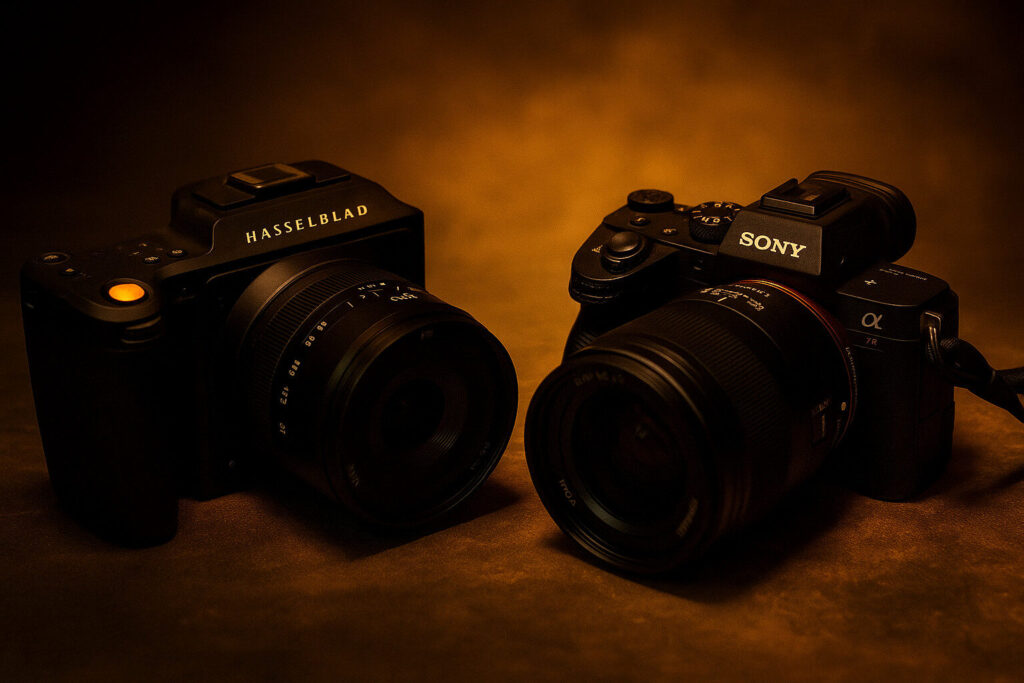
Hasselblad X2D vs Sony A7C R: Medium Format vs Full Frame Showdown
Hasselblad X2D vs Sony A7C R is one of the most talked-about comparisons among photographers today. Both cameras are powerful, but they represent two very different worlds of photography. The Hasselblad X2D is a medium-format camera known for its incredible detail, color accuracy, and image depth. It is built for professionals who want to capture every tone and texture with lifelike clarity. The medium format sensor inside the X2D is larger than a full frame sensor, allowing it to collect more light and create stunning dynamic range with a beautiful, natural look in every shot.
On the other side, the Sony A7C R comes with a full-frame sensor that is smaller but much faster and lighter. It offers 61 megapixels of sharp detail in a compact and travel-friendly body. The A7C R is perfect for photographers who need high quality but also want flexibility, fast autofocus, and strong video performance. While the Hasselblad X2D focuses on pure image quality and a premium shooting experience, the Sony A7C R focuses on speed, convenience, and versatility.
Comparing these two cameras shows how different photography needs can shape camera design. The medium format Hasselblad X2D gives you the highest image quality possible, ideal for studio, portrait, or landscape work. The full frame Sony A7C R delivers professional results in a much smaller and easier-to-carry body, ideal for travel and hybrid creators. Both cameras represent the best of their formats, one built for perfection, the other for performance. Whether you want to explore the luxury of medium format or the freedom of full frame, this comparison will help you decide which camera truly matches your vision.
Full Specs and Features Comparison
In this section, we are comparing the specs and features of both cameras by looking at each specific quality one by one. The goal is to understand how the Hasselblad X2D vs Sony A7C R perform in real photography situations. Both cameras are built for professionals, but they are made for very different kinds of users. One is a medium format masterpiece, and the other is a compact full frame powerhouse. By going through every key feature step by step, we can see which camera gives the best balance of image quality, performance, and design.
Both cameras have their strengths and weaknesses. The Hasselblad X2D offers amazing color, depth, and dynamic range thanks to its large medium format sensor. Meanwhile, the Sony A7C R focuses on flexibility, portability, and advanced autofocus in a smaller body. Therefore, in the following sections, we will explore how they compare in areas like image quality, autofocus, stabilization, design, lens support, and much more.
Sensor and Image Quality: Hasselblad X2D vs Sony A7C R
The first and most important difference between the Hasselblad X2D and the Sony A7C R is their sensor type. The Hasselblad X2D comes with a large 100-megapixel medium format sensor that captures incredible detail and depth. This big sensor collects more light, giving natural tones and smooth color transitions. Every image looks rich and full of life, especially in portraits and landscapes.
On the other hand, the Sony A7C R uses a 61-megapixel full frame sensor, which is smaller but still very powerful. It delivers sharp, clean images with great contrast and minimal noise. Because of its back-illuminated design, it performs really well in low light. So, while the Hasselblad X2D offers the highest image quality for professionals, the Sony A7C R gives nearly similar results in a more compact and affordable form.
Autofocus and Stabilization
Next, when it comes to autofocus, both cameras work differently. The Hasselblad X2D features a precise phase-detection autofocus system with 294 points, designed for accuracy over speed. It focuses smoothly and carefully, making it perfect for portraits and still scenes. However, it’s not ideal for sports or fast-moving subjects.
In contrast, the Sony A7C R offers a hybrid autofocus system with 693 points covering most of the frame. It’s faster, smarter, and can track eyes, faces, and subjects instantly. This makes it great for events, wildlife, and travel photography. Furthermore, both cameras have 5-axis in-body image stabilization, which helps reduce camera shake during handheld shooting. But since the Sony A7C R is lighter, its stabilization feels more agile and responsive in daily use.
Speed and Overall Performance: Hasselblad X2D vs Sony A7C R
Speed plays a huge role in how comfortable a camera feels in real use. The Hasselblad X2D is designed for calm and careful photography. It can shoot around 3.3 frames per second, which may sound slow, but that’s because it handles very large 100-megapixel files. It gives you time to compose, focus, and frame each shot perfectly. This slow rhythm suits studio work, landscapes, and portrait photography, where every small detail matters. Moreover, its overall performance feels smooth and stable, with no rush or lag during still photography.
In contrast, the Sony A7C R feels quick and energetic. It reacts instantly when you press the shutter. It can shoot bursts at a much higher speed, making it a great choice for travel, street, and action shots. Also, the menus, startup time, and overall operation are much faster than the Hasselblad. Everything about the Sony A7C R feels designed for movement and flexibility. So while the Hasselblad X2D focuses on perfection in every frame, the Sony A7C R focuses on speed, response, and efficiency for creators who need to capture moments quickly.
Build, Size, and Handling
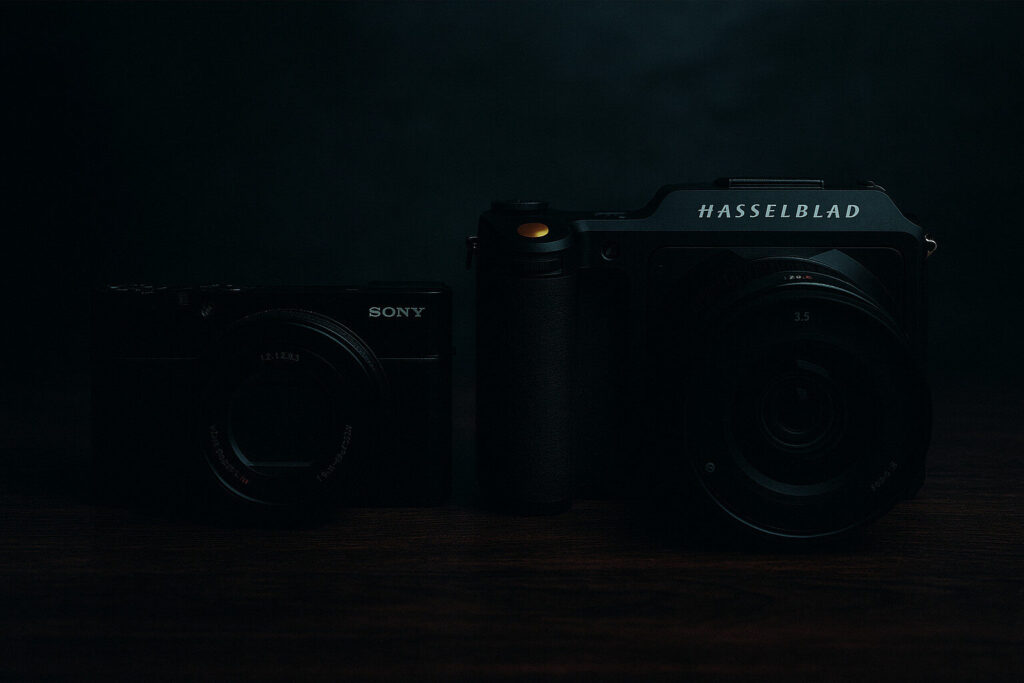
The design of both cameras shows their purpose. The Hasselblad X2D is large, solid, and beautifully made. Its body is crafted from premium aluminum and feels professional in hand. The layout is clean and minimal, giving a sense of quality and craftsmanship. However, because of its medium format sensor and large lens mount, the camera is heavier and bigger than most others. It’s ideal for tripod setups or slow handheld shooting but not for long walks or travel photography.
On the other side, the Sony A7C R is small, light, and travel-friendly. It’s almost half the weight of the Hasselblad X2D, which makes it easy to carry around all day. The grip is comfortable, and the button placement is simple yet functional. Therefore, it feels perfect for long outdoor shoots or vlogs where mobility matters. Even though it’s compact, it still feels strong and well-built. In short, the Hasselblad X2D gives you luxury and stability, while the Sony A7C R gives you freedom and portability.
Lens System and Compatibility
Lens options make a big difference in a photographer’s journey. The Hasselblad X2D uses the XCD mount, which supports some of the best lenses ever made for medium format. These lenses are known for their clarity, contrast, and color accuracy. Each shot looks clean and true to life. However, they are expensive, large, and not as widely available in every region. Because of this, the system feels more exclusive and best suited for professional or studio use.
In contrast, the Sony A7C R uses the E-mount system, which has one of the largest lens collections in the world. You can choose from Sony, Sigma, Tamron, Zeiss, and many other brands. There are lenses for every purpose portrait, macro, landscape, and even cinematic video. Moreover, there are affordable third-party options that still deliver amazing results. So, while Hasselblad gives you unmatched optical perfection, Sony gives you a huge range of choices that fit every budget and need. Therefore, in lens flexibility and accessibility, Sony clearly wins the comparison.
Video and Multimedia Features
Video performance is where these cameras differ the most. The Hasselblad X2D is built mainly for still photography. It does not focus much on video, as it’s designed to deliver the highest possible image quality for photos. It gives you slow, precise image capture with rich detail and smooth tones. On the bright side, it includes a large 3.6-inch tilting touchscreen and a 5.76-million-dot viewfinder, which make shooting very comfortable. Plus, its built-in 1TB SSD is an amazing addition for storing high-resolution files safely.
The Sony A7C R, however, is a true hybrid camera. It’s built for both photography and video creators. It records 4K video at up to 60 frames per second and supports 10-bit 4:2:2 color for professional results. It also offers advanced video modes like S-Log and S-Cinetone for better editing control. Moreover, the A7C R stays cool during long shoots and gives sharp, detailed footage. The screen is fully articulated, perfect for vlogging or filming yourself. Therefore, when it comes to video, the Sony A7C R stands far ahead of the Hasselblad X2D in flexibility and creative freedom.
Battery, Storage, and Connectivity
Battery life and storage are important for long shooting sessions. The Hasselblad X2D offers decent battery power that works well for still photography. However, the real highlight is its built-in 1TB SSD, which gives you plenty of space to store huge 100-megapixel files without needing extra cards. It also supports CFexpress Type-B cards for additional storage. The downside is that transferring large RAW files can take time, especially for photographers who shoot a lot in one session.
The Sony A7C R, on the other hand, uses Sony’s powerful NP-FZ100 battery, which is known for long life and efficiency. It easily lasts through a full day of mixed shooting. It also supports USB-C fast charging, so you can charge it directly from a power bank while traveling. In terms of connectivity, the A7C R offers Bluetooth, Wi-Fi, and USB-C, making it easy to transfer photos to your smartphone or computer instantly. Therefore, while Hasselblad impresses with internal storage, Sony takes the lead with longer battery life and faster workflow options.
Practical Use and Comfort in Hasselblad X2D vs Sony A7C R
Using these two cameras feels completely different. The Hasselblad X2D is calm, deliberate, and designed for photographers who enjoy taking their time. Every photo feels like a piece of art. The camera’s slow pace and large files encourage creativity and patience. It’s perfect for fine art photographers, product shoots, or landscape work where you can control every detail.
In contrast, the Sony A7C R feels modern and fast. It’s light, quick, and fits almost anywhere. You can take it for travel, street photography, or video production with no trouble. Switching between photo and video is instant, and the camera stays responsive in every condition. Therefore, both cameras are enjoyable, but they create very different experiences one for thoughtful shooting, and one for fast storytelling.
Final Verdict Medium Format vs Full Frame
After comparing every major feature, it’s clear that both cameras are strong in their own ways. The Hasselblad X2D offers breathtaking image quality, perfect color, and a luxurious design that no other camera can match. It’s made for photographers who want to capture art, not just pictures. Meanwhile, the Sony A7C R brings power, portability, and advanced video tools together in one small body. It’s for creators who want performance without limits.
In short, if your main goal is ultimate image perfection and medium format depth, go with the Hasselblad X2D. But if you want a compact full frame camera that can handle photos, videos, and travel with equal ease, the Sony A7C R is the smarter choice. Both are masterpieces one for passion and precision, the other for creativity and speed.
Comparison Table: Hasselblad X2D vs Sony A7C R
| Feature | Hasselblad X2D | Sony A7C R |
|---|---|---|
| Sensor Type | 100MP Medium Format CMOS | 61MP Full Frame BSI CMOS |
| Image Quality | Exceptional detail, natural tones, wide dynamic range | Sharp, clean images, excellent low-light performance |
| Autofocus | 294-point phase detection, precise but slower | 693-point hybrid AF, fast and accurate tracking |
| Image Stabilization | 5-axis in-body stabilization | 5-axis in-body stabilization |
| Burst Speed | 3.3 fps | Up to 8 fps |
| Video | Limited video features, mainly for stills | 4K 60p, 10-bit 4:2:2 internal recording |
| Storage | Built-in 1TB SSD + CFexpress Type-B | Dual SD/CFexpress Type-A slots |
| Battery Life | Moderate, suited for studio work | Long-lasting NP-FZ100 battery |
| Build Quality | Premium aluminum body, elegant design | Compact magnesium alloy body |
| Lens Mount | Hasselblad XCD Mount | Sony E-Mount (wide lens range) |
| Weight | 895g | 515g |
| Connectivity | USB-C, Wi-Fi, CFexpress | USB-C, Wi-Fi, Bluetooth |
| Best For | Studio, Portrait, Landscape | Travel, Video, Hybrid creators |
Best Features: Hasselblad X2D vs Sony A7C R
Both cameras shine in their own ways, offering photographers something truly special. The Hasselblad X2D stands out for its breathtaking image quality. Its large 100MP medium format sensor captures light in a way no smaller sensor can. The depth, dynamic range, and smooth color transitions are simply beautiful. Its design also feels premium, built with attention to every small detail. The in-body 1TB SSD is a powerful feature that gives you freedom from carrying memory cards all the time. Every photo from this camera looks elegant, cinematic, and full of life.
On the other hand, the Sony A7C R shines with speed, compactness, and advanced video features. It is perfect for creators who need both stills and video in one tool. The autofocus is one of the fastest in its class, easily tracking subjects, faces, and eyes. The image stabilization works smoothly, making it ideal for handheld shooting. Moreover, its compact body makes it an easy companion for travel or outdoor shoots. You can fit it in a small bag and still have full professional power at your fingertips.
While the Hasselblad X2D wins in color depth and premium experience, the Sony A7C R wins in flexibility, efficiency, and real-world use. Each one has a unique charm that matches a different kind of creative personality.
Conclusion
In the end, this Hasselblad X2D vs Sony A7C R comparison proves that both cameras are amazing, but they serve very different purposes. The Hasselblad X2D is a true medium format masterpiece built for precision, color, and ultimate image quality. It’s the kind of camera that turns photography into fine art. On the other hand, the Sony A7C R is a compact powerhouse that brings together speed, portability, and hybrid creativity. It’s made for people who want to capture life as it happens, quickly and beautifully.
If you want a camera that gives unmatched tones and professional studio results, go with the Hasselblad X2D. But if you want one that handles everything from travel photos to 4K videos the Sony A7C R is your best pick. Both represent excellence in their own way. It simply depends on whether you value medium format perfection or full frame flexibility.
Read More
If you love reading about camera comparisons like Hasselblad X2D vs Sony A7C R, reviews, and new releases, check out our other detailed articles. You’ll find comparisons like Fujifilm GFX100 II vs Hasselblad X2D, and upcoming reviews of rumored models such as the Sony RX100 VIII and Panasonic Lumix GM5 Mark II. Stay tuned for weekly updates, honest insights, and simple explanations about the latest in camera technology. Whether you’re a beginner or a professional, our blogs are written to help you choose the right gear for your creative journey.