
The Sony RX10 V is a highly anticipated but uncertain camera release. Sony has not announced this camera. In fact, reports suggest Sony discontinued the RX10 IV without planning a successor. Bridge camera enthusiasts hope Sony will reconsider. This article examines existing rumors and market expectations. The Sony RX10 V would target wildlife photographers, travel shooters, and those wanting extreme zoom ranges. However, the outlook remains pessimistic.
Bridge cameras occupy a challenging position in today’s market. Smartphones continue improving their telephoto capabilities. Mirrorless cameras with telephoto zoom lenses offer better image quality. The convenience factor remains the only significant advantage. Sony appears to have concluded this market lacks profitability. The RX10 IV served its purpose for many years. Production reportedly ceased in late 2024 or early 2025.
Photography forums still debate whether Sony might surprise everyone. Some optimists cite the RX100 series’ continued success. That compact camera line proves Sony still values certain niche markets. Others point to the RX1R II’s long production run. Sony occasionally maintains products with limited but dedicated audiences. However, most industry analysts believe the Sony RX10 V won’t materialize.
Sony RX10 V: Rumor Status and Expected Announcement
The rumor status for the Sony RX10 V is weak. Sony officially discontinued the RX10 IV in 2024-2025. Multiple sources report Sony has no plans for a successor. The company shifted focus to mirrorless cameras and compact vlogging cameras. Bridge cameras occupy a shrinking market segment. Sony appears to have abandoned this category. No credible announcement timeline exists. Industry insiders believe the Sony RX10 V will not materialize. Nevertheless, some photographers continue hoping for a surprise announcement.
The discontinuation news spread through camera retail channels first. Authorized dealers received notifications about RX10 IV end-of-life status. Remaining inventory sold out quickly afterward. Second-hand market prices temporarily spiked. This created speculation about a possible successor announcement. However, months passed without any Sony communication.
Sony’s strategy clearly favors other camera categories now. The A6700 and A7 series receive consistent updates. The ZV series targets content creators successfully. Compact cameras like the RX100 VII remain in production. Meanwhile, bridge cameras lost their unique selling proposition. Smartphone computational photography improved dramatically. Multi-camera smartphone systems offer versatile zoom capabilities.
Market research data explains Sony’s decision rationally. Bridge camera sales declined steadily over the past decade. Global sales numbers dropped below sustainable thresholds. Development costs for new models couldn’t be justified. The RX10 IV launched in 2017 already. That camera served the market for nearly eight years. Few camera models receive updates after such long gaps.
Sony Alpha Rumors website rates the Sony RX10 V as “SAR0” credibility. This represents pure speculation without credible sources. No leaked specifications exist from reliable sources. No prototype sightings have occurred. Patent filings show nothing relevant. Supplier networks report no manufacturing plans. Every indicator suggests abandonment.
Some photographers argue market demand still exists. Wildlife photographers appreciate the 24-600mm all-in-one convenience. Travel photographers value not carrying multiple lenses. Bird watchers use bridge cameras as spotting scope alternatives. These niche users feel underserved by Sony’s decision. However, niche markets don’t drive major manufacturer strategies.
Alternative solutions exist for these photographers anyway. Mirrorless cameras with supertelephoto zooms provide better quality. The Sony A6700 with 70-350mm lens offers excellent reach. Full-frame bodies with 200-600mm lenses surpass bridge cameras dramatically. These solutions cost more but deliver professional results. Bridge cameras competed on price and convenience only.
Expected Specifications Table for Sony RX10 V (Highly Speculative)
| Feature | Expected Details |
|---|---|
| Sensor Type | 1-inch BSI CMOS |
| Resolution | 20.1MP or possibly upgraded to 24MP |
| Processor | BIONZ X or newer BIONZ XR |
| ISO Range | 100-12800 (expandable) |
| Autofocus System | Hybrid AF with AI subject recognition |
| Stabilization | Optical SteadyShot (improved) |
| Video Recording | 4K/60fps, possibly 4K/120fps |
| EVF | 2.36M-dot OLED or higher |
| LCD Screen | 3.0-inch vari-angle touchscreen |
| Burst Shooting | 24fps or higher |
| Battery | NP-FW50 or newer NP-FZ100 |
| Storage | Dual SD card slots (UHS-II) |
| Connectivity | Wi-Fi, Bluetooth, USB-C |
| Weight | 1095g or slightly reduced |
| Expected Price | $1,800-$2,200 USD (if released) |
All specifications are purely speculative as Sony has not confirmed development
Expected Sensor and Image Quality for Sony RX10 V
If Sony develops the Sony RX10 V, it would likely use an upgraded 1-inch sensor. The RX10 IV’s 20.1MP sensor performed well. A newer sensor with improved low-light performance makes sense. Dynamic range enhancements would be welcome. Better high-ISO noise control should be included. Sony’s color science would remain excellent. However, smartphone cameras have closed the gap significantly. The 1-inch sensor advantage is smaller than before. Moreover, mirrorless cameras with zoom lenses offer better image quality.
Sony’s 1-inch sensors have historically performed admirably. The technology matured over many camera generations. Modern 1-inch sensors deliver surprisingly good results. Image quality satisfies most amateur and enthusiast needs. However, physics ultimately limits smaller sensors. Dynamic range cannot match APS-C or full-frame sensors. Low-light performance falls short of larger sensor systems.
A hypothetical sensor upgrade could bring several improvements. Backside illumination (BSI) technology might be enhanced. Stacked sensor design could enable faster readout speeds. This reduces rolling shutter during fast panning. Improved photodiode design would boost light sensitivity. Better on-chip noise reduction maintains cleaner high-ISO images.
The 20.1MP resolution might increase to 24MP maximum. Higher resolution provides more cropping flexibility. However, pixel density concerns emerge with smaller sensors. Smaller individual pixels gather less light per pixel. This potentially degrades high-ISO performance. Sony must balance resolution and light sensitivity carefully.
Color science would continue Sony’s established trends. Natural color reproduction suits most photography styles. Skin tones render accurately without heavy post-processing. The camera would likely include various picture profiles. Standard, vivid, neutral, and portrait modes would be available. These profiles help photographers achieve desired looks in-camera.
RAW file processing would use Sony’s ARW format. These files provide substantial post-processing latitude. Shadow recovery would work reasonably well. Highlight retention helps with bright skies. However, 1-inch sensor RAW files have limitations. They cannot match the editing flexibility of larger sensors.
The reality remains that smartphone computational photography evolved dramatically. Multi-camera smartphones combine images from different lenses. Software algorithms enhance dynamic range artificially. Night modes produce remarkably clean low-light images. Portrait modes simulate bokeh convincingly. Many casual photographers no longer need dedicated cameras. This trend devastated the bridge camera market significantly.
Sony RX10 V: Autofocus Expectations
The Sony RX10 V would need cutting-edge autofocus. AI-based subject recognition should be standard. Real-time tracking for birds and animals is essential. Eye detection for both humans and animals would be expected. Fast and accurate phase detection would be critical. The RX10 IV’s autofocus is outdated by 2026 standards. A modern AF system would be a major selling point. Additionally, improved low-light AF performance would attract wildlife photographers.
Expected Video Capabilities for Sony RX10 V
Video features would need substantial upgrades. 4K/60fps should be the baseline. 4K/120fps for slow motion would be competitive. S-Log profiles for professional workflows make sense. Improved video stabilization is necessary. Better audio inputs would help videographers. Overheating management must be addressed. The Sony RX10 V would compete against mirrorless cameras. Video capabilities would need to justify the bridge camera form factor. Furthermore, content creators demand better video tools.
Design and Build Expectations for Sony RX10 V
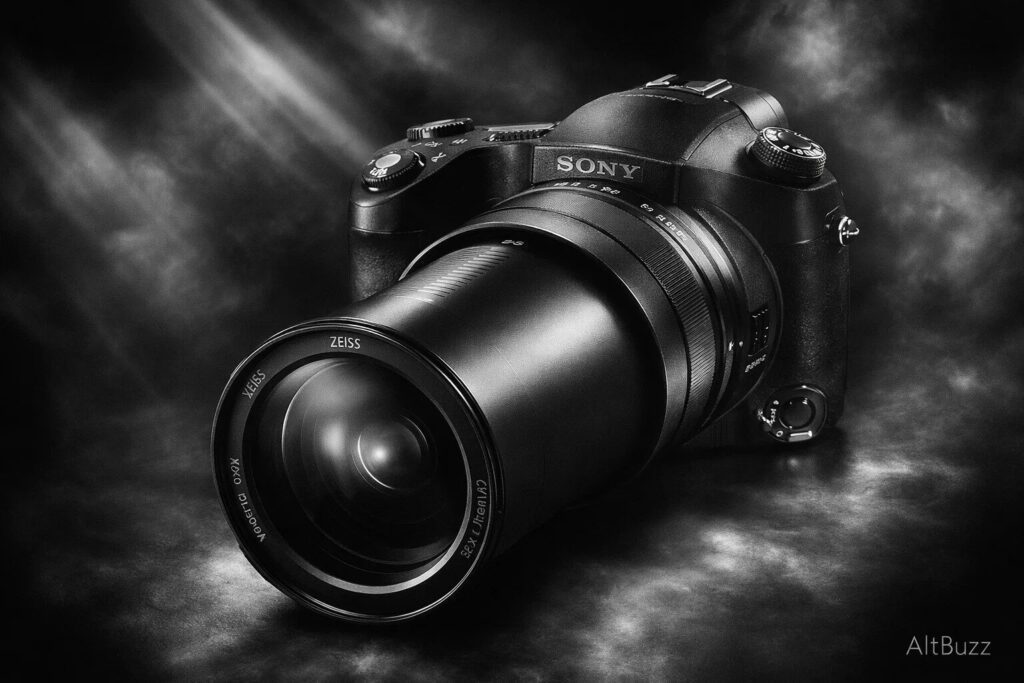
The design would likely resemble the RX10 IV. A weather-sealed body should continue. The built-in 24-600mm lens remains the main attraction. Ergonomics would need refinement. A more comfortable grip makes extended shooting easier. Button layout improvements would help usability. Weight reduction without compromising durability would be ideal. Modern connectivity ports including USB-C are essential. Besides these changes, the overall bridge camera concept would remain.
Expected Battery and Connectivity for Sony RX10 V
Sony should upgrade to the NP-FZ100 battery. Better battery life is crucial for travel photographers. USB-C charging would be standard. Wi-Fi 6 for faster transfers makes sense. Bluetooth for remote control should be included. Smartphone integration would be seamless. Cloud backup options would be helpful. In addition, improved battery performance addresses a common complaint.
Who This Sony RX10 V Is Likely For
Photography Use Cases
- Wildlife photography with extreme reach
- Travel photography without lens changes
- Bird photography on a budget
- Sports photography from a distance
- Nature photography with convenience
Video Use Cases
- Travel videography with versatile zoom
- Wildlife documentary work
- Event coverage without multiple lenses
- Run-and-gun shooting scenarios
Market Positioning
The camera would serve a niche market. It competes against mirrorless cameras with superzooms. Price must be competitive. The convenience factor is the main advantage. However, mirrorless alternatives offer better upgradability.
Bridge Camera Market Analysis
Understanding the bridge camera market decline explains Sony’s decision. Multiple factors contributed to this category’s collapse. Analyzing these trends reveals why the Sony RX10 V seems unlikely.
Smartphone photography improved exponentially over the past decade. Computational photography transformed phone cameras completely. Multi-lens smartphone systems offer versatile zoom capabilities. Night mode produces remarkably clean low-light images. Portrait mode simulates bokeh convincingly. Many casual photographers abandoned dedicated cameras entirely.
The iPhone 16 Pro Max features a 120mm equivalent telephoto. Samsung Galaxy S25 Ultra reaches 230mm equivalent. Google Pixel phones offer impressive zoom with computational enhancement. Periscope telephoto lenses became mainstream in flagship phones. While these don’t match 600mm reach, they satisfy most users. The convenience of always having your camera matters immensely.
Mirrorless camera systems offer superior upgrade paths. Photographers can start with a body and basic lens. They expand their lens collection over time. Specialized lenses serve specific needs perfectly. Bridge cameras lock users into fixed lens limitations. The 24-600mm zoom compromises optical quality for convenience.
Image quality differences matter more to serious photographers. Full-frame mirrorless cameras deliver superior dynamic range. Low-light performance surpasses 1-inch sensors dramatically. Bokeh quality depends on sensor size and aperture. Bridge cameras cannot compete with f/1.8 primes. Professional photographers choose mirrorless systems overwhelmingly.
Price competitiveness disappeared as mirrorless cameras became affordable. Entry-level mirrorless bodies cost less than premium bridge cameras. The Sony A6400 body costs around $900 currently. Add a 70-350mm lens for $1,000. This combination surpasses bridge camera performance significantly. Total investment remains reasonable for serious hobbyists.
Used camera market provides excellent alternatives affordably. Previous-generation mirrorless cameras work wonderfully. The Sony A6400 delivers professional results. Fujifilm X-T3 costs under $700 used. These cameras accept interchangeable lenses unlike bridge cameras. Smart shoppers find incredible value in used equipment.
Social media photography preferences shifted dramatically. Instagram and TikTok favor wide-angle perspectives. Selfies and group shots dominate social content. Extreme telephoto capabilities matter less than before. Content creators prioritize video capabilities and portability. Bridge cameras satisfy neither requirement particularly well.
Potential Strengths and Concerns for Sony RX10 V
Potential Strengths (If Released)
- All-in-one convenience with 24-600mm lens
- No lens changes in challenging environments
- Compact compared to mirrorless with telephoto
- Weather-sealed design for outdoor shooting
- Modern AF technology with subject tracking
- Improved video features for hybrid shooters
Possible Concerns
- No confirmed development by Sony
- Discontinued predecessor suggests abandonment
- Shrinking market segment for bridge cameras
- Smartphone competition eating into sales
- Mirrorless alternatives offer better quality
- High expected price may limit appeal
- 1-inch sensor limitations versus larger sensors
Alternative Cameras to Consider
Since the Sony RX10 V seems unlikely, photographers should explore alternatives. Several cameras provide similar capabilities with modern technology. These options offer better long-term value and performance.
Sony A6700 with 70-350mm
This combination delivers superior image quality. The APS-C sensor outperforms 1-inch sensors significantly. The 70-350mm reaches 525mm equivalent reach. Image stabilization works excellently. Autofocus performance matches Sony’s best systems. Total cost sits around $2,300. However, image quality justifies the investment completely.
Sony A7C II with 70-200mm f/4
Full-frame image quality surpasses anything bridge cameras offer. The compact A7C II body resembles bridge camera size. The 70-200mm provides professional-grade optics. Reach extends to 200mm (300mm equivalent crop mode). Low-light performance excels dramatically. This setup costs approximately $3,500. Serious photographers should consider this investment.
Canon EOS R7 with 100-400mm
Canon’s APS-C flagship delivers incredible wildlife performance. The 32.5MP sensor provides ample resolution. Burst shooting reaches 15fps mechanical, 30fps electronic. Bird detection autofocus works flawlessly. The 100-400mm reaches 640mm equivalent. Weather sealing protects your investment. Total investment approaches $3,000.
Nikon Z50 with 50-250mm
Budget-conscious buyers should consider this combination. The Z50 body costs under $900. The 50-250mm kit lens provides 375mm equivalent reach. Image quality satisfies amateur and enthusiast needs. The system remains compact and lightweight. Future lens upgrades expand capabilities. Total cost stays around $1,400.
Panasonic Lumix FZ80
Budget shoppers wanting extreme zoom should consider this. The FZ80 offers 20-1200mm equivalent reach. Image quality remains modest with a small sensor. However, price sits around $400 only. This camera serves casual photographers perfectly. Serious photographers should invest more.
Used Sony RX10 IV
Finding a used RX10 IV makes sense currently. Prices dropped significantly after discontinuation announcement. Clean examples sell for $1,000-$1,200. This provides the bridge camera experience affordably. However, remember Sony won’t develop firmware updates. Parts availability may become problematic eventually.
Final Verdict
The Sony RX10 V faces an uncertain future. Sony discontinued the RX10 IV without announcing a replacement. Industry sources suggest Sony has no plans for this camera. The bridge camera market continues shrinking. Smartphones and mirrorless cameras have captured most buyers. However, the RX10 series had loyal fans. A modernized version could still succeed in a niche market. Photographers wanting a 24-600mm all-in-one solution have limited options. Sony may reconsider if market conditions change. For now, prospects remain bleak.
Who should wait for it: Bridge camera enthusiasts, wildlife photographers wanting simplicity, and travel shooters who prioritize convenience over ultimate image quality.
Who should consider alternatives: Serious photographers should explore mirrorless options like the Sony A6700 with a 70-350mm lens, or Nikon’s Z system with zoom lenses. These offer better image quality and flexibility.
Read More from AltBuzz
Read more from Altbuzz for camera rumors, previews, and expert insights. AltBuzz delivers trusted and easy-to-understand photography content. Discover the latest camera news and gear reviews. Make informed decisions about your next camera purchase.
Subscribe AltBuzz YouTube Channel
Stay updated with camera rumors and comparisons. AltBuzz shares camera news regularly. Subscribe here: 👉 Subscribe Altbuzz
Disclaimer: This article discusses a camera that Sony has not announced or confirmed. Based on current information, Sony appears to have discontinued the RX10 line without plans for a successor. All specifications and expectations are purely speculative and based on community wishlist discussions. Information is accurate as of February 14, 2026.