
5 Worst Nikon Cameras to Buy in 2027: Don’t Waste Your Money
Nikon has made some incredible cameras. That fact is exactly why this list of the worst Nikon cameras to buy in 2027 feels uncomfortable. The problem is not image quality. The problem is what buyers are being asked to pay right now.
One discontinued mirrorless body locks you into a dead system. One retro DSLR costs more than far more capable Nikons. The camera at number one can approach Z9 money even though it belongs to the DSLR era. These are the five Nikon purchases we would question hardest in 2027.
At Altbuzz, we follow cameras from rumor to retirement. So we believe you should know what a camera is really worth before you pay for it. Read on to see which Nikon bodies earned a spot, why their prices cause trouble, and who should still buy each one.
A quick note on prices. The used prices in this article come from a recent MPB snapshot in the United States. Used prices move fast. Treat every range as a dated snapshot, not a promise, and check current listings before you buy.
What “Worst” Means on This List
A worst camera is not always a weak camera. In fact, several bodies on this list are excellent tools. We ranked them by purchase value, not by raw ability.
Price Versus Need
Here is the core idea. A camera becomes a bad purchase when its price no longer matches what the buyer needs. A great body can still be a poor deal if a better option sits at a similar price. Likewise, a cheap body can be a poor deal if its system has run out of road.
How We Ranked These Nikon Cameras
We compared each camera against what else the same money could buy today. We also looked at lens ecosystems, discontinued platforms and current Nikon lineup pricing. Then we asked a simple question. Who should still buy this camera, and who should walk away?
Keep that question in mind as we count down.
Why Nikon Pricing Feels So Confusing in 2027
Nikon’s lineup now spans several eras at once. Discontinued Nikon 1 bodies sit beside compact cameras and classic DSLRs. Meanwhile, current Z-mount bodies compete with all of them during frequent promotions. As a result, a buyer can find an old camera and a newer camera at nearly the same price.
Three Forces Behind the Confusion
First, nostalgia drives demand. Compact cameras and retro designs have become fashionable again, and that interest lifts used prices. Second, the Z system keeps growing, so sale prices on newer bodies keep shrinking the gap. Third, many buyers shop by sticker price alone. They skip the step where they compare a used body against a new or newer alternative.
Why the Comparison Step Matters
A used price looks fair when you view it alone. It looks very different when you place it next to a promotion on a newer camera. That is why every entry below includes a direct price comparison. The goal is not to talk you out of a camera you love. The goal is to make sure you pay for the right reasons.
5. Nikon COOLPIX A900
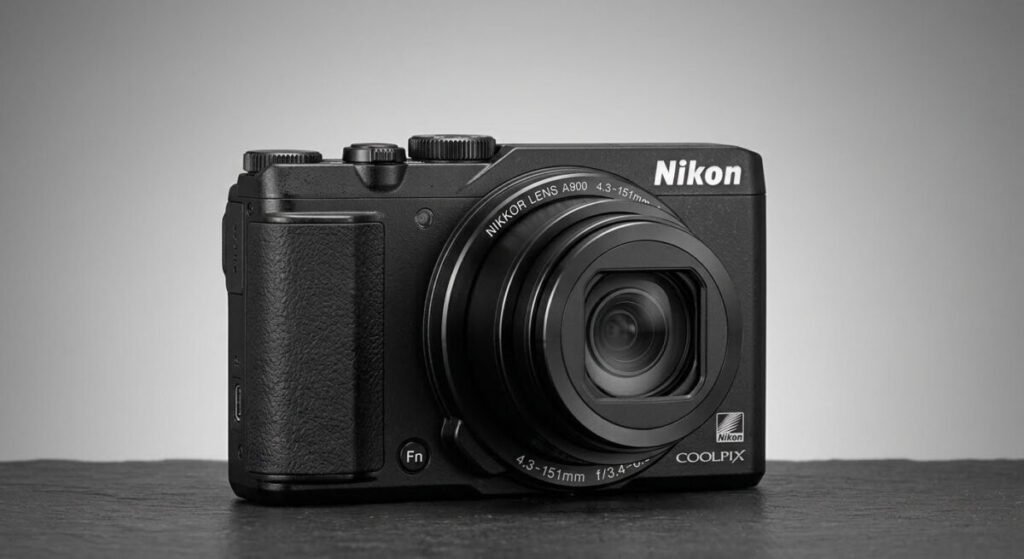
At number five, we have the Nikon COOLPIX A900. It opens with a strange little pricing puzzle. This pocket compact carries a 20MP sensor and a 35x zoom. That zoom covers roughly 24 to 840mm in full-frame terms.
Key Specs
- 20MP sensor
- 35x zoom, roughly 24 to 840mm full-frame equivalent
- 4K video recording
- Tilting 3-inch screen
- About 298 grams in weight
As a travel superzoom, that is a lovely idea. Nobody argues with the concept. Nothing is broken here either. The camera does what Nikon designed it to do, and that makes it a useful place to start.
The Pricing Puzzle
The puzzle is the price. Compact cameras have become fashionable again, and that demand has dragged used prices up. In a recent MPB snapshot in the United States, used examples ran from roughly $514 to $584. Stock levels shaped that range.
Meanwhile, Nikon’s Z30 body can sit in the same broad neighborhood during promotions. To be fair, the Z30 needs a lens. It also cannot squeeze an 800mm zoom into your jacket pocket. It solves a different problem.
The point is what each buyer pays for. One buyer gets a tiny all-in-one zoom. The other buyer gets a whole camera platform.
Who Should Still Buy It
A traveler who truly wants pocket size plus a huge built-in zoom makes sense here. That buyer should also find a sensible example. That is a real person with a real need.
Everyone else pays a hype tax. The A900 did not become more capable. Its used price simply changed faster than its technology did.
Our next camera has the opposite problem. Its price is low, and that is exactly what makes it tricky.
4. Nikon 1 J5
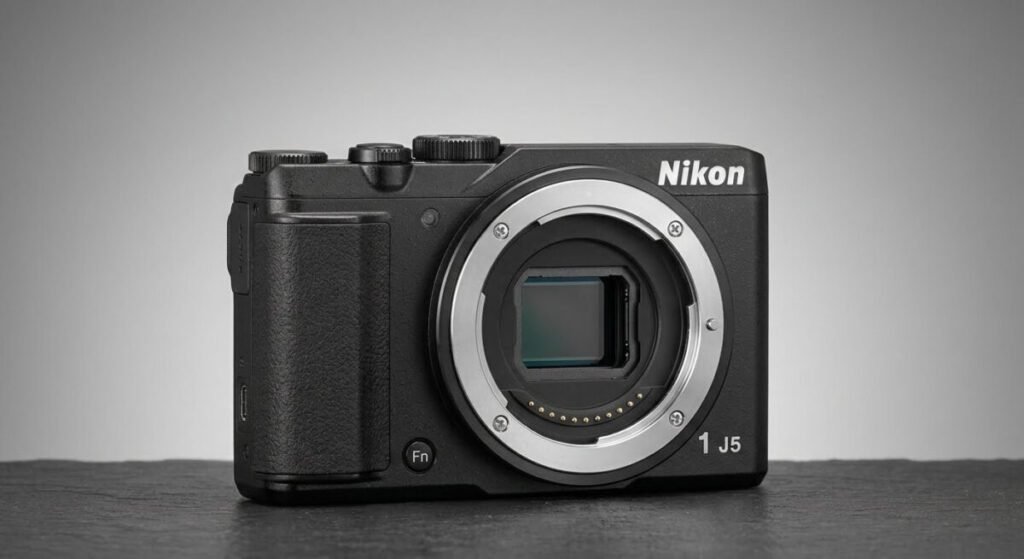
At number four, we have the Nikon 1 J5. We want to be careful here, because this little camera is genuinely fun on paper.
Key Specs
- 20.8MP one-inch-type sensor
- Tilting touchscreen
- 1080 video at 60 frames per second
- Up to 20 frames per second at full resolution
- 4K video at about 15 frames per second
The 4K option is more of a curiosity than a plan. Still, the size and speed give the J5 a loyal little following, and that following deserves credit.
A Burst Speed Worth Respecting
We do not want to wave away that burst rate. Twenty frames per second at full resolution from a body this small makes enthusiasts grin. The tilting touchscreen also keeps the camera friendly to hold and use. For the right person, the J5 is still a clever little camera with real ability.
Cheap Body, Expensive System
Trouble starts when someone sees the low sticker price and assumes it means good system value. Used examples have shown up for roughly $304 to $359 in that same MPB snapshot. Cheap, right?
Here the body is not the problem. The mount is. Nikon 1 is not Nikon F, and it is not Nikon Z. In 2018, Nikon confirmed that Nikon 1 cameras, lenses and accessories were no longer in production. That single fact changes the math completely.
A cheap body does not automatically mean a cheap system. When native lenses and accessories disappear, every future purchase gets narrower, more limited and harder to replace. Compare that with the F-mount world. Used lenses are everywhere there, and nearly every budget has an answer.
Who Should Still Buy It
Nikon 1 is a much smaller pond. The best remaining buyers are collectors, Nikon 1 enthusiasts and anyone who already owns the lenses. The weakest buyer is a newcomer who picks it as a first interchangeable-lens Nikon system in 2027.
The camera is not useless. The ecosystem is the part that ran out of road.
3. Nikon D780
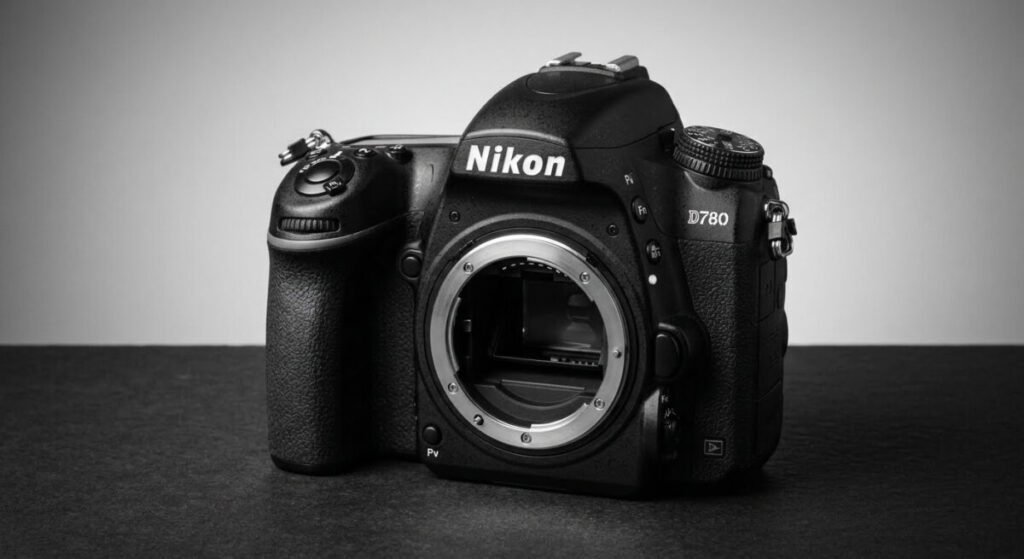
At number three, we have the Nikon D780. This is where the list gets harder to write, because the D780 is excellent.
Key Specs
- 24.5MP full-frame sensor
- Traditional 51-point viewfinder autofocus system
- 273-point hybrid autofocus in Live View, with eye detection for stills
- Full-frame 4K video at 30 frames per second
- Strong battery endurance
- F-mount compatibility
Honestly, the D780 may be the most sophisticated general-purpose Nikon DSLR after the D850.
So What Is Wrong With It?
Its used price lands in an awkward middle zone. The MPB snapshot showed roughly $1,299 to $1,439. Now look around that number.
- Used D850 bodies begin around the low $800s and climb with condition. A stills-first buyer gets far more resolution for similar money, and sometimes for less.
- Used Z6 II bodies can cost dramatically less.
- The current Z5 II and Z6 III bring newer EXPEED 7 autofocus and current Z-mount development. They cost more, yet they still matter to this decision.
The “Newer Means Safer” Trap
Think about what a buyer actually sees. They open a used listing and spot a Nikon DSLR from the last generation of bodies. Then they assume newer must mean safer. However, newer among DSLRs and newer across Nikon’s whole lineup are two very different things.
Who Should Still Buy It
We are not saying the D780 loses to every rival in every way. It does not. An optical finder paired with strong Live View behavior is genuinely unusual.
The best buyer is an F-mount owner who insists on the optical viewfinder. That buyer also wants far better rear-screen and video performance than older Nikon DSLRs offer. The weakest buyer is someone who starts from scratch and thinks, “It was one of the last new DSLRs, so it must be the smart one.”
The D780 problem is not capability. It is opportunity cost.
Compare Before You Commit
One more thing about that cost. Cameras make more sense when you compare them against what else your money could buy right now. Judging them alone hides the real picture.
2. Nikon Df
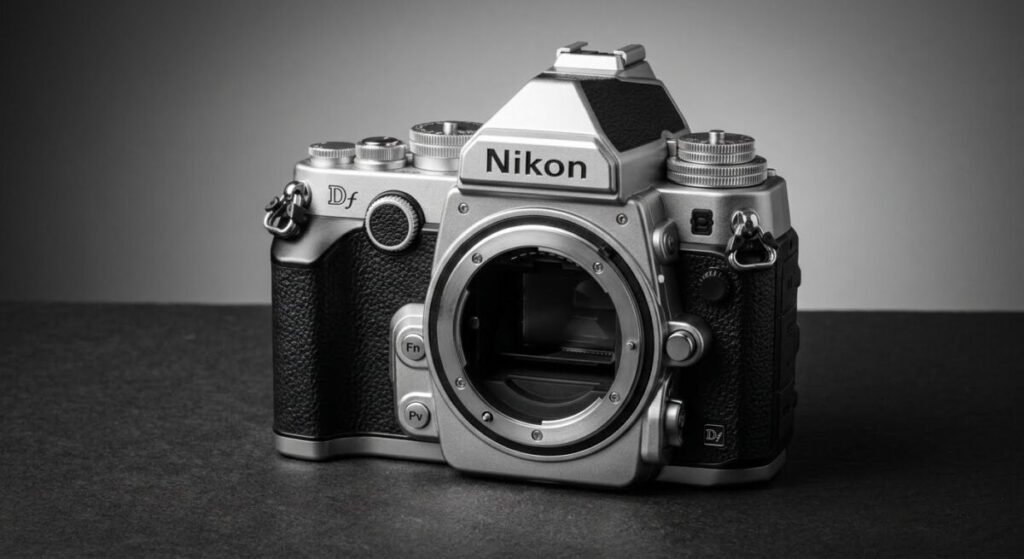
At number two, we have the Nikon Df. Here the argument stops being about numbers and starts being about feelings.
Key Specs
- 16.2MP full-frame sensor derived from Nikon’s D4 generation
- Physical exposure controls built for a traditional stills experience
- 39-point autofocus system
- About 5.5 frames per second
- Single SD card slot
- No video recording at all
Notice that last point. The Df offers not a little video. It offers none.
A Wonderful Camera Priced Like a Collectible
A camera like that can still be wonderful to own. We mean that. However, the market now prices it less like a performance purchase and more like an object of desire. In the MPB snapshot, used examples ran from about $999 to $1,339.
Now look at current D850 listings. They can overlap with that range or even undercut it. The D850 brings a 45.7MP sensor, 153 autofocus points, faster shooting, dual card slots and 4K video. On paper, it is not a contest.
Why the D850 Does Not Replace the Df
We will not say the D850 replaces the Df, because it does not. The tactile dials, the styling, the sensor character and the compatibility with older Nikon lenses explain why collectors want one.
There is an honest tension here, and we would rather name it than hide it. A buyer who loves dials and old lenses may feel the Df is worth every dollar. A buyer who loves resolution and speed may feel cheated by that same price tag. Both can be right. They are simply buying different things.
Who Should Still Buy It
The best buyer knowingly pays for the design and the shooting experience. The weakest buyer wants the most capable Nikon DSLR per dollar. The Df no longer sells like an old DSLR. It sells like a collectible.
There is nothing wrong with paying for a feeling. Just know that a feeling is what you are buying.
1. Nikon D6
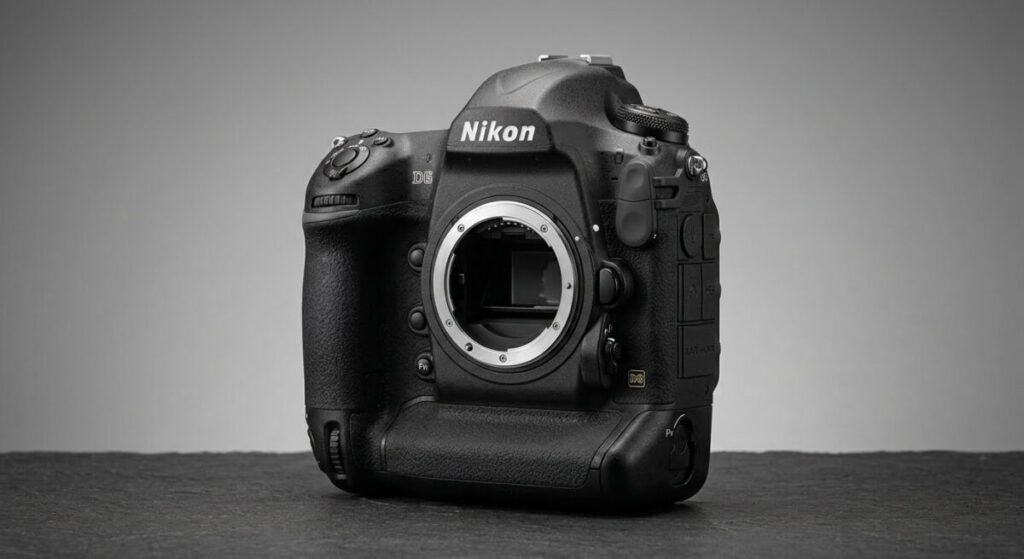
At number one, we have the Nikon D6. Yes, we know. Nikon’s final professional DSLR flagship sits at the top of a list like this. Stay with us, because the D6 is an extraordinary tool.
Built for the Hardest Jobs
Nikon built the D6 for sports, press, agencies, news and harsh professional field work. It carries a 20.8MP full-frame sensor and a professional integrated-grip body. It also offers the optical viewfinder workflow that many working photographers trained their muscle memory on.
Nothing about that is weak. Every one of those qualities is real, and none of them is the reason the D6 is on this list.
The Pricing Problem
The problem is what else Nikon now offers for similar money. In the MPB snapshot, used D6 bodies ran from about $3,279 to $4,549. During its current sale, Nikon lists the Z9 at about $4,799.95 new.
That camera has a 45.7MP fully stacked sensor and flagship subject-detection autofocus. It shoots 20 frames per second in raw and offers very high JPEG burst rates. It also records 8K60 internal raw video.
The comparison gets more awkward. Used Z9 bodies sit around $3,399 to $3,899. That range overlaps a large part of the used D6 range.
Pinched From Both Sides
Now squeeze from the other direction. Used D5 bodies can cost dramatically less and still deliver the classic Nikon pro DSLR format. So older professional DSLRs pinch the D6 from below, and the Z9 pinches it from above.
That strategic conflict explains why this camera lands at the top of the list.
Who Can Still Justify It
Three kinds of buyers can still make the D6 work.
- A working professional with a large F-mount supertelephoto investment
- A newsroom or agency that already standardized around D6 bodies
- A shooter who needs a direct D6 backup and knows exactly why the optical viewfinder workflow matters
Who Should Avoid It
Avoid the D6 if you start from zero and spend roughly $3,500 to $4,500 on a body with no existing F-mount reason. The D6 may be the best camera on this list in absolute build and professional intent. Yet it is the worst default purchase, because modern Nikon flagship pricing has moved so close.
Quick Comparison Table
| Rank | Camera | Key Strength | Main Problem | Snapshot Used Price Range |
|---|---|---|---|---|
| 5 | Nikon COOLPIX A900 | 35x pocket zoom, 4K video | Used price inflated by compact demand | $514 to $584 |
| 4 | Nikon 1 J5 | 20 fps burst in a tiny body | Discontinued Nikon 1 ecosystem | $304 to $359 |
| 3 | Nikon D780 | Optical finder plus strong Live View | Awkward price between D850 and Z bodies | $1,299 to $1,439 |
| 2 | Nikon Df | Tactile dials, classic design | Priced like a collectible, no video | $999 to $1,339 |
| 1 | Nikon D6 | Professional build and workflow | Overlaps used Z9 pricing | $3,279 to $4,549 |
Buying Advice for Each Camera
So how should you sort this list into real decisions? Here is the short version.
Nikon COOLPIX A900
Buy it only if the pocket-sized zoom is worth the premium to you.
Nikon 1 J5
Buy it only if you already understand the discontinued ecosystem or own the gear.
Nikon D780
Buy it if you specifically want the optical finder plus modern Live View, and if your F-mount lenses make sense.
Nikon Df
Buy it because you want the Df experience. Do not buy it because it is the strongest value.
Nikon D6
Buy it only if changing systems would cost your workflow more than the price comparison suggests.
Smarter Alternatives to Consider
Each camera on this list has a rival that may suit some buyers better. Here is how the alternatives stack up, based on the price comparisons above.
Instead of the COOLPIX A900
If you want a real camera platform instead of a pocket zoom, look at the Nikon Z30. Its body can sit in the same price neighborhood during promotions. It needs a lens, and it will not fit in a jacket pocket. However, it opens the door to a growing lens system.
Instead of the Nikon 1 J5
If you want an interchangeable-lens Nikon on a budget, the F-mount world offers a much deeper pool. Used lenses are everywhere, and nearly every budget has an answer. That supply makes future purchases easier and cheaper than anything in the Nikon 1 system.
Instead of the Nikon D780
Three options deserve a look. A used D850 gives stills-first buyers far more resolution for similar money, sometimes for less. A used Z6 II can cost dramatically less. The current Z5 II and Z6 III cost more, but they bring newer EXPEED 7 autofocus and current Z-mount development.
Instead of the Nikon Df
The D850 can overlap with the Df’s used price range or even undercut it. It brings a 45.7MP sensor, 153 autofocus points, faster shooting, dual card slots and 4K video. Choose it if performance matters more to you than tactile dials and classic styling.
Instead of the Nikon D6
Two paths exist. Used D5 bodies can cost dramatically less and still deliver the classic Nikon pro DSLR format. On the other side, the Z9 offers a 45.7MP fully stacked sensor, flagship subject-detection autofocus and 8K60 internal raw video. Used Z9 bodies sit around $3,399 to $3,899, so they overlap a large part of the used D6 range.
Which Buyer Are You?
Your situation decides the right answer more than any ranking does. Use this quick guide to match yourself to a recommendation.
You Own F-Mount Lenses
You gain the most from the D780, the Df or the D6, because your lenses already work on them. Even so, compare each body against the used D850 first. Your lens collection removes one cost, but it does not remove the price comparison.
You Are Starting From Zero
Avoid the Nikon 1 J5 and the D6. Neither one gives a newcomer a strong value case. Instead, compare current Z-mount options and used F-mount bodies. Then count the cost of lenses before you decide.
You Collect Cameras
The Df and the Nikon 1 J5 make the most sense for you. Both carry real character. Pay the premium knowingly, and enjoy the camera for what it is.
You Shoot for a Living
Think about workflow before price. If changing systems would cost you more than the price comparison suggests, the D6 can still make sense. Otherwise, the Z9 deserves a hard look.
How to Check Used Prices Before You Buy
The worst purchase is often not the weakest camera. It is the camera whose price no longer matches what the buyer needs. Therefore, you should compare prices before every purchase.
Compare Against Newer Options
Check what a newer Nikon body costs. Nikon often runs promotions, and those sales can shrink the gap between old and new. You can review current models and offers on the Nikon USA website.
Check More Than One Marketplace
Prices vary by seller and by condition grade. Browse used inventory at MPB, B&H Photo and Adorama. Look for sellers with clear grading standards, return windows or warranties.
Count the Whole System
Finally, add up lenses and accessories. A cheap body in a shrinking system costs more over time than it first appears.
Final Verdict: Price Is Part of the Camera
None of these five cameras is a bad camera. Each one makes sense for a specific buyer. The trouble starts when the wrong buyer meets the wrong price.
The A900 charges a compact-camera premium. The Nikon 1 J5 sits on a discontinued platform. The D780 competes with cheaper and newer options. The Df asks collector money for a stills-only body. The D6 sits too close to the Z9 for most buyers.
Now we want to hear your side. Which of these five would you defend hardest? Is the Df worth a collector’s premium, or should the D850 always win? And would you still pay D6 money when the Z9 is sitting right there? Tell us in the comments.
Frequently Asked Questions About Buying Nikon Cameras in 2027
What is the worst Nikon camera to buy in 2027?
The answer depends on the buyer. The Nikon D6 is the worst default purchase on our list, because its price now overlaps with used Z9 bodies. For a newcomer, the Nikon 1 J5 is also risky, because Nikon discontinued the system.
Is the Nikon D780 still worth buying?
Yes, for the right buyer. It suits F-mount owners who want an optical viewfinder with strong Live View and video. However, a used D850 or Z6 II may give you more for similar money.
Is the Nikon Df worth the price?
It is worth the price if you want the tactile dials, the styling and the old-lens experience. It is not worth the price if you want the most capable Nikon DSLR per dollar.
Is the Nikon 1 system dead?
Nikon confirmed in 2018 that Nikon 1 cameras, lenses and accessories were no longer in production. Collectors and existing owners can still enjoy the gear. Newcomers face a shrinking pool of options.
Read More from Altbuzz
Want more camera value, history and rumor coverage? Explore the latest articles at altbuzzmedia.com.
Subscribe to Altbuzz YouTube Channel
If you like knowing what a camera is really worth before you pay for it, subscribe to the Altbuzz channel on YouTube. We cover rankings, used-market reality checks and the latest rumors. Visit @AltBuzzMedia on YouTube and join us for the next deal worth questioning.
You can also support the channel through memberships and Super Thanks. Find more of our work at altbuzzmedia.com.