
Nikon D6 Review: Why Nikon’s Last Pro DSLR Is a Bad Buy in 2027
Nikon’s final professional DSLR flagship belongs in the history books. It is rugged, fast and loved by working photographers. Yet this Nikon D6 review has an uncomfortable message for 2027. For most buyers, the D6 is now one of the hardest Nikon purchases to defend.
The camera has not gotten worse. The market around it has changed. Nikon now sells the Z9, a newer flagship with more than double the resolution, faster raw bursts and far stronger video. Used Z9 bodies already overlap a large part of the used D6 price range. Meanwhile, used D5 bodies offer the classic Nikon pro DSLR format for dramatically less money.
At Altbuzz, we follow cameras from rumor to retirement. So we ask a blunt question about every camera we cover. What does it cost, and what else could that money buy? For the D6, the answers do not look good. Read on for the full case.
How we built this review. This article draws on Nikon’s official specifications, published reviews and a published price comparison with the Nikon Z9. It is not a hands-on lab report from Altbuzz. We do not invent flaws. Every weakness below comes from official specs or from reviewer findings. Used prices come from recent U.S. snapshots, and they move fast, so check current listings before you buy.
Nikon D6 Review: Quick Verdict
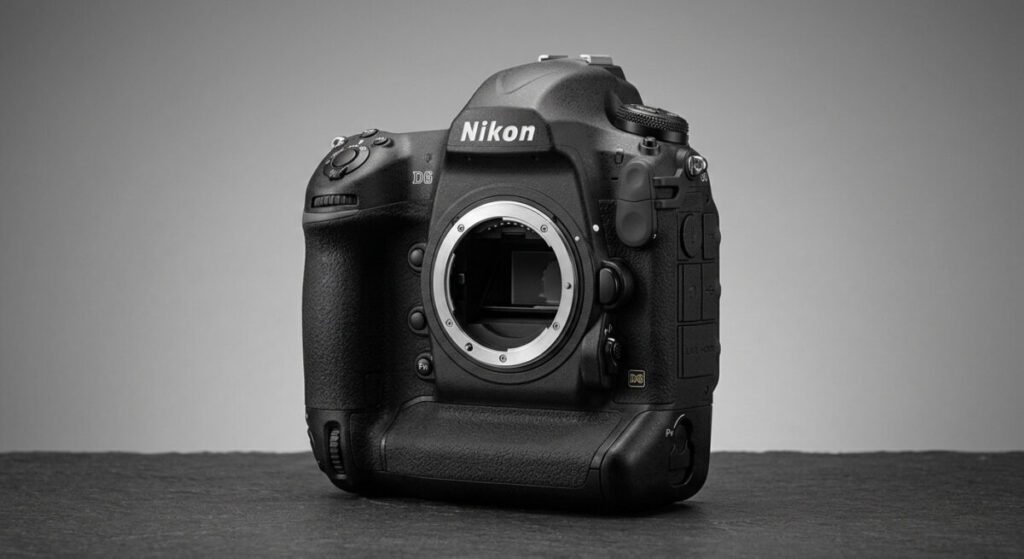
The D6 is an excellent tool wrapped in a terrible 2027 deal. It offers superb viewfinder autofocus and strong high-ISO performance. However, it also carries a low-resolution sensor, weak live view autofocus, limited video and a price that crowds the Z9.
The Case Against the D6
- Launch price sat about $1,000 above the newer Z9
- 20.8 megapixels against the Z9’s roughly 45.7 megapixels
- 14 frames per second against the Z9’s 20 frames per second in raw
- Live view and video autofocus that a major review called weak
- 4K video capped at 30 frames per second, with a crop
- A larger, heavier body than the Z9
- End-of-line DSLR status
What the D6 Still Does Well
Fairness matters, so here is the short list. The D6 offers fast and reliable viewfinder autofocus, excellent ISO performance, a very tough body and CFexpress support. Those strengths are real. They are also not enough for most buyers anymore.
Our Bottom Line
Buy a D6 only if your professional workflow depends on it. Everyone else should compare it with the Z9 and with a used D5 first. Both comparisons expose the D6’s problem.
Nikon D6 at a Glance
Here are the key specifications from Nikon’s official product page.
| Feature | Nikon D6 |
|---|---|
| Sensor | 35.9 x 23.9 mm full-frame CMOS |
| Resolution | 20.8 megapixels effective |
| Processor | EXPEED 6 |
| ISO range | 100 to 102,400, expandable to 50 and 3,280,000 equivalent |
| Autofocus | 105 cross-type points, 15 support f/8, detection from -4.5 to +20 EV |
| Burst rate | Up to 14 frames per second |
| Video | 4K UHD up to 30p, 1080p up to 60p |
| Viewfinder | Pentaprism, about 0.72x magnification, about 100% coverage |
| Rear screen | 3.2-inch touchscreen, about 2.36 million dots |
| Card slots | Dual CFexpress Type B and XQD |
| Weight | About 1,450 g with battery and cards |
| Connectivity | USB-C, HDMI, Ethernet, Wi-Fi, Bluetooth, GPS |
You can confirm the details on Nikon’s official D6 page.
The Price Problem
Price is the D6’s biggest flaw. The camera is not weak. It is simply too expensive for what you get in 2027.
Launch Pricing Told the Story Early
The D6 launched at about $6,500. The Z9 launched later at about $5,500. That means the newer, more advanced flagship cost roughly $1,000 less than the older DSLR. A published comparison of the two cameras made that point clearly and favored the Z9 for anyone buying new.
Digital Camera World pushed the same argument in July 2024. The reviewer said it made no sense that the older D6 still cost about $1,000 more than the Z9. He recommended buying a used D6 but not a new one at that price. He also said he could not recall the D6 ever being discounted.
The Z9 Now Sits Right Next to It
In a recent snapshot, used D6 bodies from MPB ran from about $3,279 to $4,549. During its current sale, Nikon lists the Z9 at about $4,799.95 new. Used Z9 bodies sit around $3,399 to $3,899. That range overlaps a large part of the used D6 range.
Read that again. For similar money, you can pick a used Z9 over a used D6. The Z9 is newer and offers far more resolution and video capability.
The D5 Pinches It From Below
Now squeeze from the other direction. Used D5 bodies can cost dramatically less. They still deliver the classic Nikon pro DSLR format. A buyer who simply wants a rugged professional DSLR can save a large amount of money.
Why This Pinch Matters
The D6 sits in an awkward middle. Older DSLRs pinch it from below, and the Z9 pinches it from above. A camera in that position needs a very specific buyer. Most photographers do not match that profile.
Image Quality and Resolution
Resolution is where the D6 shows its age most clearly. The sensor offers 20.8 megapixels. That number was a deliberate choice for speed and high-ISO performance. Still, it looks small next to the Z9’s roughly 45.7 megapixels.
Lab Results
Digital Camera World’s lab tests found resolution similar to the D5 and to a Canon rival. Dynamic range came close to the D5 and the Sony A9 II. The Canon led at lower ISO values. So the D6 did not push image quality forward in any dramatic way.
The High-ISO Advantage Is Real
The same review found the D6 produced the cleanest images of its test group between ISO 3200 and ISO 12800. The reviewer also praised the ISO range. Low-light and indoor sports photographers will value that strength.
Why It Is Not Enough
High-ISO performance helps a narrow group of shooters. Wedding, portrait, landscape and commercial photographers want resolution and cropping room. Even sports photographers often crop heavily. The Z9 offers more than double the pixels, and that gives it much more flexibility.
Our Take on Image Quality
The D6 produces clean, professional images. It does not offer a reason to pay flagship money in 2027. The Z9 beats it on resolution by a huge margin.
Burst Speed and Performance
The D6 shoots up to 14 frames per second, according to Nikon’s specification page. That speed impressed photographers in 2020. In 2027, it no longer leads.
The Z9 Is Faster
A published comparison listed the Z9 at up to 20 frames per second in raw. That is a clear lead over the D6. The comparison also noted that the Z9 keeps a much deeper raw buffer.
A Slower Flagship in a Faster World
Sports and action photographers choose cameras for speed. A flagship that trails a newer rival in burst rate loses part of its reason to exist. The D6 still shoots fast. It simply no longer shoots fastest.
Autofocus: Great Through the Viewfinder, Weak Everywhere Else
Autofocus is the D6’s best feature and its biggest contradiction. The viewfinder system earns real praise. The live view system earns real criticism.
What Works
Digital Camera World called the stills autofocus fast, intelligent and reliable. The system held focus even when subjects were briefly blocked. Nikon specifies 105 cross-type points, with 15 supporting f/8. It also lists detection from -4.5 to +20 EV. Those are strong numbers.
The Points Cluster in the Center
The same reviewer found the 105 points sit tightly in the center of the frame. That layout felt restrictive next to rivals with far more points. Subjects near the edges can fall outside the coverage area.
Live View Is a Big Problem
Live view autofocus uses contrast detection. Digital Camera World described it as borderline unusable for sport. That is a serious flaw. Modern mirrorless cameras track subjects across the whole frame with ease.
A Newer Rival Raised the Bar
The Z9 uses a hybrid autofocus system with hundreds of points. A published comparison described it as promising, even though it was largely untested at that time. Years later, the Z9 stands as the more modern flagship.
Our Take on Autofocus
The viewfinder autofocus remains excellent. However, you pay D6 money for an autofocus system that works well in only one mode. The Z9 works across the whole camera.
Video: A Clear Weakness
Video is the D6’s most obvious modern gap. The camera records 4K UHD at up to 30 frames per second. It also records 1080p at up to 60 frames per second.
What Reviewers Found
Digital Camera World called video a clear weakness. The reviewer found erratic live view focusing, poor face detection and weak subject tracking. The footage felt unfit for purpose. The reviewer also noted a 1.7x crop in 4K mode. In addition, the camera offers peaking, zebras and timecode, so the review called the situation a missed opportunity.
The Z9 Is in Another League
The comparison article listed the Z9 as offering 8K recording, internal N-Log, 10-bit ProRes and 4K slow motion up to 120 frames per second. The D6 tops out at 4K 30p.
Who Gets Hurt Most
Hybrid shooters and video journalists lose the most. News crews, event teams and content creators often need both stills and video. The D6 handles stills well. It handles video poorly.
Size, Weight and Handling
The D6 looks nearly identical to the D5. Existing Nikon professionals will feel at home. Everyone else will notice the size.
A Big, Heavy Body
The camera weighs about 1,450 grams with battery and cards. Digital Camera World noted that the body is bigger and heavier than its Canon rival. A published comparison listed the Z9 at about 1,340 grams. So the newer flagship weighs less.
Handling Complaints
The reviewer liked the large, bright viewfinder and the rugged feel. However, he disliked the joystick on the vertical grip. After you rotate the camera to portrait orientation, the joystick sits where the thumb expects the AF-ON button. The reviewer also noticed slight play in the lens mount.
Where the D6 Still Wins
The comparison article also credited the D6 with a clear edge in battery life. Long shoots favor the older camera. That advantage is real, but it does not offset the other gaps.
The Dead-End Problem
The D6 marks the end of an era. It is Nikon’s final professional DSLR flagship, and Nikon’s flagship focus now sits with the Z9 and the Z system.
What That Means for Buyers
A camera at the end of a line carries a different risk. Buyers who start from zero face the biggest risk, because they buy into the last chapter of a platform. We found nothing that confirms long-term D6 support plans, so treat future accessories and service as an open question.
The F-Mount Argument
The strongest remaining reason to buy a D6 is an existing F-mount lens collection. Large supertelephoto lenses represent a major investment for many professionals. Staying with the D6 avoids system changes. Without that investment, the argument weakens quickly.
Nikon D6 vs Nikon Z9
This comparison matters most. The Z9 is the camera that makes the D6 look bad.
| Feature | Nikon D6 | Nikon Z9 |
|---|---|---|
| Resolution | About 20.8 MP | About 45.7 MP |
| Raw burst | Up to 14 fps | Up to 20 fps |
| Video | 4K up to 30p | 8K plus 4K slow motion |
| Autofocus | 105 points, strong in viewfinder | 493-point hybrid system |
| Weight | About 1,450 g | About 1,340 g |
| Battery life | Clear advantage | Shorter |
| Launch price | About $6,500 | About $5,500 |
| Used price snapshot | $3,279 to $4,549 | $3,399 to $3,899 |
The Verdict on the Comparison
The Z9 wins on resolution, speed, video, weight and launch price. The D6 wins on battery life and on the optical viewfinder workflow. Few buyers value those two points enough to choose the older camera.
Nikon D6 vs Used Nikon D5
The D5 offers a cheaper route to the same basic format.
What You Keep
You keep the classic Nikon pro DSLR layout and the optical viewfinder workflow. You also keep F-mount compatibility. Used D5 bodies can cost dramatically less than D6 bodies.
What You Give Up
You give up the D6’s refinements. Still, many photographers will not miss them. If you want a rugged professional DSLR, the D5 saves a large amount of money. The D6 charges a big premium for an incremental step.
What Your Money Actually Buys
Money drives this entire debate, so let us break it down. Here is what a D6 budget buys across the Nikon lineup, based on the snapshots above.
A Used D6
You get a rugged professional DSLR with excellent viewfinder autofocus and strong high-ISO performance. You also get 20.8 megapixels, weak live view and limited video. Used prices run from about $3,279 to $4,549.
A Used Z9
For about $3,399 to $3,899, you get a newer flagship. It offers roughly 45.7 megapixels, 20 frames per second in raw and 8K video. It also weighs less. Many buyers will see that package as the clearly better deal.
A New Z9 on Sale
During its current sale, Nikon lists the Z9 at about $4,799.95 new. That price sits inside the used D6 range. A buyer can pay similar money for a brand-new flagship with a full warranty. Used D6 buyers lose that comfort.
A Used D5
Used D5 bodies cost dramatically less. If you want the classic DSLR format without the premium, the D5 saves you thousands.
The Pattern Is Clear
Every direction offers a stronger value argument than the D6. That pattern is why this camera sits at the top of our worst-purchase list for 2027. The camera itself is not the problem. Its position in the market is.
Real-World Scenarios: Does the D6 Make Sense?
Specs only tell part of the story. These short scenarios show how the D6 fits real buyers.
The Sports Photographer Switching Jobs
You shoot indoor sports and own a pair of supertelephoto F-mount lenses. A D6 keeps your workflow steady. Still, test the Z9 first, because its speed and resolution may change your mind.
The Wedding Photographer Upgrading
You want a flagship body for dim receptions. The D6’s high-ISO performance helps. However, 20.8 megapixels limits cropping and large prints. A Z9 or a high-resolution body suits you better.
The Wildlife Enthusiast With a Big Budget
You love birds and fast action. Viewfinder autofocus works well on the D6. Yet the Z9’s resolution gives you far more cropping room for distant subjects. Most wildlife shooters will prefer it.
The Hybrid Content Creator
You need stills and video from one camera. The D6 struggles with video autofocus and caps 4K at 30p with a crop. Avoid it.
The Agency Photo Desk
Your team already runs D6 bodies and F-mount lenses. Adding another D6 keeps the system consistent. That reason makes sense, and it is one of the few strong cases.
Who Can Still Justify the Nikon D6?
A few buyers still have a real case. Be honest about which group you belong to.
Working Professionals With Large F-Mount Investments
You may own large supertelephoto lenses. Changing systems would cost your workflow more than the price comparison suggests. The D6 fits you.
Newsrooms and Agencies Standardized on the D6
Your team already uses D6 bodies. Mixed systems cause confusion and extra training. A matching body makes sense.
Shooters Who Need a Direct D6 Backup
You already own a D6 and know exactly why the optical viewfinder workflow matters. A second body keeps your setup consistent.
Who Should Avoid the Nikon D6?
Most buyers belong here.
Anyone Starting From Zero
If you have no existing F-mount reason, avoid the D6. Spending roughly $3,500 to $4,500 on a body with no system benefit makes little sense.
Hybrid Shooters and Video Creators
The D6 handles video poorly. The Z9 handles it extremely well.
Resolution-Hungry Photographers
If you crop heavily or print large, the D6’s 20.8 megapixels will limit you.
Budget-Conscious Buyers
A used D5 or a different Nikon body offers far better value.
How to Buy a Used Nikon D6 Safely
If you still want one, protect yourself. Professional bodies often live hard lives.
Check the Body
- Inspect the weather seals, the grip and the corners for wear.
- Check the vertical grip joystick and buttons.
- Test the lens mount for play.
- Check the ports, including USB-C, HDMI and Ethernet.
Check the Shutter and Sensor
- Ask for the shutter count, and compare it with Nikon’s rated shutter life where information exists.
- Look for dust, scratches or oil on the sensor.
Test Key Features
- Test viewfinder autofocus on a moving subject.
- Test both card slots with CFexpress and XQD cards.
- Check the rear touchscreen.
Check the Battery
The D6 uses the EN-EL18c battery. Make sure the battery holds a charge and the charger works.
Compare Sellers
Prefer sellers with a clear grading standard, a return window or a warranty. You can browse used inventory at MPB, B&H Photo and Adorama. You can review current Nikon models and offers on Nikon USA.
Nikon D6 Pros and Cons
Pros
- Fast, reliable and intelligent viewfinder autofocus
- Excellent high-ISO performance
- Extremely rugged professional body
- Dual CFexpress and XQD card slots
- Strong battery life
- Wide connectivity, including Ethernet
- Familiar layout for D5 owners
Cons
- Priced above or near the newer, more capable Z9
- Only 20.8 megapixels
- Slower than the Z9 in raw burst speed
- Weak live view contrast-detect autofocus
- 4K limited to 30p with a crop
- Poor video autofocus and tracking
- Large, heavy body
- Autofocus points cluster in the center
- Joystick placement on the vertical grip frustrates some users
- End-of-line DSLR platform
Final Verdict: A Great Tool and a Poor Default Purchase
The D6 deserves respect. Nikon built an extraordinary professional DSLR for sports, press and harsh field work. Its autofocus, durability and high-ISO performance still impress.
However, great tools can make poor purchases. The D6 now faces the Z9 above it and the D5 below it. The Z9 offers more resolution, faster raw bursts, better video and a lower launch price. The D5 offers the same DSLR format for dramatically less. That leaves the D6 trapped in a narrow middle.
So here is our advice. Buy a D6 only if changing systems would cost your workflow more than the price comparison suggests. If you start from scratch, buy the Z9 or save money with a used D5. The worst purchase is often not the weakest camera. It is the camera whose price no longer matches what the buyer needs.
Now we want to hear your side. Would you still pay D6 money when the Z9 sits right there? And does the optical viewfinder justify the premium for you? Tell us in the comments.
Frequently Asked Questions About the Nikon D6
Is the Nikon D6 worth buying in 2027?
For most buyers, no. The Z9 offers more resolution, faster raw bursts and better video, and used Z9 prices overlap with used D6 prices. Only buyers with a strong F-mount reason should consider it.
Is the Nikon D6 better than the Nikon Z9?
The D6 wins on battery life and optical viewfinder workflow. The Z9 wins on resolution, burst speed, video and weight. Most photographers will prefer the Z9.
How many megapixels does the Nikon D6 have?
The D6 has 20.8 megapixels. Nikon tuned the sensor for speed and high-ISO performance.
Does the Nikon D6 shoot 4K video?
Yes. It records 4K UHD at up to 30 frames per second. Reviewers found video autofocus weak, and 4K uses a crop.
Is the Nikon D6 a good camera for sports?
Yes, through the viewfinder. Its stills autofocus is fast and reliable. However, a newer Z9 offers faster raw bursts and more flexibility.
Should I buy a Nikon D5 instead of a D6?
A used D5 saves a large amount of money and keeps the classic Nikon pro DSLR format. The D6 adds refinements, but many buyers will not need them.
Read More from Altbuzz
Want more camera reviews, rankings and honest price checks? Explore the latest articles at altbuzzmedia.com.
Subscribe to Altbuzz YouTube Channel
If you like knowing what a camera is really worth before you pay for it, subscribe to the Altbuzz channel on YouTube. We cover rankings, used-market reality checks and the latest rumors. Visit @AltBuzzMedia on YouTube and stay for the next one.
You can also support the channel through memberships and Super Thanks. Find everything else at altbuzzmedia.com.