
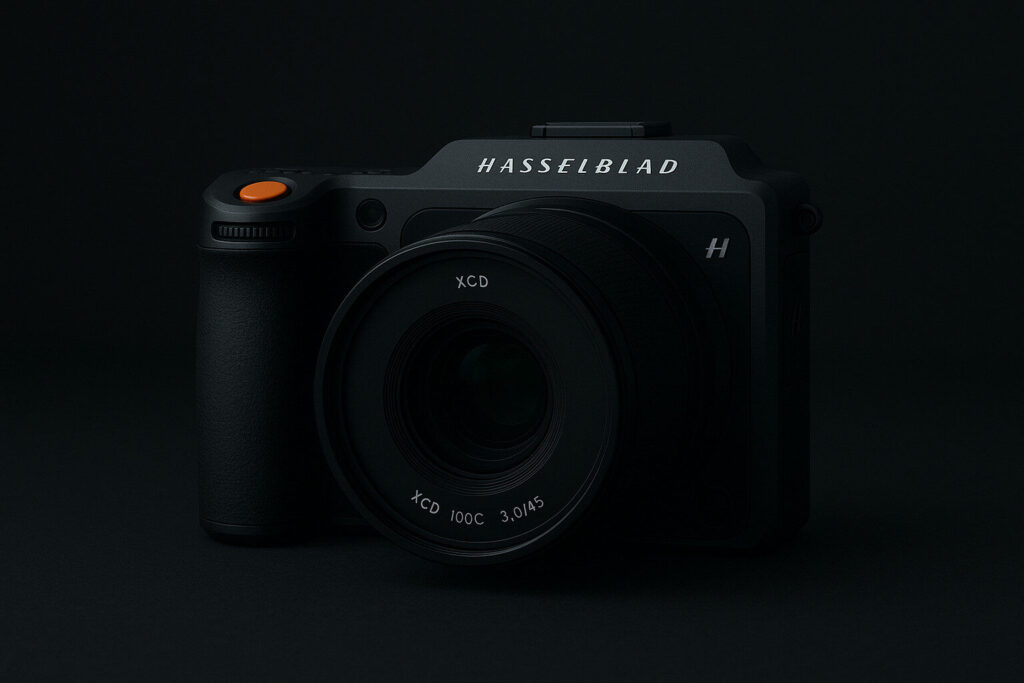
Hasselblad is a renowned Swedish camera maker that has gained trust since 1841. They had a collab with NASA during the Apollo missions. In August 2025, the company launched its new flagship model, the X2D II 100C. This camera combines classic design and modern technology. It features a 100-megapixel BSI CMOS sensor, in-camera HDR recording, continuous autofocus with LiDAR guidance, and a robust 10-stop IBIS system. It has a sleek and fine design with graphite finish. It is cheaper than its previous model, the X2D II 100C sets a new standard for photographers who want both power and style.

What’s New in the Hasselblad X2D II 100C
The X2D II 100C is more than an update. It is a big step forward. These features show Hasselblad mixing new tech with classic design.
- 100MP Medium Format Sensor: It has 44x33mm BSI CMOS sensor. It gives exceptional clarity, detail, and wide dynamic range which most of the photographers wants in these days.
- End-to-End HDR Output: It Shoots in HEIF and Ultra HDR JPEG formats, which gives rich tones and natural looking lifelike results on HDR-compatible devices.
- Continuous Autofocus with LiDAR : As a new innovation, Hasselblad added C-AF powered by LiDAR, plus subject recognition for humans, animals, and vehicles.
- Enhanced In-Body Image Stabilization (IBIS): Now rated up to 10 stops, making it easier to take clear, steady photos when shooting by hand in low light.
- Upgraded Displays: A 3.6″ tilting OLED rear screen with 1400-nit brightness and a 5.76M-dot EVF for a clear, immersive shooting experience.
- Improved Usability: It has introduced new faster autofocus joystick, which has customizable controls, and haptic feedback for a more better workflow.
- Lower Price Point: Despite all the upgrades, Its price is $7,399 which is $800 less than its predecessor so its still cheaper.
Build and Design of the Hasselblad X2D II 100C
The X2D II 100C maintains Hasselblad’s Scandinavian aesthetic. Its minimalist graphite-gray finish looks elegant and premium without being flashy. The design feels timeless rather than trendy.
Handling and Controls
Hasselblad has made some useful adjustments to improve shooting in everyday life. It has new focus point joystick which is quick and precise,and a customizable button on the back which allows shortcuts tailored with our shooting style. These are small changes and tweaks , but they enhance the overall shooting experience in a much better way.
The Improved OLED Screen
One standout feature this camera brouht to us is the tilting OLED display with 1400 nit brightness. This makes a significant difference when shooting outside. We can easily see our composition in bright light, and HDR previews look with more natural asthetics. While the full HDR effect only shows up after processing, the overall experience is greatly improved and enhanced.
Subtle and Smart Details
It has magnetic port covers, a well shaped grip, and also had a haptic feedback that makes the camera locks focus to contribute to a smoother shooting experience. These small improvements make the overall experience really really good for us.
Lighter and Solid
It Weighs only 730 grams, the X2D II which is lighter than expected for a medium format body. That makes it easier to carry on longer shoots which is a positive perk. Also it still feels sturdy and reliable.
Image Quality of the Hasselblad X2D II 100C
Image quality of the Hasselblad X2D II 100C is truly impressive and for me its the main reason I put this camera above its other competitors. It has 100-megapixel sensor which captures an extraordinary amount of detail, make even the finest textures appear sharp, defined and way better. It has up to 15-stop wide dynamic range, which effectively balances highlights and shadows, which helps tough lighting situations. Built-in HDR feature enhances outdoor photos, especially when bright skies and deep shadows coexist in the same frame. In terms of color, Hasselblad continues its tradition. It makes skin tones look more natural, landscape scenes rich and vibrant, and makes each hue feels balanced without being overly saturated. Additionally, it make the low light performance exceeds expectations for a medium format camera which is exceptional. Image quality is good even at higher ISOs. If i sum this up, the X2D II 100C produces images that are natural, refined, and rich in depth. It combines technical skill with distinct aesthetic, delivers professional and artistic results.

Performance and Autofocus
The Hasselblad X2D II 100C shows a significant improvement in performance, especially in focusing speed and accuracy. Here are the key features:
425 PDAF Zones & LiDAR Support: It combined phase detection zones and LiDAR technology. It gives us accurate focusing.
AF-C Continuous Autofocus: They first time made Autofocus available which is a huge development. It can reliably track humans, cars, cats, and dogs, using deep learning technology. This addition makes it reliable for dynamic scenes.
Multiple Focus Modes: They included several focus modes, such as 1) Expand Spot and 2) Custom mode.. This is really convenient and relaible for aesthetic and scenic photography.
Good Performance in Low Light: This camera give good results even in low light conditions.
Continuous Shooting: Features like continuous shooting make it in top of tier lists.

Display and Handling
The Hasselblad X2D II 100C combined both the style and the functionality. This is clear as soon as you start using it. The 3.6-inch OLED touchscreen is bright and sharp, with a maximum brightness of 1,400 nits, which make it easy to view in direct sunlight without a filter. The screen tilts up and down, which is highly helpful for low angle or overhead shots. It doesn’t fully rotate like some competing models, which might be limiting and annoying for video shooters or those wanting more flexibility and control. This camera is lighter than its previous model because of a refined construction, which makes it easier to carry for longer shoots and to far off places. this camera has redesigned grip making it feels secure, and the addition of a 5D joystick and eight customizable buttons allows quicker access to settings without interrupting workflow.
A major drawback is that although Hasselblad keeps things straightforward, it offered a fewer physical controls as compared to DSLRs or hybrid cameras. This may take some adjusting for those used to more complicated setups. Overall, the X2D II 100C strikes a nice balance between modern convenience, attractive design, and practical handling, though there is a slight room for improvement.
Stabilization and Storage
I have found the in-body image stabilization system most fascinating and is definitely the most impressive feature of the Hasselblad X2D II 100C. It has up to 10 stops of stabilization, which sets a new standard for medium format photography. It also works good in low light and create good and sharp images . Since the camera is larger and heavier it is difficult for new comers to manage and handle it with convenience. But it had made medium formate photography more convenient. Hasselblad also introduced large storage options for this new model. One of its new feature is the availabilty of 1TB SSD, which is ideal to handle big video formats of 100MP files. Photographers can also increase storage as per thier need because it also accepts different types of CFexpress Type B cards. In this way it prevents running out of storage space at critical times. while shooting portraits, landscapes, or products.
Who Is It For?
The Hasselblad X2D II 100C is geared towards photographers who prioritize still photography, landscape and portrait photography. Because this camera retains natural looks, colours and saturation. It is also good for wedding photography as the improved autofocus and strong stabilization also make it easier to use at weddings or events with moving subjects.
However, this camera isn’t for everyone. It is very expensive, and it doesn’t perform well in video so its not suited for videographers travel vloggers and wedding videos. Its battery life is shorter than some competitors as well. It’s a best option for photographers who wants high-quality still photography.
The Hasselblad X2D II 100C is not made for everyone and everything. It is not suitable for sports, wildlife, or fast action. It is not suitable for Videos if we want strong video features, Sony or Canon cameras are more suitable for that. We can use this camera for still photography infact it is the best option for still photography out there. But if still photography is your main focus, this camera stands apart. It works beautifully for portraits, landscapes, architecture, and studio photography. Each image feels like a piece of fine art, which makes it a dream tool for photographers who value detail beauty and creativity.
Price and Competition
The price of X2D II 100C is $7,399. It’s more affordable than the original X2D but still an expensive and premium one. Its closest rival is the Fujifilm GFX100 II, which offers faster shooting and excellent video capabilities and alot cheaper. The Sony A7R V is also a good, flexible and cheaper alternative. Hasselblad really shines when it comes to colors, built-in HDR, and the whole shooting vibe. It might not be the most flexible camera out there, but if you care about making your photos look like pure art,making your pictures asthetic and cool this one’s for you.
Hasselblad X2D II 100C: Pros and Cons
| Pros | Cons |
|---|---|
| 100MP sensor delivers stunning clarity: portraits, landscapes, and product shots come out with professional-grade detail and lifelike colors. | Price makes it a premium choice: at $7,399, it’s mainly for professionals or serious enthusiasts willing to invest. |
| In-camera HDR saves editing time: We can shoot high dynamic range photos without needing to merge files later in software. | Still focused only on photography: video features are limited, so hybrid shooters may prefer Sony or Canon. |
| 10-stop image stabilization changes the game: handheld long exposures are finally possible without always carrying a tripod. | Battery life is on the shorter side: we’ll likely need extra batteries for long events or travel days. |
| Lighter and more comfortable body: the new design shaves off weight and adds a better grip, making long shoots less tiring. | Autofocus is improved but not perfect: it works well for portraits and some action, but still can’t match the speed of full-frame cameras. |
| Massive 1TB internal storage: lets us keep thousands of RAW and HDR shots without worrying about memory cards filling up too fast. | — |
Hasselblad X2D II 100C vs Fujifilm GFX100 II vs Sony A7R V
When choosing a professional camera in 2025, many photographers will compare Hasselblad’s latest medium format with Fujifilm’s and Sony’s best offerings which are best competitors out there. Each model has its own strengths and weaknesses, and the right choice depends on our priorities and our choice of art.
| Feature | Hasselblad X2D II 100C | Fujifilm GFX100 II | Sony A7R V |
|---|---|---|---|
| Sensor | 100MP 44x33mm BSI CMOS: Excellent detail and clarity | 102MP 44x33mm CMOS: Slightly higher resolution | 61MP Full-Frame CMOS: Lower resolution but faster |
| Dynamic Range | 15.3 stops: Great for highlights and shadows | 14+ stops: Strong but less refined | About 15 stops: Close to Hasselblad |
| Autofocus | 425 PDAF + LiDAR, AI AF: Accurate even for moving subjects | 425 PDAF, Face/Eye AF: Reliable for portraits | 693 PDAF, Real-Time AF: Fastest and most versatile |
| Stabilization | Up to 10 stops: Industry-leading | Up to 8 stops: Solid but behind Hasselblad | Up to 8 stops: Strong, similar to Fujifilm |
| Storage | 1TB Internal + CFexpress: Huge built-in space | Dual SD/CFexpress: Flexible card use | Dual SD/CFexpress: Standard setup |
| HDR Workflow | Native Ultra HDR JPEG/HEIF: True HDR in-camera | Standard RAW/JPEG: Needs editing | HDR via software: Requires extra work |
| Viewfinder | 5.76M-dot OLED EVF: Clear and sharp | 5.76M-dot OLED EVF: Same as Hasselblad | 9.44M-dot OLED EVF: Sharpest viewfinder |
| Battery Life | About 327 shots: Shorter life | About 460 shots: Better balance | About 530 shots: Longest-lasting |
| Weight | 725g: Lighter than rivals | 900g: Heavier body | 723g: Light and compact |
| Price (2025) | $7,399: Premium investment | $5,500: More affordable medium format | $3,900: Most budget-friendly option |
Hasselblad X2D II 100C is best for photographers who are into color science, HDR workflow, and medium format quality photography. Fujifilm strikes a balance between high resolution and price, while Sony remains the fastest and most versatile choice for hybrid shooters.
Conclusion
Hasselblad X2D II 100C is a vey powerful medium format camera and ideal for medium format and still photography. It has alot of new features like built-in HDR, LiDAR autofocus, and 10-stop image stabilization. It also has amazing amazing color quality.
But it’s not for everyone. It’s really expensive at $7,399. The battery doesn’t last very long, and it’s slower to use compared to faster full-frame cameras. If you want video, fast action shots, or something cheaper, Sony and Fujifilm are better choices.
Where this camera shines is in still photos. Portraits, landscapes, buildings, and studio shots come out with amazing detail, colors, and depth. It’s not built to do everything, but when it comes to pure photo quality, it’s one of the best.
Explore More Camera Reviews
If you found this review helpful and want to learn more about new photography gear, you can explore our selection of reviews where we discuss everything from innovations in medium format to all around full frame models. Each review is written clearly to guide you and help you make informed decisions.