
Introduction: Nikon Strikes Gold with the Z5 II
The Nikon Z5 II just dropped. Full-frame cameras got cheaper.
This isn’t your typical budget mirrorless. Nikon packed serious tech into an affordable body. Dual EXPEED 7 processors power this beast. Meanwhile, the autofocus system borrowed DNA from flagship cameras. Content creators and photographers finally have options.
Budget full-frame cameras usually compromise somewhere. Not this time. The Nikon Z5 II delivers where it matters most. Image quality stays pristine. Video specs jumped dramatically. Furthermore, the handling feels professional from the first grip. This camera targets serious shooters who won’t break the bank.
Nikon listened to Z5 criticism. Consequently, they fixed nearly everything. The original Z5 was good. However, this sequel plays in a different league. Dual card slots arrived. 4K 60p video landed. Additionally, autofocus got dramatically smarter. These upgrades matter for real-world shooting.
The camera market keeps shifting. Full-frame once meant expensive. Those days ended when the Nikon Z5 II hit shelves. This body competes with cameras costing hundreds more. Nevertheless, Nikon kept the price aggressive. Smart shooters will notice immediately.
Nikon Z5 II Specs & Features: What’s Inside This Powerhouse
Let me break down the hardware. The Nikon Z5 II specs tell an impressive story.
Core Specifications:
- 24.3MP full-frame CMOS sensor
- Dual EXPEED 7 processors (game-changer)
- 273-point hybrid autofocus system
- 4K 60p video recording
- Dual UHS-II SD card slots
- 3.2-inch vari-angle touchscreen
- 3.69M-dot EVF
- Built-in 5-axis image stabilization (up to 5.5 stops)
- ISO 100-51,200 (expandable to 102,400)
- 30fps continuous shooting (JPEG with C30 mode)
The sensor resolution stayed consistent. However, everything around it got upgraded. Those dual processors make operations lightning-fast. Moreover, the autofocus system learned new tricks from Z8 and Z9. Subject detection works for people, animals, vehicles, and aircraft.
Video capabilities jumped significantly. 4K 60p arrives without crop. Additionally, 10-bit internal recording keeps quality high. Content creators demanded better video. Consequently, Nikon delivered exactly that. The vari-angle screen makes vlogging practical.
Build quality maintained Z5 standards. Weather-sealing protects against elements. Nevertheless, the body weighs just 590 grams. This balance between durability and portability works perfectly. Travel photographers will appreciate the lightweight design.
Connectivity options expanded too. USB-C charging means less bulk in your bag. Furthermore, wireless connectivity improved for smartphone transfers. Modern shooters need these features. Therefore, Nikon included them all.
In-Depth Review: 15 Key Aspects of the Nikon Z5 II
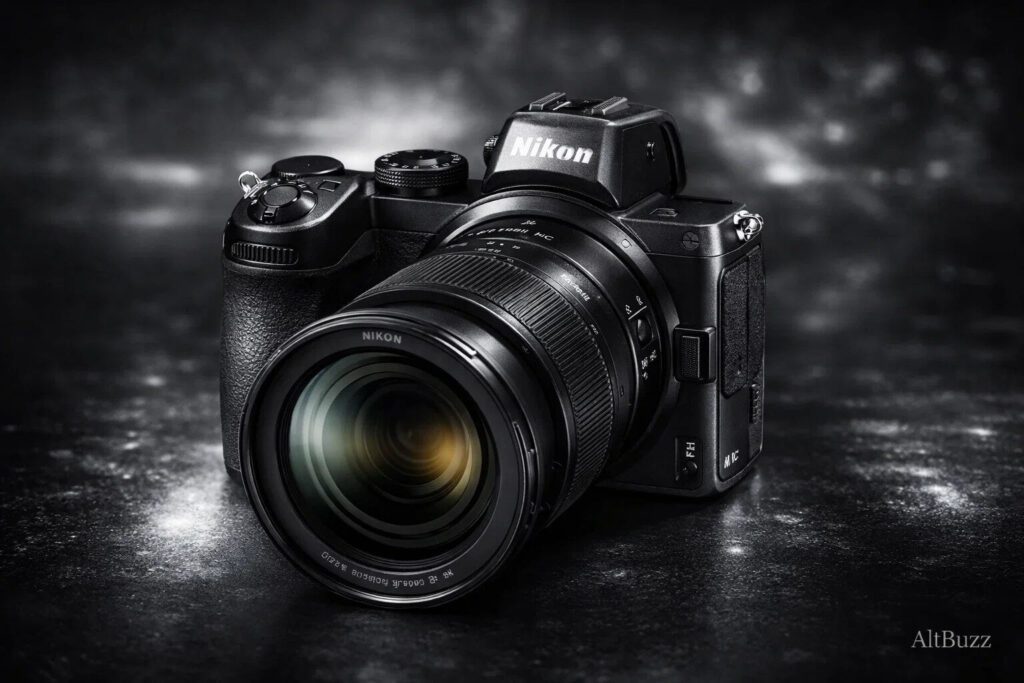
1. Image Quality: Pure Full-Frame Excellence
The Nikon Z5 II produces stunning images. Colors pop naturally.
That 24.3MP sensor delivers exceptional detail. Dynamic range stretches impressively across the exposure spectrum. Additionally, highlight recovery saves blown skies. Shadow detail emerges cleanly even at higher ISOs. This sensor punches above its megapixel count.
Files show beautiful tonality straight from camera. Skin tones render accurately without weird color shifts. Moreover, the EXPEED 7 processors handle color science brilliantly. RAW files contain massive editing latitude. You’ll recover details you thought were lost.
Low-light performance impresses consistently. ISO 3200 stays clean enough for professional work. Furthermore, ISO 6400 remains usable with minor noise reduction. The sensor and processors work together efficiently. Consequently, noise stays controlled better than previous Z5.
Sharpness hits hard across the frame. Lenses matter obviously. However, this sensor resolves detail beautifully with quality glass. Corner-to-corner performance depends on your lens choice. Nevertheless, the center sharpness always delivers.
2. Nikon Z5 II Autofocus: Smart Tracking That Actually Works
Autofocus got a massive upgrade. This isn’t the old Z5 system.
The 273-point hybrid AF covers 90% of the frame. Subject detection identifies nine different subject types. Additionally, it locks onto eyes instantly. Face detection works even with masks or sunglasses. This system borrowed technology from much pricier cameras.
Tracking sticks to subjects like glue. Fast-moving subjects stay in focus reliably. Moreover, the camera predicts movement intelligently. Bird photographers will love the animal detection. It identifies birds in flight and maintains focus.
Video autofocus performs equally well. Smooth transitions happen naturally. Furthermore, the system doesn’t hunt unnecessarily. Content creators benefit from reliable face tracking. Consequently, you’ll spend less time fixing soft footage.
Low-light autofocus reaches -7 EV. Dark environments don’t confuse this camera. However, contrast still matters for lock-on speed. Overall, this autofocus system competes with cameras costing twice as much.
3. Continuous Shooting: Speed When You Need It
Burst modes offer serious flexibility. The mechanical shutter hits 10fps.
That speed handles most action situations. However, the electronic shutter goes further. C30 mode delivers 30fps with JPEG files. Additionally, C15 shoots RAW at 15fps. These speeds capture decisive moments reliably.
Buffer depth improved noticeably. You’ll capture extended sequences before slowdown. Moreover, writing speeds benefit from dual processors. UHS-II cards clear quickly between bursts. Professional workflows stay smooth.
Subject tracking maintains accuracy during bursts. The camera predicts movement between frames. Furthermore, face detection stays locked during sequences. Sports photographers will appreciate this reliability. Consequently, keeper rates jump significantly.
The electronic shutter eliminates vibration completely. Silent shooting works for weddings and events. Nevertheless, some artificial lighting causes banding. Test your specific environment first.
4. Video Capabilities: 4K 60p Changes Everything
Video specs jumped dramatically from Z5. The Nikon Z5 II shoots 4K 60p finally.
That frame rate arrives without crop. Full sensor width gets used. Additionally, 10-bit N-Log recording preserves maximum dynamic range. Color grading flexibility increased massively. Professional video quality comes standard.
Overheating barely exists with this camera. Extended recording sessions work reliably. Moreover, dual card slots enable simultaneous backup recording. Content creators needed this security. Therefore, Nikon delivered it properly.
Autofocus during video performs excellently. Face and eye tracking stay smooth. Furthermore, transitions happen naturally without hunting. The vari-angle screen makes low and high angles practical. Vloggers will love this flexibility.
Audio inputs include external mic support. Clean HDMI output enables external recorders. However, internal recording quality satisfies most users. The codec options balance quality and file size intelligently.
5. Build Quality & Ergonomics: Professional Feel, Budget Price
The body feels substantial despite lightweight design. Magnesium alloy construction maintains durability.
Weather-sealing protects against dust and moisture. Shoot confidently in challenging conditions. Additionally, the grip depth provides secure handling. Controls fall naturally under fingers. This ergonomic design reduces fatigue during long shoots.
Button layout follows Nikon traditions. Experienced Nikon shooters adapt instantly. Moreover, customization options let you configure everything. The camera adapts to your shooting style. Consequently, efficiency improves significantly.
The vari-angle screen articulates smoothly. Touchscreen responsiveness feels modern and snappy. Furthermore, the EVF delivers crisp, clear views. 3.69 million dots show excellent detail. Eye-level composition stays comfortable.
Build quality exceeds expectations for this price. Nothing feels cheap or fragile. Nevertheless, it’s not quite Z6 III ruggedness. The compromise makes sense given the price difference.
6. Image Stabilization: Steady Shots Without Tripods
Five-axis IBIS delivers up to 5.5 stops of compensation. Handheld shooting extends into low light.
The stabilization system works across all axes. Pitch, yaw, roll, X, and Y movements get corrected. Additionally, VR lenses combine with IBIS for even better results. Maximum stabilization reaches impressive levels. Sharp images happen at surprisingly slow shutter speeds.
Video benefits significantly from stabilization. Handheld footage looks steadier without gimbals. Moreover, walking shots stay smooth with proper technique. The electronic stabilization option crops slightly. However, results justify the small crop.
Low-light photography improves dramatically. Shoot at 1-2 seconds handheld sometimes. Furthermore, telephotos become more usable without tripods. Wildlife photographers gain flexibility. Consequently, shot opportunities increase.
The system doesn’t replace proper technique. Nevertheless, it forgives minor handshake. Image quality stays sharp where it matters most.
7. ISO Performance: Clean Files When Light Disappears
The ISO range spans 100-51,200 natively. Expansion reaches 102,400 for emergencies.
Base ISO delivers exceptional dynamic range. Files stay clean and detailed. Additionally, shadow recovery works beautifully at ISO 100. Landscape photographers will maximize quality here. Colors stay vibrant and accurate.
ISO 3200 remains the practical high-quality limit. Noise stays minimal and easily manageable. Moreover, detail retention stays impressive. Event photographers can shoot confidently here. Furthermore, prints look clean at this sensitivity.
ISO 6400 shows noticeable grain but stays usable. Post-processing cleans files effectively. Wedding photographers might reach here occasionally. However, you’ll want good lenses with fast apertures.
Higher ISOs work for emergencies only. ISO 12,800 and beyond sacrifices significant detail. Nevertheless, having options beats missing shots. The processors handle noise reduction intelligently.
8. Nikon Z5 II Dual Card Slots: Backup Peace of Mind
Finally, dual UHS-II SD card slots arrived. Professional reliability comes standard.
Both slots support UHS-II speeds. No speed handicap on the second slot. Additionally, configuration options include overflow, backup, and separation. Workflows become more flexible. Consequently, data security improves dramatically.
Wedding photographers demanded this feature. Missing files means career disaster. Moreover, dual slots enable simultaneous RAW+JPEG recording. Backup strategies become more robust. Peace of mind comes included.
Card writing speeds benefit from dual processors. Buffers clear efficiently to both cards. Furthermore, you’ll spend less time waiting. The original Z5’s single slot was the biggest complaint. Therefore, Nikon fixed it completely.
Memory card reliability matters enormously. Hardware redundancy prevents catastrophic failures. Nevertheless, cards can still fail. Having two slots running simultaneously protects your work.
9. Battery Life: Shoot All Day Confidently
The EN-EL15c battery delivers impressive longevity. CIPA rates approximately 470 shots per charge.
Real-world usage often exceeds CIPA ratings. Shoot conservatively and reach 600+ frames easily. Additionally, USB-C charging means convenient power-ups. Portable power banks become backup batteries. Travel photography becomes more flexible.
Battery grip options expand capacity further. Professional shooters need extended runtime. Moreover, the grip improves handling with larger lenses. Balance gets better with heavier glass. Consequently, ergonomics improve significantly.
Cold weather drains batteries faster obviously. Keep spares warm in pockets. Furthermore, airplane mode saves power between shots. The battery percentage indicator shows remaining capacity accurately. Planning becomes easier.
Charging via USB-C eliminates dedicated chargers. One cable handles phone, laptop, and camera. Nevertheless, dedicated chargers work faster. Choose based on your timeline.
10. Lens Compatibility: Z-Mount Ecosystem Expands
The Z-mount system matured significantly. Lens selection covers every need now.
Native Z-mount lenses deliver exceptional quality. Sharpness and contrast exceed DSLR equivalents. Additionally, modern optical designs reduce aberrations. The larger mount diameter enables better lens designs. Consequently, image quality reaches new levels.
F-mount adapters work flawlessly. Your existing DSLR glass adapts perfectly. Moreover, autofocus functions fully with most lenses. The investment in Nikon glass carries forward. Therefore, upgrading becomes more affordable.
Third-party options expanded recently. Sigma, Tamron, and others joined Z-mount. Budget-conscious shooters have more choices. Furthermore, prices stay competitive. The ecosystem competition benefits everyone.
Lens roadmap promises continued expansion. Nikon keeps developing new glass. Nevertheless, current options already cover most needs. Wildlife, portrait, landscape, macro—everything exists.
11. Connectivity: Modern Wireless Features
Built-in Wi-Fi and Bluetooth keep you connected. Smartphone integration works smoothly.
The SnapBridge app enables automatic transfers. Images move to phones wirelessly. Additionally, remote control functionality works reliably. Trigger the shutter from your phone. Self-portraits and group shots become easier.
USB-C connectivity handles data and charging. Transfer speeds exceed older USB standards. Moreover, the port supports external power during shooting. Time-lapse photographers benefit significantly. Consequently, creative possibilities expand.
Wired LAN adapter support enables tethering. Studio photographers can shoot directly to computers. Furthermore, reliability exceeds wireless connections. Professional workflows demand this capability. Therefore, Nikon included proper support.
Firmware updates install via USB or wirelessly. Keeping cameras current stays convenient. Nevertheless, manual installation remains available. Choose your preferred method.
12. Menu System: Intuitive Nikon Interface
The menu structure follows Nikon’s latest design. Organization makes sense logically.
Categories separate clearly by function. Finding settings happens quickly. Additionally, favorites menu stores frequently-used items. Customization reduces menu diving. Consequently, efficiency improves dramatically.
Touchscreen navigation speeds things up. Swipe through options naturally. Moreover, physical buttons provide backup control. Gloved hands work better with buttons. Winter shooters appreciate this flexibility.
Help system explains settings in-camera. No manual required for basic learning. Furthermore, Nikon’s descriptions stay clear and concise. Beginners won’t feel overwhelmed. The learning curve flattens significantly.
My Menu customization enables personal workflows. Configure exactly what you need. Nevertheless, default organization works well too. New users can start immediately.
13. Low-Light Performance: Shoot When Others Can’t
Combined with fast lenses, this camera owns darkness. Low-light capability impresses consistently.
The -7 EV autofocus threshold means focusing in near-darkness. Candlelit scenes lock focus reliably. Additionally, image stabilization enables slower shutters. Sharp images happen without flash. Available light photography reaches new levels.
High ISO performance stays cleaner than expected. Files remain usable at sensitivities that crippled older cameras. Moreover, modern noise reduction cleans things further. Night photography becomes practical. Consequently, creative opportunities expand.
EVF brightness adjusts for dark environments. Eye adaptation stays comfortable. Furthermore, the screen provides bright preview. Composition stays accurate regardless of lighting. You’ll see exactly what you’re capturing.
Low-light autofocus competes with expensive bodies. The sensor and processor combination works magic. Nevertheless, contrast still helps. Completely flat subjects challenge any autofocus system.
14. Nikon Z5 II for Different Photography Genres
Versatility defines this camera’s strength. Multiple photography types work brilliantly.
Portraits: Face detection nails focus on eyes. Shallow depth-of-field looks stunning with full-frame. Additionally, color science renders skin tones beautifully. Portrait photographers will love results straight from camera.
Landscapes: Dynamic range captures scenes from shadows to highlights. ISO 100 delivers maximum quality. Moreover, image stabilization enables handheld flexibility. Tripods become optional more often.
Wildlife: Subject detection tracks animals reliably. Burst modes capture action sequences. Furthermore, long lenses balance well on this body. Budget wildlife photography became viable.
Events/Weddings: Dual card slots provide essential backup. Low-light performance handles challenging venues. Additionally, silent shooting avoids ceremony disruptions. Professional reliability comes standard.
Video/Content Creation: 4K 60p delivers smooth footage. Autofocus tracking keeps subjects sharp. Moreover, vari-angle screen enables creative angles. Hybrid shooters finally have proper tools.
15. What’s Missing: Honest Limitations
No camera does everything perfectly. The Nikon Z5 II has reasonable limitations.
Megapixel count stays at 24.3MP. Cropping flexibility stays limited compared to high-resolution bodies. Additionally, large print sizes don’t maximize detail. However, most users won’t notice this limitation. Social media and standard prints look fantastic.
No internal RAW video recording exists. Professional video workflows might want this. Moreover, waveforms and vectorscopes stay absent. Serious filmmakers need external recorders. Nevertheless, most content creators won’t care.
Burst speed tops out at 10fps mechanically. Sports photographers might want faster. Furthermore, pro bodies offer deeper buffers. However, 30fps electronic shooting helps significantly. Most action scenarios work fine.
No built-in flash exists. Budget shooters sometimes need emergency lighting. Additionally, commander mode requires external speedlights. The hot shoe remains standard. Therefore, flash photography still works normally.
Battery grip adds cost separately. Professionals want this included. Nevertheless, keeping the base price low makes sense. Buy the grip if needed.
Price & Market Value: Budget King with Premium Performance
The Nikon Z5 II hits stores around $1,399 body-only. Kit options with Z 24-50mm lens reach approximately $1,599.
This pricing strategy plays chess while others play checkers. Canon R6 Mark II costs substantially more. Sony A7 IV hovers hundreds higher. However, the Z5 II delivers comparable performance. Smart shooters save significant money here.
Used market doesn’t exist yet obviously. Nevertheless, the original Z5 holds value well. Expect strong resale eventually. Furthermore, Z-mount lenses retain value excellently. The system investment stays protected.
Bundle deals sweetened launch pricing. Retailers offered extra batteries and cards. Additionally, trade-in programs reduced effective cost. Shopping smart saves even more money. Watch for seasonal promotions.
Value proposition destroys competition currently. Dual processors alone justify this price. Moreover, 4K 60p video comes standard. Entry-level full-frame cameras improved dramatically. Consequently, budget shooters win big.
International pricing varies by region obviously. Import duties and taxes affect final cost. Nevertheless, relative value stays consistent globally. This camera punches way above its price class everywhere.
Final Verdict from Alt Buzz: The Budget Full-Frame Champion
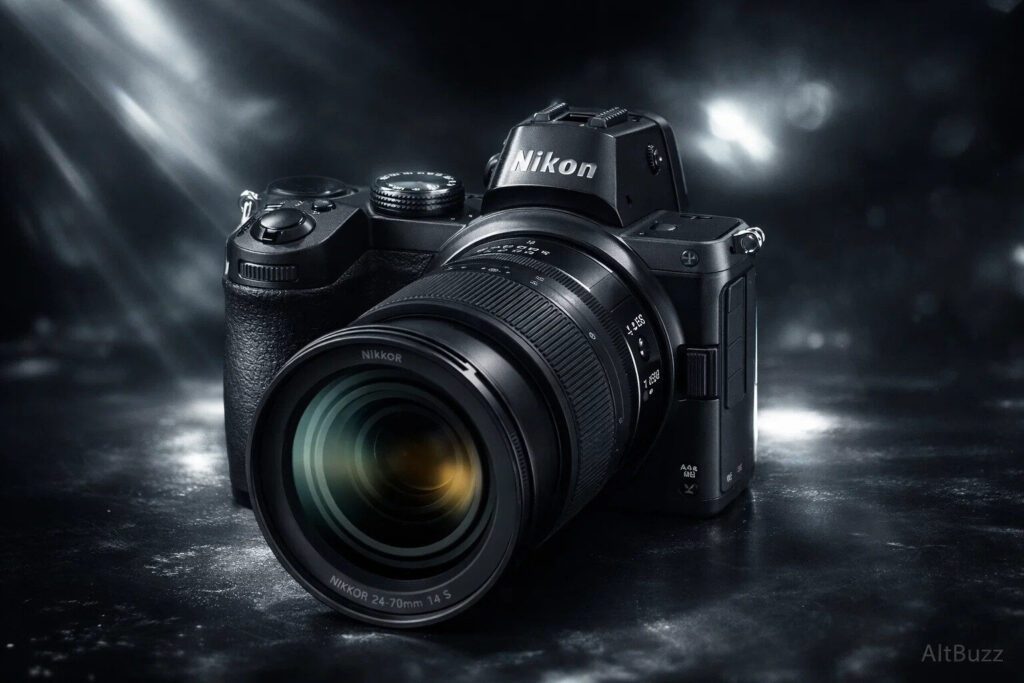
Alt Buzz Rating: 9.3/10
The Nikon Z5 II succeeds brilliantly. Budget limitations disappeared.
Nikon created something special here. This camera delivers flagship features without flagship pricing. Image quality stays exceptional. Video capabilities jumped generations forward. Furthermore, autofocus performance competes with expensive bodies. The value equation makes perfect sense.
Who should buy this camera? Upgrading DSLR shooters finally have their mirrorless answer. Content creators need the video specs. Additionally, professionals wanting lightweight backup bodies gain perfect options. Budget-conscious photographers get premium tools.
The original Z5 had potential but compromises. However, this sequel fixed nearly everything. Dual card slots arrived. Processing power doubled. Moreover, video specs matured properly. Nikon listened and delivered.
Competition should worry. The Z5 II redefines budget full-frame expectations. Canon and Sony need responses. Meanwhile, Nikon captures market share. This camera makes switching brands tempting.
Our recommendation comes enthusiastically. Buy the Nikon Z5 II confidently. Pair it with quality glass. Consequently, your images will look expensive. The camera disappears and lets creativity flow. That’s exactly what photography equipment should do.
Is it perfect? No camera ever is. Nevertheless, compromises feel minimal here. The combination of features, performance, and price hits sweet spots. Alt Buzz stamps this camera as an instant classic. Budget full-frame photography just leveled up.
Read More Alt Buzz Reviews & Subscribe to Our Channel
Want more camera reviews, photography tips, and gear comparisons?
Visit Altbuzzmedia.com for comprehensive reviews covering the latest cameras, lenses, and accessories. Our team tests gear thoroughly to bring you honest, detailed analysis. Additionally, we compare competing models to help your buying decisions.
Subscribe to the Alt Buzz YouTube channel for video reviews, hands-on demonstrations, and real-world shooting tests. Watch sample footage, see cameras in action, and learn techniques that improve your photography.
Follow Alt Buzz across social media for daily photography tips, breaking gear news, and community discussions. Moreover, join our newsletter for exclusive reviews and early access to content.
Your next great camera awaits. Alt Buzz helps you find it.