
Nikon Z6 III Full Review: Specs, Performance & Verdict
The Nikon Z6 III is officially released and widely available in the global market. Nikon announced this camera in June 2024 and began shipping immediately, making it one of the most significant full-frame mirrorless camera releases of that year. It is aimed squarely at hybrid shooters, meaning photographers and videographers who use a single body to cover both disciplines at the highest possible level.
This is not a modest incremental update to the Nikon Z6 II. The Z6 III introduces an entirely new sensor technology that had never previously appeared in a full-frame camera at this price range. The partially stacked CMOS sensor changes the performance ceiling for this body in meaningful and measurable ways. Speed improves dramatically. Video quality jumps to a level previously unavailable outside dedicated cinema cameras. Electronic shutter reliability increases to the point where it can be used confidently for sports and action photography.
The Nikon Z6 III competes in a fiercely contested market segment. At $2,499, it faces direct competition from the Sony a7 IV and the Canon EOS R6 Mark II. Both are excellent cameras. However, the Z6 III brings a genuinely different technical foundation to the comparison, and that difference manifests in real-world shooting advantages that matter to serious users.
This review covers every aspect of the Nikon Z6 III thoroughly. We examine the sensor and image quality, autofocus system, video capabilities, design and handling, battery life, and the scenarios in which this camera excels. By the end of this review, you will have a clear picture of whether the Nikon Z6 III is the right investment for your work.
Release Date and Market Position of the Nikon Z6 III
Nikon officially announced the Z6 III on June 17, 2024. The camera shipped globally in the same month at a body-only launch price of $2,499. This positioned it aggressively within the upper-enthusiast and mid-professional segment of the full-frame mirrorless market.
The Z6 III replaces the Nikon Z6 II, which launched in October 2020. A four-year development gap is unusually long for a product line update, but the result justifies the timeline. Nikon did not produce a minor refresh. Instead, they rebuilt the camera around a new sensor architecture, an upgraded processor, and a completely revised video pipeline.
Within Nikon’s own lineup, the Z6 III sits between the enthusiast-oriented Nikon Zf and Nikon Z5 II below it, and the professional Nikon Z8 and Z9 above it. It shares its EXPEED 7 processor with the Z8 and Z9, which means that image processing quality at the engine level is consistent with Nikon’s flagship bodies. The primary differentiator between the Z6 III and higher-tier Nikon cameras is sensor resolution and maximum recording specifications rather than processing philosophy.
The target audience for the Z6 III is broad. Working photographers who need a reliable all-rounder benefit from its combination of speed, resolution, and weather sealing. Video professionals who want serious recording capabilities without the expense of dedicated cinema equipment find genuine value in its 6K RAW recording. Enthusiasts stepping up from an APS-C system or an older full-frame body will experience the Z6 III as a substantial performance upgrade.
Nikon Z6 III Full Specifications Table
| Feature | Details |
|---|---|
| Sensor Type | 24.5MP Partially Stacked Full-Frame CMOS (world’s first at this price range at launch) |
| Resolution | 24.5 Megapixels |
| Processor | EXPEED 7 |
| ISO Range | 64 to 25,600 (expandable to 50 to 204,800) |
| Autofocus System | Hybrid phase-detection and contrast AF with deep learning subject detection |
| Stabilization | 5-axis IBIS up to 8 stops compensation |
| Video Recording | 6K N-RAW 12-bit internal, 4K 60p, 4K 30p oversampled, Full HD 240fps, ProRes 422 HQ |
| EVF | Quad-VGA OLED 5.76M-dot, 120fps refresh rate, 0.9x magnification |
| LCD Screen | 3.2-inch fully articulating 2.1M-dot touchscreen |
| Burst Shooting | 20 fps full-frame, up to 120fps in DX crop with pre-release capture |
| Battery | EN-EL15c, approx. 380 shots CIPA |
| Storage | CFexpress Type B plus SD UHS-II dual card slots |
| Connectivity | Wi-Fi, Bluetooth, USB 3.2 Gen 2 Type-C, full-size HDMI, 3.5mm mic input and headphone output |
| Weight | 760g with battery and card |
| Launch Price | $2,499 USD body only |
Sensor and Image Quality on the Nikon Z6 III
The Partially Stacked CMOS Sensor Technology Explained
The defining characteristic of the Nikon Z6 III is its partially stacked CMOS sensor. At the time of launch in June 2024, no other full-frame camera at this price offered this technology. Understanding what partially stacked means and why it matters is important for evaluating this camera’s real-world advantages.
Traditional back-side illuminated (BSI) CMOS sensors place the light-capturing photodiode layer on the back of the silicon wafer, improving light gathering efficiency. However, they still read out data through a relatively conventional circuit pathway, which limits the speed at which that data can be transmitted to the image processor.
In a partially stacked design, additional readout memory and processing circuitry is placed alongside the imaging layer in a stacked configuration. This parallel architecture dramatically increases the speed at which image data can be read from the sensor and passed to the processor. Faster readout reduces the time it takes to capture a full frame, which directly reduces rolling shutter distortion during movement, enables faster burst rates, and unlocks higher video frame rates at higher resolutions.
The practical results are significant. The Z6 III can record 6K video at up to 60fps. It can fire the electronic shutter at 20fps full-frame with minimal rolling shutter distortion. It produces usable live view at up to 120fps for smooth preview during fast-action shooting. These are capabilities that previously required either a fully stacked sensor in a much more expensive body or a dedicated cinema camera.
Real-World Image Quality from the Z6 III Sensor
In real-world photography use, the Nikon Z6 III produces outstanding image quality. The 24.5-megapixel resolution delivers excellent detail for professional applications including printing at large formats, tight cropping in wildlife and sports photography, and high-resolution commercial work. Files are clean, well-exposed, and rich in tonal information when shooting in RAW format.
Nikon’s natural color rendering is a consistent strength across the Z system. Colors look accurate and neutral rather than aggressively stylized. This baseline accuracy is valuable for professional photography where post-processing flexibility is more important than out-of-camera pop. For wedding photographers, portrait specialists, and commercial photographers who need reliable baseline colors that respond predictably to editing, Nikon’s rendering approach is highly effective.
JPEG and HEIF output from the EXPEED 7 processor is exceptional. The in-camera processing produces finished images that require minimal correction or adjustment before delivery. For photographers who shoot in high-volume event scenarios or in any context where post-processing time is limited, the Z6 III’s out-of-camera output quality is a genuine workflow advantage.
Dynamic Range Performance
Dynamic range is one of the Z6 III’s strong suits. The sensor provides approximately 14 or more stops of usable dynamic range in optimally exposed RAW captures. This figure is competitive with the best full-frame sensors available from any manufacturer at this price point. Highlights retain detail in bright conditions, and shadow areas can be lifted significantly in post-processing without introducing objectionable noise or color shifts.
In practice, the wide dynamic range benefits many common shooting scenarios. Landscape photographers can capture detail in both bright skies and dark foregrounds without resorting to HDR blending. Wedding photographers handling reception venues with mixed bright windows and shadowed interiors can expose for one and recover the other. Portrait photographers working with dramatic directional lighting retain detail across the full tonal range of the subject.
The dynamic range advantage of the Z6 III over the preceding Z6 II is measurable and visible in side-by-side comparisons. The EXPEED 7 processor’s improved noise floor contributes to this improvement by preserving more shadow detail before noise becomes the limiting factor.
Low-Light and High ISO Performance
Low-light performance from the Nikon Z6 III is exceptional and represents one of its clearest competitive advantages. At ISO 3200, images are essentially clean with minimal visible noise under normal viewing conditions. At ISO 6400, luminance noise is present but well-structured and easy to manage with modest noise reduction in post-processing. ISO 12,800 produces results that remain usable for editorial and documentary applications.
The EXPEED 7 processor applies sophisticated multi-frame noise reduction that preserves fine detail in low-light shots better than the simpler algorithms found in lower-cost processors. Color accuracy is maintained at elevated ISOs, which is particularly important for skin tones in event and portrait photography under artificial lighting.
The expanded ISO range reaching ISO 204,800 at the extreme end pushes into territory that is rarely usable for critical work but demonstrates the sensor’s fundamental capability. Even at extended ISOs, the Z6 III maintains a usable image structure that can be processed into acceptable results for documentary or archival purposes where capturing the moment outweighs technical perfection.
Color Rendering and Picture Controls
Nikon’s color science in the Z6 III produces neutral, film-like image rendering. The standard Picture Control profiles cover a range of stylistic preferences from landscape to portrait to neutral and flat. Each profile is fully customizable and can be shared across bodies via memory card or Nikon’s cloud service. This enables consistent color rendering across multiple bodies on a multi-camera production, which is highly valuable for commercial and broadcast video work.
For video, the Z6 III supports both N-Log and the newer Z-Log profile introduced via firmware update. N-Log provides a flat gamma curve with expanded dynamic range capture suitable for professional color grading. Z-Log extends this with an even flatter curve optimized for high-end post-production workflows. HLG mode covers HDR delivery requirements for platforms and broadcasters who specify hybrid log-gamma encoding.
Autofocus Performance on the Nikon Z6 III
Deep Learning AI Autofocus System
The Nikon Z6 III uses a hybrid phase-detection and contrast-detection autofocus system powered by deep learning artificial intelligence. This AF system is derived directly from the technology developed for the flagship Nikon Z9, Nikon’s top professional camera body. Bringing that technology into the mid-range segment represents a significant advancement over what was available before the Z6 III’s launch.
The deep learning algorithms analyze scene content in real time to identify and classify subjects. The system detects people, animals (including specific recognition of birds, dogs, and cats), vehicles (including motorcycles, cars, and trains), and aircraft. For each subject type, dedicated tracking algorithms manage the specific behavioral characteristics of that subject class, enabling more reliable tracking than a single generalized algorithm could provide.
Subject Detection and Recognition Depth
Subject detection in the Nikon Z6 III operates across a wide range of conditions and distances. Human face and eye detection is the most refined capability, reliably identifying subjects even at significant distances and in partial profile. The eye detection works accurately even through glasses, in low light, and when subjects are moving toward or away from the camera.
Animal detection demonstrates a level of subject-class specificity that was rare outside Nikon’s flagship lineup before this camera. Bird recognition in the Z6 III handles distant subjects in flight and can maintain tracking even during fast directional changes. For wildlife and nature photographers who cannot afford the Nikon Z8 or Z9, the Z6 III brings meaningful flagship-quality subject recognition at a lower cost.
The auto-capture function, added through firmware update 2.0, allows the camera to trigger autonomously when specified conditions are met. Photographers can configure the camera to fire when a subject enters the frame, when a specified subject is detected, or when a particular motion threshold is crossed. This feature transforms the camera from a reactive tool into a proactive capture system, significantly increasing the hit rate in unpredictable wildlife and action scenarios.
Continuous Tracking at Speed
Continuous AF tracking at 20 frames per second full-frame is one of the Z6 III’s most impressive practical capabilities. The camera maintains subject lock with high accuracy during fast lateral movement, approach and recession, and changes in depth. For sports photographers shooting football, basketball, track and field, or any dynamic human movement, the Z6 III’s tracking maintains a hit rate that competes with cameras in significantly higher price brackets.
In video mode, focus tracking is smooth and cinematic. Speed and sensitivity settings allow precise control over how quickly the system responds to focus demand changes. Slow, smooth rack focus transitions can be achieved without a dedicated focus motor or external controller. This level of precision AF control in video mode at $2,499 is a genuine differentiator in the competitive mid-range mirrorless segment.
Pre-Release Capture in DX Crop Mode
The Z6 III includes pre-release capture in DX (APS-C) crop mode. This feature stores up to 1 second of images before the shutter release button is fully pressed, at up to 120 frames per second. For subjects that behave unpredictably, such as birds taking flight, athletes at peak motion, or any fast event with an unclear trigger moment, pre-release capture provides a safety net that fundamentally changes the capture rate for decisive moments.
The DX crop mode does reduce the effective image size to approximately 10.5 megapixels. However, in situations where pre-release capture is needed, the probability of capturing the critical moment increases dramatically enough to justify the resolution trade-off. For many wildlife, sports, and event photographers, a well-timed 10MP image is far more valuable than a perfectly timed 24MP missed opportunity.
Video Capabilities of the Nikon Z6 III
6K N-RAW Internal Recording
The Nikon Z6 III records 6K N-RAW video internally at 12-bit quality. This is the camera’s single most remarkable video specification. Achieving 6K RAW recording internally in a $2,499 body was not previously possible from any major manufacturer. Sony, Canon, and other competitors at this price offered 10-bit LOG recording but not RAW, which requires significantly more processing bandwidth and introduces greater demands on both the sensor readout and storage write speeds.
N-RAW format provides the maximum recording latitude by preserving all the unprocessed sensor data. Color grading flexibility in N-RAW footage is comparable to professional cinema cameras costing five to ten times more. For video professionals who must deliver broadcast-quality graded content, N-RAW recording enables that workflow from a camera body that also functions as a professional stills camera.
ProRes 422 HQ recording is also available for editors working in Apple-centric workflows, particularly those using Final Cut Pro X. ProRes RAW HQ extends this to Apple’s RAW video format, combining the quality of RAW recording with the efficient decode performance of the ProRes codec family.
4K Recording Modes and Oversampling
For standard 4K delivery, the Z6 III offers multiple recording configurations. The highest-quality option is 4K UHD oversampled from the full 6K sensor readout, available at up to 30fps. This oversampled 4K is exceptionally sharp and detailed, with a natural-looking image structure that rivals dedicated cinema cameras in terms of visual quality.
At 60fps, 4K recording is available with a modest crop applied to the sensor readout. This crop factor increases the effective focal length of attached lenses, which can be beneficial for wildlife and sports photography but may constrain wide-angle framing in other scenarios.
Full HD recording extends to 240fps for extreme slow-motion capability. At 8x slow motion, footage retains good image quality with natural-looking grain structure. For commercial videos, event highlight reels, and creative visual content where slow-motion is a stylistic tool, the 240fps option provides a genuinely cinematic result.
5-Axis IBIS with Focus Point VR
The Nikon Z6 III’s 5-axis in-body image stabilization provides up to 8 stops of compensation. This is among the highest IBIS performance available in any full-frame mirrorless camera at any price point. For stills photography, 8 stops of stabilization enables sharp handheld exposures at shutter speeds several seconds long in optimal conditions. For video, IBIS produces smooth handheld footage in walking and tracking scenarios.
Focus Point VR is a Z6 III innovation that significantly improves the practical performance of electronic stabilization in video. Conventional electronic stabilization applies a compensating crop and shift relative to the geometric center of the frame. Focus Point VR instead references the active AF point position, keeping the focused subject stable rather than the frame center. The result is more natural-looking stabilized footage, particularly during panning and tracking shots.
Audio, Monitoring, and External Recording
Audio capabilities on the Z6 III are comprehensive and appropriate for professional use. The camera includes both a 3.5mm microphone input and a 3.5mm headphone monitoring output. The ability to monitor audio in real time through headphones during recording is an important capability that many competing cameras at this price omit. For interview work, documentary filmmaking, and any scenario where audio quality is critical, in-camera headphone monitoring prevents audio problems from being discovered only in post-production.
The full-size HDMI Type A output provides a clean uncompressed video signal to external recorders and monitors at up to the full recording resolution. Connecting an Atomos Shogun or Blackmagic Video Assist enables ProRes RAW recording externally at higher resolutions and frame rates than internal recording supports.
Design, Build Quality, and Handling of the Nikon Z6 III
Magnesium Alloy Construction and Weather Sealing
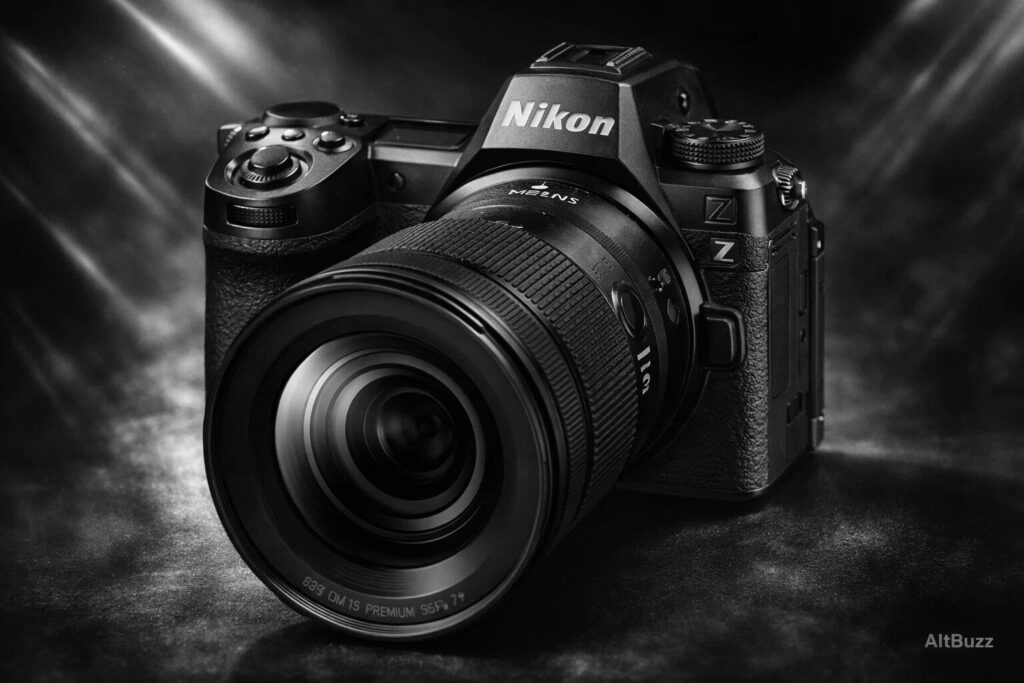
The Nikon Z6 III uses a magnesium alloy body construction throughout. This material provides an excellent balance of rigidity, impact resistance, and weight. The camera body is fully weather-sealed against dust and moisture ingress. Sealing is applied to all ports, dials, buttons, and body seams. In field testing in rain and dusty environments, the Z6 III handles professional workloads without concern.
The weather sealing quality is comparable to what Nikon provides in its professional-tier Z8 and Z9 bodies. For photographers who regularly work outdoors in variable weather conditions, this protection is genuinely valuable and distinguishes the Z6 III from mid-range competitors that offer limited or no weather sealing.
Electronic Viewfinder Quality
The Z6 III’s electronic viewfinder is among the finest available in any camera at this price. The quad-VGA OLED panel provides 5.76 million dots of resolution and refreshes at 120fps. At this resolution and refresh rate, the EVF displays a clear, detailed, and smooth preview that approaches the experience of an optical viewfinder without sacrificing the exposure and white balance preview benefits of an electronic system.
The high-resolution EVF is particularly valuable in fast-action photography where the photographer must track moving subjects through the viewfinder while maintaining awareness of focus, exposure, and composition simultaneously. The 0.9x magnification is larger than most competitors in its class, providing a more spacious and immersive viewing experience.
Grip, Controls, and Ergonomics
The Z6 III features a deep, well-contoured grip that accommodates a wide range of hand sizes comfortably. One-handed operation is stable and fatigue-free during extended shooting sessions. The dual control dial configuration places one dial at the front and one at the rear, enabling independent control of aperture and shutter speed without hand repositioning. The multi-selector joystick for AF point placement is responsive and accurate.
Nikon has placed a strong emphasis on button customization in the Z6 III. Multiple physical function buttons can be assigned to almost any camera parameter. This customization enables photographers to build a control configuration precisely matched to their individual workflow. Once configured, the camera can be operated by touch memory without taking eyes off the viewfinder.
LCD Screen and Display Quality
The fully articulating 3.2-inch touchscreen with 2.1 million dots provides bright, detailed image preview and review. The articulating mechanism supports a full range of shooting orientations including low-angle near-ground placement, overhead framing, and direct-to-camera vlogging position. Touch sensitivity is smooth and accurate for AF point selection, menu navigation, and playback.
The touch-and-drag AF feature enables AF point repositioning by touching the screen while looking through the EVF. This combination of EVF composition with touch AF control is ergonomically natural and significantly faster than using the joystick for large AF point movements across the frame.
Battery Life and Connectivity on the Nikon Z6 III
Real-World Battery Performance
The EN-EL15c battery powering the Nikon Z6 III is rated at approximately 380 shots under CIPA testing conditions. In real-world use, most photographers report achieving 400 to 600 shots per charge in typical field conditions. Variables including EVF usage percentage, burst shooting frequency, video recording duration, and wireless connectivity activity all influence actual battery consumption.
For video recording, a single EN-EL15c charge supports approximately 90 minutes of continuous 4K recording. Extended video productions should carry at least two battery charges. The camera accepts USB-C power delivery, which enables continuous operation from an AC adapter or large power bank.
Nikon Imaging Cloud and Smart Connectivity
The Nikon Z6 III is the first camera to integrate fully with Nikon Imaging Cloud, Nikon’s cloud-based platform for camera management and creative tools. Through this platform, photographers can download and apply Imaging Recipes, which are Nikon’s version of creative color presets. These recipes define specific combinations of color rendering, tone, sharpening, and other parameters to achieve consistent looks across shoots.
Nikon Imaging Cloud also enables remote firmware management, allowing photographers to receive and apply updates wirelessly without connecting a cable. Image backup to cloud storage can be configured to trigger automatically when the camera connects to a known Wi-Fi network.
Dual Card Slot Configuration
The Z6 III’s dual card slot configuration pairs a CFexpress Type B slot with an SD UHS-II slot. Simultaneous backup recording writes each image to both cards in real time, providing immediate redundancy that protects against card failure during critical assignments. Separate format recording writes RAW files to the fast CFexpress card and JPEGs to the SD card, enabling a two-stream delivery workflow without additional hardware.
For video recording, the CFexpress Type B slot provides the high write speeds needed for 6K N-RAW and ProRes 422 HQ recording. SD cards, even at UHS-II specification, cannot sustain the write speeds required for the highest quality recording modes.
Real-World Use Cases for the Nikon Z6 III
Wedding and Event Photography
The Nikon Z6 III is exceptionally well-suited to wedding and event photography. The combination of reliable face and eye detection AF, 14-plus stops of dynamic range, excellent low-light performance, weather sealing, and dual card safety recording addresses every major technical demand of the wedding photography workflow. The 5-axis IBIS enables sharp exposures in dim reception venues without excessive ISO increases, and the 20fps burst rate captures fast-moving moments with high probability of a perfectly timed expression.
Sports and Wildlife Photography
Sports and wildlife photographers find the Z6 III compelling as a capable alternative to the higher-cost Z8. Deep learning subject tracking derived from Z9 technology handles the fast and erratic movements of athletes and animals reliably. Pre-release capture in DX crop mode provides insurance against missed moments during unpredictable events. Bird and animal recognition handles the subject diversity found in nature photography with a level of specificity that most mid-range cameras cannot match.
Documentary and Commercial Video
For documentary filmmakers and commercial video producers, the Z6 III offers a professional production tool in a relatively compact package. 6K N-RAW internal recording provides the post-production latitude required for broadcast and high-end digital delivery. The combination of IBIS, reliable AF tracking, and dual card backup creates a self-contained production system for one-person or small-team video crews. The headphone output enables professional-grade audio monitoring that is absent from several competing cameras in this class.
Pros and Cons of the Nikon Z6 III
Pros
- World-first partially stacked full-frame CMOS sensor at this price point at launch
- 6K N-RAW 12-bit internal video recording with ProRes 422 HQ and ProRes RAW HQ
- Exceptional 5.76M-dot OLED EVF at 120fps with 0.9x magnification
- 5-axis IBIS with up to 8 stops compensation and innovative Focus Point VR
- Deep learning subject detection including people, animals, vehicles, and aircraft
- 20fps full-frame continuous shooting with full AF and AE tracking
- Pre-release capture at up to 120fps in DX crop mode
- Full-size HDMI output for external recording and monitoring
- 3.5mm headphone monitoring output for professional audio workflow
- Nikon Imaging Cloud integration for wireless firmware updates and recipe downloads
- Weather-sealed magnesium alloy construction for field reliability
- Dual CFexpress Type B plus SD UHS-II card slots with backup recording
Cons
- Higher price than direct competitors at launch
- EN-EL15c battery life moderate at 380 shots CIPA; requires management on long shooting days
- 4K 60p requires a crop factor that reduces effective field of view
- Z-mount native lens ecosystem smaller than Sony E-mount at time of writing
- CFexpress Type B cards required for maximum video quality add storage cost
- Body weight of 760g may be heavy for photographers preferring compact systems
- No built-in pop-up flash for simple fill-flash scenarios
Final Verdict on the Nikon Z6 III
The Nikon Z6 III stands as one of the most technically advanced mid-range mirrorless cameras ever produced. Its partially stacked CMOS sensor is not a specification-sheet talking point. It delivers real, observable performance benefits in video quality, electronic shutter reliability, and burst photography that make the Z6 III measurably better than previous-generation sensors at this price point. Combined with the EXPEED 7 processor’s excellent image quality and the comprehensive 6K RAW video pipeline, the Z6 III offers capabilities that genuinely compete with cameras at significantly higher prices.
For hybrid shooters who need a single camera to handle professional photography and serious video production, the Z6 III is one of the most complete tools available. The combination of weather sealing, IBIS, dual card slots, headphone monitoring, and a class-leading EVF addresses the practical needs of professional shooting conditions thoroughly. The value proposition at $2,499 is strong, and the Nikon Z6 III earns a confident recommendation for photographers and videographers who demand excellence in both disciplines from one body.
Read More from AltBuzz
Read more from AltBuzz for camera reviews, detailed specs, and expert insights. AltBuzz delivers trusted and easy-to-understand photography content for professionals and enthusiasts alike. Visit AltBuzz for in-depth gear coverage and buying guidance you can trust.
Subscribe to the AltBuzz YouTube Channel
Stay updated with the latest camera reviews and hands-on comparisons. AltBuzz publishes camera content consistently, covering major releases across all formats and price ranges. Subscribe to AltBuzz and never miss a review.