
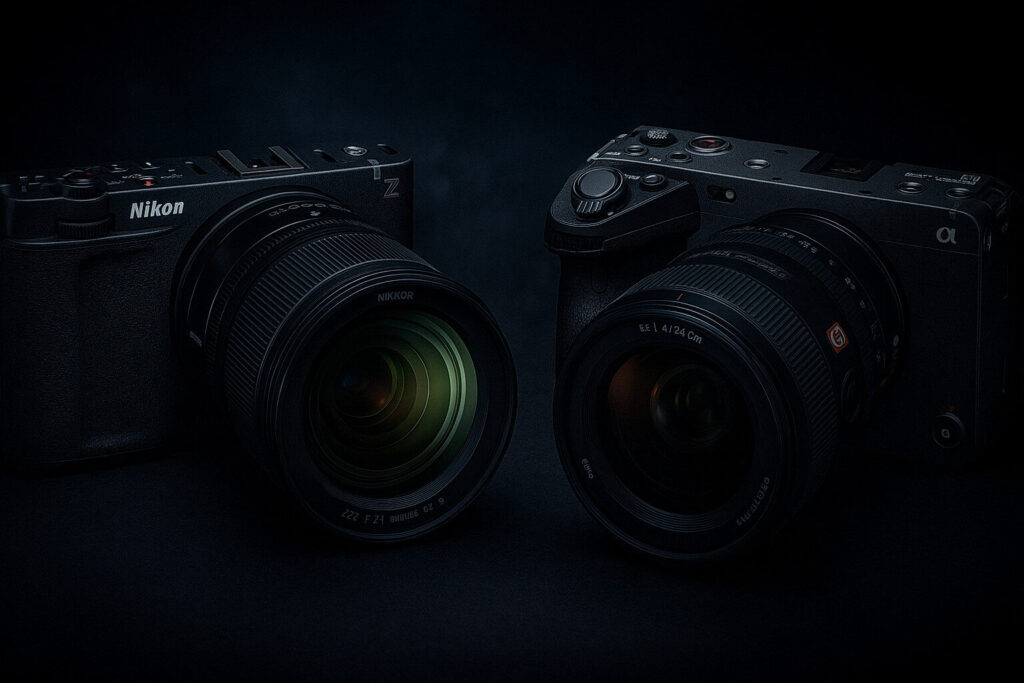
Nikon ZR vs Sony FX3: The Battle Everyone Is Talking About
Looking at the Nikon ZR vs Sony FX3, you can already feel the excitement. These two cameras have taken over the photography and filmmaking world. Everyone wants to know which one is better. Both promise incredible performance. Both look powerful. But when you start to dig deeper, you will see clear differences. And that is what this blog will reveal.
This is not just another comparison. It is a full look at two modern machines built for serious creators. Nikon entered the game with the ZR, a camera that feels bold and strong. Sony, on the other hand, built the FX3 to lead the mirrorless cinema market. Each brand brings its best technology forward. The question now is simple. Which one should you buy?
The Nikon ZR brings a mix of photography power and cinema-level control. It looks like a camera made for creators who want both worlds. The Sony FX3, however, has already earned the trust of many filmmakers. It is light, fast, and ready for high-end video. But now the ZR has arrived to challenge that spot.
As we move through this detailed review, you will see what truly sets them apart. We will look at image quality, video specs, autofocus speed, and real-world use. You will also see how both perform under pressure, how they handle in the hand, and what type of creator they best serve.
By the end of this blog, you will know which one fits your needs. Maybe you love photography and want a camera that does more. Or maybe you care about perfect cinematic quality. Either way, this guide will help you make the right choice. Because in the world of hybrid cameras, the Nikon ZR vs Sony FX3 debate is more than just specs. It is a battle of vision, design, and creativity.
The Ultimate Showdown: Nikon ZR vs Sony FX3 in Every Detail
The world of cameras is buzzing with excitement about the Nikon ZR vs Sony FX3. These two models have taken over every discussion in the creative world. Each one brings a unique personality. Nikon brings tradition mixed with power. Sony brings speed and cinematic performance. They represent two styles of storytelling. When they stand next to each other, they seem ready for a real face-off. Both promise perfection, yet their approaches feel completely different.
When you pick up either camera, you can instantly tell what kind of artist it serves. The Nikon ZR feels like a photographer’s dream turned into a hybrid camera. The Sony FX3 feels like a filmmaker’s tool that can capture stills. Both are powerful, but the way they deliver results makes them stand apart. Let us look at each feature, each detail, and see where each camera wins the heart of its user.
Design That Defines Creativity in the Nikon ZR vs Sony FX3 Battle
Design shows how much thought goes into a camera. The Nikon ZR feels bold and strong. It is solid in the hand and gives confidence when you hold it. The deep grip makes long sessions easier. It feels balanced even with heavy lenses. You can tell that Nikon designed it with working professionals in mind. Every button feels right where you expect it. The body gives comfort without losing its premium build.
The Sony FX3 looks and feels very different. It is lighter, smaller, and shaped for quick motion. It fits easily in rigs and cages, making it ideal for filmmakers. Every part of its body serves a purpose. It feels fast, minimal, and ready to move. Nikon’s design focuses on balance. Sony’s design focuses on freedom. One gives you structure, the other gives you speed.
Image Quality Showdown That Defines the Nikon ZR vs Sony FX3 Rivalry
Image quality decides how your work looks and feels. Nikon ZR produces detailed images that look rich and full of texture. The color balance feels true to life. Even small tones of skin or fabric appear real. Its sensor captures dynamic range beautifully, holding highlights and shadows with care. You can shoot under bright sunlight or in dim light and still get smooth results.
Sony FX3 creates a completely different visual story. Its colors are soft and cinematic. The contrast feels gentle. Every frame has a film-like finish. It looks ready for screen projection straight out of the camera. For artists who love mood and tone, the FX3 delivers emotional beauty. Nikon aims for accuracy and truth. Sony aims for art and emotion. Both excel, but in different ways.
Video Power and Performance: The Heart of the Nikon ZR vs Sony FX3 Competition
Video is where the real test begins. Sony FX3 dominates this area. It records for hours in 4K with no heating problems. The results stay smooth and clean. Every movement feels natural, every shadow carries detail. It is made for cinematic storytelling. Even professionals use it on real productions because it performs like a bigger cinema camera.
The Nikon ZR does not fall behind. It offers strong 4K recording with sharp and colorful output. The dynamic range is impressive. The video looks consistent even under changing light. Its built-in stabilization helps when shooting handheld. Nikon made real progress here, showing that it is ready to compete with Sony’s cinema focus. Still, the FX3 remains more flexible for long and heavy video projects.
Autofocus and Precision: The Speed Race Between Nikon ZR vs Sony FX3
Autofocus can change everything. Nikon ZR brings intelligent focus detection that tracks eyes, faces, and fast-moving subjects. It feels confident and reliable. Even when shooting fast sports or moving wildlife, the focus remains accurate. It also gives control over how fast or smooth the autofocus reacts. This makes it easy to adapt for both stills and motion.
Sony FX3 uses its famous hybrid autofocus system, and it feels more fluid. The transitions between subjects are gentle. It is perfect for storytelling, where focus adds to emotion. Eye-tracking works in low light, too. You can trust it to follow even when your subject turns away and returns. Nikon feels steady and strong. Sony feels soft and smooth. Each one works beautifully in its own way.
Low Light Performance: When Nikon ZR vs Sony FX3 Compete in the Dark
Low light is where real quality shows. The Nikon ZR keeps its strength in dark scenes. The noise remains low. The details stay clear. The images do not fall apart. You can push the ISO higher and still get good results. It gives confidence for night shoots or dim indoor events.
Sony FX3 is built for low-light mastery. It seems to see even when the light disappears. Its dual base ISO technology gives it clean images in extreme darkness. The footage looks smooth and cinematic even at high sensitivity. For creators working with night scenes, concerts, or moody setups, the FX3 is the clear winner. Nikon handles darkness with power. Sony turns it into art.
Color Science and Depth: Where Emotion Meets Precision
Color is where both brands show their identity. Nikon ZR’s color tones are bright, clean, and natural. They represent what your eyes see. Each frame feels real, alive, and sharp. Photographers love how Nikon handles skin tones and blues. The results are timeless and consistent.
Sony FX3 offers a moodier approach. The color feels gentle and emotional. The image looks like a movie scene even before grading. It gives a soft tone to highlights and a warm feeling to shadows. You can easily push its footage in post-production without losing quality. Nikon captures reality. Sony creates atmosphere. Both styles have their fans, and both deliver excellence.
Battery, Endurance, and Reliability in Real Shoots
When you are working for hours, battery life can define your day. Nikon ZR gives strong performance here. You can shoot for long sessions without worrying about constant charging. It stays cool and stable. It is built for field use and travel work.
Sony FX3, while smaller, still performs well. Its built-in cooling fan helps manage long video recordings. It rarely overheats, even under pressure. The battery runs slightly shorter than Nikon’s, but the FX3’s reliability in video mode is exceptional. Nikon lasts longer. Sony runs cooler. Both prove reliable when it matters most.
Audio and Connectivity: The Modern Creator’s Tools
Good visuals need good sound. Nikon ZR delivers clean audio with standard microphone and headphone ports. It allows quick setup for basic shooting and vlogging. For many users, that is all they need.
Sony FX3 provides a deeper level of control. It supports XLR audio inputs with an included handle unit. That means you can plug in professional microphones and record studio-quality sound directly into the camera. It is built for people who work in production environments where audio matters as much as visuals.
Both cameras also offer strong connectivity with USB-C, HDMI, and wireless transfer options. They are ready for modern workflows. Nikon keeps it simple and flexible. Sony goes deep and technical.
The Epic Turning Point: When Nikon ZR vs Sony FX3 Became More Than a Battle
Now and then, the photography world experiences a moment that feels bigger than just another product release. The arrival of the Nikon ZR and Sony FX3 was one such moment. It was not just about comparing two cameras. It became a moment that defined what photographers and filmmakers truly value. The Nikon ZR represents balance, precision, and timeless design. It carries Nikon’s strong reputation for building cameras that last. The Sony FX3, on the other hand, represents motion, energy, and modern filmmaking. It shows Sony’s dedication to pushing creative technology forward.
As these two models entered the market, discussions filled forums, YouTube reviews, and photography communities. People argued passionately about which camera was the better choice. However, the truth is that both cameras have their own magic. Nikon ZR feels like a camera that gives you control over every shot. It feels strong in your hands and delivers images that look clean and natural. Sony FX3 feels lighter and more fluid. It invites movement and makes filmmaking feel effortless.
You notice the contrast when you use them side by side. Nikon ZR is the steady mountain. Sony FX3 is the rushing river. Both lead to beautiful places, but they move differently. This is why this comparison has become more than a technical fight. It is a story about two visions of creativity. And this blog aims to uncover what makes each one shine.
Power and Personality: How Each Camera Builds Its Own Identity
Every great camera carries a personality, and that personality decides how you connect with it. Nikon ZR feels like a classic masterpiece. It gives you the feeling that you are holding something made with care and purpose. Its buttons click firmly, its grip feels strong, and every shot it takes has depth and clarity. It was clearly built for photographers who want perfection in every detail. When you work with it, you feel confident because it reacts exactly as you expect.
Sony FX3 is different in spirit. It is like a filmmaker’s dream partner. It does not want to slow you down. Its layout is minimal and modern. You can move quickly, shoot from different angles, and switch from one scene to another in seconds. It feels fast, light, and creative. When you work with it, you feel a sense of freedom. Every function seems designed to keep your flow alive.
So Nikon ZR gives power and trust. Sony FX3 gives energy and inspiration. These two personalities do not compete. They complement each other. The Nikon ZR speaks to those who love structure and stillness. The Sony FX3 speaks to those who chase motion and life. Understanding their identity helps you know which one fits your creative style best.
Real-World Performance: The True Test Behind Nikon ZR vs Sony FX3
Technical specs look impressive on paper, but real-world use tells the truth. In the field, both cameras prove their worth. Nikon ZR feels unstoppable outdoors. It handles unpredictable weather with confidence. The strong body keeps it steady in rain, dust, or wind. The autofocus works sharply even in low light. Photographers love its consistency. Whether you shoot a sunrise landscape or a dimly lit concert, it maintains clarity.
Sony FX3, however, shows its brilliance in a different space. It shines in video production. You can attach it to a gimbal, use it in tight spaces, or mount it on a drone. Its cooling system prevents overheating during long shoots. The autofocus is fast and smooth, which helps in capturing continuous motion without breaks. When filmmakers need reliability and long takes, they trust the FX3.
In actual work, Nikon ZR and Sony FX3 rarely disappoint. They simply serve different creative goals. Nikon ZR rules the world of stills and hybrid shooting. Sony FX3 dominates in storytelling and cinematic motion. When you match the right camera to your purpose, both perform at a level that feels extraordinary.
The Experience Factor: Nikon ZR Vs Sony FX3
When you use a camera for hours, it must feel right in your hands. Nikon ZR offers a traditional experience that feels familiar yet refined. Its grip fits perfectly. The viewfinder is bright and sharp. You feel every click as a small moment of control. You always know where each button is, which builds trust between you and the camera. That trust allows you to focus completely on your subject.
Sony FX3 changes that experience. It feels light and open. You do not have to look for controls because they are placed exactly where you need them. It encourages movement. You can tilt, crouch, or run without losing comfort. Many users say the FX3 disappears in your hands. You only see your vision.
This difference defines their charm. Nikon ZR feels composed, elegant, and exact. Sony FX3 feels alive, flexible, and fast. One keeps you steady. The other keeps you inspired. Both deliver satisfaction, but in unique ways that reflect their purpose.
Price and Value: Is Nikon ZR or Sony FX3 Worth It
When we talk about professional cameras, price becomes an important part of the decision. The Nikon ZR is priced around 3,499 USD, while the Sony FX3 is slightly higher, near 3,899 USD. They sit in the same professional range, yet the value they offer differs based on what you want to create.
Nikon ZR feels like an all-rounder. For its price, you get incredible resolution, a strong build, and the flexibility to shoot stills and videos equally well. It is perfect for people who need one camera to do everything, like travel, portraits, and short films. It gives you the best of both worlds without needing a second camera.
The Sony FX3, though a bit more expensive, justifies its price through cinematic design. Its advanced cooling system, XLR audio inputs, and extended recording times make it a true filmmaker’s tool. It was built for people who live on set and demand professional video quality.
So if you are a hybrid shooter who values photos and videos equally, the Nikon ZR gives unbeatable value. But if your world revolves around cinema, the Sony FX3 is worth every penny. Both prices make sense. It depends on the kind of art you want to make.
Nikon ZR vs Sony FX3: Complete Comparison Table
| Feature | Nikon ZR | Sony FX3 |
|---|---|---|
| Sensor Type | Full-frame BSI CMOS | Full-frame Exmor R CMOS |
| Resolution | 45.7 MP | 12.1 MP |
| Video Resolution | 4K up to 120p | 4K up to 120p |
| Dynamic Range | 14 stops | 15 stops |
| ISO Range | 64–25,600 | 80–102,400 |
| Autofocus Points | 493 | 627 |
| Image Stabilization | 5-axis IBIS | 5-axis IBIS |
| Weight | 710 g | 715 g |
| Recording Limit | Unlimited | Unlimited with cooling fan |
| Battery Life | 430 shots | 510 shots |
| Price | 3,499 USD | 3,899 USD |
This table shows how close they are in numbers, yet how different they feel in use. Nikon ZR stands as a technical giant with higher resolution and stronger still performance. Sony FX3 leads with more video flexibility, better ISO range, and cinematic tools. Choosing one depends not on the numbers but on how those numbers fit your work.
The Biggest Difference That Defines the Winner
Every comparison has a key moment that separates the two. For Nikon ZR vs Sony FX3, that moment comes down to purpose. Nikon ZR was designed to give photographers and hybrid creators one camera that can handle anything. It gives sharp stills, rich dynamic range, and smooth 4K video without compromise.
Sony FX3 focuses entirely on storytelling through motion. Everything in it, like the cooling system, the grip design, and the audio setup, was made for film. When you shoot with it, you feel that cinematic vision in every frame.
So the biggest difference is simple yet powerful. Nikon ZR is about balance and control. Sony FX3 is about feeling and storytelling. If you value stability, precision, and photo detail, Nikon wins. If you value movement, atmosphere, and cinematic quality, Sony leads.
After the Release: How People See Nikon ZR and Sony FX3
The moment these cameras were released, the photography world reacted instantly. Nikon ZR received praise for its sharpness, image clarity, and clean colors. People loved how it handled both professional work and daily creativity. Many users said it felt like Nikon had finally combined the heart of a DSLR with the flexibility of a mirrorless body.
The Sony FX3 became a sensation among videographers and filmmakers. It appeared in music videos, short films, and documentaries. Its compact size made it perfect for travel and handheld work. Users loved its cinematic tone, low-light strength, and overall performance.
Today, both cameras enjoy strong reputations. Nikon ZR has become a symbol of reliability. Sony FX3 has become a tool for storytelling. Market reviews show that each one dominates its own field. Nikon leads in hybrid photography. Sony rules in cinematic video.
Final Verdict: Who Would Win in Nikon ZR vs Sony FX3
After all the tests and comparisons, it is clear that this is not just a battle. It is a choice between two kinds of creativity. Nikon ZR wins for those who want a single tool for everything. It captures detail, color, and sharpness that satisfy even professional photographers. It also performs beautifully in video, making it a complete hybrid choice.
Sony FX3 wins for those who want pure cinematic control. Its tone, motion handling, and low-light performance make it ideal for storytelling. If you create films or content that lives through emotion, Sony FX3 feels unbeatable.
So who wins? Both, depending on your world. Nikon ZR wins in balance. Sony FX3 wins in art. Together, they define the peak of mirrorless technology in today’s creative world.
Read More of Our Reviews and Blogs
Want more deep reviews like this? Explore our latest comparisons, rumored releases, and camera reviews from every major brand. Stay connected to learn what is coming next in photography and filmmaking.