
The Panasonic GH9 stands as one of the most anticipated cameras in video production circles. This flagship Micro Four Thirds camera has not been officially announced. Nevertheless, videographers and hybrid shooters eagerly await its arrival.
Designed for professional content creators, the Panasonic GH9 targets filmmakers and video producers. The GH series has maintained a strong reputation for video capabilities. Additionally, documentary filmmakers and YouTube creators find these cameras invaluable. The Panasonic GH9 should continue this legacy with significant upgrades.
Expected Release Date and Market Position
The Panasonic GH9 release date remains speculative at this point. Industry analysts predict an announcement in mid-2027. Panasonic typically maintains four to five years between major GH series updates.
This camera will occupy the professional video-centric Micro Four Thirds position. Direct competitors include the Sony FX30 and Canon C70. The Panasonic GH9 may also challenge entry-level cinema cameras. Furthermore, it competes against larger sensor cameras like the Sony A7S III.
Pricing expectations range from $2,200 to $2,500 for the body. This positions it as a premium Micro Four Thirds option. Kit configurations with professional lenses could exceed $3,500. Nevertheless, the price remains competitive compared to full-frame video cameras.
Panasonic GH9 Rumored Specifications Table
| Feature | Rumored Details |
|---|---|
| Sensor Type | 28MP Micro Four Thirds Stacked BSI CMOS |
| Resolution | 28 Megapixels |
| Processor | Venus Engine XII with AI processing |
| ISO Range | 200-102,400 (extended to 204,800) |
| Autofocus System | Phase Detection with AI subject recognition |
| Stabilization | 8.5-stop 5-axis IBIS with Boost mode |
| Video Recording | 8K 30p, 6K 120p, 4K 240p 10-bit |
| EVF | 7.68M-dot OLED, 0.85x magnification |
| LCD Screen | 3.2″ fully articulating, 2.36M-dot |
| Burst Shooting | 100 fps electronic, 20 fps mechanical |
| Battery | DMW-BLK22, ~800 shots |
| Storage | Dual CFexpress Type B |
| Connectivity | Wi-Fi 6E, Bluetooth 5.3, USB-C 3.2 Gen 2 |
| Weight | Approximately 745g (body only) |
| Launch Price | $2,299-$2,499 (estimated) |
Sensor and Image Quality Expectations
The Panasonic GH9 sensor is rumored to feature 28 megapixels with stacked architecture. This represents a significant technological advancement. The stacked design enables faster readout speeds and reduced rolling shutter. Moreover, back-side illumination improves light-gathering efficiency considerably.
Image quality should reach new heights for Micro Four Thirds cameras. Dynamic range expectations exceed 14 stops in V-Log mode. The Panasonic GH9 would deliver cinema-grade image quality. Additionally, the dual native ISO design provides optimal performance at multiple sensitivity levels.
Low-light capabilities remain crucial for video production. The Panasonic GH9 may feature native ISOs at 200 and 2000. Clean footage at ISO 12,800 appears achievable. Extended sensitivity reaching ISO 204,800 would help in extreme situations. However, practical use would focus on the native ISO ranges.
Color science has always distinguished Panasonic cameras. The Panasonic GH9 should maintain this reputation for accurate colors. Skin tone rendering would be natural across various lighting conditions. Furthermore, RAW video recording preserves maximum color information. Post-production flexibility becomes exceptional with proper exposure.
Autofocus Expectations
Autofocus performance represents a critical upgrade for the Panasonic GH9. Full sensor phase detection coverage seems certain. This eliminates the limitations of contrast-based systems. Moreover, the AI-powered subject recognition would identify multiple subjects simultaneously. The phase detection system would cover approximately 100% of the frame area.
Subject detection categories may include humans, animals, vehicles, and various objects. Face and eye detection accuracy should be industry-leading. The Panasonic GH9 tracking would maintain focus through complex movements. Subsequently, operators can concentrate on composition rather than focus adjustments. The AI processing can differentiate between multiple people in a scene. Priority settings would allow users to specify which subjects take precedence.
Real-time tracking algorithms would predict subject movement patterns. This anticipatory focus helps maintain sharpness even during erratic motion. The Panasonic GH9 could remember and reacquire subjects that temporarily leave the frame. Sports videographers would benefit tremendously from this capability. Furthermore, the system adapts to different subject sizes automatically.
Video autofocus smoothness has become essential for professional work. The system would transition between subjects without pulsing or hunting. Touch-tracking enables intuitive subject selection during recording. Additionally, customizable focus speeds match different shooting styles. The Panasonic GH9 could offer multiple AF profiles for various scenarios. Users might choose between slow, medium, and fast transition speeds.
Focus breathing compensation would be available for compatible lenses. This eliminates the slight zoom effect during focus pulls. Professional productions demand this level of refinement. Moreover, focus mapping features could create repeatable focus pulls. The Panasonic GH9 would remember and execute complex focus movements perfectly.
Low-light autofocus capabilities would extend to -7 EV. This enables reliable operation in extremely dim conditions. Focus speed remains consistent regardless of lighting levels. Furthermore, the system maintains accuracy with fast-moving subjects. Confidence in autofocus allows more creative freedom. The combination of phase detection and AI processing ensures reliability. Even in challenging mixed lighting, performance would remain consistent.
Video Features
Video specifications define the Panasonic GH9 primary purpose. Recording capabilities are expected to include 8K at 30 frames per second. This provides exceptional resolution for professional productions. Additionally, 6K recording at 120fps enables stunning slow-motion footage. The Panasonic GH9 would deliver 4K at 240fps for extreme slow-motion effects.
Professional codec support appears comprehensive. Internal ProRes RAW recording seems highly likely. Moreover, ProRes 422 HQ and ProRes 422 would be standard options. The camera may also support Blackmagic RAW output via HDMI. Bit depth of 10-bit internal and 12-bit external through HDMI seems certain.
Log profiles would include V-Log and V-Gamut. These flat profiles maximize dynamic range for color grading. Optional ARRI LogC3 compatibility may require a paid upgrade. Additionally, Rec.709 and Rec.2020 color spaces would be available. The Panasonic GH9 real-time LUT functionality helps visualize final looks.
Recording limits have been a concern with some competitors. The Panasonic GH9 should offer unlimited recording at all resolutions. Active cooling systems prevent overheating during extended takes. Furthermore, dual CFexpress Type B cards ensure sufficient write speeds. The camera would handle the highest bitrates without dropping frames.
Audio capabilities match professional video requirements. Built-in stereo microphones provide decent quality for backup. The optional XLR adapter enables professional microphone connections. Moreover, 32-bit float audio recording eliminates clipping concerns. Timecode synchronization supports multi-camera productions seamlessly.
Design, Build Quality, and Handling
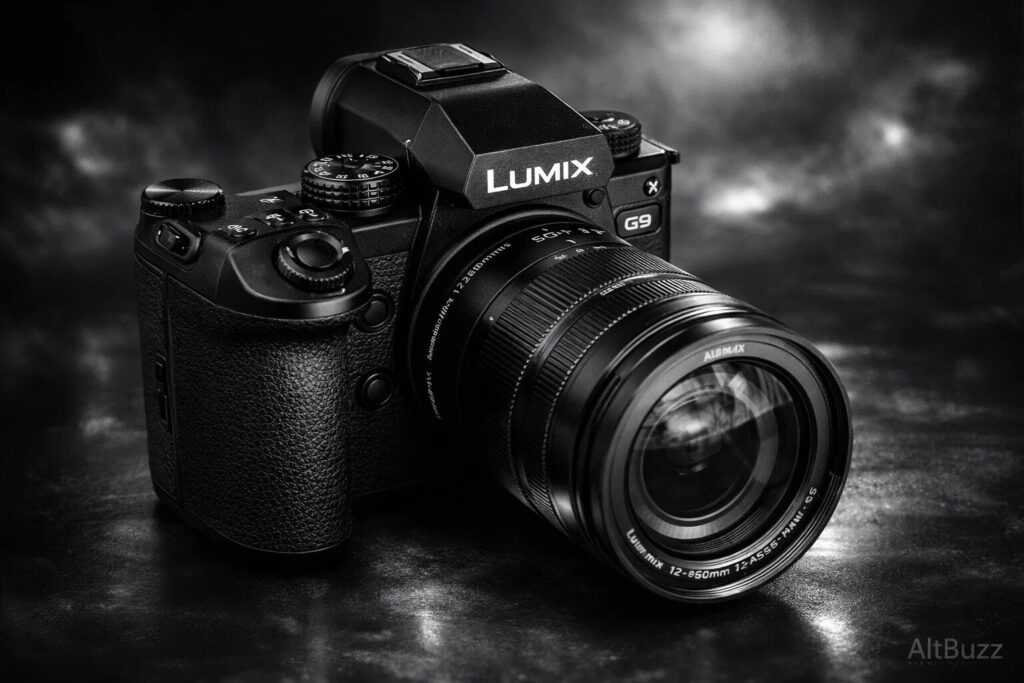
Professional build quality is expected from the Panasonic GH9. The body would use magnesium alloy construction throughout. Full weather sealing protects against dust and moisture. This durability supports demanding production environments. The camera could withstand rain, snow, and dusty conditions without hesitation.
Ergonomics should build upon the proven GH series design. A substantial grip accommodates long shooting sessions comfortably. The grip depth would allow secure single-handed operation. Button layout would prioritize video-specific controls. The Panasonic GH9 may include dedicated buttons for recording, focus assist, and monitoring. Meanwhile, customization options let users tailor the interface. Function buttons can be programmed for frequently used settings.
The top plate would feature a comprehensive LCD information display. Critical shooting parameters remain visible at a glance. Mode dials for photo and video offer quick switching between configurations. Additionally, the shutter button would include threading for cable releases. Professional accessories integrate seamlessly into the camera system.
The electronic viewfinder quality should be exceptional. A 7.68-million-dot OLED panel provides crystal-clear viewing. Magnification of 0.85x offers a large, immersive view. The refresh rate would exceed 120fps for smooth motion. Additionally, the rear LCD screen would be fully articulating. This flexibility enables shooting from various angles. Touch functionality simplifies menu navigation and quick adjustments. The screen coating resists smudges and provides anti-reflective properties.
Recording indicators would be clearly visible during operation. Tally lights on both front and rear confirm recording status. This prevents accidental missed recordings. Moreover, audio level meters display prominently during video capture. The Panasonic GH9 interface keeps critical information accessible. Customizable screen layouts adapt to different shooting scenarios.
Cooling system design becomes critical for extended recording. The Panasonic GH9 likely incorporates advanced heat dissipation technology. Active cooling with internal fans prevents thermal issues. This prevents thermal shutdown during intensive use. Moreover, the body size balances portability with professional features. Weight around 745 grams remains manageable for handheld work. However, this is heavier than consumer cameras. The trade-off delivers superior durability and feature density.
Port placement would be logical and accessible. Protective covers shield connections from environmental damage. The ports include full-size HDMI, USB-C, microphone, and headphone jacks. Additionally, a dedicated remote control port enables intervalometer connections. Cable management considerations include lock mechanisms for secure connections. Professional productions demand reliable physical connections throughout long shoots.
Battery Life and Connectivity
Battery performance impacts practical shooting duration significantly. The Panasonic GH9 would likely use the proven DMW-BLK22 battery. Approximately 800 shots per charge seems reasonable under standard conditions. However, video recording consumes more power. External power solutions via USB-C would extend recording time indefinitely.
Wireless connectivity should include cutting-edge technology. Wi-Fi 6E provides extremely fast transfer speeds. Bluetooth 5.3 enables low-power connections for remote control. The Panasonic GH9 could integrate perfectly with the Lumix Lab app. Consequently, monitoring and control from smartphones becomes seamless.
Wired connections would be comprehensive. USB-C 3.2 Gen 2 supports high-speed data transfer. Full-size HDMI output enables external recorder connections. Additionally, professional audio jacks accommodate various input devices. Remote control via USB tethering works reliably for studio setups.
Cloud integration features may be standard on the Panasonic GH9. Frame.io Camera to Cloud functionality would benefit production workflows. Direct uploads to cloud storage occur automatically. Subsequently, editors can begin work while shooting continues. This accelerates the entire production timeline significantly.
Expected Use Cases
Independent filmmaking represents a core target for the Panasonic GH9. The combination of features and price appeals to budget-conscious creators. Professional video quality doesn’t require compromising financial resources. Moreover, the compact size facilitates nimble production styles. Independent filmmakers often work with minimal crew sizes. The Panasonic GH9 autofocus and stabilization enable solo shooting effectively.
The camera’s codec options provide flexibility for different workflows. ProRes files integrate seamlessly into professional editing systems. Moreover, RAW recording preserves maximum quality for color grading. Independent productions benefit from having cinema-grade tools. The Panasonic GH9 democratizes access to professional video capabilities. Furthermore, the unlimited recording times prevent missed takes.
Documentary production benefits from the camera’s reliability. Weather sealing protects equipment in challenging environments. Long battery life supports extended shooting days. The Panasonic GH9 autofocus enables solo operators to capture critical moments. Furthermore, excellent low-light performance handles unpredictable conditions. Documentary work often occurs in uncontrolled environments. The camera adapts to whatever situation presents itself.
Subject tracking proves invaluable during documentary shooting. The AI recognition identifies and follows interview subjects automatically. This frees the operator to focus on framing and movement. Additionally, the compact form factor appears less intimidating to subjects. The Panasonic GH9 allows intimate, natural documentation. Audio quality matters tremendously in documentary work. The 32-bit float recording eliminates worry about clipping.
Commercial video production finds this camera highly capable. The 8K resolution provides flexibility in post-production. Slow-motion capabilities at 6K and 4K enhance creative options. Additionally, professional audio support ensures high-quality sound recording. The Panasonic GH9 handles multiple production types effectively. Corporate videos, advertisements, and branded content all benefit equally. The camera delivers consistent, reliable results across applications.
Color grading flexibility becomes crucial for commercial work. Clients often request specific looks and styles. The V-Log profile provides maximum latitude for adjustments. Moreover, real-time LUTs preview final looks during shooting. The Panasonic GH9 streamlines approval processes on set. Directors and clients can visualize results immediately. This reduces expensive reshoots and revisions later.
YouTube and content creation benefit from the camera’s versatility. Autofocus and stabilization simplify one-person operations. Internal recording eliminates external recorder requirements. Meanwhile, real-time LUTs preview final looks immediately. The Panasonic GH9 streamlines the entire production process. Content creators can work more efficiently without sacrificing quality.
Social media content demands quick turnaround times. The Panasonic GH9 wireless connectivity enables rapid file transfers. Footage can reach editing systems within minutes of shooting. Moreover, the camera’s reliability reduces technical troubleshooting. Creators can focus on content rather than equipment issues. The combination of features addresses modern content creation needs comprehensively.
Broadcast journalism applications suit the Panasonic GH9 well. The camera delivers broadcast-quality footage consistently. Fast autofocus captures breaking news as it unfolds. Additionally, the robust build withstands frequent transportation. News crews require dependable equipment under pressure. The Panasonic GH9 meets these demanding requirements effectively. Furthermore, the dual card slots provide essential backup security.
Live event coverage benefits from multiple camera capabilities. The Panasonic GH9 could serve as A-camera or B-camera equally. Matching footage from multiple units becomes straightforward. Concert filming, conference coverage, and sports all demand reliability. The camera performs consistently throughout long events. Battery life and thermal management support marathon recording sessions.
Pros and Cons
Pros
- Exceptional 8K 30p and 6K 120p video recording capabilities
- Advanced phase detection autofocus with AI subject recognition
- Outstanding 8.5-stop in-body stabilization system
- Internal ProRes RAW recording without external devices
- Unlimited recording times across all resolutions
- Professional audio options including 32-bit float recording
- Robust weather-sealed magnesium alloy construction
Cons
- Micro Four Thirds sensor limits shallow depth of field
- Lower light sensitivity compared to full-frame sensors
- Higher price point than previous GH models
- Heavier than entry-level mirrorless cameras
- Limited native lens options for specialized applications
- Smaller sensor affects extreme low-light performance
- May require expensive CFexpress cards for highest bitrates
Final Thoughts
The Panasonic GH9 appears positioned to dominate the video-centric camera market. This rumored camera addresses previous limitations while maintaining system advantages. Professional video features combine with manageable size and weight. Moreover, the price point remains competitive for the capabilities offered.
Video professionals seeking maximum features should strongly consider this camera. Independent filmmakers particularly benefit from the comprehensive toolset. The Panasonic GH9 eliminates many reasons to choose larger, more expensive cinema cameras. Additionally, hybrid shooters appreciate excellent stills capabilities as a bonus.
However, full-frame purists may prefer Sony or Canon alternatives. Photographers prioritizing shallow depth of field might find limitations. The Panasonic GH9 excels in specific applications but isn’t universal. Budget considerations include not just the body but also supporting equipment.
Read More from AltBuzz
Read more from AltBuzz for camera rumors, detailed specs, and expert insights. AltBuzz delivers trusted and easy-to-understand photography content.
Subscribe AltBuzz YouTube Channel
Stay updated with camera rumors and comparisons. AltBuzz shares hands-on camera content regularly.
👉 Subscribe here: AltBuzz YouTube Channel