
Panasonic LX100 III Leaked: Rumored Specs, Features and Release Date
The Panasonic LX100 III is one of the most talked-about compact cameras in recent memory. Panasonic has not officially confirmed it. Yet, the buzz around this camera just keeps growing. Street photographers, travel shooters, and compact camera fans are all watching closely.
This blog breaks down every rumor, leak, and educated guess about the LX100 III. Remember, none of this is confirmed. Everything here is based on speculation and pattern analysis. Always wait for an official Panasonic announcement before making any decisions.
The original LX100 launched in 2014. It was a bold camera. It paired a Micro Four Thirds sensor with a fast Leica-branded zoom lens inside a compact, retro-styled body. Then came the LX100 II in 2018. It refined the formula with a higher-resolution sensor and a touchscreen. Now, six-plus years later, the Panasonic LX100 III feels genuinely long overdue.
Compact cameras are having a revival right now. The Fujifilm X100VI sold out across the globe. The Ricoh GR IIIx has a cult following. Sony’s RX100 series continues to sell steadily. People clearly still want well-built, high-quality compact cameras. Panasonic has a real opportunity here. The LX100 III could tap into that momentum in a big way.
Who Is This Camera For?
The LX100 III targets a very specific kind of shooter. These are people who want excellent image quality without carrying a full system. They want a camera that fits in a jacket pocket. They want physical dials. They want a fast lens that works beautifully in dim light.
Travel photographers are a natural fit. So are street photographers. Enthusiasts who want one brilliant camera instead of a whole kit are also the target audience. Even experienced photographers who want a capable second body will find the LX100 III appealing if Panasonic gets it right.
Expected Release Date and Market Position
No official date has been announced. However, based on Panasonic’s past patterns, a 2025 reveal is entirely possible. The company has used CP+ Japan and various online events to launch compact cameras in the past. A standalone announcement is also possible given how long the LX100 line has been dormant.
Some industry watchers believe Panasonic may have deliberately paused the LX100 line to focus resources on the Lumix S full-frame system. That makes sense commercially. However, the renewed consumer enthusiasm for premium compacts appears to be pulling Panasonic back in this direction.
The Panasonic LX100 III would enter a competitive but exciting market. Its main rivals would include the Ricoh GR IIIx, Sony Cyber-shot RX100 VII, and the Fujifilm X100VI. Each of those cameras has a passionate user base. Panasonic would need to bring something genuinely special to win attention in this space.
The LX100 III’s strongest differentiator remains its Leica-branded zoom lens. Most premium compacts offer a fixed prime. A fixed prime is sharp and fast. However, it offers no flexibility in framing. The LX100 series offers a versatile zoom at a fast aperture. That combination remains genuinely unique among compact cameras at this price level.
Rumored Specifications
Here are all the rumored specs for the Panasonic LX100 III.
| Feature | Rumored Details |
|---|---|
| Sensor Type | Micro Four Thirds MOS (Updated) |
| Resolution | 20 to 22 MP |
| Processor | Venus Engine (Latest Gen) |
| ISO Range | 100 to 25,600 |
| Autofocus | Hybrid Phase-Detect plus AI Recognition |
| Stabilization | 5-axis IBIS |
| Video | 4K 60fps, C4K, FHD 120fps, V-Log L |
| EVF | 3.68M dot OLED (improved) |
| LCD | 3.0 inch tilting touchscreen |
| Burst Speed | 20fps electronic shutter |
| Battery | DMW-BLG10 or updated cell |
| Storage | Single SD UHS-II |
| Connectivity | Wi-Fi 5, Bluetooth 5.0, USB-C |
| Lens | Leica DC Vario-Summilux 24 to 75mm f/1.7 to 2.8 |
| Weight | 350 to 380g |
| Expected Price | USD 1,199 to 1,499 |
Panasonic LX100 III Sensor and Image Quality
The LX100 II used a 17 MP Multi-Aspect MOS sensor. That resolution was already modest at the time of its launch. The Panasonic LX100 III is expected to push this to 20 or 22 megapixels. That is a meaningful jump. More resolution means more detail in landscapes, architecture, and travel shots.
However, the resolution is not the most interesting part of this sensor. The Multi-Aspect Ratio system is. This clever feature lets the camera use different crop areas of the sensor for different aspect ratios. Shooting in 4:3 gives one frame size. Shooting in 16:9 gives another. Shooting in 1:1 gives a square frame. Crucially, all of these crops maximize the image circle of the Leica lens. This means you always get the full optical performance of the glass regardless of the ratio you choose.
This system is genuinely unique to the LX100 lineup. Almost no other compact camera does this. It is a major reason why enthusiasts are so loyal to this series. The LX100 III is almost certainly keeping it.
In terms of color, Panasonic’s Leica partnership remains strong. Expect rich, film-like color rendering straight out of camera. V-Log L recording for expanded dynamic range is also expected. That allows more flexibility in post-production color grading for those who want it.
Low-light improvements should also come with the updated sensor architecture. The LX100 II could get noticeably noisy above ISO 3,200. A refined sensor and updated Venus Engine should push that ceiling meaningfully higher.
Dynamic Range Expectations
Dynamic range is another area where the LX100 III should improve over its predecessor. The LX100 II delivered solid dynamic range for its class. However, it was not exceptional. An updated sensor with improved per-pixel performance could bring the LX100 III closer to the dynamic range ceiling of modern MFT cameras from Olympus and the Panasonic G9 II.
Better highlight recovery and shadow detail in raw files would make a real difference for landscape and travel photographers who frequently deal with challenging exposure situations.
JPEG and Film Simulation Style
Panasonic has been improving its JPEG processing and color profiles steadily over the years. The LX100 III should benefit from the latest generation of photo styles. Expect profiles that produce pleasing results straight from the camera. This matters for travelers and casual shooters who do not want to spend hours editing every image.
Panasonic LX100 III Autofocus System
Autofocus was not the LX100 II’s strong suit. The contrast-detect system was reliable but slow. It was especially inconsistent during video recording. That limited the camera’s appeal for video-first users.
The Panasonic LX100 III is rumored to address this directly. A hybrid phase-detect system is expected. Panasonic has already proven it can build strong PDAF systems in the G9 II and S5 IIX. Bringing this down to the LX100 tier would be a genuinely big deal.
AI-powered face and eye detection would make the LX100 III dramatically better for portrait work, street photography, and candid shooting. Real-time subject tracking during video is also expected. Together, these improvements would transform the LX100 III’s appeal for modern shooters.
Low-Light Autofocus
Low-light autofocus performance is another key area for improvement. The LX100 II struggled in dim conditions. It would hunt and hesitate. For street photography and indoor shooting, that is a real problem. The LX100 III’s rumored PDAF system should handle low-contrast and low-light scenes far more confidently.
Video Autofocus
For video creators using the LX100 III, reliable continuous autofocus is essential. The improved system should maintain confident lock during slow pans, subject movement, and changing backgrounds. That would make the LX100 III a far more trustworthy travel video camera than the LX100 II ever was.
Panasonic LX100 III Video Capabilities
The LX100 II supported 4K at 30fps. That feels dated in 2025. The Panasonic LX100 III is expected to jump to 4K 60fps. That matches competitors and gives users proper smooth-motion footage for travel videos and social media content.
Full HD at 120fps for slow-motion is also expected. This is now standard across most cameras in this price range. It would be surprising if Panasonic skipped it. V-Log L should return for expanded dynamic range in post-production color grading.
10-Bit Video Recording
One of the most exciting rumored video upgrades is 10-bit internal recording. The LX100 II was limited to 8-bit. Moving to 10-bit would give the LX100 III significantly better color depth in video. Skin tones, gradients, and highlights would all hold up better during grading. For a camera at this price, 10-bit internal recording would be impressive.
Cinematic Look Out of Camera
With V-Log L, 10-bit recording, and Panasonic’s well-regarded color science, the LX100 III should be capable of producing genuinely cinematic-looking footage with minimal post-processing. That appeals to travel filmmakers who want a pocketable camera that can produce professional-quality video when needed.
Audio Recording
Audio recording is another area with room for improvement. A better built-in stereo microphone and a dedicated 3.5mm microphone jack would be very welcome. Many compact camera users rely on external microphones for travel videos and vlogs. A microphone jack makes the LX100 III a genuinely capable one-camera travel setup.
Some rumors also suggest a headphone output for monitoring audio during recording. If included, that would be a premium addition for a compact camera at this price point.
Panasonic LX100 III Design and Build
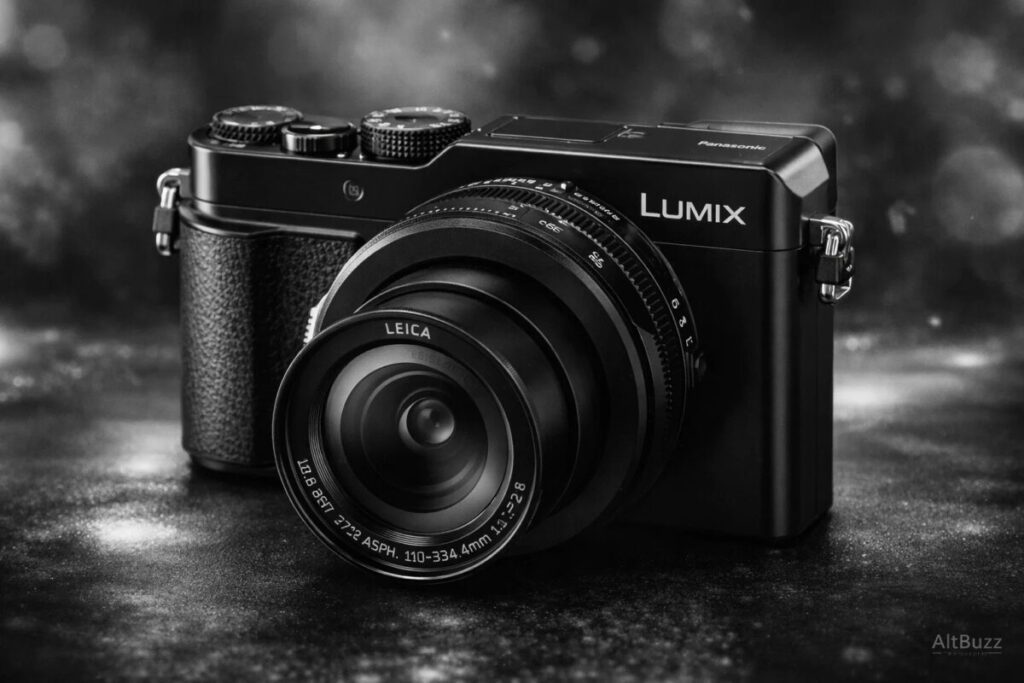
Design is one area where the LX100 series has never disappointed. The retro-inspired body with physical aperture, shutter speed, and exposure compensation dials gives this camera a tactile, analog feel. This is exactly what enthusiasts love. The Panasonic LX100 III is expected to keep this design DNA entirely.
Small refinements are likely. Better grip texture, improved button layout, and a more comfortable EVF eyecup are all plausible based on community feedback. The top plate dial arrangement is expected to remain similar to the LX100 II. That layout works well and there is little reason to change it.
Weather sealing is the big question. Many users have requested it for years. The Ricoh GR IIIx is not weather sealed. However, some competitors at this price point are beginning to offer basic splash resistance. Whether Panasonic includes weather sealing on the LX100 III remains genuinely unclear.
Build Quality
The LX100 series has always felt solid in hand. The combination of metal construction and thoughtful finishing makes it feel more premium than its price suggests. The LX100 III should continue this tradition. A magnesium alloy chassis with quality paint finishing is expected.
The lens barrel design is also expected to be refined. The original LX100’s lens extended noticeably when powered on. The LX100 II improved this slightly. Faster deployment and a smoother zoom action would both be welcome in the LX100 III.
Compactness as a Feature
Compactness remains the camera’s physical identity. It must stay genuinely pocketable to justify its existence against interchangeable-lens alternatives. The LX100 III is expected to remain slim enough for a large jacket pocket. That is a design constraint Panasonic will not compromise on.
Panasonic LX100 III Battery and Connectivity
Battery life has always been a weak point in premium compacts. The LX100 II offered around 340 shots per charge. That is acceptable but not impressive. The LX100 III may use the same DMW-BLG10 battery with efficiency improvements. Alternatively, it might switch to a slightly higher-capacity unit.
USB-C charging is essential in 2025. Being able to charge from a power bank is a major quality-of-life improvement for travel photographers. Expect Panasonic to include it in the LX100 III. USB-C also allows for faster wired data transfer, which many photographers prefer over wireless syncing.
Wi-Fi and Bluetooth connectivity for the Lumix Sync app are expected to continue. GPS geotagging via a smartphone connection is useful for travel photography. These features add genuine value without significantly increasing cost or size.
Power Management
Smarter power management is also expected. The LX100 II would drain its battery relatively quickly in standby mode. Improved sleep behavior and faster wake-from-sleep performance would extend usable shooting time per charge. These software-level improvements can make a meaningful difference in the field.
Panasonic LX100 III vs Competitors
Panasonic LX100 III vs Ricoh GR IIIx
The Ricoh GR IIIx uses an APS-C sensor and a fixed 40mm equivalent prime lens at f/2.8. It is sharper at the edges than most compact cameras. However, it offers no zoom flexibility. The LX100 III’s Leica zoom lens covering 24 to 75mm equivalent at f/1.7 to 2.8 offers far more compositional range. The LX100 III is also better for video. The GR IIIx targets purist street photographers. The LX100 III targets a broader audience.
Panasonic LX100 III vs Sony RX100 VII
The Sony RX100 VII uses a 1-inch sensor. It is physically smaller than the LX100 III’s MFT sensor. However, Sony’s autofocus is exceptional. The RX100 VII’s zoom range extends further in telephoto at 200mm equivalent. The LX100 III counters with a faster maximum aperture, larger sensor, and better low-light performance. Both cameras offer strong video features. The choice depends on whether the user prioritizes telephoto reach or low-light capability.
Panasonic LX100 III vs Fujifilm X100VI
The Fujifilm X100VI has become one of the most coveted compact cameras in years. It uses an APS-C sensor and a fixed 35mm equivalent prime at f/2. Its retro design, film simulations, and IBIS have made it enormously popular. The LX100 III’s zoom lens gives it versatility that the fixed-prime X100VI cannot match. However, Fujifilm’s color science and film simulation modes have a dedicated following that is difficult to compete with purely on specs.
Real-World Use Cases for the Panasonic LX100 III
Travel Photography
This is the LX100 III’s home territory. A pocketable body, a versatile 24 to 75mm equivalent zoom, and a fast f/1.7 maximum aperture cover virtually every travel situation. Add improved IBIS and 4K 60fps video, and the LX100 III becomes a compelling all-in-one travel tool.
For traveling photographers who shoot everything from wide cityscapes to tighter portrait shots of locals, the LX100 III’s zoom range is genuinely practical. A prime-lens compact forces you to zoom with your feet. The LX100 III lets you frame quickly and move on.
Street Photography
Physical dials, a fast lens, and a compact body are perfect for street work. The LX100 series has always been respected in the street photography community. The camera does not draw attention the way a larger DSLR or mirrorless body does. Better autofocus tracking would make the LX100 III even more capable for capturing fleeting moments in busy environments.
Casual Video and Vlogging
A tilting touchscreen, 4K 60fps, and pocketable size make the LX100 III a strong option for casual vloggers and travel content creators. It is not trying to replace a dedicated video camera. However, for someone who wants quality video without a dedicated kit, it makes a very strong case at its price point.
Enthusiast Daily Shooter
Many photographers simply want a high-quality camera they can carry everywhere without thinking about it. The LX100 III would serve this audience extremely well. Excellent optics, physical controls, and versatile focal length coverage make it ideal as a primary everyday camera. You leave the house with the LX100 III because it is always ready and never a burden to carry.
Portrait Photography
The f/1.7 maximum aperture at the wide end creates pleasant background separation even on a MFT sensor. At 75mm equivalent and f/2.8, the LX100 III can produce genuinely attractive shallow depth-of-field portraits. Combined with improved face and eye detection, it would be a capable casual portrait camera alongside its other strengths.
Pros and Cons Based on Rumors
Expected Strengths
- Leica DC Vario-Summilux zoom lens at f/1.7
- Multi-Aspect Ratio sensor system returning
- 4K 60fps video expected
- Improved EVF resolution
- Compact and genuinely pocketable
- Physical dials for tactile control
- Hybrid PDAF with AI subject recognition
- V-Log L for color grading
- 10-bit internal video recording rumored
- USB-C charging expected
Potential Weaknesses
- MFT sensor is smaller than APS-C rivals
- Fixed lens limits versatility for telephoto work
- Weather sealing remains unconfirmed
- Battery life may still be modest
- Price above USD 1,200 faces strong competition
- No official confirmation from Panasonic yet
What Would Make the LX100 III a Must-Buy?
The LX100 III does not need to be perfect. It needs to be right for its audience. If Panasonic delivers reliable PDAF, 4K 60fps, 10-bit recording, and USB-C charging while keeping the Leica zoom lens and Multi-Aspect Ratio system intact, the LX100 III becomes very hard to resist.
Weather sealing would make it a near-perfect travel compact. Better battery life would remove the last significant frustration from the LX100 experience. Neither is guaranteed. However, both are possible. And if Panasonic manages to price it below USD 1,300, the LX100 III would genuinely challenge every other premium compact on the market.
Final Thoughts on the Panasonic LX100 III
The compact premium camera market is having a real moment right now. There is clearly a passionate audience for carefully designed, high-quality compact cameras. The Panasonic LX100 III has a unique angle. No other compact camera offers a Leica-branded zoom at f/1.7 with a Multi-Aspect Ratio MFT sensor. That combination is genuinely special.
If Panasonic updates the autofocus, pushes video to 4K 60fps, adds 10-bit recording, and improves the sensor, the LX100 III would immediately become one of the most interesting cameras in the compact segment. It would have a clear identity. It would serve its audience well. It would be something that no competitor is currently offering.
The real question is whether Panasonic believes in this product enough to release it properly. Based on the growing rumor activity, the answer seems to be yes. And if it is, the Panasonic LX100 III could be the most exciting compact camera announcement of 2025.
AltBuzz will bring you every update on the Panasonic LX100 III as new information surfaces.
Read more from AltBuzz for camera reviews, rumors, and detailed specs. AltBuzz delivers trusted and easy-to-understand photography content.
Stay updated with camera reviews, rumors, and comparisons. AltBuzz shares regular camera content on YouTube. Subscribe AltBuzz