
Here is the fully rewritten Sony Venice 3 blog with active voice throughout, rich transition words, and smaller sub-headings breaking up every long section.
Meta Title: Sony Venice 3: Technical Specs and Cinema Leaks Meta Description: Sony Venice 3 rumored specs point to next-gen cinema technology. Full-frame sensor, RAW capture, and advanced color science details inside. Focus Keyword: Sony Venice 3 Tone: Technical and Cinema-Focused
Sony Venice 3 Rumors: Expected Specs, Features and Release
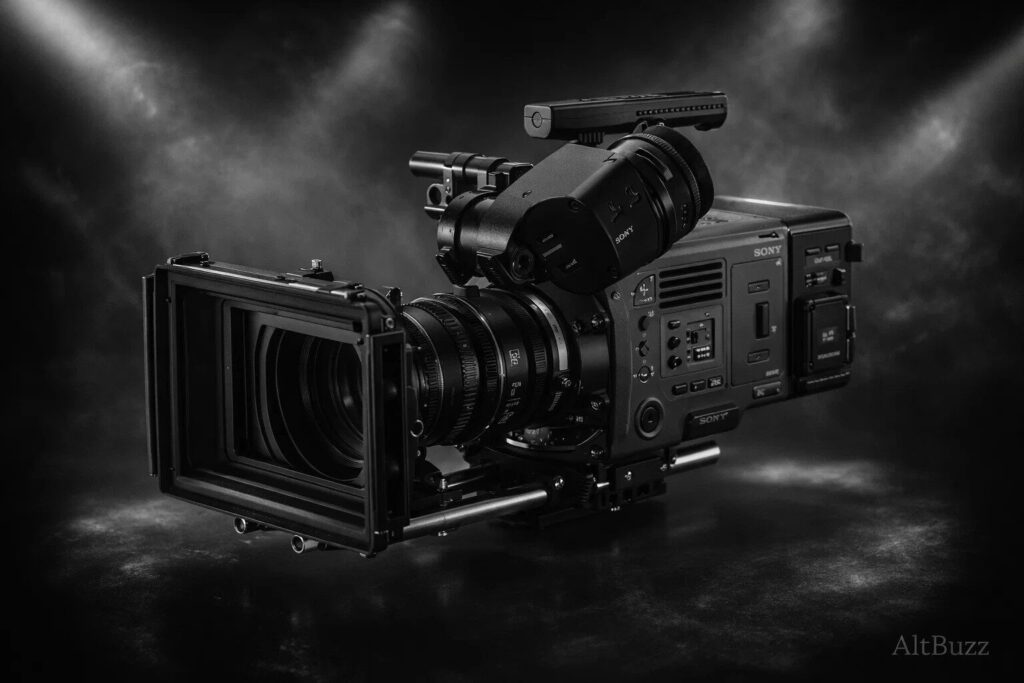
The Sony Venice 3 does not officially exist yet. Sony has released no statement. Sony has confirmed nothing publicly. Yet inside professional cinema production communities, the conversation around the Sony Venice 3 keeps growing louder every month.
Cinematographers are talking. Rental house managers are tracking developments closely. Digital imaging technicians and post-production supervisors are all asking the same question. What does Sony plan to do with the next generation of its flagship cinema camera?
This is not a consumer photography discussion. The Sony Venice series sits at one of the most technically demanding positions in the entire imaging industry. Films shot on Venice cameras have appeared at the highest levels of theatrical and streaming production worldwide. Consequently, the Sony Venice 3 will face scrutiny from professionals who understand cinema production requirements with exceptional depth.
This blog brings together all available leaks, credible speculation, and technical context around the Sony Venice 3. Every specification discussed here is rumor-based. Nothing carries official Sony confirmation.
Expected Release Date and Market Position
How Sony Times Its Venice Launches
Sony follows an approximate three-to-four-year development cycle with the Venice series. The original Venice arrived in 2017. The Venice 2 followed in late 2021 with a new 8.6K full-frame sensor and an improved dual-base ISO system. Following that same rhythm, a Sony Venice 3 announcement in 2025 or 2026 fits the historical pattern precisely.
Where Sony Will Likely Announce It
Industry sources consistently point toward NAB Show in spring or IBC in September as the most probable announcement venues. Both events draw the broadcast and cinema technology professionals who make large-scale purchasing decisions. An announcement at either show would immediately reach rental house buyers and production company equipment supervisors. These are exactly the people whose decisions determine which cameras appear on major productions.
Who the Sony Venice 3 Competes Against
The Sony Venice 3 enters competition at the very top of digital cinema. Its primary rivals are the ARRI ALEXA 35, which now dominates prestige productions globally, and RED’s V-RAPTOR in various configurations. Blackmagic’s URSA Cine 12K occupies overlapping production contexts at a lower price point.
Sony needs to deliver advancement that cinematographers and production companies can clearly articulate. Vague improvements do not drive adoption at this price tier. Measurable, demonstrable technical progress does.
Sony’s Institutional Advantage
Sony already holds strong institutional relationships with major studios, streaming platforms, and television production companies. The Venice and Venice 2 built those relationships through consistent on-set performance. The Sony Venice 3 enters the market with that foundation already in place. However, maintaining those relationships demands that each generation deliver visible advancement over the last.
Sony Venice 3 Rumored Specifications Table
| Feature | Rumored Details |
|---|---|
| Sensor Type | Full-frame or large-format CMOS, next-generation dual-base ISO architecture |
| Resolution | 16K full-sensor or 8.6K full-frame extraction with improved oversampling |
| Processor | Next-generation Bionz XR cinema processing architecture |
| ISO Range | Dual Base ISO: 1600 and 5000 speculated, improving on Venice 2’s 800 and 3200 |
| Autofocus System | Phase-detect with cinema-grade subject tracking and focus speed control |
| Stabilization | No IBIS, optical stabilization via compatible Sony Cinema Line lenses |
| Video Recording | X-OCN XT, ST, and LT internal plus external RAW via AXS recorder or next-gen format |
| EVF | External Venice EVF-3 speculated as new generation OLED viewfinder |
| LCD Screen | Optional 7-inch touchscreen monitor via mounting bracket |
| Burst Shooting | Not applicable, cinema-grade continuous recording at rated frame rates |
| Battery | BP-FZ100 ecosystem or expanded V-mount via plate adaptor |
| Storage | AXS media for RAW recording, CFexpress internal for proxy or X-OCN |
| Connectivity | 12G-SDI dual output, HDMI 2.1, Ethernet, Wi-Fi, USB-C, Genlock and TC |
| Weight | Approximately 4.0 to 4.8 kilograms body only |
| Expected Price | 45000 to 60000 USD body only |
Rumored Sensor and Image Quality of the Sony Venice 3
Why the Sensor Conversation Matters So Much
The sensor sits at the center of every meaningful discussion about the Sony Venice 3. All other specifications follow from it. To understand where the Venice 3 might go, you first need to understand where the Venice 2 currently stands and where its competitors have moved ahead.
The Venice 2 uses an 8.6K full-frame CMOS sensor with a dual-base ISO system. It delivers strong results. However, the ARRI ALEXA 35 changed the competitive landscape significantly after its 2022 arrival. ARRI’s new sensor measures approximately 17 stops of dynamic range. The Venice 2 sits at around 15 to 16 stops depending on the measurement approach. That gap matters to cinematographers who make equipment decisions based on technical specifications.
The Two Sensor Scenarios Rumor Sources Describe
Current leaks point toward two distinct directions for the Sony Venice 3 sensor.
The first scenario keeps Sony within the full-frame sensor format but involves a fundamentally redesigned photosite architecture. Better electron well capacity lets each photosite collect more charge before saturation. Lower read noise lets the sensor distinguish finer signal details from background noise. Together, these improvements translate directly into extended dynamic range across all ISO settings. This scenario represents a focused engineering refinement rather than a format change.
The second scenario takes a more aggressive approach. Some sources suggest Sony may develop a sensor that exceeds the 43.1mm diagonal of full-frame standard, potentially moving toward dimensions associated with large-format cinema capture. A larger sensor gives each photosite more physical area to collect light. More light collection per photosite produces better signal-to-noise ratios. This direction would put the Sony Venice 3 in direct competition with the ARRI ALEXA LF in the large-format segment, which is a strategically significant market position.
The Dual-Base ISO Upgrade Rumor
Sony Venice 3 rumors consistently include an upgrade to the dual-base ISO system. The Venice 2 offers base ISO 800 for controlled lighting and base ISO 3200 for available light situations. Leaked information suggests the Venice 3 could offer base ISO 1600 and base ISO 5000 instead.
That improvement carries real practical consequences. Base ISO 5000 lets the camera operate in lighting conditions that currently require the Venice 2 to use supplemental illumination to maintain acceptable image quality. Documentary cinematographers, news production teams, and event coverage crews would all benefit directly from that expanded sensitivity range.
Color Science and ACES 2.0 Alignment
Color science development for the Sony Venice 3 follows logically from these sensor improvements. The Venice series currently uses Venice RGB color space alongside S-Gamut3.Cine and S-Log3. These profiles work well within established Venice workflows but require specific color transforms when integrating with ACES pipelines.
The Sony Venice 3 is expected to introduce new color profiles that align more precisely with ACES 2.0, the Academy Color Encoding System version that increasingly governs high-end production color management. Better native ACES 2.0 alignment reduces the color transforms needed in post-production. That simplification directly benefits VFX integration workflows and improves color precision through complex multi-step post pipelines.
Rumored Autofocus System in the Sony Venice 3
How Cinema AF Differs from Photography AF
Autofocus in cinema cameras occupies a fundamentally different role than it does in still photography or consumer video. Most narrative cinema productions deliberately keep autofocus disabled. A dedicated first assistant camera controls focus manually, executing pre-planned marks at rehearsed positions. This approach prioritizes precise creative control over automation convenience.
Nevertheless, Sony actively develops and markets cinema AF as a commercial differentiator. That strategy targets documentary production, news gathering, and smaller-crew commercial projects where no dedicated focus puller joins the production. For those contexts, reliable AF saves time and reduces crew costs meaningfully.
What the Venice 3 AF System Is Rumored to Deliver
The Sony Venice 3 autofocus system reportedly advances well beyond the Venice 2’s implementation. Subject recognition covering human subjects at the face and eye level, operating at cinema-standard frame rates, is widely expected. Additionally, tracking performance across challenging environments with changing light and background complexity is expected to improve through more sophisticated subject identification algorithms.
The Critical Implementation Detail: Focus Movement Control
Simply tracking a subject accurately does not satisfy professional cinema requirements. How the camera moves focus between positions matters just as much as whether it locks correctly.
Cinema AF systems need to control transition speed and movement smoothing in detail. A sudden electronic snap to a new focus position looks wrong in narrative footage. Cinematographers need to program focus moves that match the pace and emotional character of each scene. The Sony Venice 3’s AF system reportedly offers granular control over focus transition speed and smoothing behavior. This allows motor-controlled lens systems to execute moves that feel intentional rather than mechanical.
Integration with Sony’s Cine Lens Control Protocol
Beyond the AF system itself, Sony reportedly refines the Venice 3’s integration with its cinema lens control protocol. This improvement lets cinematographers and focus pullers use the Venice 3’s AF data as an assistive reference rather than as fully autonomous control. That workflow model bridges traditional manual focus practice with the practical assistance that intelligent AF systems can provide. It respects professional conventions while still offering the efficiency benefits of automation when crew structures demand it.
Expected Video Capabilities of the Sony Venice 3
Why Video Specs Face Intense Scrutiny at This Level
Every video capability claim that Sony makes for the Venice 3 will face rigorous testing before productions commit to it. Rental house technicians run controlled technical evaluations. Production company equipment supervisors examine results carefully. Independent cinematographers post detailed findings publicly. At this price tier, marketing claims carry no currency. Measured performance does.
Internal Recording: The X-OCN Format Family
Internal recording in the Sony Venice 3 centers on the X-OCN format family that Sony introduced with the original Venice. X-OCN stands for Extended tonal range Original Camera Negative. It delivers visually lossless compressed RAW recording that preserves the sensor’s full latitude within manageable data rates.
X-OCN XT delivers the highest quality at the largest data rates. Productions with robust post infrastructure choose this variant for maximum grading flexibility. X-OCN ST and X-OCN LT offer progressively more conservative data rates. These variants suit productions where post-production resources are more constrained or where turnaround times demand faster file handling.
At the Sony Venice 3’s anticipated resolution increase, X-OCN XT data rates will rise substantially. Productions choosing the Venice 3 need to plan storage acquisition, media management workflows, and post-production pipeline capacity accordingly.
External RAW Recording and the Next-Generation AXS Format
The Sony Venice 3 is widely expected to support external RAW recording through the AXS-R7 recorder or a next-generation replacement. Furthermore, industry sources suggest Sony may introduce a new RAW recording format alongside the Venice 3. A higher-resolution sensor generates more data per frame. The existing AXS format and media specification may not accommodate the increased throughput without a corresponding upgrade to media speed and capacity ratings.
This potential format change has practical consequences for productions that already own AXS infrastructure. Rental houses and owner-operators will watch this specification closely when evaluating the Venice 3’s total cost of adoption.
Frame Rate Capability: The 4K 120fps Rumor
Frame rate capability represents the specification that production companies examine most immediately when comparing cinema cameras. The Venice 2 currently supports 4K internally at up to 60 frames per second. It reaches 120 frames per second only at 2K resolution. That resolution downgrade limits the creative and delivery applications of high-frame-rate footage from the Venice 2.
The Sony Venice 3 is rumored to offer 4K capture at 120 frames per second internally. This advancement would enable ultra-smooth slow-motion sequences at cinema-standard 4K resolution without the quality compromise that Venice 2 users currently accept when shooting high frame rates. Automotive campaigns, nature documentary productions, sports content, and action sequences would all benefit directly from this capability.
At full sensor resolution, maximum frame rates would naturally be lower, consistent with sensor data throughput limitations. The specific ceiling at full resolution remains among the less precisely detailed elements in current Sony Venice 3 speculation.
HDR and IP Production Protocol Support
HDR delivery capabilities are expected to expand considerably in the Sony Venice 3. Native HLG and PQ output directly from the camera would simplify HDR broadcast delivery workflows. Productions aiming at HDR10 or Dolby Vision deliverables currently require additional processing steps. Direct camera output in these formats removes a workflow layer and reduces the chance of color accuracy errors during format conversion.
SMPTE ST 2110 network video protocol support is also speculated. Broadcast production infrastructure globally is transitioning from traditional SDI cabling toward IP-based Ethernet video distribution. Camera systems that support IP protocol natively integrate more cleanly into these modern facility architectures. The Sony Venice 3’s speculated SMPTE 2110 support would make it significantly more practical for live broadcast and studio production environments currently upgrading their signal infrastructure.
Design and Build Expectations for the Sony Venice 3
The Modular Architecture Continues
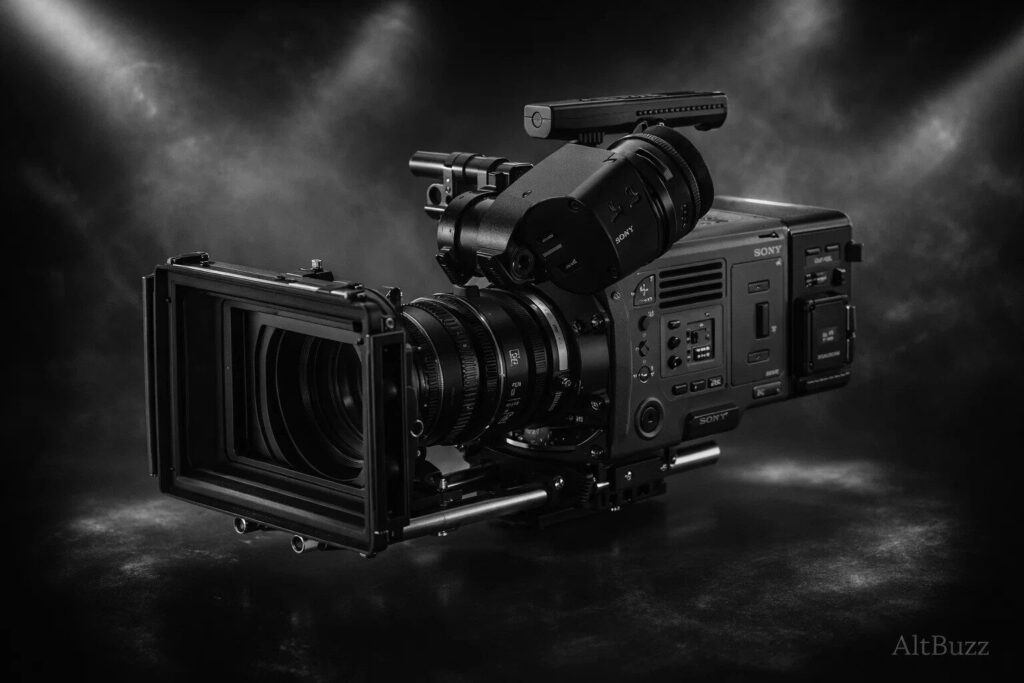
The Sony Venice 3 reportedly maintains the modular design philosophy that defined both earlier Venice models. The sensor block separates from the main recording body. This separation enables the camera to configure for a wider range of rigging scenarios than fixed-architecture cinema cameras allow.
Crane and gimbal work benefit from modular configurations because the sensor block can position independently of the heavier electronics. Remote head deployment for car-mounted or aerial work also benefits. Studio rigging supervisors appreciate the flexibility when designing complex multi-camera setups.
Thermal Management: The Core Engineering Challenge
Thermal management represents the most critical engineering challenge the Sony Venice 3’s development team faces. Higher sensor resolution generates more heat during readout. Increased maximum frame rates generate even more. Sony needs to handle that heat without allowing recording performance to drop during extended takes.
Thermal throttling is not acceptable on a professional cinema camera. When a camera reduces its frame rate or stops recording to protect itself from overheating, productions lose takes and time. At 45000 to 60000 dollars per body, buyers expect sustained performance at maximum specifications throughout a full shooting day.
Sony is expected to address this through improved passive heat dissipation using larger thermal mass and better surface area engineering. Some sources also speculate about active cooling with internal fans designed for minimal acoustic intrusion. On quiet sets where production sound is recording simultaneously, fan noise cannot bleed into the audio track.
Body Controls and Ergonomics
Beyond thermal management, the Sony Venice 3’s control layout and ergonomic refinements follow from feedback accumulated across Venice and Venice 2 production deployments. Camera operators, focus pullers, and digital imaging technicians have all contributed observations about what the existing design does well and where it falls short.
Control placement improvements that reduce the number of menu navigations required during takes are expected. Better tactile differentiation between adjacent buttons, which matters when operators work in low-light conditions without looking away from the monitor, is also anticipated. These refinements may seem minor individually, but together they reduce friction on set and improve the speed at which crews can respond to changing production demands.
The I/O Panel: What Connectivity the Venice 3 Needs
The I/O configuration of the Sony Venice 3 will face detailed scrutiny from integration specialists who connect cinema cameras into complex broadcast and studio signal chains. Dual 12G-SDI outputs for simultaneous monitoring and recording feeds are expected. HDMI 2.1 for 4K monitoring output is anticipated. High-speed USB-C for data transfer and camera control, Gigabit Ethernet for network integration, and standard Genlock and timecode connectors for multi-camera synchronization all belong on this camera based on its market positioning.
Productions running multi-camera shoots need cameras that sync precisely. Broadcast integrations need cameras that accept facility reference signals without additional hardware. The completeness of the Venice 3’s I/O panel will directly determine how broadly it can be adopted across different production infrastructure environments.
Battery and Connectivity Rumors for the Sony Venice 3
Professional Power Architecture
Professional cinema cameras operate within power ecosystems that differ completely from consumer camera contexts. The Sony Venice 3 reportedly supports both Sony’s BP-FZ100 proprietary battery system and industry-standard V-mount or Gold-mount batteries through a plate adaptor.
This dual compatibility matters significantly. V-mount and Gold-mount batteries are the standardized power currency of professional cinema. Grip and electrical departments carry these batteries universally. Camera systems that force crews to manage a separate proprietary battery ecosystem create logistical complications that experienced productions prefer to avoid.
Voltage Input Flexibility and Power Consumption
Beyond battery compatibility, the Sony Venice 3 reportedly accepts both 12V DC and 24V DC input. This allows the camera to draw power directly from standard cinema power distribution systems from brands like Bebob, Core SWX, and IDX. Electrical department supervisors plan power distribution for each shooting day based on each piece of equipment’s voltage requirements and power draw. Sony needs to publish clear power consumption figures for the Venice 3 at each resolution and frame rate combination to support that planning process.
Power efficiency improvements through better energy management architecture are also expected. A higher-performance camera that draws proportionally less additional power than raw performance numbers might suggest would be commercially attractive to productions running large camera packages from shared power systems.
Network and Wireless Connectivity
The Sony Venice 3’s network connectivity architecture reportedly supports Gigabit Ethernet for camera status monitoring and control from digital imaging technician workstations positioned away from the camera. This enables the DIT to monitor color accuracy and exposure remotely while communicating with the camera operator through the production intercom system.
Wi-Fi connectivity for wireless camera monitoring and control through Sony’s production applications extends this remote workflow to environments where running physical Ethernet cable is impractical. Outdoor location shoots, moving vehicle work, and multi-story building productions all benefit from wireless camera control capability. Together, these connectivity features make the Venice 3 more practical to integrate into the increasingly distributed and networked production environments that modern cinema productions operate within.
Potential Real-World Use Cases for the Sony Venice 3
Theatrical Feature Film Production
Theatrical feature film production represents the primary use case the entire Venice series targets. Productions with budgets large enough to allocate 45000 to 60000 dollars or more per camera body, plus the associated lens packages, accessories, and crew infrastructure, define the target production scale. The Sony Venice 3’s color science, dynamic range, and resolution will be evaluated precisely in this context by productions that accept nothing less than reference-quality capture.
High-Budget Streaming Originals
High-budget streaming content for major platforms represents a rapidly expanding second primary market. Netflix, Apple TV+, and Amazon Studios all operate technical delivery specifications that align with what the Venice 3 reportedly offers. These platforms have adopted Sony Venice cameras extensively across their original content slates. The Venice 3 enters this market with established relationships and a proven track record from earlier Venice deployments.
Commercial Advertising Cinematography
Advertising cinematography for automotive, fashion, luxury goods, and consumer brand categories represents another significant and consistent deployment context. Directors of photography working in commercial production prize the combination of large-format sensor characteristics, high-frame-rate slow-motion capability, and precise color performance. The Venice series has become an established tool in this sector. The Venice 3’s rumored improvements in frame rate and sensitivity would strengthen that position further.
Documentary and Live Broadcast Production
Documentary production and live event broadcast represent growing applications for Venice-class cameras. Sports documentary series, music event coverage, and prestige documentary features have all used Venice cameras in recent productions. The Sony Venice 3’s anticipated sensitivity improvements at higher base ISO values would extend the camera’s practical operating range in available-light documentary scenarios where rigging traditional cinema lighting is physically impossible or editorially inappropriate.
Possible Pros and Cons Based on Rumors
Expected Advantages of the Sony Venice 3
- Next-generation dual-base ISO architecture reportedly moves base values to ISO 1600 and 5000, meaningfully extending low-light operating range
- X-OCN RAW internal recording continues with a potential new high-bandwidth format variant addressing increased resolution demands
- 4K 120fps internal capture rumored as a transformational high-frame-rate capability at cinema-standard resolution
- Dynamic range reportedly expands beyond 16 stops through fundamental sensor architecture improvements rather than software processing
- New color space and ACES 2.0 aligned profiles reportedly streamline VFX integration and reduce color transform complexity in post pipelines
- Modular body architecture reportedly continues and refines for flexible professional rigging across crane, gimbal, remote head, and studio configurations
- Comprehensive I/O panel reportedly includes dual 12G-SDI, HDMI 2.1, Gigabit Ethernet, and full sync connectivity
- SMPTE ST 2110 IP protocol support reportedly addresses modern broadcast facility infrastructure transitions
- Sony’s existing institutional production relationships give the Venice 3 a strong adoption foundation before it ships
Possible Limitations of the Sony Venice 3
- Expected price of 45000 to 60000 dollars restricts realistic adoption to high-budget productions exclusively
- Higher-resolution X-OCN files will demand substantially more storage capacity and post-production infrastructure investment
- Cinema-standard body weight and dimensions require significant rigging infrastructure for all handheld and stabilized shooting modes
- The absence of IBIS means productions must achieve optical stabilization through lens systems or external gimbal equipment
- Thermal management at maximum sustained performance remains an unresolved engineering question until Sony confirms specifications
- 4K 120fps internal recording remains among the least confirmed and most speculative claims in current Sony Venice 3 rumors
- A potential new AXS RAW format could require productions to invest in new media and recorder hardware alongside the camera itself
- All specifications presented here carry no official Sony confirmation and remain subject to change
Final Thoughts on the Sony Venice 3
The Sony Venice 3, assembled from available industry leaks and careful technical analysis, looks like a camera that Sony designs with genuine ambition. Every rumored specification targets either a known limitation of the Venice 2 or a competitive gap opened by ARRI’s current market position. That coherence gives the rumor picture more credibility than cameras where leaked specifications feel randomly assembled.
The sensor advancement rumors carry the most weight. If Sony actually delivers dual-base ISO values of 1600 and 5000 alongside expanded dynamic range exceeding 16 stops, the Venice 3 directly challenges the ALEXA 35’s current reference position for high-dynamic-range capture. That challenge would reshape the premium cinema camera conversation significantly.
The 4K 120fps capability, if Sony achieves it internally, adds something no current large-format cinema camera offers at this resolution without external recording infrastructure. That singular capability could drive adoption among commercial and documentary productions that currently work around the limitation.
Professional cinema production evaluates cameras through a slow and rigorous process. Rental house technical tests come first. Colorist evaluations of RAW output follow. Extended production deployments generate real-world performance data. Only after all of that does widespread adoption follow. The Sony Venice 3 will go through every step of that process when it arrives. Based on the current rumor picture, Sony appears to be preparing a camera that enters that evaluation with genuine technical ambition behind it.
All information in this article is speculative. Sony has made no official statements about the Sony Venice 3. The professional imaging community continues monitoring Sony’s patent activity, trade show presence, and production partner communications for further confirmation.
Read more from AltBuzz for camera rumors, leaked specs, and expert insights. AltBuzz delivers trusted and easy-to-understand photography content. Altbuzz
Stay updated with camera rumors and comparisons. AltBuzz shares latest camera content regularly. Subscribe Altbuzz