
The Panasonic G9 III is rumored to arrive as the next flagship in Panasonic’s G-series lineup. This camera has not been officially released yet. However, photography enthusiasts are watching closely for any announcements.
The Panasonic G9 III is expected to target serious photographers who value speed and reliability. Wildlife, sports, and action photographers may find this camera particularly appealing. Micro Four Thirds users are also eager to see what improvements Panasonic brings to this system.
Expected Release Date and Market Position
The Panasonic G9 III release window remains unconfirmed. Industry insiders suggest a possible announcement in late 2026 or early 2027. Panasonic typically spaces its flagship releases several years apart.
This camera will likely sit in the professional Micro Four Thirds segment. It would compete directly with the OM System OM-1 Mark II. The Panasonic G9 III may also attract users considering APS-C cameras from Canon and Fujifilm.
Market positioning suggests a price range between $1,700 and $2,000 for the body only. Kit options with quality lenses would likely exceed $2,500. Competition in this segment has intensified considerably.
Panasonic G9 III Rumored Specifications Table
| Feature | Rumored Details |
|---|---|
| Sensor Type | 26MP Micro Four Thirds Live MOS |
| Resolution | 26 Megapixels |
| Processor | Venus Engine XI |
| ISO Range | 100-51,200 (extended) |
| Autofocus System | Phase Detection + Contrast Detection Hybrid |
| Stabilization | 8-stop 5-axis IBIS |
| Video Recording | 6K 60p, 4K 120p 10-bit |
| EVF | 5.76M-dot OLED, 0.83x magnification |
| LCD Screen | 3.2″ fully articulating, 1.84M-dot |
| Burst Shooting | 75 fps electronic, 15 fps mechanical |
| Battery | DMW-BLK22, ~900 shots |
| Storage | Dual UHS-II SD + CFexpress Type B |
| Connectivity | Wi-Fi 6, Bluetooth 5.2, USB-C 3.2 |
| Weight | Approximately 685g (body only) |
| Launch Price | $1,799-$1,999 (estimated) |
Sensor and Image Quality Expectations
The Panasonic G9 III sensor is rumored to feature 26 megapixels. This represents a modest increase from previous models. The new sensor may incorporate back-side illumination technology for improved light gathering.
Image quality improvements should focus on dynamic range. Photographers expect at least 13 stops of usable latitude. The Panasonic G9 III will likely excel in challenging lighting conditions. Additionally, the sensor’s parallel gain architecture could reduce noise significantly.
Low-light performance has always been critical for Micro Four Thirds cameras. The Panasonic G9 III may deliver clean images up to ISO 6400. Usable results at ISO 12,800 seem achievable with proper exposure. Meanwhile, extended ISO ranges would reach 51,200 for emergency situations.
Color science from Panasonic has remained consistently praised. The Panasonic G9 III should maintain accurate skin tones and natural color reproduction. Furthermore, RAW files will provide excellent flexibility for post-processing. The Venus Engine XI processor would handle noise reduction intelligently.
Autofocus Expectations
Autofocus represents a crucial upgrade area for the Panasonic G9 III. Rumors suggest full phase detection coverage across the frame. This marks a significant improvement over older contrast-based systems. Moreover, the hybrid system would combine speed with accuracy.
Subject detection capabilities should include humans, animals, vehicles, and aircraft. Eye detection for both humans and animals appears certain. The Panasonic G9 III tracking system may maintain focus even during rapid subject movement. Subsequently, photographers could rely on the camera for unpredictable action.
Continuous autofocus performance would reach professional standards. The system might acquire focus in as little as 0.03 seconds. Video autofocus should perform smoothly without hunting or pulsing. Additionally, touch-to-focus functionality would offer intuitive control.
Low-light autofocus has improved dramatically in recent cameras. The Panasonic G9 III could focus down to -6 EV. This enables shooting in near-darkness with confidence. Face and eye detection should work reliably even in dim conditions.
Video Features
Video capabilities remain a strong focus for Panasonic cameras. The Panasonic G9 III is expected to record 6K footage at 60 frames per second. This provides exceptional resolution for professional productions. Moreover, 4K recording at 120fps would enable stunning slow-motion effects.
Log profiles will likely include V-Log L as standard. This flat profile maximizes dynamic range for color grading. Additionally, optional ARRI LogC3 compatibility might be available. High-quality 10-bit 4:2:2 internal recording seems certain. Frame rates up to 240fps in Full HD would satisfy slow-motion enthusiasts.
Stabilization during video recording should be exceptional. The 8-stop IBIS system combined with electronic stabilization would deliver smooth footage. Furthermore, unlimited recording times appear feasible with improved heat management. The Panasonic G9 III body design may incorporate better cooling systems.
Audio support would include microphone and headphone jacks. The optional DMW-XLR2 adapter could provide professional XLR inputs. Real-time LUT application would help visualize final looks during shooting. Consequently, filmmakers could work more efficiently on set.
Design, Build Quality, and Handling
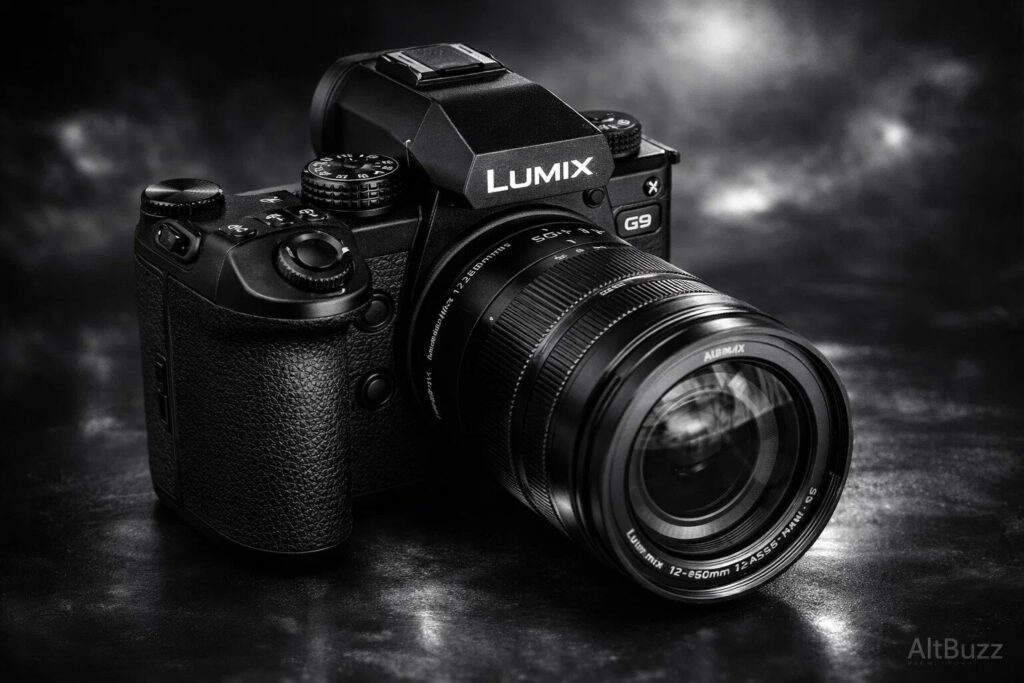
Build quality has always been a Panasonic G9 series strength. The Panasonic G9 III will likely feature magnesium alloy construction. Full weather sealing against dust and moisture is expected. This makes the camera suitable for demanding outdoor use.
Ergonomics should follow Panasonic’s proven design philosophy. A deep grip provides secure handling even with large lenses. Button placement would be logical and customizable. The Panasonic G9 III may offer dedicated buttons for frequently accessed functions. Meanwhile, a top LCD display would show critical shooting information.
The electronic viewfinder quality should be outstanding. A 5.76-million-dot OLED panel with 0.83x magnification seems likely. This provides a bright, clear view for composition. Additionally, the rear LCD screen would be fully articulating. Touch functionality enables intuitive menu navigation and focus point selection.
Weight considerations balance portability with professional build. At approximately 685 grams, the Panasonic G9 III remains manageable. However, this is heavier than entry-level mirrorless cameras. The trade-off delivers superior durability and control options.
Battery Life and Connectivity
Battery performance determines practical shooting duration. The Panasonic G9 III would likely use the DMW-BLK22 battery. This provides approximately 900 shots per charge under standard conditions. Furthermore, USB-C charging enables convenient power top-ups in the field.
Wireless connectivity should include the latest standards. Wi-Fi 6 would deliver fast image transfers. Bluetooth 5.2 allows low-power connections for remote control. The Panasonic G9 III could integrate seamlessly with smartphones via the Lumix Lab app. Consequently, photographers can review and share images immediately.
Wired connections would include USB-C 3.2 for high-speed data transfer. Micro HDMI output enables external monitor connections. Additionally, microphone and headphone jacks support professional audio workflows. Remote control via USB tethering should work reliably for studio shooting.
Cloud connectivity features may appear in the Panasonic G9 III. Frame.io Camera to Cloud integration would benefit video professionals. This allows direct uploads to cloud storage during or after shooting. Subsequently, editing teams can begin work without delay.
Expected Use Cases
Wildlife photography represents a primary target for the Panasonic G9 III. The fast burst rates and reliable autofocus suit this demanding genre. Moreover, the crop factor of Micro Four Thirds extends lens reach effectively. A 300mm lens provides 600mm equivalent focal length.
Sports photographers would appreciate the camera’s speed and tracking. The 75fps burst rate captures peak action moments. Meanwhile, the buffer depth should accommodate extended shooting sequences. Autofocus subject tracking would maintain focus during rapid movement.
Landscape photographers benefit from the high-resolution sensor. The 26-megapixel count provides detailed images for large prints. Additionally, in-body stabilization enables handheld shooting in low light. The Panasonic G9 III weather sealing protects against harsh conditions.
Event photography and weddings suit this camera well. The combination of stills and video capabilities offers versatility. Fast autofocus ensures critical moments aren’t missed. Furthermore, excellent low-light performance handles challenging venue lighting. The Panasonic G9 III battery life supports all-day shooting.
Pros and Cons
Pros
- Exceptional burst shooting speeds up to 75fps
- Advanced phase detection autofocus with subject tracking
- Impressive 8-stop in-body stabilization system
- Professional 6K 60p and 4K 120p video recording
- Robust weather-sealed magnesium alloy construction
- Outstanding battery life for extended shooting
- Compact lens ecosystem with excellent telephoto reach
Cons
- Micro Four Thirds sensor smaller than APS-C and full-frame
- Lower light-gathering capability compared to larger sensors
- Potentially higher price than competing APS-C cameras
- Limited third-party lens support compared to other systems
- Smaller sensor affects depth of field control
- ISO performance may lag behind full-frame alternatives
Final Thoughts
The Panasonic G9 III represents an exciting prospect for Micro Four Thirds enthusiasts. This rumored camera appears to address previous system limitations. Phase detection autofocus and improved video specifications strengthen its position considerably.
Photographers who value portability with professional features should consider this camera. Wildlife and sports shooters particularly benefit from the system’s strengths. The Panasonic G9 III combines speed, reliability, and versatility effectively. Moreover, the Micro Four Thirds lens ecosystem offers compact telephoto options.
However, photographers prioritizing absolute image quality might prefer larger sensors. Low-light specialists may find full-frame systems more suitable. The Panasonic G9 III excels in specific applications but doesn’t replace all camera types. Budget-conscious buyers should also consider the total system cost.
Read More from AltBuzz
Read more from AltBuzz for camera rumors, detailed specs, and expert insights. AltBuzz delivers trusted and easy-to-understand photography content.
Subscribe AltBuzz YouTube Channel
Stay updated with camera rumors and comparisons. AltBuzz shares hands-on camera content regularly.
👉 Subscribe here: AltBuzz YouTube Channel