
Sony ZV-E20 Rumored Specs and Features: A Complete Creator Preview for 2025
If you follow camera news, you have probably seen the name Sony ZV-E20 pop up across leak communities, photography forums, and creator discussion groups. Rumored to be the follow-up to the widely popular ZV-E10, this camera is generating serious excitement among content creators, vloggers, travel filmmakers, and social media videographers around the world.
The Sony ZV-E20 has not been officially announced. Sony has not confirmed its existence publicly. However, the volume of credible leaks, the logical progression of the ZV product line, and the competitive pressure Sony faces from rivals all point toward a new release being imminent.
This full preview breaks down every rumor surrounding the Sony ZV-E20 in careful detail. You will find information on the expected sensor, video capabilities, autofocus system, battery upgrades, design changes, competitive positioning, and much more. Whether you are considering upgrading from the ZV-E10 or shopping for your very first interchangeable lens mirrorless camera, this guide covers everything you need to know before the Sony ZV-E20 is officially revealed.
What Is the Sony ZV-E20 and Why Creators Are Excited
To understand why the Sony ZV-E20 matters so much to the creator community, it helps to look at where the ZV series started and where it has gone.
Sony launched the original ZV-1 in 2020 as a fixed-lens compact camera built entirely for vloggers. It was smaller than a traditional camera, had a front-tilting screen for self-shooting, and prioritized face tracking autofocus above almost everything else. Creators responded enthusiastically. The ZV-1 sold well and established Sony as a brand that genuinely understood what content creators needed.
The ZV-E10 followed in 2021 and took the concept further by introducing an APS-C sensor and an E-mount lens system. This gave creators access to Sony’s extensive lens ecosystem without needing to buy into the more expensive Alpha series. The ZV-E10 became a bestseller almost immediately and remains one of the most recommended entry-level cameras for YouTube creators today.
The Sony ZV-E20 is expected to continue this progression. Based on available rumors, Sony appears to have identified the ZV-E10’s weaknesses carefully and targeted them with meaningful upgrades. Battery life, video resolution, stabilization, and screen flexibility are all rumored to receive significant improvements. For creators who have outgrown the ZV-E10, or for new buyers who want more capability from the start, the Sony ZV-E20 could be the ideal solution.
Sony ZV-E20 Rumored Release Date: When Can Creators Expect It
Most leak sources point to a mid-2025 to late-2025 launch window for the Sony ZV-E20. Sony does not typically reveal ZV-series cameras at traditional photography trade shows like CP+ or Photokina. Instead, the company tends to use targeted digital launch events and social media reveals for creator-focused products. This strategy reaches the YouTube and Instagram audience far more effectively than a trade show floor announcement.
Some sources suggest Sony could bundle the Sony ZV-E20 reveal with a new kit lens designed specifically for vloggers. A compact 16 to 50mm power zoom lens was mentioned in one rumor community thread, though this detail remains highly speculative and should be treated with extra caution.
The broader context of Sony’s product calendar also supports a 2025 launch. Sony typically refreshes its creator-focused lineup every two to three years. The ZV-E10 is now approaching its fourth year on the market. A successor is overdue by Sony’s own historical standards. The timing aligns well with the mid-2025 rumor window.
Retailers in some markets have also reportedly begun clearing ZV-E10 stock, which some observers interpret as preparation for an incoming replacement. This kind of inventory movement often precedes a new camera announcement by several months. None of this is definitive evidence, but the combination of factors builds a credible case for a 2025 Sony ZV-E20 launch.
Sony ZV-E20 Rumored Specifications Table
| Feature | Expected Details |
|---|---|
| Sensor Type | APS-C BSI CMOS — Rumored |
| Resolution | 26 MP — Rumored |
| Processor | BIONZ XR — Expected |
| ISO Range | 100 to 51200 expandable to 204800 — Rumored |
| Autofocus System | Real-time AI tracking with subject recognition — Expected |
| Stabilization | In-body 5-axis plus Active Mode — Rumored |
| Video Recording | 4K 60fps and 1080p 240fps — Rumored |
| EVF | None, typical for ZV line — Expected |
| LCD Screen | 3-inch fully articulating touchscreen — Expected |
| Burst Shooting | Up to 11 fps — Rumored |
| Battery | NP-FZ100 — Rumored upgrade from ZV-E10 |
| Storage | Single SD UHS-II — Rumored |
| Connectivity | USB-C, Bluetooth 5.0, Wi-Fi 5 — Expected |
| Weight | Approx. 350g — Estimated |
| Expected Price | $750 to $900 USD — Estimated |
All entries in this table are based on rumors and leaks. Sony has not confirmed any of these specifications. Treat all information as subject to change until an official announcement is made.
How the Sony ZV-E20 Stacks Up Against the Competition
The creator camera market has evolved rapidly since the ZV-E10 launched. The Sony ZV-E20 will enter a more competitive landscape than its predecessor faced in 2021. Understanding the competitive environment helps set realistic expectations for what Sony needs to deliver.
The Fujifilm X-S20 is one of the strongest rivals the Sony ZV-E20 will face. Fujifilm’s camera offers 6.2K video, excellent film simulations, a large NP-W235 battery, and strong in-body stabilization. It has found a devoted following among vloggers and hybrid shooters who appreciate Fujifilm’s color science. The X-S20 is priced similarly to where the Sony ZV-E20 is expected to land, making it a direct competitor.
The Canon EOS R50 targets the same entry-level creator audience with Canon’s proven Dual Pixel CMOS AF II system and compact body design. Canon’s color science is popular for skin tones, and the R50 benefits from the RF lens ecosystem. However, it lacks in-body stabilization, which the Sony ZV-E20 is expected to include.
The DJI Osmo Pocket 3 and various action cameras also compete for creator attention at lower price points. These devices offer simplicity and portability that dedicated mirrorless cameras cannot match. However, they lack the image quality, lens flexibility, and low-light performance that the Sony ZV-E20 should provide.
Sony’s primary competitive advantage in this market has always been autofocus. No competitor in the entry-level creator space has consistently matched Sony’s real-time tracking AF at a similar price point. If the Sony ZV-E20 delivers on its rumored AI autofocus upgrades while also improving battery life and video specs, maintaining market dominance becomes very achievable.
Autofocus System: What Creators Can Really Expect
Autofocus is not just a feature for the ZV series. It is the foundation of the entire product philosophy. The ZV line exists specifically to let creators focus on their content rather than on operating their camera. Reliable, intelligent autofocus is what makes this possible.
The ZV-E10 offered Sony’s real-time tracking AF, which was impressive for its time. Eye AF worked reliably for most creators shooting in reasonable conditions. However, tracking performance in low contrast situations and with fast-moving subjects showed limitations that more demanding users noticed.
The rumored AI-powered real-time tracking system for the Sony ZV-E20 draws on the same deep-learning AF architecture developed for Sony’s Alpha series cameras. This means not just face and eye detection, but full body tracking that maintains subject lock even when faces turn away from the camera. For creators who move around during filming, this matters enormously.
Subject recognition covering animals and vehicles is also expected on the Sony ZV-E20. Pet owners who create content featuring their animals would benefit from reliable animal eye AF. Creators shooting automotive content or travel videos in busy environments would appreciate vehicle recognition.
The practical impact of improved AF on the Sony ZV-E20 goes beyond technical specs. A creator using the ZV-E10 who loses focus mid-sentence must stop the recording and reshoot. A creator using the Sony ZV-E20 with improved tracking AF can move naturally, gesture freely, and step in and out of frame without worrying that the camera will lose them. This confidence changes how creators work and what they feel comfortable attempting on camera.
Sony is also expected to refine the touch tracking interface on the Sony ZV-E20. Tapping a subject on the rear screen to lock tracking AF is already possible on the ZV-E10, but the system is expected to become faster and more responsive on the new model.
Video Recording Capabilities
Video is the primary reason most people buy a ZV-series camera, and the Sony ZV-E20 video rumors are the most impactful in its entire spec sheet. The ZV-E10 was limited to 4K at 30fps with a noticeable crop applied. In 2021, this was acceptable. By 2025 standards, it feels limiting.
The Sony ZV-E20 is widely rumored to address this directly with 4K at 60fps recording. This single upgrade alone would make the Sony ZV-E20 more competitive than its predecessor across essentially every video use case. High-motion content, sports coverage, and cinematic B-roll all benefit from the smoother movement that 60fps enables. For creators who want slow-motion sequences at 4K quality, 4K 60fps recorded and played back at 24fps delivers a 2.5x slow-motion effect that looks genuinely cinematic.
For more dramatic slow-motion, the Sony ZV-E20 is also rumored to offer 1080p at 240fps. This enables 10x slow motion at standard 24fps playback, which opens creative possibilities for fitness creators demonstrating technique, cooking channels showing liquid and steam movement, and lifestyle vloggers capturing dynamic moments with creative flair.
S-Log3 support is another highly anticipated feature for the Sony ZV-E20. The ZV-E10 did not offer log recording, which meant creators had limited dynamic range in their footage and less flexibility during color grading. S-Log3 expands the tonal range captured in each frame, preserving detail in highlights and shadows that would otherwise be clipped. For creators who spend time in post-production refining their look, this is a genuinely meaningful addition.
Creators who use external monitors or recorders will also be interested in the clean HDMI output expected on the Sony ZV-E20. Clean HDMI allows full-resolution video to be output without on-screen information overlays, which external recorders and streaming encoders require for proper capture.
USB streaming capability is widely anticipated as well. The ability to use the Sony ZV-E20 as a direct webcam or streaming source via USB-C without additional capture hardware simplifies setups for live streamers and hybrid creators who work across multiple platforms simultaneously.
Image Quality: What to Expect from the Sensor
The resolution increase from 24.2 MP on the ZV-E10 to a rumored 26 MP on the Sony ZV-E20 is a small but meaningful step. More important than the megapixel count, however, is the rumored shift to a BSI CMOS sensor architecture.
BSI stands for backside illuminated. This design places the light-gathering photodiodes at the front of the sensor structure rather than behind the circuit layer. The result is a more efficient path for light to reach the sensor, which translates directly to better low-light performance, reduced noise at high ISO values, and improved dynamic range compared to traditional front-illuminated sensors.
For the ZV-E20’s primary audience, indoor low-light performance is probably the most practically impactful image quality consideration. Many creators shoot indoors under mixed artificial lighting without professional lighting rigs. A sensor that handles these conditions cleanly at ISO 3200 or 6400 means the difference between publishable footage and footage that looks grainy and unprofessional.
The BIONZ XR processor expected in the Sony ZV-E20 brings additional image quality benefits beyond raw sensor performance. BIONZ XR applies sophisticated noise reduction algorithms in real time, processes complex subject detection data for the AI autofocus system, and manages the high data throughput required for 4K 60fps recording without compromising image quality.
Color science is another area where the Sony ZV-E20 should impress. Sony’s current color rendering, particularly for skin tones, is widely regarded as among the best in its class. The BIONZ XR platform should maintain and potentially refine this strength, giving creators footage that looks polished with minimal grading effort in everyday shooting situations.
Design and Body Changes: What Is Rumored
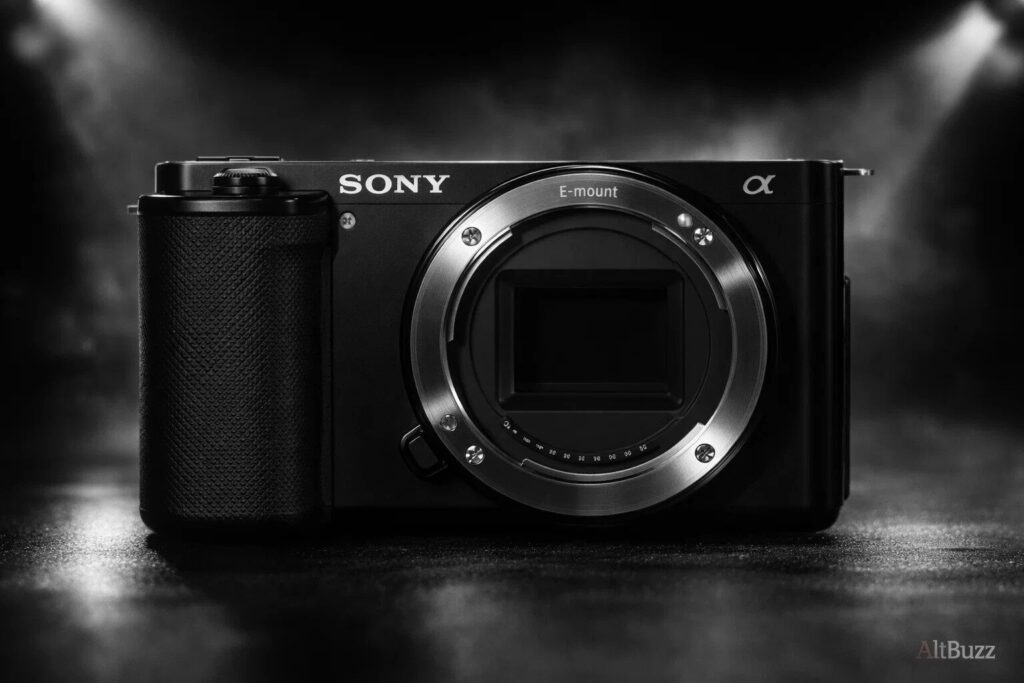
Sony is not expected to dramatically reinvent the ZV-E10’s design with the Sony ZV-E20. The compact form factor, simplified control layout, and creator-friendly features that made the ZV-E10 popular are all expected to be retained. However, several meaningful design refinements are rumored.
The most significant design change is the screen. The ZV-E10 used a side-tilting vari-angle screen that could flip forward for self-shooting. While useful for vlogging, it was less practical for low-angle ground-level shots and overhead content. The Sony ZV-E20 is widely rumored to feature a fully articulating screen that rotates on two axes. This would allow the camera to be positioned at any angle while still showing a usable image to the operator.
For solo creators who shoot without assistance, a fully articulating screen on the Sony ZV-E20 is transformative. Cooking creators can shoot directly overhead to capture preparation surfaces. Fitness creators can place the camera on the floor and shoot upward. Travel vloggers can hold the camera at unusual angles to capture dynamic perspectives. All of these require a screen that articulates fully.
The grip on the Sony ZV-E20 is expected to receive a slight improvement for better one-hand holding stability during active filming. This may seem like a minor change but matters significantly for extended handheld recording sessions where hand fatigue becomes a real concern.
The front-facing speaker, which allows creators to monitor audio from the front of the camera during self-filming sessions, is expected to be retained on the Sony ZV-E20. The built-in microphone capsule may also receive an upgrade, with better wind noise rejection expected based on rumor sources.
Body color options are likely to expand beyond basic black. Sony offered the ZV-E10 in white and multiple limited-edition colors. The Sony ZV-E20 is expected to follow a similar approach, giving creators options that match their aesthetic preferences and personal branding.
Battery Life Upgrade: The Most Important Sony ZV-E20 Rumor
Among all the rumors surrounding the Sony ZV-E20, the battery upgrade is arguably the single most impactful for everyday creators. The ZV-E10 used the NP-FW50 battery, which offered approximately 440 shots or roughly 60 to 90 minutes of continuous video recording per charge. For creators who shoot long-form content, conduct extended live streams, or film all day at events, this limitation was a constant source of frustration.
The Sony ZV-E20 is widely rumored to switch to the NP-FZ100 battery. The NP-FZ100 offers approximately 2280mAh of capacity compared to the NP-FW50’s 1020mAh. In practical terms, this roughly triples the energy available per charge. A creator who previously got one hour of video recording from the ZV-E10 could realistically expect three hours or more from the Sony ZV-E20 under similar conditions.
This is not a marginal improvement. For a creator who shoots a full day of travel content, covers a multi-hour event, or runs a live stream that extends past the hour mark, the battery difference between the ZV-E10 and the rumored Sony ZV-E20 changes the entire shooting experience. Carrying fewer spare batteries, worrying less about power during critical moments, and having confidence that the camera will last through extended sessions are all practical benefits that improve the quality of the creative process.
USB-C charging is also expected on the Sony ZV-E20, which means creators can top up the battery from a portable power bank while traveling without needing to carry a dedicated charger. This convenience is increasingly important for mobile-first creators who work from backpacks and do not always have access to wall outlets.
Connectivity Features
Connectivity improvements on the Sony ZV-E20 extend beyond USB-C charging. Wi-Fi 5 support would allow significantly faster wireless file transfers compared to the older Wi-Fi standard in the ZV-E10. Transferring a day’s worth of 4K footage to a laptop or tablet wirelessly becomes a much faster process with Wi-Fi 5, which is directly relevant to creators who edit on the go.
Bluetooth 5.0 is expected to improve pairing stability and range with Sony’s wireless accessories. The Sony Bluetooth Remote Commander and wireless microphone adapters benefit from a more reliable connection, which reduces the risk of dropouts during recording.
The combination of improved Wi-Fi and Bluetooth on the Sony ZV-E20 also enhances the Sony Creators’ App experience. Creators who use Sony’s mobile application to control their camera remotely, transfer files, and manage settings directly from their smartphone will see noticeable improvements in responsiveness and reliability.
For live streamers, the expected USB-C streaming capability of the Sony ZV-E20 means the camera can function as a high-quality webcam or streaming source connected directly to a computer or streaming device. This eliminates the need for a separate capture card in many setups, simplifying the streaming workflow and reducing equipment costs.
Real-World Use Cases: Who Benefits Most from the Sony ZV-E20
The Sony ZV-E20 clearly targets a specific type of creator, but that category is broader than it might initially appear. Understanding which use cases benefit most helps potential buyers assess whether this is the right camera for their work.
Daily vloggers who publish regularly to YouTube or short-form platforms like Instagram Reels and TikTok represent the core audience. For this group, the combination of compact size, reliable AI autofocus, improved stabilization, and 4K 60fps recording on the Sony ZV-E20 covers all primary needs. The fully articulating screen and front-facing speaker design specifically support the self-filming workflow that daily vloggers depend on.
Travel creators need portability above almost everything else. The rumored 350g body weight of the Sony ZV-E20 keeps it genuinely compact for international travel where luggage weight limits are a real concern. Paired with a small prime lens or compact zoom, the Sony ZV-E20 builds into a travel kit that fits in a jacket pocket or small daypack without difficulty.
Fitness and wellness content creators face a specific challenge. They move constantly during filming, often change direction rapidly, and need the camera to maintain focus on their face without assistance. The expected AI tracking AF of the Sony ZV-E20 combined with active stabilization mode would handle fitness content creation reliably without an operator.
Food and cooking creators benefit from the fully articulating screen, which allows overhead shots without the awkward camera positioning that a simpler tilt screen requires. The improved low-light performance of the Sony ZV-E20 also helps in kitchen environments where window light and overhead fixtures create mixed lighting challenges.
Podcasters and interview creators who film conversations rather than solo content need a camera that handles two people in frame reliably. The wide tracking AF area expected on the Sony ZV-E20 should manage multi-subject scenes more smoothly than the ZV-E10 in similar situations.
Pros and Cons Based on Current Rumors
Rumored Strengths
- 4K at 60fps is a significant and long-overdue upgrade from the ZV-E10’s 4K 30fps limit
- AI autofocus expected to be the most capable in the entry-level APS-C creator segment
- NP-FZ100 battery upgrade directly addresses the ZV-E10’s most widely criticized limitation
- Fully articulating screen expected to replace the more limited side-tilting design
- S-Log3 support would open color grading possibilities that were unavailable on the ZV-E10
- BSI CMOS sensor should deliver meaningfully improved low-light performance
- Compact and lightweight design expected to be maintained for travel and mobile creators
- USB-C charging adds significant convenience for creators who work on the go
Rumored Concerns
- No EVF means the Sony ZV-E20 will struggle in very bright direct sunlight conditions
- Single SD card slot limits backup recording options for more demanding professional use
- Price increase from the ZV-E10’s original launch price may challenge the most budget-conscious buyers
- APS-C sensor limits depth-of-field control compared to full-frame alternatives in the same budget range
- 4K crop factor at 60fps is an unresolved concern based on Sony’s current camera behavior
- Absence of a headphone jack for audio monitoring has not been confirmed but is a concern based on the ZV-E10 omission
Final Verdict: Is the Sony ZV-E20 Worth Waiting For
Based on everything available in current rumor sources, the Sony ZV-E20 looks like a thoughtfully constructed upgrade over the ZV-E10. Sony appears to have studied user feedback carefully and addressed the complaints that mattered most to the creator community. The battery, the screen, the video resolution, and the autofocus system are all rumored to receive meaningful improvements. These are not superficial changes. They address the most practically impactful limitations of the predecessor.
For current ZV-E10 owners, the decision to upgrade depends on how much the battery life and 4K 60fps limitations affect your current workflow. If you regularly hit the battery wall during shoots or find 4K 30fps limiting for your content style, the Sony ZV-E20 upgrade could be genuinely worthwhile assuming the key rumors prove accurate.
For first-time buyers who are currently deciding between the ZV-E10 and waiting for something new, the Sony ZV-E20 represents a compelling reason to wait. If the 2025 launch timeline holds, the extra patience would likely result in a significantly more capable camera at a modest price premium over the aging ZV-E10.
As always, wait for official Sony confirmation before making any purchasing decisions. Rumors are not promises. Specifications often differ between development and final production. Watch official Sony channels and trusted photography news sources for the first reliable confirmation of the Sony ZV-E20.
Read More from AltBuzz
For more camera reviews, creator gear guides, and photography tips, explore AltBuzz. AltBuzz covers camera content in a clear and accessible way for creators at every level.
Subscribe to the AltBuzz YouTube Channel
Get hands-on camera reviews and real-world comparisons delivered regularly. Subscribe AltBuzz and stay informed with the latest gear coverage posted consistently across all major camera categories.