
Leica SL3-P Review: The Most Complete Leica SL Camera Ever Made
The Leica SL3-P arrived on June 25, 2026, and changed what Leica SL cameras could do. At the heart of the SL3-P is a new 44-megapixel full-frame BSI sensor, hybrid autofocus, and 8K video, priced at 5,990 euros with availability starting June 25, 2026. First, it sits directly between the 60-megapixel SL3 and the 24-megapixel SL3-S in resolution. Additionally, it introduces Leica’s fastest autofocus system to date. Furthermore, it delivers 8K Open Gate video for the first time in any Leica camera. Therefore, it appeals to photographers and videographers who previously had to choose between two specialized bodies. Leica consistently heard requests for either more speed from the SL3 or more resolution from the SL3-S, and the SL3-P answers both requests at once. Basic Tutorials GermanyRed Dot Forum
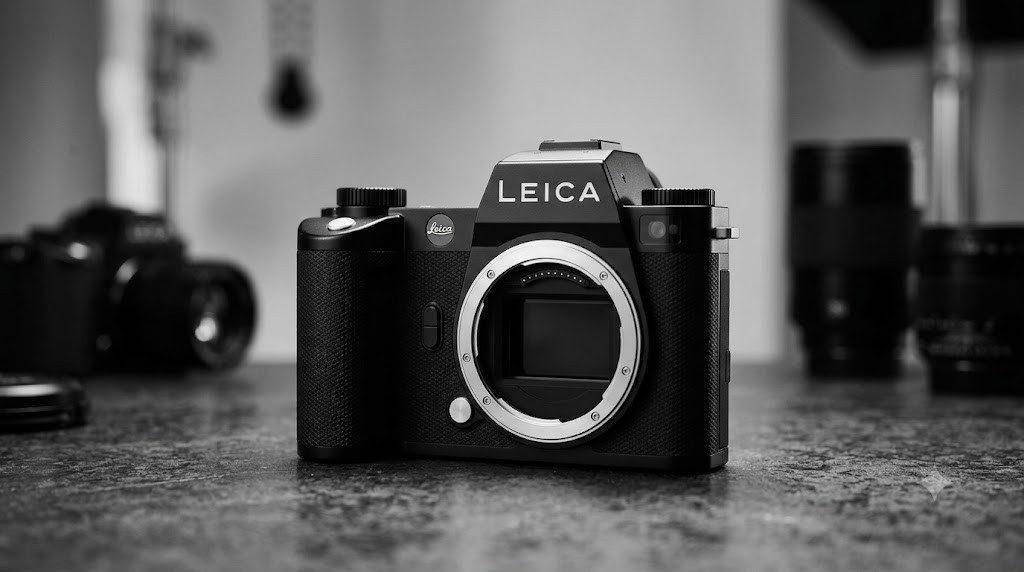
Moreover, the SL3-P carries a distinctly different visual identity. Leica’s most capable SL camera strips away the red Leica logo and opts for a more understated blacked-out design. Consequently, it appeals to professional photographers who prefer working discreetly. This blog breaks down every technical detail, every real-world capability, and every reason this camera deserves serious consideration. Man of Many
Background: The Leica SL System in Context
A Decade of SL Excellence
Leica launched the SL System in 2015. When Leica launched the SL System in 2015, it set a new standard for creative photography and video production based on the L-Mount. First, the original SL introduced a large-bodied, minimalist professional mirrorless camera. Additionally, it positioned Leica seriously in the professional mirrorless market for the first time. Furthermore, each successive model upgraded the system meaningfully. Therefore, the SL lineage carries a decade of refinement into the SL3-P. PR Newswire
The Problem the SL3-P Solves
Before the SL3-P, Leica SL buyers faced a difficult choice. First, the SL3 delivered 60 megapixels and outstanding resolution. However, its sensor readout speed limited burst performance. Additionally, the SL3-S offered faster shooting with 24 megapixels. However, resolution-demanding work felt limiting on the S variant. Each camera excelled in its intended role, but many photographers wanted more speed from the SL3 or more resolution from the SL3-S. Therefore, the SL3-P fills this gap directly with a camera that handles both demands competently. Red Dot Forum
Leica SL3-P Full Technical Specifications
Here is a complete breakdown of every confirmed specification.
Sensor
- Type: BSI Full-Frame CMOS Sensor
- Resolution: 44 megapixels (44.7MP effective)
- Dynamic Range: Up to 14 stops
- ISO Range: 50 to 200,000
- Anti-Aliasing Filter: None
- Multishot Mode: Up to 176 megapixels composite output
- Sensor Partner: Shared with Panasonic Lumix S1R II
Autofocus System
- AF Type: Triple Hybrid (Phase Detection, Depth Mapping, Contrast Detection)
- Phase Detection Points: 819 points
- Contrast Detection Points: 315 points
- Subject Recognition: Human, animal (including birds), car detection
- Machine Learning: Yes, AI-based subject tracking
- Low Light AF: Rated to challenging low-light conditions
- Tracking: Continuous with full AF support at 40fps
Speed and Burst Shooting
- Maximum Burst Rate: 40 fps with full AF tracking
- Electronic Shutter Buffer: Approximately 70 frames before clearing
- 14-bit RAW Burst: Limited to slower burst rates
- Blackout: Zero blackout during burst shooting
Video Specifications
- Maximum Resolution: 8K Open Gate at 30fps
- 8.1K Open Gate: Yes
- 5.9K Recording: Up to 60fps
- 4K Recording: Up to 120fps
- Apple ProRes: Internal recording up to 5.8K
- RAW Output: 12-bit RAW over HDMI
- Color Sampling: 4:2:2 10-bit internal
- Log Profile: L-Log
- LUTs: Leica Pure and Leica Cine LUTs built in, custom LUT loading
- Frame.io Integration: Camera-to-Cloud supported
- Content Credentials: Yes
- False Color Monitoring: Yes
- Autoframing: Screen recording available
In-Body Image Stabilization
- IBIS Rating: Up to 5 stops
- Axis System: Multi-axis stabilization
- Video Stabilization: Active mode available
Viewfinder
- Type: OLED Electronic Viewfinder
- Resolution: 5.76 million dots
- Coverage: 100%
Rear Screen
- Size: 3 inches
- Resolution: 1,840,000 dots
- Type: Touchscreen LCD
- Articulation: Tilt only (vertical tilt)
- Touch Functions: Full touch control
Storage
- Card Slot 1: CFexpress Type B
- Card Slot 2: SD / SDHC / SDXC (UHS-I and UHS-II)
Connectivity
- USB: USB-C
- HDMI: Full-size HDMI
- Wi-Fi: Built-in
- Bluetooth: Built-in
- Frame.io Camera-to-Cloud: Yes
- Microphone Input: Yes
- Headphone Output: Yes
Body and Build
- Material: Full metal body, all-metal construction
- Weather Sealing: IP54 rated (dust and splash protection)
- Manufacturing: Made in Germany, Wetzlar
- Design: No red Leica logo (“P” stealth design)
- Finish: Black only at launch
Price
- Body Only: USD 6,690 / GBP 5,150 / EUR 5,990
- SL3-P 28-70 Vario Kit: USD 7,790
- SL3-P 24-70 Vario Kit: USD 8,390
- SL3-P 24-70 and 70-200 Vario Kit: USD 10,995
The 44MP BSI Sensor: Balancing Resolution and Speed
Why 44 Megapixels Is the Right Number
Leica describes 44 megapixels as a middle ground between rich detail and manageable file sizes. 60 megapixels fill up storage rapidly, while 24 megapixels can feel limited for studio and print applications, so 44 megapixels strike a balance between the two. First, 44 megapixels produces print-quality output at sizes up to 40 x 60 inches comfortably. Additionally, raw file sizes stay manageable for extended shooting sessions. Furthermore, the sensor reads fast enough to enable 40fps burst shooting. Therefore, the resolution choice directly enables the speed capability simultaneously. Basic Tutorials Germany
The BSI Architecture Advantage
The back-side illuminated sensor design places wiring behind the pixel layer. First, this allows more surface area on each pixel for light collection. Additionally, improved light gathering directly reduces noise at higher ISO values. Furthermore, the BSI design contributes to the 14-stop dynamic range measurement. Therefore, photographers capture broader tonal ranges in high-contrast scenes. Moreover, BSI architecture enables the fast sensor readout that powers the 40fps burst system.
14 Stops of Dynamic Range
With a dynamic range of up to 14 aperture stops, even the finest tonal gradations are captured. First, 14 stops rivals the best full-frame sensors from Sony and Nikon in this class. Additionally, shadow recovery in raw files produces clean detail without significant color shift. Furthermore, highlight recovery manages overexposed areas with smooth gradation. Therefore, landscape, wedding, and commercial photographers handle difficult lighting with confidence. Consequently, the need for exposure bracketing decreases significantly in most shooting scenarios. PR Newswire
ISO 50 to 200,000
The ISO range of 50 to 200,000 ensures high image quality and flexibility, even in challenging lighting conditions. First, ISO 50 provides the cleanest possible base exposure for controlled lighting. Additionally, ISO 200,000 serves extreme emergency situations where no other option exists. Furthermore, the BSI architecture keeps mid-range ISO performance very clean. Therefore, event photographers shoot in dim reception halls with confidence. Moreover, the dual native ISO architecture supports video recording in mixed lighting. Consequently, indoor and outdoor transitions during video remain clean and consistent. PR Newswire
Multishot Mode: 176 Megapixels From a 44MP Camera
How Multishot Works
The SL3-P features an advanced Multishot Mode capable of producing composite images of up to 176 megapixels, combining multiple precisely aligned exposures to record substantially more color and spatial information than a single frame achieves. First, the camera captures several frames with tiny sensor shifts between each capture. Additionally, the Maestro processor combines these frames into a single high-resolution composite. Furthermore, each pixel position records actual color data rather than interpolating neighboring pixels. Therefore, the final composite contains significantly more accurate color detail than standard Bayer pattern sensors deliver. B&H Photo Video
Practical Applications for Multishot
Multishot mode suits specific professional scenarios particularly well. First, commercial product photographers gain extraordinary detail reproduction for advertising work. Additionally, architectural photographers capture fine building textures with exceptional clarity. Furthermore, fine art and museum reproduction work benefits from the extended resolution. Therefore, photographers working in controlled studio and tripod environments unlock genuine 176-megapixel capability. However, the mode requires a stationary subject and stable camera support. Consequently, it complements rather than replaces standard shooting for moving subjects.
Triple Hybrid Autofocus: Leica Finally Delivers Speed
The Three-System Approach
The new hybrid autofocus system combines three focus technologies: phase detection (PDAF), depth mapping (object detection AF), and contrast detection to achieve quick, precise, and reliable focusing. First, phase detection provides fast initial focus acquisition across 819 points. Additionally, depth mapping adds spatial awareness that improves tracking through depth changes. Furthermore, contrast detection refines focus accuracy in areas where phase detection alone might struggle. Therefore, the three systems work together for a more robust result than any single system achieves alone. Digital Photography Review
819 Phase Detection Points
With continuous shooting at up to 40 frames per second with full autofocus support, improved tracking performance with 819 AF points, and smart subject recognition, the SL3-P handles even the most dynamic subjects with ease. First, 819 phase detection points covers a broad portion of the sensor area. Additionally, this point density provides enough coverage for reliable tracking across the full frame. Furthermore, the machine learning subject recognition adds intelligence above the raw point count. Therefore, the system maintains lock even when subjects move unpredictably. Red Dot Forum
Subject Recognition in Practice
The hybrid autofocus combines 315 contrast AF points with 819 phase detection points, with human, animal including birds, and car detection. Tracking held up well in practice; testing on an active cat, the camera maintained focus through erratic movement without significant trouble. First, human detection covers eye, face, and body tracking for portrait and event photography. Additionally, animal detection with bird recognition serves nature and wildlife photographers. Furthermore, car detection opens the SL3-P to automotive photography applications. Therefore, the subject recognition covers the core needs of professional photographers across multiple disciplines. TechRadar
Real-World Autofocus Performance
Haisch has been openly critical of the SL series for a while, particularly around autofocus, and his real-world testing found hit rates on moving subjects including a sprinting child to be impressive with the SL3-P, changing his view of Leica autofocus performance. First, this represents a significant shift from the SL3’s well-documented autofocus limitations. Additionally, the 40fps burst combined with reliable tracking produces large volumes of in-focus frames. Furthermore, wedding and event photographers report clean focus through dynamic reception environments. Therefore, the autofocus improvement alone justifies serious consideration from photographers who previously dismissed Leica SL cameras. Fstoppers
40fps Burst Shooting: Leica’s Fastest Ever
Understanding 40 Frames Per Second
The SL3-P shoots at 40 frames per second with full autofocus and autoexposure tracking. First, this represents the fastest burst rate Leica has ever built into any camera. Additionally, it competes directly with action-oriented cameras from Sony and Nikon at similar burst speeds. Furthermore, the full AF and AE tracking at this speed means every frame receives fresh focusing data. Therefore, fast-moving subjects appear sharp throughout extended burst sequences.
Buffer Limitations at Maximum Speed
40 frames per second is available, but the electronic shutter caps the buffer at 70 frames total before it needs to clear, and at 14-bit RAW the burst rate is limited. First, 70 frames at 40fps equals approximately 1.75 seconds of continuous maximum-speed shooting. Additionally, this buffer depth suits most peak action moments adequately. Furthermore, 14-bit RAW shooting at reduced burst speeds allows longer sequences with full color depth. Therefore, photographers choose between maximum speed and maximum color depth based on the shooting scenario. Consequently, fast events and peak moments suit the 40fps mode while controlled shooting suits 14-bit RAW capture. Fstoppers
Video: 8K Open Gate and Cinema-Grade Tools
8K Open Gate Recording
For the first time, a Leica camera features 8K Open Gate video at 30fps. First, Open Gate recording uses the full sensor area without any crop factor. Additionally, this preserves the natural field of view of every lens during video capture. Furthermore, Open Gate footage provides more cropping flexibility in post-production for reframing and stabilization. Therefore, cinematographers gain maximum image information from every recording setup. The SL3-P enables recording at resolutions of up to 8K for the latest SL3 family addition in terms of video. Tom’s GuideRed Dot Forum
ProRes Internal Recording
Native Apple ProRes recording reaches up to 5.8K resolution internally. First, ProRes stores significantly more color information than H.264 or H.265 compression. Additionally, the intraframe compression of ProRes produces easier-to-edit files in post-production. Furthermore, colorists working in Final Cut Pro and DaVinci Resolve access ProRes files natively. Therefore, production companies integrate SL3-P footage directly into professional editing pipelines. Moreover, the quality of internally recorded ProRes rivals external recorder output from many competing cameras. B&H Photo Video
4K at 120fps Slow Motion
Full-sensor 4K recording at 120fps enables stunning slow-motion footage. First, at 24fps playback, this produces 5x slow motion at full 4K resolution. Additionally, the full-sensor coverage preserves wide-angle lens characteristics during slow-motion capture. Furthermore, 10-bit 4:2:2 color ensures rich color grading latitude throughout slow-motion sequences. Therefore, dramatic slow-motion sequences integrate cleanly into professional production without resolution compromises. Video capabilities are more extensive than the camera’s photographer-first positioning might suggest, with 8K Open Gate, ProRes to 5.8K, 4K at 120fps, L-Log, 12-bit RAW and 4:2:2 10-bit all available. TechRadar
12-bit RAW HDMI Output
The SL3-P outputs 12-bit RAW video over HDMI to compatible external recorders. First, this delivers the maximum possible color depth to external recording devices. Additionally, 12-bit RAW captures subtle color transitions that compressed formats cannot reproduce. Furthermore, productions requiring the highest color grading quality connect an Atomos or Blackmagic recorder to the SL3-P HDMI port. Therefore, commercial and narrative productions extract maximum sensor quality for premium deliverables.
L-Log and Custom LUT Monitoring
Leica Pure and Leica Cine LUTs provide filmmakers with accurate preview looks directly in-camera, allowing footage to be monitored with consistent color throughout production while reducing time spent creating preview profiles before a shoot. First, L-Log flattens the image to preserve the full dynamic range during recording. Additionally, the built-in LUT preview applies a color grade to the monitor view without affecting recorded footage. Furthermore, loading custom LUTs allows production-specific color preview on set. Therefore, directors and cinematographers see the intended final look during the shoot without committing to a grade in the recording. B&H Photo Video
Frame.io Camera-to-Cloud
The SL3-P adds Frame.io Camera-to-Cloud connectivity. First, this transfers footage directly to Frame.io cloud storage during shooting. Additionally, remote editors and directors review footage in near real time without physical media transfer. Furthermore, this workflow eliminates the traditional card-to-computer transfer step entirely. Therefore, productions with distributed teams collaborate more efficiently during and after shoots. Moreover, Content Credentials integration embeds camera and shooter metadata into every file automatically. Man of Many
Rolling Shutter Consideration
Rolling shutter shows up on fast lateral motion, demonstrated clearly with a plastic bat swing that visibly warps in the frame during fast panning moves. First, this is a characteristic of stacked sensor designs without global shutter capability. Additionally, careful panning speed management reduces the visible distortion significantly. Furthermore, the 8K Open Gate mode provides buffer footage for reframing that minimizes panning distortion in edit. Therefore, videographers plan camera movements intentionally to avoid this limitation. Notably, this remains a real limitation compared to the Sony A9 III’s global shutter. Fstoppers
Design and Build: The Stealth Leica
The P Badge Philosophy
The “P” designation in SL3-P carries specific meaning. Leica’s P badge usually signals a stealthier design. The SL3 Reporter, for example, dropped the red dot for a quieter look. First, the iconic Leica red dot logo disappears from the camera front entirely. Additionally, all branding becomes subtle and minimal throughout the body. Furthermore, the blacked-out design suits photojournalists and documentary photographers who prefer to work discreetly. Therefore, the SL3-P serves professionals who want Leica quality without the visual statement Leica branding creates. Photography Talk
Full Metal IP54-Rated Body
The SL3-P features a minimalist design without the red Leica logo, all-metal body, IP54 rating, and is manufactured in Germany. First, IP54 protection resists dust particles and water splashes from any direction. Additionally, the full metal construction delivers a premium and robust feel throughout. Furthermore, Leica manufactures every SL3-P in Wetzlar, Germany, ensuring consistent quality control. Therefore, professionals trust this camera in demanding field conditions. Moreover, the IP54 rating exceeds the basic splash resistance of many competing cameras at this price point. Basic Tutorials Germany
German Craftsmanship in Every Detail
Leica describes the SL3-P as compact dimensions resulting from state-of-the-art manufacturing processes ensuring Made in Germany finesse. First, the machining precision reflects decades of optical instrument manufacturing experience. Additionally, every dial, button, and port cover operates with consistent and satisfying feedback. Furthermore, the build quality communicates permanence rather than disposability. Therefore, photographers who value the physicality of their tools find the SL3-P deeply satisfying to handle daily. Consequently, the made-in-Germany origin contributes both to the quality and the premium pricing simultaneously. Basic Tutorials Germany
Image Quality: The Leica Difference
Color Science and Rendering
Leica color science stands apart from Japanese camera brands in important ways. First, Leica tuned the color rendering toward natural and accurate tonal relationships. Additionally, the fine color science produces skin tones with accurate and pleasing subtlety. Furthermore, the SL3-P delivers exceptional image quality, and the color rendering is outstanding. Therefore, portrait and editorial photographers achieve their intended look with minimal post-processing correction. Moreover, Leica’s color science integrates naturally with images captured on Leica M and Q cameras. TechRadar
Dynamic Range in Real-World Shooting
The 14-stop dynamic range delivers practical benefits in everyday shooting. First, high-contrast outdoor scenes with bright sky and shaded foreground capture detail in both simultaneously. Additionally, mixed indoor and window lighting scenarios require fewer exposure adjustments. Furthermore, shadow recovery in raw files produces usable detail even from significantly underexposed areas. Therefore, event and wedding photographers work more confidently in unpredictable lighting. Impressive battery life and extensive video options accompany the exceptional image quality from the 44.7MP BSI full-frame sensor. TechRadar
High ISO Performance
The ISO range of 50 to 200,000 ensures high image quality and flexibility even in challenging conditions. First, base ISO 50 produces extremely clean files for controlled light situations. Additionally, footage at 3,200 ISO on a dark dance floor with only a small off-camera light held up well, demonstrating the sensor’s capable low-light performance. Furthermore, the BSI architecture improves photon collection efficiency at every sensitivity level. Therefore, photographers and videographers cover a wide range of lighting scenarios without changing cameras. Basic Tutorials GermanyFstoppers
In-Body Image Stabilization
The SL3-P gets up to 5 stops of IBIS. First, the 5-stop rating enables handheld shooting at shutter speeds several stops below what the focal length normally demands. Additionally, the IBIS operates during video recording for smoother handheld footage. Furthermore, Active Mode stabilization increases video smoothness at a minor crop penalty. Therefore, documentary and travel photographers benefit from the IBIS when tripods are impractical. However, the 5-stop rating falls below the 8.5-stop performance of Sony’s A1 II and similar flagship cameras. Consequently, photographers requiring maximum stabilization for extreme telephoto handheld work note this difference. Tom’s Guide
The Menu System and User Experience
Leica built a filtering approach into the video settings where selecting a sensor format or frame rate narrows down the remaining options automatically, so photographers never scroll through combinations that do not apply. First, this intelligent menu filtering dramatically reduces the cognitive load during video setup. Additionally, the simplified approach speeds up configuration changes between shooting scenarios. Furthermore, the touchscreen enables quick setting changes without navigating deep menu hierarchies. Therefore, photographers adapt the camera to changing conditions more efficiently. Moreover, the SL-System menu design philosophy prioritizes logical simplicity over comprehensive feature display. Fstoppers
Three Custom Shooting Profiles
The SL3-P stores multiple complete shooting configurations. First, photographers save full camera states for portrait, documentary, and video work separately. Additionally, switching between profiles requires minimal button interaction. Furthermore, the intuitive nature of the menu ensures new users learn quickly. Therefore, photographers arriving at a shoot pre-configured for every expected scenario perform more efficiently under pressure.
The SL3-P Body Design and Ergonomics
Grip and Handling
The SL3-P is a delight to handle. First, the deep grip accommodates the full hand comfortably during extended shooting sessions. Additionally, the button layout reflects professional input from working photographers. Furthermore, the control placement keeps critical functions reachable without repositioning the grip hand. Therefore, photographers stay focused on the subject rather than managing the camera body. Moreover, the weight and balance suit use with large L-Mount telephoto lenses. Tom’s Guide
The Tilt-Only Screen
The tilt-only screen is an unusual omission in this camera class. First, a tilting screen adjusts for low and high shooting angles effectively. Additionally, however, it does not rotate sideways for portrait orientation or face-forward for solo video creation. Furthermore, competing cameras at this price point often include fully articulating screens. Therefore, solo video creators and vloggers find this limiting compared to alternatives. Consequently, this design choice reflects Leica’s photographer-first philosophy at the cost of some video workflow versatility. TechRadar
Leica SL3-P vs Competitors: Direct Comparisons
SL3-P vs Leica SL3
The SL3 and SL3-P serve different primary needs. First, the SL3 offers 60 megapixels versus the SL3-P’s 44 megapixels. Additionally, the SL3 costs $7,485 versus the SL3-P at $6,690. Furthermore, the SL3-P shoots at 40fps while the SL3 lags significantly behind in speed. Therefore, resolution-critical work in controlled environments still suits the SL3. However, the SL3-P wins for hybrid shooting, faster subjects, and video production. Nothing happens to the SL3, which remains the high-resolution variant of the lineup. Consequently, the two cameras coexist for different professional use cases within the same system. Threads
SL3-P vs Leica SL3-S
The SL3-S uses a 24-megapixel sensor and targets speed and video-first workflows. First, the SL3-S retails at $5,665 versus the SL3-P at $6,690. Additionally, the SL3-P delivers significantly more resolution for print and commercial work. Furthermore, both cameras now share strong video capabilities including 8K options. Therefore, photographers who need 44 megapixels for client deliverables choose the SL3-P. Moreover, those prioritizing video-first workflows and speed may still find the SL3-S adequate at a lower price.
SL3-P vs Sony A1 II
The Sony A1 II is the most direct global competitor. First, the A1 II offers 50.1 megapixels versus the SL3-P’s 44 megapixels. Additionally, the A1 II shoots at 30fps versus the SL3-P’s 40fps. Furthermore, the A1 II records 8K video internally and costs $6,499 body only. Therefore, the SL3-P and A1 II compete very closely on specification. However, the A1 II carries Sony’s AI Processing Unit with broader subject recognition categories. Moreover, Sony’s E-mount lens ecosystem vastly exceeds the L-mount in native lens selection breadth. Consequently, photographers primarily driven by system breadth and autofocus sophistication favor the Sony. Photographers who prioritize Leica’s color science, build quality, and optical excellence choose the SL3-P.
SL3-P vs Panasonic Lumix S1R II
The SL3-P shares its 44.7MP BSI full-frame CMOS sensor with the Panasonic Lumix S1R II, and the image quality is predictably exceptional. First, the Lumix S1R II costs approximately $3,300 versus the SL3-P at $6,690. As a camera expert notes, the S1R II is a solid choice for a flagship mirrorless camera at a way lower price than the typical Leica price point for similar specs. Additionally, the Lumix S1R II offers a fully articulating screen and superior video stabilization. Furthermore, the Panasonic holds advantages most favouring the hybrid creator, including better stabilisation, a fully articulating screen, faster mechanical fps, more AF options, and built-in cooling. Therefore, specification-focused buyers find the Lumix S1R II a compelling alternative. However, what the Leica brings is a more robust body, a camera designed first for photographers, and Content Credentials. Consequently, the choice comes down to Leica’s premium build, color science, and Germany-made quality versus Panasonic’s feature completeness and value. Leica SL3-P review: I tested the stealthy new full-frame mirrorless, and it’s something special +3
SL3-P vs Nikon Z8
The Nikon Z8 represents the strongest value competitor from Japan. First, the Z8 offers 45.7 megapixels at $3,999 versus the SL3-P at $6,690. Additionally, the Z8 records 8K RAW internally at a much lower price. Furthermore, the Z8 shoots at 20fps with excellent autofocus. Therefore, the Z8 delivers similar resolution and comparable video at nearly half the price. However, the SL3-P offers superior burst speed at 40fps. Moreover, Leica’s build quality, IP54 sealing, and color science justify the premium for photographers who value these qualities. Consequently, photographers coming from Nikon or who prioritize value find the Z8 a stronger option. Dedicated Leica users and photographers who trust Leica’s system and aesthetics choose the SL3-P confidently.
New Companion Lenses for the SL3-P
Summilux-SL 50mm f/1.4 ASPH
The Summilux-SL 50mm f/1.4 ASPH features a compact build, weather sealing, 11 aperture blades, and a 50cm minimum focusing distance, manufactured in Germany at a rumored price near $4,950. First, the fast f/1.4 aperture delivers beautiful subject separation and bokeh on the 44-megapixel sensor. Additionally, 11 aperture blades produce smooth and rounded out-of-focus highlights. Furthermore, weather sealing matches the SL3-P body’s IP54 protection rating. Therefore, the pairing creates a fully sealed professional portrait and street photography kit. Moreover, the compact build keeps the combined system at a manageable size for location work. Photography Talk
APO-Macro-Elmarit-SL 100mm f/2.8
The APO-Macro-Elmarit-SL 100mm f/2.8 is available at the end of 2026 priced at $2,700. First, the APO optical design corrects chromatic aberration at every wavelength for exceptional sharpness. Additionally, the macro capability allows 1:1 magnification for close-up product and nature photography. Furthermore, the 100mm focal length produces flattering perspective compression for portrait work. Therefore, this lens serves macro photographers, portrait specialists, and product photographers simultaneously. Moreover, the f/2.8 aperture provides sufficient subject separation for compelling close-up work. Yahoo Finance
The L-Mount Ecosystem: Leica, Panasonic, and Sigma
The SL3-P uses the Leica L-Mount and is part of the L-Mount Alliance that Leica co-developed with Panasonic and Sigma. First, this alliance dramatically expands the available lens selection beyond Leica-branded glass. Additionally, Panasonic’s Lumix S-Pro lenses offer professional quality at more accessible prices. Furthermore, Sigma’s Art and Contemporary lines provide outstanding optical quality across many focal lengths. Therefore, SL3-P photographers build complete systems from lenses at multiple quality and price tiers. Moreover, the shared mount means firmware-driven features pass through to third-party lenses effectively. Wikipedia
Key L-Mount Lenses for the SL3-P
Several lenses pair particularly well with the SL3-P’s 44-megapixel sensor. First, the Vario-Elmarit-SL 24-70mm f/2.8 ASPH provides professional standard zoom coverage with exceptional center and edge sharpness. Additionally, the Vario-Elmarit-SL 70-200mm f/2.8 ASPH delivers telephoto performance for events and sports. Furthermore, Sigma’s 35mm f/1.4 Art for L-Mount delivers extraordinary sharpness at a fraction of Leica prime prices. Therefore, photographers build versatile systems within the L-mount ecosystem regardless of brand preference.
Who Should Buy the Leica SL3-P?
Commercial and Editorial Photographers
Commercial photographers find the SL3-P a comprehensive professional tool. First, 44 megapixels satisfies advertising and editorial resolution demands for large-format reproduction. Additionally, the 14-stop dynamic range handles product photography with challenging reflective surfaces. Furthermore, accurate Leica color science reduces post-processing correction time for color-critical commercial work. Therefore, photographers working in advertising, fashion, and editorial publishing find the SL3-P genuinely productive.
Wedding and Event Photographers
Haisch used the SL3-P extensively during a wedding shoot and found the footage holds up well even at 3,200 ISO on a dark dance floor. First, the strong high-ISO performance handles dimly lit reception venues reliably. Additionally, the 40fps burst captures ceremony moments with complete sequential coverage. Furthermore, the improved autofocus performs in unpredictable social photography environments. Therefore, wedding photographers gain a technically capable and aesthetically premium camera for client work. Fstoppers
Hybrid Photographers and Videographers
The SL3-P is one of the best mirrorless cameras available if you can afford it, combining 40fps and Leica’s most advanced autofocus with 8K Open Gate video capabilities. First, 8K Open Gate provides maximum footage quality for commercial video clients. Additionally, ProRes internal recording integrates directly into professional post-production pipelines. Furthermore, the Frame.io Camera-to-Cloud workflow suits distributed production teams. Therefore, hybrid photographers who deliver both premium stills and professional video to clients find the SL3-P compelling. Tom’s Guide
Dedicated Leica System Users
Existing Leica SL system users find the SL3-P the strongest upgrade path available. First, every existing SL lens mounts and performs fully on the SL3-P body. Additionally, the improved autofocus addresses the primary complaint about earlier SL cameras. Furthermore, 8K Open Gate video expands the creative range without changing the system. Therefore, current SL users who shoot both stills and video find the upgrade genuinely meaningful.
Who Should Consider Alternatives
Several photographers find better options elsewhere. First, those prioritizing resolution above all else get more megapixels from the Leica SL3 at a similar investment. Additionally, photographers who need a fully articulating screen for solo video creation find the Sony A1 II or Panasonic S1R II more practical. Furthermore, budget-conscious photographers find the Nikon Z8 delivers comparable resolution and video quality at nearly half the price. Therefore, the SL3-P best suits photographers who specifically value the combination of Leica quality, 40fps speed, 44-megapixel resolution, and 8K video simultaneously.
What AltBuzz Says About Premium Hybrid Cameras
The blend of nostalgia and innovation defines the best premium cameras in 2025 and 2026, and brands that combine heritage craftsmanship with next-generation performance create the most compelling and desirable products. First, the SL3-P exemplifies this principle precisely in Leica’s execution. Additionally, AltBuzz highlights AI-powered autofocus as the single most transformative upgrade across all premium cameras in this cycle. Furthermore, the site notes that 8K video capability has transitioned from a premium differentiator to an expected feature across the top tier. Therefore, the SL3-P arrives with exactly the feature set the premium market now demands. You can explore more in-depth analysis of premium camera developments at AltBuzz Media. AltBuzz
Leica SL3-P Pros and Cons
Strengths
First, the 44-megapixel resolution balances detail and file management intelligently. Additionally, 40fps burst speed with full AF and AE tracking is Leica’s fastest ever. Furthermore, 8K Open Gate video appears in a Leica camera for the first time. Moreover, the triple hybrid autofocus system with 819 phase detection points finally makes Leica competitive in tracking. Also, the IP54 full-metal German-made body sets a benchmark for build quality. Furthermore, the 176-megapixel Multishot mode extends creative possibilities significantly. Additionally, Frame.io Camera-to-Cloud and Content Credentials suit modern professional workflows. Finally, the stealth P design suits working professionals who prefer minimal visual branding.
Limitations
First, the tilt-only screen limits portrait-orientation video and solo creator workflows. Additionally, the 70-frame electronic shutter buffer restricts maximum burst duration at 40fps. Furthermore, 14-bit RAW capture reduces burst speed compared to compressed formats. Moreover, the 5-stop IBIS rating falls below competitors like Sony and Nikon in stabilization performance. Also, rolling shutter in fast lateral video movements remains a real limitation. Furthermore, the price of $6,690 body only places it above several competitors with more comprehensive feature sets. Additionally, the L-mount native lens selection, while growing, remains narrower than Sony E-mount. Finally, no red Leica logo may disappoint some buyers who value brand visibility as part of the ownership experience.
Frequently Asked Questions About the Leica SL3-P
Is there a Leica SL4?
No, Leica has not announced or confirmed an SL4. Leica usually updates cameras after approximately four years, and the SL3 launched in 2024, so the SL4 is unlikely for at least another year or two. The SL3-P, announced June 25, 2026, is currently Leica’s most advanced and comprehensive SL-System camera available. Threads
What sensor does the Leica SL3-P use?
The SL3-P uses a 44.7MP BSI full-frame CMOS sensor shared with the Panasonic Lumix S1R II, delivering exceptional image quality. Additionally, the sensor supports up to 14 stops of dynamic range. Furthermore, the ISO range extends from 50 to 200,000 for maximum shooting flexibility. TechRadar
Does the Leica SL3-P shoot 8K video?
Yes. The SL3-P enables recording at resolutions of up to 8K, including 8.1K Open Gate, 5.9K at 60p, and 4K at 120p. Additionally, internal Apple ProRes recording reaches up to 5.8K resolution. Furthermore, 12-bit RAW HDMI output supports external recorder connections for maximum quality. PR Newswire
How fast does the Leica SL3-P shoot?
The SL3-P delivers continuous shooting at up to 40 frames per second with full autofocus support. First, this is the fastest burst rate Leica has ever achieved in any camera. However, the buffer limits electronic shutter continuous shooting to approximately 70 frames. Additionally, 14-bit RAW shooting reduces the maximum burst rate. Therefore, photographers choose between maximum speed and maximum bit depth based on their specific scenario. Red Dot Forum
Is the Leica SL3-P weather sealed?
Yes. The SL3-P features an IP54-rated body made entirely from metal and manufactured in Germany. First, IP54 protection resists dust particles and water splashes from any direction. Additionally, Leica designed the sealing to meet professional field use standards. Therefore, photographers shoot confidently in light rain and dusty outdoor environments. Basic Tutorials Germany
What is the Leica SL3-P price?
Starting June 25, 2026, the retail price is $6,690 body only. Three kit options are available: the 28-70 Vario Kit at $7,790, the 24-70 Vario Kit at $8,390, and the 24-70 and 70-200 Vario Kit at $10,995. Additionally, the European price is 5,990 euros and the UK price is GBP 5,150. Yahoo Finance
How does the SL3-P compare to the Panasonic S1R II?
The SL3-P shares the same 44.7MP BSI sensor with the Panasonic Lumix S1R II. First, the Panasonic costs approximately $3,300 versus the Leica’s $6,690. The Panasonic holds advantages for hybrid creators including better stabilisation, a fully articulating screen, faster mechanical fps, more AF options, and built-in cooling. The Leica brings a more robust body, a photographer-first design, and Content Credentials. Therefore, the choice depends on whether the Leica premium builds, color science, and made-in-Germany quality justify the significant price difference. TechRadarThreads
Can I use my existing Leica lenses on the SL3-P?
Yes, all existing L-Mount lenses from Leica, Panasonic, and Sigma mount and function fully on the SL3-P. Additionally, Leica M and Leica R lenses adapt to the SL3-P via compatible adapters. Furthermore, the M-Adapter L and R-Adapter L maintain basic shooting functionality with legacy optics. Therefore, photographers with existing Leica lens collections find the transition to the SL3-P straightforward.
Final Verdict: Is the Leica SL3-P Worth It?
The SL3-P is one of the best mirrorless cameras available if you can afford it. First, it delivers exceptional image quality from its 44-megapixel BSI sensor. Additionally, it offers 40fps burst speed with Leica’s most capable autofocus system ever. Furthermore, it records 8K Open Gate video with ProRes, L-Log, and Frame.io integration. Therefore, it genuinely serves professional photographers across stills, events, and video production simultaneously. Tom’s Guide
Moreover, the build quality sets it apart from every competitor. First, the IP54-rated full-metal body manufactured in Germany exceeds the build standard of most competing cameras. Additionally, the stealth P design suits professional photographers who prefer working without visual conspicuousness. Furthermore, the Leica color science produces images with a distinctive and recognizable quality. Therefore, photographers who have worked with Leica imagery understand immediately what the system delivers.
However, the SL3-P demands honest evaluation against its price. It is still a Leica, so it is priced like one. Leica knows exactly who this camera is for. First, the Panasonic S1R II delivers the same sensor in a more feature-complete body at half the price. Additionally, the Sony A1 II and Nikon Z8 both deliver competitive or superior specifications at comparable or lower costs. Therefore, the SL3-P premium requires a genuine appreciation for what Leica uniquely delivers beyond raw specifications. Consequently, photographers who value Leica’s heritage, craftsmanship, optical culture, and color philosophy find the investment fully justified. Threads
Above all, the Leica SL3-P marks a turning point for the SL-System. Prior to today, photographers could choose the SL3 with class-leading image quality or the SL3-S for faster shooting. The SL3-P answers both requests at once. Additionally, the improved autofocus addresses the most common criticism of previous SL cameras directly. Furthermore, 8K Open Gate video opens the SL-System to serious cinema production for the first time. Therefore, the SL3-P represents Leica’s most complete and versatile professional camera to date. In July 2026, it stands as the strongest argument Leica has ever made for the SL-System as a primary professional platform.