
Canon EOS R6 Mark III Review: The Camera That Wins Canon’s 2026 Lineup
Canon’s RF mount lineup now spans four cameras that most buyers will seriously consider: the EOS R50, the EOS R10, the EOS R6 Mark III, and the EOS R5 Mark II. Prices climb steeply as you move up that list, but image quality and features do not climb at the same rate. We tested all four side by side, in portraits, travel shooting, fast action, and video, to answer one question. Where does spending more on a Canon camera actually pay off, and where does it stop mattering?
Our answer surprised us. The camera we ended up recommending was not the most expensive one, and it was not the cheapest one either.
Meet the Contenders
| Camera | Sensor Type | Resolution | Stabilization | Card Slots | Approx. Price Tier |
|---|---|---|---|---|---|
| Canon EOS R50 | APS-C | 24.2MP | Lens-dependent | Single SD | Entry-level |
| Canon EOS R10 | APS-C | 24.2MP | Lens-dependent | Single SD | Enthusiast entry |
| Canon EOS R6 Mark III | Full-frame | 32.5MP | In-body (IBIS) | CFexpress B + SD UHS-II | Mid-range professional |
| Canon EOS R5 Mark II | Full-frame stacked | 45MP | In-body (IBIS) | CFexpress B + SD UHS-II | High-end professional |
Canon EOS R50 Review
Build and Handling
The EOS R50 is a compact, lightweight body aimed at photographers who want simplicity over control. The grip is small, the button layout is minimal, and there is no in-body stabilization, so a shaky hand stays shaky regardless of shutter speed.
Image Quality
The 24.2MP APS-C sensor delivers genuinely good results in decent light. Skin tones look natural, colors are accurate straight out of the camera, and detail holds up well for prints and social sharing. In low light or fast-moving situations, the lack of stabilization and the smaller sensor start to show their limits.
Who Should Buy It
The R50 is the right choice for family photography, everyday travel, and anyone picking up an interchangeable-lens camera for the first time. It answers the “is this good enough” question almost immediately, which makes every more expensive camera in this lineup work harder to justify its price tag.
Canon EOS R10 Review
Build and Handling
The R10 uses the same sensor as the R50 but wraps it in a more serious body. Real dials, a deeper grip, and a faster burst rate give photographers direct control instead of relying on automatic modes.
Performance
Faster continuous shooting and quicker autofocus tracking make the R10 noticeably more capable for kids, pets, and casual sports. Image quality itself does not change from the R50, since the sensor is identical.
Who Should Buy It
Choose the R10 if handling and speed matter more to you than image quality alone. Photographers who want to grow into manual settings and faster shooting will get real value from the upgrade. Buyers who are happy shooting on automatic modes are usually better served by saving the money and staying with the R50.
Canon EOS R6 Mark III Review
Sensor and Image Quality
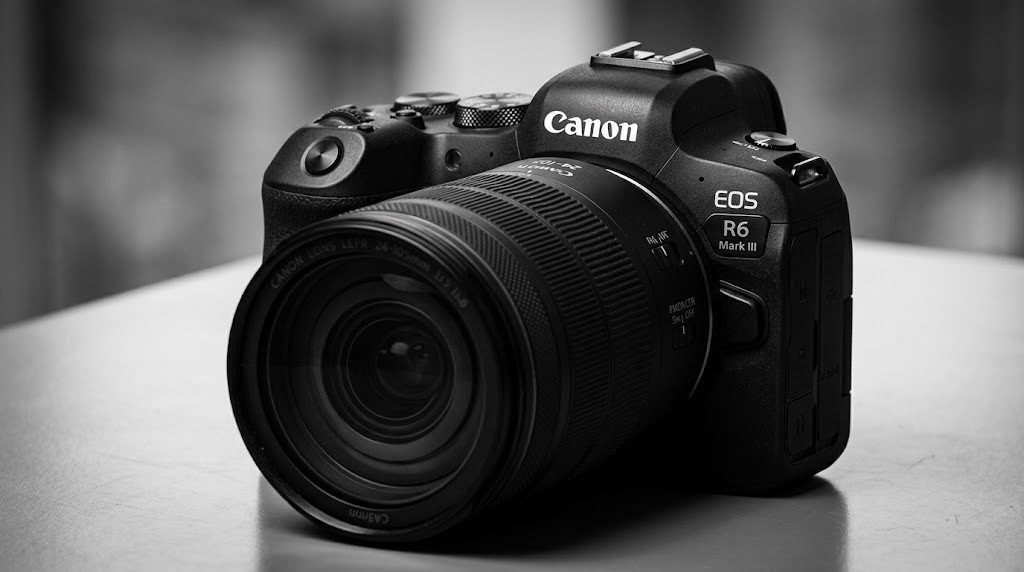
This is where the lineup changes shape entirely. The R6 Mark III steps up to a 32.5MP full-frame sensor, and the difference shows immediately in dynamic range, low-light performance, and background separation. Files hold up far better under heavy editing than anything from the two APS-C bodies.
Autofocus and Speed
Canon paired the new sensor with 40fps burst shooting and a pre-capture feature that grabs frames just before the shutter is fully pressed. Subject tracking is noticeably more reliable than on the R10, holding focus on erratic movement in ways the cheaper cameras cannot match. DPReview scored the R6 Mark III 91 percent, calling out this exact combination of sensor quality, stabilization, and burst performance as unusually versatile for the price.
Video
7K RAW recording puts the R6 Mark III into serious hybrid shooter territory. Combined with in-body stabilization, it handles documentary style shooting, event coverage, and content creation without needing a gimbal for most situations.
Verdict
The R6 Mark III is the camera in this lineup that stops requiring justification. Full-frame image quality, professional dual card slots, fast and reliable autofocus, and strong video all arrive together in one body. DPReview’s review reached a similar conclusion, noting that unless a photographer has especially demanding professional needs, it becomes difficult to argue for meaningfully more than what this camera already delivers.
Canon EOS R5 Mark II Review
Sensor and Resolution
The R5 Mark II carries a 45MP stacked full-frame sensor, the highest resolution in this comparison by a wide margin. That extra resolution gives far more room to crop images without losing quality, which matters enormously for commercial, landscape, and studio photographers.
Autofocus
Eye Control AF lets the camera track focus based on where your eye looks through the viewfinder, and Canon’s subject recognition system pushes further than anything on the R6 Mark III. For photographers chasing fast, unpredictable subjects, this feature alone can justify the upgrade.
Video
8K RAW recording up to 60p sits at the top of Canon’s current video capability. The stacked sensor also reads out faster than the R6 Mark III’s, which reduces rolling shutter distortion under electronic shutter and matters most during fast action with a moving subject.
Verdict
DPReview scored the R5 Mark II 93 percent, the highest of any camera in this test. It is objectively the most capable camera here. The catch is that larger files bring real costs beyond the purchase price: bigger memory cards, heavier backup storage, slower edits, and more demanding computers. For photographers whose work does not already push against a 32MP ceiling, much of that capability goes unused.
The RF Lens Mount Ties This Whole Lineup Together
One detail matters more than any single spec in this comparison. Every camera here mounts the same RF lenses. That single design choice changes how you should think about the whole buying decision.
Why the Shared Mount Changes the Math
A photographer who buys the R50 today is not committing to APS-C forever. The RF 50mm f/1.8, the RF 24-105mm f/4-7.1, and dozens of other RF lenses work identically on the R50 and the R5 Mark II. The camera body becomes the part you can upgrade later, while the lens investment carries forward untouched. That is a meaningfully different situation than systems where an entry-level body locks you into a separate, lower-quality lens mount.
Crop Factor on the APS-C Bodies
The R50 and R10 apply a 1.6x crop factor to full-frame RF lenses, which changes both field of view and effective reach. A 50mm lens behaves closer to an 80mm lens on these bodies. That can work in your favor for wildlife and sports reach, but it also means wide-angle lenses run less wide than expected, which is worth knowing before building a kit around either APS-C body.
Ergonomics and Everyday Handling
Specs tell part of the story, but how a camera feels in daily use often decides whether it gets picked up or left on a shelf.
R50 and R10 in the Hand
The R50 is genuinely pocketable with a small prime lens attached, which makes it an easy camera to carry everywhere. The R10 adds real heft and a deeper grip that pays off during longer shooting sessions or with heavier telephoto lenses, though it is still light enough for all-day travel use.
R6 Mark III and R5 Mark II in the Hand
Both full-frame bodies share a similar chassis, with a substantial grip, dual control dials, and a joystick for fast autofocus point selection. Weather sealing on both cameras holds up to light rain and dusty conditions far better than either APS-C body, which matters for outdoor and event photographers who cannot control their shooting environment.
Low Light and High ISO Performance
Sensor size and resolution both play a role once the light starts to fade, and this is one area where the gap between APS-C and full frame becomes obvious fast.
APS-C Low Light Results
Both the R50 and R10 produce clean files up to moderate ISO settings, but noise becomes noticeable earlier than on the full-frame bodies, and fine detail softens faster as ISO climbs. For daylight and well-lit indoor shooting, this rarely matters. For dim venues, evening events, or indoor sports, it becomes a real limitation.
Full-Frame Low Light Results
The larger sensors on the R6 Mark III and R5 Mark II gather noticeably more light per pixel, which translates into cleaner high-ISO files and more usable shadow detail when recovering exposure in post-production. Combined with in-body stabilization, both cameras make handheld shooting in dim conditions far more reliable than either APS-C body manages.
Battery Life and Storage in Real Use
Battery life and card format rarely make it into a highlight reel, but they shape how a camera performs across a full day of shooting.
R50 and R10 Battery and Storage
Both APS-C cameras use a single SD card slot and a smaller battery, which keeps the body light but means backup redundancy is not available in camera. For casual and everyday shooting, this rarely causes problems. For paid work, the lack of a second card slot is a real risk.
R6 Mark III and R5 Mark II Battery and Storage
Both full-frame bodies pair a CFexpress Type B slot with a UHS-II SD slot, giving photographers the option to record backup copies simultaneously or split stills and video across two cards. Battery life is also stronger on both bodies, which matters during long wedding days or extended video shoots.
Who Should Skip This Entire Lineup
Not every photographer belongs in this comparison at all. Videographers who need higher frame rates at full resolution for slow motion work, or photographers who specifically need in-camera focus stacking for macro work, may find better tools outside Canon’s current RF lineup entirely. This review focuses on general stills and hybrid photography, where all four of these cameras genuinely compete.
Head to Head: How the Upgrades Actually Compare
Resolution is the easiest place to start. 32.5MP already covers weddings, events, portraits, travel, and most professional output, with room to crop moderately. 45MP earns its keep in large commercial output, landscapes, studio work, architecture, and aggressive wildlife cropping. If your output already fits inside 32MP files, more resolution becomes a nice-to-have rather than a necessity.
Sensor readout speed is where the R5 Mark II buys something genuinely different from the R6 Mark III, not just more of the same. Faster readout changes how an electronic shutter behaves under fast motion, and that headroom matters most to photographers whose work regularly pushes against it. Raw burst speed numbers alone (40fps against 30fps) undersell what is actually happening, because they do not fully describe how a sensor behaves once you are relying on it in the field.
Buying Guide: Which Canon Camera Should You Actually Buy
Best for Beginners: Canon EOS R50
Pick this if you want excellent everyday photography at the lowest cost and the smallest, lightest system. It shares the RF lens mount with every other camera in this guide, so nothing you buy now goes to waste later.
Best for Enthusiasts: Canon EOS R10
Pick this if stronger handling, faster burst shooting, and more direct manual control matter specifically to you, and you are ready to move past fully automatic shooting.
Best Overall Value: Canon EOS R6 Mark III
Pick this if you want a single camera that covers almost everything a serious photographer needs: full-frame quality, reliable autofocus, strong video, and a professional workflow, without paying for specialized capability you may never use.
Best for Professionals: Canon EOS R5 Mark II
Pick this if higher resolution, stacked-sensor readout speed, and Eye Control AF genuinely apply to your work, such as commercial, landscape, studio, or high-speed action photography where every extra megapixel and every millisecond of readout speed counts.
Real Shooting Scenarios: How Each Camera Handled Specific Situations
Numbers on a spec sheet only go so far. Here is how each camera performed in the specific situations we tested them in.
Portrait Sessions
The R50 handled controlled portrait sessions with even, well-lit conditions surprisingly well, producing skin tones and background separation that held up against the more expensive cameras. Once we introduced movement or lower light, the R6 Mark III and R5 Mark II pulled ahead noticeably, thanks to stronger autofocus tracking and better high-ISO performance.
Travel and Everyday Shooting
For everyday travel shooting, the R50 and R10 were the easiest cameras to carry all day, and image quality in typical daylight conditions rarely gave away which camera took the shot. The full-frame bodies added noticeable weight to a travel kit without a proportional benefit for casual travel photography.
Fast Action and Sports
This is where the lineup separated the most. The R10’s faster burst rate helped over the R50, but both APS-C bodies struggled to keep up with erratic, fast-moving subjects. The R6 Mark III’s 40fps burst and pre-capture feature made a visible difference in keeper rate, and the R5 Mark II’s stacked sensor reduced rolling shutter distortion further still during the fastest sequences we shot.
Video and Hybrid Work
Casual video clips looked clean on all four cameras in good light. Once we pushed into more demanding hybrid shooting, with mixed lighting, handheld movement, and a need for flexible reframing in post, the R6 Mark III’s 7K RAW footage and in-body stabilization made it the clear standout for most real-world hybrid work, with the R5 Mark II’s 8K ceiling reserved for the small number of projects that genuinely need it.
Pricing and Long-Term Value
Sticker price only tells part of the story once you factor in lenses, storage, and how long a camera stays relevant in a fast-moving lineup.
Entry-Level Value: R50 and R10
Both APS-C cameras deliver strong value at their price point, especially for buyers who are not yet sure how deep they want to go into photography. Since RF lenses carry forward to any future full-frame body, money spent on glass now is never wasted, even if the camera body gets replaced later.
Full-Frame Value: R6 Mark III and R5 Mark II
The R6 Mark III carries a noticeably higher price than the APS-C bodies, but it also delivers a proportionally larger jump in capability, which is not always true of camera upgrades. The R5 Mark II costs more again, and buyers should weigh that extra cost against real, current output needs rather than the appeal of having the highest specification available. Larger files also mean ongoing costs in storage and computer hardware that continue well after the purchase.
Frequently Asked Questions
Is the Canon EOS R6 Mark III worth it over the R10?
Yes, for most photographers who need full-frame image quality, in-body stabilization, and a professional dual-card workflow. The jump from APS-C to full frame changes far more than the jump from the R50 to the R10 does.
Is the Canon EOS R5 Mark II overkill for most photographers?
For many shooters, yes. The 45MP sensor and 8K video ceiling matter most to commercial, landscape, studio, and aggressive-crop wildlife work. Photographers whose output already fits comfortably inside 32MP files may not need the extra resolution or the larger file sizes it brings.
What is the best Canon camera for a beginner in 2026?
The Canon EOS R50 remains the easiest entry point into the RF mount system. It shares lenses with every other camera in this comparison, so upgrading later never means starting over.
Which Canon camera is best for action and sports photography?
The Canon EOS R6 Mark III, with 40fps burst shooting and pre-capture, handles fast action extremely well for the price. The Canon EOS R5 Mark II pushes further with a stacked sensor that reduces rolling shutter distortion under electronic shutter, which matters most for the fastest and most demanding action work.
Do the R50 and R10 use the same sensor?
Yes. Both cameras share the same 24.2MP APS-C sensor, so the main differences between them come down to handling, burst speed, and control layout rather than raw image quality.
Can I use my existing Canon EF lenses on these cameras?
Older EF and EF-S lenses can be used on all four cameras with Canon’s EF-to-RF mount adapter, though native RF lenses generally offer faster and more reliable autofocus performance.
Final Verdict
After testing all four cameras side by side, the Canon EOS R6 Mark III is our pick. It is not the cheapest camera in this lineup, and it is not the most technically capable one either. It wins because it sits at the exact point where Canon hands a serious photographer nearly everything they realistically need, before the spending starts buying increasingly specialized advantages instead of universally useful ones.
The R5 Mark II wins on outright capability. The R6 Mark III wins on balance. For most photographers upgrading their Canon system in 2026, balance is what actually gets used.
Where to Buy
Check current pricing and availability for each camera directly through Canon’s official store:
Read More from Altbuzz
Looking for more hands-on Canon and mirrorless camera coverage? Explore our other in-depth reviews and comparisons on Altbuzz for the latest camera rumors, releases, and buying guides.
Subscribe to Altbuzz YouTube Channel
If you appreciate a review that actually tries to find where spending more improves the experience instead of just assuming it does, subscribe to Altbuzz on YouTube for more hands-on camera comparisons like this one.