
Caira Camera Full Review: Specs, Performance and Verdict
The Caira Camera is the first AI-native interchangeable lens camera ever made. It attaches directly to an iPhone via MagSafe. It uses Google’s Nano Banana generative AI model for real-time in-camera image editing. And it accepts standard Micro Four Thirds lenses from brands like Panasonic, Olympus, Sigma, and Leica.
Camera Intelligence, formerly known as Alice Camera, launched Caira on Kickstarter in October 2025. Early backers began receiving units in Q1 2026. The body retails at $995 without a lens. The Caira Pro subscription, which unlocks full AI editing features, costs $7 per month.
This review covers real specifications, hands-on performance, and an honest verdict on whether the Caira Camera delivers on its remarkable promises.
Release Date and Market Position
When Did Caira Launch?
Camera Intelligence announced the Caira Camera in October 2025. The Kickstarter campaign launched on October 30, 2025 and met its funding target quickly. Additionally, early backers received a 30% discount, with subsequent backers getting 20% off. Shipping to early customers began in Q1 2026.
What Market Does Caira Target?
The Caira Camera does not target traditional photographers. Camera Intelligence states clearly that Caira is designed for creators, travelers, and marketing professionals. Furthermore, it aims to offer mirrorless image quality with smartphone-level simplicity. This is a genuinely different proposition from any other interchangeable lens camera on the market.
Pricing Overview
The Caira body without a lens costs $995. This price positions it below most mirrorless bodies at this sensor size tier. However, buyers also need a lens and an active iPhone with MagSafe capability. Additionally, full AI features require the $7 per month Caira Pro subscription to access generative editing through Google Nano Banana.
Specifications Table
| Feature | Details |
|---|---|
| Sensor | 12MP Four Thirds Sony Quad-Bayer HDR dual-native ISO |
| Sensor Size | Micro Four Thirds (same sensor as Panasonic GH5S) |
| Lens Mount | Micro Four Thirds (interchangeable) |
| Processor | Qualcomm Snapdragon with 8-core CPU and DSP |
| AI Chip | Google Edge TPU |
| ISO Range | Dual-native ISO (specific values not published) |
| Autofocus | AI-driven PDAF with face, animal, and scene detection |
| Stabilization | Electronic image stabilization only |
| Shutter | Electronic only |
| Video | 4K/30p, 1080p/60p |
| Screen | None (uses iPhone as display via MagSafe and Wi-Fi) |
| EVF | None |
| Connectivity | Wi-Fi (to iPhone), USB-C |
| Storage | Internal 64GB plus external via USB-C SSD |
| Battery | 5000mAh non-removable |
| App | Caira iOS app required |
| iPhone Connection | MagSafe snap-on attachment |
| AI Features | Voice control, Smart Styles, Generative Editing (Nano Banana) |
| Price | $995 body only |
Sensor and Image Quality
The Micro Four Thirds Sony Sensor
The Caira Camera uses a 12MP Four Thirds sensor from Sony Semiconductor. This is the same sensor found in the Panasonic GH5S. It uses quad-Bayer HDR technology and dual-native ISO. As a result, the sensor delivers strong dynamic range and solid low-light performance relative to its size.
Real-World Image Quality
Reviewers consistently note that the Caira produces clean and usable images in good lighting conditions. The MFT sensor captures significantly more detail and light than a smartphone camera. Furthermore, pairing it with a quality MFT prime lens produces results that clearly exceed what an iPhone camera can achieve independently.
Computational Multi-Shot Mode
The Caira includes a computational stacking mode for low-light photography. This mode captures up to 17 frames, including eight before the shutter press and eight after. Then it combines them using the Snapdragon processor to reduce noise and extend dynamic range. As a result, low-light performance improves beyond what the single-frame sensor captures alone.
Color Science and AI Styles
Smart Styles are six AI-trained color profiles available on-device without a subscription. Each profile applies a distinct look to the image immediately after capture. Additionally, the profiles reflect deliberate aesthetic choices rather than generic filter effects. Reviewers describe them as tasteful and usable for professional content creation.
Generative Editing with Nano Banana
The headline AI feature is generative editing powered by Google Nano Banana. Users type or speak natural language prompts to transform photos immediately after capture. Examples include changing a subject’s clothing color, replacing the background, or making a daytime scene look like night. Furthermore, background removal and object studio placement also work effectively in real-world testing.
Generative AI Controversy
The original version of Caira offered unconstrained generative editing prompts. The response from the professional photography community was strong and largely negative. Camera Intelligence subsequently pulled back the implementation to a curated selection of AI effects. Currently, the generative features operate within controlled creative boundaries rather than allowing completely open prompt-based image transformation.
Autofocus Performance
AI-Driven PDAF System
The Caira Camera uses phase detection autofocus driven by its Qualcomm Snapdragon AI system. This system handles face detection, scene recognition, and exposure decisions independently from the sensor. Additionally, the Google Edge TPU chip contributes to computational image pipeline decisions.
Everyday AF Reliability
In everyday shooting scenarios, the Caira’s autofocus performs adequately. Face detection works consistently in good light. Subject tracking is reliable for static or slow-moving subjects. Moreover, the AI auto-exposure, auto-white-balance, and focus decisions combine to produce ready-to-use results for creators who want minimal manual control.
AF Limitations
The Caira Camera is not suitable for sports, wildlife, or any fast-action photography. Its phase detection system lacks the processing speed and subject classification depth needed for rapidly moving subjects. Additionally, because the iPhone app serves as the viewfinder, there is inherent lag between the real world and what the shooter sees on screen.
Voice Control AF
One genuinely novel feature is voice control. Shooters can say “take a photo” and the camera fires. They can also ask for vertical framing for Instagram without knowing what aspect ratio means. Furthermore, voice commands extend to basic exposure adjustments and style changes. This lowers the barrier to use for non-photographers significantly.
Video Capabilities
Video Specification
The Caira Camera supports 4K video at 30fps and 1080p at 60fps. Video files transfer to the iPhone automatically for sharing and editing. L-format video files also benefit from the Smart Styles color profiles applied in real time. As a result, footage can go from camera to social platform without a laptop at any stage.
Video Limitations
However, the Caira has real video limitations that serious videographers should understand. Electronic image stabilization applies a significant crop during active stabilization mode. This noticeably reduces the field of view compared to un-stabilized capture. Additionally, no IBIS is present, so handheld video without stabilization will be noticeably shaky.
iPhone Dependency for Video Monitoring
Video monitoring on the Caira requires the iPhone to be attached and the app to be active. This creates a combined device that is less portable than a standalone camera. Furthermore, the MagSafe connection between the camera and iPhone can feel wobbly and insecure during active handheld use.
Audio Capabilities
The Caira accepts wireless microphone input through USB-C compatible wireless systems. This eliminates the need for a wired microphone cable in some setups. However, there is no built-in microphone on the camera body itself. Consequently, audio quality depends entirely on the iPhone microphone or a connected wireless solution.
Design and Handling
Aluminum Body and Grip
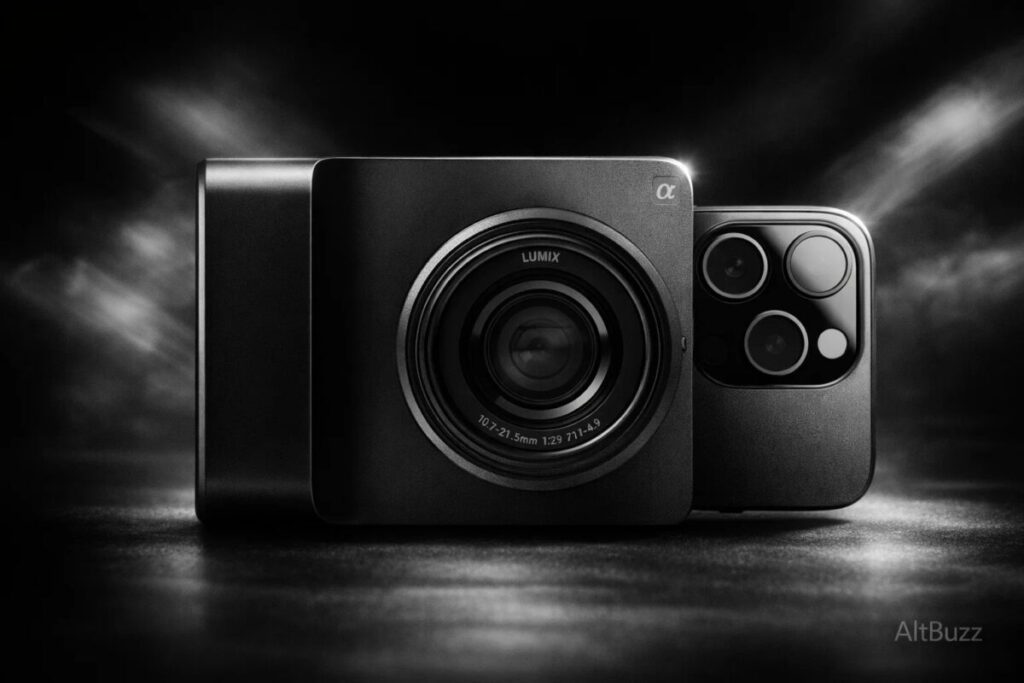
The Caira Camera features a CNC-machined aluminum chassis. The grip is described as sharp-looking but surprisingly comfortable during extended use. Overall, the build quality exceeds what most Kickstarter camera products deliver. Additionally, the compact dimensions make the combined iPhone-plus-Caira unit manageable for everyday carry.
MagSafe Connection
The iPhone attaches to the rear of the Caira via MagSafe. This connection provides both mechanical attachment and Wi-Fi data communication between the camera and the phone. However, reviewers consistently note that the MagSafe connection feels wobbly and somewhat insecure during dynamic shooting situations. This is one of the most common real-world complaints from buyers.
Minimal Physical Controls
The Caira has very few physical controls. The main shutter button is a two-stage release and performs well. An on/off switch is also present. All other controls operate through the Caira iOS app on the attached iPhone. Consequently, shooters who prefer physical dials and buttons will find this approach unfamiliar and limiting.
No Screen on the Camera Body
The Caira has no built-in screen at all. The iPhone provides the viewfinder, review screen, and all control interfaces. This design choice keeps the camera body compact but creates complete dependency on a charged and operational iPhone. Moreover, outdoor visibility depends entirely on the iPhone screen brightness rather than a purpose-built camera display.
Battery and Connectivity
5000mAh Non-Removable Battery
The Caira includes a large 5000mAh internal battery. This provides a full day of use under normal shooting conditions. Additionally, the non-removable design keeps the exterior clean and the body compact. Charging happens via the USB-C port.
Internal 64GB Storage
The Caira holds 64GB of internal storage. Photos and videos transfer automatically to the iPhone app for cloud backup and sharing. Additionally, external storage is available through a USB-C SSD connection for shooters who need more capacity or faster offload options.
Wi-Fi Communication with iPhone
The camera communicates with the iPhone app over its own dedicated Wi-Fi connection rather than through Bluetooth or a cable. Reviewers describe this connection as easy to establish and stable during normal shooting. Furthermore, the Wi-Fi link allows the iPhone to function as a fully capable wireless remote control and live view monitor.
Camera Intelligence OS
The Caira runs Camera Intelligence OS version 2.0, which is an entirely software-based image signal processing pipeline. Sony provides the sensor hardware. Qualcomm provides the processing. Google provides the AI model. Camera Intelligence ties these together with its own OS and image pipeline. Moreover, the software-based approach means features can be updated over the air after purchase.
Real-World Use Cases
Content Creators and Influencers
The Caira Camera fits content creators who want mirrorless image quality without a mirrorless learning curve. Smart Styles produce polished-looking results immediately. Voice control handles technical decisions automatically. Additionally, automatic transfer to the iPhone keeps content creation flowing from shoot to post without workflow interruption.
Marketing Professionals
Brand teams and marketing professionals who need to produce regular visual content quickly will appreciate the Caira’s simplicity. The generative editing features reduce retouching time for product images. Furthermore, the ability to change background environments or clothing colors in-camera saves significant post-production investment.
Travelers and Casual Shooters
The Caira suits travelers who want better image quality than a smartphone provides without carrying a full camera system. A compact body plus one MFT prime lens creates a genuinely portable kit. Additionally, internal storage and automatic iPhone transfer removes memory card management from the travel photography workflow.
Who Should Not Buy the Caira Camera
Traditional photographers who value direct manual control, advanced AF performance, or broad accessory ecosystems should look elsewhere. The Caira does not serve these needs. Furthermore, serious videographers, sports photographers, and anyone with an Android phone should look at alternative options that better suit their workflows.
Pros and Cons
Pros
The 12MP Four Thirds Sony dual-native ISO sensor delivers genuinely better image quality than any smartphone camera at this price. Google Nano Banana generative AI enables real-time in-camera image transformation using natural language prompts. Voice control removes technical barriers for non-photographers completely. Smart Styles produce polished color profiles on-device without a subscription. Additionally, the computational multi-shot mode extends low-light performance meaningfully. The 5000mAh battery provides a full day of shooting. Furthermore, Micro Four Thirds lens compatibility opens access to a large and affordable lens ecosystem.
Cons
The MagSafe connection between the iPhone and Caira body feels wobbly and insecure during active use. Electronic stabilization only applies a significant crop during active use. No built-in screen means complete dependency on a charged iPhone for viewfinder and control access. Additionally, the Caira is iOS-only with no Android support. The Caira Pro subscription at $7 per month is required for full generative AI access. Camera Intelligence’s history with Alice Camera delivery delays may create trust concerns for new buyers. Furthermore, the 4K video tops out at 30fps, which limits slow-motion and creative video flexibility.
Final Verdict
The Caira Camera is genuinely innovative. It represents a new type of camera designed for a new type of user. It succeeds at making photography more accessible, more automated, and more connected to smartphone-centric workflows than any other interchangeable lens camera on the market.
However, the Caira is a product that inspires as much debate as it does enthusiasm. Traditional photographers will find its limitations frustrating and its AI features unnecessary. Content creators and marketing professionals who prioritize speed, simplicity, and shareable results will find it surprisingly capable.
The Caira Camera is the right choice only for a very specific type of shooter. If you match that profile, it is a genuinely exciting tool. If you do not, there are better options at every step of the price ladder.
Read More from AltBuzz
Read more from Altbuzz for camera reviews, rumors, and detailed specs. AltBuzz delivers trusted and easy-to-understand photography content.
Subscribe AltBuzz YouTube Channel
Stay updated with camera reviews, rumors, and comparisons. AltBuzz shares regular camera content.