
The Fujifilm GFX Eterna 55 is officially released and ready for filmmakers. This cinema camera launched in October 2025. It targets professional cinematographers and content creators. Moreover, it suits filmmakers who want medium format image quality. The camera costs $16,499.95 and offers unique features. Additionally, it brings Fujifilm’s color science to cinema production.
This camera represents Fujifilm’s first dedicated cinema body. The company combines decades of imaging expertise with modern video technology. Furthermore, the GFX Eterna 55 uses the largest cinema sensor currently available. Content creators gain access to distinctive visual characteristics. The medium format sensor creates shallow depth of field naturally. Consequently, filmmakers achieve theatrical aesthetics without extensive equipment. Independent producers particularly benefit from this compact solution.
Release Date and Market Position
Fujifilm released the GFX Eterna 55 in October 2025. The camera ships directly to consumers and rental houses. Furthermore, it competes in the professional cinema segment. Specifically, it rivals RED V-RAPTOR XE 8K VV and Blackmagic URSA Cine 12K LF. However, it offers the largest commercially available cinema sensor. Meanwhile, traditional competitors use smaller sensors. The camera positions itself between high-end mirrorless cameras and full cinema systems. Consequently, it appeals to independent filmmakers and boutique studios.
Fujifilm GFX Eterna 55 Specifications Table
| Feature | Details |
|---|---|
| Sensor Type | 102MP GFX 102MP CMOS II HS, 43.8 x 32.9mm (55mm diagonal) |
| Resolution | 102 Megapixels |
| Processor | X-Processor 5 |
| ISO Range | Dual-Base ISO: 800 and 3200 |
| Autofocus System | Intelligent Hybrid AF (TTL contrast/phase detection), subject detection for faces, animals, vehicles |
| Stabilization | Lens-based (with compatible lenses) |
| Video Recording | 8K DCI 30fps, 6.3K 24fps, 5.8K 30fps, 4K Open Gate 48fps, ProRes 422 HQ/422/LT, H.265, H.264 |
| EVF | Not included (cinema-style camera) |
| LCD Screen | Dual 3″ side touchscreens (700 nits), 5″ flip-out monitor (2,000 nits) |
| Burst Shooting | Up to 48fps (video mode) |
| Battery | NP-W235 internal battery, V-mount external battery plate, DC power input |
| Storage | CFexpress Type B |
| Connectivity | HDMI, SDI, USB-C, Ethernet, Wi-Fi, BLE, Timecode In/Out (BNC) |
| Weight | 2.0 kg (4.4 lbs) body only |
| Launch Price | $16,499.95 USD |
Fujifilm GFX Eterna 55 Sensor and Image Quality Performance
The Fujifilm GFX Eterna 55 features a massive 43.8 x 32.9mm sensor. This sensor measures 55mm diagonally. Therefore, it ranks among the tallest cinema sensors available. The 102-megapixel resolution enables flexible cropping. Additionally, it supports multiple recording formats.
The sensor size exceeds full-frame by significant margins. Standard full-frame sensors measure approximately 43mm diagonally. Consequently, the GFX Eterna 55 offers nearly 30% more sensor area. This expanded area captures more light and detail. Furthermore, it creates unique perspective characteristics. Filmmakers gain distinctive visual separation between subjects.
The image quality delivers cinematic depth. Colors render naturally with smooth gradation. Furthermore, the sensor provides excellent tonal range. Highlights hold detail without clipping easily. Shadows maintain information even in challenging scenes. Consequently, filmmakers gain significant grading flexibility.
The 102-megapixel resolution serves multiple purposes. Full 8K extraction maintains exceptional sharpness. Additionally, lower resolutions oversample sensor data. This oversampling reduces noise and increases detail. Consequently, 6K and 4K footage looks remarkably clean. The camera downscales intelligently from the full sensor.
Dynamic range reaches 14+ stops with F-Log2 C. This wide range handles high-contrast scenes. Moreover, it preserves details in bright and dark areas. The sensor excels in controlled lighting environments. However, it performs well in natural light too. Interior locations with window light pose no problems. Furthermore, mixed lighting scenarios stay manageable.
Low-light performance benefits from dual-base ISO. The camera switches between ISO 800 and ISO 3200. This design minimizes noise in dark conditions. Nevertheless, image quality remains clean at ISO 3200. Noise appears film-like rather than digital. Furthermore, the large sensor gathers more light naturally. Night exteriors remain usable without excessive lighting.
Color science stands as a major strength. Fujifilm’s 90+ years of film heritage shines through. Skin tones render accurately across ethnicities. Moreover, colors feel emotionally resonant rather than just accurate. The camera includes 20 Film Simulations. These recreate iconic Fujifilm film stocks digitally. Additionally, F-Log2 C offers wide color gamut coverage.
The sensor readout speed impresses for its size. Rolling shutter remains manageable despite high resolution. Fast pans show some skew but stay usable. Furthermore, vertical movements handle better than horizontal. The camera reads out data efficiently given sensor dimensions. Subsequent firmware updates may improve performance further.
Fujifilm GFX Eterna 55 Autofocus Performance
The Fujifilm GFX Eterna 55 uses intelligent hybrid autofocus. This system combines contrast and phase detection. Consequently, it works only with native GF lenses. The camera includes deep learning subject detection. It recognizes faces, animals, birds, vehicles, and trains.
AF performs reliably for documentary work. Subject tracking stays locked during movement. Furthermore, face detection works consistently. Eye detection activates when subjects face the camera. However, manual focus remains preferred for narrative work.
Autofocus speed suits controlled environments. It focuses smoothly without hunting. Moreover, transitions happen gradually for cinematic results. Nevertheless, fast action may challenge the system. Sports and high-speed subjects work better with manual focus.
In video mode, autofocus maintains consistent performance. Focus breathing stays minimal with GF lenses. Additionally, the system avoids sudden jumps. Operators can rely on autofocus for interviews. However, cinema lens users typically choose manual control.
The shallow depth of field complicates focusing. Large sensors create razor-thin focus planes. Therefore, precise focus becomes critical. Camera assistants may prefer traditional methods. Meanwhile, solo shooters appreciate autofocus assistance.
Fujifilm GFX Eterna 55 Video Capabilities
Maximum video resolution reaches 8K DCI at 30fps. The camera also records 6.3K and 5.8K. Furthermore, it offers 4K Open Gate at 48fps. This flexibility suits various production needs. Additionally, Super 35 crops remain available.
The 8K DCI format delivers 8192 x 4320 pixels. This resolution exceeds standard 8K UHD slightly. Therefore, it provides extra width for compositions. Filmmakers crop without losing quality. Moreover, downscaling to 4K produces exceptional sharpness. The oversampling reduces noise significantly. Consequently, final output looks remarkably clean.
Frame rate options cover standard cinema speeds. The camera shoots 24, 25, 30, and 48fps. Slow motion reaches 60fps in 1080p. Moreover, multiple aspect ratios work natively. Open Gate 4:3 recording utilizes the full sensor. This format suits anamorphic workflows perfectly. Additionally, vertical video works for social media.
The tall sensor enables unique compositions. Standard cameras crop vertically for portraits. However, the Eterna 55 uses full height naturally. Consequently, vertical social content gains quality advantages. Furthermore, reframing flexibility increases dramatically. Editors extract different aspect ratios easily.
Log profiles include F-Log2 and F-Log2 C. These profiles preserve maximum dynamic range. F-Gamut C covers 81% of ACES color space. Consequently, colorists gain extensive grading latitude. Furthermore, the wide gamut prevents color clipping. Saturated colors maintain detail throughout. Skin tones grade smoothly across ranges.
The camera handles color grading exceptionally well. Files withstand aggressive adjustments. Moreover, recovery tools work effectively. Blown highlights contain recoverable information. Crushed shadows reveal hidden detail. Consequently, poorly exposed footage salvages better. However, proper exposure remains ideal always.
Internal recording uses ProRes 422 HQ/422/LT. These codecs balance quality and file size. Additionally, H.265 and H.264 options save storage. ProRes proxy recording aids editing workflows. External recording supports 12-bit RAW via HDMI. Furthermore, Atomos recorders capture ProRes RAW.
File sizes grow substantial at 8K. ProRes 422 HQ generates approximately 40GB per minute. Therefore, storage requirements multiply quickly. CFexpress Type B cards handle the data rates. Moreover, fast cards prevent recording interruptions. Production budgets must account for media costs.
Video stabilization relies on lens-based systems. Compatible GF lenses include optical stabilization. The GF 32-90mm T3.5 features built-in OIS. However, the camera body lacks sensor stabilization. Therefore, stable tripod or gimbal work produces best results.
The built-in variable ND filter provides significant advantages. It adjusts from 2 to 7 stops smoothly. Therefore, exposure control stays precise. Filmmakers shoot wide open in bright conditions. Moreover, cinematic shutter angles remain usable. Depth of field control increases dramatically. Consequently, consistent looks across shots become easier.
Audio options remain comprehensive. The camera includes 3.5mm microphone input. Additionally, it accepts external audio via TASCAM adapter. XLR inputs connect through the hot shoe. Moreover, headphone monitoring via 3.5mm jack. Professional productions benefit from dedicated audio recorders.
Timecode functionality supports multi-camera workflows. BNC connections provide reliable synchronization. External generators maintain precise timing. Additionally, Atomos AirGlu enables wireless timecode. Large productions coordinate multiple cameras easily. Furthermore, audio devices stay perfectly synchronized.
The camera supports anamorphic lenses natively. De-squeeze ratios include 1.3x, 1.5x, 1.8x, and 2.0x. Real-time monitoring shows correct aspect ratios. Consequently, framing stays accurate during shooting. Moreover, focus pulling becomes easier. The camera accommodates both spherical and anamorphic workflows.
Recording limits stay reasonable for cinema work. The camera records continuously without time limits. Overheating rarely occurs during normal use. Furthermore, the low power consumption helps. Extended takes for dialogue scenes work reliably. However, extreme heat may require breaks.
Fujifilm GFX Eterna 55 Design, Build Quality, and Handling
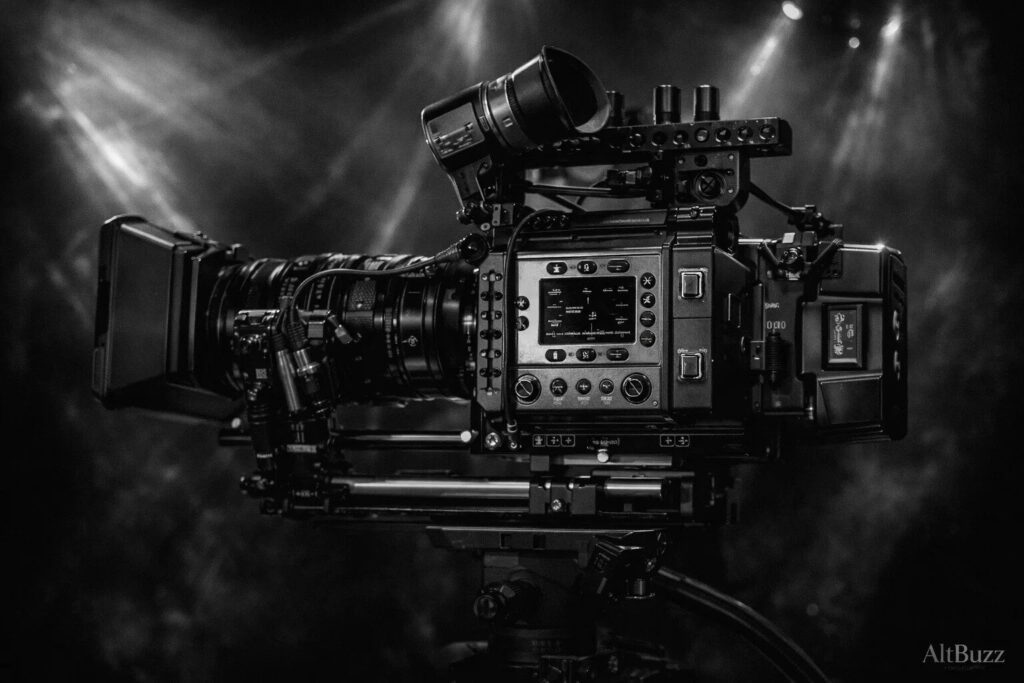
The body construction uses durable metal alloy. Build quality feels professional and solid. Furthermore, the design emphasizes practical filmmaking. Weather sealing protects against dust and moisture. However, extreme conditions require additional protection.
The camera measures compact for its sensor size. Traditional cinema cameras dwarf the Eterna 55. Moreover, the form factor resembles large mirrorless cameras. Consequently, it fits existing accessories. Cage systems from SmallRig and Tilta work perfectly. Additionally, follow focus units attach easily.
Grip design supports handheld operation. The camera weighs 2.0 kg (4.4 lbs). Therefore, extended handheld use remains manageable. Additionally, the compact size fits various rigs. Multiple mounting points accommodate accessories. Cheese plate patterns appear throughout the body. Furthermore, ARRI rosettes enable handle attachment.
Button layout mirrors on both sides. Left and right controls match identically. Consequently, operators and assistants access settings easily. Separate lock switches prevent accidental changes. Moreover, six primary buttons provide quick access. The interface prioritizes shooting efficiency.
The dual 3-inch side monitors display menus. Each screen reaches 700 nits brightness. Furthermore, both show identical information. Settings adjust from either side. Consequently, camera position flexibility increases. Moreover, outdoor viewing stays possible. However, bright sunlight still challenges visibility.
The main 5-inch flip-out monitor hits 2,000 nits. This exceptional brightness enables outdoor shooting. Furthermore, the high-resolution display shows fine detail. Touch functionality speeds menu navigation. Consequently, settings change quickly. Moreover, focus pulling benefits from magnification. The monitor articulates for various angles.
Ergonomics suit cinema-style shooting. Traditional camera operators adapt quickly. Moreover, the form factor accepts standard accessories. Shoulder rigs balance weight effectively. Furthermore, the low-profile design fits tight spaces. Car interior shots become feasible. Additionally, gimbal mounting stays straightforward.
The cinema market offers growing accessory support. Initially, third-party options stayed limited. However, manufacturers recognize the opportunity. SmallRig released comprehensive cage systems. Tilta provides advanced rigging solutions. Moreover, Wooden Camera develops professional accessories. The ecosystem expands continuously.
Weather sealing meets production demands. The camera handles light rain and dust. Nevertheless, heavy weather requires additional protection. Operating temperature ranges from 14°F to 104°F. Humidity tolerance reaches 80% without condensation. Tropical and cold climates stay manageable. However, extreme environments need weatherproof housing.
The built-in cooling system works silently. Heat dissipates through the metal body. Furthermore, internal fans activate when necessary. Noise levels remain acceptably low. Consequently, audio recording stays clean. Moreover, overheating rarely interrupts shooting. Long takes in moderate temperatures work reliably.
Port placement considers practical workflow. SDI and HDMI outputs sit on the left. USB-C and Ethernet share the right side. Furthermore, audio jacks locate logically. Timecode BNC connectors appear on the rear. Consequently, cable management stays organized. Moreover, port protection covers shield connections.
The top handle provides multiple functions. It houses accessory connections internally. Moreover, cold shoes accept wireless receivers. XLR adapters mount securely. Additionally, the handle improves carrying balance. Consequently, transport becomes easier. The modular design accommodates various needs.
Battery mounting offers flexibility. Internal NP-W235 enables hot swapping. External V-mount plates attach via standard rosettes. Moreover, Gold mount adapters work identically. DC power input accepts block batteries. Consequently, power never limits shooting. Productions choose preferred systems freely.
The lens mount uses native G-mount. This large diameter accommodates huge sensors. Moreover, it provides short flange distance. Native GF lenses maintain electronic communication. Additionally, PL adapter ships included. Consequently, cinema lenses work immediately. Furthermore, adapters enable other mounts. EF, E-mount, and vintage glass adapt successfully.
Fujifilm GFX Eterna 55 Battery Life and Connectivity
Battery performance uses multiple power sources. The internal NP-W235 enables hot swapping. External V-mount batteries extend runtime significantly. Additionally, DC power input supports block batteries. Therefore, all-day shoots remain feasible.
Power consumption stays remarkably low at 21W. This efficiency surprises given sensor size. Furthermore, it reduces heat generation. Long takes don’t overheat the camera. Moreover, battery changes happen less frequently.
Charging options include USB-C PD. The camera charges while powered off. Additionally, V-mount plates charge externally. Production teams typically use multiple batteries. Meanwhile, AC adapters provide unlimited power.
Wireless connectivity includes Wi-Fi and Bluetooth. Frame.io Camera to Cloud uploads files directly. Consequently, editors access footage immediately. Furthermore, Ethernet provides wired networking. Remote control works via web browser.
File transfer happens through multiple methods. USB-C supports fast data transfer. Additionally, CFexpress cards transfer quickly. Cloud uploads work over Wi-Fi or Ethernet. Moreover, proxy files accelerate workflows.
Timecode synchronization uses BNC connections. External timecode generators maintain sync. Additionally, Atomos AirGlu connects wirelessly. Multi-camera productions benefit from precise timing. Furthermore, audio recorders stay synchronized.
Fujifilm GFX Eterna 55 Real-World Use Cases
Photography genres benefit from the sensor size. Commercial photography gains cinematic motion. Furthermore, fashion shoots use video B-roll. Documentary work captures high-resolution footage. Additionally, wedding videography produces stunning results.
Commercial photography embraces video increasingly. Brands demand both stills and motion. The GFX Eterna 55 serves both needs. Moreover, the sensor creates distinctive looks. Shallow depth of field separates subjects beautifully. Consequently, products stand out dramatically. Additionally, the color science enhances appeal.
Video use cases include narrative filmmaking. Independent features leverage the large sensor. Moreover, commercials achieve distinctive looks. Music videos benefit from shallow depth. Additionally, corporate videos gain professional polish.
Narrative films benefit most from unique aesthetics. The medium format sensor creates theatrical depth. Faces separate from backgrounds naturally. Moreover, wide shots maintain sharpness throughout. Establishing shots gain epic quality. Consequently, productions achieve premium looks. Furthermore, the color science simplifies grading. Film Simulations provide starting points instantly.
Strengths shine in controlled environments. Studio work maximizes image quality. Furthermore, narrative films benefit from color science. Anamorphic productions utilize the tall sensor. Additionally, open gate recording provides flexibility.
The camera excels at cinematic interviews. Skin tones render beautifully. Moreover, bokeh quality enhances production value. Short films gain theatrical presentation. Additionally, web series achieve premium aesthetics.
Music videos exploit the sensor advantages. Shallow depth of field creates isolation. Artists separate from backgrounds dramatically. Moreover, movement through space looks gorgeous. Rack focus effects happen naturally. Consequently, visual storytelling improves. Additionally, stylized color grades work excellently.
Documentary productions appreciate image quality. The sensor handles available light well. Moreover, color rendering stays natural. Interview subjects look their best. Consequently, productions maintain professional standards. Furthermore, the compact size reduces intimidation. Subjects relax faster during filming.
Wedding cinematography benefits from aesthetics. The sensor creates romantic depth. Ceremonies gain emotional impact visually. Moreover, reception coverage stays beautiful. Low-light performance handles dim venues. Consequently, quality never suffers. Additionally, Film Simulations match wedding styles.
Corporate video productions elevate with quality. Executive interviews gain gravitas. Moreover, facility tours look impressive. Product demonstrations showcase details. Consequently, companies justify premium pricing. Furthermore, the professional look increases credibility. Clients notice the visual difference.
Limitations appear in fast-action scenarios. Sports coverage needs higher frame rates. Furthermore, wildlife work requires longer lenses. Run-and-gun documentary presents challenges. Additionally, rolling shutter affects quick pans.
Sports videography proves challenging. The maximum 48fps limits slow motion. Moreover, autofocus tracks inconsistently. Fast lateral movement shows rolling shutter. Consequently, dedicated sports cameras work better. Nevertheless, controlled sports work acceptably. Skateboarding and BMX productions succeed.
Wildlife cinematography faces lens limitations. Medium format glass stays expensive. Moreover, telephoto options remain limited. The GF lens lineup needs expansion. Consequently, wildlife shooters choose elsewhere. However, adapted lenses work sometimes. Manual focus enables some scenarios.
Event coverage depends on conditions. Controlled events work excellently. Moreover, theatrical productions shine. However, unpredictable action proves difficult. Additionally, quick setup situations challenge. The camera rewards careful preparation. Consequently, experienced operators succeed.
Fujifilm GFX Eterna 55 Pros and Cons
Pros
- Tallest commercially available cinema sensor delivers unique perspective
- Exceptional color science inherited from Fujifilm’s film heritage
- 20 Film Simulations plus customizable 3D LUTs
- Built-in variable ND filter (2-7 stops)
- Dual-base ISO system (800/3200) for flexible exposure
- Internal ProRes 422 HQ recording
- Compact and lightweight for sensor size
- Dual-sided controls benefit operators and assistants
- Multiple recording formats support diverse workflows
- Frame.io Camera to Cloud integration
- Low power consumption (21W nominal)
- 14+ stops of dynamic range with F-Log2 C
- Real-time anamorphic de-squeeze
- Professional connectivity (HDMI, SDI, Timecode)
- Native G-mount with included PL adapter
Cons
- No internal RAW recording capability
- Requires expensive medium-format lenses for full coverage
- Rolling shutter noticeable in fast pans
- Autofocus only works with GF lenses
- Limited third-party accessories currently available
- ProRes file sizes reach 40GB per minute at 8K
- Maximum 48fps limits slow-motion options
- No built-in sensor stabilization
- Ecosystem less established than RED or ARRI
- Higher price than some competitors
- Rental market availability remains limited
- Learning curve for color science workflows
- Heavy memory card requirements
- Not ideal for fast-action sports coverage
- Weather sealing good but not extreme-condition rated
Final Verdict
The Fujifilm GFX Eterna 55 delivers outstanding image quality. Its large sensor creates distinctive cinematic images. Moreover, color science remains unmatched in this class. The camera excels at narrative and commercial work. Additionally, it suits productions valuing aesthetics over speed.
The sensor size alone justifies consideration. No comparable cinema camera offers this area. Consequently, the look stays truly unique. Filmmakers differentiate their work visually. Moreover, clients notice the quality difference. Premium pricing becomes easier to justify. Additionally, the camera creates signature aesthetics.
Value for money depends on priorities. At $16,499.95, it costs less than comparable systems. However, lens investments add significant expense. Furthermore, the unique sensor justifies the premium. Productions focused on image quality benefit most.
Comparing to RED V-RAPTOR reveals differences. The RED offers higher frame rates. Moreover, it provides internal RAW recording. However, the sensor stays smaller. Additionally, RED cameras cost more fully configured. The Eterna 55 delivers better color science. Consequently, choice depends on production needs.
Blackmagic URSA Cine 12K LF competes directly. It offers higher resolution recording. Moreover, internal RAW comes standard. However, the sensor remains slightly smaller. Additionally, color science differs significantly. The Fujifilm renders skin tones better. Consequently, narrative work favors the Eterna.
Who should buy this camera? Independent filmmakers seeking distinctive looks. Commercial producers wanting cinematic aesthetics. Narrative directors prioritizing color and depth. Additionally, studios building medium-format workflows. Wedding videographers charging premium rates. Music video creators emphasizing style.
Boutique production companies benefit immensely. The camera differentiates their offerings. Moreover, it enables signature looks. Clients recognize the quality immediately. Consequently, premium pricing sticks. Additionally, the investment pays returns quickly. Marketing emphasizes unique capabilities.
Who should avoid it? Sports videographers needing high frame rates. Documentary shooters requiring run-and-gun flexibility. VFX-heavy productions preferring internal RAW. Budget-conscious creators on tight finances. Action filmmakers dealing with fast motion. Additionally, productions locked into existing ecosystems.
Television production houses face decisions. Broadcast work sometimes needs speed over aesthetics. Moreover, established workflows resist change. However, premium dramas benefit from quality. Consequently, evaluation depends on content type. The camera serves selective productions best.
The Fujifilm GFX Eterna 55 represents bold innovation. It brings medium format to professional cinema. Furthermore, it offers unique creative possibilities. The camera suits filmmakers who prioritize image quality. Ultimately, it delivers on Fujifilm’s cinematic promise.
Long-term prospects look promising. Fujifilm commits to cinema seriously. Moreover, firmware updates improve functionality. The lens ecosystem continues expanding. Consequently, the system grows stronger. Additionally, accessory support increases steadily. Early adopters position themselves advantageously.
The cinema market needs innovation desperately. Traditional cameras converge toward similarity. However, the Eterna 55 diverges deliberately. Consequently, it creates new aesthetic possibilities. Filmmakers gain fresh creative tools. Moreover, visual language expands meaningfully. The industry benefits from diversity.
Read More from AltBuzz
Read more from Altbuzz for camera reviews, detailed specs, and expert insights. AltBuzz delivers trusted and easy-to-understand photography content.
Subscribe AltBuzz YouTube Channel
Stay updated with camera reviews and comparisons. Subscribe to AltBuzz YouTube for hands-on camera content regularly.