
Fujifilm TX-3 Rumors: Expected Specs, Features and Release
The Fujifilm TX-3 does not exist officially yet. Fujifilm has confirmed nothing. No product page has appeared. No press release has gone out. However, the photography world is already paying very close attention.
Leaks are surfacing regularly. Forum discussions grow longer every week. Patent filings point in a clear direction. Together, all of this evidence makes the Fujifilm TX-3 feel increasingly inevitable.
The TX series holds a deeply special place in photography history. Fujifilm introduced the TX-1 in 1998. It used a 35mm film panoramic format called Xpan. That format shot images across two frames of film simultaneously. The result was a wide, cinematic aspect ratio unlike anything else in the 35mm world.
Photographers fell in love with it immediately. The panoramic frame captured environments with a completeness that standard rectangular framing could never match. Mountains stretched edge to edge. Coastlines breathed across the full width of the frame. City streets became sweeping documentary landscapes.
The TX-2 followed in 2003 with modest improvements. Then Fujifilm went quiet on the TX line entirely. Digital photography took over. Film sales dropped globally. The TX series appeared finished.
But Fujifilm surprised everyone. The brand leaned back into film aesthetics and film-inspired design with enormous commercial success. The GFX medium format system. The X series APS-C mirrorless line. The iconic X100 fixed-lens cameras. All of them celebrate the analog spirit inside a digital body.
Meanwhile, something remarkable happened in the used camera market. Original TX-1 and TX-2 cameras became extraordinarily sought after. Prices climbed to levels that seemed absurd just a decade ago. A working TX-1 with a lens now commands prices comparable to serious modern mirrorless cameras.
That market signal is unmistakably clear. Photographers want the Xpan experience in a modern digital body. The Fujifilm TX-3 may be exactly that camera. Let us walk through everything currently rumored about it in full detail.
Expected Release Date and Market Position
Why the Timing Is Right for the Fujifilm TX-3
Fujifilm has been reading the market with remarkable precision. The analog revival continues to accelerate rather than slow down. Film photography communities grow on every major platform. Film sales at Fujifilm’s own manufacturing operations have increased year over year.
Meanwhile, the desire for panoramic framing has never been stronger among serious photographers. Instagram and YouTube have both expanded support for ultra-wide aspect ratios. The visual language of panoramic photography resonates strongly with modern audiences who consume content across wide-screen devices.
Additionally, Fujifilm has spent years developing its X-Trans sensor technology to world-class levels. The X-Trans CMOS 5 HR sensor in the X-T5 and X-H2 delivers exceptional image quality at 40 megapixels. The color science feeding into Film Simulations has never been more refined. The digital tools to deliver an authentic Xpan experience now genuinely exist. Previously they did not.
Furthermore, Fujifilm’s recent product strategy demonstrates a consistent pattern. The brand targets niche but deeply passionate audiences and serves them exceptionally well. The X100VI sold out globally within hours of its launch announcement. Lines formed outside camera stores. Online stock disappeared before most photographers could place an order. The TX-3 targets an even more focused and passionate audience. That audience is hungry. They have been waiting for years. And they absolutely have the budget to spend on the right product.
Analyzing the Market Pressure on Fujifilm
Fujifilm faces an interesting competitive situation with the TX-3. No other camera manufacturer currently offers a dedicated digital panoramic camera that authentically replicates the Xpan format. This creates both an opportunity and a responsibility.
The opportunity is clear. Fujifilm can own an entirely unique market segment with no direct digital competition. No Sony or Nikon or Canon. Nobody else is currently building a native digital panoramic camera in this spirit.
The responsibility is equally clear. Photographers who have waited years for a digital Xpan hold very strong expectations. The Fujifilm TX-3 cannot simply add a panoramic crop mode to an existing body and call it done. The camera needs to deliver the authentic Xpan experience through dedicated hardware, native sensor proportions, and lens designs optimized for the format.
Leaked information and industry analysis both suggest Fujifilm understands this responsibility. The TX-3 appears designed as a genuinely dedicated panoramic system rather than a software feature bolted onto an existing product.
Rumored Launch Timeline for the Fujifilm TX-3
Based on Fujifilm’s current product rhythm and consistently growing leak activity, industry sources suggest the Fujifilm TX-3 could be announced in late 2025 or the first half of 2026. Fujifilm has recently favored dedicated online reveal events for major product launches. A standalone TX-3 reveal event would make complete sense.
The significance of the TX-3 within Fujifilm’s brand story justifies a dedicated reveal. This is not a routine product refresh. It is the revival of one of photography’s most beloved formats. Fujifilm would almost certainly want to give it a standalone moment rather than bury it in a multi-product announcement.
Retail availability following announcement would likely come within eight to twelve weeks. Fujifilm tightened its production and shipping timelines following the lessons learned from the X100VI launch delays. The TX-3 would almost certainly launch in limited initial quantities given its specialty positioning and the dedicated lens ecosystem it would require.
Competitive Landscape Around the Fujifilm TX-3
The Fujifilm TX-3 faces essentially no direct digital competition in the native panoramic segment. However, photographers evaluating the TX-3 would also consider several alternative approaches to panoramic photography.
The original Hasselblad XPan with film remains a revered alternative. Leica M cameras with wide lenses and manual panoramic crops represent another approach. Medium format digital cameras with generous sensor dimensions and post-production cropping offer a third path. Phase One systems can deliver panoramic files through software extraction.
None of these alternatives deliver the native Xpan experience. All of them require compromise. Either they use film, requiring a separate scanning workflow. Or they use software crops that sacrifice significant resolution. Or they cost dramatically more than the expected TX-3 price range.
The Fujifilm TX-3 is expected to be the only camera that delivers the Xpan format natively in a dedicated digital body at a price accessible to serious enthusiasts.
Expected pricing sits between 3,500 and 5,000 dollars. That range reflects the specialty positioning, the premium build quality expected from a TX-series product, and the genuine engineering cost of developing a unique optical and sensor system from scratch.
Fujifilm TX-3 Rumored Specifications Table
| Feature | Rumored Details |
|---|---|
| Sensor Type | APS-H or extended APS-C X-Trans CMOS 5 variant |
| Resolution | 40 megapixels in panoramic mode, 26 megapixels in standard mode |
| Processor | X-Processor 5 Pro |
| ISO Range | 125 to 12800, expandable to 51200 |
| Autofocus System | Hybrid phase and contrast detect with face and eye detection |
| Stabilization | In-body 5-axis IBIS up to 7 stops |
| Video Recording | 6.2K panoramic video and 4K standard at 30fps |
| EVF | 0.5-inch 5.76 million dot OLED EVF |
| LCD Screen | 3.0-inch tilting touchscreen |
| Burst Shooting | Up to 15 frames per second |
| Battery | NP-W235 |
| Storage | Dual UHS-II SD card slots |
| Connectivity | Wi-Fi 6, Bluetooth 5.0, USB-C |
| Weight | Approximately 550 grams |
| Expected Price | 3500 to 5000 USD |
Rumored Sensor and Image Quality of the Fujifilm TX-3
The Engineering Challenge of a Native Digital Panoramic Sensor
Recreating the Xpan format in digital form is genuinely complex. The original Xpan captured images across a 65mm wide by 24mm tall area on film. That physical dimension is considerably wider than a standard 35mm full-frame sensor measures. Replicating this digitally requires either a physically wider sensor or a software crop that removes a significant portion of the total resolution.
A software crop approach would disappoint serious photographers. Imagine buying a camera specifically for its panoramic format and receiving only a heavily cropped portion of a standard sensor. The resolution penalty would be severe. The edge quality from lens corners designed for standard framing would be inconsistent. The result would feel inauthentic and compromised.
Fujifilm clearly understands this. The TX-3 is therefore rumored to feature a custom extended sensor. Speculation points toward an APS-H sensor format or a specially extended APS-C sensor with a wider-than-standard horizontal dimension. Either approach provides a physical sensor footprint significantly wider than standard APS-C. This allows the TX-3 to capture the panoramic format natively using purpose-designed lenses optimized for the wider image circle.
Understanding the Extended Sensor Architecture
An extended sensor in the Fujifilm TX-3 delivers several simultaneous benefits that go beyond simply providing more horizontal pixels.
First, the panoramic images use the full sensor width without any cropping penalty. The complete 40 megapixels spread across the wider frame. No resolution sacrifice. No edge quality compromise from using lens corners designed for a narrower format.
Second, the wider physical sensor captures more total light during every exposure. More light across the panoramic field improves the signal-to-noise ratio in the recorded file. The resulting images show cleaner shadows, smoother midtones, and more controlled highlight rolloff compared to cropping a standard narrower sensor.
Third, the extended sensor creates a natural and authentic relationship between the camera’s dedicated lenses and the panoramic format. Lens designers can optimize their designs for the actual image circle the TX-3 requires. The resulting images will exhibit the characteristic rendering that made the original Xpan optical system so admired.
Fourth, the native format affects depth of field rendering. Standard lenses adapted to shoot a wider proportion of their circle produce depth of field characteristics that differ from using purpose-designed optics. Native lenses matched to the native sensor format deliver the expected panoramic aesthetic with natural, pleasing background rendering.
X-Trans CMOS 5 Technology and Color Science
Fujifilm’s X-Trans sensor pattern fundamentally differs from the Bayer array that virtually every competing camera uses. The standard Bayer pattern arranges red, green, and blue photosites in a regular repeating grid. This regularity creates a pattern that interacts poorly with fine repetitive details in fabric, architecture, and natural textures. The result is moiré interference that requires software correction.
The X-Trans pattern uses a more randomized arrangement of color filters across the sensor surface. This randomization breaks the regular frequency that causes moiré. Fine detail renders more naturally without the false color fringing that Bayer sensors sometimes introduce. The tonal transitions between different colored areas feel smoother and more organic. The overall character of X-Trans images consistently reminds viewers of analog film rather than digital capture.
The Fujifilm TX-3 is expected to use a variant of the X-Trans CMOS 5 sensor tuned specifically for the panoramic format dimensions. This means the camera inherits every advantage of X-Trans technology alongside the architectural benefit of a dedicated panoramic sensor design.
Film Simulations on the Fujifilm TX-3
Film Simulations are one of the most genuinely differentiated features in the entire camera market. No other camera manufacturer has invested as deeply or as successfully in recreating the aesthetic of analog films through digital processing. Fujifilm’s Film Simulation suite has become a defining reason that photographers choose the brand.
The Fujifilm TX-3 is expected to include Fujifilm’s complete current Film Simulation library. Provia delivers accurate, balanced color for versatile everyday shooting. Velvia produces vivid, highly saturated color with deep blues and lush greens that landscape photographers adore. Astia provides soft, flattering color rendition ideal for portrait and people photography.
Classic Chrome delivers muted, documentary-style tones with slightly desaturated shadows and lifted midtones that feel timeless and editorial. Classic Neg replicates the warm, slightly faded aesthetic of consumer negative film with a nostalgic character that resonates strongly with contemporary photographers. Nostalgic Neg pushes this further into warmer, more faded territory.
Eterna delivers smooth, low-contrast color perfect for cinematic video work. Eterna Bleach Bypass mimics the silver retention process from analog film development, producing desaturated tones with high contrast and strong shadow density. Acros produces precise, sharp black and white with characteristic grain structure that feels genuinely analog rather than digitally desaturated.
Each of these simulations produces images with a distinctive character that would be difficult or impossible to replicate in post-processing starting from a flat RAW file. For photographers who want beautiful, finished images directly from the camera, Film Simulations deliver results that feel unlike anything else in the digital world.
Dynamic Range and Its Importance for Panoramic Photography
Dynamic range from the expected TX-3 sensor is speculated at approximately 14 stops at base ISO. For panoramic photography, broad dynamic range is especially important. The wider horizontal field of view means the camera simultaneously captures more of the environment in a single frame. Bright sky on one side. Deep shadow under trees on the other. A narrow street’s dark foreground against an open bright plaza beyond.
All of these scenarios appear constantly in the wide panoramic frame. A camera with limited dynamic range forces the photographer to choose which part of the tonal range to preserve correctly. Shadows go dark and detail-less. Or highlights blow out to featureless white. Neither result suits the documentary, comprehensive aesthetic that panoramic photography aims for.
With 14 stops of dynamic range, the Fujifilm TX-3 can capture both extremes of these scenes in a single exposure. Post-production recovery then reveals detail throughout the tonal range. This latitude changes what panoramic photography is practically capable of capturing without complex HDR merging or exposure bracketing workflows.
Low-Light Performance Compared to Film
Low-light performance represents one of the clearest advantages the Fujifilm TX-3 would hold over the original film-based Xpan cameras. Film speeds were physically limited. Pushing film to ISO 1600 introduced heavy grain and significant color shift. ISO 3200 on film was barely usable for critical work. Beyond that, results became experimental rather than reliable.
The Fujifilm TX-3’s modern BSI sensor combined with X-Processor 5 Pro noise reduction changes this equation entirely. Usable results at ISO 6400 are expected. Clean, grain-structured images at ISO 3200 that echo the character of analog film at much lower speeds are anticipated. The camera could deliver night panoramic photography that the original Xpan cameras could never practically achieve.
Furthermore, the expected IBIS system would allow slower shutter speeds in low light without camera shake degrading sharpness. Combining extended ISO capability with IBIS-assisted slow shutter speeds opens up low-light panoramic photography to a remarkable degree.
Rumored Autofocus System in the Fujifilm TX-3
Why Panoramic AF Has Different Requirements
Autofocus in a panoramic camera operates differently from standard photography. The wider horizontal frame changes the geometry of subject placement and tracking. Subjects appear smaller within the panoramic frame than they would in a standard rectangular framing of the same scene. The AF system must search and track across a significantly broader horizontal field.
Landscape photographers who work deliberately benefit from precise manual focus tools including focus peaking and magnified confirmation. Street photographers who capture spontaneous moments need fast, reliable predictive AF. Environmental portrait photographers who balance subject sharpness against sweeping backgrounds need accurate subject detection across the wide frame.
The Fujifilm TX-3 reportedly addresses all of these different AF needs through a comprehensive hybrid system that combines phase-detect speed with contrast-detect precision.
Phase-Detect AF as the Primary System
The new Phase-detect autofocus is expected as the primary AF mechanism in the Fujifilm TX-3. It read focus error directly from the sensor surface. The sensor itself provides information about which direction and by how much the lens needs to move to achieve focus. This direct feedback eliminates the hunting behavior that older contrast-detect systems produced.
Phase-detect AF acquisition speed is particularly important for street photographers who raise the TX-3 to capture spontaneous moments. By the time focus confirmation chirps and the photographer presses the shutter, a decisive moment has already passed if the AF system is slow. Phase-detect AF locks quickly enough that the camera is ready when the moment arrives rather than searching for it after.
Contrast Detect Refinement for Precision
Contrast-detect refinement operates as a secondary system alongside phase-detect in the rumored Fujifilm TX-3 AF implementation. After phase-detect establishes the approximate focus position quickly, contrast-detect algorithms make fine adjustments to achieve maximum sharpness at the exact focus plane.
This two-stage approach combines the speed advantage of phase-detect with the precision advantage of contrast-detect. The result is focus that arrives quickly and lands precisely. Critical sharpness on eyelashes in a close portrait. Fine feather detail in a bird at medium distance. Sharp inscription detail in architectural photography. All of these benefit from the precision refinement that a combined system provides.
Face and Eye Detection Across the Panoramic Frame
Face and eye detection in a panoramic camera presents unique algorithmic challenges that standard subject detection systems are not designed to handle. Fujifilm reportedly develops a dedicated version of its deep-learning subject detection for the TX-3’s wider aspect ratio.
This adapted system searches the full horizontal extent of the panoramic frame for human subjects. It identifies faces across a much wider detection zone than standard cameras need to cover. When a face is detected, the system narrows to eye-level precision to maintain the sharpest possible focus on the most expressive element of any human subject.
Multi-subject detection is expected to be particularly important in the panoramic format. When multiple people appear spread across the wide frame, the camera identifies all detected faces simultaneously. The photographer then selects the priority subject via the touchscreen or joystick. This selection capability prevents the camera from defaulting to the nearest or largest face when the photographer intends to focus on a specific individual positioned elsewhere in the panoramic composition.
Animal Detection and Wildlife Panoramic Photography
Animal detection is also expected in the Fujifilm TX-3 AF system. Panoramic photography of wildlife in natural habitats represents a compelling use case that Fujifilm clearly recognizes. Animals in their environmental context benefit enormously from the panoramic format. A single bird against a wide sky. A herd of deer across a meadow. Horses along a coastal cliff edge.
The TX-3’s animal detection system is expected to recognize birds, mammals, and domestic animals within the panoramic frame and maintain focus tracking as they move. For wildlife photographers who use the panoramic format to capture animals within their complete environmental context rather than isolated against blurred backgrounds, this capability opens up a new creative approach that no current camera system can provide.
Zone Focus and Manual Focus Tools
Manual focus tools are expected to be comprehensive in the Fujifilm TX-3. Focus peaking with selectable color overlays highlights the sharpest areas of the frame. This tool is especially useful for landscape photographers who use hyperfocal distance techniques to maximize depth of field across the panoramic frame.
A digital split image rangefinder simulation mirrors the manual focus experience of classic rangefinder cameras. The original Xpan cameras were used alongside rangefinder focusing in some configurations. The TX-3’s digital rangefinder simulation pays homage to this history while providing the precision that digital photography demands.
Distance scale display on the rear screen provides clear zone focusing information. Street photographers who prefer to pre-focus at a specific distance and shoot reactively without waiting for AF confirmation will rely on this display constantly. The ability to see exactly where the lens is focused in meter and foot measurements removes any guesswork from zone focus technique.
Additionally, focus limiter settings are expected. Limiting the AF search range to specific distance zones speeds up AF acquisition in scenarios where subjects always appear within a known distance range. Wildlife photographers at a waterhole. Street photographers in a busy market. Portrait photographers in a studio. All benefit from focus limiters that prevent the camera from wasting time searching outside the relevant distance range.
Expected Video Capabilities of the Fujifilm TX-3
Panoramic Video: A Genuinely New Creative Territory
Video capability in the Fujifilm TX-3 opens up a creative territory that essentially does not currently exist in the digital camera market. Panoramic video recording at the native Xpan aspect ratio has never been practically available before. The TX-3’s rumored 6.2K panoramic video mode would capture footage at the same cinematic ultra-wide ratio that defined Xpan photography.
For filmmakers and video creators, this aspect ratio creates an immersive viewing experience unlike standard 16:9 video. The ultra-wide frame wraps the viewer into the scene. Landscapes feel vast rather than framed. Architecture communicates its full scale. Street scenes capture their complete context rather than a selected slice.
Furthermore, the panoramic format projects beautifully on ultra-wide cinema screens and modern wide-format displays. As screen technology continues pushing toward wider aspect ratios, panoramic video content gains increasing relevance for creative professionals who want their work to feel current and visually distinctive.
What 6.2K Panoramic Video Actually Delivers
The resolution of 6.2K in panoramic mode is not arbitrary. It reflects the sensor’s full horizontal readout at the panoramic aspect ratio. Recording at 6.2K captures every detail the sensor can resolve across the panoramic width. In post-production, this resolution provides meaningful cropping latitude while still delivering output well above 4K quality standards.
For cinema and commercial filmmakers who deliver to high-specification clients, the ability to reframe slightly in post without visible resolution loss is a practical workflow advantage. It provides a safety margin for shots where perfect framing in-camera was not achievable due to time pressure or physical constraints on set.
Additionally, 6.2K oversampled footage downscaled to 4K panoramic output produces noticeably sharper, cleaner results than native 4K capture. The oversampling process averages multiple sensor pixels into each output pixel, which reduces noise and increases apparent sharpness in the final delivered file.
Standard 4K Video Mode for Conventional Delivery
Beyond panoramic video, a standard 4K video mode using the central sensor area in conventional 16:9 framing is also expected. This mode covers the standard delivery requirements for YouTube, broadcast, and social media platforms that have not yet adopted ultra-wide panoramic formats.
For photographers who primarily shoot stills with the TX-3 but occasionally need video deliverables in standard formats, this conventional 4K mode provides reliable, high-quality footage without requiring the client or platform to accommodate the panoramic aspect ratio.
Moreover, standard 4K mode uses a portion of the extended sensor rather than a separate sensor. The larger photosites available through this arrangement compared to a native 4K sensor should deliver excellent noise performance and dynamic range in standard mode video output.
F-Log2 and the Color Grading Workflow
The new F-Log2 recording is expected across all video modes in the Fujifilm TX-3. S, F-Log2 represents a significant improvement over the original F-Log profile that earlier Fujifilm cameras offered. The wider logarithmic curve of F-Log2 captures more tonal information across the dynamic range. Highlights are preserved further before rolloff. Shadows retain more recoverable detail.
In DaVinci Resolve or Adobe Premiere Pro, F-Log2 footage can be transformed through Fujifilm’s official LUTs into any of the Film Simulation aesthetics. The result is video footage with the same characteristic Film Simulation rendering that makes Fujifilm stills so recognizable, but with the extended tonal range of log capture underneath it.
For professional video creators who deliver color-graded content to film festival, broadcast, or commercial clients, F-Log2 provides the professional starting point that serious production requires. The panoramic aspect ratio combined with F-Log2 color grading could produce a visual aesthetic genuinely unlike anything currently available in the moving image market.
Film Simulations in Video Mode
Film Simulations carry into video mode on the Fujifilm TX-3. This is one of the features that distinguishes Fujifilm video from competitor alternatives most clearly. Recording directly in Eterna Cinema produces smooth, controlled, cinematic-looking video without any post-production color work. Classic Chrome in video mode delivers the documentary aesthetic that photojournalists and travel filmmakers have embraced in still photography for years.
For content creators who want a consistent, beautiful visual output that feels complete straight from the camera, Film Simulation video recording eliminates the need for grading software, LUT libraries, and color grading expertise. The camera does the aesthetic work automatically based on the filmmaker’s simulation choice.
IBIS Performance in Panoramic Video Mode
The wide panoramic frame amplifies camera movement more than standard framing does. A small shake that would be barely noticeable in a standard 4:3 or 16:9 framing becomes much more visible when stretched across the panoramic width. Effective stabilization is therefore critically important for handheld panoramic video.
The Fujifilm TX-3’s expected 5-axis IBIS system compensates for pitch, yaw, roll, horizontal, and vertical movement simultaneously. For handheld panoramic video, all five axes contribute to stabilization quality. Roll stabilization is especially important in panoramic video because horizon tilt is immediately obvious and visually distracting across the wide frame.
The combination of IBIS with compatible lens optical stabilization for equipped lenses is expected to deliver genuinely smooth handheld panoramic footage in walking and observational filmmaking contexts. For solo documentary makers who cannot always deploy a gimbal or tripod, this combination makes handheld panoramic video practically usable rather than merely theoretically possible.
Design and Build Expectations for the Fujifilm TX-3
Honoring the Original TX Design Language
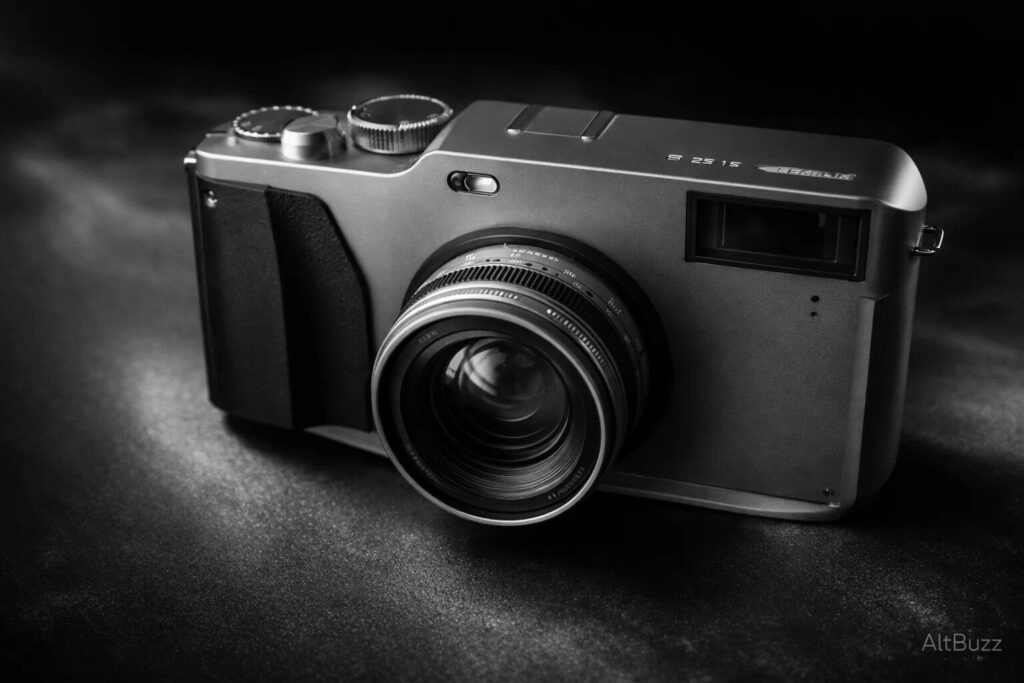
The Fujifilm TX-3 is expected to honor the distinctive design proportions of the original TX-1 and TX-2. Those cameras were longer and slimmer than standard 35mm cameras. The horizontal body stretched wider to accommodate the panoramic film path. That distinctive elongated shape was not merely functional. It became part of the Xpan aesthetic identity.
Photographers who owned and used the original Xpan cameras developed an emotional connection to that specific body shape. The way it balanced in the hands. Also, the way it looked on a strap compared to standard rectangular cameras and the way the long body communicated its purpose visually before you even raised it to your eye.
The TX-3 is rumored to honor these proportions in its digital body. The elongated horizontal form factor returns. However, the execution reflects Fujifilm’s current manufacturing standards. Precision-machined magnesium alloy construction. Exceptionally tight tolerances between body panels. Controls that feel as precise and satisfying as they look.
Material Quality and Premium Finish
Material quality in the Fujifilm TX-3 is expected to match or exceed the standard set by the GFX series and the premium X series bodies. Magnesium alloy provides an excellent strength-to-weight ratio. The material feels cold and substantial in the hand in a way that resin cannot replicate. It communicates quality immediately upon first handling.
Surface finishing is expected to use Fujifilm’s characteristic fine leatherette texture combined with machined metal accent elements. The top plate dials and their engraved markings are expected to demonstrate the same attention to detail that makes the X-Pro series feel like precision instruments rather than consumer electronics.
This material and finish quality matters to the TX-3’s target audience in a way that it might not for a mainstream consumer camera. Photographers who spend 3,500 to 5,000 dollars on a specialty panoramic camera expect the physical experience of using the camera to match the financial investment. The TX-3 reportedly delivers on this expectation completely.
Weather Sealing as a New Addition
Weather sealing is expected to be a significant addition to the Fujifilm TX-3 compared to the original film-based Xpan cameras. The original TX-1 and TX-2 offered no weather resistance. Using them in rain required careful protection. Sand and dust in coastal or desert environments posed genuine risks.
The TX-3’s expected dust and splash resistance changes the practical deployment options available to photographers significantly. Coastal landscape photography in sea spray. Mountain shooting in rain and mist. Urban street photography in unexpected downpours. All of these previously risky scenarios become manageable with weather-sealed construction.
For Fujifilm to market the TX-3 as a serious outdoor photography tool and charge a premium price for it, weather sealing is essentially non-negotiable. Its expected inclusion reflects Fujifilm’s understanding of how panoramic landscape photographers actually use their cameras in the field.
Physical Controls and the Analog Interface Philosophy
Control layout on the Fujifilm TX-3 is expected to reflect Fujifilm’s established physical control philosophy in its purest form. Dedicated shutter speed dial with clear markings on the top plate. Separate ISO dial with discrete click stops. Exposure compensation dial with third-stop increments.
These physical controls serve a specific purpose that software-based controls cannot replicate. They allow the photographer to set exposure before raising the camera to their eye. They communicate camera state through touch alone. You can feel where your shutter speed is set without looking at a screen. You can adjust ISO by feel alone. This tangible control experience connects photographer and camera in a way that menu navigation destroys.
For a camera deeply connected to the analog photography tradition like the Fujifilm TX-3, this physical control philosophy is not just a design feature. It is a statement about how photography should feel.
The Panoramic Viewfinder Experience
The EVF in the Fujifilm TX-3 requires special consideration. Standard EVFs display in 4:3 or 3:2 aspect ratios that do not match the panoramic format natively. Using a standard EVF to compose panoramic images forces the photographer to either view a letter-boxed panoramic crop surrounded by black bars, or to use a cropped central area that does not show the full panoramic frame.
Neither approach is acceptable for a dedicated panoramic camera. The Fujifilm TX-3 is therefore expected to use an EVF with a specially adapted display orientation or masking system that presents the panoramic aspect ratio at the largest possible display size within the viewfinder housing.
The 5.76 million dot OLED panel is expected to deliver the brightness, color accuracy, and refresh rate needed for confident composition in both bright outdoor environments and low-light street situations. High refresh rate in the EVF is particularly important for tracking moving subjects across the wider panoramic frame, where there is simply more space for subjects to move before reaching the frame edge.
Aspect Ratio Switch and Format Toggle
A dedicated aspect ratio switch or format toggle is expected on the Fujifilm TX-3 body. This control allows photographers to switch between the full panoramic format and a standard 3:2 aspect ratio mode quickly without menu navigation.
The ability to switch formats rapidly matters in practice. A landscape photographer arrives at a location and shoots the wide environment in panoramic format. Then a portrait opportunity presents itself. Standard 3:2 framing suits portraits more naturally than the extreme horizontal panoramic ratio. The format toggle lets the photographer switch instantly rather than navigating menus while their subject waits.
This flexibility makes the Fujifilm TX-3 a more versatile everyday camera rather than a single-purpose panoramic tool. Photographers can carry one camera and serve multiple compositional needs throughout a shooting day.
Battery and Connectivity Rumors for the Fujifilm TX-3
NP-W235 Battery: A Proven Choice
The Fujifilm TX-3 is expected to use the NP-W235 battery. This is the same battery powering recent X-series and GFX cameras including the X-T5, X-H2, and GFX100S II. For photographers who already own Fujifilm cameras using this battery, the compatibility is immediately practical. Existing spare batteries work in the TX-3 without any additional investment.
Battery life is estimated at approximately 400 to 500 shots per charge under standard mixed shooting conditions. For a camera primarily used for considered, deliberate landscape and street photography rather than high-speed burst sequences, this figure covers a substantial day of shooting comfortably.
In cold mountain and coastal environments where landscape photographers commonly use the TX-3, battery performance typically degrades. The NP-W235 handles cold temperatures better than smaller battery formats. Nevertheless, carrying one spare battery is always advisable for serious full-day outdoor shoots.
USB-C Charging and Its Practical Benefits
USB-C charging is expected in the Fujifilm TX-3. The ability to charge in-camera via a standard USB-C cable provides flexibility that proprietary charger solutions cannot match. A small power bank in a jacket pocket can top up the battery between shooting locations on a long day out.
The convenience extends particularly to travel photographers who prefer to minimize charging infrastructure in their kit. One USB-C cable and one small wall adapter charges camera, smartphone, and laptop. The simplicity reduces what needs to be packed and remembered, which matters when traveling to remote locations where forgotten gear cannot be easily replaced.
Pass-through charging while recording video is also speculated. For extended panoramic time-lapse sequences where the camera runs for hours from a fixed position, this capability eliminates battery capacity as a constraint entirely.
Dual Card Slots for Professional Reliability
Dual UHS-II SD card slots are expected in the Fujifilm TX-3. For photographers documenting important projects where file loss is professionally unacceptable, simultaneous backup writing to two cards provides meaningful protection.
The importance of this protection scales with the significance of the shoot. A travel photographer on a once-in-a-decade expedition to a remote location cannot afford to lose images to a card failure. A commercial photographer delivering panoramic images under a tight deadline cannot reshoot a location hundreds of miles away. Dual card slots provide insurance against both scenarios.
Alternatively, the second slot can serve as overflow storage, switching automatically when the first card fills. For photographers who plan for high-volume shooting days and do not want to interrupt a session to swap cards, overflow mode provides practical peace of mind.
Wi-Fi 6 and the Transfer Speed Advantage
Wi-Fi 6 connectivity enables significantly faster wireless image transfer compared to previous Wi-Fi 5 implementations. For a camera shooting 40-megapixel panoramic RAW files, the speed advantage of Wi-Fi 6 is practically significant. Larger files take longer to transfer. Faster Wi-Fi reduces the time between capture and review on a connected tablet or laptop.
Fujifilm’s XApp provides the smartphone and tablet interface for wireless control and transfer. Through the app, photographers browse images on the camera and transfer selected files to their mobile device for immediate review, sharing, or backup. The improved Wi-Fi 6 speed makes this workflow meaningfully faster with the TX-3’s large panoramic files than it was with Wi-Fi 5 equipped predecessors.
Bluetooth 5.0 for Background Location Tagging
Bluetooth 5.0 maintains a persistent low-power connection between the Fujifilm TX-3 and a paired smartphone. This background connection enables GPS location tagging via the phone’s receiver without requiring the camera to run its own GPS hardware.
For landscape photographers who want precise location metadata embedded in their panoramic images for portfolio organization, licensing records, and return-trip planning, Bluetooth GPS tagging works automatically once set up. No manual steps required during shooting. No additional hardware to carry. The phone does the location work quietly in the background while the photographer concentrates on composition.
Potential Real-World Use Cases for the Fujifilm TX-3
Landscape Photography: The Natural Home
Landscape photography is where the Fujifilm TX-3 would most immediately and dramatically distinguish itself from every other camera in the market. The panoramic format captures the sweeping horizontal expanse of natural environments in a single frame without stitching or compromise.
Mountain ranges stretch fully from foothills to peaks across the entire panoramic width. Coastlines breathe along their complete horizontal extent. Desert plains expand to their natural horizon. All of these subjects gain visual power in the Xpan panoramic ratio that cropped or stitched alternatives cannot replicate.
At 40 megapixels in panoramic mode, the TX-3 produces files capable of supporting extremely large print output. Gallery-sized panoramic prints at six feet wide or more would maintain exceptional sharpness and detail at normal viewing distances. For photographers who exhibit their work or sell large format prints to collectors and commercial clients, this resolution provides meaningful commercial capability.
Furthermore, the expected dynamic range of 14 stops changes what landscape photographers can capture in challenging light. Sunrise and sunset scenes with bright sky against dark foreground. Waterfall environments with bright water and deeply shadowed surrounding rock. Coastal scenes balancing bright ocean reflections against dark headlands. All of these high-contrast scenarios become more practically capturable in a single exposure.
Street Photography: A Documentary Language
Street photography in the panoramic format creates a distinctive observational documentary aesthetic that standard rectangular framing cannot replicate. The wide frame captures the environmental context of a scene alongside the central human subject. A person pauses in a doorway with the full length of the street stretching to either side. A market vendor works at their stall within the complete context of the surrounding market environment.
This contextual completeness is what originally attracted documentary photographers to the Xpan format in the late 1990s. Photographers like Sebastião Salgado, who used the Xpan extensively, recognized that the panoramic ratio captured social environments with a comprehensiveness that standard framing sacrificed in favor of subject isolation.
The Fujifilm TX-3’s compact dimensions relative to medium format systems make it appropriate for discreet street shooting. It is substantially smaller and lighter than a GFX body. It does not intimidate subjects in the way that large professional cameras sometimes do. Combined with the responsive phase-detect AF and the physical dial controls, it suits the spontaneous, reactive demands of street photography well.
Architectural and Interior Photography
Architectural photographers find the panoramic format particularly valuable for capturing the complete horizontal breadth of building facades. Many architectural subjects have strong horizontal emphasis in their design. Rows of columns. Long glass facades. Sweeping colonnades. The panoramic format captures these subjects at their natural proportions rather than forcing them into a square or portrait-oriented rectangular frame.
Interior spaces benefit similarly. Long reception halls. Wide panoramic restaurants. Gallery spaces with art along extended walls. The panoramic format captures these spaces with a naturalism that matches how humans experience them in person. We scan horizontally through wide interior spaces. The panoramic photograph replicates that scanning experience in a single image.
For architectural photographers who deliver images to architects, developers, and interior designers, the Fujifilm TX-3 would offer a native tool for panoramic architectural capture that no current digital camera provides. The native format and purpose-designed lens system would produce technically superior results to cropped or stitched alternatives.
Environmental Portrait Photography
Environmental portraiture combines subject focus with contextual setting. The subject appears sharp and clearly the central element of the image. However, the surrounding environment receives equal visual consideration in the wider frame. A craftsperson in their workshop. A farmer in their field. A musician on a stage. All of these subjects tell richer stories when placed within the panoramic context of their environment.
The Fujifilm TX-3’s face and eye detection AF in panoramic format directly serves this application. The camera maintains sharp focus on the subject’s eyes while the surrounding environment renders naturally. The photographer concentrates on building rapport with the subject and directing expression rather than managing focus manually.
Film Simulations add a further dimension to environmental portraiture from the TX-3. Classic Neg’s warm, slightly faded aesthetic suits documentary environmental portraits with a nostalgic, humanistic character. Provia’s balanced accuracy serves commercial portrait work. The same camera serves dramatically different aesthetic approaches through simulation selection alone.
Possible Pros and Cons Based on Rumors
Expected Advantages of the Fujifilm TX-3
- Native digital panoramic format expected as the only camera to deliver authentic Xpan aspect ratio without software cropping
- Extended APS-H or modified APS-C sensor rumored to deliver 40 megapixels across the panoramic frame
- Full X-Trans CMOS 5 color science expected with complete Film Simulation suite
- 5-axis IBIS up to 7 stops rumored for stabilized handheld shooting in both photo and panoramic video
- 6.2K panoramic video mode speculated as a genuinely unique creative capability with no market equivalent
- F-Log2 expected for professional color grading with full dynamic range preservation
- Weather sealing anticipated as a major improvement over original film-based TX cameras
- Dedicated physical controls expected including separate shutter speed, ISO, and exposure compensation dials
- Dual UHS-II SD card slots expected for professional file redundancy and overflow storage management
- Wi-Fi 6 expected for faster panoramic RAW file transfer to connected mobile devices
- Animal and face detection AF expected across the full panoramic frame width
- Format toggle for quick switching between panoramic and standard aspect ratio expected
Possible Limitations of the Fujifilm TX-3
- Expected price of 3500 to 5000 dollars limits the audience to dedicated enthusiasts with serious budgets
- Panoramic format requires different compositional thinking that takes meaningful time to master
- Panoramic video editing requires software capable of handling non-standard aspect ratios confidently
- The dedicated TX-mount lens ecosystem would start small and grow slowly
- Single-format specialty limits versatility compared to standard mirrorless cameras of similar price
- All specifications here are based entirely on rumors without any official Fujifilm confirmation whatsoever
Final Thoughts on the Fujifilm TX-3
The Fujifilm TX-3 is one of the most passionately anticipated potential camera releases in the current photography world. It represents something genuinely different from everything else available today. Also it does not try to out-resolve a Sony and does not try to out-track a Canon. It does not compete on burst speed or video frame rates.
Instead, it offers something none of those cameras can touch. An authentic native digital panoramic format. Fujifilm’s legendary Film Simulations and X-Trans color science. Analog-inspired physical controls. A dedicated lens system optimized for the format. All wrapped in a body that honors the original Xpan’s design philosophy while delivering modern digital capability.
If the rumors prove accurate, the TX-3 would be a genuinely landmark product. It would bring the Xpan experience properly into the digital age for the first time. It would give photographers a dedicated tool for a format that has been available only through aging film cameras for over two decades.
However, nothing here carries official confirmation. Fujifilm has made no statement about the TX-3’s existence or development. Everything discussed comes from leaks and educated speculation. Patience is essential. Wait for the official announcement. Evaluate the confirmed specifications carefully against your specific photographic needs. If the TX-3 delivers on these rumors, it may become one of the most special cameras Fujifilm has ever produced.
Read more from AltBuzz for camera rumors, leaked specs, and expert insights. AltBuzz delivers trusted and easy-to-understand photography content. Altbuzz
Stay updated with camera rumors and comparisons. AltBuzz shares latest camera content regularly. Subscribe Altbuzz