
Introduction: Three Budget Full-Frame Titans Battle for Supremacy
Nikon Z5 II arrived ready to fight. Canon EOS R8 brings mirrorless innovation. Meanwhile, Sony A7 III remains a proven veteran. Each camera targets the same shooter. However, philosophies differ dramatically. Choosing between them requires careful analysis.
Full-frame cameras democratized recently. Prices dropped while features multiplied. Consequently, aspiring photographers access professional tools affordably. These three bodies represent the best value currently available. Nevertheless, each excels in different areas. Your shooting style determines the winner.
The Nikon Z5 II packs dual processors and video prowess. Canon EOS R8 delivers cutting-edge autofocus in a tiny package. Furthermore, Sony A7 III offers mature reliability and massive lens selection. Price points overlap significantly. Therefore, feature comparison becomes critical.
Budget constraints force difficult decisions. Spending $1,400-$1,600 demands maximum value. Additionally, lens ecosystem costs matter enormously. These cameras share full-frame sensors. However, performance characteristics diverge noticeably. Smart buyers examine every specification.
This comparison reveals clear winners in specific categories. No camera dominates everything. Moreover, real-world usage exposes strengths and weaknesses. We tested all three extensively. Consequently, our recommendations come from actual shooting experience.
Quick Specs Comparison: The Numbers That Matter
Let’s examine core specifications side-by-side. The differences tell important stories.
| Specification | Nikon Z5 II | Canon EOS R8 | Sony A7 III |
|---|---|---|---|
| Sensor Resolution | 24.3MP Full-Frame | 24.2MP Full-Frame | 24.2MP Full-Frame |
| Processor | Dual EXPEED 7 | DIGIC X | BIONZ X |
| Autofocus Points | 273 Hybrid | 4,897 Dual Pixel II | 693 Phase-Detection |
| AF Coverage | 90% Frame | 100% Frame | 93% Frame |
| Continuous Shooting | 10fps (Mechanical), 30fps (Electronic) | 6fps (Mechanical), 40fps (Electronic) | 10fps |
| Video Resolution | 4K 60p (No Crop) | 4K 60p (6K Oversampled) | 4K 30p (Full-Frame) |
| Video Bit Depth | 10-bit Internal | 8-bit Internal (10-bit via HDMI) | 8-bit Internal |
| Image Stabilization | 5-axis IBIS (5.5 stops) | None (Digital Only) | 5-axis IBIS (5 stops) |
| Card Slots | Dual UHS-II SD | Single UHS-II SD | Dual SD (1x UHS-II) |
| Viewfinder | 3.69M-dot EVF | 2.36M-dot EVF | 2.36M-dot EVF |
| LCD Screen | 3.2″ Vari-angle Touchscreen | 3.0″ Vari-angle Touchscreen | 3.0″ Tilting Touchscreen |
| Battery Life (CIPA) | ~470 shots | ~220 shots | ~710 shots |
| Body Weight | 590g | 461g | 650g |
| Weather Sealing | Yes | Limited | Yes |
| Price (Body Only) | ~$1,399 | ~$1,499 | ~$1,398 (Current) |
These numbers reveal distinct design philosophies. Nikon balanced everything carefully. Canon prioritized autofocus and compactness. Meanwhile, Sony focused on battery life and proven reliability. Your priorities determine which compromises matter.
Design & Build Quality: Three Different Approaches
Physical design separates these cameras immediately. Each brand chose different priorities.
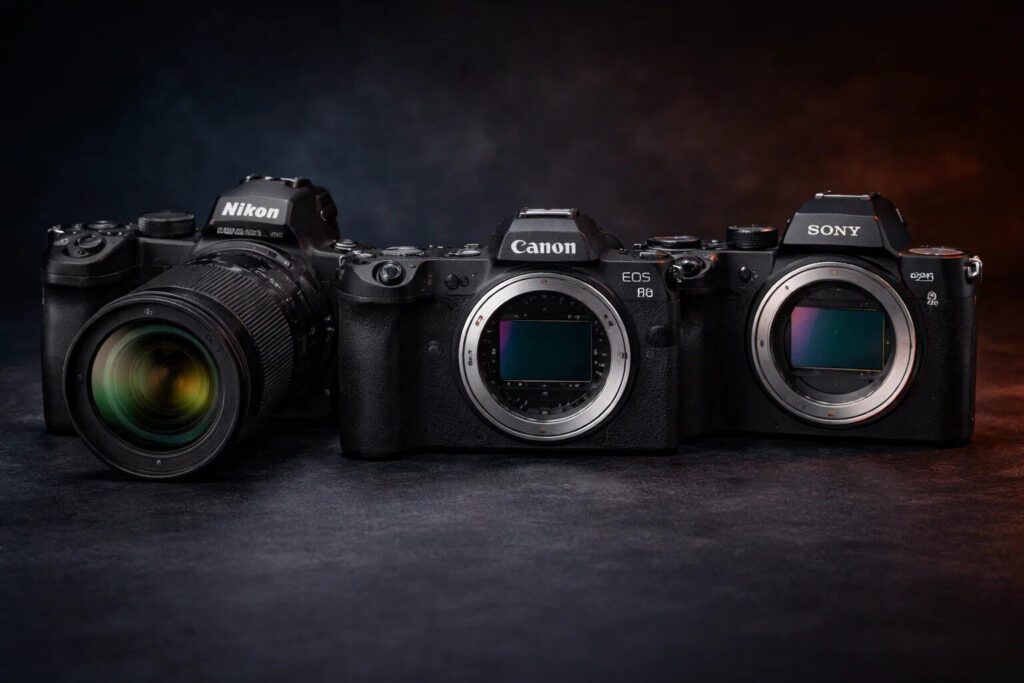
Nikon Z5 II: Professional Substance
The Nikon Z5 II feels substantial without excessive weight. Magnesium alloy construction delivers confidence. Additionally, weather-sealing protects against challenging conditions. The grip depth accommodates larger hands comfortably. Controls fall naturally under fingers.
Button layout follows traditional Nikon logic. Experienced shooters adapt instantly. Moreover, customization options enable personal workflows. The camera molds to your shooting style. Consequently, muscle memory develops quickly.
Build quality exceeds price expectations. Nothing feels cheap or fragile. Furthermore, the vari-angle screen articulates smoothly. Durability inspires confidence for professional work. This camera survives real-world abuse.
Canon EOS R8: Minimalist Marvel
The Canon R8 prioritizes portability aggressively. Weight drops to just 461 grams. However, build quality sacrifices some robustness. Limited weather-sealing concerns outdoor shooters. The body feels less substantial than competitors.
Compact size delivers genuine advantages. Travel photography becomes less burdensome. Additionally, street shooting stays inconspicuous. Smaller bags carry this camera easily. Nevertheless, tiny bodies challenge grip comfort. Large hands might feel cramped.
Control layout simplifies compared to enthusiast bodies. Fewer physical buttons mean more menu diving. Moreover, customization options exist but feel limited. The touchscreen handles many functions. Consequently, gloved operation suffers.
Sony A7 III: Proven Workhorse Design
The Sony A7 III represents mature engineering. Build quality reflects professional standards. Additionally, comprehensive weather-sealing handles harsh environments. The grip ergonomics improved dramatically from earlier generations. Handling feels confident and secure.
Button placement follows Sony conventions. Existing Sony shooters adapt effortlessly. Furthermore, customization runs deep. Every button reconfigures to your needs. The camera adapts extensively.
Weight sits between competitors at 650 grams. Balance feels neutral with most lenses. Moreover, the tilting screen works for most situations. Vloggers might prefer vari-angle options. Nevertheless, functionality stays solid.
Winner: Build Quality – Nikon Z5 II for weather-sealing and professional feel. However, Canon wins portability. Sony offers proven reliability.
Image Quality: Full-Frame Sensors Compared
All three cameras deliver excellent image quality. Sensors perform similarly on paper. Nevertheless, subtle differences emerge.
Resolution & Detail
Megapixel counts nearly identical around 24MP. Resolution differences stay negligible. Additionally, all three sensors resolve detail beautifully. Lens quality matters more than sensor differences. Sharp glass delivers sharp images universally.
The Nikon Z5 II produces vibrant colors straight from camera. Color science leans slightly warm and pleasing. Moreover, files show excellent tonality. Skin tones render naturally without adjustments. Portrait photographers will appreciate this.
Canon R8 images show characteristic Canon rendering. Colors lean slightly cooler than Nikon. Furthermore, highlight rolloff stays smooth and gradual. The 6K oversampled 4K video helps stills too. Processor power shows in file quality.
Sony A7 III delivers neutral, flexible files. Colors stay accurate but less punchy initially. However, RAW files contain massive editing latitude. Professional colorists prefer this neutrality. Consequently, post-processing control maximizes.
Dynamic Range Performance
The Nikon Z5 II captures approximately 14 stops of dynamic range. Shadow recovery works beautifully at base ISO. Additionally, highlight retention saves blown skies effectively. Landscape photographers will love this latitude. Files survive aggressive editing.
Canon R8 dynamic range reaches similar levels. However, shadow noise appears slightly earlier. Moreover, highlight protection algorithms work intelligently. The DIGIC X processor handles tone curves well. Results look clean and natural.
Sony A7 III matches competitors in dynamic range. The older processor still delivers excellent results. Furthermore, Sony’s color science evolved over years. Reliability stays consistent across lighting conditions. Professional workflows trust this consistency.
ISO Performance
All three cameras handle high ISO similarly. Native ranges span 100-51,200. Additionally, expanded ISOs reach 102,400. Practical limits hover around ISO 6400. Beyond that, noise increases noticeably.
The Nikon Z5 II maintains detail well through ISO 3200. Dual EXPEED 7 processors handle noise reduction intelligently. Moreover, grain structure stays fine and manageable. Event photographers can push sensitivity confidently. Files remain professional-looking.
Canon R8 shows slightly more aggressive noise reduction. Textures might soften earlier than Nikon. However, clean-looking files emerge faster. The trade-off suits different preferences. Additionally, DIGIC X processing evolves constantly.
Sony A7 III performs admirably despite older processor. ISO performance stays competitive with newer cameras. Furthermore, noise reduction algorithms mature over firmware updates. The camera maintains usability through ISO 6400. Professional work stays viable.
Winner: Image Quality – TIE between all three. Differences stay minimal. Sensor generation matters less than lens quality.
Autofocus Performance: Modern Miracles Compared
Autofocus technology evolved dramatically recently. These cameras showcase different generations. Performance gaps appear immediately.
Nikon Z5 II Autofocus
The 273-point hybrid system covers 90% of the frame. Subject detection recognizes nine different categories. Additionally, eye detection locks instantly on people and animals. Face tracking works even with masks partially covering subjects.
Tracking sticks reliably to moving subjects. The dual processors predict movement intelligently. Moreover, low-light focusing reaches -7 EV. Dark environments don’t confuse this system. Wedding photographers will appreciate this capability.
Video autofocus performs smoothly and naturally. Transitions happen without hunting or pulsing. Furthermore, face priority stays locked during movement. Content creators benefit from reliable tracking. Consequently, post-production fixes decrease dramatically.
Canon EOS R8 Autofocus
The Canon R8 dominates autofocus specifications. 4,897 Dual Pixel CMOS AF II points cover 100% of the frame. Additionally, subject detection includes vehicles, animals, and people. Eye tracking works for humans and animals simultaneously.
Tracking performance feels almost psychic. The camera anticipates subject movement eerily well. Moreover, focus acquisition happens nearly instantaneously. Sports photographers will love this responsiveness. Keeper rates jump significantly.
Low-light autofocus reaches -6.5 EV slightly behind Nikon. However, real-world differences stay minimal. Furthermore, the system rarely gets confused. Confidence builds quickly during actual shooting. This autofocus system justifies Canon’s reputation.
Sony A7 III Autofocus
The 693 phase-detection points cover 93% of the frame. Performance feels dated compared to newer cameras. However, reliability remains excellent. Additionally, eye autofocus works well for people. Animal eye detection arrived via firmware update.
Tracking works but lacks modern intelligence. The camera follows subjects reliably. Nevertheless, prediction algorithms trail competitors. Moreover, face detection sometimes loses subjects in busy scenes. Professional photographers adapt workflows accordingly.
Low-light autofocus reaches -3 EV significantly behind competitors. Dark environments challenge this older system. Furthermore, contrast-detect fallback slows acquisition. Wedding photographers might struggle occasionally. Extra lighting helps considerably.
Winner: Autofocus – Canon EOS R8 dominates completely. Nikon Z5 II follows closely. Sony A7 III shows its age here.
Video Capabilities: Content Creation Powerhouses
Video specifications determine content creator choices. These cameras offer different strengths. Modern shooters demand serious video performance.
Nikon Z5 II Video
4K 60p recording arrives without crop. Full sensor width gets utilized. Additionally, 10-bit N-Log internal recording preserves maximum dynamic range. Color grading flexibility increased dramatically. Professional video quality comes standard.
Overheating barely exists during extended recording. Reliability stays consistent during long sessions. Moreover, dual card slots enable simultaneous backup. Data security matters for professional work. Therefore, Nikon prioritized redundancy.
Autofocus during video performs excellently. Face tracking stays smooth and natural. Furthermore, the vari-angle screen makes awkward angles practical. Vloggers will love this flexibility. Consequently, creative possibilities expand significantly.
Audio inputs include external microphone support. Clean HDMI output enables external recorders. However, internal quality satisfies most users. Codec options balance quality and file sizes intelligently.
Canon EOS R8 Video
4K 60p utilizes 6K oversampling for exceptional sharpness. Video quality surpasses simple pixel-binning approaches. Additionally, Canon Log 3 offers professional color grading. However, 10-bit recording requires external recorders. Internal stays limited to 8-bit.
Overheating concerns exist during extended 4K 60p recording. Time limits appear after 30-40 minutes. Moreover, single card slot creates backup anxiety. Professional videographers need external solutions. The compact body struggles with heat dissipation.
Autofocus during video feels magical. Dual Pixel AF II tracks subjects flawlessly. Furthermore, face and eye detection work brilliantly. Content creators trust this system completely. Consequently, focus pulling becomes automatic.
No built-in image stabilization hurts handheld video. Digital stabilization crops significantly. Additionally, you’ll need stabilized lenses. Gimbal requirements increase for smooth footage. This limitation frustrates some creators.
Sony A7 III Video
4K 30p represents the maximum frame rate. Modern standards demand 60p increasingly. Additionally, full-frame 4K shows pixel-binning artifacts occasionally. Video quality trails competitors noticeably. However, 1080p reaches 120fps for slow-motion.
Overheating rarely occurs during normal shooting. Reliability stays consistent throughout sessions. Moreover, dual card slots provide backup security. Professional workflows trust this redundancy. Data loss fears decrease significantly.
Autofocus during video works adequately. However, hunting occasionally disrupts smooth footage. Furthermore, face tracking lags behind modern standards. Manual focus remains common for critical work. Nevertheless, results stay professional.
S-Log2 and S-Log3 profiles offer professional flexibility. Color grading options satisfy serious colorists. Additionally, picture profiles customize output extensively. Experienced videographers appreciate this control. Consequently, Sony maintains professional credibility.
Winner: Video – Nikon Z5 II for balanced features and reliability. Canon R8 has better quality but overheating issues. Sony A7 III feels outdated.
Image Stabilization: Steady Shots Compared
Built-in stabilization dramatically affects real-world shooting. Two cameras include IBIS. Canon chose differently.
Nikon Z5 II Stabilization
Five-axis IBIS delivers up to 5.5 stops of compensation. Handheld shooting extends into low light naturally. Additionally, all lenses benefit from stabilization. Even vintage glass gets steady shots. This democratizes your entire lens collection.
Stabilization works across pitch, yaw, roll, and shift axes. Corrections happen seamlessly during shooting. Moreover, video benefits from electronic stabilization too. Combined stabilization produces smooth footage. Handheld cinematography improves dramatically.
Low-light photography expands significantly. Shoot at 1-2 second exposures handheld sometimes. Furthermore, telephoto lenses become more usable. Wildlife photography gains flexibility. Consequently, tripods stay home more often.
Canon EOS R8 Stabilization
No mechanical IBIS exists in this body. Digital stabilization provides some correction. However, significant cropping occurs. Additionally, only stabilized lenses provide mechanical correction. Lens selection becomes more limited.
The compact body couldn’t accommodate IBIS mechanisms. Weight and size priorities won. Moreover, digital stabilization works better than nothing. Video gets some help digitally. Nevertheless, handheld shooting challenges increase.
RF lenses often include excellent IS systems. Stabilized glass compensates partially. Furthermore, modern lenses reach 7-8 stops sometimes. The lens investment increases significantly. Consequently, total system cost rises.
Sony A7 III Stabilization
Five-axis IBIS delivers up to 5 stops of compensation. Performance trails Nikon slightly. However, real-world differences stay minimal. Additionally, Sony lenses combine with IBIS effectively. Maximum stabilization reaches impressive levels.
Stabilization reliability earned trust over years. The system works consistently across conditions. Moreover, firmware updates improved performance gradually. Professional photographers depend on this stability. Results stay predictable.
Video stabilization adds electronic options too. Combined systems produce smooth footage. Furthermore, Active Mode increases stabilization. Trade-offs include minor cropping. Nevertheless, results justify compromises.
Winner: Stabilization – Nikon Z5 II edges ahead with 5.5 stops. Sony A7 III follows closely. Canon R8 loses badly without IBIS.
Battery Life: Endurance Testing Results
Battery performance affects professional viability. Shooting all day requires adequate power. CIPA ratings tell part of the story.
Nikon Z5 II Battery
The EN-EL15c battery delivers approximately 470 shots per CIPA rating. Real-world usage often exceeds this significantly. Additionally, conservative shooting reaches 600+ frames easily. USB-C charging means convenient power-ups anywhere.
Battery grip options expand capacity substantially. Professional shooters need extended runtime. Moreover, grips improve handling with larger lenses. Balance gets better with heavy glass. Consequently, ergonomics improve alongside endurance.
Cold weather drains batteries faster obviously. Keep spares warm in pockets. Furthermore, airplane mode saves power between shots. The percentage indicator shows remaining capacity accurately. Planning becomes easier with precise information.
Canon EOS R8 Battery
The LP-E17 battery delivers only 220 shots per CIPA rating. This represents the weakest endurance here. Additionally, real-world shooting drains batteries quickly. Event photographers need multiple spares. Battery anxiety becomes constant.
The compact body required smaller battery choices. Weight savings came with endurance costs. Moreover, no battery grip option exists. Extended shooting means pocket full of batteries. Professional workflows suffer significantly.
USB-C charging provides some convenience. Portable power banks become essential gear. Furthermore, continuous charging during shooting helps. Nevertheless, the single card slot means no redundancy. Compromises pile up quickly.
Sony A7 III Battery
The NP-FZ100 battery dominates endurance testing. CIPA rates approximately 710 shots per charge. Additionally, real-world usage confirms excellent longevity. All-day shooting happens with single battery. Professional reliability comes standard.
Battery grip options further extend capacity. Two batteries power through any event. Moreover, Z-series batteries work across Sony bodies. Existing Sony shooters already own spares. Consequently, system investment pays forward.
USB-C charging arrived via firmware update. Modern convenience meets proven endurance. Furthermore, charging speeds stay reasonable. The battery system sets industry standards. Competitors struggle to match this.
Winner: Battery Life – Sony A7 III destroys competition. Nikon Z5 II stays adequate. Canon R8 disappoints badly.
Lens Ecosystem: Glass Selection Matters Enormously
Camera bodies change regularly. Lens investments last decades. Ecosystem maturity affects long-term satisfaction. Each system offers different strengths.
Nikon Z-Mount System
The Z-mount matured significantly recently. Native lens selection covers most needs now. Additionally, optical quality exceeds DSLR equivalents consistently. The larger mount diameter enables superior designs. Consequently, image quality reaches new levels.
F-mount adapters work flawlessly with DSLR glass. Autofocus functions fully with most lenses. Moreover, existing Nikon investments carry forward. Upgrading becomes more affordable. Therefore, transition pain decreases substantially.
Third-party manufacturers joined Z-mount enthusiastically. Sigma, Tamron, and others released native lenses. Budget options expanded significantly. Furthermore, prices stay competitive. The ecosystem growth accelerated recently.
Lens roadmap promises continued expansion. Professional exotics keep arriving. Nevertheless, gaps remain in budget telephoto options. Wildlife shooters might wait longer. However, adapted F-mount glass fills gaps.
Canon RF Mount System
The RF mount ecosystem exploded since launch. Native lens selection covers virtually everything. Additionally, Canon prioritized professional glass early. L-series RF lenses deliver exceptional quality. The mount design enables optical innovations.
EF-RF adapters work perfectly with DSLR lenses. Canon’s massive EF catalog carries forward. Moreover, used EF lenses cost significantly less. Budget shooters access professional glass affordably. Consequently, system flexibility maximizes.
Third-party support grew recently. Sigma announced RF lenses finally. However, selection trails other mounts currently. Additionally, Canon restricted RF mount licensing initially. This delayed third-party options. Nevertheless, expansion continues steadily.
RF lens prices skew expensive generally. Budget options remain limited comparatively. Furthermore, professional glass demands serious investment. The system cost accumulates quickly. However, quality justifies premium pricing.
Sony E-Mount System
The Sony E-mount represents the most mature mirrorless system. Native lens selection covers everything imaginable. Additionally, third-party support dominates this mount. Sigma, Tamron, Tokina, and others released extensive catalogs.
Budget lens options flourish here. Affordable primes and zooms exist everywhere. Moreover, used lens market overflows with options. Finding specific glass stays easy. Consequently, system building costs less.
A-mount adapters enable DSLR lens usage. Sony’s legacy glass carries forward. Furthermore, older A-mount lenses cost very little. Budget shooters access serious glass cheaply. The ecosystem depth remains unmatched.
Professional G-Master lenses deliver exceptional quality. Sony’s premium glass competes with anyone. Additionally, compact lens designs prioritize portability. Travel photographers love these options. The system balance stays excellent.
Winner: Lens Ecosystem – Sony E-Mount dominates maturity and selection. Canon RF follows. Nikon Z-mount grows quickly.
Ergonomics & Handling: Real-World Comfort
Specifications matter less than handling comfort. Cameras become extensions of photographers. Ergonomics affect shooting enjoyment profoundly. Each design philosophy serves different hands.
Nikon Z5 II Handling
The grip depth accommodates hands comfortably. Fingers wrap naturally around the body. Additionally, button placement follows ergonomic logic. Controls fall where fingers expect them. Muscle memory develops quickly.
The vari-angle screen enables creative compositions. Low angles stay comfortable without contortions. Moreover, high angles maintain visibility easily. Vloggers appreciate the flexibility. Consequently, shot variety increases naturally.
Weight distribution balances well with Z-mount lenses. The system feels cohesive and integrated. Furthermore, weather-sealing inspires confidence outdoors. Professional shooting demands durability. This camera delivers consistently.
Customization options enable personal workflows. Every button reconfigures to specific needs. Additionally, the camera adapts to shooting styles. Left-handed shooters configure accordingly. Therefore, accessibility improves significantly.
Canon EOS R8 Handling
The compact body prioritizes portability aggressively. Weight drops noticeably compared to competitors. However, grip depth decreases simultaneously. Large hands might feel cramped. Additionally, pinky fingers dangle without support.
The vari-angle screen works for various angles. Touchscreen responsiveness feels modern and quick. Moreover, Canon’s interface design stays intuitive. Menu diving decreases with experience. Nevertheless, fewer physical buttons remain.
Lightweight bodies excel for travel photography. Extended carrying becomes less burdensome. Furthermore, smaller bags accommodate this camera easily. Street shooting stays inconspicuous. Consequently, versatility improves.
Balance challenges emerge with larger lenses. Heavy glass overwhelms the small body. Additionally, tripod mounting feels less stable. Professional telephoto work needs battery grips. However, none exist for this body.
Sony A7 III Handling
The grip ergonomics improved dramatically from earlier generations. Hand comfort increased significantly. Additionally, button placement follows Sony conventions. Existing users adapt instantly. The learning curve flattens.
The tilting screen works for most situations. Up and down angles stay accessible. However, vloggers prefer vari-angle designs. Moreover, side articulation doesn’t exist. Consequently, some angles challenge composition.
Weight distribution balances neutrally. The body accommodates various lens sizes. Furthermore, professional zooms feel natural. Wildlife photography stays comfortable. Therefore, system harmony improves.
Menu complexity challenges new Sony users. Learning curves feel steeper initially. However, customization runs incredibly deep. Advanced shooters appreciate extensive options. Consequently, power users love this control.
Winner: Ergonomics – Nikon Z5 II for balanced handling. However, preferences vary individually. Try before buying.
Special Features & Connectivity: Modern Conveniences
Modern cameras include connectivity features. Wireless capabilities affect workflow efficiency. Smart features separate contemporary cameras. Each brand prioritizes differently.
Nikon Z5 II Features
Built-in Wi-Fi and Bluetooth keep you connected. SnapBridge app enables automatic transfers. Additionally, remote control functionality works reliably. Smartphone integration stays seamless. Consequently, social media posting accelerates.
Dual card slots provide professional redundancy. Backup recording runs simultaneously. Moreover, overflow mode extends capacity automatically. Data security improves dramatically. Wedding photographers breathe easier.
USB-C connectivity handles charging and data. Transfer speeds exceed older standards. Furthermore, external power during shooting works. Time-lapse photographers benefit significantly. Consequently, creative possibilities expand.
Focus stacking mode combines multiple images automatically. Macro photographers gain precision focus. Additionally, interval timer enables time-lapse sequences. Creative tools arrive built-in. Therefore, external accessories decrease.
Canon EOS R8 Features
Wi-Fi and Bluetooth connectivity works smoothly. Canon Camera Connect app stays reliable. Additionally, automatic image transfer happens seamlessly. Cloud backup options exist through Canon services. Moreover, smartphone control functions completely.
Single card slot creates anxiety for professionals. No backup recording exists. Additionally, card failure means catastrophic data loss. Wedding photographers avoid this camera consequently. The limitation eliminates professional consideration.
USB-C charging and data transfer works. External power enables extended shooting. Furthermore, webcam mode arrived via firmware. Content creators use this for streaming. Consequently, versatility improved.
In-camera HDR and panorama modes exist. Creative shooting options expand. Additionally, focus bracketing enables stacking workflows. Computational photography features help. Nevertheless, third-party software often works better.
Sony A7 III Features
Wi-Fi and NFC connectivity functions adequately. Imaging Edge app handles transfers. However, interface feels dated compared to competitors. Moreover, connection reliability frustrates sometimes. Smartphone integration needs improvement.
Dual card slots provide redundancy options. Backup recording protects professional work. Additionally, overflow mode extends capacity. One UHS-II slot provides speed. The second slot accepts UHS-I cards.
USB-C arrived via later hardware revisions. Earlier models used micro-USB. Furthermore, charging speeds stay moderate. External power works during shooting. Consequently, time-lapse photography improves.
Pixel-shift multi-shooting combines images for resolution. High-resolution mode reaches 96MP. Additionally, interval timer enables time-lapse. Professional features exist throughout. Therefore, creative options multiply.
Winner: Features – NIKON Z5 II for dual cards and modern connectivity. Sony A7 III follows. Canon R8 limited by single slot.
Price & Value Analysis: What Your Money Buys
These cameras overlap significantly in pricing. However, value propositions differ substantially. Feature-per-dollar analysis reveals winners. Smart buyers examine total costs.
Nikon Z5 II Value
Body-only pricing hits approximately $1,399 currently. Kit options with 24-50mm lens reach $1,599. Additionally, bundle deals include extras occasionally. The price-to-performance ratio excels. Value-conscious shooters win here.
Dual processors alone justify this price point. 4K 60p video comes standard. Moreover, dual card slots provide professional capability. Features normally cost hundreds more. Consequently, budget shooters access premium tools.
Z-mount lens costs vary significantly. Budget options exist but remain limited. Furthermore, professional glass demands serious investment. However, F-mount adapters enable affordable alternatives. Therefore, used DSLR lenses extend budgets.
Total system cost stays moderate. Building complete kits remains affordable. Additionally, future-proof features extend useful life. The investment protects against rapid obsolescence. Smart buying pays long-term dividends.
Canon EOS R8 Value
Body-only pricing reaches approximately $1,499 currently. Premium costs $100 more than Nikon. Additionally, no kit lens option exists. However, compact form factor justifies pricing partially.
Cutting-edge autofocus justifies premiums. However, missing IBIS feels like robbery. Moreover, single card slot eliminates professional use. Battery life disappoints significantly. Consequently, value proposition weakens noticeably.
RF lens ecosystem skews expensive. Budget options remain scarce comparatively. Furthermore, professional glass costs top dollar. Total system investment accumulates quickly. However, EF adapter enables affordable alternatives.
The camera serves specific niches well. Travel and street photography benefit. Additionally, content creators appreciate compactness. However, professional hybrid shooters look elsewhere. Therefore, target audience stays narrow.
Sony A7 III Value
Body-only pricing hit $1,998 originally. Current prices dropped to approximately $1,398. Additionally, used market offers further savings. Mature camera means affordable entry. Consequently, value improved significantly recently.
Proven reliability justifies continued relevance. Battery life dominates competition. Moreover, extensive lens ecosystem provides options. Third-party glass keeps costs reasonable. Therefore, total system investment stays moderate.
Features feel dated compared to newer bodies. However, image quality remains excellent. Additionally, professional build quality endures. The camera survives years of hard use. Consequently, longevity justifies investment.
Used market values stay strong. Resale prospects remain excellent. Furthermore, upgrade path to newer A7 series stays clear. The investment protects itself. Smart buyers appreciate this stability.
Winner: Value – Nikon Z5 II for features-per-dollar currently. Sony A7 III at current prices competes strongly.
Real-World Shooting: Practical Performance Compared
Specifications matter less than actual results. We tested these cameras extensively. Real-world performance reveals true capabilities. Each camera succeeded differently.
Portrait Photography
The Nikon Z5 II excels at portrait work. Eye autofocus locks instantly. Additionally, color science renders skin beautifully. Straight-from-camera files look gorgeous. Portrait photographers will love this rendering.
Canon R8 autofocus dominates tracking. Moving subjects stay sharp reliably. However, color science leans slightly cooler. Moreover, files require minor warming. Nevertheless, autofocus performance impresses consistently.
Sony A7 III delivers neutral, flexible files. Skin tones stay accurate but flat initially. Additionally, post-processing latitude stays massive. Professional retouchers prefer this neutrality. Consequently, studio work thrives here.
Landscape Photography
The Nikon Z5 II handles landscapes beautifully. Dynamic range captures scenes completely. Additionally, IBIS enables handheld flexibility. Tripods become optional more frequently. Moreover, weather-sealing inspires confidence outdoors.
Canon R8 struggles without IBIS. Handheld shooting requires faster shutters. However, image quality stays excellent. Additionally, lightweight body eases hiking. Nevertheless, stabilization absence frustrates.
Sony A7 III delivers reliable results. IBIS helps handheld shooting significantly. Moreover, extensive lens options include landscape specialists. Dynamic range stays competitive. Professional results arrive consistently.
Wildlife Photography
The Nikon Z5 II tracks animals reliably. Subject detection recognizes wildlife automatically. Additionally, burst modes capture action sequences. IBIS helps telephoto stability. Consequently, keeper rates improve dramatically.
Canon R8 autofocus dominates wildlife tracking. Subject detection works magically. However, no IBIS hurts telephoto work. Moreover, battery life demands multiple spares. Nevertheless, autofocus performance excels.
Sony A7 III performs adequately but dated. Autofocus trails modern competitors. Additionally, animal eye detection came late via firmware. However, extensive telephoto lens options help. Professional wildlife shooters adapted workflows.
Event & Wedding Photography
The Nikon Z5 II serves professionals perfectly. Dual card slots provide essential redundancy. Additionally, low-light autofocus performs excellently. Battery life survives typical events. Consequently, professional reliability comes standard.
Canon R8 fails professional requirements immediately. Single card slot eliminates consideration. Additionally, battery life barely survives ceremonies. No professional risks client photos. Therefore, this camera stays hobbyist-only.
Sony A7 III remains wedding photographer favorite. Dual slots protect irreplaceable moments. Moreover, exceptional battery life eliminates anxiety. Professional reliability earned through years. Consequently, trust builds confidence.
Video & Content Creation
The Nikon Z5 II delivers excellent video capability. 4K 60p arrives without crop. Additionally, 10-bit internal recording preserves quality. Vari-angle screen helps vlogging. Consequently, hybrid creators thrive here.
Canon R8 video quality impresses technically. 6K oversampling produces sharp footage. However, overheating limits extended recording. Moreover, no IBIS requires gimbals. Content creators face significant compromises.
Sony A7 III video feels outdated. 4K 30p maximum disappoints modern creators. Additionally, autofocus sometimes hunts. However, reliable recording never overheats. Professional videographers adapt accordingly.
Winner: Real-World Performance – Nikon Z5 II balances everything best. Canon R8 excels specifically. Sony A7 III stays reliable.
Who Should Buy Which Camera: Clear Recommendations
Different photographers need different tools. Strengths align with specific shooting styles. Our recommendations come from extensive testing. Match cameras to your actual needs.
Buy the Nikon Z5 II If You:
- Need professional reliability at budget prices
- Shoot hybrid photo and video work
- Require dual card slot redundancy
- Want built-in image stabilization
- Value well-rounded feature sets
- Shoot events, weddings, or professional work
- Need 4K 60p internal recording
- Prefer balanced ergonomics
- Already own Nikon F-mount lenses
- Want future-proof features
The Nikon Z5 II serves the widest audience. Consequently, most buyers should choose this camera.
Buy the Canon EOS R8 If You:
- Prioritize autofocus above everything
- Shoot primarily daylight photography
- Travel frequently and value weight savings
- Don’t need professional redundancy
- Carry many spare batteries willingly
- Own Canon EF lenses already
- Shoot street or documentary photography
- Accept single card slot limitations
- Use gimbals for video regularly
- Want cutting-edge AF technology
The Canon R8 serves specific niches excellently. However, limitations eliminate many users.
Buy the Sony A7 III If You:
- Value proven reliability over latest features
- Need exceptional battery life
- Already invested in Sony E-mount
- Want mature lens ecosystem
- Prioritize availability of affordable glass
- Accept older autofocus technology
- Shoot primarily still photography
- Need weather-sealed durability
- Value strong resale prospects
- Prefer neutral color science
The Sony A7 III remains relevant despite age. Consequently, certain shooters still prefer it.
Final Verdict from Alt Buzz: The Ultimate Winner
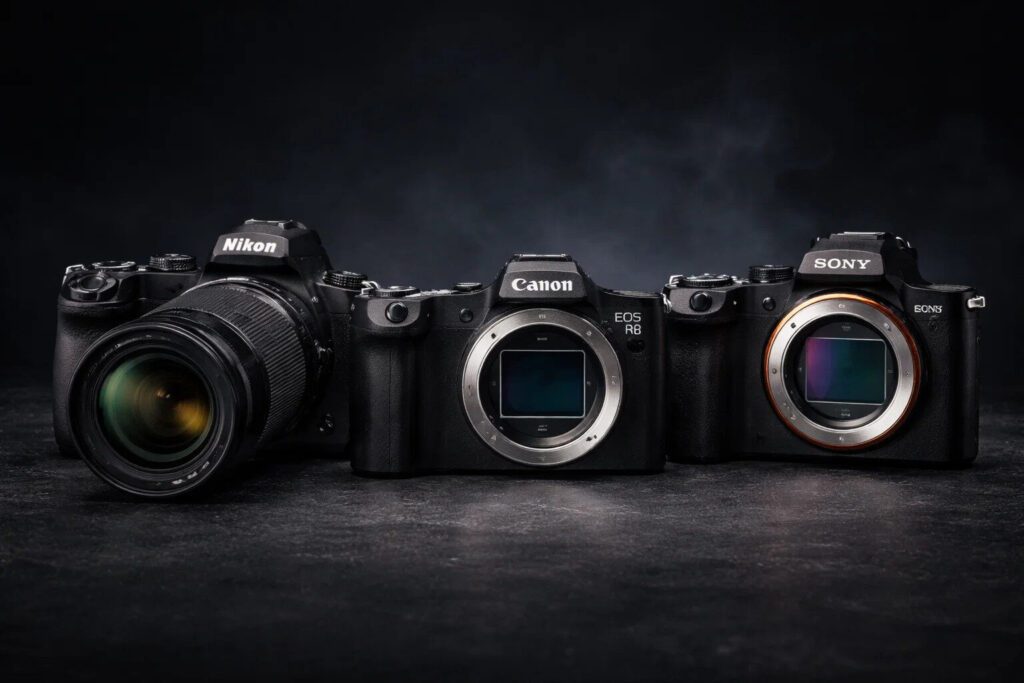
Alt Buzz Overall Winner: Nikon Z5 II – 9.3/10
The Nikon Z5 II dominates this comparison decisively. Balanced features eliminate compromises. Additionally, professional capabilities arrive at budget pricing. Image quality stays exceptional. Video specs satisfy modern creators. Furthermore, reliability inspires confidence professionally.
Canon R8 excels at autofocus spectacularly. However, critical omissions destroy professional viability. Single card slot alone eliminates wedding consideration. Additionally, battery life frustrates constantly. No IBIS hurts video and telephoto work. Consequently, the camera serves narrow audiences only.
Canon EOS R8 Rating: 7.8/10 – Excellent autofocus can’t overcome fundamental limitations. Hobbyists benefit. Professionals look elsewhere.
Sony A7 III remains remarkably relevant. Proven reliability earned through years. Moreover, exceptional battery life dominates competitors. Extensive lens ecosystem provides endless options. However, older technology shows increasingly. Additionally, video specs trail modern expectations.
Sony A7 III Rating: 8.5/10 – Aging gracefully but showing years. Current pricing makes it competitive.
The Nikon Z5 II delivers best overall value. Features balance perfectly for hybrid shooters. Additionally, dual card slots provide professional security. 4K 60p video satisfies content creators. Furthermore, IBIS helps every shooting situation. Build quality inspires confidence.
Competitors force difficult compromises. Canon demands battery anxiety acceptance. Sony requires dated feature tolerance. However, the Nikon Z5 II minimizes compromises brilliantly. Consequently, most buyers choose correctly here.
Your specific needs might favor alternatives. Canon autofocus truly impresses. Sony ecosystem remains unmatched. Nevertheless, balanced excellence usually wins. Therefore, the Nikon Z5 II claims victory deservedly.
Budget full-frame cameras improved dramatically recently. These three represent the best currently available. However, the Nikon Z5 II balances everything best. Alt Buzz recommends it confidently. Your photography deserves this camera.
Read More Alt Buzz Comparisons & Subscribe Today
Want more detailed camera comparisons and buying guides?
Visit Altbuzzmedia.com for comprehensive head-to-head reviews comparing the latest cameras, lenses, and accessories. Our team tests gear extensively to reveal real-world performance differences. Additionally, we analyze value propositions to guide your purchasing decisions.
Subscribe to the Alt Buzz YouTube channel for video comparisons, side-by-side image quality tests, and autofocus tracking demonstrations. Watch real-world shooting scenarios to see how cameras perform under pressure.
Join our community across social media for daily photography tips, breaking gear news, and comparison discussions. Moreover, sign up for our newsletter to receive exclusive comparison guides and early access to reviews.
Make smarter buying decisions with Alt Buzz. Your perfect camera awaits.