
Introduction
The Pixii Max is a full-frame digital rangefinder camera from French manufacturer Pixii. This camera officially released in July 2024 and started shipping to customers shortly thereafter. Designed specifically for rangefinder enthusiasts, the Pixii Max targets photographers who value manual focusing, deliberate composition, and premium image quality. The camera accepts Leica M-mount lenses and emphasizes photographic purity over modern conveniences. Street photographers, travel shooters, and rangefinder devotees represent the primary audience for this specialized camera.
Release Date and Market Position
Pixii announced the Max on July 5, 2024, with pre-orders opening immediately. Initial deliveries began in September 2024. The camera occupies the professional rangefinder segment, positioned as a premium alternative to Leica’s M-series cameras. Furthermore, the Pixii Max competes directly with the discontinued Leica M10 and offers a more affordable entry point than the current Leica M11. This French-made camera represents the only non-Leica full-frame rangefinder currently available in the market. Additionally, Pixii continues manufacturing the APS-C Pixii Plus alongside the full-frame Max model.
Pixii Max Specifications Table
| Feature | Details |
|---|---|
| Sensor Type | Full-Frame BSI CMOS |
| Resolution | 24.5MP |
| Processor | 64-bit quad-core ARM SoC |
| ISO Range | 100-25,600 (expandable to 80-51,200) |
| Autofocus System | Manual Focus (Rangefinder) |
| Stabilization | None (lens-dependent) |
| Video Recording | No video capability |
| EVF | Optical rangefinder viewfinder (0.67x magnification, 28mm field of view) |
| LCD Screen | No rear LCD (top OLED panel only) |
| Burst Shooting | 1.0 fps |
| Battery | NP-FW50 Li-ion (1,080mAh, 7.2V) |
| Storage | 32GB or 128GB internal storage |
| Connectivity | Wi-Fi 802.11ac, Bluetooth LE 5.0, USB-C |
| Weight | 480g (body with battery) |
| Launch Price | $4,499 (32GB) / $4,799 (128GB) |
Sensor and Image Quality Performance
The Pixii Max features a carefully selected 24.5MP full-frame BSI CMOS sensor measuring 36 x 24mm. This advanced sensor incorporates 5.94 μm photodiodes for superior light-gathering capability. DxOMark tested the sensor and awarded it an overall score of 93, placing it alongside the Canon EOS R8 and Sony a9 II in performance. Meanwhile, the sensor delivers exceptional results across critical image quality metrics.
Breaking down the performance numbers reveals impressive capabilities. The sensor achieves 25.2 bits of color depth in portrait scenarios, 13.6 stops of dynamic range for landscape work, and a low-light ISO score of 3,108. These figures demonstrate professional-grade imaging performance. The full-frame format provides beautiful depth of field control and superior bokeh rendering compared to smaller sensors. Dynamic range proves excellent for recovering highlights and shadows during post-processing work.
Real-world image quality matches the technical specifications admirably. Colors reproduce accurately with pleasing saturation straight from the camera. Low-light performance stands out as particularly impressive, with clean images maintained even at higher ISO settings. The sensor lacks an anti-aliasing filter, which increases sharpness and detail but may occasionally introduce moiré in certain scenes. Photographers appreciate the crisp detail and excellent tonal gradation this sensor provides. However, image quality ultimately depends heavily on lens selection, as M-mount optics vary considerably in performance characteristics.
The native monochrome DNG mode deserves special mention. This unique feature allows photographers to shoot black-and-white negatives directly from the Bayer sensor. The camera employs a patent-pending de-Bayering algorithm that recreates tonality similar to true monochrome sensors. While this doesn’t improve technical image quality over conventional greyscaling, it enables a pure monochrome workflow that many photographers value. The feature forces photographers to think in black and white during capture rather than relying on color conversion later.
Autofocus Performance
The Pixii Max employs a traditional optical rangefinder focusing system requiring complete manual operation. This analog approach represents both the camera’s greatest charm and its steepest learning curve. The rangefinder utilizes images from two viewfinder windows that must be aligned to achieve sharp focus. When properly calibrated, this system produces accurate results, particularly at shorter focal lengths. Additionally, the rangefinder performs reliably even in challenging lighting conditions where contrast-detect autofocus might struggle.
However, the rangefinder patch quality has drawn criticism from experienced users. Some photographers find the patch contrast and clarity disappointing for a camera at this price point. The split images can appear faint and difficult to see in certain lighting conditions. Focusing speed and accuracy depend entirely on the photographer’s skill level and experience. The learning curve proves steep for those accustomed to modern autofocus systems. This manual approach rewards patience, practice, and deliberate composition rather than rapid-fire shooting.
The rangefinder system works best with focal lengths between 28mm and 90mm. Wide-angle lenses below 28mm and telephoto lenses beyond 90mm present focusing challenges due to rangefinder baseline limitations. Photographers shooting primarily with 35mm and 50mm lenses will find the system most effective. The slow 1.0 fps burst rate makes this camera unsuitable for action photography or sports. Instead, the Pixii Max excels at thoughtful, considered photography where timing matters less than precise composition and exposure.
Video Capabilities
The Pixii Max offers absolutely no video recording functionality whatsoever. This represents a deliberate design choice rather than an oversight. Pixii designed the Max exclusively for still photography without compromise or distraction. The company targets photographers who prioritize image-making over multimedia content creation. This singular focus allows Pixii to optimize every aspect of the camera for still image capture.
For photographers who need video capability, the Pixii Max simply isn’t an option. Content creators, hybrid shooters, and multimedia professionals must look elsewhere entirely. However, photographers who appreciate a camera dedicated solely to stills may find this limitation refreshing rather than restrictive. The absence of video features removes menu clutter and simplifies the shooting experience. This approach aligns perfectly with the rangefinder philosophy of minimalism and photographic purity.
Design, Build Quality, and Handling
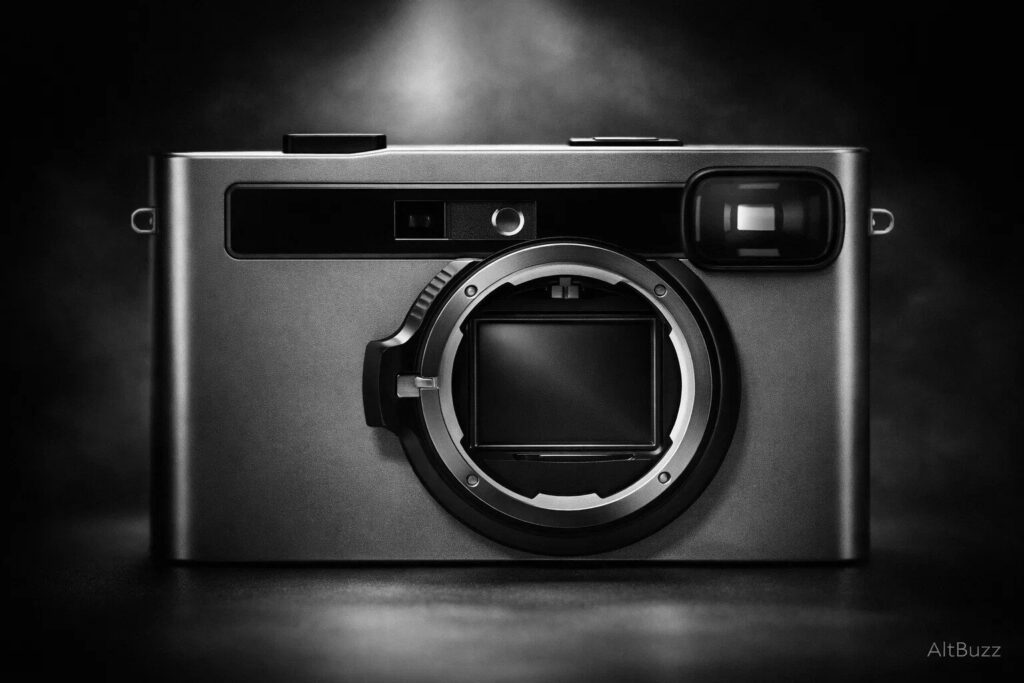
The Pixii Max features a machined aluminum body construction that balances durability with portability. Weighing just 480 grams with battery, the camera proves remarkably light for a full-frame rangefinder. The dual-block machined aluminum construction feels solid without excessive heft. Dimensions measure 138 x 79 x 33mm, making the camera highly portable for street photography and travel. The camera comes in two finishes: space gray and matte black.
Build quality reflects premium craftsmanship throughout the design. However, some photographers note the camera doesn’t quite match Leica’s legendary solidity. Buttons feel functional but lack the precision tactility of German-made rangefinders. The lens mount operates smoothly, though some users report it doesn’t feel quite as refined as Leica’s mount. The camera includes a cold shoe for accessories, tripod socket, USB-C port, and strap lugs. Unfortunately, the Pixii Max lacks weather sealing entirely, requiring careful protection in adverse conditions.
Handling characteristics prioritize compactness over extended comfort. The modest grip works adequately for casual shooting but may fatigue hands during long sessions. Button layout follows minimalist rangefinder conventions with only essential controls accessible. The top OLED panel displays current settings including shutter speed, ISO, battery life, and exposure information. Notably, the camera completely omits a rear LCD screen, which some photographers find liberating while others consider it limiting. All settings adjustments occur through the top screen and in-viewfinder menu system.
The new wide-angle optical viewfinder represents a significant upgrade from previous Pixii models. The 28mm field of view features high-quality optics with advanced coatings for enhanced clarity and sharpness. The viewfinder displays backlit LED frame lines for 35mm, 50mm, and 75mm focal lengths. Real-time controls and indicators appear inside the viewfinder for convenient shooting. However, some users find the viewfinder optics lack the contrast and clarity of Leica viewfinders. The rangefinder patch appears somewhat faint compared to German alternatives. Additionally, the absence of 28mm frame lines disappoints photographers who primarily shoot ultra-wide lenses.
Battery Life and Connectivity
The Pixii Max uses the widely available Sony NP-FW50 battery rated at 1,080mAh and 7.2V. CIPA standards rate battery life at approximately 250 shots per charge. This falls significantly below the mirrorless camera average of 392 shots. Real-world performance often proves even shorter, particularly with wireless connectivity enabled. Some users report batteries draining by 50% even when the camera sits unused for a day or two. The camera supports USB-C charging for convenient power management from power banks during travel. However, photographers should definitely invest in multiple spare batteries for extended shooting sessions.
Wireless connectivity operates via Wi-Fi 802.11ac and Bluetooth LE 5.0 standards. The Pixii mobile app allows remote camera control, live preview, and image transfer from internal storage. Settings can be adjusted remotely, and images reviewed on smartphones before transferring. However, real-world wireless performance has proven problematic for many users. The Wi-Fi connection often drops unexpectedly and requires camera restarts to reestablish. Bluetooth connectivity drains the battery rapidly when enabled. Image preview loading through the app proceeds extremely slowly or fails entirely. Some users cannot download images via the app despite being connected to Wi-Fi. These connectivity issues frequently frustrate photographers who prefer USB-C transfer instead.
The USB-C port serves dual purposes for data transfer and charging. Images save to internal storage ranging from 32GB to 128GB depending on model. The 32GB version stores approximately 840 DNG RAW images or 1,700 JPEG files. Meanwhile, the 128GB model holds about 3,350 DNG images or 6,800 JPEGs. The camera lacks SD card slots entirely, which some photographers view as risky if the camera malfunctions. However, images can also be saved to external flash drives via the USB-C port for backup redundancy.
Real-World Use Cases
The Pixii Max excels in several specific photography genres while struggling in others. Street photography represents the camera’s strongest application. The compact size, discrete appearance, and quiet electronic shutter make it ideal for candid urban photography. The lack of a rear screen contributes to the camera’s film-like, unobtrusive character. Many bystanders mistake the Pixii Max for a vintage film camera, allowing photographers to work unobtrusively. The rangefinder focusing system works perfectly for street photography’s typical focal lengths and shooting distances.
Travel photography benefits from the camera’s light weight and portability. The full-frame sensor delivers excellent image quality in a compact package. Photographers can carry the Pixii Max all day without fatigue. However, the lack of weather sealing requires caution in unpredictable conditions. The limited battery life also poses challenges during long travel days without charging opportunities. Nevertheless, the camera’s versatility with M-mount lenses makes it adaptable to various travel scenarios.
Portrait photography proves viable with appropriate lenses. The full-frame sensor and excellent color science produce flattering skin tones and beautiful bokeh. However, the manual focusing system demands cooperation from subjects. The slow burst rate eliminates this camera from consideration for event photography or weddings. Landscape photography works adequately, though the lack of live view and focus peaking makes critical focusing more challenging. The camera’s exceptional dynamic range helps with high-contrast landscape scenes.
Sports photography and action work fall completely outside this camera’s capabilities. The 1.0 fps burst rate and manual focus make capturing fast movement nearly impossible. Wildlife photography similarly proves impractical. Macro photography presents challenges due to rangefinder focusing limitations at close distances. The Pixii Max truly shines when photographers work deliberately, thoughtfully, and at a measured pace.
Pros and Cons
Pros
Exceptional Image Quality: The full-frame sensor delivers professional-grade results with excellent dynamic range, color depth, and low-light performance comparable to cameras costing significantly more.
Compact and Lightweight: At just 480 grams, the Pixii Max offers full-frame performance in a remarkably portable package ideal for all-day shooting and travel photography.
Premium Build Quality: The machined aluminum construction provides durability and a refined feel, even if not quite matching Leica’s legendary build standards.
Unique Monochrome Mode: The native DNG monochrome workflow appeals to black-and-white purists seeking an authentic monochrome shooting experience.
Leica M-Mount Compatibility: Access to the extensive M-mount lens ecosystem provides creative flexibility from vintage classics to modern optical designs.
More Affordable Than Leica: The Pixii Max costs significantly less than a new Leica M11 while delivering comparable sensor performance and image quality.
Upgrade Path for Existing Owners: Pixii offers existing camera owners upgrade options, demonstrating commitment to sustainability and customer value.
No Rear Screen Distraction: The absence of a rear LCD encourages photographers to focus on composition and decisive moments rather than chimping.
Cons
Poor Battery Life: The 250-shot CIPA rating often proves optimistic in real-world use, particularly with wireless features enabled, requiring multiple spare batteries.
No Video Recording: The complete absence of video functionality eliminates this camera from consideration for hybrid shooters or content creators.
Manual Focus Only: The rangefinder system demands significant skill and practice, creating a steep learning curve for photographers accustomed to autofocus.
Slow Burst Rate: The 1.0 fps continuous shooting makes action photography and sports completely impractical.
No Weather Sealing: The lack of environmental protection requires careful handling in dust, moisture, or unpredictable weather conditions.
Limited Internal Storage: The absence of SD card slots means lost photos if the camera malfunctions before images are transferred.
Problematic Wireless Connectivity: Wi-Fi frequently drops connections, Bluetooth drains batteries rapidly, and the mobile app proves unreliable for many users.
Inconsistent Viewfinder Quality: Some users find the rangefinder patch faint and the overall viewfinder optics lack the clarity expected at this price point.
No 28mm Frame Lines: Despite the 28mm field of view, the absence of 28mm frame lines disappoints photographers who prefer ultra-wide focal lengths.
High Price Point: At $4,499-$4,799, the camera costs significantly more than many full-frame mirrorless alternatives offering autofocus and video.
Final Verdict
The Pixii Max represents a bold, uncompromising vision of digital rangefinder photography. The sensor’s DxOMark score of 93 places it on par with respected cameras like the Canon EOS R8 and Sony a9 II. Image quality stands as the camera’s greatest strength, delivering full-frame excellence in a beautifully compact package. The 24.5MP sensor produces images with exceptional dynamic range, accurate colors, and impressive low-light capability. For photographers who prioritize pure image quality above all else, the Pixii Max delivers admirably.
However, the camera demands significant compromises from its users. The manual rangefinder focusing system requires dedication, practice, and patience to master. Battery life proves frustratingly short, necessitating multiple spares for any serious shooting session. Wireless connectivity issues plague many users, forcing reliance on wired transfers. The complete absence of video recording eliminates hybrid shooters from the target audience entirely. These limitations aren’t flaws but rather deliberate design choices that define the camera’s character.
Value for money remains debatable depending on perspective. At $4,499 for the 32GB model, the Pixii Max costs considerably more than full-frame mirrorless cameras offering autofocus, video, and modern conveniences. However, it undercuts the Leica M11 by nearly $5,000 while delivering comparable sensor performance. Photographers seeking a new full-frame rangefinder have essentially two choices: Pixii Max or Leica M11. In this context, the Pixii Max offers reasonable value as the more affordable alternative.
Who should buy the Pixii Max: Experienced rangefinder photographers who appreciate manual focusing and deliberate composition will find much to love. Street and travel photographers valuing compactness and discrete operation will appreciate the camera’s strengths. Black-and-white enthusiasts seeking a monochrome workflow will enjoy the unique DNG mode. Photographers already invested in M-mount lenses looking for a modern digital body should consider this option. Budget-conscious buyers wanting full-frame rangefinder performance without Leica pricing will find this appealing.
Who should avoid the Pixii Max: Action photographers, sports shooters, and wildlife enthusiasts need autofocus and fast burst rates this camera cannot provide. Video creators and hybrid shooters requiring both stills and video must look elsewhere entirely. Photographers accustomed to modern autofocus conveniences will find the learning curve frustrating. Landscape photographers requiring live view and focus peaking for critical sharpness may prefer alternatives. Anyone expecting Leica-level refinement at half the price will likely feel disappointed by the viewfinder quality and overall polish.
The Pixii Max succeeds brilliantly at its intended purpose: delivering exceptional full-frame image quality in a compact rangefinder package for photographers who embrace manual focusing and photographic minimalism. It fails completely for everyone else. This camera represents a love-it-or-leave-it proposition with little middle ground. For its target audience of rangefinder devotees, the Pixii Max offers a compelling alternative to Leica’s monopoly. For everyone else, modern mirrorless cameras provide better value, convenience, and versatility.
Read More from AltBuzz
Read more from AltBuzz for camera reviews, detailed specs, and expert insights. AltBuzz delivers trusted and easy-to-understand photography content.
Subscribe AltBuzz YouTube Channel
Stay updated with camera reviews and comparisons. AltBuzz shares hands-on camera content regularly. Subscribe AltBuzz for the latest updates.