
The Sigma BF is a full-frame mirrorless camera unlike absolutely anything else currently available in the photography market. Launched in February 2025 during an unconventional product announcement, this camera completely redefines minimalism in camera design philosophy. It targets photographers seeking radical simplicity without compromising fundamental image quality expectations. The Sigma BF combines cutting-edge sensor technology with aggressively stripped-down controls that challenge conventional interface wisdom. Available since April 2025, it appeals strongly to street shooters, travel enthusiasts, and photography purists who value intentionality over features. This camera makes a bold statement about what photography equipment truly needs versus marketing-driven feature creep.
Sigma has long established itself as a lens manufacturer challenging industry giants Canon and Nikon with superior optical quality at competitive prices. The company’s Art series lenses earn legendary status among professionals for sharpness and build quality. However, Sigma’s camera body attempts have historically struggled gaining market traction against established competitors. The original Sigma SD Quattro series used Foveon sensors with unique advantages but niche appeal. The Sigma fp series introduced ultra-compact full-frame bodies aimed at cinema and hybrid shooting. Now, the BF represents Sigma’s most radical camera design departure yet, embracing extreme minimalism as core philosophy rather than compromise.
The BF name allegedly stands for “Beautiful Foolishness” – a philosophical statement about the camera’s approach. This self-aware naming acknowledges the camera’s deliberate rejection of conventional wisdom. Sigma recognizes that prioritizing aesthetics and simplicity over feature completeness seems foolish in specification-driven markets. However, the company believes this foolishness creates something beautiful for photographers tired of complexity. The name perfectly captures the camera’s contradiction: technically capable yet deliberately limited, premium quality yet ergonomically challenging, innovative yet nostalgic. This duality defines the entire product experience from unboxing through daily shooting.
Release Date and Market Position
Sigma announced the BF camera in February 2025 during a minimalist press event reflecting the product philosophy itself. The announcement eschewed typical camera launch spectacle in favor of simple product reveal. The camera began shipping in April 2025 through select retailers worldwide with limited initial production runs. Sigma positioned this as a boutique product rather than mass-market camera competing on specifications. Initial availability focused on specialized camera stores and direct sales through Sigma’s website. This limited distribution strategy emphasized the camera’s niche positioning rather than mainstream aspirations.
Priced at $1,999 body-only, the Sigma BF competes price-wise with capable all-around cameras from major manufacturers. The Panasonic Lumix S9 ($1,499) offers similar compact full-frame philosophy with more conventional controls. The Sony a7C II ($2,199) provides comprehensive features in compact full-frame packaging. The Leica Q3 ($6,000) represents premium compact full-frame with fixed lens. Against these competitors, the BF occupies unique space as minimalist full-frame option. It challenges conventional camera design philosophy rather than competing directly on specifications.
The Sigma BF positions itself uniquely within Sigma’s existing camera lineup structure. The fp ($1,899) and fp L ($2,499) continue serving as ultra-compact modular cameras for hybrid shooting. Meanwhile, the BF targets photographers seeking even greater simplicity with integrated design philosophy. The BF abandons modularity entirely in favor of complete integration and minimalism. This creates clear product differentiation within Sigma’s portfolio between modular flexibility and minimalist integration. The pricing at $1,999 positions the BF identically to the original fp launch price.
Sigma markets the Sigma BF toward photographers valuing simplicity, aesthetics, and deliberate shooting workflows above feature richness. Street photographers seeking discrete, elegant tools appreciate the clean design and compact dimensions. Travel photographers prioritizing lightweight equipment benefit from the aluminum unibody construction’s strength-to-weight ratio. Minimalist lifestyle enthusiasts value the camera as both photographic tool and design object. Professional photographers seeking secondary cameras for personal projects appreciate the simplified interface eliminating decision fatigue. Each target segment shares appreciation for intentional limitations as creative constraints rather than frustrating compromises.
Sigma BF Specifications Table
| Feature | Details |
|---|---|
| Sensor Type | 24.6MP Full-Frame BSI CMOS |
| Resolution | 6048 x 4032 pixels |
| Processor | Dedicated image processor (proprietary) |
| ISO Range | 100-25,600 (expandable to 50-102,400) |
| Autofocus System | Hybrid phase/contrast detection, 49 points |
| Stabilization | None (IBIS completely absent) |
| Video Recording | 6K 30fps, 4K 60fps, 1080p 120fps |
| EVF | None (no electronic viewfinder) |
| LCD Screen | 3.2-inch fixed touchscreen, 2.1M-dot |
| Burst Shooting | 8fps continuous |
| Battery | Integrated rechargeable lithium-ion (non-removable) |
| Storage | 230GB internal SSD storage only |
| Connectivity | USB-C 10Gbps (USB 3.2 Gen 2) |
| Weight | 490g (1.08 lb, body with integrated battery) |
| Dimensions | 112.6 x 70.8 x 39.9mm |
| Weather Sealing | None (no weather protection) |
| Launch Price | $1,999 (body) / $2,499 (with 35mm f/2 lens kit) |
Sensor and Image Quality Performance
The Sigma BF houses a 24.6-megapixel full-frame BSI (Back-Side Illuminated) CMOS sensor providing excellent image quality foundation. This sensor delivers professional image quality across the entire ISO range with beautiful color rendition. The 24.6MP resolution strikes ideal balance between detail capture and file size manageability for most photography applications. Each RAW file measures approximately 35-40MB depending on scene complexity and compression settings. Dynamic range impresses significantly with clean shadows and well-controlled highlights suitable for professional work. The sensor handles challenging lighting scenarios admirably with approximately 13.5 stops usable dynamic range at base ISO.
Real-world shooting demonstrates sharp detail rendition and pleasing color reproduction straight from camera. Images exhibit excellent micro-contrast and three-dimensional rendering that creates depth. The BSI sensor design improves low-light performance compared to conventional sensor architectures. Back-side illumination allows more light reaching individual photosites by relocating circuitry behind the sensor. This translates directly into cleaner high-ISO performance and better shadow detail recovery. Additionally, the full-frame sensor provides shallow depth-of-field control for subject isolation when desired.
Low-light performance remains impressively strong through ISO 6400 with minimal visible noise degradation. Images at this sensitivity level maintain excellent detail retention suitable for professional publication and large prints. Between ISO 12,800 and 25,600, noise increases progressively but detail survival remains good with appropriate processing. The noise grain structure appears fine and organic rather than digital and blocky. Extended ISO settings reach 50 (low) and 102,400 (high) for extreme situations. However, ISO 50 restricts dynamic range noticeably while ISO 102,400 produces marginal quality suitable only for emergencies.
The sensor’s color science prioritizes natural tones over excessive saturation appealing to purist photographers. Colors render accurately without artificial boosting that creates unnatural appearance. Skin tones particularly benefit from accurate color reproduction across diverse ethnicities and lighting conditions. The rendering philosophy aligns with the camera’s overall minimalist approach – honest, straightforward, without embellishment. Blues lean slightly neutral rather than excessively saturated. Greens appear natural without crossing into oversaturation. Reds stay vibrant and controlled without blocking shadows or blowing highlights.
Files exhibit good latitude for post-processing adjustments without falling apart under aggressive editing. Shadow lifting reveals clean detail without excessive noise or banding artifacts. Highlight recovery works well within reason, though extreme overexposure obviously loses detail. The 14-bit RAW files contain excellent color information for selective adjustments during editing. However, rolling shutter appears noticeably during quick pans or fast subject movement. This represents the sensor’s primary technical limitation compared to stacked sensor alternatives. Photographers shooting action must plan compositions accounting for rolling shutter artifacts.
Autofocus Performance
The Sigma BF employs hybrid phase-detection and contrast-detection autofocus combining both technologies. The system features 49 selectable autofocus points arranged centrally within the frame area. This relatively modest point count reflects the camera’s minimalist philosophy rather than technical limitation. Modern cameras often tout 400+ focus points providing complete frame coverage. However, Sigma argues that 49 well-implemented points suffice for deliberate, thoughtful photography. The central clustering ensures excellent performance where most photographers compose critical subjects anyway.
The system includes fundamental subject detection for people and animals improving portrait photography usability. Face detection recognizes human faces and prioritizes them for focusing automatically. This works reliably in various lighting conditions and subject orientations. Eye detection locks onto eyes within detected faces ensuring critical sharpness exactly where needed. The implementation feels straightforward without excessive complexity or configuration options. Animal detection identifies pets and wildlife, though performance lags dedicated wildlife cameras significantly.
The simple autofocus interface offers straightforward all-area or single-point selection without overwhelming options. Photographers choose between letting the camera select focus points automatically or specifying exact placement. This binary choice eliminates menu diving and analysis paralysis from excessive AF modes. Touch-to-focus on the rear screen provides intuitive focus point selection during composition. This interface matches smartphone familiarity making adoption nearly instantaneous for most users.
Tracking proves adequate for casual shooting scenarios but lacks sophistication for demanding action photography. The camera can follow moderately moving subjects with reasonable success rates. Walking people, pets moving around rooms, and vehicles at moderate speeds track acceptably. However, fast-moving subjects or erratic movement patterns frequently confuse the system. Sports photographers, wildlife specialists, and action shooters need much more advanced tracking capabilities. The autofocus system serves deliberate photography excellently while struggling with spontaneous action capture.
For everyday photography including portraits, street work, and environmental documentation, the system performs admirably well. Studio portraits with patient subjects produce consistently sharp results with excellent eye detection. Environmental portraits benefit from reliable face detection even when subjects occupy small frame areas. Street photography works well when pre-focusing or photographing relatively static subjects. The autofocus speed feels adequate without being blazingly fast. Lock-on time measures approximately 0.2-0.3 seconds in good light with contrasty subjects.
The touchscreen enables extremely quick focus point selection by directly tapping desired areas. This proves faster than joystick navigation for dramatic focus point changes across the frame. Additionally, manual focus override works smoothly with good focus peaking assistance. The focus-by-wire implementation provides acceptable precision for critical focusing situations. Focus peaking colors include red, yellow, and white for visibility across different scene contents. Magnification options reach 5x and 10x for verifying critical focus during manual operation.
Video Capabilities
Video specifications in the Sigma BF exceed expectations for a camera emphasizing still photography minimalism. The camera records impressive 6K resolution at 30fps maximum frame rate providing spectacular detail. This 6K capability (6048 x 4032 pixels) uses the full sensor width without cropping. Full-width readout eliminates field-of-view changes between photo and video modes maintaining consistent perspective. This proves valuable for hybrid shooters switching between stills and motion seamlessly. Additionally, 4K UHD (3840 x 2160) recording reaches 60fps for smooth motion capture suitable for professional work.
Full HD (1920 x 1080) recording extends to 120fps enabling beautiful slow-motion effects. This high frame rate reveals details invisible during real-time observation creating dramatic footage. The 120fps slow-motion works well for sports, wildlife behavior, product demonstrations, and creative transitions. However, serious slow-motion work requiring 240fps or higher needs alternative cameras. The video encoding uses efficient H.265 (HEVC) compression balancing quality against file sizes.
Leica L-Log gamma profile enables professional color grading workflows preserving maximum dynamic range information. This flat picture profile captures scene information optimally for post-production color manipulation. Professional colorists appreciate the grading latitude L-Log provides for creating distinctive visual styles. The implementation appears well-executed with clean gradation and minimal artifacts. However, the camera lacks additional log profiles or extensive picture profile customization found in dedicated video cameras.
Video encoding quality impresses with 10-bit 4:2:2 color sampling when recording externally via HDMI output. This professional specification provides excellent chroma information for demanding color grading work. Internal recording delivers 10-bit 4:2:0 color sampling still exceeding most competitor cameras at this price point. The elevated bit depth prevents banding artifacts in gradients like skies and smooth surfaces. Serious colorists notice the quality advantage immediately during grading sessions.
However, the complete absence of in-body image stabilization creates significant challenges for handheld video shooting. The camera records perfectly steady footage only when mounted on tripods, gimbals, or other stabilization platforms. Even experienced videographers struggle maintaining stable footage during handheld operation without support equipment. Digital stabilization exists but applies aggressive cropping reducing effective field of view noticeably. The crop factor increases focal length equivalent making wide-angle shooting difficult. Additionally, digital stabilization quality doesn’t match optical stabilization found in competing cameras.
Rolling shutter becomes particularly problematic during camera movement or panning shots. The sensor’s readout speed isn’t particularly fast by contemporary standards. Quick pans create the characteristic “jello effect” as vertical lines wobble during movement. This artifact appears distracting in professional productions requiring clean motion. Careful, deliberate camera movements minimize the issue somewhat. Avoiding whip pans and sudden movements produces cleaner results. Tripod work or smooth gimbal operation eliminates rolling shutter concerns entirely.
The fixed 3.2-inch rear screen significantly limits video shooting flexibility and vlogging applications. The non-articulating screen cannot flip forward for self-framing during recording. Vloggers cannot monitor themselves while shooting without external monitors adding bulk. Additionally, high and low angle shooting becomes awkward without screen articulation. Overhead shots and ground-level perspectives require guesswork or external monitoring solutions. This represents a significant limitation compared to competitors offering fully articulating screens.
Audio input capabilities require USB-C microphones or adapters for professional sound recording. Traditional 3.5mm microphone inputs are completely absent from the camera body. USB-C audio interfaces work but add dongles and complexity to the minimalist design philosophy. Built-in stereo microphones provide acceptable audio for casual recording and scratch tracks. However, professional productions absolutely require external microphones for broadcast-quality sound. Headphone monitoring similarly requires USB-C adapters or headphones with USB-C connectivity.
Despite these limitations, video image quality genuinely impresses when shooting conditions align with camera capabilities. The 6K resolution provides exceptional detail suitable for commercial productions and high-end content creation. Colors render beautifully with accurate saturation and pleasing tonality straight from camera. The full-frame sensor creates gorgeous depth-of-field control for cinematic subject isolation. Dynamic range handles challenging lighting scenarios admirably with detail retention in shadows and highlights. Casual content creators producing social media videos find more than adequate capability. However, dedicated videographers and commercial productions need more comprehensive video features from specialized equipment.
Design, Build Quality, and Handling
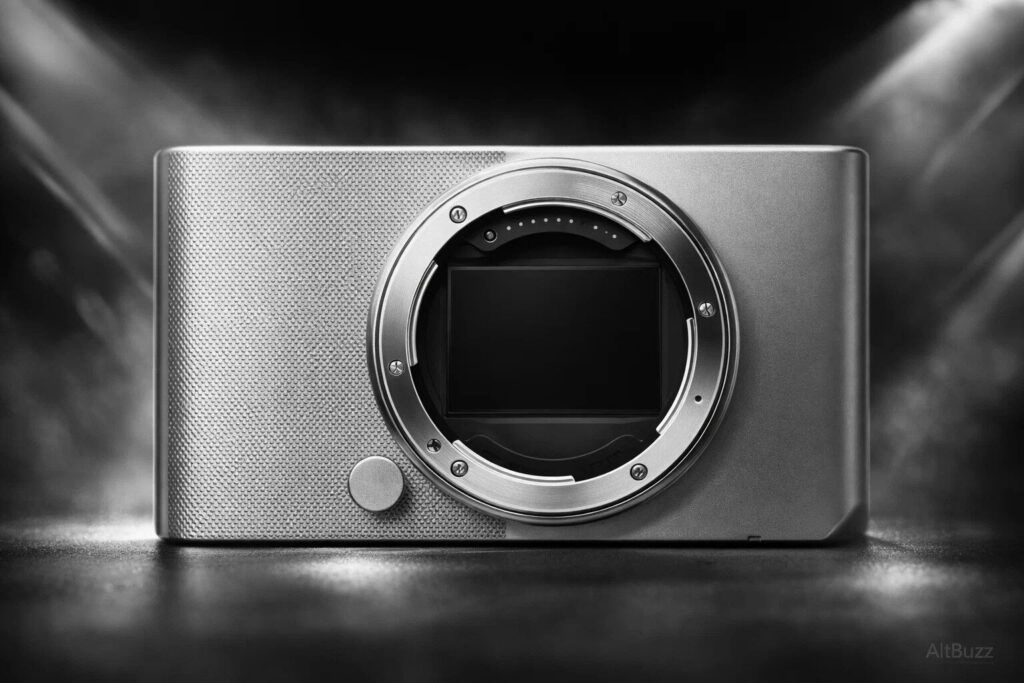
The Sigma BF represents absolutely unprecedented camera design approach prioritizing aesthetics and minimalism above conventional ergonomics. Each camera body is precision-machined from a single solid aluminum block through extensive CNC machining. This manufacturing process reportedly takes seven hours per camera body creating exceptional cost and production time. However, the result produces unparalleled structural rigidity and premium feel unmatched by conventional construction. The unibody design eliminates seams, screws, and joints visible on traditional cameras creating clean visual aesthetic.
This construction approach provides exceptional rigidity that protects internal components from shock and vibration damage. The aluminum body resists flexing and twisting even under significant stress. Professional photographers report the camera surviving drops and impacts that would destroy conventional cameras. The material choice balances strength against weight remarkably well. Additionally, the aluminum naturally dissipates heat effectively during extended video recording sessions. The body finish uses quality anodization resisting scratches and maintaining appearance over extended use.
Available color options include understated black or striking silver finishes appealing to different aesthetic preferences. The black version provides stealth appearance blending into shadows during street photography. The silver finish makes bold design statement celebrating the camera’s unique aesthetic philosophy. Both finishes photograph beautifully for social media content and product photography. The finish quality rivals luxury consumer electronics like premium smartphones and watches.
Dimensions measure just 112.6mm wide, 70.8mm tall, and 39.9mm deep making this exceptionally compact for full-frame cameras. The slim profile fits easily into jacket pockets and small camera bags without bulk. At 490 grams (1.08 pounds) body weight, it balances portability with substantial feel. The weight provides reassuring heft suggesting quality without becoming burdensome during all-day carrying. Comparison to smartphones shows only modest size increase despite containing full-frame sensor and professional optics.
The completely flat front surface lacks any traditional grip protrusion or contouring for hand holding. This radical design decision prioritizes clean aesthetic over ergonomic optimization. However, the decision creates genuine handling challenges for photographers with larger hands. The smooth aluminum surface provides minimal texture for secure gripping. Consequently, many photographers worry about dropping this expensive camera during active shooting. Adding wrist straps becomes absolutely essential for security rather than optional convenience.
However, subtle texturing on strategic areas provides adequate purchase for most hand sizes during careful handling. The sides feature slight grip patterns machined into the aluminum providing friction. The thumb rest area includes gentle contouring barely visible but functionally important. After adaptation period, most photographers report comfortable handling despite unconventional ergonomics. The compact dimensions mean hands wrap around the body naturally without requiring pronounced grips.
Physical controls are reduced to absolute minimum: shutter button, center button, and option button – just three total buttons. Additionally, one control dial handles all parameter adjustments through contextual behavior. This extreme minimalism eliminates button clutter creating clean design aesthetic. However, it also means virtually every function requires touchscreen interaction through the rear display. The touchscreen interface must work flawlessly because physical controls barely exist as backup.
Haptic feedback confirms button presses through subtle vibrations rather than mechanical clicking. This provides tactile confirmation without mechanical noise or button travel. The implementation feels modern and refined like premium smartphone buttons. However, some photographers prefer distinct mechanical clicking for positive confirmation. The haptic approach supports the minimalist aesthetic while maintaining functional feedback.
The massive 3.2-inch rear touchscreen absolutely dominates the back panel consuming available surface area. This screen represents the primary interface for all camera operation beyond basic shooting. Screen resolution at 2.1 million dots provides sharp, detailed image review and menu navigation. Touch responsiveness matches flagship smartphone standards with accurate tracking and smooth scrolling. However, the fixed mounting without articulation limits shooting angles and vlogging capability significantly.
No electronic viewfinder exists anywhere on the camera body – another radical design decision. Photographers must compose exclusively through the rear screen like smartphones and compact cameras. This eliminates EVF bulk and cost while simplifying construction. However, it also makes shooting in bright sunlight extremely challenging. The rear screen becomes nearly invisible in harsh daylight forcing chimping and guesswork. Additionally, holding the camera at arm’s length reduces stability compared to eye-level shooting.
No hot shoe exists for accessory mounting – no external flashes, microphones, or viewfinders attach directly. This limitation affects professional photographers requiring flash photography or advanced audio recording. External accessories must connect via USB-C port or remain entirely separate. The absence supports minimalist aesthetic while restricting professional versatility. Weather sealing is completely, utterly absent from the Sigma BF design philosophy. The camera offers zero protection against moisture, dust, or environmental hazards. The exposed USB-C port and lens mount provide direct ingress points for contamination. Sigma explicitly warns against using the camera in rain, snow, fog, or dusty conditions. This represents significant limitation for outdoor photographers and travel shooters. Many photographers expect weather protection from cameras costing nearly $2,000 regardless of design philosophy.
Battery Life and Connectivity
Battery performance represents the Sigma BF’s most significant practical limitation for professional photography applications. The integrated rechargeable lithium-ion battery cannot be removed or swapped in the field. The battery compartment requires complete disassembly with screwdrivers like smartphones rather than simple door access. This design choice prevents quick battery changes during shoots eliminating backup battery options entirely. Consequently, photographers must rely completely on the built-in battery capacity for entire shooting sessions.
CIPA rates the battery for approximately 2 hours continuous shooting time under standardized testing conditions. However, real-world usage varies dramatically with shooting intensity and feature utilization. Conservative estimates suggest 200-300 shots per charge for typical mixed shooting. Aggressive shooting with frequent review and menu diving reduces this to 150-200 shots potentially. Screen brightness settings significantly impact battery life with maximum brightness draining power rapidly. Video recording consumes power much faster than still photography reducing total shooting time significantly.
Comparison to cameras with removable batteries shows the limitation clearly. Professional cameras often support 800-1000 shots per battery with multiple spares providing virtually unlimited shooting. The BF’s fixed battery creates absolute ceiling that cannot be extended through spare batteries. This fundamental limitation eliminates the camera from consideration for many professional applications. Wedding photographers cannot risk batteries dying mid-ceremony without replacement options. Event shooters covering all-day conferences similarly need battery swap capability.
However, USB-C charging enables convenient power bank connectivity for extended shooting sessions. Modern high-capacity power banks provide multiple recharges enabling all-day shooting theoretically. Photographers can shoot while charging from portable batteries during brief breaks. A 20,000mAh power bank can recharge the camera 3-4 times extending total shooting considerably. This modern solution partially compensates for non-removable battery limitation.
Charging from standard USB-C power adapters takes approximately 2 hours for completely depleted batteries. Fast charging isn’t supported so higher wattage adapters don’t reduce charging time meaningfully. The camera operates while charging allowing continuous shooting when connected to power. However, the cable dangling from the camera side interferes with handling and looks unprofessional. Most photographers charge between shooting sessions rather than during active work.
The single USB-C port handles absolutely all connectivity functions – charging, data transfer, audio input, and accessories. This minimalist approach eliminates multiple ports cluttering the camera body aesthetics. However, it also means only one function operates at any time. Photographers cannot charge while transferring files or monitoring audio simultaneously. The port uses modern USB 3.2 Gen 2 standard providing theoretical 10Gbps transfer speeds. Real-world data transfer achieves approximately 800-900 MB/s to modern computers with compatible ports.
No Wi-Fi or Bluetooth wireless connectivity exists anywhere in the camera hardware. Smartphone connection requires wired USB-C link using compatible cables and adapters. This eliminates wireless image preview and remote camera control common in modern cameras. File transfer to smartphones requires physical cable connection and appropriate software. Cloud backup and wireless sharing features common in competing cameras simply don’t exist. The lack of wireless connectivity forces photographers into purely wired workflows.
Headphone monitoring for video recording requires USB-C headphones or USB-C to 3.5mm adapters. Similarly, external microphones attach via USB-C audio interfaces adding dongles and complexity. The single port limitation means choosing between charging, audio monitoring, or external microphone – never multiple simultaneously. Professional videographers find this limitation particularly frustrating during productions requiring simultaneous audio monitoring and power.
Real-World Use Cases
The Sigma BF excels specifically in deliberate, contemplative photography scenarios rewarding intentional composition. Street photography benefits tremendously from the camera’s exceptionally compact design and discrete appearance. The minimalist aesthetic appears less threatening than professional camera gear reducing subject awareness. Photographers blend into urban environments more effectively carrying elegant design objects versus tactical camera equipment. Additionally, the lightweight construction encourages all-day carrying that heavy professional bodies discourage.
Travel photography suits the camera’s portable form factor and premium build quality perfectly. The compact dimensions fit easily into personal item luggage and jacket pockets saving valuable space. International travelers appreciate the reduced equipment weight during long flights and extensive walking. The aluminum construction withstands travel rigors better than plastic alternatives common at this price point. However, the complete absence of weather sealing creates anxiety during unpredictable weather encounters. Photographers must protect the camera carefully from moisture unlike weather-sealed alternatives.
Everyday documentation and casual photography match the camera’s simplified interface reducing decision fatigue. Family events, social gatherings, and personal projects benefit from straightforward operation. The minimalist controls eliminate menu diving and technical distractions. Photographers focus on composition and moment rather than technical adjustments. This philosophy particularly appeals to shooters burned out on feature-rich cameras requiring constant management.
Urban exploration and architectural photography leverage the full-frame sensor quality and compact form. The camera disappears into small bags for spontaneous shooting opportunities during city wandering. Building exteriors and interior spaces capture beautifully with excellent dynamic range and detail. However, the fixed focal length limitation restricts architectural documentation requiring comprehensive coverage. Professional architectural photographers need wide-angle through telephoto focal lengths for complete property documentation.
Portrait photography produces beautiful results when shooting conditions align with camera capabilities. Studio portraits with controlled lighting and patient subjects yield gorgeous files. The full-frame sensor creates beautiful background separation even at moderate apertures. Skin tone rendering appears natural and flattering across diverse subjects. However, the absent weather sealing and limited autofocus capabilities restrict outdoor portrait sessions. Unpredictable weather and active children overwhelm the camera’s limitations quickly.
Documentary photography rewards the camera’s deliberate workflow and thoughtful composition encouragement. Photographers working methodically rather than reactively appreciate the simplified interface. Long-form projects benefit from reduced technical complexity enabling sustained creative focus. However, breaking news coverage and event photography exceed the camera’s action capabilities. The modest autofocus performance and limited battery life create missed moment anxiety.
Social media content creation aligns reasonably well with the shoot-edit-share workflow many creators maintain. The camera produces beautiful images suitable for Instagram, Facebook, and visual platforms. The 230GB internal storage provides ample space for content creation sessions. However, the wired file transfer requirement complicates smartphone workflows compared to wireless competitors. Content creators accustomed to Wi-Fi transfer find the wired requirement frustrating.
However, the Sigma BF clearly doesn’t suit action photography, sports, wildlife, or fast-paced photojournalism applications. The limited autofocus capabilities struggle with erratically moving subjects dramatically. The 8fps burst rate feels glacially slow compared to modern cameras achieving 20-30fps. Sports photographers capturing peak action need much faster continuous shooting. Wildlife specialists tracking birds and animals require advanced subject detection and tracking. Wedding photographers cannot risk the battery life limitations during critical moments. Event coverage demanding all-day reliability exceeds the camera’s endurance completely.
Pros and Cons
Pros
- Absolutely unprecedented aluminum unibody construction machined from solid blocks
- Exceptional build quality and premium materials feeling worth $3,000+
- Remarkably compact full-frame design at just 490g body weight
- Excellent 24.6MP full-frame image quality with beautiful color rendering
- Radically simplified interface eliminating decision fatigue and menu complexity
- Impressive 6K video recording capability at 30fps with full sensor width
- Generous 230GB internal SSD storage eliminating memory card management
- Blazing fast 10Gbps USB-C data transfer for quick file offloading
- Beautiful minimalist aesthetics standing out from conventional camera designs
- 13 built-in color modes providing creative looks straight from camera
- Thoughtful haptic button feedback providing modern tactile experience
- Competitive $1,999 pricing for full-frame quality and unique design
- Leica L-Log profile supporting professional video color grading workflows
- 10-bit 4:2:2 video output via HDMI for professional productions
Cons
- Severely limited battery life at approximately 200-300 shots per charge
- Complete absence of in-body image stabilization limiting handheld shooting
- No electronic viewfinder forcing rear screen composition in all conditions
- Fixed rear screen preventing articulation for high/low angles and vlogging
- Single USB-C port handling all functions creates operational limitations
- Absolutely no weather sealing protecting against rain, dust, or moisture
- Internal storage only without removable memory card backup options
- Limited autofocus capability compared to modern competing cameras
- No Wi-Fi or Bluetooth connectivity forcing wired-only workflows
- Significant video rolling shutter issues during camera movement
- Heavy digital stabilization crop reducing effective field of view
- Non-removable battery preventing field replacement during shoots
- Flat ergonomics won’t suit photographers preferring molded grips
- High-ISO performance lags some competing full-frame sensors
- No hot shoe preventing external flash and accessory mounting
Final Verdict
The Sigma BF makes an extraordinarily bold statement about camera design philosophy that simultaneously impresses and frustrates. This camera polarizes opinions more dramatically than virtually any recent camera release. Photographers either immediately love or hate the extreme minimalism without middle ground. At $1,999, it costs identically to capable all-around cameras offering superior versatility. The Panasonic S9, Sony a7C II, and Nikon Z5 all provide more features at similar or lower pricing. From pure specification comparison, the BF struggles justifying premium pricing against versatile alternatives.
Image quality genuinely matches competitors easily despite the minimalist approach. The 24.6MP full-frame sensor produces excellent files with beautiful color and strong dynamic range. However, Sony cameras with nearly identical sensors cost $500-$1,000 less with comprehensive feature sets. The value proposition relies entirely on appreciating the minimalist philosophy and unique design aesthetic. For photographers seeking conventional camera functionality, better values exist elsewhere clearly.
Build quality exceeds expectations dramatically, feeling worth $3,000+ cameras from competing manufacturers. The aluminum unibody construction provides exceptional rigidity and premium tactile experience. The seven-hour machining process per camera creates something genuinely special. However, purchasing premium build quality at the expense of critical features creates questionable value for most photographers. Professional photographers generally prioritize reliability and features over aesthetic statements.
The workflow limitations created by minimalist design choices prove genuinely frustrating during practical shooting. Poor battery life creates constant range anxiety during important shoots. Wedding photographers cannot risk batteries dying during ceremonies without replacement capability. Event shooters covering all-day conferences similarly need extended battery endurance. The non-removable battery eliminates the camera from professional consideration despite otherwise adequate image quality.
Additionally, the complete absence of weather sealing restricts outdoor photography applications dramatically. Travel photographers encounter unexpected weather regularly requiring weather protection. Landscape specialists shooting during optimal sunrise/sunset lighting often face moisture and precipitation. Adventure photographers need comprehensive sealing for mountain, forest, and coastal environments. The BF’s vulnerability eliminates it from consideration for outdoor specialties entirely.
However, the camera’s greatest strength lies in inspiring photography through beautiful design and simplified operation. Photographers report the camera makes them want to shoot more frequently than conventional equipment. The elegant aesthetic creates emotional connection transcending pure functionality. This intangible inspiration value proves difficult quantifying but matters significantly. Additionally, the radical minimalism forces photographers to slow down and compose deliberately. The limitations become creative constraints encouraging thoughtful photography rather than spray-and-pray approaches.
Who Should Buy: The Sigma BF suits very specific photographer profiles valuing aesthetics equally with performance. Photographers seeking radically simplified workflows eliminating decision fatigue find ideal tools. Street shooters wanting compact, elegant full-frame quality in discrete packages discover perfect equipment. Travel enthusiasts prioritizing ultimate lightweight portability accept trade-offs for reduced system weight. Minimalist design lovers appreciating objects as art pieces justify premium pricing through aesthetic value. Photographers with existing comprehensive camera systems adding lightweight personal project cameras expand capability. Shooters valuing intentional limitations as creative constraints rather than frustrating compromises embrace the philosophy. Content creators producing primarily static subjects with controlled conditions accept the limitations.
Who Should Avoid: Professional photographers needing absolute reliability across varying conditions should choose conventional equipment. Action and sports shooters requiring fast autofocus and high burst rates need specialized performance. Wedding and event photographers cannot risk battery life and reliability limitations during paid work. Videographers wanting comprehensive stabilization and professional features require purpose-built equipment. Photographers shooting primarily in challenging outdoor weather need comprehensive sealing protection. Users wanting customizable controls and extensive feature sets prefer conventional camera designs. Photographers expecting traditional handling ergonomics with sculpted grips should test carefully first. Beginners needing guidance from comprehensive menus and automation benefit from traditional cameras. Anyone prioritizing specifications over aesthetics finds superior value in competing products.
The Sigma BF represents beautiful foolishness indeed – the name proves perfectly chosen and self-aware. It challenges photography conventions while delivering genuine quality within intentional constraints. This camera will become either beloved companion or garage decoration depending entirely on user expectations and shooting style. For photographers embracing the minimalist philosophy, few cameras inspire and delight similarly. For conventional users expecting traditional functionality, frustration awaits inevitably. The BF proves conclusively that camera design philosophy matters as much as sensor specifications for certain photographers.
Read More from AltBuzz
Read more from AltBuzz for camera reviews, detailed specs, and expert insights. AltBuzz delivers trusted and easy-to-understand photography content. Discover in-depth analysis, comparison guides, and hands-on reviews that help you navigate the complex world of photography gear with confidence. Our comprehensive testing reveals real-world performance beyond marketing specifications.
Subscribe AltBuzz YouTube Channel
Stay updated with camera reviews and comparisons. AltBuzz shares hands-on camera content regularly. Experience detailed unboxings, real-world tests, and expert analysis to help you make informed purchasing decisions. Subscribe here: 👉 Subscribe Altbuzz