
Sony A7S IV Rumors: Expected Specs, Features and Release Date
The Sony A7S IV is the most anticipated video camera in the world right now. Professionals plan entire kit upgrades around it. Sony has not officially announced it yet. However, leaks and sourced speculation are building a very detailed picture of what is coming.
The Sony A7S III launched in October 2020 and instantly became the benchmark for low-light video. More than five years have passed since then. The camera world has changed dramatically. Canon, Nikon, and Blackmagic have all raised the bar. Sony now needs to answer.
All information in this article is based on rumors, leaks, and realistic industry analysis. Nothing here is confirmed by Sony. Treat this as a deep dive into the rumor landscape only.
Expected Release Date and Market Position
Why Is the A7S IV Taking So Long?
The A7S line operates on longer cycles than other Sony cameras. The A7S I arrived in 2014. The A7S II came in 2015. Then the A7S III followed in 2020. Sony does not rush this series. Each generation needs to deliver a genuine and meaningful advancement.
The Shared Sensor Theory
Multiple credible sources suggest Sony is developing a new sensor platform for both the A7S IV and the FX3 II together. This strategy spreads development costs across two premium bodies. Consequently, this explains both the extended timeline and the expected 2027 arrival window.
When Will It Launch?
The current consensus across the rumor community points to early to mid 2027. Some optimistic sources still mention a late 2026 announcement. However, most credible reports have now aligned on 2027 as the realistic launch period.
Price and Target Audience
Expected pricing sits between $3,500 and $4,200 at launch. The primary audience includes documentary cinematographers, news videographers, and wedding filmmakers. Additionally, wildlife documentary makers and nocturnal shooters represent a major part of the expected buyer base.
Rumored Specifications Table
| Feature | Rumored Details |
|---|---|
| Sensor Type | Full-frame Exmor R BSI CMOS (partially stacked) |
| Resolution | Approximately 24MP |
| Processor | Dual BIONZ XR2 with dedicated AI chip |
| ISO Range | 80 to 409600 (expandable) |
| Autofocus System | AI Phase Detection with advanced low-light tracking |
| Stabilization | 8.5-stop 5-axis IBIS with Active Mode |
| Video Recording | 6K oversampled 4K/60p full-frame, 4K/120p Super 35, 1080p/240p |
| EVF | 9.44M-dot OLED (retained from A7S III) |
| LCD Screen | 3-inch fully articulating touchscreen, brighter panel |
| Burst Shooting | Up to 20fps electronic |
| Battery | NP-FZ100 with BIONZ XR2 efficiency |
| Storage | Dual CFexpress Type A and SD UHS-II |
| Connectivity | USB-C 3.2 Gen 2, Wi-Fi 6E, Bluetooth 5.3, full-size HDMI |
| Weight | Approximately 660g |
| Expected Price | $3,500 to $4,200 |
Sensor and Image Quality (Rumored)
The 24MP Large-Photosite Design
The Sony A7S IV is expected to use a newly developed 24MP full-frame Exmor R BSI CMOS sensor. This sensor uses a partially stacked architecture. As a result, it combines the large-photosite low-light advantages of the A7S line with meaningfully faster readout speeds.
Why 24MP Instead of More?
The A7S series has always prioritized large photosites over high pixel counts. More light per pixel means stronger signal relative to electronic noise. Therefore, lower megapixel sensors in large full-frame bodies produce cleaner footage at extreme ISO values.
What Is a Partially Stacked Sensor?
A partially stacked sensor adds a dedicated memory layer beneath the imaging layer. This separation speeds up pixel data transfer to the processor dramatically. The practical result is reduced rolling shutter and support for higher frame rate video modes.
Dual-Layer Transistor Technology
Some leaks mention dual-layer transistor pixel technology in the new sensor. This improves how well the photodiode separates from the readout circuit at the pixel level. Consequently, dynamic range increases and noise performance improves across the full ISO range.
Expected ISO Performance
The expected ISO range reaches from 80 all the way to 409600. The more meaningful number is where the camera delivers professionally clean footage. Based on the new architecture, community analysis suggests genuinely clean footage at ISO 25600 and highly usable results at ISO 51200.
Dynamic Range
Most sources estimate 16 or more stops of dynamic range in mechanical shutter mode. This would beat the A7S III’s already excellent dynamic range. Moreover, it allows the camera to capture bright windows and deep interior shadows simultaneously in a single exposure.
Autofocus System (Rumored)
Closing the Gap with Sony’s Best Bodies
One valid criticism of the A7S III was that its autofocus lagged behind Sony’s stills-focused bodies. The Sony A7S IV should close this gap completely. Sony’s newest AI system, already proven in the A1 II and A7 V, should appear in the A7S IV in full.
The Dedicated AI Chip
The dedicated AI recognition chip runs scene analysis completely independently. It does not share resources with the main BIONZ XR2 imaging processor. Therefore, the autofocus stays fast and consistent without compromising video quality or codec performance.
Subject Recognition Capabilities
Expected subject tracking includes human eye and face detection. Full-body tracking kicks in when the face is not visible. Additionally, animal recognition, bird eye tracking, and vehicle detection are all expected to be part of the A7S IV’s AI tracking suite.
Low-Light Autofocus
This is the most critical improvement for A7S users. The new AI system maintains accurate subject tracking at very low ambient light levels. For documentary shooters working in dark venues, backstage environments, and nighttime locations, this directly translates to fewer missed shots.
Cinema-Grade Focus Transitions
The A7S IV should include adjustable focus transition speed controls. These controls let videographers choose how quickly the camera moves between subjects. As a result, cinematographers get intentional and predictable focus pulls rather than jarring auto transitions.
Video Capabilities (Expected)
Full-Frame 4K at 60fps
The Sony A7S IV’s biggest video upgrade is full-frame 4K/60p with 6K oversampling. The A7S III required an APS-C crop to reach 4K/60p. This change eliminates the field-of-view compromise that A7S III users have lived with for years.
4K at 120fps in Super 35
Slow-motion shooting should reach 4K at 120 frames per second in a slightly cropped Super 35 mode. This allows a factor-of-five slow motion effect at 24fps playback. Furthermore, wedding cinematographers, wildlife shooters, and commercial directors all benefit enormously from this.
Extreme Slow Motion
Additionally, 1080p at 240fps is expected for maximum slow-motion applications. This delivers footage at approximately one-tenth of real time at 24fps playback. The resolution trades some sharpness for the extreme frame rate, which is standard at this tier.
Internal Codec Options
Expected internal codec options include 10-bit 4:2:2 XAVC HS for everyday professional work. All-Intra XAVC S-I is also expected for maximum quality post-production workflows. Standard XAVC S rounds out the options for efficient delivery-ready recordings.
External RAW Output
External RAW recording via HDMI to field recorders is widely anticipated. 16-bit RAW output to recorders like the Atomos Shogun would allow the A7S IV to serve as a RAW cinema camera on high-end productions. This would place it in direct competition with far more expensive cinema systems.
Heat Management
The A7S III has documented recording time limits caused by heat buildup. The A7S IV should address this with a redesigned internal thermal dissipation system. Some leaks also mention a slightly modified body shape and a possible optional external fan accessory for sustained recording.
Cinema Color Science
Full S-Log3, S-Cinetone, and HLG support are standard expectations across all Sony Cinema Line cameras. Additionally, the A7S IV’s footage should match seamlessly with FX3, FX6, and FX9 bodies in multi-camera productions. Sony’s shared color science architecture already handles this well.
Design and Build (Expected)
Grip and Ergonomics
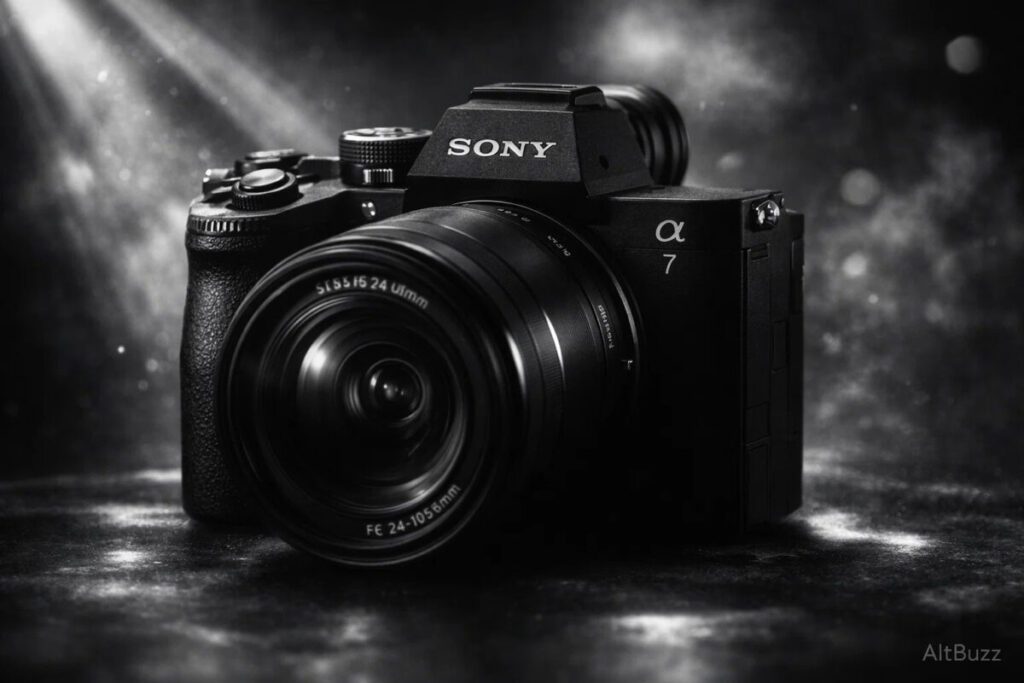
Sony is expected to retain the A7S III form factor with refined ergonomics. The grip should adopt the deeper, more contoured profile first seen on the A1 II. This change improves comfort and security significantly during long documentary shoots and all-day event coverage.
Brighter LCD Screen
The rear LCD panel should be noticeably brighter than the A7S III’s display. Better outdoor visibility is essential for professional field video shooters. Additionally, the articulating touchscreen mechanism should remain the same, as it serves run-and-gun workflows very well.
9.44M-Dot EVF Retained
The exceptional 9.44M-dot OLED electronic viewfinder from the A7S III is expected to carry over. This remains one of the best EVF specifications in any mirrorless camera. Sony has no reason to reduce it, and professional users would not accept a downgrade.
Weather Sealing and Build Quality
Magnesium alloy construction and comprehensive weather sealing are standard professional expectations. The A7S IV will certainly meet both. Professional video cameras face harsh real-world conditions, and Sony has consistently delivered at this level.
Port Selection
Expected ports include full-size HDMI, USB-C 3.2 Gen 2, a 3.5mm mic input, a headphone jack, and a multi-interface shoe. A flash sync port is also expected for hybrid photographers who use studio flash alongside the camera’s video capabilities.
Battery and Connectivity (Rumored)
NP-FZ100 Battery
The NP-FZ100 battery continues as the expected power source. This keeps the A7S IV compatible with every current Sony Alpha and Cinema Line professional body. Moreover, BIONZ XR2 power management should improve battery efficiency compared to the A7S III.
Wi-Fi 6E and Bluetooth 5.3
Wi-Fi 6E provides faster wireless transfer and better performance in interference-heavy environments. Bluetooth 5.3 enables reliable low-power pairing with Sony’s Creators App. Together, these connectivity options support modern professional wireless workflows.
USB-C Charging and Transfer
USB-C 3.2 Gen 2 covers fast wired data offload, tethered shooting, and in-field charging from power banks. For remote location documentary work without wall power access, USB-C charging is a genuinely important practical benefit.
Dual Card Slots
Dual CFexpress Type A and SD UHS-II card slots are expected. CFexpress handles sustained high-bitrate recording at maximum quality. Meanwhile, the SD slot provides a practical and cost-effective backup or proxy recording option.
Real-World Use Cases
Nocturnal Documentary Filmmaking
Nocturnal documentary work is the most compelling use case for the A7S IV. Stories that unfold in near-darkness, under streetlights, or in dimly lit interiors currently demand heavy compromises. The expected low-light sensor performance changes what is actually filmable without additional lighting equipment.
News and Current Affairs
News videographers work in unpredictable and often poorly lit environments. Reliable autofocus, compact form factor, and extreme ISO performance create a combination that serves fast-paced news coverage better than almost any other camera at this price.
Wedding Cinematography
Wedding receptions in dimly lit hotel ballrooms and candle-lit venues challenge even excellent cameras. The A7S IV’s expected sensor performance, reliable autofocus, and Cinema Line color science would give wedding cinematographers a distinct advantage in these conditions.
Wildlife Documentary
Wildlife documentary filmmakers often wait hours for nocturnal animals to appear. When the moment comes, low light, fast movement, and distance all conspire against image quality. The A7S IV addresses each of these challenges with its sensor, autofocus, and IBIS system working together.
Live Music and Performance Video
Concert venues are designed for audiences, not cameras. Dramatic lighting changes and deep shadows between spotlights make low-light performance the single most important camera characteristic in this context. The Sony A7S IV would be the natural first choice for professional live performance videography.
Pros and Cons (Based on Rumors)
Expected Pros
The new 24MP partially stacked full-frame sensor preserves the large-photosite philosophy that defines the A7S series. The expected ISO range reaching 409600 sets a new standard for extreme low-light capability. Full-frame 4K/60p with 6K oversampling eliminates the APS-C crop that A7S III users have tolerated for years. The anticipated 8.5-stop IBIS produces smooth handheld footage without a gimbal. AI autofocus closes the performance gap with Sony’s stills-focused bodies. Improved heat management should finally deliver extended recording without unexpected interruptions. Furthermore, the retained 9.44M-dot OLED EVF keeps the A7S IV’s viewfinder specification at the top of its class.
Expected Cons
The 2027 release window means a long wait for professionals who need an upgrade today. The 24MP resolution will disappoint photographers who also use the A7S platform for stills work. No 8K video capability is expected at this price point. No internal RAW video recording is expected either. Additionally, the $3,500 to $4,200 price range places the camera beyond serious enthusiasts. Finally, every specification here remains entirely unconfirmed by Sony.
Final Thoughts
The Sony A7S IV is not just a product update. It carries the full weight of the professional video community’s expectations. The A7S III changed how a generation of filmmakers approached low-light production. The A7S IV needs to do it again.
If the rumored specs prove accurate, the Sony A7S IV will more than justify the long wait. It will deliver what every great A7S generation has delivered before. It will show professional video creators that what they thought was the limit of achievable quality at a practical price is not actually the limit at all.
Keep following AltBuzz for every update as the A7S IV rumor cycle progresses toward an official Sony announcement.
Read More from AltBuzz
Read more from Altbuzz for camera reviews, rumors, and detailed specs. AltBuzz delivers trusted and easy-to-understand photography content.
Subscribe AltBuzz YouTube Channel
Stay updated with camera reviews, rumors, and comparisons. AltBuzz shares regular camera content.