
Sigma BF Full Review: Specs, Performance and Verdict
The Sigma BF is unlike any other full-frame camera released in 2025. It carries a 24.6MP BSI CMOS sensor, L-mount compatibility, and a body carved entirely from a single block of aluminum. However, it also strips away the viewfinder, the memory card slot, the hot shoe, and almost every physical control you have come to expect from a modern camera.
The BF officially launched in April 2025 at a price of $1,999. It targets everyday photographers, street shooters, and anyone who values design, simplicity, and image quality above feature count. Additionally, Sigma’s CEO describes it as a camera designed for people who want to feel photography again rather than manage it.
This review covers real specifications, real-world performance, and a clear verdict on who the Sigma BF is actually for.
Release Date and Market Position
Official Launch
Sigma announced the BF in February 2025 and made it available in April 2025. It comes in two finishes: silver and black. The silver version pairs particularly well with Sigma’s I-series prime lenses, which also come in silver L-mount versions.
Pricing and Competitors
The Sigma BF retails at $1,999. For comparison, the Sony A7C II costs approximately $2,200 and the Panasonic Lumix S9 sits around $1,400. The BF costs more than the Lumix S9 but offers a dramatically different design philosophy and build quality.
Who Is the Sigma BF For?
The Sigma BF targets photographers who value simplicity, design, and the act of taking photographs. It is not a camera for sports shooters, videographers, or accessory-heavy studio photographers. Instead, it suits street photographers, travel shooters, and those who appreciate premium everyday objects.
Specifications Table
| Feature | Details |
|---|---|
| Sensor | 24.6MP BSI CMOS Full-Frame |
| Lens Mount | L-Mount (Leica, Panasonic, Sigma compatible) |
| Processor | Not disclosed |
| ISO Range | 100 to 51200 |
| Autofocus | Phase Detection with subject detection (people and animals) |
| Stabilization | None (IBIS absent) |
| Shutter | Electronic only (no mechanical shutter) |
| Video | 6K/30p, 4K/30p, 1080p/120fps |
| Screen | Fixed 3.15-inch LCD |
| EVF | None |
| Hot Shoe | None |
| Memory Card Slot | None |
| Internal Storage | 230GB built-in |
| Connectivity | Single USB-C 3.2 (10Gbps) |
| Battery | BP-82 (charged via USB-C) |
| Body Construction | Single block of aluminum (unibody) |
| Controls | 3 buttons, 1 dial, shutter, power |
| Weight | Approximately 427g body only |
| Price | $1,999 |
Sensor and Image Quality
The 24.6MP BSI CMOS Sensor
The Sigma BF shares its sensor with the Panasonic Lumix S9. This is a proven 24.6MP BSI CMOS full-frame sensor that delivers high-quality image output. Furthermore, BSI architecture improves low-light efficiency compared to front-illuminated sensor designs.
Real-World Image Quality
Images from the Sigma BF are sharp, detailed, and well-resolved. The sensor renders fine textures and subject detail faithfully. Additionally, color science is strong, with natural skin tones and accurate color rendering across a wide range of lighting conditions.
Dynamic Range Performance
The BF’s dynamic range is competitive for a 24MP full-frame sensor. Shadow recovery is solid across most shooting scenarios. However, it does not exceed what other cameras at this price point offer. The sensor performs consistently but not exceptionally in this area.
Color Profiles and Look Effects
Sigma includes several built-in Look Effect color modes that produce distinctive and pleasing results. These modes adjust color, contrast, and tonal rendering in-camera. As a result, many shooters can achieve a finished look directly from the camera without post-processing.
RAW File Performance
The Sigma BF shoots 12-bit DNG RAW files. These files are compatible with most major post-processing applications. However, some reviewers note that DNG files shot below ISO 320 can occasionally render at incorrect brightness when processed in-camera. Additionally, there is no 14-bit RAW option, which limits maximum tonal gradation in high-dynamic-range scenes.
Color Moire Issue
One real-world image quality concern is color moire. Several reviewers report visible color moire in detailed scenes with repeating fine patterns like railings, roof tiles, and fabric weaves. This suggests the sensor lacks an optical low-pass filter. Moreover, it appears more frequently than on most other cameras at this price point.
Autofocus Performance
Autofocus System Overview
The Sigma BF uses phase detection autofocus with subject detection for people and animals. The system offers two area modes: all-area and single point. Furthermore, users can choose whether face and eye detection is active and what subject type the camera prioritizes.
Real-World AF Reliability
In everyday and social photography situations, the Sigma BF’s autofocus works reliably and consistently. Face detection is fast and accurate. Eye tracking is responsive and precise in social and portrait situations. As a result, photographers can concentrate on composition and expression rather than manual focus management.
AF Limitations
The Sigma BF is clearly not designed for sports or wildlife photography. Its AF system lacks the speed, tracking continuity, and subject classification depth needed for fast-moving subjects. Additionally, because there is no EVF, verifying precise focus at wide apertures can be challenging without the AF-S auto-review zoom function.
Manual Focus Override
Users can configure manual focus override to activate either at any time by turning the focus ring, or only when the shutter is half-pressed. This flexibility supports photographers who want manual control for precise focus placement. However, the limited physical controls make manual focus less practical during spontaneous shooting situations.
Video Capabilities
Video Specification Overview
The Sigma BF supports 6K recording at 30fps and 4K at 30fps. Additionally, it supports 1080p at up to 120fps for slow-motion footage. L-Log recording is available for footage that requires color grading in post-production.
Video Limitations
However, the Sigma BF is not a serious video camera. It has no image stabilization, which makes handheld video noticeably shaky without a tripod or gimbal. Additionally, the fixed screen cannot flip or articulate for self-facing or unconventional angle video recording.
Audio Limitations
There is no microphone or headphone jack on the Sigma BF. The single USB-C port can function as an audio input through compatible USB-C microphones. However, this significantly limits the flexibility of any video production setup. For anyone planning regular video work, these constraints are genuinely limiting.
Rolling Shutter
The Sigma BF uses an electronic shutter only. Without a stacked sensor, rolling shutter becomes visible during fast panning or when shooting rapidly moving subjects. This is a real-world limitation for video and fast-action stills shooting that potential buyers should understand before purchasing.
When Is Video Appropriate?
The Sigma BF suits occasional and casual video recording well. It captures clean and visually pleasing clips when placed on a tripod or used with a stabilizing accessory. Furthermore, the L-Log support gives creative shooters grading flexibility for those occasional beautiful short-form video clips.
Design and Handling
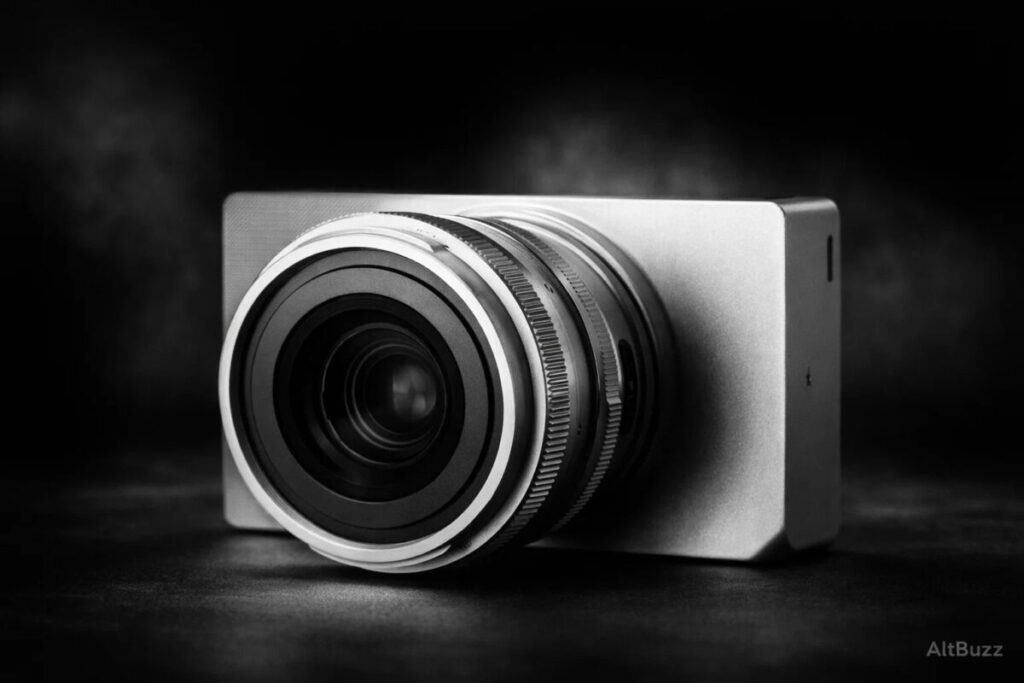
The Unibody Aluminum Construction
This is where the Sigma BF becomes truly special. Sigma carves each body from a single solid block of aluminum over the course of seven hours. The result is a camera that feels extraordinarily rigid, dense, and premium in the hand. No other mirrorless camera at any price uses this manufacturing approach.
Haptic Feedback Controls
The Sigma BF is the first mirrorless camera to integrate haptic feedback into its physical controls. The dial, center button, option button, and playback button all deliver precise tactile clicks. This reduces mechanical wear on the controls over time. Additionally, the haptic feedback makes the interface feel refined and deliberate rather than cheap.
Minimal Control Layout
Three buttons, one dial, a shutter release, and a power button control the entire camera. This is a radical simplification. The main LCD handles composition and focus point selection. A separate settings display shows exposure parameters. For photographers who learn the system, this becomes an intuitive and natural way to shoot.
No Viewfinder
There is no EVF and no way to attach one. The hot shoe is absent, which also eliminates the possibility of an external flash. For photographers who rely on a viewfinder for outdoor shooting or precise composition, this is a significant missing feature. However, for the casual and street-focused audience Sigma targets, the LCD-only approach works effectively.
Screen and Visibility
The fixed 3.15-inch LCD is the only viewing option. It performs well in indoor and overcast outdoor conditions. However, direct bright sunlight makes the fixed screen difficult to see clearly. This is one of the practical limitations photographers experience most frequently in real-world use.
Single Strap Lug
The Sigma BF has only one strap attachment point. This accepts a wrist strap comfortably. Attaching a neck strap requires a creative solution using third-party anchors. Additionally, there is no built-in hot shoe or accessory port, which confirms the camera’s identity as a photography-first, accessories-minimal tool.
Battery and Connectivity
Internal 230GB Storage
The Sigma BF eliminates the memory card slot entirely. Instead, it uses 230GB of built-in internal storage. This holds approximately 4,300 uncompressed RAW images or 14,000 JPEG files. Additionally, it holds roughly 2.5 hours of video at the highest quality setting.
Single USB-C Port
There is only one port on the entire camera: a USB-C 3.2 port running at 10Gbps. This single port handles battery charging, data transfer, and audio input via compatible USB-C accessories. Sigma prioritized design purity over port flexibility, and the result is an extremely clean exterior.
Battery Life
The BP-82 battery is rated for approximately two hours of continuous shooting. In practice, actual shooting time varies depending on how actively the photographer uses the screen and subject detection. Furthermore, heavy video use reduces battery life significantly below the rated figure.
Wireless Transfer
Sigma does not include Wi-Fi or Bluetooth connectivity in the BF. File transfer requires a wired USB-C connection to a computer or compatible hub. For photographers accustomed to wireless workflow, this is a notable omission that requires a workflow adjustment.
Real-World Use Cases
Street Photography
The Sigma BF excels in street photography contexts. Its compact and discreet appearance avoids drawing attention in public spaces. Furthermore, the all-area face detection with wide-area AF handles candid moments reliably without requiring shooter intervention.
Everyday and Travel Photography
As an everyday camera, the BF is genuinely compelling. Its build quality inspires use. It fits comfortably in a bag alongside just one or two I-series prime lenses. Additionally, the internal storage eliminates the need to carry and manage memory cards during travel.
Casual Portrait Photography
In controlled and semi-controlled portrait sessions, the Sigma BF performs very well. Face and eye detection are reliable and precise. The L-series lens system delivers excellent optical quality. Furthermore, S-Cinetone-equivalent color rendering from the Look Effect profiles produces flattering and usable results without post-processing.
Who Should Not Buy the Sigma BF
Sports photographers, serious videographers, and studio shooters with external flash requirements should look elsewhere. Additionally, photographers who need an EVF for outdoor precision shooting or who depend on fast burst shooting for action subjects will find the Sigma BF limiting. It simply does not try to serve those use cases.
Pros and Cons
Pros
The single-block aluminum unibody construction is genuinely exceptional and unlike anything else in the camera market. Haptic feedback controls add a refined and premium interaction quality. The 24.6MP full-frame BSI CMOS sensor delivers sharp and accurate image output. L-Mount lens compatibility opens access to an excellent and growing ecosystem. Additionally, the 230GB internal storage eliminates memory card management entirely. The simplified control system reduces decision fatigue and keeps focus on photography. Furthermore, the camera’s design inspires use in a way that specification-focused cameras do not.
Cons
There is no EVF and no way to attach one, which limits outdoor composition and focusing confidence. The fixed screen is difficult to see in direct sunlight. The electronic shutter combined with no IBIS and no mechanical shutter produces visible rolling shutter with fast movement. No Wi-Fi or Bluetooth connectivity requires wired file transfer. Additionally, the single USB-C port limits accessory and audio flexibility significantly. Battery life at approximately two hours is below average for a professional full-frame camera. Furthermore, color moire appears more frequently than on comparable cameras. The 12-bit DNG RAW limit may disappoint photographers wanting maximum tonal gradation in high-dynamic-range scenes.
Final Verdict
The Sigma BF is one of the most unusual and genuinely interesting cameras released in years. It does not try to be the best at every specification. Instead, it tries to be the best at making you want to take photographs. In that very specific goal, it succeeds remarkably well.
For street photographers, travel shooters, and collectors of beautifully made photographic tools, the Sigma BF is a compelling purchase. However, anyone who needs an EVF, fast action performance, video capabilities, or broad accessory support should look at other cameras at this price point.
The Sigma BF is not for everyone. However, for the right photographer, it may be exactly the camera they have been waiting for.
Read More from AltBuzz
Read more from Altbuzz for camera reviews, rumors, and detailed specs. AltBuzz delivers trusted and easy-to-understand photography content.
Subscribe AltBuzz YouTube Channel
Stay updated with camera reviews, rumors, and comparisons. AltBuzz shares regular camera content.