
Kodak Charmera Rumors: Expected Specs, Features & Release
Introduction
The Kodak Charmera is one of the most talked-about compact cameras to surface in recent memory — and not for the reasons you might expect. This isn’t a powerhouse mirrorless or a flagship point-and-shoot packed with AI autofocus. It’s a keychain-sized digital toy camera that sparked massive buzz long before most people could even get their hands on one. Manufactured by RETO Project under a Kodak brand license, the Charmera had been circulating through photography forums, Reddit threads, and social media feeds as a highly anticipated novelty release — one that photography communities couldn’t stop speculating about.
Before launch, rumors pointed to an intentionally lo-fi experience: a tiny camera sold in blind boxes, built to celebrate imperfection rather than chase pixel-perfect sharpness. Leaks suggested it would be aimed squarely at Gen Z photographers, nostalgic millennials, and anyone tired of obsessing over resolution numbers. Early whispers described a design inspired by Kodak’s legendary 1987 Fling disposable camera, with bold retro colorways and collectible appeal baked into the concept from day one.
Expected Release Date and Market Position
Pre-launch speculation placed the Charmera’s arrival sometime in late 2025, with rumors indicating a September window that would perfectly align with the back-to-school and early holiday season. Photography insiders expected RETO Project and Kodak to position it firmly in the ultra-budget, lifestyle-accessory segment — not competing with the Fujifilm Instax Mini Evo or any serious compact, but instead creating an entirely new niche: the collectible keychain camera.
Competing products in the rumored target space included cheap digicam revivals, Holga-style toy cameras, and Lomography’s various novelty releases. Nobody expected the Charmera to threaten any of them on specs. The rumored market position was always about culture, community, and collectibility — a camera that competes more with Labubu blind-box figures than with the Sony ZV-1 II.
Kodak Charmera Rumored Specifications Table
| Feature | Rumored Details |
|---|---|
| Sensor Type | 1/4″ CMOS |
| Resolution | 1.6MP (1440 × 1080 JPEG) |
| Processor | Basic embedded image processor |
| ISO Range | Fixed / Auto (limited low-light capability) |
| Autofocus System | Fixed focus, no autofocus |
| Stabilization | None |
| Video Recording | 1080p AVI at 30fps |
| EVF | None |
| LCD Screen | None |
| Burst Shooting | None |
| Battery | Built-in rechargeable, USB-C charging |
| Storage | MicroSD card (up to 32GB+ supported) |
| Connectivity | USB-C (data transfer & charging) |
| Weight | Ultra-lightweight keychain form factor |
| Expected Price | ~$29.99 USD |
Rumored Sensor and Image Quality
Even before the Charmera launched, leaks made it crystal clear that image quality was never going to be the main attraction. The rumored 1/4-inch CMOS sensor — one of the smallest sensor formats in any digital camera — had enthusiasts divided. Technical purists were horrified. Lo-fi photography fans were thrilled.
Pre-release speculation suggested the output would closely resemble what you’d get from a digicam circa 1999: soft, grainy, low-detail images with washed-out highlights and limited dynamic range. Some early influencer previews described it as looking like a webcam from the early 2000s, and that comparison stuck. The plastic 35mm f/2.4 equivalent lens was rumored to add its own layer of optical softness, further distancing the Charmera from anything approaching clinical sharpness.
Dynamic range expectations were kept deliberately low. Rumors suggested the camera would struggle in any situation outside of bright, even outdoor lighting. Overexposed highlights and murky shadows were anticipated as a feature rather than a flaw — part of the intentional lo-fi charm that defined the product’s identity. Color science was expected to lean warm and desaturated, with the available filter presets doing much of the heavy aesthetic lifting.
Low-light performance was universally expected to be poor, a natural consequence of the tiny sensor and fixed-aperture plastic lens. The built-in flash was rumored to offer some close-range assist, but nothing that would salvage indoor shots beyond arm’s length. For a camera built on the philosophy of “point, press, and see what happens,” all of this was by design.
Rumored Autofocus System
The Charmera was never going to have autofocus, and nobody expected it to. Pre-launch information consistently described a fully fixed-focus lens with no focusing mechanism whatsoever. The rumored shooting experience was described as pure point-and-shoot in the most literal sense: there are no settings to adjust, no focus points to select, and no feedback about whether your subject is in the optimal focus zone.
Subject detection, tracking, and eye-detection were never even whispered about in connection with this camera. The entire philosophy behind the Charmera is the opposite of intelligent autofocus systems — it’s a camera that removes every decision from the photographer except one: whether to press the shutter button.
Expected tracking performance was essentially nonexistent. Moving subjects, anything shot in lower light, and handheld shots taken while the shooter was also moving were all expected to produce motion blur as a matter of course. Reviewers anticipated this and positioned it not as a failure of design but as the camera’s most honest feature.
Expected Video Capabilities
Video was rumored to be a secondary feature at best. Pre-launch expectations centered on basic 1080p recording at 30fps in AVI format — a codec and container combination that feels distinctly retro in an era of H.265 and ProRes. No log profiles, no flat picture modes, and absolutely no stabilization were anticipated, making handheld video a shakily authentic experience.
Frame rate options beyond 30fps were not expected, and confirmed leaks showed no indication of slow-motion capability. The video output was rumored to carry the same lo-fi aesthetic as the still images: soft, slightly grainy, and thoroughly charming for casual use on social media.
Stabilization expectations were zero. With no optical or electronic image stabilization rumored or confirmed, video footage was always going to require a steady hand or a forgiving aesthetic sensibility. For the Charmera’s target audience, this was entirely on-brand. The camera was never expected to challenge a GoPro or a DJI Osmo Pocket — it was meant to feel like finding old family footage on a VHS tape.
Design and Build Expectations
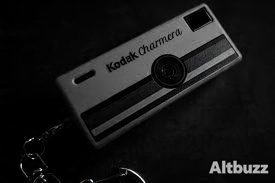
Design rumors were among the most exciting pre-launch leaks. The Charmera was widely reported to be a spiritual and aesthetic recreation of the Kodak Fling, the company’s original 1987 disposable camera. This connection was expected to run deep — not just in shape but in branding details, with the “1987” model reportedly replacing the film speed indicator with the year of the Fling’s birth as a subtle historical tribute.
The body design was consistently described as block-like and compact, small enough to attach to a keychain and carry in a jeans pocket without a second thought. Six standard colorway designs were rumored, each with a distinctly retro look, plus a rare transparent “secret” variant sold at lower odds in the blind-box format. The blind-box packaging concept itself was a major pre-launch talking point, generating excitement in the collectibles community as much as in the photography world.
Weather sealing was never mentioned in any leak or rumor. The camera’s plastic housing and tiny form factor made any kind of weather resistance unlikely from the start. That said, the rugged, simple design was expected to handle casual knocks reasonably well. Size and weight were rumored to be genuinely pocketable and feather-light, making it one of the most carry-anywhere cameras imaginable.
Battery and Connectivity Rumors
Battery rumors were minimal because expectations were simple: a small built-in rechargeable cell accessed through a USB-C port was confirmed very early in the pre-launch information cycle. Capacity was never specified in early leaks, but given the camera’s minimal processing demands and tiny sensor, life between charges was expected to be decent for casual, on-and-off use.
USB-C was confirmed as the sole connectivity option, serving double duty for both charging and data transfer to a computer. No wireless features — Wi-Fi, Bluetooth, or NFC were ever rumored or expected. The Charmera was always positioned as a deliberately disconnected device: shoot first, review later, on a laptop or desktop, the old-fashioned way.
There were no rumors about fast charging, wireless charging, or a companion app. The intentional absence of digital connectivity is as much a feature of the Charmera as its tiny sensor. It was designed to be used, forgotten in a pocket, and rediscovered with a roll of surprise photos waiting to be reviewed.
Potential Real-World Use Cases
Photography Use Cases
The Charmera was tailor-made for spontaneous, everyday photography where technical excellence was never the goal. Pre-launch speculation placed it perfectly in the hands of festival-goers, gap-year travelers, and anyone who wanted a secondary camera that didn’t require any thought whatsoever. The keychain attachment made it uniquely suited to always-on carry — clipped to a bag, looped on a belt, or buried in a jacket pocket alongside keys and coins.
Creative photographers interested in lo-fi aesthetics were also flagged as a natural audience. The Charmera’s limitations — soft focus, low resolution, muted colors are the same characteristics that draw people to expired film, cheap toy cameras, and vintage digicams. For this community, the Charmera represented an affordable, consistent, and endlessly shareable aesthetic tool.
Video Use Cases
Video on the Charmera was positioned as social-first and nostalgic. Short clips for Instagram Reels or TikTok, captured with zero friction and reviewed later on a computer, were the primary use case whispered about in pre-launch discussions. The grainy, soft 1080p output was expected to be a hit with audiences already obsessed with Y2K aesthetics and early-2000s digicam footage.
Target Audience
Gen Z users leading the digicam revival trend were always the primary demographic. Nostalgic millennials who grew up with point-and-shoot cameras in the early 2000s were the secondary audience. Collectors drawn by the blind-box gamification were a third, entirely distinct group — people who might never even put a MicroSD card in the camera but would display it on a shelf alongside other collectibles.
Possible Pros and Cons (Based on Rumors)
Expected Advantages
- Extraordinary portability — keychain-sized and light enough to forget you’re carrying it
- Blind-box collectibility adds a layer of fun and community that no other camera in this space offers
- Intentionally lo-fi aesthetic delivers exactly the kind of character that photographers and social media users were actively seeking
- Dead-simple operation removes all friction — no settings, no learning curve, no decision fatigue
- Extremely low price point makes it an impulse purchase and an easy gift
- Cultural cachet driven by influencer hype and limited supply created a buzz machine that money typically can’t buy
- 12 filter and frame looks offer creative variety within the camera’s inherent limitations
- Inspired by a genuine piece of Kodak history — the 1987 Fling connection gives it real heritage depth
Possible Limitations
- 1.6MP resolution is genuinely low by any standard, including older smartphone cameras
- Fixed focus means no control over what’s sharp and what isn’t
- Tiny 1/4″ sensor guarantees poor low-light performance and minimal dynamic range
- Blind-box format means you cannot choose your preferred colorway without buying multiple units
- No wireless connectivity requires physical download via USB-C
- No screen means there’s no way to review shots in the field
- MicroSD only not standard SD — requires a specific card type
- Scalper pricing at launch made the affordable $29.99 MSRP largely inaccessible
Final Thoughts
The Kodak Charmera was one of the most interesting camera product stories in years — not because of what it could do, but because of what it deliberately chose not to do. Before it launched, the rumors painted a picture of a camera that would connect with people on an emotional and cultural level long before it connected on a technical one. That instinct proved exactly right.
As with all rumor-based coverage, it’s worth noting that specs and packaging details can shift between the leak stage and final production. The Charmera delivered almost exactly what the leaks promised, which in itself is a testament to how clearly defined the product concept was from the beginning.
Is the Kodak Charmera worth waiting for or buying the moment it’s in stock? If you approach it as a collectible accessory that also happens to take lo-fi photos, the answer is almost certainly yes. If you need reliable image quality, working autofocus, or a screen to review your shots, look elsewhere. But if you want the most fun a single charge and a MicroSD card can buy, the Charmera delivers exactly that.
Read More from AltBuzz
Read more from AltBuzz for camera rumors, leaked specs, and expert insights. AltBuzz delivers trusted and easy-to-understand photography content.
Subscribe AltBuzz YouTube Channel
Stay updated with camera rumors and early previews. AltBuzz shares the latest camera leaks and comparisons. Subscribe to AltBuzz on YouTube to never miss a drop.