
Canon EOS R8 Mark II: The Full-Frame Camera Canon Should Have Built Three Years Ago
Canon just closed the biggest gap in its own lineup. The Canon EOS R8 Mark II arrived on September 15, 2026, and it fixes the one complaint that followed the original R8 everywhere it went. That camera had no in-body stabilization. This one does, and it still weighs almost nothing.
If you searched for a “Canon EOS R8V,” you landed in the right place by accident. No such model exists. What Canon actually announced is the EOS R8 Mark II, and the confusion is understandable. Rumor sites spent months floating names, sensor guesses, and leaked mockups before the real announcement. AltBuzz always corrects the record when a camera name gets scrambled in the rumor cycle, so consider this the accurate version.
This is not a small refresh. Canon rebuilt the body, added a stabilizer system borrowed from its flagship engineering, and gave the autofocus system a real upgrade. Here is everything photographers need to know before the camera ships in late October.
Canon EOS R8 Mark II Release Date and Price
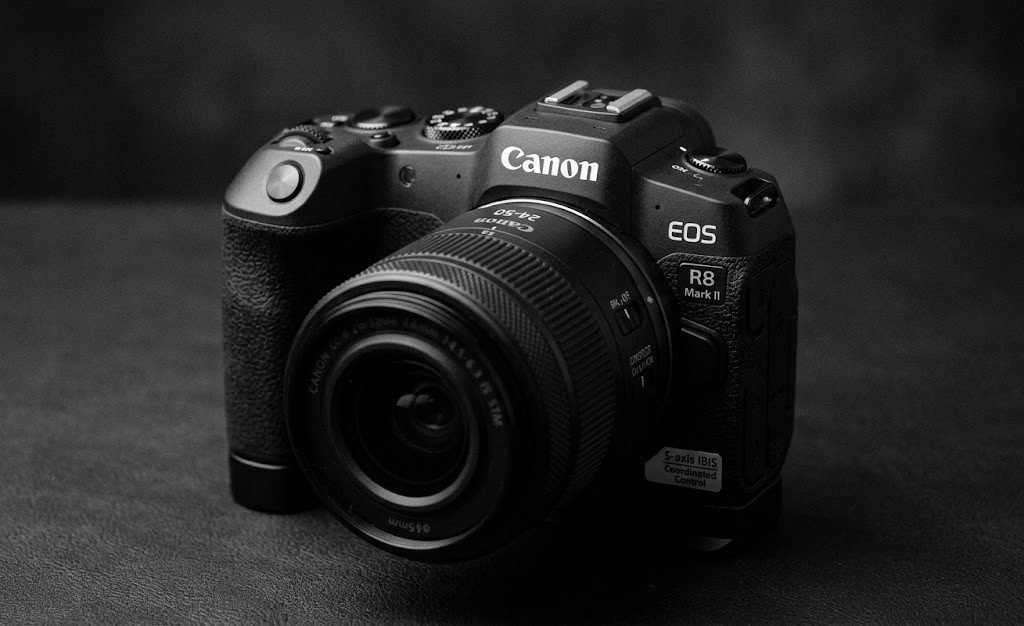
Canon U.S.A. made the announcement official from its Melville, New York headquarters on September 15, 2026. The camera ships in late October 2026, and Canon has already locked in pricing for the US market.
The EOS R8 Mark II body only carries an estimated retail price of $1,899. Buyers who want a lens in the box can pick up the kit version with the RF 24-50mm F4.5-6.3 IS STM lens for $2,099. Both configurations become available on the same late October timeline.
That price sits about $400 higher than the original EOS R8 launched at in 2023. The jump makes sense once you look at what Canon packed into the body. Stabilization alone usually adds hundreds of dollars to a camera’s price tag, and Canon added far more than that here.
Two accessories launch alongside the camera. The EG-E2 Extension Grip runs $99.99, and the new Speedlite EL-5 Ver.2 flash costs $379. Both ship in late October as well.
Why This Release Matters for Canon’s Lineup
Canon built the original EOS R8 as an entry point into full-frame photography. It borrowed the sensor and autofocus system from the EOS R6 Mark II and dropped them into a much lighter body. The tradeoff was stabilization. Canon left it out to protect the compact size and the price point.
Three years later, competitors closed that gap. Sony and Nikon both ship stabilized full-frame bodies in this price range, and photographers noticed. Canon Rumors reported months before the announcement that Canon had discontinued body-only inventory of the original R8 at several major retailers, a clear signal that a replacement was close. The EOS R8 Mark II answers that pressure directly.
Canon EOS R8 Mark II Design and Build: The Lightest EOS With IBIS
Canon calls the EOS R8 Mark II the lightest camera in the entire EOS lineup to include in-body image stabilization. That claim matters because stabilization systems usually add weight through extra motors, magnets, and reinforced internal mounts.
The body measures approximately 5.17 by 3.54 by 3.13 inches and weighs close to 1.2 pounds. Canon achieved this by borrowing design cues from its own camera heritage rather than starting from a blank sheet. The official photo gallery released alongside the announcement placed the new camera next to a classic Canon EOS 650 body, a clear nod to how the design language traces back through decades of Canon cameras.
The body shape moves away from the rounded, minimal look of the original R8. Expect a flatter top plate, more defined edges, and control dials that echo Canon’s film-era aesthetic. This retro influence gives the camera a distinct identity compared to the more clinical look of Canon’s higher-end R-series bodies.
The New Multi-Controller Joystick
One of the most requested features finally arrives on this camera. Canon added a multi-controller joystick to the rear of the body, something enthusiast shooters have asked for since the original R8 launched without one. The joystick speeds up autofocus point selection significantly compared to using the touchscreen or the earlier control layout, especially for photographers who shoot fast-moving subjects like sports or wildlife.
EG-E2 Extension Grip
Canon designed a dedicated grip accessory specifically for this camera. The EG-E2 Extension Grip attaches through a simple turn-dial mechanism and adds height for photographers with larger hands or those pairing the body with heavier lenses. It does not block the battery door or the tripod mount, so you can keep the grip attached during normal shooting and charging routines. The finish matches the camera body closely, keeping the retro design intact even with the accessory installed.
Canon EOS R8 Mark II Sensor and Image Quality
The EOS R8 Mark II uses a 24.2-megapixel full-frame CMOS sensor. This surprised a portion of the rumor community, since earlier leaks pointed toward a 32.5-megapixel sensor borrowed from the EOS R6 Mark III. Canon went a different direction and stuck with the resolution that already proved itself in the original R8 and the EOS R6 Mark II.
Standard ISO sensitivity reaches up to 102400, giving the camera solid performance in low-light conditions without pushing into extended ranges that introduce heavy noise. Canon markets this as the same core imaging system found in its top-tier professional bodies, scaled down into a lighter, more accessible package.
Full-frame sensors carry a real advantage over APS-C alternatives. Canon points out that the sensor in this camera gathers approximately 2.5 times more light than an APS-C sensor of similar design. That translates into stronger background separation, better low-light clarity, and wider field of view at equivalent focal lengths. Portrait photographers and anyone chasing shallow depth of field will notice the difference immediately.
Canon EOS R8 Mark II In-Body Image Stabilization: The Headline Feature
This is the upgrade that defines the camera. The EOS R8 Mark II includes a 5-axis In-Body Image Stabilizer, something the original R8 never had. Canon built this system with two specific technologies working together.
Coordinated Control lets the sensor-based stabilization work in tandem with any lens that includes its own optical IS. The two systems communicate rather than compete, producing steadier results than either system could deliver alone.
Peripheral Coordinated Control targets a specific weakness in most IBIS systems. Wide-angle lenses often show blur toward the edges of the frame even when the center stays sharp, because standard stabilization corrects primarily for center-frame motion. Canon’s Peripheral Coordinated Control specifically suppresses that edge blur, which matters a great deal for landscape and architecture photographers who rely on wide lenses.
For anyone shooting handheld in low light or recording video without a gimbal, this single feature changes what the camera can do compared to its predecessor.
Canon EOS R8 Mark II Autofocus: Dual Pixel CMOS AF II
Canon carried its Dual Pixel CMOS AF II system into the EOS R8 Mark II and improved on it. The system delivers 100% frame coverage and tracks people, animals, and vehicles automatically. Canon states the tracking performs more tenaciously than it did on the original EOS R8, meaning the camera holds onto a moving subject through more difficult conditions like partial occlusion or fast direction changes.
A new feature called Register People Priority lets photographers pre-register specific faces so the camera prioritizes tracking them over other people in the frame. This proves useful for event photographers, wedding shooters, and parents trying to keep a camera locked onto one child in a crowded scene.
Canon EOS R8 Mark II Burst Shooting and Speed
The EOS R8 Mark II shoots at up to 40 frames per second using its electronic shutter. That number alone puts it ahead of most cameras in its price bracket, but the real story is in the buffer improvements.
Canon added pre-continuous shooting support, a feature that captures up to 20 frames before you fully press the shutter button. Half-press the shutter, and the camera starts buffering frames in the background. Fully press it a half second later, and those pre-captured frames get included in your final burst. This solves the classic problem of missing the exact peak moment of action because your reaction time lagged behind the moment itself.
Buffer depth also improved substantially. Canon reports a 58% increase in uninterrupted JPEG shooting compared to the original EOS R8, along with a 30% increase when shooting RAW files. Photographers who shoot sports, wildlife, or any fast action will feel this improvement directly during long bursts.
For photographers who prefer a mechanical-style shutter sound and feel, the camera also supports an electronic first-curtain shutter mode at up to 6 frames per second.
Canon EOS R8 Mark II Video Capabilities
Canon didn’t neglect video on this release. The EOS R8 Mark II records uncropped 6K oversampled 4K video at 60 frames per second, giving footage extra sharpness and detail compared to native 4K capture. For high frame rate work, the camera supports uncropped Full HD recording at 180 frames per second, useful for smooth slow-motion sequences.
Audio support ships built in, along with a dedicated Slow and Fast Mode for in-camera speed ramping. Combined with the new IBIS system, handheld video shooters gain a level of stability that the original R8 simply could not offer.
Canon EOS R8 Mark II Creative Tools Built for Every Skill Level
Canon clearly designed part of this camera for photographers moving up from smartphones or entry-level cameras. Scene Intelligent Automatic mode handles exposure decisions automatically, while Creative Assist lets beginners adjust background blur, brightness, and color tone through simple on-screen sliders rather than technical settings.
Creative Bracketing and Advanced A+ round out the automated shooting tools, and the camera includes 14 different SCN modes for specific shooting situations like portraits, action, or low light.
Color filters get a creative boost too. The EOS R8 Mark II ships with 16 color filters total, including two new additions called Negative Filmtone and Positive Filmtone. These give photos and video a distinct film-inspired color grade directly in camera, without needing separate editing software.
Canon EOS R8 Mark II Connectivity and Live Streaming
The Canon EOS R8 Mark II supports Wi-Fi 6, a meaningful jump in wireless transfer speed for moving photos and video files to a smartphone or router. Live streaming works through wired USB-C or HDMI connections, or wirelessly through Canon’s own Camera Connect app paired with the Live Switcher Mobile app. Content creators who stream directly from the camera gain more flexibility here than the original EOS R8 offered.
New Speedlite and Software
Canon didn’t stop at the camera body. The Speedlite EL-5 Ver.2 flash launches alongside the EOS R8 Mark II, built for enhanced integration with Canon’s multi-function hotshoe cameras. It includes a high-capacity LP-EL lithium-ion battery pack that recycles to full power in just 1.2 seconds, a significant improvement for event and wedding photographers who need rapid-fire flash recovery.
Canon also released a free Windows application called Dual Pixel 3D Converter. This software uses the camera’s Dual Pixel sensor technology to generate 3D imagery from compatible RAW files or specially captured JPEG images. Photographers can create a full 3D photo with background, an isolated 3D model perfect for product or web use, or even a 3D video clip, all generated from a single image captured on the EOS R8 Mark II.
Canon EOS R8 Mark II Specifications at a Glance
| Spec | Detail |
|---|---|
| Sensor | 24.2MP full-frame CMOS |
| ISO Range | 100 to 102400 (standard) |
| Stabilization | 5-axis IBIS with Coordinated Control |
| Autofocus | Dual Pixel CMOS AF II, 100% coverage |
| Burst Speed | Up to 40fps electronic, 6fps mechanical-style |
| Video | 6K oversampled 4K60p, FHD 180p |
| Connectivity | Wi-Fi 6, USB-C, HDMI |
| Weight | Approx. 1.2 lbs body only |
| Price (Body) | $1,899 |
| Price (Kit) | $2,099 with RF 24-50mm lens |
| Availability | Late October 2026 |
Canon EOS R8 Mark II Pros and Cons
What Works
- In-body stabilization finally arrives on Canon’s lightest full-frame body
- Autofocus tracking improved noticeably over the original R8
- 40fps burst with pre-continuous shooting captures moments you’d otherwise miss
- Video specs punch well above the camera’s price bracket
- New joystick fixes a long-standing control complaint
What to Watch
- Sticking with a 24.2MP sensor disappoints buyers who wanted the rumored 32.5MP jump
- The $400 price increase over the original R8 pushes it closer to R6 Mark II territory
- Still relies on a single SD card slot, not the dual-slot setup some competitors offer
Final Verdict
Canon built exactly the camera the original EOS R8 needed to become. Stabilization was the single biggest weakness holding that camera back, and Canon solved it without inflating the weight or size that made the original so appealing to travel photographers in the first place.
The EOS R8 Mark II is not trying to compete with the EOS R6 Mark III on resolution or dual card slots. It stays focused on what made the first R8 popular: full-frame image quality, strong autofocus, and a body light enough to carry all day. Add stabilization, a faster burst mode, and genuinely useful video specs, and this becomes one of the most complete entry points into full-frame Canon shooting available right now.
For photographers stepping up from APS-C or a smartphone, or for existing R8 owners who felt limited by the lack of stabilization, this camera delivers a clear and worthwhile upgrade.
Read More from Altbuzz
Stay ahead of every camera announcement and rumor with more coverage from AltBuzz. Visit altbuzzmedia.com for the latest camera news, reviews, and buying guides.
Subscribe to Altbuzz YouTube Channel
Watch hands-on breakdowns, comparisons, and rumor roundups on the Altbuzz YouTube Channel. Subscribe so you never miss a new camera release.