
Canon EOS R6 Mark III Review: The Hybrid Camera That Finally Feels Complete
The Canon EOS R6 Mark III arrived as the third generation of Canon’s enthusiast full-frame line, and it carries a genuinely different mission than the camera it replaces. Where the EOS R6 Mark II played it safe with a familiar 24.2-megapixel sensor, the Canon EOS R6 Mark III pushes resolution up to 32.5 megapixels, adds a faster processing pipeline, and borrows autofocus tricks straight from Canon’s flagship bodies. This review walks through everything the camera gets right, where it still asks for a compromise, and who should actually spend their money on it.
Canon announced the EOS R6 Mark III on November 6, 2025, positioning it as a hybrid camera built to handle stills and video with equal confidence. It replaces the EOS R6 Mark II, a camera that spent nearly three years as one of Canon’s best-selling full-frame bodies. That is a long run for a camera to hold its position, and it means the Mark III carries real expectations.
Canon EOS R6 Mark III: Design and Build Quality
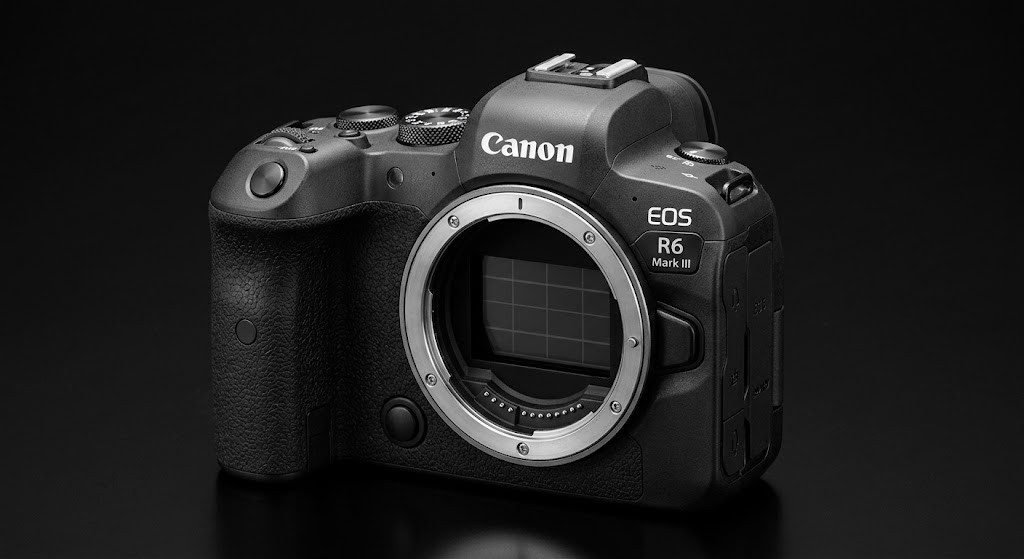
Canon kept the exterior dimensions of the R6 Mark III nearly identical to its predecessor, and that choice pays off the moment you pick up the camera. Anyone upgrading from an earlier R6 body finds every dial, button, and switch exactly where muscle memory expects it.
Grip and Handling
The deep grip suits medium and large hands well, and reviewers who spent hours shooting portraits and events reported no fatigue even during long sessions. The power switch sits within easy reach for one-handed operation, and the custom buttons fall naturally under the fingers without forcing an awkward hand position. The camera balances well even with heavier glass mounted, including Canon’s RF 45mm f/1.2 STM, and it avoids the top-heavy feeling that some compact mirrorless bodies develop once a large lens goes on the front.
Weather Sealing and Ports
Canon builds the R6 Mark III with the same weather-resistant construction that defines the R6 line, and it holds up through light rain and dusty conditions without extra precautions. The port selection stands out for a camera in this price tier. A full-size HDMI Type-A output makes external monitor use far more reliable than the mini-HDMI connectors found on cheaper bodies, and a dedicated microphone terminal keeps audio gear connected without an adapter. USB-C rounds out the connections, alongside 5GHz Wi-Fi and Bluetooth 5.1 for fast file transfer and remote control.
The camera weighs 699 grams with a battery and memory card installed, or 609 grams as a body alone. That weight sits slightly above the R6 Mark II, a small tradeoff for the extra resolution and processing power packed inside.
Display and Viewfinder
Electronic Viewfinder
The electronic viewfinder uses a 3.69-million-dot OLED panel running at 120Hz, and it delivers a bright, detailed, low-lag view that holds up during fast action. Reviewers consistently single out the EVF as one of the camera’s strongest features, since a laggy viewfinder undermines fast-moving subjects no matter how good the sensor performs underneath it.
Rear Screen
The rear screen is a 3-inch, fully articulating TFT LCD with 1.62 million dots. It stays snappy and reliable for vlogging, overhead angles, and awkward compositions where a fixed screen would force an uncomfortable shooting position. Canon’s touchscreen autofocus implementation shines here too. Photographers can pinch to resize the AF point and keep it independent from the EVF, and the eye sensor switches between the two displays seamlessly. The one weak spot shows up in direct sunlight, where the screen gets noticeably dimmer than ideal.
Canon EOS R6 Mark III: Sensor and Image Quality
The headline change in this camera sits at the sensor level. Canon moved from the 24.2-megapixel chip in the R6 Mark II to a new 32.5-megapixel full-frame CMOS sensor paired with the DIGIC X processor, the same combination Canon uses across several of its current bodies.
Resolution and Dynamic Range
That jump represents more than a 34 percent increase in resolution over the outgoing model, and it changes what photographers can do with a single file. Cropping headroom improves noticeably, letting a photographer reframe a shot after the fact without the visible quality loss that comes from cropping a lower-resolution image too aggressively. The sensor also delivers strong dynamic range and exposure latitude, giving photographers more flexibility to recover shadow and highlight detail during editing.
File Sizes and Editing Workflow
The extra resolution does come with a practical tradeoff. Files grow larger than the R6 Mark II produced, which means faster memory cards, more storage space, and slightly heavier processing demands during editing. That tradeoff stays manageable for most photographers, especially compared to the file sizes a 45-megapixel sensor produces, but it is worth planning for before a big shoot.
High ISO and Low Light Performance
The R6 Mark III supports an expanded ISO range from 50 to 102,400, giving photographers room to push exposure in genuinely dark conditions. The improved sensor and processing combination delivers cleaner files at high ISO than the resolution increase alone would suggest, since Canon paired the sensor upgrade with meaningful gains in noise handling rather than simply packing in more megapixels.
Autofocus and Subject Tracking
Autofocus performance stands out as the single biggest reason the Canon EOS R6 Mark III feels like it belongs closer to Canon’s flagship bodies than to a mid-range camera.
Dual Pixel CMOS AF II
Canon equips the camera with Dual Pixel CMOS AF II, built around whole-scene deep learning subject detection. The system tracks people, animals, and vehicles with confidence, and it holds focus through fast bursts, erratic motion, and dim venues where older autofocus systems would hunt. The low-light autofocus rating reaches down to -6.5 EV, an impressive figure that lets the camera lock focus in near-darkness.
Registered People Priority
The Registered People Priority mode deserves special attention for anyone shooting weddings, sports, or news events. Photographers can register up to ten different faces, including side profiles, and the camera prioritizes those specific people during a shoot even when a scene is crowded with other subjects. Ten separate registration files can live on a memory card at once, each holding up to ten registered faces, which makes it easy to switch between different subjects across different assignments without re-registering anyone.
Custom AF Profiles
The camera also carries over a feature from Canon’s R5 Mark II and R1 flagship bodies: up to six custom autofocus setting profiles. A photographer can save distinct AF configurations for different shooting situations, whether that means fast sports action, static portrait work, or unpredictable wildlife, and recall the right setup instantly instead of digging through menus mid-shoot.
Pre-Continuous Shooting
Pre-continuous shooting captures up to 20 frames before the shutter button gets fully pressed, saving the images whether they land as RAW or JPEG/HEIF files. That feature alone changes how photographers approach unpredictable moments. A bird taking flight, a goal being scored, or a candid expression that lasts half a second all become far easier to catch, since the camera has already been capturing frames in the background.
Burst Shooting and Buffer
The R6 Mark III shoots at up to 40fps using the electronic shutter with continuous autofocus and autoexposure tracking, or 12fps with the mechanical shutter, a burst rate that matches Canon’s range-topping EOS R3. That electronic shutter speed puts the camera firmly in professional sports and wildlife territory, a segment it did not compete in as strongly under the previous generation.
The buffer backs up that burst speed with real staying power. Using a CFexpress card, the camera holds up to 150 uncompressed RAW frames, double what the R6 Mark II could manage. In practical terms, that buffer depth means a photographer can hold down the shutter through a longer sequence of action without the camera slowing down or dropping frames partway through.
In-Body Image Stabilization
Canon rates the R6 Mark III’s in-body image stabilization at up to 8.5 stops of shake correction, an improvement that pays off across both stills and video. Handheld shooting at slower shutter speeds becomes far more forgiving, which matters enormously in low light where a faster shutter speed is not always an option. Video benefits just as much, since the stabilization smooths out handheld footage without leaning entirely on digital stabilization, which crops into the frame and can soften detail.
Canon EOS R6 Mark III: Video Capabilities
Video performance moves the R6 Mark III into serious hybrid territory, a space where Canon clearly wants this camera to compete against dedicated video-first bodies.
7K RAW and Open Gate Recording
The camera records internal 7K RAW footage at up to 59.94p using Canon’s RAW Light format, giving video shooters exceptional detail to work with in post-production. A 3:2 Open Gate recording mode captures footage at up to 30p using the sensor’s full vertical resolution, which gives editors far more flexibility to reframe footage for different aspect ratios, a workflow that matters more every year as content spreads across vertical and horizontal platforms alike.
4K and Slow Motion Options
Oversampled 4K recording runs at up to 60p, pulling extra detail from the full sensor readout for sharper footage than a simple crop would produce. Subsampled 4K climbs to 120p for slow-motion work, and the camera supports dedicated slow and fast motion modes for creative flexibility. That combination gives hybrid shooters a genuinely deep toolkit without forcing them to step up to a video-specific camera body.
Storage and Connectivity
The R6 Mark III pairs a CFexpress Type B slot with a UHS-II SD slot, giving photographers a real professional workflow with fast primary storage and a reliable backup option. That dual-slot setup rarely shows up on cameras in this price range, and it signals that Canon built this camera for photographers who cannot afford to lose a file mid-shoot.
Wireless connectivity keeps pace with the rest of the camera. 5GHz Wi-Fi speeds up file transfers considerably compared to the 2.4GHz connections still found on some competing cameras, and Bluetooth 5.1 keeps a low-power connection active for remote triggering and location tagging.
Canon EOS R6 Mark III vs Canon EOS R6 Mark II
Photographers deciding whether to upgrade from the R6 Mark II get a clear answer here. The resolution jump from 24.2 to 32.5 megapixels delivers meaningfully more cropping room and detail. The buffer doubles in depth. Burst shooting speed climbs from the R6 Mark II’s top rate up to 40fps with the electronic shutter. Autofocus inherits technology from Canon’s flagship bodies, including Registered People Priority and deep learning subject detection. Video jumps from the R6 Mark II’s more modest recording options up to 7K RAW with Open Gate capture.
The tradeoffs stay modest by comparison. The camera weighs slightly more, files take up more storage space, and the price sits higher than the outgoing model launched at. For photographers who lean on autofocus reliability, burst speed, or video flexibility, the upgrade justifies itself quickly.
Canon EOS R6 Mark III vs Canon EOS R5 Mark II
Canon’s own lineup places the R6 Mark III below the R5 Mark II in resolution, price, and a handful of specialized capabilities. The R5 Mark II carries a 45-megapixel stacked sensor that reads out faster and reaches higher burst speeds under electronic shutter, along with Eye Control AF and 8K RAW video. The R6 Mark III uses a standard, non-stacked sensor and tops out at 7K RAW recording.
For most photography and video work, that gap matters less than the spec sheet suggests. The R6 Mark III already covers weddings, events, sports, wildlife, and hybrid professional work convincingly. The R5 Mark II earns its higher price primarily for large commercial output, aggressive cropping work, and the fastest-possible autofocus and readout speed that only the most demanding action photography truly requires.
Who Should Buy the Canon EOS R6 Mark III
The Canon EOS R6 Mark III fits an unusually wide range of photographers well. Wedding and event photographers gain real value from Registered People Priority and the deep buffer. Sports and wildlife shooters benefit from the 40fps burst rate, pre-continuous shooting, and reliable low-light autofocus. Hybrid creators who split their time between photo and video work get a genuinely capable video toolkit without needing a second camera body. Enthusiasts upgrading from an older R6 or a crop-sensor body gain full-frame image quality and professional-grade storage in a single upgrade.
Photographers who need the absolute highest resolution for large-format commercial printing, or who depend on the fastest possible sensor readout for extreme action work, should look toward the R5 Mark II instead.
Canon EOS R6 Mark III: Pros and Cons
Pros
- 32.5-megapixel full-frame sensor with strong dynamic range and real cropping headroom
- Autofocus system inherited from Canon’s flagship bodies, including Registered People Priority
- Burst shooting up to 40fps with a deep 150-frame RAW buffer on CFexpress
- Pre-continuous shooting that captures frames before the shutter fully presses
- Up to 8.5 stops of in-body image stabilization
- 7K RAW video with Open Gate recording for flexible reframing
- Dual CFexpress Type B and UHS-II SD card slots
- Weather-resistant build with a full-size HDMI port and comfortable grip
Cons
- Noticeably more expensive than the outgoing R6 Mark II
- One CFexpress slot may not suit every professional workflow that wants dual fast cards
- Larger file sizes demand faster cards, more storage, and stronger editing hardware
- Rear screen dims noticeably in direct sunlight
- No dual native ISO, a feature found on Canon’s video-focused Cinema EOS bodies
Canon EOS R6 Mark III: Ease of Use in Real Shooting Scenarios
Specs only tell half the story. How a camera feels across a full day of shooting often matters more than any single number on a chart, so it helps to walk through how the R6 Mark III performs in the situations photographers actually face.
Wedding and Event Photography
Registered People Priority turns out to be one of the most practical features on this camera for anyone shooting weddings. A photographer can register the bride, groom, and key family members before the ceremony starts, and the autofocus system keeps prioritizing those faces even as the room fills with guests. Combined with the deep buffer and 40fps burst rate, the camera rarely misses a fleeting expression during a first kiss or a speech that runs long.
Sports and Wildlife
Pre-continuous shooting changes how a photographer approaches unpredictable action. Instead of trying to anticipate the exact moment a play develops or an animal moves, a shooter can simply keep the camera active and let the buffer capture frames leading up to the decisive instant. Paired with -6.5 EV autofocus sensitivity, the camera holds focus through dim stadium lighting and overcast wildlife conditions where older systems would start to hunt.
Portrait and Studio Work
The 32.5-megapixel sensor gives portrait photographers plenty of resolution for large prints and detailed retouching work, without pushing into the file sizes and storage demands that a 45-megapixel sensor requires. Eye detection autofocus locks onto a subject’s eyes reliably even at wide apertures, and the in-body stabilization helps handheld shooters keep images sharp during slower studio setups.
Run-and-Gun Video Work
Content creators who shoot video without a dedicated crew benefit enormously from the combination of strong autofocus, in-body stabilization, and a fully articulating screen. The camera tracks a moving subject through a shot without requiring constant manual focus adjustments, and the stabilization smooths out handheld walking shots well enough that many creators can skip a gimbal for casual work.
Canon EOS R6 Mark III: Menu System and Customization
Canon’s menu system on the R6 Mark III follows the same logical structure found across the rest of the RF lineup, which makes the camera easy to pick up for anyone coming from another recent Canon body. Custom buttons cover most of the controls a photographer needs during an active shoot, reducing how often anyone needs to dive into menus mid-session. The ability to save and recall custom autofocus profiles adds a genuine workflow advantage for photographers who switch between different shooting styles throughout a single day, such as moving from a formal portrait session into candid crowd shots at the same event.
Canon priced the R6 Mark III at approximately $2,799 for the body only at launch, positioning it above the R6 Mark II’s original price while staying well below the R5 Mark II. Street prices have fluctuated since launch, occasionally dropping several hundred dollars during promotions through authorized dealers. Buyers should check current pricing and availability directly through Canon USA’s official product page before purchasing, since promotional pricing changes throughout the year.
Frequently Asked Questions
Is the Canon EOS R6 Mark III worth the upgrade from the R6 Mark II?
For most photographers, yes. The resolution increase, doubled buffer depth, faster burst shooting, and flagship-derived autofocus all deliver real improvements in everyday shooting. Photographers satisfied with their R6 Mark II’s image quality and who rarely push the buffer or autofocus system to its limits may find the upgrade less urgent.
Does the Canon EOS R6 Mark III shoot better video than the R6 Mark II?
Yes, by a wide margin. The Canon EOS R6 Mark III adds 7K RAW recording, Open Gate capture for flexible reframing, and improved oversampled 4K footage, giving hybrid creators a far deeper toolkit than the previous generation offered.
How does the Canon EOS R6 Mark III handle low light?
The camera performs well in low light, thanks to an expanded ISO range up to 102,400 and an autofocus system rated down to -6.5 EV. That autofocus sensitivity lets the camera lock focus in near-darkness, a genuine advantage for event and wedding photographers working in dim venues.
Is one CFexpress card slot a real limitation?
It depends on the workflow. Photographers who want to record two simultaneous full-speed backups may find a single CFexpress slot limiting, since the second slot uses the slower UHS-II SD standard. For most photographers, the CFexpress slot handles primary fast storage while the SD slot provides a reliable backup, which covers the needs of the vast majority of shoots.
Can the Canon EOS R6 Mark III replace a dedicated video camera?
For most hybrid creators, yes. The combination of 7K RAW recording, Open Gate capture, strong in-body stabilization, and reliable autofocus covers the needs of most video work. Dedicated video productions that need dual native ISO or the absolute highest resolution video may still prefer a Cinema EOS body instead.
Final Verdict
The Canon EOS R6 Mark III earns its place as one of the most well-rounded full-frame cameras Canon currently sells. It takes the strengths that made the R6 Mark II a bestseller and pairs them with a meaningfully better sensor, flagship-derived autofocus, and a genuinely capable video toolkit. The price increase over its predecessor is real, and the single CFexpress slot will matter to a small slice of professional workflows, but neither issue changes the overall picture. For photographers and hybrid creators who want one camera that handles almost any assignment well, the Canon EOS R6 Mark III delivers exactly that.
Read More from Altbuzz
- I Bought 4 Canon Cameras in 2026: Here’s the One I’d Keep
- Canon RF Lens Roadmap 2026: What’s Coming Next for R-Series Shooters
- Full-Frame vs APS-C in 2026: Which Sensor Size Actually Fits Your Work
Subscribe to Altbuzz YouTube Channel
Want more hands-on camera breakdowns like this one? Subscribe to the Altbuzz YouTube channel for weekly reviews and buying guides, and check out the Core and Elite memberships linked in the channel description to support future gear tests directly.