
Best Lumix Camera to Buy in 2027: Don’t Buy Before You Read This
Choosing the best Lumix camera to buy in 2027 starts with one question: which specialty do you actually need? Panasonic now sells different answers for full frame, cinema codecs, high resolution, and speed, and the prices overlap more than most buyers expect. If you pick the wrong body, you pay hundreds extra for features you never touch. Here is the surprise: one of the cheaper Lumix cameras may suit you better than bodies far above it.
At Altbuzz, we follow cameras through the rumors, the redesigns, and the buying decisions. This Lumix buying guide walks you through six comparisons, one decision at a time, and ends with a simple map you can screenshot. Subscribe to Altbuzz if you want the next warning before it costs you money.
Quick Answer: Which Lumix Should You Buy in 2027?
Short on time? This summary points you to the right body fast. The sections below explain every choice.
- Compact full frame for mobile and social creators: Lumix S9
- Wildlife, travel, and small telephoto kits: Lumix G9II
- Complete conventional full-frame hybrid: Lumix S5II
- Cinema codecs and SSD recording on full frame: Lumix S5IIX
- Dedicated Micro Four Thirds filmmaking: Lumix GH7
- New S1 body and platform without stacked speed: Lumix S1IIE
- Speed, readout, and action work: Lumix S1II
- Resolution, detail, and 8K: Lumix S1RII
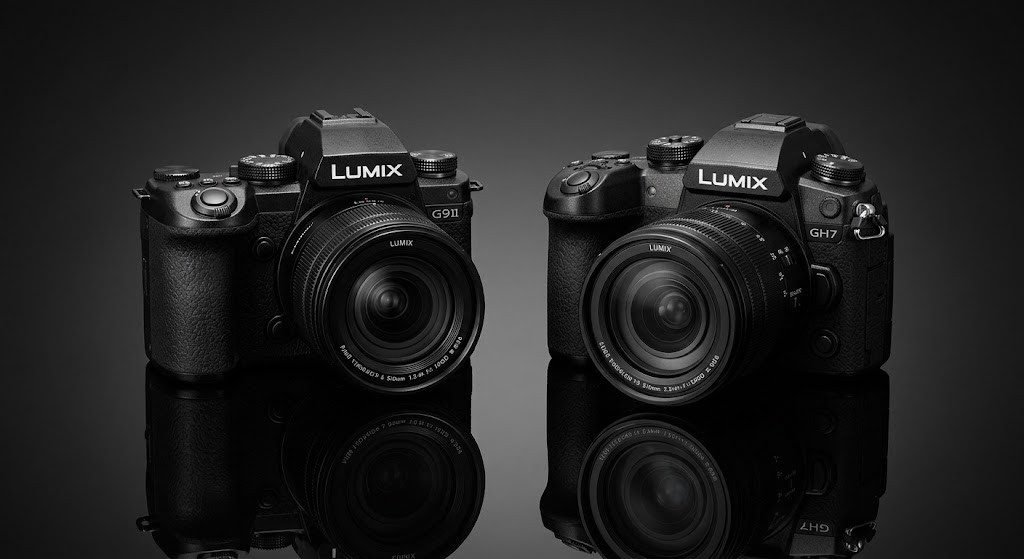
Decision One: create blackand white image of
The “Full Frame Must Be Better” Trap
The Lumix G9II and the Lumix S5II start the conversation with the assumption that costs buyers the most money. When the two cameras land at similar prices, full frame starts to look like the grown-up answer. A bigger sensor carries a bigger reputation, so the decision feels easy. However, this was never a sensor decision. It is a system decision.
Lumix G9II vs S5II Specs Compared
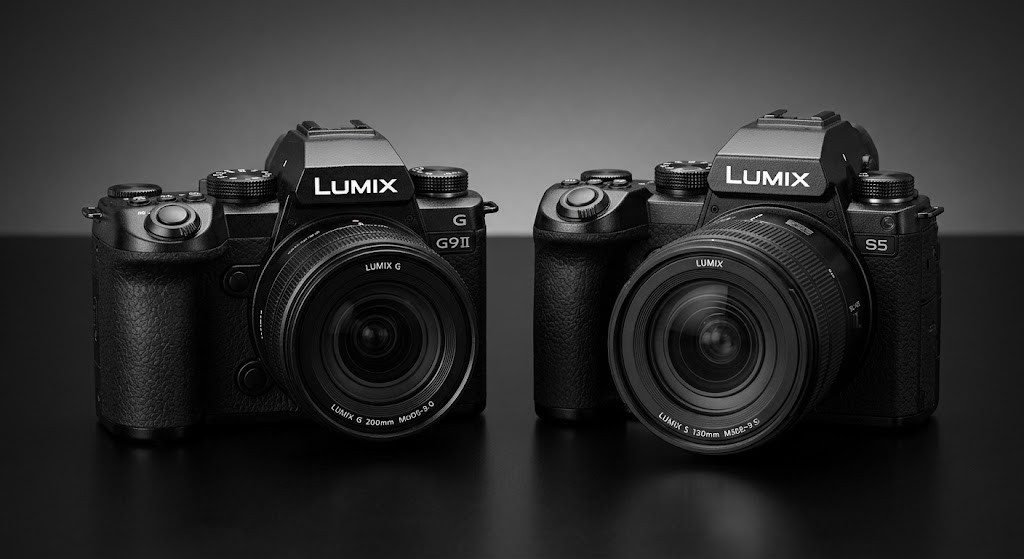
On paper, these two cameras sit closer together than their sensor formats suggest. The G9II delivers 25.2 megapixels on Micro Four Thirds, phase-detection autofocus, very strong IBIS, a high-speed electronic burst, open gate video, and two fast card slots. The S5II answers with 24.2 megapixels on full frame, phase-detection autofocus, strong IBIS, 6K open gate video, and the entire L-mount lens ecosystem behind it.
Notice what is missing from that comparison. Nobody gets a resolution upgrade. The sensor changes everything it drags along with it.
Why the G9II Wins for Wildlife and Travel
Picture a wildlife shooter, or a traveler with one bag and a long lens. Micro Four Thirds keeps the telephoto kit small, keeps the reach generous, and keeps the lens bill under control. When that same photographer moves to full frame, the sensor grows while the rest of the kit gets bigger, heavier, and more expensive. That move is a downgrade wearing an upgrade’s badge.
You can browse the current Lumix G9II on Panasonic’s official Lumix site or compare retail prices at B&H Photo.
When the Lumix S5II Earns Its Place
The S5II justifies its price when full frame is the actual point. Choose it for these reasons:
- You need extra low-light margin.
- You want shallow depth of field.
- You already plan to buy a specific L-mount lens.
If that sounds like your shooting, buy the S5II without guilt. If it does not, do not climb to a bigger sensor just because the ladder exists. Spend where your kit improves, not where the spec sheet does.
Decision Two: Lumix S9 vs Lumix S5II
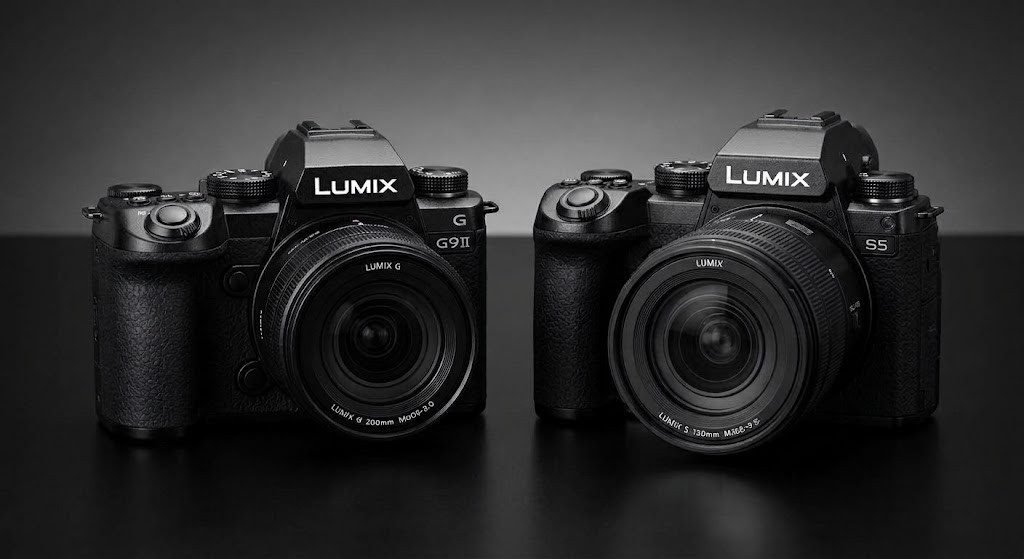
The Compact Full-Frame Trap
Maybe the smarter answer is simply smaller. The Lumix S9 looks like the sharpest bargain in the lineup. It offers full-frame Lumix image quality, modern creator features, a body that disappears into a jacket pocket, and a price well below the S5II. Bargains in the camera world usually hide an invoice somewhere, and this one arrives in hardware.
What Panasonic Removed From the Lumix S9
Panasonic did not cripple the S9. The company designed it for one particular person, and every omission follows that person:
- No electronic viewfinder
- No mechanical shutter
- No traditional hot shoe
- One card slot
- No active cooling fan
- Fewer conventional controls
In return, you get compact full frame, strong stabilization, the Real Time LUT workflow, and a carry profile built for mobile and social work. For that creator, the missing parts are weight, not wealth.
Why the Lumix S5II Is the Complete Hybrid
Now stand the S5II next to it. Yes, it is larger. It is also the complete, traditional hybrid. You get an electronic viewfinder for bright days, a hot shoe for flash, and a proper control layout. It also gives you room for long-form video, where the S9 offers no fan to lean on, and for event work, where a missing component announces itself at the worst moment.
Flash users, event shooters, and anyone who lives behind a viewfinder will not save money with the S9. They will buy a smaller problem.
The Lumix S9 Buying Rule
The S9 saves money by removing hardware, so name the hardware you would miss before you buy it. If the list stays empty, the S9 may be the smartest full-frame purchase Lumix sells. If the list does not stay empty, you are looking at a compromise with a lower price tag, not a bargain.
Want help separating a cheaper camera from a cheaper compromise? Keep Altbuzz camera coverage in your feed.
Decision Three: Lumix S5II vs Lumix S5IIX
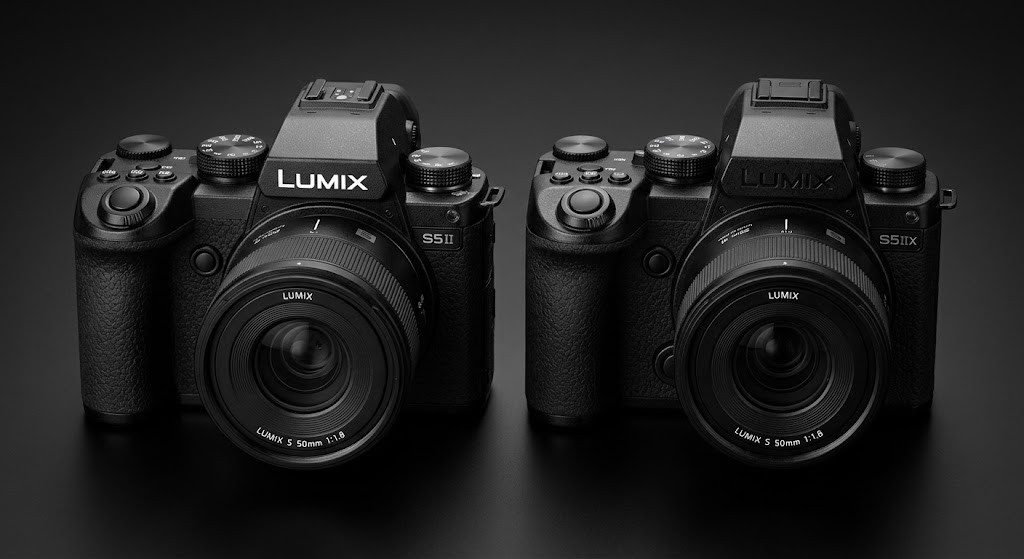
The Cinema-Codec Trap
The Lumix S5II versus the Lumix S5IIX is the cleanest comparison in the lineup, and buyers misread it easily. The S5IIX looks like an S5II wearing a premium badge. That impression is the trap. The two cameras share extremely similar still-image foundations, so photographers hunting for a hidden photo advantage in the X can stop looking. It does not exist.
What the Lumix S5IIX Actually Adds
The X buys workflow. Panasonic added these features:
- ProRes recording
- All-intra recording
- Direct recording to an external USB SSD
- RAW output as standard
- IP streaming options
Read that list like a spec sheet and it sounds like prestige. Read it like an editor and every item becomes a question. Does your edit actually want ProRes, or will you convert it to something lighter anyway? Do you need every frame to stand on its own? Does a cheap SSD solve a real storage problem? Does a grade wait for that RAW file? Are you really pushing a live stream?
Who Should Buy the S5II Instead
For weddings, travel, YouTube, photography, and ordinary 10-bit workflows, the S5II may already be enough. Plenty of creators shoot for years on that body and never miss a codec. Meanwhile, plenty of productions wish they had paid for the X on day one.
The Lumix S5IIX Dividing Line
The dividing line is simple. If you cannot explain where ProRes, SSD recording, or all-intra fits into your edit, the premium buys capability you will admire in a menu and never use. If you can explain it, the S5IIX is one of the cleanest ways into a cinema workflow on a full-frame Lumix. None of this makes an S5IIX owner foolish. Specialization is a strength when the work demands it.
A Quick Thank You to Altbuzz Members
Altbuzz currently has 10 members, and we thank every one of them. They make it possible for us to spend this long on comparisons instead of rushing out a surface-level list. If you value deeper buying research, the Core membership costs $5 and the Elite membership costs $10. You will find the join link in the video description.
Decision Four: Lumix G9II vs Lumix GH7
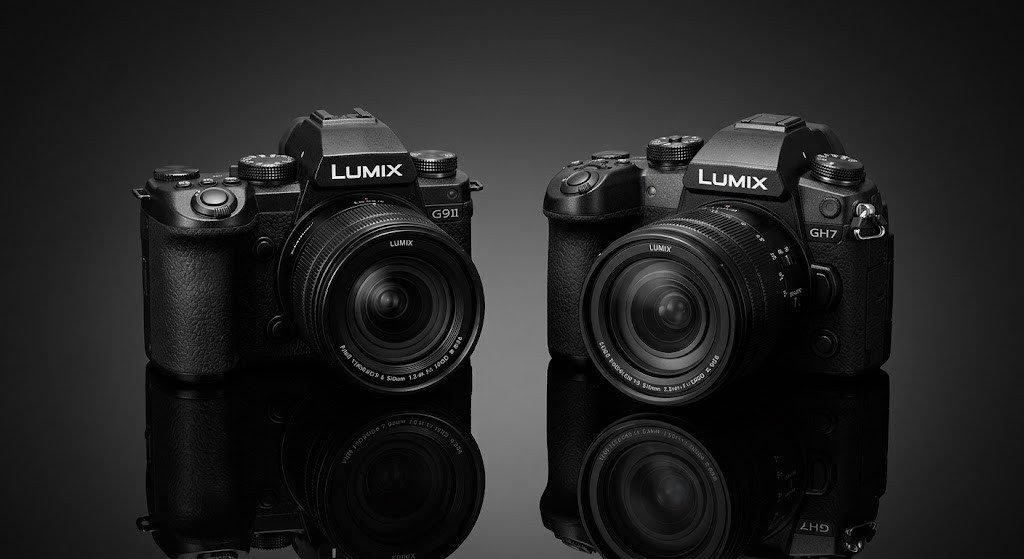
The GH Badge Trap
Back in Micro Four Thirds, a badge plays tricks on buyers. The GH name has meant serious video for so long that the Lumix GH7 feels like the automatic top choice. Look at what the G9II already carries first. It brings phase-detection autofocus, very strong stabilization, high-speed stills, open gate video, and deep video capability. That is no stills camera with a token record button. It is a hybrid with real reach into filmmaking.
What the Lumix GH7 Adds
So what does the GH7 add? It adds production tools:
- Internal ProRes RAW
- A CFexpress Type B card slot
- Active cooling
- Long-duration recording
- Proxy workflows
- 32-bit float audio and ARRI LogC3 workflows with compatible accessories or licensing
Every item on that list is a sentence a filmmaker can finish: “I need this because my pipeline asks for it.”
Why the G9II Stays the Better Default for Most Shooters
A bird photographer does not run that pipeline. Neither does a traveler who cuts one short film after each trip. For those buyers, the G9II stays the stronger default. It puts stills first, suits outdoor work, and still delivers plenty of video capability when the trip calls for it.
The Lumix GH7 Buying Test
Buy the GH7 because you run a production, not because GH sounds like the more serious badge. If you cannot name the workflow feature you would miss on the G9II, you have already answered the question. The GH7 is no overpriced badge. It is a very specific answer.
Practical camera advice should separate headline specifications from real workflow value. Subscribe to Altbuzz for more guides that do exactly that.
Decision Five: Lumix S5IIX vs Lumix S1IIE
The New-Generation Body Trap
This comparison is the point where Lumix names stop helping you. Panasonic sells an S5IIX, an S1IIE, and an S1II, so a careful buyer could reasonably assume the newer S1 generation brings the faster S1 sensor along. It does not, at least not in the E.
Lumix S1IIE Sensor and Speed Explained
The Lumix S1IIE uses a conventional 24-megapixel-class back-illuminated full-frame sensor. It does not use the partially stacked sensor from the S1II. Panasonic has described the E sensor as similar to the one in the S5II family. The gap shows up in motion. The S1II fires stills at 70 frames per second, while the E manages 30. That speed is still fast, but it belongs to a different category.
What You Pay For With the S1IIE
So what does the extra money buy? It buys the body:
- Premium ergonomics
- A proper viewfinder
- Strong stabilization
- Professional handling
- A modern autofocus and workflow platform
The S1IIE feels like the new S1 generation because Panasonic built it like one. For someone who spends all day with a camera in hand, that is a real reason to buy. Meanwhile, the S5IIX remains the value-heavy video and hybrid choice, with ProRes and SSD recording already on board.
The Lumix S1IIE Verdict
Moving up to the S1IIE is a decision about handling and platform. It is not a shortcut to S1II speed. The jump from the S5IIX is real, but it is a jump in feel, and you should pay for feel only when you can tell it is missing. Do not buy the S1IIE because you want the S1II sensor for less money. The faster partially stacked sensor is exactly the feature the E does not share.
Decision Six: Lumix S1II vs Lumix S1RII
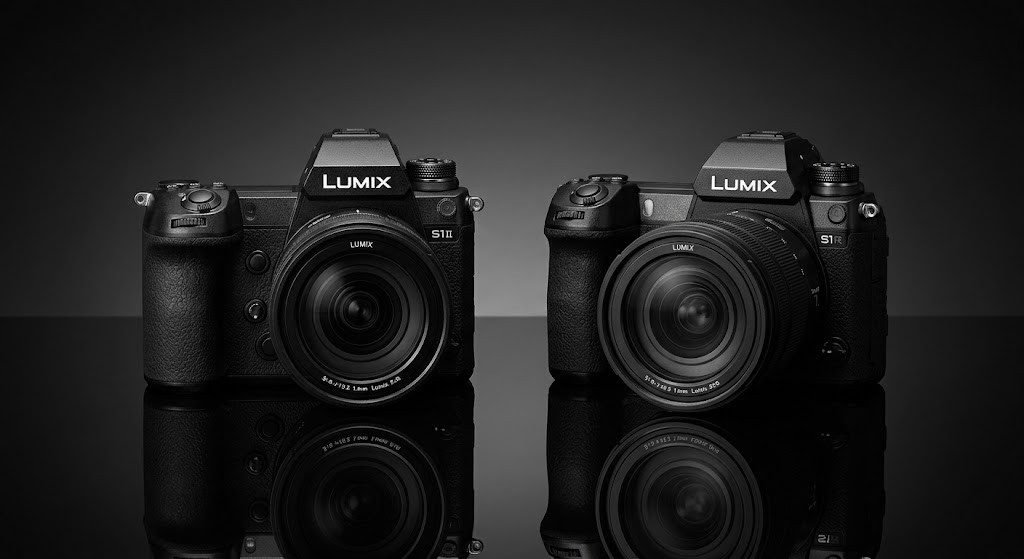
The Final High-End Choice: Speed vs Resolution
The last decision is the one where price finally stops helping you. The Lumix S1II and the Lumix S1RII can sit close enough together on a price tag to tempt you into reasoning by budget. Resist that urge. These cameras are not a cheaper option and a better option. They answer two completely different questions.
Lumix S1II: Built for Speed
Panasonic built the S1II around speed. It carries a 24.1-megapixel partially stacked full-frame sensor, faster readout, high-speed burst, high-frame-rate video, and reduced rolling-shutter behavior. Put it in the hands of someone shooting action, sports, or anything that refuses to hold still, and that sensor starts earning its keep. The same applies to a serious hybrid production where readout matters.
The S1II is also the first partially stacked sensor Lumix has placed in the S series. That milestone explains why this body lives in its own lane instead of sitting one rung up a ladder.
Lumix S1RII: Built for Resolution
The S1RII goes the other way. It offers 44.3 megapixels, substantially higher stills resolution, 8K-class video, and a very high-resolution mode. Think of landscape, architecture, studio, and commercial work. Think of heavy cropping and large prints, where a viewer zooms into the frame and expects more detail to remain. For that buyer, detail is the whole product.
Why Neither Camera Is the Flagship
Look at what both descriptions leave out: the word flagship. Neither camera is the better camera. A sports shooter on the S1RII asks a detail camera to chase motion. A landscape photographer on the S1II leaves resolution on the table. At the top of the Lumix lineup, paying more barely matters. Choosing the wrong sensor matters far more.
Want future brand guides that show exactly where spending more stops making sense? Subscribe to Altbuzz so the next one finds you.
Final Lumix Buying Map for 2027
After six contradictions, you have earned the map. Match your main need to the camera below.
Full Frame and Compact Picks
- Lumix S9: Choose it if you want compact full frame for mobile and social work and you can live without traditional hardware.
- Lumix S5II: Choose it if you want the most complete conventional full-frame hybrid without paying for specialist codec workflows.
Micro Four Thirds Picks
- Lumix G9II: Choose it for wildlife, travel, or any shooting where a small telephoto system pays off.
- Lumix GH7: Choose it if you are a dedicated Micro Four Thirds filmmaker with a production workflow.
Cinema and Body Upgrades
- Lumix S5IIX: Choose it if ProRes, SSD recording, RAW output, and streaming have a real place in your edit, and you want to avoid S1-level body costs.
- Lumix S1IIE: Choose it if you want the new S1 body and platform without needing stacked speed.
Top-End Picks
- Lumix S1II: Choose it for speed, readout, and serious action work.
- Lumix S1RII: Choose it for resolution, detail, and 8K.
Final Verdict: Which Lumix Is Right for You?
The title sounds like a warning, but it was never a verdict against any of these cameras. Panasonic does not sell a ladder. It sells specialist tools, and the expensive one wins only when the specialty belongs to you. The best Lumix camera to buy in 2027 is the cheapest one that already solves your real problem without making you pay for a different specialty.
If this guide saved you from one unnecessary upgrade, consider leaving a Super Thanks under the video, and visit altbuzzmedia.com for more of our camera coverage. Before you buy, compare current prices at an authorized retailer such as B&H Photo and confirm specifications on Panasonic’s official Lumix site.
Join the Conversation
Now comes the part we actually want to argue about. Pick the one specialty you genuinely use every week: full frame, compact size, cinema codecs, speed, resolution, or Micro Four Thirds reach. Then tell us which Lumix you would match with it, and whether the price gap would change your answer. We suspect the S1II versus S1RII crowd will disagree the loudest.
Read More from Altbuzz
- Altbuzz camera reviews and buying guides
- Latest camera rumors on Altbuzz
- Photography tips and gear news from Altbuzz Media
Subscribe to Altbuzz YouTube Channel
Watch the full video version of this Lumix buying guide and get every new camera rumor, review, and comparison first. Subscribe to the Altbuzz YouTube channel and turn on notifications so the next buying warning reaches you before it costs you money.