
Canon EOS R6 Mark III Review: Is This Canon’s Best Hybrid Camera Yet?
This Canon EOS R6 Mark III review looks at a camera that many Canon shooters have waited three years to see. The EOS R6 Mark II earned a reputation as one of the best all-round full-frame cameras on the market. Its successor keeps the same winning body, then upgrades the parts that matter most: a 32.5MP sensor, a faster buffer, a CFexpress card slot, a newer battery, and a far stronger video toolkit.
The camera lands in a crowded and competitive space. Nikon, Sony, and Panasonic all offer excellent hybrid bodies at similar prices, so Canon needs more than a strong spec sheet. In this review, we cover design, image quality, autofocus, stabilization, burst shooting, video, battery life, lenses, and value. We also compare the R6 Mark III with its closest rivals, share setup tips, and explain who should buy it. We point out the weak spots too, because honest reviews serve readers better than flattery.
Canon EOS R6 Mark III at a Glance
Here are the key specifications before we go deeper.
- Sensor: 32.5MP full-frame CMOS, a 34% resolution increase over the R6 Mark II
- Autofocus: Dual Pixel CMOS AF II with deep-learning subject detection for people, animals, and vehicles
- Burst shooting: Up to 40 fps with the electronic shutter
- Buffer: Up to about 150 RAW images with a CFexpress card
- Video: Internal 7K RAW, open gate recording, and Canon Log options
- Viewfinder: 3.69 million-dot OLED EVF
- Cards: One CFexpress Type B slot and one UHS-II SD slot
- Battery: LP-E6P, rated around 620 shots per CIPA standards
- Weight: About 699 grams with battery and card
- Release date: November 20, 2025
- Launch price: $2,799 for the body only in the United States
Check the latest official details on the Canon USA website, because pricing and bundles change over time.
A Short History of the Canon EOS R6 Series
The R6 line has a simple mission: deliver most of Canon’s flagship performance at a more accessible price. Canon launched the original EOS R6 in 2020 alongside the R5. It impressed photographers with its autofocus, stabilization, and low-light performance, although it also drew criticism for heat issues during video.
The EOS R6 Mark II arrived in November 2022. It moved to a 24.2MP sensor, improved autofocus, added stronger video features, and became a favorite among wedding, event, and hybrid shooters. Canon positioned it as the sensible choice for people who did not need the resolution of the R5.
The EOS R6 Mark III followed in late 2025. Rather than reinventing the formula, Canon refined it. The body looks nearly identical, but the internals take a meaningful step forward. The camera sits between the R6 Mark II and the EOS R5 Mark II in Canon’s lineup, and it blends strengths from both.
Design and Build Quality
If you hold an R6 Mark II and an R6 Mark III side by side, you will struggle to tell them apart. Canon kept the same dimensions, and the new camera weighs only about 29 grams more. That decision makes sense. The R6 body already handled well, so Canon spent its effort on the technology inside.
Body and Grip
The R6 Mark III has a deep, comfortable grip that suits long shooting days. The magnesium alloy body feels solid without feeling heavy, and the button layout follows Canon’s familiar logic. Photographers who already use an EOS R camera will feel at home within minutes.
The camera weighs roughly 699 grams with battery and card, or about 609 grams body only. That balance works well with mid-size RF lenses. Larger telephoto lenses feel more front-heavy, but the grip handles them well.
Controls and Menus
Canon’s menu system remains one of the friendliest in the industry. It uses clear categories and sensible labels, so new users learn quickly. A joystick moves your focus point, a multi-function dial adds quick access to settings, and custom buttons let you assign your favorite controls.
The camera also lets you register up to six custom autofocus setups, a feature inherited from Canon’s pro bodies. That helps photographers who switch between portrait, sports, and event work. You can recall a saved setup with a single action instead of rebuilding settings from scratch.
The New Card Setup
Canon made one big physical change: the second card slot. The R6 Mark II used two UHS-II SD slots. The Mark III now uses one CFexpress Type B slot and one UHS-II SD slot, which matches the R5 series layout.
Why CFexpress Matters
CFexpress cards write data much faster than SD cards. That speed lets the camera clear its buffer sooner and record high-bitrate video, including RAW. The change also doubles the RAW burst depth compared with the previous model.
However, the new setup comes with a cost. CFexpress cards cost more than SD cards, and photographers who own several SD cards must adapt. Some shooters will wish for dual CFexpress slots, since the SD slot limits some functions. Canon likely drew this line to protect its more expensive R5 line.
Weather Sealing and Durability
Canon builds the R6 family with dust and moisture resistance, and the Mark III follows that tradition. It handles light rain and dusty environments well. Even so, treat the camera with care in harsh conditions, and pair it with sealed lenses for the best protection.
Battery Design
The R6 Mark III uses the newer LP-E6P battery, the same type found in the R5 Mark II. It offers more capacity than the older LP-E6NH, and it supports faster charging and better power delivery. We cover real-world battery life later in this review.
Image Quality and Sensor Performance
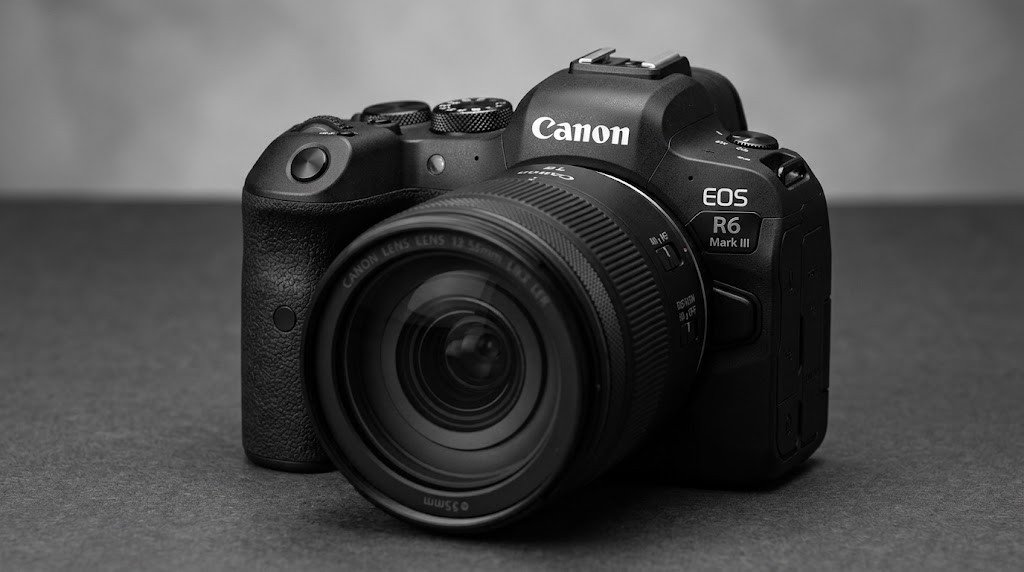
Image quality marks one of the biggest upgrades. The 32.5MP sensor offers a noticeable jump over the 24.2MP sensor in the Mark II, and it sits closer to the R5 Mark II’s resolution than the old R6 ever did.
Resolution and Detail
Thirty-two megapixels offers a very practical balance. Files carry enough detail for large prints, tight crops, and commercial work. At the same time, they stay manageable for storage and editing. Many photographers consider this range a sweet spot, because it avoids the huge files of 45MP bodies.
Landscape photographers will appreciate the extra detail in textures, such as foliage, rock, and architecture. Portrait shooters benefit as well, since the added resolution gives them more flexibility in post.
Dynamic Range and Color
Canon’s color science remains a major strength. Skin tones look warm and natural, and the camera handles mixed lighting gracefully. JPEG files look pleasing straight out of the camera, which helps photographers who deliver quickly. RAW files give you plenty of latitude to adjust highlights and shadows.
High ISO Performance
The R6 line built its reputation on low-light capability, and the Mark III continues that story. Noise stays controlled at higher ISO values, and fine detail holds up well. Event photographers who shoot in dim venues will value that performance. Combined with strong stabilization, the camera copes confidently in dark rooms and evening light.
File Formats and Workflow
The camera records RAW, JPEG, and HEIF files, giving photographers flexibility in editing and delivery. The faster card slot also improves workflow, since large bursts write quickly and clear sooner.
Autofocus Performance
Autofocus is where Canon traditionally shines, and the R6 Mark III delivers again. The camera uses Dual Pixel CMOS AF II with deep-learning subject detection. It recognizes people, animals, and vehicles, and it tracks them smoothly across the frame.
Subject Detection
The system locks onto eyes, faces, and bodies with impressive reliability. Animal detection handles pets and wildlife well, and vehicle detection helps with motorsport, aviation, and cycling. Switching between subject types feels simple, so you can adapt to changing situations quickly.
Registered People Priority
The R6 Mark III inherits Registered People Priority from Canon’s professional bodies. You register specific faces, and the camera prioritizes them in a crowd. That feature helps wedding photographers, event shooters, and sports parents who want the camera to favor a particular person. It saves time and reduces missed shots.
What the Camera Does Not Include
Canon held back a few high-end autofocus features. The R6 Mark III lacks eye-controlled autofocus, which lets you pick a focus point with your gaze on the R5 Mark II. It also skips Action Priority modes and in-camera AI upscaling. Most photographers will not miss these tools, but sports and action specialists may notice.
Low-Light Autofocus
The autofocus system works reliably in dim light, which suits indoor events and evening photography. It acquires focus quickly, and it holds on subjects with confidence. For most real-world work, the system leaves little to complain about.
In-Body Image Stabilization
Stabilization remains a strong point. Reported specifications describe coordinated stabilization of up to roughly 8.5 stops when the camera pairs with certain stabilized RF lenses. Real results vary by lens, focal length, and technique, so treat the number as a best-case figure.
In practice, the system lets you handhold slow shutter speeds with confidence. It also smooths video footage, which benefits run-and-gun shooters and event videographers. Pair the camera with a stabilized lens, and you gain even more flexibility in low light.
Burst Shooting and Buffer Depth
The R6 Mark III shoots up to 40 fps with the electronic shutter, matching the R6 Mark II on paper. However, the implementation improves. The new CFexpress slot supports a deeper buffer of around 150 RAW images, which doubles the previous model’s capacity while the files carry more resolution.
Why the Buffer Matters
Speed means little if the buffer fills quickly. A deeper buffer lets you hold the shutter through a long sequence, such as a sprint finish or a bird’s takeoff. Sports and wildlife photographers will appreciate that headroom.
Electronic vs Mechanical Shutter
The electronic shutter delivers the fastest bursts and silent shooting. It can produce rolling shutter distortion with very fast motion, though. The mechanical shutter shoots at a lower speed, but it avoids that distortion. Choose the mode that suits your subject. Check Canon’s official specification page for exact mechanical shutter figures.
Pre-Shooting Features
Canon includes pre-shooting options that record a short burst before you fully press the shutter. That feature helps capture split-second moments, like a bird launching or a child’s expression changing. Many photographers will find it useful for unpredictable action.
Video Features
Video separates the R6 Mark III from its predecessor more than any other area. Canon aimed the camera at hybrid creators, and the spec list shows it.
Internal 7K RAW
The R6 Mark III records 7K RAW video internally, a feature that once belonged to far more expensive cameras. RAW footage gives colorists enormous flexibility in post. It preserves detail and dynamic range, and it allows heavy grading without breaking the image.
Open Gate Recording
The camera also supports open gate recording, which captures the full sensor area. That feature lets editors crop for different aspect ratios later, such as vertical social video and widescreen footage. Content creators who publish across multiple platforms will love the flexibility.
Oversampled 4K and Frame Rates
For everyday work, the camera produces sharp 4K footage by oversampling from its higher-resolution sensor. It also supports high frame rate options for slow motion. Check Canon’s official specifications for the exact frame rate and codec combinations, since they vary by recording mode.
Canon Log and Color Grading
Canon Log options give you wide dynamic range for grading. Filmmakers who want a cinematic look will appreciate the flexibility. The camera also pairs well with Canon’s cinema-style color workflow.
Heat Management
Early R6 cameras faced criticism for overheating, and Canon improved that behavior in later models. The R6 Mark III has no built-in cooling fan, and it does not support the fan accessory that Canon released for the R5 Mark II. Reviewers describe recording times as strong in most situations, though extended high-resolution recording may still require breaks in warm environments. Serious filmmakers should test their own workflows.
Who Video Suits
Wedding videographers, YouTubers, documentary shooters, and hybrid photographers will find plenty to like. Professional cinema crews may still prefer dedicated cinema cameras. Still, the R6 Mark III covers a huge range of video needs at a reasonable price.
Viewfinder, Screen, and Battery
Electronic Viewfinder
The camera uses a 3.69 million-dot OLED viewfinder that can refresh at up to 120 fps. That high refresh rate reduces lag, which helps when tracking fast subjects. The view looks clear, bright, and natural, and it makes composition feel immediate. Both the R6 Mark II and Mark III share this EVF, so you will not see a change here.
Rear Screen
The vari-angle touchscreen flips out and rotates, which supports low-angle shots, high-angle shots, and vlogging. Touch controls feel responsive, and the screen works well in bright light.
Battery Life
The LP-E6P battery is rated for roughly 620 shots per CIPA testing, which is strong for a mirrorless camera. Real-world performance will vary with video use, burst shooting, and screen brightness. Even so, the number puts the camera in a comfortable range for full days of shooting. Carry a spare battery for long events, and consider USB-C charging for travel.
Ports and Connectivity
The camera includes standard ports for HDMI, USB-C, headphones, and a microphone. Wireless features support quick image transfer to your phone and remote control through Canon’s app. Wi-Fi and Bluetooth help photographers share images or deliver quickly from events.
Shooting Different Subjects With the R6 Mark III
A camera earns its value in the field. Here is how photographers typically use a body like this.
Portraits
Eye detection and Registered People Priority make portraits easy. Canon’s color science flatters skin tones, and the 32.5MP sensor offers enough detail for crisp results. Pair the camera with a fast prime lens, and you can create beautiful subject separation.
Weddings and Events
Event photographers need reliable autofocus, strong low-light performance, and dual card slots. The R6 Mark III delivers all three. Registered People Priority helps you track the couple, while the large buffer keeps up with busy moments. The CFexpress and SD pairing lets you back up files as you shoot.
Sports and Action
The 40 fps burst, deep buffer, and fast autofocus suit many sports. Vehicle and animal tracking help with motorsport and wildlife. Photographers who need the very best action tools may still consider the R5 Mark II or R1, but the R6 Mark III handles most scenarios well.
Wildlife and Birds
Subject detection helps with birds and animals, and the high frame rate captures peak action. Combine the camera with a telephoto lens like the RF 100-500mm, and you get a capable wildlife setup.
Landscapes and Travel
The 32.5MP sensor gives landscape shooters plenty of detail. Weather resistance helps in tough conditions, and the camera remains light enough for travel. Battery life also supports long days outdoors.
Hybrid and Content Creation
Creators who shoot photo and video in the same session will appreciate the flexible video features. Open gate recording supports multiple aspect ratios, and the vari-angle screen helps vloggers.
Setup Tips for New Owners
Good settings help you enjoy the camera sooner. Treat these as starting points, then adjust to your style.
- Register your autofocus profiles. Save separate setups for portraits, sports, and general use.
- Use a fast CFexpress card. It unlocks the deeper buffer and supports high-bitrate video.
- Set the SD card for backup. Record to both cards when reliability matters.
- Try pre-shooting for unpredictable action. It helps with birds, kids, and fast sports.
- Choose the right shutter mode. Use electronic for silence and speed, and mechanical for fast motion.
- Customize buttons. Assign your favorite functions for quick access.
- Update firmware regularly. Canon often improves performance and features through updates.
- Test video recording times. Check heat behavior in your environment before an important job.
Canon EOS R6 Mark III vs Rivals
Strong competition surrounds the R6 Mark III. Here is a quick comparison.
| Camera | Strength | Weakness |
|---|---|---|
| Canon EOS R6 Mark III | Balanced stills and video, strong AF | Higher price than R6 Mark II |
| Canon EOS R6 Mark II | Lower price, proven performance | 24.2MP, dual SD slots |
| Nikon Z6 III | Competitive price, strong video | Smaller lens range than Sony |
| Sony A7 V | Huge lens ecosystem | Higher price |
| Panasonic Lumix S1 II | Powerful video tools | Larger, heavier body |
| Canon EOS R5 Mark II | 45MP and advanced AF | Much higher price |
Visit the Canon USA, Nikon USA, Sony Electronics, and Panasonic websites for official specifications.
R6 Mark III vs R6 Mark II
The Mark III improves on the Mark II with higher resolution, a deeper buffer, a faster card slot, a bigger battery, and stronger video. The Mark II still looks like a great camera, and its price has dropped, with a list price reported around $1,979. If you shoot mostly stills and do not need the new features, the Mark II offers excellent value. If you want the latest technology, the Mark III justifies the upgrade.
R6 Mark III vs R5 Mark II
The R5 Mark II offers more resolution and advanced features like eye-controlled autofocus. It also costs significantly more. For most photographers, the R6 Mark III delivers similar real-world performance at a friendlier price. Choose the R5 Mark II only if you need the extra resolution or the top-tier autofocus features.
R6 Mark III vs Nikon Z6 III
The Nikon Z6 III has been on the market longer and tends to see price cuts. It offers strong video, a bright electronic viewfinder, and capable autofocus. Canon’s autofocus tools and color science appeal to many shooters, while Nikon’s price can attract budget-minded buyers. Both cameras serve hybrid photographers well, so lens choice and personal preference may decide the winner.
R6 Mark III vs Sony A7 V
Sony’s A7 V benefits from the largest lens ecosystem, including many third-party options. It costs slightly more than the R6 Mark III at launch pricing. Canon counters with excellent handling, strong color, and a mature RF lens lineup. If you already own Sony lenses, staying put makes sense. If you are starting fresh, Canon’s ecosystem has grown strong.
R6 Mark III vs Panasonic S1 II
Panasonic leans heavily on video, with powerful tools for filmmakers. The body runs larger and heavier than Canon’s. If video drives your decision, the S1 II deserves a look. If you want balanced stills and video in a smaller body, the R6 Mark III fits better.
Best Lenses for the Canon EOS R6 Mark III
Great lenses unlock the camera’s potential. Canon’s RF mount now offers a deep catalog.
- RF 24-70mm f/2.8L IS USM: A professional standard zoom for events and portraits
- RF 70-200mm f/2.8L IS USM: A compact and sharp telephoto zoom
- RF 50mm f/1.8 STM: An affordable portrait and everyday lens
- RF 85mm f/2 Macro IS STM: A flexible portrait and close-up lens
- RF 100-500mm f/4.5-7.1L IS USM: A versatile wildlife and sports lens
- RF 15-35mm f/2.8L IS USM: A wide zoom for landscapes and interiors
Photographers with older Canon lenses can also use the EF-EOS R adapter, which keeps autofocus performance strong. Explore official lenses on the Canon USA website.
Useful Accessories
A few accessories improve the R6 Mark III experience:
- CFexpress Type B cards: These unlock the fast buffer and RAW video.
- UHS-II SD cards: These provide reliable backup storage.
- Spare LP-E6P batteries: These extend shooting time.
- A sturdy strap or sling: These improve comfort on long shoots.
- A quality microphone: This elevates video audio.
- A small camera cage: This adds mounting points for video work.
- Weather-sealed lenses: These match the camera’s durability.
Find official accessories on the Canon USA website.
Canon EOS R6 Mark III Pros and Cons
Pros
- 32.5MP sensor with a great balance of detail and file size
- Excellent Dual Pixel CMOS AF II with subject detection
- Registered People Priority for events and weddings
- 40 fps burst and a deeper RAW buffer
- Internal 7K RAW and open gate video
- Strong battery life with the LP-E6P
- Comfortable body and Canon’s friendly menus
Cons
- Higher price than the R6 Mark II
- One CFexpress and one SD slot instead of dual CFexpress
- No eye-controlled autofocus
- No built-in fan or fan accessory support
- Fewer high-end autofocus modes than the R5 Mark II
Common Complaints and How to Handle Them
Every camera draws criticism. Here are the most common concerns and some practical responses.
- “The price feels high.” Consider the R6 Mark II, which remains available at a lower price. Wait for sales and bundles if you can.
- “CFexpress cards cost too much.” Buy one fast card for the main slot and keep your SD cards for backup.
- “I wanted eye-controlled autofocus.” Use the joystick and touch controls, or step up to the R5 Mark II.
- “Video heat worries me.” Test recording times in your conditions, and use external power or breaks for long takes.
- “The camera looks the same as the old one.” Remember, the changes live inside. The familiar design helps if you already own R-series accessories.
Who Should Buy the Canon EOS R6 Mark III?
Buy the R6 Mark III If You Shoot Hybrid
Photographers who also shoot video will get the most from this camera. Internal 7K RAW, open gate recording, and strong stabilization make it a flexible creative tool. It suits YouTubers, wedding teams, and small production crews.
Buy the R6 Mark III If You Shoot Events and Weddings
Reliable autofocus, strong low-light performance, and dual card slots make the camera ideal for events. Registered People Priority adds a real advantage in crowded scenes.
Buy the R6 Mark III If You Shoot Sports and Wildlife on a Budget
The 40 fps burst, deep buffer, and subject tracking handle many action situations. You get strong performance without the R1 price tag.
Skip the R6 Mark III If You Want Maximum Resolution
If you print huge or crop heavily, the R5 Mark II offers more resolution. Studio and landscape professionals may prefer the extra detail.
Consider the R6 Mark II If Budget Matters
The R6 Mark II remains a superb camera. If you do not need the new sensor or video features, you can save a meaningful amount.
Canon EOS R6 Mark III Price and Value
The R6 Mark III launched at $2,799 for the body only in the United States, a $300 increase over the R6 Mark II’s launch price of $2,499. Pricing varies by region and retailer, and bundles with lenses cost more. Check current listings at B&H Photo and Adorama before you buy.
At that price, the camera offers strong value. You gain a higher-resolution sensor, a faster card slot, a larger battery, and much stronger video features. Competitors sit in a similar range, and prices tend to fall over time, so patient buyers may find deals.
Smart Buying Tips
- Buy from authorized retailers to protect your warranty.
- Compare kit bundles with lenses, since they can save money.
- Budget for a CFexpress card, since it adds to the total cost.
- Watch for seasonal sales and rebates.
- Check return policies, and inspect the camera on arrival.
The Altbuzz Verdict on the Canon EOS R6 Mark III
At Altbuzz, we judge cameras by one question: does this camera help you make better pictures and videos with less friction? The Canon EOS R6 Mark III answers yes for a very wide group of creators. It combines a polished body, excellent autofocus, strong image quality, and a serious video toolkit without pushing the price into flagship territory.
Here is our score breakdown, shared as our opinion:
- Design and handling: 9 out of 10
- Image quality: 9 out of 10
- Autofocus: 9 out of 10
- Video: 9 out of 10
- Battery and practicality: 8.5 out of 10
- Value: 8 out of 10
- Overall: 8.8 out of 10
The camera does not fix every complaint. The card setup feels like a compromise, and the price rose from the previous model. Even so, Altbuzz recommends the R6 Mark III to hybrid shooters, event photographers, and enthusiasts who want one dependable camera for almost everything.
Canon EOS R6 Mark III FAQ
Is the Canon EOS R6 Mark III worth buying?
Yes, for most hybrid shooters, event photographers, and enthusiasts. It offers strong stills, powerful video, and reliable autofocus at a fair price.
What is the difference between the R6 Mark III and R6 Mark II?
The Mark III adds a 32.5MP sensor, a CFexpress card slot, a deeper buffer, a larger battery, and stronger video features. The body size stays nearly the same.
How many megapixels does the R6 Mark III have?
It has a 32.5MP full-frame sensor.
How fast is the R6 Mark III burst rate?
It shoots up to 40 fps with the electronic shutter. The mechanical shutter runs slower, so check Canon’s official specifications.
Does the R6 Mark III shoot 7K video?
Yes. It records internal 7K RAW and supports open gate recording.
What memory cards does the R6 Mark III use?
It uses one CFexpress Type B slot and one UHS-II SD slot.
How long does the R6 Mark III battery last?
The LP-E6P battery is rated around 620 shots per CIPA testing. Real results vary with video use and burst shooting.
Is the R6 Mark III good for sports and wildlife?
It handles many sports and wildlife situations well, thanks to its burst speed, buffer, and subject detection. Specialists may prefer the R5 Mark II or R1.
Does the R6 Mark III have in-body stabilization?
Yes. It offers coordinated stabilization rated at up to roughly 8.5 stops with certain lenses.
Does the R6 Mark III overheat?
Reviewers describe strong recording times in most situations. Long, high-resolution video in hot conditions may still need breaks, since the camera has no built-in fan.
Should I buy the R6 Mark III or the Nikon Z6 III?
Choose Canon for its autofocus tools, color science, and RF lenses. Choose Nikon if you want a lower price and strong video. Both suit hybrid shooters.
Can I use EF lenses on the R6 Mark III?
Yes. The EF-EOS R adapter lets you use EF lenses with full autofocus support.
Final Thoughts on the Canon EOS R6 Mark III
The Canon EOS R6 Mark III proves that refinement can matter as much as reinvention. Canon kept the body that photographers loved, then upgraded the sensor, buffer, card slot, battery, and video features. The result feels like a complete, confident all-rounder for people who refuse to choose between stills and video.
A few compromises remain, such as the mixed card slots and the lack of some R5 Mark II features. Still, those trade-offs rarely affect real-world shooting. If you want a camera that handles weddings, sports, travel, portraits, and video with equal skill, the R6 Mark III belongs at the top of your shortlist.
Read More from Altbuzz
Explore more camera news, reviews, and buying guides on Altbuzz:
- Fujifilm X100VI Review: Is This Compact Camera Worth the Hype?
- Nikon Zf Review: Is This Retro Full-Frame Camera Worth Buying?
- Nikon Z9 II: Rumored Specs, Price and Release Date
- 10 Best Mirrorless Cameras in 2026, Ranked
Subscribe to Altbuzz YouTube Channel
Love honest camera reviews, rumor breakdowns, and buying advice? Subscribe to the Altbuzz YouTube channel for fresh videos on Canon, Nikon, Sony, Fujifilm, Leica, and more. Hit the bell icon so you never miss a camera review.