
Leica D-Lux 9: Everything the Rumors Point To
The Leica D-Lux 9 has become the most talked about compact camera that does not exist yet. Leica has not announced it, and Leica has not confirmed a single spec. Still, the rumor keeps growing louder every week, and there is a real reason behind the noise.
Panasonic recently launched the Lumix L10, a premium compact camera that many photographers see as the spiritual successor to the LX100 line. History matters here. Every past Panasonic LX100 generation eventually became a Leica D-Lux twin, rebadged with Leica styling, a Leica-tuned color profile, and a higher price tag. That pattern is why the Leica D-Lux 9 rumor has so much traction right now, even without a shred of official confirmation.
This article breaks down where the rumor comes from, what specs are realistic based on the L10, and what remains pure guesswork. We flag speculation clearly throughout, because a rumor blog only stays useful when readers can trust which parts are grounded in evidence and which parts are hope.
Why the Leica D-Lux 9 Rumor Is Gaining Steam
The current Leica D-Lux 8 launched as an update to the D-Lux 7, itself built on Panasonic’s LX100 II platform. Leica did not build a brand-new camera from scratch. Instead, Leica took Panasonic’s compact camera engineering, added its own design language, tuned the color science, and sold it at a premium.
That relationship is well documented and widely accepted among camera enthusiasts. Panasonic builds the hardware platform. Leica adapts it into a luxury product. This partnership explains why Panasonic’s recent Lumix L10 announcement immediately triggered speculation about a Leica D-Lux 9.
The L10 modernizes several weak points from the older LX100 II platform. It moves past the aging contrast-detect autofocus system, and it adds a proper multi-aspect Four Thirds sensor with meaningfully better dynamic range. Photographers who track this ecosystem noticed the upgrade instantly and started asking the obvious question. If Panasonic builds a better platform, does Leica build a better D-Lux on top of it?
The Panasonic Connection: Why Every LX100 Becomes a D-Lux
Understanding this relationship is the key to understanding every Leica D-Lux 9 rumor circulating right now. Panasonic and Leica share a long licensing partnership. In this arrangement, Panasonic engineers the sensor, the lens system, and the core electronics, while Leica reworks the exterior, adjusts the color rendering, and often removes a few features to create separation between the two brands.
This pattern held true across multiple camera generations. The original LX100 became the D-Lux Typ 109. Later, the LX100 II became the D-Lux 7, and then the D-Lux 8 with modest internal updates. Each time, Leica’s version arrived roughly a year or more after Panasonic’s version, carrying a significantly higher price for the same core hardware plus Leica branding and support.
Panasonic has broken from that naming convention with the L10, choosing not to call it an “LX100 III.” Some analysts read that shift as Panasonic repositioning the line as its own standalone premium series rather than a direct LX100 successor. Even so, most camera watchers still expect Leica to follow with its own version, because the underlying business relationship between the two companies has not changed.
Leica D-Lux 9 Rumored Specs
Nothing below comes from Leica directly. Every spec here is a projection based on the Panasonic Lumix L10 platform and Leica’s historical pattern of adapting that hardware. Treat this section as an educated guess, not a confirmed spec sheet.
Sensor and Image Quality
The Panasonic L10 uses a 26.5MP Four Thirds BSI CMOS sensor, with roughly 20.4MP effective resolution in its multi-aspect mode. If Leica follows its usual playbook, the Leica D-Lux 9 would likely inherit this same sensor, possibly with Leica’s own color tuning applied on top.
A larger sensor than the outgoing D-Lux 8 would mark a real generational jump. Better dynamic range and cleaner high ISO performance would follow naturally from that upgrade, assuming Leica keeps the sensor unchanged from the Panasonic donor platform, as it has done in past generations.
Lens
The L10 pairs its sensor with a fixed 24 to 75mm equivalent zoom, built with a bright f/1.7 to f/2.8 aperture range. This lens already carries Leica’s DC Vario-Summilux branding, since Leica has long supplied the optical design for these compact cameras regardless of which company sells the final product.
Because the lens formula already carries Leica’s name, expect the Leica D-Lux 9 to use the same optic largely unchanged. This is one of the more confident predictions in this entire rumor, simply because Leica has never significantly altered the core lens design between platform generations in the past.
Autofocus
The L10 introduces phase-detection autofocus, a meaningful upgrade over the older contrast-detect systems used in the LX100 II and the current D-Lux 8. Faster, more reliable subject tracking would represent one of the biggest real-world improvements a Leica D-Lux 9 could offer street and travel photographers.
Leica has historically kept the autofocus hardware unchanged from the Panasonic donor camera, only adjusting menu naming and interface presentation. If that pattern holds, the Leica D-Lux 9 should inherit the L10’s improved autofocus system directly.
Video Capabilities
Camera rumor threads have not settled on consistent video specs for either the L10 platform or a hypothetical Leica D-Lux 9. Panasonic has generally positioned its compact cameras as photography-first tools, with video treated as a secondary feature rather than a headline spec.
Expect similar positioning if the Leica D-Lux 9 becomes real. Leica’s compact camera line has never competed on video specifications against dedicated vlogging cameras, and there is no strong signal suggesting that philosophy will change.
Design, Screen, and Viewfinder
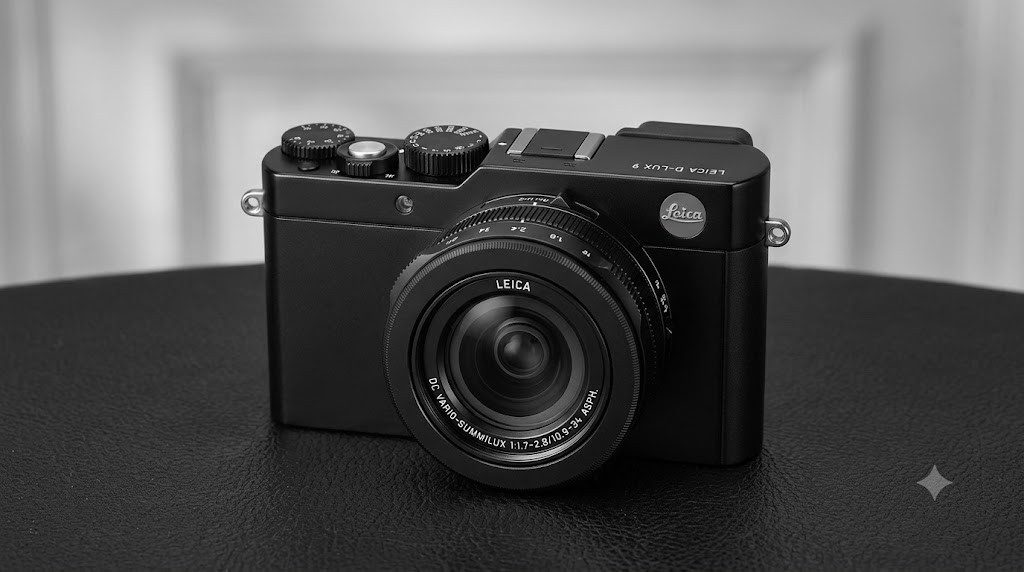
Leica typically reshapes the exterior design language for its D-Lux models, even when the internal hardware stays close to the Panasonic donor camera. Expect a similar approach here. A red dot logo, a simplified control layout, and Leica’s typical minimalist aesthetic would all fit the brand’s established design formula.
Screen and viewfinder details remain unconfirmed for now. If Leica addresses long-standing complaints about the D-Lux 8, a fully articulating rear screen and a higher resolution electronic viewfinder would be logical additions, though neither detail has leaked with any real confidence yet.
Leica D-Lux 9 Release Date Speculation
No official release date exists for the Leica D-Lux 9, and forum estimates vary widely. Some community discussions point to a one to two year window following the Panasonic L10 launch, based on how long the gap ran between previous LX100 and D-Lux releases. Other longtime Leica watchers argue the wait could stretch closer to two or three years, citing Leica’s typically slower production and testing cycle.
Leica rarely rushes a product to market. The company tends to let a Panasonic donor platform mature in the marketplace first, gathering feedback and identifying weaknesses before building its own version. That pattern suggests patience is the realistic expectation here, even for eager D-Lux fans.
Leica D-Lux 9 Price Speculation
Pricing follows a fairly consistent historical pattern for this camera line. The current Leica D-Lux 8 sells for around $1,915, notably higher than the Panasonic L10’s $1,499 launch price for essentially related underlying hardware. That price gap reflects Leica’s brand premium, its included accessories, and its extended warranty support rather than any dramatic hardware difference.
If the Leica D-Lux 9 arrives on the L10 platform, expect a similar markup over Panasonic’s pricing. A launch price somewhere in the $1,900 to $2,200 range would align with Leica’s historical positioning for this camera line, though this figure remains an estimate until Leica says otherwise.
How the Leica D-Lux 9 Might Compare to Rivals
Camera buyers rarely evaluate a rumored release in isolation. The Leica D-Lux 9 would enter a competitive premium compact segment, so it is worth weighing it against the cameras already fighting for the same buyers.
Leica D-Lux 9 vs Panasonic Lumix L10
This comparison matters most, since the L10 is the direct hardware donor for any future Leica D-Lux 9. You can review the L10’s official specifications on Panasonic’s global site. Buyers who care mainly about raw specs and price may find little reason to wait for a Leica badge, since the underlying camera already exists today at a lower cost.
Leica D-Lux 9 vs Fujifilm X100VI
Fujifilm’s X100VI remains the benchmark premium compact many photographers compare against any Leica release. Full specifications are available on Fujifilm’s official site. The X100VI uses a larger APS-C sensor and a fixed prime lens, while the D-Lux line uses a smaller sensor paired with a versatile zoom, so the two cameras appeal to somewhat different shooting styles despite competing for similar budgets.
Leica’s Own Positioning
Leica’s official product catalog shows exactly how the company currently prices and markets its compact lineup. Browsing Leica’s official camera site gives useful context for how a Leica D-Lux 9 would likely fit alongside the rest of the brand’s current offerings.
Why Photographers Care About the D-Lux Line
The D-Lux series occupies a specific niche. It gives photographers a genuine Leica ownership experience without the cost of an M-series rangefinder or an SL mirrorless body. The zoom lens adds versatility that Leica’s fixed-lens Q series does not offer, making it a popular travel and street photography choice for shooters who want Leica’s color science in a smaller, more affordable package.
That combination of brand prestige and everyday usability explains why any hint of a new D-Lux generation generates this much discussion. Existing D-Lux owners want to know whether an upgrade is worth waiting for. Prospective buyers want to know whether purchasing the current D-Lux 8 now makes sense, or whether patience will pay off with meaningfully better hardware.
Should You Wait for the Leica D-Lux 9?
Here is a practical way to think through this decision.
If you need a camera immediately for travel, street photography, or everyday shooting, the current D-Lux 8 remains a capable, real camera you can buy today. Waiting an unknown length of time for an unconfirmed release carries real opportunity cost, especially if your trip or project has a fixed timeline.
If budget matters more than the Leica badge, the Panasonic L10 already delivers most of the rumored hardware improvements at a notably lower price right now. Buyers focused purely on specs and value have little reason to wait for Leica’s rebadged version.
If Leica’s brand experience, included accessories, and resale value genuinely matter to you, waiting could make sense, provided you are comfortable with an open-ended timeline that could stretch well beyond a year.
Common Mistakes People Make Following Camera Rumors
Rumor coverage gets misread often, and it can lead to real buyer regret. A few patterns repeat constantly across camera forums.
Readers frequently assume a donor platform’s specs will transfer over perfectly unchanged. Leica has altered specs before, sometimes removing features present on the Panasonic version to create brand separation. Shoppers also tend to delay purchases indefinitely while chasing a rumored release, missing out on deals or usable shooting time with a camera that already exists. A more balanced approach treats rumors as useful context rather than a reason to freeze every buying decision indefinitely.
Altbuzz Take: Our Verdict on the Leica D-Lux 9
Altbuzz tracks camera rumors daily, and this one earns more credibility than most. The Leica D-Lux 9 speculation is not built on an anonymous forum post or an unverifiable name. It is built on a documented, repeated business relationship between Panasonic and Leica, combined with a real, already-released Panasonic camera that fits the historical pattern perfectly.
That said, credibility is not the same as confirmation. Leica has not announced anything, no leaked images exist, and no firm release window has emerged from Leica’s own channels. We will keep watching this story closely on Altbuzz and update this article the moment Leica shares anything official.
Our advice stays consistent. The Panasonic L10 connection makes this rumor worth following seriously. It still does not make the Leica D-Lux 9 a real product yet, and buyers should shop based on what exists today rather than what might arrive next year.
A Brief History of the Leica D-Lux Line
Context helps explain why this rumor feels so plausible. Leica introduced the first D-Lux camera back in 2003, built on an early Panasonic compact platform. That partnership continued for more than two decades, with Leica consistently rebranding Panasonic’s premium compact cameras rather than engineering its own compact sensor and lens system from scratch.
Leica’s D-Lux Typ 109 arrived in 2014, based on the original Panasonic LX100. That camera introduced the Four Thirds sensor size to the D-Lux line for the first time, a significant jump from the smaller sensors used in earlier D-Lux models. The D-Lux 7 followed in 2018, built on the improved LX100 II platform, adding touch controls and a slightly refined design.
Leica’s current D-Lux 8 launched more recently as an incremental refresh of the D-Lux 7 formula, rather than a ground-up redesign. Some features present on the Panasonic donor camera were notably absent on the Leica version, a pattern longtime followers of this camera line have pointed out repeatedly. That history matters, because it shows Leica does not always carry over every feature from the Panasonic platform without changes.
What Could Change Between the L10 and a Real Leica D-Lux 9
Assuming the platform theory holds, Leica rarely ships a pure rebadge without any adjustments. Past D-Lux releases show a consistent pattern of small omissions and additions compared to their Panasonic counterparts.
Leica has previously removed certain video frame rate options present on the donor Panasonic camera, likely to create clearer separation between the two product lines. The brand has also historically included a more generous accessory bundle, such as a padded case or extended warranty coverage, partially justifying its higher price point beyond just the badge and color tuning.
Firmware and menu design also tend to differ meaningfully. Leica typically simplifies the menu structure compared to Panasonic’s more feature-dense interface, prioritizing a cleaner shooting experience over exhaustive customization options. Photographers who have owned both a Panasonic donor camera and its later Leica counterpart often describe the Leica version as feeling more restrained and deliberately curated, even when the core hardware performs identically.
Who the Leica D-Lux 9 Rumor Appeals To Most
Not every photographer follows this story with the same urgency. Existing D-Lux 8 owners naturally want to know whether a meaningful upgrade is coming soon, since nobody wants to buy a camera right before its replacement arrives. Prospective first-time D-Lux buyers face a similar dilemma, weighing whether to buy now or wait for better hardware.
Leica collectors represent another audience entirely. Some buyers purchase Leica cameras primarily for their design, resale value, and brand cachet rather than pure specifications. For this group, the rumor matters less as a spec upgrade and more as a question of timing a collection purchase around a fresh release.
Street and travel photographers make up the largest practical audience for this camera line. They value the versatile zoom range, the compact size, and the Leica color rendering for everyday shooting. This group tends to weigh the Leica D-Lux 9 rumor most carefully against the already-available Panasonic L10, since both cameras would serve the same practical shooting needs.
Frequently Asked Questions About the Leica D-Lux 9
Has Leica confirmed the D-Lux 9?
No. Leica has not made any official statement about a D-Lux 9. Every detail in circulation comes from community speculation built around the Panasonic Lumix L10 launch.
Is the Leica D-Lux 9 just a rebadged Panasonic L10?
Likely, based on Leica’s historical pattern with this camera line. Leica has consistently used Panasonic’s hardware platform for past D-Lux generations, adding its own design, color tuning, and pricing on top.
When will the Leica D-Lux 9 release?
There is no confirmed release date. Community estimates range from one to three years after the Panasonic L10 launch, based on the gap seen between previous generations.
How much will the Leica D-Lux 9 cost?
Pricing is unconfirmed. Based on the historical markup Leica applies over the Panasonic donor camera, a launch price between $1,900 and $2,200 is a reasonable estimate, though not a guarantee.
Should I buy the Panasonic L10 instead of waiting for the Leica D-Lux 9?
If price matters more than the Leica badge, the L10 already offers much of the rumored hardware today at a lower cost. On the other hand, if brand experience and resale value matter more, waiting could make sense, provided you are comfortable with an uncertain timeline.
Does Leica always follow Panasonic with a rebadged camera?
Not always, but the pattern has held consistently for the D-Lux line specifically. Leica has released a D-Lux counterpart after nearly every major Panasonic LX100-generation camera since the partnership began, which is exactly why the Leica D-Lux 9 rumor carries more weight than a typical anonymous forum leak.
Will the Leica D-Lux 9 keep the same lens as the D-Lux 8?
The lens is one of the more likely elements to carry over unchanged. Leica has kept its DC Vario-Summilux optical formula consistent across recent D-Lux generations, and the Panasonic L10 uses a closely related lens design, so a similar zoom range is a reasonable expectation for the Leica D-Lux 9.
Read More From Altbuzz
Want more rumor coverage like this? Head over to Altbuzz for the latest camera reviews, rumor roundups, and buying guides across every major brand.
Subscribe to Altbuzz YouTube Channel
Prefer video breakdowns of camera rumors and reviews? Subscribe to the Altbuzz YouTube Channel for hands-on camera coverage, rumor discussions, and gear comparisons every week.