
Leica Q3 43 Review: The Everyday Leica That Asks for Nothing Else
This Leica Q3 43 review starts with one blunt question. Can a fixed-lens compact justify a price above $6,800? Most cameras cannot. The Q3 43 tries anyway, and it makes a surprisingly strong case.
Leica took the 60-megapixel Q3 and swapped its wide 28mm lens for a 43mm f/2 APO-Summicron. That one change transforms the camera. It no longer feels like a street shooter built for tight spaces. It feels like a normal-view tool you can carry everywhere and trust with almost anything.
At Altbuzz, we crowned this camera number one in our best Leica cameras ranking. Here, we go deeper. This review covers the design, the lens, image quality, autofocus, video, battery life and price. It also lists the real weak points, because every camera at this price deserves honest scrutiny.
How We Reviewed the Leica Q3 43
We want to be clear about our method. This review builds on Leica’s official specifications and on published test results from major camera reviewers. We name those reviewers in the text when we cite their findings. We add our own editorial analysis on top.
Our analysis asks one question. How convincingly does this camera justify Leica ownership for the person it was built for? A camera at this price must do more than take sharp pictures. It must also make you want to pick it up.
Leica Q3 43 Review: The Quick Verdict
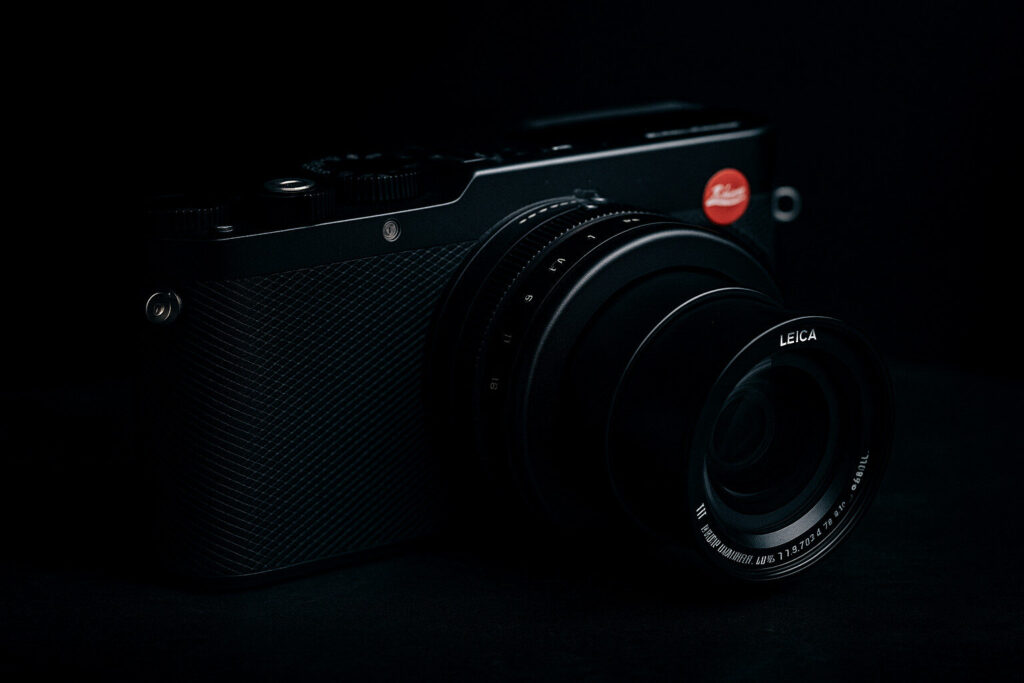
The Q3 43 is a stills-first camera with outstanding image quality and a natural field of view. It delivers pin-sharp results, handles beautifully and keeps ownership simple. It also costs a lot, offers no in-body stabilization and trails rivals on some modern features.
Altbuzz rating: 4.5 out of 5 for the right buyer.
| Category | Our Take |
|---|---|
| Image quality | Excellent |
| Lens | Outstanding |
| Handling and build | Excellent |
| Autofocus | Good, not class-leading |
| Video | Capable, but secondary |
| Battery life | Average |
| Value for money | Weak, as with every Leica |
The published scores back this up. DPReview gave the camera 89 percent. Photography Blog awarded 4.5 stars overall but only 3 stars for value. Tom’s Guide gave it an Editor’s Choice award. TechRadar called it one of the finest compacts you can buy for everyday shooting.
Leica Q3 43 Key Specifications
Here are the specs that matter most.
| Feature | Specification |
|---|---|
| Sensor | 60.3MP full-frame BSI CMOS |
| Processor | Leica Maestro IV |
| Lens | Fixed APO-Summicron 43mm f/2 ASPH with optical stabilization |
| Crop modes | 60mm, 75mm, 90mm, 120mm and 150mm equivalents (JPEG) |
| ISO range | 50 to 100,000 (ISO 50 set manually) |
| Burst | Up to 15 fps electronic, up to 7 fps mechanical |
| Autofocus | Hybrid system with phase detection, contrast detection and depth mapping |
| Viewfinder | 5.76M-dot OLED, 0.79x magnification |
| Screen | 3-inch tilting touchscreen, about 1.84M dots |
| Video | 8K at 30p, 4K at 60p, 1080p at 120p, 10-bit 4:2:2 |
| Storage | One SD UHS-II slot |
| Protection | IP52 dust and splash resistance |
| Weight | About 1.5 pounds (body only) |
| Connectivity | USB-C, micro HDMI, Wi-Fi, Bluetooth |
You can confirm the full list on Leica’s official specification page. Always check the maker’s page before you buy, because firmware updates can change features.
Leica Q3 43 Price and Availability
Leica launched the Q3 43 in 2024 at $6,895 in the United States. That figure sat nearly $900 above the original Q3’s launch price. In Europe, Leica set the launch price at €6,750, compared with €6,250 for the standard Q3.
Prices have crept up since then. Tom’s Guide lists a $7,380 price. It also notes that retailers range from roughly $6,449 to $7,950. So the price you pay depends on your region, your retailer and the moment you buy.
What the Leica Q3 43 Price Includes
The price covers the lens, the sensor, the viewfinder and a complete camera. That point matters more than it first seems. Buyers of interchangeable-lens Leicas must buy glass on top of the body. Q3 43 buyers do not.
The camera ships in a black and gray finish. An orange leatherette version has also appeared. Check Leica’s Q-series page for current colors and availability.
Optional Extras to Budget For
You may want a few extras. The optional handgrip costs about $250. It adds Arca-compatible tripod flanges and wireless charging. A spare battery, a case and a thumb support also add to the bill. Even so, these costs stay small next to a second lens.
Design and Build Quality
Leica’s design philosophy shows in every surface. The Q3 43 looks and feels like a precision instrument. Nothing about it feels cheap or casual.
A Near-Twin of the Original Q3
The Q3 43 looks almost identical to the standard Q3. Three details tell them apart. The lens barrel carries a “43” engraving. The hotshoe also carries a number. And the front wears a gray leatherette covering instead of the usual black.
The body measures about 5.11 by 3.84 by 3.16 inches. It weighs roughly 1.5 pounds without a lens, since the lens is built in. That is compact for a full-frame camera with a 60-megapixel sensor. It fits a jacket pocket only if the jacket is generous. A small shoulder bag or a wrist strap works better.
Controls and Handling
Reviewers praise the tactile feel of the controls. TechRadar called the manual focus ring “so enjoyable to use.” The layout is simple. You get a few dials, a few buttons and a clean interface. Nothing distracts you from the picture.
Some complaints exist. The body offers limited room for a sculpted grip, and some reviewers wanted more to hold. The optional handgrip solves that problem for many people. DPReview also found the AF and MF switch button fiddly. Focus control uses a D-pad instead of a joystick, which feels slower to some users.
The Tilting Screen
The rear screen tilts, which helps with low and high angles. However, TechRadar found it hard to pull out and adjust. The reviewer also called the tilt mechanism unnecessary. Cameras in this class rarely need one when the viewfinder is this good. Photography Blog added that the screen juts out and spoils the body’s lines.
Weather Resistance
DPReview lists IP52 dust and water resistance. That rating means protection against dust and light drips. It does not mean the camera is waterproof. Treat it as a margin of safety in a drizzle, not as permission to shoot in a storm. Our camera buying mistakes guide explains this difference in detail.
The 43mm APO-Summicron Lens
The lens defines this camera. Leica designed the 43mm f/2 APO-Summicron ASPH specifically for the Q3 43. It is the first time a Q-series camera has used a focal length other than 28mm.
Why 43mm Works So Well
A 43mm lens sits between 35mm and 50mm. TechRadar described the field of view as natural and intuitive. It suits street portraits, travel scenes and everyday documentary work. It also gives pictures an intimate feel, because it avoids the stretched perspective of a wide-angle lens.
Think of it as the focal length that matches how most people see. You raise the camera, and the frame feels right. You do not need to step back or lean in much. That simplicity is the whole appeal.
Sharpness at f/2
The lens delivers on sharpness. Photography Blog called it “truly excellent.” The reviewer found pin-sharp results with little chromatic aberration or distortion, even wide open at f/2. DPReview agreed and said the lens stays very sharp at its widest aperture.
The f/2 aperture also produces smooth background blur. Portraits look clean, and the subject separates nicely from the background.
Macro Mode
A macro ring lets you focus much closer. Normal minimum focus is about 0.6 meters. Engage macro mode, and that distance falls to roughly 0.27 meters. The standard Q3 focuses closer still, at about 17 centimeters in macro mode. So the 43mm version gives up some close-up ability in exchange for its longer view.
Digital Crop Modes
The Q3 43 offers crop modes at 60mm, 75mm, 90mm, 120mm and 150mm equivalents. Photography Blog called the 60mm, 75mm and 90mm modes “genuinely useful.” The 120mm and 150mm modes produce files under 10 megapixels and prove harder to compose with.
Remember what cropping means. It reduces resolution. It does not turn one lens into several. TechRadar also noted that crop modes apply to JPEG files only. Your DNG raw files keep the full frame, so you can always reframe later.
Image Quality
Image quality is where this camera earns its price. The 60.3-megapixel sensor captures enormous detail. The lens resolves almost all of it.
Detail and Sharpness
DPReview compared the Q3 43 with a Sony a7R V and an 85mm GM lens. The Sony captured fractionally more fine detail. That is a high bar to miss by a tiny margin. Remember that the Q3 43 fits in a much smaller package.
DPReview also warned about the JPEG engine. It applies heavy sharpening, which can cause slight overshoot along high-contrast edges. Shooting raw avoids that look. Photography Blog found a different trade-off. It reported that raw files looked noticeably less sharp than the in-camera JPEGs. So the right choice depends on your editing workflow.
Color and White Balance
Tom’s Guide described the colors as accurate and vivid. TechRadar found JPEG colors a little understated. DPReview noted that auto white balance can look cool and neutral. Both views fit Leica’s reputation for restrained, natural color.
You can shape the look yourself. The camera includes Film Style color modes. The Leica Fotos app lets you download up to six Leica Looks and transfer them to the camera. Photography Blog found the number of Film Styles limited, but they allow quick changes to your JPEG look.
Dynamic Range
Tom’s Guide credits the sensor with more than 14 stops of dynamic range. The Intelligent Dynamic Range feature can also brighten shadow detail in JPEGs. Landscape and high-contrast scenes hold up well, even though this is not a landscape-first camera.
High ISO Performance
Noise control looks good at everyday settings. Photography Blog found JPEGs noise-free from ISO 50 to 3200. A little noise appears at ISO 6400. ISO 12,800 to 25,000 remains usable. Reviewers advise against ISO 50,000 and ISO 100,000.
Tom’s Guide made a useful comparison here. It found that the Fujifilm GFX100RF performs better at high ISO. DPReview also noted that default luminance noise reduction leaves noisy low-light images. You can fix that in the menu or in post-processing.
Night Photography
Photography Blog rated night photography “very good.” The camera supports exposures up to 60 seconds in Manual mode. That range gives you room for city scenes, star trails and long-exposure work. A tripod is wise for those shots.
Autofocus Performance
Autofocus improved a great deal over older Leica Q cameras. The system combines phase detection, contrast detection and depth mapping. Leica calls it Intelligent Hybrid autofocus.
Speed and Accuracy
DPReview called the autofocus quiet and reasonably quick for a fixed-prime compact. Tom’s Guide found it locks onto people and animals reliably in stills. TechRadar called it Leica’s best phase-detection system to date. The reviewer described the human tracking as “broadly sticky.”
Still, the same reviewer noted that other cameras do it better. That is a fair summary. The Q3 43 focuses well. It does not focus like a sports camera.
Subject Recognition Quirks
Two complaints appear in more than one review. DPReview found that subject recognition modes cannot combine with AF point selection. That limit makes candid multi-person shooting harder. The same reviewer also saw one rushed shot falsely confirmed as focused. Photography Blog found the animal-detection options confusingly arranged in the menu.
Burst Shooting
Leica advertises up to 15 frames per second with the electronic shutter. DPReview lists 7 frames per second with continuous autofocus. Photography Blog found a tougher limit. At the 15 fps rate, continuous autofocus and exposure lock at the first frame. The reviewer put the practical burst speed at about 4 fps.
So read the burst figure carefully. This is not a sports camera, and Leica never built it as one. Our camera buying mistakes guide explains why you should always check the conditions behind a headline frame rate.
Image Stabilization
The Q3 43 uses optical stabilization in the lens. It has no in-body stabilization. That choice follows from the fixed-lens design, and reviewers noticed it.
Tom’s Guide tested the limits. The slowest reliable handheld shutter speed was about 1/4 second. That result is decent. It still falls short of the best in-body systems. The reviewer recommends a tripod for low-light scenes.
Remember what stabilization cannot do. It reduces your own hand shake. It cannot freeze a moving subject. For a dancer on a dim stage, you still need a faster shutter speed.
Video Performance
The Q3 43 records serious video. It shoots 8K at 30p, 4K at up to 60p and 1080p at up to 120p. The 4K and 8K modes use 10-bit 4:2:2 color. The camera also supports ProRes 422 HQ at 1080p and 60p, along with L-Log.
The Good Points
DPReview praised the detail and the wide range of codecs. TechRadar listed 8K recording and an improved viewfinder among the strengths. The camera also works with Rode microphones through the USB-C port, which helps with sound.
The Weak Points
Video has real limits. DPReview measured significant rolling shutter in the most detailed modes. The rolling shutter time is about 31.3 milliseconds at 30p and below. That causes warping during fast motion or quick pans. Frame rates above 30p also show moiré. DPReview called the video results “a little disappointing.”
The camera has no microphone socket and no headphone jack. DPReview also noted the lack of audio output, despite the strong video specs. So video stays a bonus here. If you need a hybrid tool, look at a camera built for video first.
Battery Life
Leica rates the camera for 350 shots per charge under CIPA testing. That figure is average. Real-world use often beats it. Tom’s Guide got nearly 450 JPEG shots per charge. DPReview noted that real-world results often reach roughly double the rated number.
You can charge the battery through USB-C. The optional handgrip adds wireless charging. A spare battery fits easily in a pocket. For an all-day trip, carry one.
Leica Q3 43 vs Leica Q3 (28mm)
Many buyers will compare the two siblings. They share the same sensor, the same processor, the same body and the same core features. The lens makes all the difference.
| Feature | Leica Q3 43 | Leica Q3 (28mm) |
|---|---|---|
| Lens | 43mm f/2 APO-Summicron | 28mm f/1.7 Summilux |
| Best for | Portraits, travel, documentary, everyday | Street, environmental, wide scenes |
| Normal minimum focus | About 60 cm | About 30 cm |
| Macro minimum focus | About 27 cm | About 17 cm |
| Launch price (US) | $6,895 | $6,295 |
Which Lens Should You Choose?
Choose the Q3 43 if you see the world at a normal angle. It suits portraits and everyday scenes. It also gives your pictures a calmer, more natural perspective. Choose the standard Q3 if you love wide views, or if you shoot in tight spaces. Street and environmental photographers often prefer the 28mm.
You can also crop a 28mm file, but you lose resolution. You cannot widen a 43mm view. That fact matters when you shop.
Leica Q3 43 vs Rivals
At this price, you have other choices. Here is how the Q3 43 fits against them.
Fujifilm GFX100RF
The Fujifilm GFX100RF costs about $4,899, according to Tom’s Guide. It uses a larger sensor and handles high ISO better. It also costs far less. The Q3 43 answers with a more compact body, a faster lens and the Leica experience.
Sony a7R V With a Prime Lens
DPReview compared the Q3 43 directly with a Sony a7R V. The Sony resolved slightly more detail with an 85mm GM lens. However, it needs a body and a lens, and the pair is bigger and heavier. The Q3 43 trades a sliver of detail for a far smaller kit.
The Real Rival: Other Leicas
Inside Leica’s own lineup, the choice is clearer. The SL3-P gives you speed, video and interchangeable lenses. The M11-P gives you the optical rangefinder. The Q3 43 gives you the simplest path from seeing to shooting. We explain that logic in our full Leica ranking.
Pros and Cons
Pros
- Outstanding image quality from a 60.3MP full-frame sensor
- A razor-sharp 43mm f/2 APO-Summicron lens, even wide open
- A natural field of view for portraits, travel and everyday shooting
- Premium build quality and tactile controls
- A sharp 5.76M-dot OLED viewfinder
- Fast hybrid autofocus for stills
- Useful crop modes at 60mm, 75mm and 90mm
- Optional wireless charging grip
- No extra lens purchases needed
Cons
- A very high price
- No in-body stabilization
- Average rated battery life
- Subject recognition limits and some menu confusion
- Heavy rolling shutter in the best video modes
- No microphone socket and no headphone jack
- The 120mm and 150mm crops drop below 10MP
- The tilting screen feels unnecessary to some reviewers
Who Should Buy the Leica Q3 43?
The Q3 43 suits a specific kind of photographer. Match yourself against these profiles.
Buy It If You Are a Normal-Lens Shooter
You prefer a natural perspective. You shoot portraits, travel scenes, documentary work and daily life. You want one camera that stays ready all day. The Q3 43 fits you perfectly.
Buy It If You Value Simplicity
You do not want a lens roadmap or a bag full of glass. You want to switch on and shoot. The Q3 43 removes decisions, and that is its quiet superpower.
Skip It If You Shoot Sports or Wildlife
You need fast tracking autofocus and long lenses. The Q3 43 cannot do that job. Cameras from Nikon, Canon or Sony serve you better at a lower price.
Skip It If Video Is Your Priority
You need audio inputs, low rolling shutter and strong video tools. The Q3 43 offers none of these in full. A dedicated video camera suits you far better.
Skip It If Value Matters Most
You want the most features per dollar. Leica has never competed on that ground. Photography Blog scored value just 3 out of 5. The reviewer even suggested renting the camera before you buy. That is smart advice for any expensive camera.
Is the Leica Q3 43 Worth It?
Worth is personal. For the right buyer, the answer is yes. The Q3 43 gives you a stunning lens, a superb sensor and a camera you will want to carry. It also removes the lens roadmap that makes other Leica systems expensive.
For everyone else, it is a luxury. You can find cheaper cameras that out-shoot it on paper. Sports cameras track faster. Video cameras record better. Larger sensors handle high ISO better. Still, none of them give you this exact experience.
That experience is the point. A Leica asks you to pay for the feeling of using it. The Q3 43 delivers that feeling better than almost any other camera today.
Final Verdict: Leica Q3 43 Review
The Leica Q3 43 is a beautiful piece of engineering. It captures pin-sharp, richly detailed images with a lens that feels natural from the first frame. It handles with confidence, looks superb and keeps ownership simple.
It is not a bargain. It is not a hybrid powerhouse. It does not win a spec-sheet fight. It wins where it counts for its owner: taking pictures that you are proud of, every day, with almost no friction.
If you love the 43mm view, and you can afford the cost, buy it. If you doubt either point, rent one first. Our final rating stands at 4.5 out of 5 for the right buyer.
Frequently Asked Questions
What is the Leica Q3 43?
The Leica Q3 43 is a full-frame compact camera with a fixed 43mm f/2 APO-Summicron lens. It uses a 60.3-megapixel BSI CMOS sensor and the Leica Maestro IV processor. It is a variant of the original 28mm Leica Q3.
How much does the Leica Q3 43 cost?
Leica launched the Q3 43 at $6,895 in the United States and €6,750 in Europe. Retail prices have risen since then. Tom’s Guide lists $7,380, with retailer prices ranging from about $6,449 to $7,950. Check the current price before you buy.
Is the Leica Q3 43 better than the Leica Q3?
Neither is better in every way. The Q3 43 suits portraits and everyday shooting. The standard Q3 suits wide scenes and street work. The sensor and body are the same. The lens decides the winner for you.
Does the Leica Q3 43 have image stabilization?
Yes, but only optical stabilization in the lens. It has no in-body stabilization. Tom’s Guide found the slowest reliable handheld shutter speed was about 1/4 second.
Is the Leica Q3 43 good for video?
It records 8K at 30p and 4K at 60p in 10-bit. However, reviewers found heavy rolling shutter in the best modes, and the camera has no microphone socket. It works as a bonus video tool. It does not work as a main video camera.
How is the Leica Q3 43 battery life?
Leica rates it for about 350 shots under CIPA testing. Real-world results often run higher. Tom’s Guide reached nearly 450 JPEG shots per charge. Carry a spare for long days.
Is the Leica Q3 43 weather sealed?
DPReview lists IP52 dust and water resistance. That means protection from dust and light drips. It does not mean the camera is waterproof.
Can the Leica Q3 43 shoot raw?
Yes, it records DNG raw files. Crop modes apply to JPEG files only, so your raw files keep the full 60-megapixel frame.
Is the Leica Q3 43 worth the money?
It is worth it for photographers who love a normal focal length and want a self-contained Leica. It is poor value for those who need speed, video tools or the most features for the price.
Read More from Altbuzz
Want more camera reviews and rankings that make a clear decision? Explore these Altbuzz guides.
- Best Leica Cameras in 2027: Which One Wins?
- 10 Camera Buying Mistakes to Avoid in 2027
- Top 3 Cameras to Avoid in 2026
- All Altbuzz Camera Reviews
Subscribe to the Altbuzz YouTube Channel
Prefer watching to reading? Our video rankings and reviews break down every pick with extra context. Subscribe to Altbuzz on YouTube for camera reviews, rankings and rumor coverage. You can also find more at altbuzzmedia.com.
Would you pick the Q3 43 or the standard 28mm Q3? Tell us which focal length fits your eye, and why, in the comments.