
Panasonic Lumix L10 Review: A Compact Camera Built For Serious Photographers
The Panasonic Lumix L10 arrives as one of the most ambitious fixed-lens compacts of the year. Panasonic built this camera to mark the 25th anniversary of the Lumix brand, and the specification sheet backs up that milestone. A large Four Thirds sensor sits behind a bright Leica zoom, and the whole package weighs barely over 500 grams. Photographers who grew up loving the LX100 series will recognize the spirit instantly, yet the L10 pushes the formula much further. This review walks through every major system on the camera, from sensor design to video codecs, so you can judge whether it deserves a spot in your bag.
Panasonic Lumix L10 Design and Build Quality
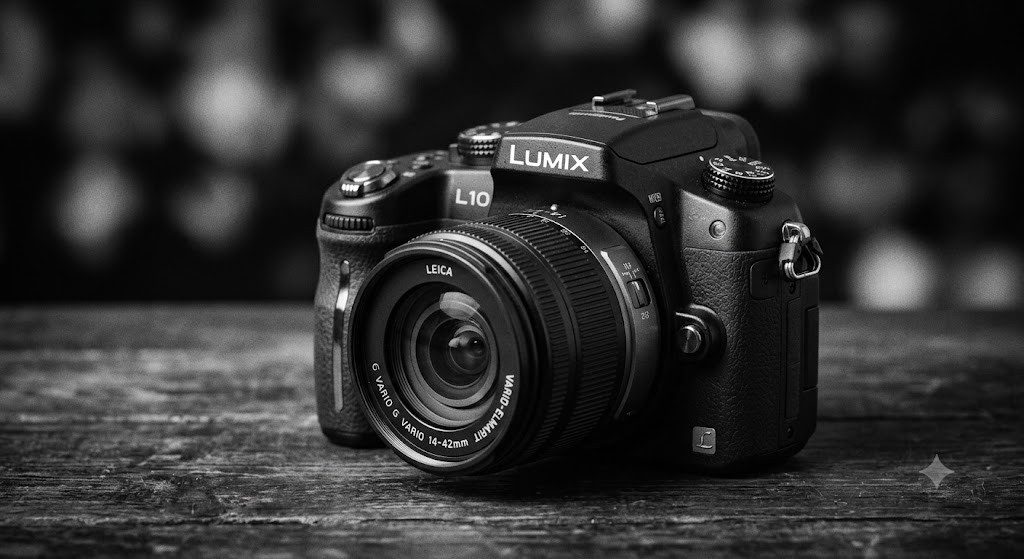
Panasonic wrapped the Lumix L10 in a magnesium alloy front case, then finished it with a saffiano leather texture that feels grippy in hand. The body measures 127.1 x 73.9 x 66.9 mm, which keeps it small enough for a jacket pocket. Weight comes in at 508 grams with the battery and an SD card installed, so the camera never feels like a burden during long walks. Buyers can choose between Black, Silver, or a limited Titanium Gold Special Edition that celebrates the anniversary with a gold-themed menu and bonus accessories. Consequently, the styling choices give the L10 a premium feel that matches its asking price.
Every control on the top plate falls naturally under the thumb and forefinger. A dedicated exposure compensation dial sits next to the shutter button, while a mode dial covers Program, Aperture Priority, Shutter Priority, and full Manual exposure. Five custom modes let shooters save entire setups for photo, video, and slow-motion work. Additionally, the aperture ring on the lens barrel offers both linear and nonlinear control, which video shooters will appreciate during smooth exposure pulls. This layout rewards photographers who prefer physical dials over buried menu settings.
Panasonic Lumix L10 Sensor and Image Quality
At the heart of the Lumix L10 sits a 4/3-type back-illuminated CMOS sensor with 20.4 effective megapixels. Panasonic borrowed this chip from the flagship GH7, so image quality tracks closely with what GH7 owners already know well. The sensor uses a Multi-Aspect design, meaning the camera never crops a single 4:3 frame down to other ratios. Instead, it captures a slightly larger circle across the sensor and pulls a native crop for 4:3, 3:2, 16:9, or 1:1 shooting. As a result, the effective focal length barely changes as you switch aspect ratios, a trick borrowed directly from Panasonic’s beloved LX100 line.
Dynamic range on this sensor reaches an impressive 13 stops when V-Log is engaged at standard frame rates. That figure drops slightly to 12 stops once frame rates climb past 60fps, though it still competes with cameras carrying much larger sensors. Base ISO in standard mode runs from 100 to 25600, with an extended low setting of ISO 50 for bright outdoor scenes. Photographers who shoot RAW files gain plenty of room to recover shadow detail without introducing heavy noise. Furthermore, the anti-reflection coating on the sensor stack helps reduce flare in backlit situations.
Panasonic Lumix L10 Lens Performance
Panasonic paired the sensor with a Leica DC Vario-Summilux zoom that covers a 24-75mm equivalent range. The aperture stays remarkably fast throughout that zoom, opening to f/1.7 at the wide end and narrowing only to f/2.8 at full telephoto. Nine rounded diaphragm blades keep out-of-focus backgrounds smooth, which matters for portrait work and low-light interiors. Eleven elements arranged in eight groups include five aspherical lenses, so edge sharpness holds up even at the widest aperture setting. This combination of speed and sharpness rarely appears together on a compact this small.
Optical zoom range reaches 3.1x, giving photographers real flexibility between environmental wide shots and tighter portrait framing. Power OIS stabilization compensates for hand shake across the whole zoom range, which helps during slower shutter speeds indoors. The lens also supports focus stacking for macro and product photography, a feature usually reserved for interchangeable lens systems. Because the lens is permanently mounted, Panasonic optimized every element specifically for this sensor and processor pairing. That tight integration produces corner-to-corner sharpness that a bolted-on zoom rarely matches.
Panasonic Lumix L10 Autofocus System
Autofocus on the Lumix L10 relies on a hybrid system combining 779 phase detection points with a 315-area contrast detection array. Panasonic also layered in its Depth From Defocus technology to speed up focus acquisition in tricky lighting. Subject recognition covers humans, animals, cars, motorcycles, trains, and airplanes, then locks onto eyes and faces automatically once a person enters the frame. Sensitivity reaches down to EV -5, so the camera can still find focus in near-darkness. These capabilities put the L10 ahead of most fixed-lens compacts on the market today.
Shooters can pick from Tracking, Full Area, Zone, or Pinpoint autofocus modes depending on the scene. Focus ring behavior can switch between linear and nonlinear response, and the linear throw adjusts from 120 degrees all the way to 1080 degrees. Manual focus assist tools include peaking, a magnified guide, and an AF point scope for critical work. Sports and wildlife shooters will appreciate how quickly the camera reacquires a subject after it briefly leaves the frame. Portrait photographers, meanwhile, gain reliable eye detection that rarely hunts once it locks onto a face.
Panasonic Lumix L10 Burst Shooting Speed
Continuous shooting on the mechanical shutter reaches 11 frames per second with single autofocus engaged. Switching to the electronic shutter unlocks even faster options, topping out at 30 frames per second in the SH30 burst mode. Buffer depth allows more than 40 RAW plus JPEG images before the camera slows down, assuming a fast UHS-II card is installed. Pre-burst modes also capture frames just before the shutter button is fully pressed, which helps freeze fleeting expressions or fast action. Wildlife and street photographers gain a genuine advantage from this speed in a body this compact.
Panasonic Lumix L10 Video Capabilities
Video recording sits at the center of this camera’s identity, and the specification sheet reads like something from a dedicated cinema camera. Maximum resolution reaches 5.6K at 59.94p, while 4K recording pushes all the way to 120 frames per second for smooth slow motion. Codec options include 4:2:0 10-bit LongGOP for everyday work, alongside 4:2:2 10-bit All-Intra for color grading projects that demand maximum quality. V-Log capture preserves that wide dynamic range discussed earlier, giving editors far more latitude in post-production. Consequently, hybrid shooters who split time between photos and video rarely need a second camera body.
Panasonic also included an MP4 Lite mode that produces smaller, ready-to-share files without any transcoding step afterward. Waveform monitoring appears directly on the rear screen, so exposure can be checked without external gear. A 3.5mm microphone input accepts external audio, though the camera skips a headphone jack entirely. Serious video shooters will therefore need a wireless monitoring solution or an external recorder for audio confirmation. Even so, the raw video specification list here beats most competitors in this camera class by a wide margin.
Panasonic Lumix L10 Viewfinder and Screen
A 0.39-inch OLED viewfinder delivers 2,360,000 dots of resolution alongside 100 percent frame coverage. Magnification reaches 0.74x in 35mm equivalent terms, which keeps the eyepiece view comfortable during extended shooting sessions. The rear monitor measures three inches across and flips out on a fully articulating hinge, useful for vlogging or overhead shots. Touch response feels immediate across the menu system, autofocus point selection, and image playback. Photographers moving between stills and video will appreciate switching quickly between viewfinder and screen without missing a shot.
Panasonic Lumix L10 Battery Life and Connectivity
A 2200mAh battery pack powers roughly 420 shots through the rear monitor or 410 shots through the viewfinder, based on CIPA testing standards. Power Save LVF mode stretches that figure toward 1,000 images, which benefits travel photographers who cannot recharge often. USB-C charging and power delivery both work over the same port, so a portable power bank keeps the camera running during long days. Wireless connectivity spans dual-band Wi-Fi alongside Bluetooth 5.0 for constant smartphone pairing through the Lumix Lab app. Overall battery performance sits in line with expectations for a camera in this compact class.
Panasonic Lumix L10 Photo Styles and Color Profiles
Panasonic loaded the Lumix L10 with an extensive color profile library that includes Standard, Vivid, Natural, and several Leica-inspired monochrome looks. The L. ClassicNeo and L. ClassicGold profiles recreate warm film tones straight out of camera, so JPEG shooters rarely need heavy editing afterward. Cinelike A2, Cinelike D2, and Like709 profiles cater specifically to video shooters who want a flatter starting point for grading. Custom LUTs can also be loaded directly onto the camera in both .vlt and .cube formats, then applied as a live preview during recording. This flexibility appeals equally to JPEG-focused photographers and colorists building a specific look.
Picture adjustment controls go deeper than most compacts offer, covering contrast, highlight, shadow, saturation, hue, and grain effect independently. Photographers can save up to ten custom Photo Style presets, which speeds up workflow for anyone shooting consistent series or client work. Soft Skin Effect also ships onboard, giving portrait shooters a gentler default look without reaching for post-processing software. Because these tools live directly in the camera menu, in-field adjustments happen quickly during a session. As a result, the L10 suits photographers who want creative control without necessarily editing every single frame later.
Panasonic Lumix L10 Menu System and Customization
Navigating the Lumix L10 menu feels familiar to anyone who has used a recent Panasonic mirrorless body. Function buttons scattered around the body can be reassigned to dozens of different actions, including AF-ON, focus limiter, and touch pad AF. Five custom modes on the main dial let photographers save entirely different configurations for portraits, landscapes, sports, and video work. Switching between these presets takes one dial click, so there is no need to dig through submenus mid-shoot. Consequently, photographers moving between different shooting styles during a single outing save meaningful time.
Touch control extends across nearly every menu screen, and the rear display responds quickly even with gloves on in cooler weather. Focus point selection through the touchpad works while the eye stays against the viewfinder, a feature borrowed from higher-end Lumix bodies. Wi-Fi setup connects to the Lumix Lab smartphone app within a few taps, enabling remote shutter control and instant image transfer. Bluetooth Low Energy keeps that connection alive in the background without draining the battery excessively. Overall, the interface never feels like an afterthought bolted onto a compact body.
Panasonic Lumix L10 Compared To Rival Compacts
Photographers shopping in this price bracket will naturally compare the Lumix L10 against Sony’s RX100 series and Ricoh’s GR line. The RX100 series uses a smaller one-inch sensor, so the L10 pulls ahead in dynamic range and low-light performance despite similar overall size. Ricoh’s GR III favors a fixed prime lens rather than a zoom, appealing to street photographers who prioritize discretion over flexibility. Meanwhile, the L10 essentially replaces Panasonic’s own aging LX100 II, offering a larger sensor and dramatically upgraded autofocus and video specifications. Buyers choosing between these options should weigh sensor size, zoom range, and video needs before committing to a purchase.
Fujifilm’s X100 series also competes for attention among photographers who want a stylish, capable compact. That camera leans harder into retro dial controls and a fixed 35mm equivalent lens, while the L10 offers real zoom flexibility from 24-75mm equivalent. Video shooters will notice the L10 pulling ahead thanks to its 5.6K recording and V-Log support, features the X100 series does not match. Photographers who value zoom versatility alongside video capability will likely find the L10 the stronger all-around choice. Ultimately, the right camera depends on whether zoom range or a fixed focal length better suits a photographer’s typical subjects.
Panasonic Lumix L10 Accessories and Ecosystem
Panasonic bundles a lens front cap, hot shoe cover, battery pack, and shoulder strap with every standard L10 purchase. The Titanium Gold edition adds an automatic lens cap and a leather cloth, reinforcing its position as a collector-friendly anniversary release. Optional accessories include the DMW-XLR2 microphone adapter, which unlocks four-channel audio recording for serious video production. External flash units like the DMW-FL200L work wirelessly with the built-in trigger system, expanding lighting options for portrait and event photographers. SILKYPIX Developer Studio handles RAW processing on a desktop computer, though most photographers will likely prefer familiar editing software like Lightroom instead.
Panasonic Lumix L10 Price and Value
Panasonic priced the standard Black and Silver versions at $1,499, positioning the L10 against premium compacts and some entry-level mirrorless kits. The Titanium Gold Special Edition costs $1,599 and adds a gold-themed menu along with bonus accessories including a titanium lens cap. Buyers who preorder the anniversary edition also receive a special 25th Anniversary Lumix shutter release button. Given the sensor size, lens speed, and video specification, this price feels justified against rivals with smaller one-inch sensors. Photographers considering a GH7 alongside a prime lens should compare total system cost before dismissing the L10 as expensive.
Panasonic Lumix L10 Real World Shooting Scenarios
Street photographers will appreciate how quietly the electronic shutter operates during candid moments in busy areas. The 24mm wide end captures full scenes easily, then the zoom pulls into 75mm for tighter candid portraits without swapping lenses. Silent mode disables every beep and mechanical sound, so subjects rarely notice a photo was taken at all. Because the body stays compact, carrying the L10 all day never produces the shoulder fatigue that heavier mirrorless kits often cause. These traits combine to make the camera a natural fit for documentary and travel photography styles.
Event and wedding second shooters gain a genuinely useful backup camera thanks to the fast lens and reliable low-light autofocus. Guests rarely notice a small camera the way they notice a large body with an attached flash unit. Focus tracking keeps moving subjects sharp during first dances or candid reception moments without constant manual adjustment. Meanwhile, video shooters covering vows or speeches benefit from V-Log footage that blends smoothly with footage from larger cinema cameras. Consequently, many hybrid shooters now carry the L10 as a discreet second body during full-day coverage.
Content creators recording talking-head videos will find the flip-out screen and strong autofocus especially useful for solo shooting. Eye detection keeps focus locked during presentations, even when the presenter shifts position slightly during recording. The built-in stereo microphone captures usable audio for quick social clips, while the external mic input covers more serious production needs. Waveform monitoring on the rear screen helps creators nail exposure without needing a separate light meter app. Altogether, these features make the L10 a strong single-camera solution for creators juggling multiple video formats.
Panasonic Lumix L10 Pros and Cons
The bright Leica lens, large Four Thirds sensor, and class-leading video specification stand out as the biggest strengths of this camera. Fast autofocus with reliable subject tracking also deserves praise, since many fixed-lens compacts still struggle in this area. On the downside, the missing headphone jack limits serious video monitoring without extra gear. Battery life, while respectable, will still require a spare cell for full-day shooting sessions. Weighing these factors together, the L10 earns strong marks as long as buyers understand where it trades convenience for capability.
Who Should Buy The Panasonic Lumix L10
Photographers upgrading from a smartphone or an older LX100 will find the jump in image quality immediately noticeable. Hybrid creators who need strong photo and video performance from one small body should also shortlist this camera seriously. Landscape and street photographers benefit from the compact size paired with a genuinely fast, sharp lens. Travelers who hate carrying interchangeable lenses gain nearly all the benefits of a Four Thirds system in one sealed package. However, shooters who need interchangeable optics or in-body stabilization beyond OIS should still consider a full mirrorless kit instead.
Frequently Asked Questions About The Panasonic Lumix L10
Does the Panasonic Lumix L10 shoot RAW files? Yes, the camera records RAW, JPEG, and HEIF formats across every aspect ratio option.
What sensor size does the Panasonic Lumix L10 use? It uses a 4/3-type back-illuminated CMOS sensor shared with the Lumix GH7.
Can the Panasonic Lumix L10 shoot in low light? Autofocus works down to EV -5, and ISO sensitivity extends up to 25600 for still images.
Does the Panasonic Lumix L10 have a headphone jack? No, the camera includes a microphone input but skips a headphone output entirely.
Final Verdict on the Panasonic Lumix L10
Panasonic built the Lumix L10 as a genuine flagship compact rather than a simple anniversary gimmick. The combination of a fast Leica lens, a proven GH7 sensor, and cinema-grade video codecs makes this one of the most complete compacts released this year. Minor tradeoffs around monitoring and battery life feel reasonable given everything else packed into such a small body. For photographers who want one camera that handles stills and video equally well, the L10 deserves a place near the top of the shortlist. Check current pricing and full specifications directly through Panasonic’s official Lumix L10 product page or through B&H Photo before making a final decision.
Read More From Altbuzz
Camera news moves fast, and Altbuzz covers every major release the moment it drops. Head over to Altbuzz Media for more in-depth camera reviews, rumor roundups, and buying guides. Our team breaks down sensor technology, lens performance, and real-world handling across every brand worth watching. New comparisons and hands-on tests get published regularly, so bookmark the site for updates.
Subscribe To Our YouTube Channel
Video reviews often reveal details that photos and text simply cannot capture. Subscribe to the Altbuzz YouTube channel for hands-on camera tests, lens comparisons, and first-look coverage of upcoming releases. New videos go live regularly, covering everything from budget compacts to professional mirrorless systems. Turn on notifications so you never miss a new upload.