
Sony RX1R III Review: The Tiny Full-Frame Camera That Changes Everything
The Sony RX1R III finally answers a question that photographers asked for almost ten years. Can a pocket-sized camera truly deliver full-frame quality without any compromise? Sony waited nearly a decade since the RX1R II, and that gap built massive expectations. This Sony RX1R III review breaks down every part of the camera, from the sensor to real-world handling, so you can decide if it belongs in your bag. We tested the build quality, image output, autofocus speed, and video performance in detail. By the end, you will know exactly who this camera suits and who should look elsewhere.
What Is the Sony RX1R III
The Sony RX1R III sits at the top of Sony’s premium compact lineup. It pairs a fixed ZEISS Sonnar T* 35mm F2 lens with a full-frame sensor inside a body smaller than most APS-C cameras. This combination makes it the smallest full-frame camera currently sold anywhere. Photographers who loved the original RX1 series will recognize the philosophy immediately. However, the internals now match Sony’s current flagship technology, which changes the entire experience.
Unlike interchangeable lens systems, this camera commits fully to one focal length and one aperture range. That decision might sound limiting at first. Yet many street and travel photographers argue that this restriction actually improves creative focus. You stop worrying about lens choices and start thinking about composition instead.
Who Sony Built This Camera For
Sony designed the RX1R III for photographers who already own larger systems but need something smaller for daily carry. Professionals who shoot with an A7R V or A7CR often want a lightweight backup for personal projects. Street photographers also value the compact size since it draws less attention in public settings. Meanwhile, collectors and enthusiasts who appreciate engineering craftsmanship will enjoy the premium build.
Design and Build Quality
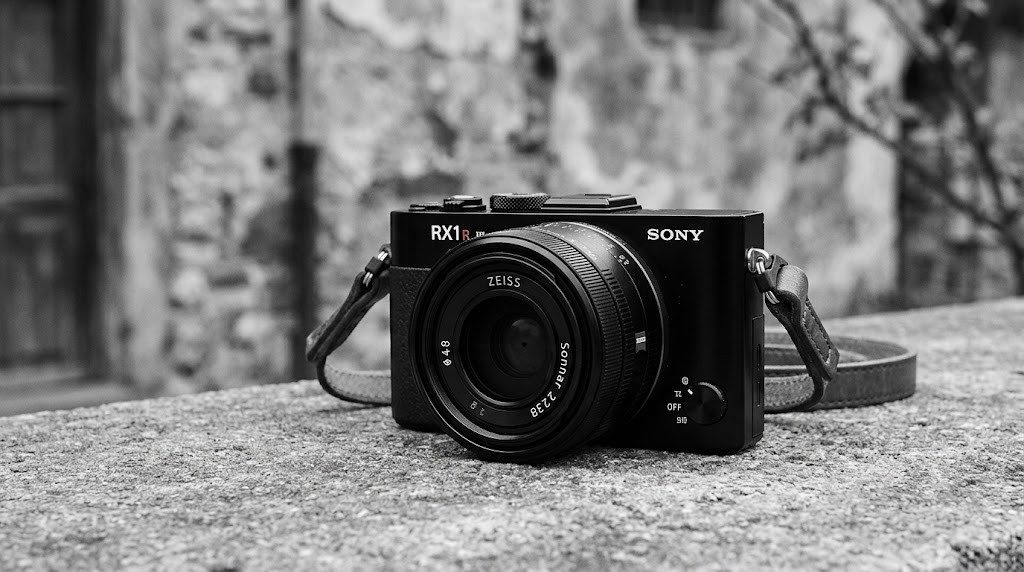
The body follows a minimal, flat design that closely resembles Leica’s approach to compact cameras. Sony uses a magnesium alloy shell, which keeps the camera light yet sturdy during daily use. The lens and viewfinder protrude slightly, but the rest of the body stays remarkably slim. This design choice makes the camera easy to slip into a jacket pocket or small bag.
Sadly, Sony did not include weather sealing on this model, which surprised many reviewers. That omission feels unusual for a camera priced above five thousand dollars. Still, the fit and finish feel premium in hand, matching the quality found on Sony’s Alpha series bodies. Every dial and button clicks with satisfying precision, and nothing on the body feels loose or cheap.
Handling and Grip Comfort
Because the RX1R III lacks a large grip, handling takes some adjustment for photographers used to bigger cameras. The camera feels light but never flimsy, and the weight distribution stays balanced during handheld shooting. Sony added a small thumb rest as an optional accessory, which improves stability significantly. Most reviewers recommend picking up this accessory since the stock grip feels minimal for extended sessions.
Control Layout and Menu System
Sony carried over its familiar menu system, so existing Alpha shooters will feel right at home immediately. New users might find the menu structure overwhelming at first, since Sony packs many settings into small submenus. Thankfully, the physical dials allow quick access to aperture, shutter speed, and exposure compensation. This layout speeds up shooting once you memorize the button positions.
Sensor and Image Quality
At the heart of this camera sits a 61-megapixel full-frame Exmor R CMOS sensor. This sensor also powers the Sony A7R V and A7CR, so image quality expectations run high. Paired with the BIONZ XR processor, the sensor produces sharp files with impressive dynamic range. Photographers who print large formats will especially appreciate the extra resolution.
Color rendering leans natural and true to life, matching what Sony fans expect from recent Alpha bodies. Skin tones look smooth without appearing artificial, and shadow detail holds up well during editing. Noise performance stays clean even at moderately high ISO settings, which helps in dim environments. Overall, this sensor delivers professional-level output inside a genuinely pocketable shell.
ZEISS 35mm F2 Lens Performance
The fixed ZEISS Sonnar T* 35mm F2 lens defines the entire shooting experience on this camera. Sony first introduced this optical design over a decade ago, yet it still performs beautifully today. Sharpness stays excellent across the frame, even when shooting wide open at F2. Close-up shots benefit from a macro ring, which allows focusing as near as twenty centimeters.
Bokeh rendering feels smooth and pleasing, especially for portraits and environmental shots. Chromatic aberration stays well controlled, and distortion remains minimal throughout the focal range. Some critics argue the lens feels dated compared to Sony’s newer G Master optics. Even so, most photographers agree the character and rendering still hold their own against modern competitors.
Step Crop Shooting Explained
Sony added a clever feature called Step Crop Shooting, which simulates three different focal lengths. Users can switch between 35mm, 50mm, and 70mm equivalents using assigned buttons or dials. This function relies on the high resolution sensor to crop without losing too much detail. When shooting RAW files, photographers can even change the focal length choice during post-production editing.
Autofocus and Subject Tracking
Autofocus performance represents one of the biggest upgrades over the previous RX1R II model. Sony packed up to 693 phase-detection points, covering roughly seventy-eight percent of the frame. The AI processing unit recognizes human bodies, faces, and eyes with impressive accuracy. Tracking stays locked onto moving subjects even when their face briefly turns away from the lens.
Real-world testers report strong hit rates when photographing children, pets, and street scenes. However, some reviewers noticed occasional hesitation compared to Sony’s newest interchangeable lens cameras. This slight lag likely comes from the older lens design rather than the autofocus algorithm itself. Despite this minor quirk, autofocus performance still ranks among the best in the compact camera category.
Viewfinder, Screen, and Ergonomics
Sony replaced the old pop-up viewfinder with a built-in electronic viewfinder on this generation. The EVF uses a 2.36-million-dot XGA OLED panel with 0.70x magnification for clear framing. This upgrade feels like a major improvement since the previous pop-up design felt fragile and slow. Photographers who shoot in bright sunlight will appreciate having a reliable built-in viewfinder option.
The rear screen measures three inches and sits flat against the body without any tilting mechanism. Some reviewers wished for an articulating screen, especially for low-angle or vlogging shots. Despite the fixed design, the screen still displays sharp, accurate colors during composition and playback. Touch response feels responsive, and menu navigation through the touchscreen works smoothly overall.
Video Recording Capabilities
Video was never the primary focus of the RX1R series, and that trend continues here. The camera records solid footage but lacks the advanced video tools found on Sony’s dedicated video cameras. Casual creators can still capture quality clips for personal projects or social media content. However, serious videographers should look toward the A7CR or FX3 for professional video work instead.
Rolling shutter and limited frame rate options also restrict fast-action video capture on this camera. Still, for travel diaries or quick behind-the-scenes clips, the footage looks clean and detailed. Audio quality through the built-in microphone sounds adequate for casual use, though external mics improve results. Overall, treat video as a bonus feature rather than a primary reason to buy this camera.
Real-World Shooting Experience
Numbers on a spec sheet only tell part of the story, so field testing matters just as much. Street photographers who tested the RX1R III praised how quickly it disappears into daily carry routines. Because the body stays so slim, strangers rarely notice the camera during candid shooting sessions. This discretion helps capture natural expressions and unposed moments that larger cameras often disrupt.
Travel photographers also reported strong results, especially during long walking tours through busy cities. The fixed 35mm focal length forces you to move closer or farther rather than zooming lazily. Over time, many reviewers said this constraint actually improved their compositional instincts significantly. Low-light interiors, including cafes and evening markets, showed clean detail even without a flash.
Portrait and Low-Light Testing
Portrait photographers found the F2 aperture more than capable of producing pleasing subject separation. Skin tones rendered naturally under mixed lighting, including tungsten bulbs and window light combinations. Autofocus locked onto eyes reliably, even in dim restaurant settings with limited ambient light. Handheld shots at slow shutter speeds, sometimes near one quarter of a second, still came out sharp.
That steadiness comes partly from the leaf shutter design, which reduces vibration during the exposure. While Sony skipped in-body stabilization, testers say the trade-off feels less painful than expected in practice. Still, action photography or handheld video benefits far more from stabilized systems like the A7CR.
Handling During Extended Shooting Sessions
One reviewer shot nearly ten thousand frames across a single week of documentary and family photography. He noted that fatigue stayed minimal thanks to the camera’s light overall weight and balance. However, he also mentioned that autofocus occasionally hesitated during fast-paced, unpredictable scenes. This hesitation appeared more often compared to newer Sony bodies using updated lens designs.
Despite that quirk, the same reviewer called the RX1R III a genuine joy for everyday carry photography. He specifically praised how the camera encouraged him to bring it along on trips he previously skipped. That emotional connection between photographer and gear often matters as much as raw technical performance.
Accessories and System Ecosystem
Sony sells several dedicated accessories designed specifically for the RX1R III body and shooting style. The TG-2 thumb grip attaches to the hot shoe and dramatically improves one-handed stability. Many reviewers consider this accessory close to essential given the camera’s minimal factory grip. A leather half-case, called the LCS-RXL, also protects the body during daily transport.
For photographers who want closer framing options, Sony offers the LHP-1 lens hood as an add-on. This accessory helps reduce flare during backlit shooting scenarios, particularly around sunset or bright windows. Because the RX1R III shares its NP-FW50 battery with several older Sony models, spares remain easy to find. This compatibility helps reduce the overall cost of building a small accessory kit around the camera.
Battery Life and Connectivity
The RX1R III uses Sony’s NP-FW50 battery, rated for approximately three hundred shots per charge. That number drops slightly to around two hundred seventy shots when using the electronic viewfinder consistently. Compared to modern mirrorless cameras, this battery life feels somewhat limited for full-day shooting sessions. Many photographers recommend carrying a spare battery, especially during travel or event photography.
On the connectivity side, Sony includes USB Type-C charging, which supports fast power delivery compatible devices. This feature allows photographers to top up battery levels using portable power banks during long outings. Wireless transfer to smartphones works through Sony’s Creators’ App, enabling quick sharing to social platforms. Overall, connectivity feels modern, even though battery capacity remains a noticeable limitation.
Sony RX1R III vs Sony A7CR
Many reviewers compare the RX1R III directly against the Sony A7CR, since both share the same sensor. The A7CR costs roughly two thousand dollars less while offering in-body image stabilization and lens flexibility. It also includes better battery life, a tilting screen, and access to Sony’s entire E-mount lens lineup. For most buyers, the A7CR delivers better overall value and practical performance.
However, the RX1R III wins decisively on size and pure minimalism. If you already own an A7CR and want an ultra-compact companion camera, the RX1R III makes sense. Otherwise, the A7CR remains the smarter choice for photographers who prioritize versatility over pocketability.
Sony RX1R III vs Leica Q3
The Leica Q3 stands as the closest conceptual rival to the RX1R III in the premium compact segment. Both cameras use a fixed lens design paired with a high-resolution full-frame sensor. Leica charges a noticeably higher price, though buyers pay partly for brand heritage and build reputation. Sony counters with a lighter body and a more advanced autofocus system overall.
Photographers who value Leica’s rendering style and simplified shooting philosophy may still prefer the Q3. Meanwhile, those who want cutting-edge autofocus technology at a relatively lower price will lean toward the RX1R III.
Sustainability and Manufacturing
Sony highlights environmental efforts as part of the RX1R III launch, tying it to a broader company initiative. The Road to Zero program aims for a completely zero environmental footprint across Sony products by 2050. Manufacturing facilities responsible for imaging products, including this camera, now run entirely on renewable electricity. This detail matters increasingly to buyers who consider sustainability alongside performance when choosing new gear.
Packaging for the RX1R III also avoids traditional plastic in favor of Sony’s Original Blended Material. This proprietary packaging solution reduces environmental impact without compromising protection during shipping and storage. While packaging rarely influences a purchase decision directly, it reflects Sony’s broader commitment to responsible manufacturing. Buyers who prioritize sustainable brands may find this an added, if minor, point in the camera’s favor.
Pricing and Availability
Sony priced the RX1R III at approximately five thousand ninety-nine dollars in the United States market. This price positions it as one of the most expensive compact cameras currently available. Buyers in the United Kingdom and Europe pay slightly less due to regional pricing differences. Optional accessories, including a thumb grip, leather case, and lens hood, add further cost.
You can find full specifications and purchasing details directly through the official Sony RX1R III product page. Sony also shares behind-the-scenes stories and sample galleries through its own Alpha Universe platform, which offers useful reference material before you buy.
Sony RX1R III vs Fujifilm X100VI
Fujifilm’s X100VI offers a lower price point alongside a fixed 35mm equivalent lens on an APS-C sensor. Photographers who love Fujifilm’s film simulations often choose the X100VI for its distinct color rendering. However, the RX1R III delivers a noticeably larger sensor, which improves depth of field control and low-light output. Buyers deciding between these two cameras usually weigh brand ecosystem and color science against raw sensor size.
If you already shoot Sony bodies and want matching color output, the RX1R III fits naturally into that workflow. Fujifilm shooters who value simplicity and a lower entry price will likely stick with the X100VI instead.
Who Should Buy the Sony RX1R III
This camera suits photographers who already understand its limitations and still want the experience. If portability matters more than versatility, this camera rewards that priority generously. Professionals seeking a discreet personal camera alongside their main system will find genuine value here. Collectors who appreciate engineering craftsmanship will also enjoy owning this unique piece of technology.
On the other hand, casual photographers or beginners should consider more affordable and flexible alternatives instead. Anyone needing interchangeable lenses or in-body stabilization should also skip this model entirely. Ultimately, this camera targets a narrow but passionate audience within the photography community.
Ideal Photography Genres for This Camera
Street photography benefits enormously from the RX1R III’s discreet size and fast, silent leaf shutter. Travel photographers appreciate the light weight, since it barely adds strain during long days of walking. Documentary and lifestyle shooters value the natural 35mm perspective, which mirrors how the human eye sees scenes. Portrait photographers who prefer environmental context over tight headshots also find the fixed lens genuinely useful.
However, wildlife, sports, and macro specialists should look elsewhere, since the fixed 35mm lens cannot adapt. Studio photographers who need tethering flexibility and interchangeable lenses will also find this camera too restrictive. Match your shooting style honestly against these strengths before committing to this significant investment.
Pros and Cons
Pros
- Exceptional 61MP full-frame image quality
- Smallest full-frame camera on the market today
- Strong AI-powered autofocus and subject tracking
- Premium magnesium alloy build quality
- Fast USB Type-C charging support
Cons
- No in-body image stabilization
- No weather sealing despite the premium price
- Fixed, non-articulating rear screen
- Below average battery life for daily shooting
- Very high price compared to similar alternatives
Final Verdict on the Sony RX1R III
The Sony RX1R III delivers genuinely impressive image quality inside an incredibly small body. Autofocus performance and sensor resolution both meet the high standards Sony fans expect from Alpha cameras. That said, the missing stabilization, fixed screen, and steep price will disappoint budget-conscious buyers. This camera clearly targets a specific, dedicated group of photographers rather than the mass market.
If you value pure portability and accept the trade-offs, this camera will not disappoint you. For everyone else, the Sony A7CR likely offers a smarter and more practical purchase decision.
Frequently Asked Questions
Does the Sony RX1R III have image stabilization? No, the camera relies on its leaf shutter design rather than in-body stabilization technology.
What is the RX1R III sensor resolution? It uses a 61-megapixel full-frame Exmor R CMOS sensor, matching the A7R V and A7CR.
Is the Sony RX1R III good for video? Video works fine for casual clips, but dedicated video cameras offer far more advanced tools.
How much does the Sony RX1R III cost? Pricing starts around five thousand ninety-nine dollars in the United States market.
Read More From Altbuzz
Enjoyed this deep dive into the Sony RX1R III? Explore more detailed camera reviews, rumor coverage, and photography guides on Altbuzz, where we break down the latest gear so you can shoot with confidence.
Subscribe to Our YouTube Channel
Want hands-on video breakdowns of cameras like the RX1R III? Subscribe to the Altbuzz YouTube channel for real-world tests, comparisons, and honest first impressions of new camera releases.