
The Canon EOS R7 Mark II has become the most talked about, most leaked, and most waited for camera in years. It has not been officially announced. Canon has not confirmed a single specification. Yet the photography world cannot stop discussing it.
This camera has been rumored since 2024. It got delayed through 2025. It slipped past a potential 2026 announcement window. Now, according to multiple credible sources and reliable industry insiders, the Canon EOS R7 Mark II is pointing firmly toward a 2027 arrival.
So who is this camera for? Wildlife photographers who need extreme speed. Sports shooters who demand precision autofocus. Hybrid creators who want 8K video in a compact, affordable APS-C body. Based on everything leaking out of the Canon rumor mill, the Canon EOS R7 Mark II could serve all of them at once.
This blog covers every major rumor, leaked specification, and realistic expectation surrounding the Canon EOS R7 Mark II. All information here is based on rumors, leaks, and speculation. Nothing is confirmed by Canon. Read accordingly.
Expected Release Date and Market Position
Why the Canon EOS R7 Mark II Keeps Getting Delayed
The original Canon EOS R7 launched in mid-2022. It brought a 32.5MP APS-C sensor, 15fps mechanical burst, and Dual Pixel CMOS AF to a relatively compact body. It sold well and quickly became a favorite for wildlife and sports enthusiasts.
A Mark II was expected as early as late 2024. Then sources pointed to early 2025, Q3 or Q4 of 2025. And then a possible CP+ 2026 reveal. None of those materialized. According to Digital Camera World, the Canon EOS R7 Mark II is now widely expected to arrive in 2027.
The reasons behind the delays are not officially confirmed. However, industry patterns suggest Canon may be holding the camera back for a very specific reason. The rumored specifications are so advanced that Canon needs time to manage heat dissipation, finalize the stacked sensor architecture, and ensure the body design can support a completely new processing pipeline.
Where It Sits in the Canon Lineup
The Canon EOS R7 Mark II is expected to sit above the R10 and below the full-frame R6 series. It would serve as Canon’s definitive flagship APS-C mirrorless camera. According to leaked positioning reports, Canon plans to push this camera firmly upmarket. It is not meant to be a simple refresh. Based on the rumored specs, it would challenge full-frame cameras from competitors in certain performance categories.
Rumored Specifications Table
| Feature | Rumored Details |
|---|---|
| Sensor Type | BSI Stacked CMOS APS-C |
| Resolution | 39MP to 40MP |
| Processor | DIGIC X with DIGIC Accelerator |
| ISO Range | 100 to 51,200 (native), expandable to 204,800 |
| Autofocus System | Dual Pixel CMOS AF with advanced AI subject detection |
| Stabilization | 8+ stops IBIS (in-body) |
| Video Recording | 8K UHD at 30fps, 4K at 120fps |
| EVF | High-resolution OLED, 5.76M dots (expected) |
| LCD Screen | Fully articulating vari-angle touchscreen |
| Burst Shooting | 40fps electronic, pre-capture support |
| Battery | LP-E6NH (same as R5 series, likely) |
| Storage | Dual slots: CFexpress Type B + SD UHS-II |
| Connectivity | Wi-Fi 6, Bluetooth 5.0, USB-C (10Gbps) |
| Body Size | Larger than original R7, comparable to R6 Mark III |
| Expected Price | USD $2,299 to $2,499 |
All specifications above are based on leaks and industry speculation. None are confirmed by Canon.
Sensor and Image Quality (Rumored)
The 39MP to 40MP Stacked APS-C Sensor
This is where the Canon EOS R7 Mark II gets truly exciting. According to Photo Rumors and multiple Canon-specific leak sources, the camera is expected to use a 39MP backside-illuminated stacked CMOS sensor. Some earlier reports rounded this up to 40MP.
The distinction between BSI and stacked architecture matters a great deal. A BSI sensor moves the wiring layer behind the photodiodes. This allows more light to reach each pixel. A stacked sensor goes one step further. It places a dedicated DRAM layer directly beneath the BSI imaging layer. This DRAM buffer stores image data at extreme speeds before it passes to the processor.
The result is a dramatically faster sensor readout. Faster readout means less rolling shutter distortion during video. It also means higher burst rates without image degradation.
How 40MP Changes Everything for APS-C
The original R7 launched with 32.5MP, which was class-leading for APS-C in 2022. Fujifilm then raised the bar with the X-T5 and its 40.2MP sensor. The Canon EOS R7 Mark II is widely expected to match or slightly exceed that resolution.
At around 40MP, the APS-C sensor would also have enough horizontal pixel coverage to record true 8K UHD video. 8K UHD requires 7,680 horizontal pixels. A 40MP APS-C sensor provides enough native resolution to cover that width without oversampling tricks.
Furthermore, a higher megapixel count offers serious advantages for wildlife and bird photographers. The 1.6x crop factor of APS-C already provides extra reach. Combined with 40MP of resolution, photographers could crop heavily in post and still retain substantial detail.
Expected Dynamic Range and Color Science
While no specific dynamic range figures have leaked, reasonable expectations based on Canon’s recent sensor generations point toward 14 to 15 stops. The EOS R5 Mark II already demonstrated strong dynamic range performance on its full-frame stacked sensor. A similar architecture applied to APS-C could deliver comparable latitude per stop.
Canon’s color science on recent cameras has leaned toward accurate, slightly warm skin tones with a natural rendering style. The R7 Mark II would likely continue this tradition. Canon Log 3 support is expected based on how Canon has integrated it across the entire RF lineup.
Autofocus System (Rumored)
The Promise of APS-C’s Best Autofocus
According to Photo Rumors, the Canon EOS R7 Mark II is expected to feature what insiders have described as potentially the best autofocus system ever placed in an APS-C camera. That is a bold claim. But when you look at what Canon has achieved with the EOS R1 and R5 Mark II, it starts to seem believable.
Dual Pixel CMOS AF with DIGIC Accelerator
The original R7 already uses Dual Pixel CMOS AF. It covers 100% of the frame and tracks multiple subject types. The Mark II is expected to take this much further.
Based on the R5 Mark II architecture, the Canon EOS R7 Mark II would likely pair a DIGIC X processor with a separate DIGIC Accelerator chip. This dual-chip setup changes how autofocus works. The DIGIC Accelerator handles AI calculations in real time. It tracks subjects, predicts movement, and classifies what it sees. The DIGIC X processor handles all image writing tasks separately. Neither chip waits on the other.
The practical result is autofocus that operates faster and more intelligently. Subject detection categories in the R5 Mark II include people, animals, vehicles, trains, and airplanes. The R7 Mark II would likely inherit all of these. New AI-trained categories could also appear.
Pre-Capture and Predictive AF
Several leak sources suggest the Canon EOS R7 Mark II will support pre-capture shooting. This feature, found on the EOS R5 Mark II and R1, buffers a short period of images before the shutter button is fully pressed. Photographers can capture the exact peak moment even if their reaction is slightly late.
Combined with predictive phase-detection autofocus, this system would make the R7 Mark II extraordinarily capable for unpredictable subjects. Birds in flight, athletes mid-motion, wildlife in low light. The combination of pre-capture and advanced subject tracking is a game changer for action photography.
Video Capabilities (Expected)
8K UHD: A First for Canon APS-C
This is one of the most significant rumored upgrades for the Canon EOS R7 Mark II. According to Digital Camera World and multiple other sources, the camera is expected to record 8K UHD video at up to 30fps. This would make it the first Canon APS-C camera to offer 8K recording.
Importantly, the expected resolution is 8K UHD (7,680 x 4,320) rather than 8K DCI (8,192 x 4,320). This distinction reportedly keeps the R7 Mark II from overlapping too aggressively with the full-frame EOS R5 Mark II.
4K at 120fps: High Frame Rate for Sports and Slow Motion
Beyond 8K, the Canon EOS R7 Mark II is expected to support 4K recording at 120fps. This would represent a major leap over the original R7, which topped out at 4K/60p. 4K/120p opens doors for slow-motion sports footage, wildlife behavior studies, and high-speed creative work. Earlier reports confirmed that the lack of 4K/120p on the original R7 was a complaint from video-oriented users.
Thermal Management and the Bigger Body
Heat is the enemy of extended video recording. Canon’s decision to make the R7 Mark II body larger, reportedly comparable in footprint to the EOS R5 series, is not purely about ergonomics. A larger body provides more surface area for heat dissipation. Some sources suggest an internal heat dispersion system similar to what Canon used in the R5 Mark II.
This improvement could allow longer continuous recording windows. For run-and-gun videographers who shoot long takes, this matters enormously.
Canon Log 3 and C-Log Support
Based on Canon’s consistent rollout of Canon Log 3 across the RF lineup, the R7 Mark II would almost certainly support it. Canon Log 3 provides a flat, wide-gamut recording profile. It preserves detail in highlights and shadows for color grading in post production. For hybrid shooters, this feature is now a baseline expectation.
Design and Build (Expected)
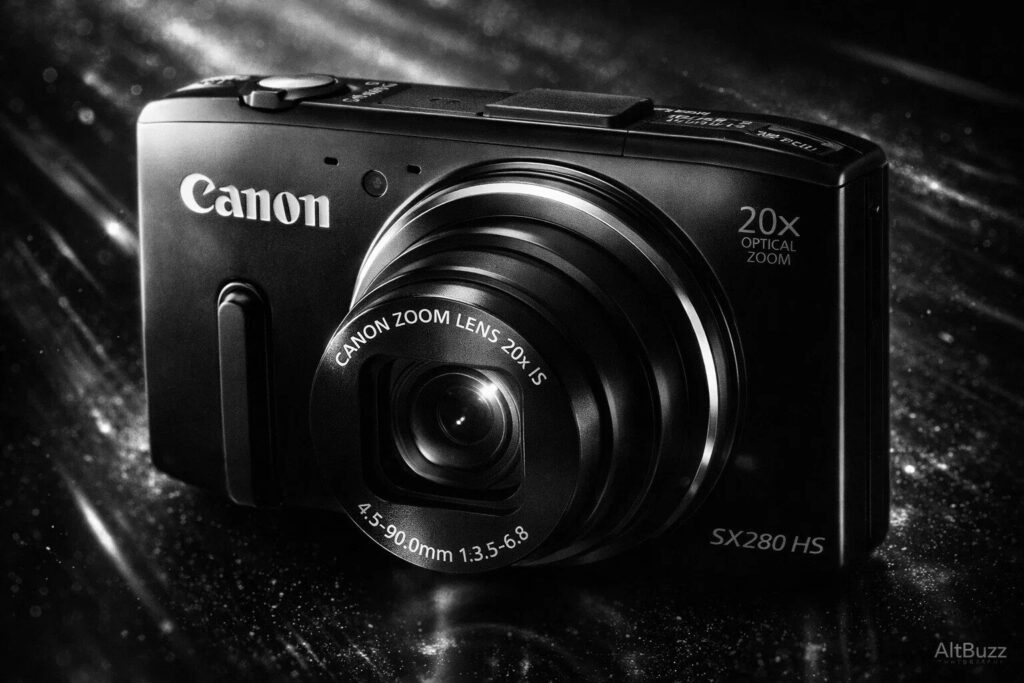
A Bigger, More Robust Body
The original EOS R7 used a relatively compact body that drew some criticism for feeling small in the hand during extended shoots. Leaked reports consistently describe the Canon EOS R7 Mark II as larger. Several sources compare the expected footprint to the EOS R6 Mark III.
A bigger grip depth improves handling during long telephoto sessions. For wildlife photographers spending hours with a 500mm lens attached, ergonomics matter as much as specifications.
Weather Sealing
The original R7 offered basic weather sealing. The Canon EOS R7 Mark II is expected to step up to more rigorous sealing, closer to what Canon provides on the R6 and R5 lines. This would involve improved gasketing around all buttons, dials, ports, and the battery door.
Weather sealing does not make a camera waterproof. However, it provides meaningful protection during light rain, dusty field conditions, and humid outdoor environments where wildlife and sports photographers regularly operate.
Controls and Customization
Based on Canon’s recent design philosophy across the R3, R5 Mark II, and R6 Mark III, the R7 Mark II would likely inherit a similar control layout. This includes a top-plate mode dial, rear control wheel, joystick for AF point selection, and a customizable multi-function button setup.
Canon has also been expanding touchscreen functionality. The fully articulating touchscreen expected on the R7 Mark II would provide flexible shooting angles for both stills and video.
Battery and Connectivity (Rumored)
Battery Life Expectations
The original Canon EOS R7 uses the LP-E6NH battery, shared across the R5 and R6 lines. The R7 Mark II is expected to retain this battery for user convenience. However, the increased processing demands of a stacked sensor and DIGIC Accelerator chip could impact efficiency.
Canon engineers have consistently improved power management across generations. Reasonable expectations based on the R5 Mark II and R6 Mark III suggest around 320 to 380 shots per charge under standard conditions. USB-C charging and power delivery support is also expected.
Storage: CFexpress Type B Plus SD
For the Canon EOS R7 Mark II, leaked specs point to a dual card slot configuration. One slot would accept CFexpress Type B cards. The second would take SD UHS-II cards. This mirrors the storage setup found on the EOS R6 Mark III.
CFexpress Type B provides the raw bandwidth needed for 40fps RAW bursts and 8K video streams. The SD slot serves as overflow, backup, or JPEG secondary storage. This dual-standard approach gives professionals flexibility without requiring two expensive CFexpress cards.
Wireless and Connectivity
Canon has steadily upgraded wireless features across its RF lineup. Based on recent releases, the Canon EOS R7 Mark II would likely include Wi-Fi 6 for faster image transfer, Bluetooth 5.0 for low-power remote control, and a USB-C port capable of 10Gbps data transfer. An HDMI port for external recording output is also expected.
Real-World Use Cases
Wildlife and Bird Photography
This is the primary use case driving hype around the Canon EOS R7 Mark II. The combination of a 40MP sensor and a 1.6x APS-C crop factor delivers the equivalent of a 1.6x reach multiplier on every lens. A 500mm RF lens becomes effectively 800mm at the sensor level.
Add 40fps burst shooting, pre-capture, and advanced subject detection, and the Canon EOS R7 Mark II becomes a serious tool for capturing fast-moving wildlife. The expected 8+ stops of IBIS further stabilize long telephoto shooting in the field.
Sports and Action Photography
Speed is the defining requirement for sports photography. At a rumored 40fps with pre-capture, the Canon EOS R7 Mark II would rank among the fastest APS-C cameras ever produced. Athletes, motorsport, and action sports demand this kind of performance.
The expected AI subject classification would help the camera lock onto and track athletes through complex, cluttered backgrounds. Stadium environments with mixed artificial lighting would challenge any sensor. Canon’s recent ISO performance improvements suggest the R7 Mark II would handle these conditions competently.
Hybrid Shooters and Content Creators
For photographers who also produce video content, the Canon EOS R7 Mark II presents a compelling package. 8K UHD recording, 4K/120fps for slow motion, Canon Log 3 for color grading, and a fully articulating touchscreen together form a hybrid tool that rivals dedicated video cameras.
Travel content creators would appreciate the APS-C sensor’s lighter lens pairing options. The R7 Mark II paired with compact RF-S lenses would produce a portable, versatile travel rig.
Studio and Commercial Work
At 40MP, the Canon EOS R7 Mark II would also enter conversation for commercial still work. Product photography, editorial shoots, and high-resolution advertising content all benefit from extra resolution. The improved color science and dynamic range would support demanding lighting scenarios.
Pros and Cons (Based on Rumors)
Expected Strengths
The Canon EOS R7 Mark II carries a set of anticipated advantages based on everything leaked so far.
The 40MP stacked sensor would represent a genuine leap over APS-C competitors. Canon’s implementation of DIGIC Accelerator AI autofocus has proven extremely accurate on the R5 Mark II and R1. Applying that same intelligence to APS-C would give wildlife and sports shooters a meaningful edge.
The expected 40fps burst speed with pre-capture would push the boundaries of what crop-sensor cameras can do. For photographers who miss peak moments, pre-capture can be transformative.
8K UHD video in an APS-C body would be unprecedented from Canon. Combined with 4K/120fps, the video package would satisfy a wide range of hybrid shooters.
The larger, more ergonomic body addresses a common criticism of the original R7. Better weather sealing adds field durability. Dual card slots provide professional-grade redundancy.
Potential Weaknesses
No camera is perfect. Based on realistic analysis of the rumored specifications, a few concerns are worth noting.
The larger body trades portability for grip comfort. Photographers who valued the original R7 for its compactness may find the Mark II less convenient for travel.
An expected price of USD $2,299 to $2,499 represents a significant jump over the original R7’s launch price. This moves the camera into territory where it competes against entry-level full-frame options.
Canon’s APS-C lens ecosystem remains limited compared to its full-frame RF lineup. Getting the most from a 40MP sensor requires high-quality glass. Most of Canon’s sharpest lenses are full-frame RF designs. RF-S options are fewer and skewed toward kit-level specifications.
Final Thoughts
The Canon EOS R7 Mark II has been one of the most anticipated cameras in the industry for nearly three years. The constant delays, the repeated leaks, and the growing list of expected features have created a level of community excitement that few camera announcements generate.
Based on everything currently circulating in the rumor ecosystem, this camera could genuinely redefine what APS-C photography means in 2027. A 40MP stacked sensor, 40fps burst shooting, 8K UHD video, and what sources describe as the best autofocus ever placed in a crop-sensor camera. These are not incremental upgrades. They represent a fundamental shift in capability.
However, patience remains essential. Canon has not announced this camera. Specifications can change. Release timelines can shift again. The Canon EOS R7 Mark II rumor cycle has taught the photography community one important lesson over the past few years. Trust the pattern. Wait for the announcement.
When it does arrive, it promises to be worth every month of waiting.
Read More from AltBuzz
Read more from Altbuzz for camera reviews, rumors, and detailed specs. AltBuzz delivers trusted and easy-to-understand photography content.
Subscribe AltBuzz YouTube Channel
Stay updated with camera reviews, rumors, and comparisons. AltBuzz shares regular camera content. Subscribe Altbuzz to stay ahead of every major camera announcement.