
Sony FX3 vs FX3 Mark II: How Much Would Actually Change
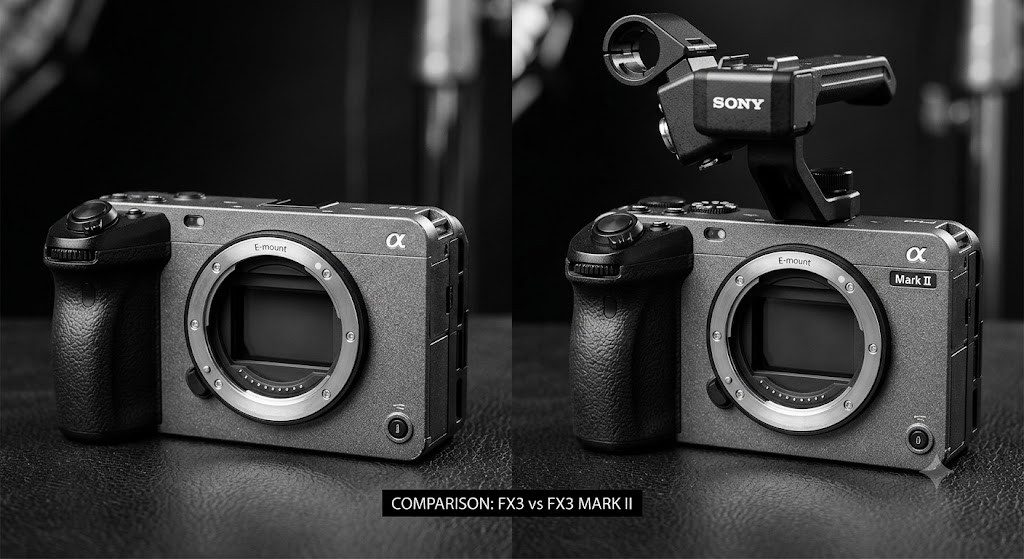
The Sony FX3 has remained one of the most influential cameras in the entire Cinema Line since its 2021 launch, and its rumored successor has generated genuine anticipation precisely because the original set such a high bar. As of today, Sony has not announced an FX3 Mark II, and rumor sources themselves admit there are still no fully reliable specifications to share with confidence. That uncertainty makes a direct comparison genuinely useful, since it forces a clear line between what the current FX3 actually delivers today and what its rumored successor might realistically add.
This article compares the Sony FX3 against its rumored Mark II successor across sensor architecture, dynamic range, video specifications, autofocus, and body design. We will be explicit throughout about which details come from Sony’s own confirmed specifications for the current FX3, and which come from unconfirmed rumor coverage regarding the Mark II. By the end, you will understand exactly how much genuine change is actually being discussed, rather than assuming every rumored feature is guaranteed to arrive.
Sony FX3 vs FX3 Mark II: Quick Overview
Before comparing individual categories, it helps to understand the fundamental gap between confirmed fact and current speculation defining this entire comparison.
The FX3 Is a Known Quantity
According to Sony’s official FX3 product materials, the current FX3 uses a 12.1-megapixel full-frame back-illuminated Exmor R CMOS sensor delivering more than 15 stops of dynamic range, paired with a BIONZ XR processor. Every specification discussed for the current camera in this article comes directly from Sony’s own published materials, since this camera has been shipping and thoroughly tested for several years now.
The Mark II Remains Genuinely Unsettled
By contrast, the FX3 Mark II remains a rumored and unreleased product, and even dedicated rumor coverage acknowledges there are still no reliable specifications to share with real confidence. Some reports mention a possible dual processor design paired with global shutter technology, while earlier 2026 speculation pointed toward a different 33-megapixel partially stacked sensor approach entirely. Readers should treat every Mark II detail in this comparison as unconfirmed speculation rather than settled fact.
Sensor Architecture Compared
The sensor sits at the heart of any cinema camera’s identity, and this is exactly where the FX3 and its rumored successor appear headed in genuinely different directions.
The FX3’s Deliberately Low Resolution Approach
The FX3’s 12.1-megapixel sensor, with roughly 10.2 megapixels effective in video mode, represents a deliberate choice rather than a limitation. Fewer pixels spread across the same full-frame sensor surface area means each individual pixel is physically larger, directly improving low-light sensitivity and dynamic range. This tradeoff is precisely why the FX3 has earned a reputation as an exceptional low-light performer despite what looks like a modest resolution figure compared to modern stills-oriented cameras.
Conflicting Rumors on the Mark II’s Sensor Direction
Current Mark II speculation genuinely disagrees on this exact point. Some earlier 2026 rumors suggested a 33-megapixel partially stacked sensor similar in spirit to Sony’s newer high-resolution hybrid bodies, a figure that would represent a dramatic resolution increase over the current FX3. More recent reports instead describe a possible dual processor architecture paired with global shutter technology, without specifying a clear resolution figure at all. This inconsistency itself is meaningful, since it suggests Sony’s actual internal direction has not solidified enough to produce consistent leaked information.
What a Resolution Increase Would Actually Trade Away
If the more dramatic 33-megapixel rumor proves accurate, a Mark II would need to work considerably harder to preserve the FX3’s signature low-light performance, since smaller individual pixels generally gather less light per pixel than the current sensor’s larger photosites. Sony would likely need genuinely advanced sensor engineering, potentially including a stacked design with improved per-pixel efficiency, to increase resolution without meaningfully sacrificing the low-light capability that defines this camera line’s core identity.
Why the Resolution Debate Echoes Across Sony’s Broader Lineup
This exact tension between resolution and low-light specialization is not unique to the FX3 Mark II. A remarkably similar debate has played out around the long-rumored a7S IV, where some sources argue Sony should push toward 24 megapixels for greater hybrid flexibility while others insist on preserving a lower resolution sensor built specifically around maximum sensitivity. Seeing this same fundamental disagreement surface across two separate camera lines suggests Sony’s broader engineering teams may be genuinely divided internally on how far to push resolution across its low-light specialist cameras as a category, not just for this one specific model.
How Pixel Binning Could Offer a Middle Path
One technical possibility that would let Sony pursue both directions simultaneously involves pixel binning, a process where a higher resolution sensor combines multiple adjacent photosites into a single larger effective pixel during video capture. If the rumored 33-megapixel sensor uses this approach, a Mark II could theoretically deliver high resolution stills capture alongside video performance that approaches the current FX3’s low-light characteristics by binning down to a lower effective resolution specifically for video recording. This kind of dual-mode sensor behavior has already appeared across some of Sony’s other recent hybrid cameras, making it a genuinely plausible technical path forward rather than pure conjecture.
Dynamic Range and Low-Light Performance Compared
Beyond raw resolution, dynamic range and sensitivity represent the FX3’s single most defining characteristic, making this comparison particularly important.
The FX3’s Proven 15-Plus Stop Performance
According to Sony’s official specifications, the FX3 delivers more than 15 stops of dynamic range in S-Log3, alongside a standard ISO range of 80 to 102,400 for movies, expandable to 409,600. Dual base ISO settings at 800 and 12,800 let cinematographers switch between two distinct noise-optimized sensitivity points depending on lighting conditions, a feature that has become a signature characteristic across Sony’s broader Cinema Line.
Whether a Higher Resolution Sensor Could Match This Bar
Any Mark II pursuing a meaningfully higher resolution sensor faces a genuine engineering challenge in matching or exceeding this existing dynamic range benchmark. Camera engineering generally treats resolution and per-pixel light gathering as competing priorities on a sensor of fixed physical size, meaning Sony would need genuine sensor architecture advances, not simply a resolution increase alone, to avoid a meaningful step backward in low-light capability.
The Global Shutter Rumor’s Own Tradeoffs
The rumored global shutter design mentioned in some Mark II speculation introduces its own additional complexity here. Global shutter sensors have historically struggled to match the dynamic range of conventional sensor designs, a gap that stacked CMOS technology has only recently begun narrowing across the industry. If Sony pursues both a resolution increase and global shutter simultaneously, preserving the FX3’s dynamic range reputation becomes an even more demanding technical goal.
Real World Shooting Scenarios Where This Comparison Matters Most
Understanding how this dynamic range debate translates to actual shooting conditions helps clarify why cinematographers care so much about this specific comparison. Documentary filmmakers working in mixed lighting, such as a subject lit by a window alongside dim interior lamps, depend heavily on wide dynamic range to preserve both the bright window detail and the darker interior shadows within the same shot. The current FX3’s proven 15-plus stop performance already handles this kind of scenario confidently, and any Mark II that meaningfully regressed here, even in exchange for higher resolution, would represent a genuine step backward for exactly the audience this camera line serves.
Dual Base ISO as a Feature Worth Preserving
Beyond the headline dynamic range figure, the FX3’s dual base ISO system at 800 and 12,800 gives cinematographers a genuinely practical tool for switching between distinct noise-optimized sensitivity points depending on available light. Whatever sensor direction the Mark II ultimately takes, preserving some version of this dual base ISO approach would likely matter more to working cinematographers than a marginal increase in the maximum stated dynamic range figure, since this feature directly shapes how the camera performs across a genuinely wide range of practical lighting conditions encountered on a typical shoot.
Video Recording Specifications Compared
Video capability remains the FX3’s primary purpose, and understanding its current ceiling clarifies what a Mark II would need to improve upon.
The FX3’s Current 4K and Full HD Ceiling
According to Sony’s official specifications, the FX3 records 4K at up to 120 frames per second and Full HD at up to 240 frames per second, using XAVC S-I 4:2:2 10-bit codecs internally. The camera also supports 16-bit RAW output over HDMI to compatible external recorders, giving cinematographers a genuinely professional-grade capture toolkit despite the camera’s compact form factor.
What Higher Resolution Would Unlock for the Mark II
If the rumored 33-megapixel sensor direction proves accurate, a Mark II would likely unlock considerably higher native video resolution options, potentially supporting 6K or similar oversampled capture that could downsample to a genuinely detailed 4K output. This would represent a meaningful capability increase for productions that value maximum resolution flexibility in post-production, even if it means working with a different sensor readout profile than the current FX3.
Rolling Shutter Considerations Either Way
Regardless of which sensor direction Sony ultimately pursues, rolling shutter performance remains a genuine consideration for any successor. The current FX3 already achieves a widely cited 4-millisecond sensor readout speed, a figure good enough that critics have specifically argued rolling shutter is a non-issue for most professional workflows on the existing camera. Any Mark II, whether pursuing global shutter or simply a faster stacked sensor, would need to at least match this existing readout performance to avoid a genuine step backward in motion handling.
Codec and External Recording Options Compared
The current FX3 supports internal XAVC S-I 4:2:2 10-bit recording alongside 16-bit RAW output over HDMI to compatible external recorders, giving cinematographers genuine flexibility depending on production budget and post-production requirements. A Mark II built years later would plausibly introduce internal RAW recording without requiring an external recorder at all, following a pattern already visible across other recent Sony Cinema Line updates that have progressively moved capability that once required external hardware directly into the camera body itself.
Frame Rate and Slow Motion Expectations
The FX3’s current 4K120 and Full HD 240p capabilities already cover the vast majority of slow motion needs for documentary, narrative, and commercial production work. Any Mark II would likely need to at least match these frame rates while potentially extending 4K slow motion capability further, particularly if the rumored higher resolution sensor can be read out fast enough to support elevated frame rates without a significant crop penalty, a genuine engineering challenge tied directly to the same sensor readout speed questions discussed throughout this comparison.
Autofocus and Stabilization Compared
Autofocus and stabilization round out the core shooting experience, and both cameras approach this differently based on their generation.
The FX3’s Fast Hybrid Autofocus System
According to Sony’s official specifications, the FX3 uses a Fast Hybrid AF system combining phase detection with face and eye tracking, built directly into the sensor design. This system has aged reasonably well since the camera’s 2021 launch, though it predates some of the more advanced AI-driven subject recognition technology Sony has introduced across its more recent Alpha releases.
Likely Autofocus Improvements for the Mark II
While specific Mark II autofocus details remain unconfirmed, any successor built years after the original FX3 would almost certainly inherit more advanced subject recognition technology from Sony’s newer camera generations, following the same pattern visible across the company’s other recent Cinema Line updates. This represents one of the more confidently predictable improvements on this entire comparison, even without official specifications.
The FX3’s Active Mode Stabilization
The current FX3 includes Active Mode, an optical in-body 5-axis image stabilization system using a gyroscope sensor to measure camera shake and compensate optically during movie shooting. Any Mark II would likely retain and potentially refine this same stabilization approach, given how central handheld and gimbal-mounted shooting remains to this camera line’s core audience of solo content creators and documentary filmmakers.
Subject Recognition Categories the Mark II Could Inherit
Sony’s most recent camera generations have expanded autofocus subject recognition well beyond simple face and eye detection, adding dedicated categories for animals, birds, and vehicles across several current Alpha bodies. If a Mark II inherits this same broader subject recognition suite, documentary filmmakers covering wildlife or automotive content would gain meaningfully more reliable tracking than the current FX3’s more general-purpose Fast Hybrid AF system offers today, representing a genuine practical upgrade even without any changes to the underlying sensor architecture.
Why Autofocus Improvements Carry Less Rumor Attention Here
Despite these plausible improvements, autofocus receives noticeably less rumor discussion for the Mark II compared to sensor architecture and resolution. This likely reflects genuine satisfaction with the current FX3’s autofocus performance among its core professional audience, who tend to prioritize dynamic range, low-light capability, and reliable thermal management over incremental autofocus refinements that matter more to run-and-gun documentary work than to the narrative and commercial production scenarios many FX3 owners actually shoot.
Body Design and Handling Compared
Physical design differences matter enormously for a camera line built specifically around portability and solo operation.
The FX3’s Cage-Free, Compact Design
According to retail specifications, the current FX3 features a compact, cage-free design with an active cooling fan positioned between the sensor and screen, allowing extended recording sessions without overheating even in demanding conditions like a stuffy interview room or direct sunlight at an outdoor event. This cooling system represents a genuinely important practical advantage that does not show up on a typical resolution or dynamic range chart, but meaningfully affects real-world reliability.
What a Mark II Would Need to Preserve
Given how central compact handling and reliable thermal management have become to the FX3’s reputation among solo creators, any Mark II pursuing a more advanced sensor or additional processing power would need to maintain this same compact form factor and cooling reliability. A successor that solved sensor limitations only to introduce new overheating problems would undermine one of the original camera’s most consistently praised practical strengths.
How the Recently Released FX5 Complicates This Picture
Sony’s FX5, officially announced July 22, 2026, now sits above the FX3 in the Cinema Line hierarchy with genuinely new sensor technology including open gate recording and triple base ISO support. This recent development raises a real question about how a Mark II would differentiate its own body design and positioning from this newly repositioned camera, since both would need to serve a somewhat similar audience of solo creators and documentary filmmakers without directly cannibalizing each other’s appeal.
Card Slot and Storage Architecture Considerations
The current FX3 uses dual CFexpress Type A and SDXC card slots, giving cinematographers flexibility between high-bitrate primary recording and more cost-effective backup or proxy options. Any Mark II pursuing higher resolution or internal RAW recording would need to carefully consider whether this existing card architecture can sustain the increased data rates involved, or whether a transition toward faster storage media becomes necessary, a decision that would carry real cost implications for productions already invested in the current camera’s storage ecosystem.
Weight and Balance for Gimbal and Handheld Work
The FX3’s compact, cage-free design has made it a genuinely popular choice for gimbal-mounted cinematography, where every additional gram of body weight affects balance and operator fatigue over a long shooting day. Any Mark II introducing additional processing hardware, a larger sensor package, or expanded cooling requirements would need to manage these additions carefully to avoid meaningfully increasing body weight, since this specific handling characteristic represents one of the clearest reasons solo creators chose the original FX3 over larger Cinema Line alternatives in the first place.
What Cinematographers Actually Want From the Mark II
Beyond pure specifications, understanding what working cinematographers have specifically requested clarifies which rumored changes would genuinely matter in practice.
Preserving Core Identity Over Chasing Specifications
Community wishlist discussion around the Mark II consistently emphasizes preserving the qualities that made the original FX3 so influential, namely speed, low-light performance, reliability, and compact handling, rather than simply maximizing every possible specification. This sentiment suggests working cinematographers view the current FX3’s balanced design as the camera’s core strength, not a limitation demanding aggressive correction.
Autofocus Requests Remain Notably Modest
Interestingly, community wishlist requests rarely focus heavily on autofocus changes specifically, suggesting the current Fast Hybrid AF system has aged better among working cinematographers than some other aspects of the camera. This stands in contrast to how much autofocus speculation dominates rumor discussion for many other camera categories, suggesting the FX3’s existing autofocus performance already satisfies its core professional audience reasonably well.
Monitoring Tools as a Genuine Improvement Area
Some criticism of the current FX3 centers on its monitoring tools, including waveform and false color displays that started out fairly basic on the original firmware and have improved over time but still lag behind dedicated external monitors. A Mark II addressing this specific gap through improved built-in monitoring capability would represent a genuinely welcome practical upgrade that has received less rumor attention than sensor specifications, but matters considerably to working cinematographers relying on accurate in-camera exposure tools.
Should You Buy the Current FX3 or Wait for the Mark II
This question carries genuine practical weight for anyone currently planning a Cinema Line purchase.
The Case for Buying the FX3 Now
Filmmakers with an immediate production need should not delay a purchase based on unconfirmed Mark II speculation. The current FX3 remains a genuinely capable, thoroughly proven camera today, and industry analysts are currently eyeing the IBC Show in September 2026 as a realistic announcement window, meaning even an optimistic timeline still leaves a meaningful gap before any Mark II reaches actual availability.
The Case for Waiting
Filmmakers specifically frustrated by the current FX3’s aging monitoring tools or interested in a genuine resolution increase have reasonable grounds to wait and see how Sony resolves the currently conflicting rumor directions, particularly given how recently the FX5’s launch has already reshaped the Cinema Line hierarchy around the FX3’s existing position.
Frequently Asked Questions About the Sony FX3 vs FX3 Mark II
Is the Sony FX3 Mark II officially confirmed?
No. Sony has not announced this camera, and even dedicated rumor sources acknowledge there are still no fully reliable specifications to share with confidence.
What resolution does the current Sony FX3 use?
The current FX3 uses a 12.1-megapixel full-frame sensor, with approximately 10.2 megapixels effective in video mode, a deliberately modest figure chosen to maximize low-light sensitivity and dynamic range rather than pursue high resolution.
Will the FX3 Mark II definitely have a higher resolution sensor?
This remains genuinely unconfirmed. Some rumors point toward a 33-megapixel partially stacked sensor, while other more recent reports describe a dual processor and global shutter design without specifying a clear resolution figure.
How does the FX3 Mark II rumor relate to the recently released FX5?
The FX5, announced July 22, 2026, now sits above the FX3 in Sony’s Cinema Line hierarchy with genuinely new sensor technology. This recent repositioning adds a layer of uncertainty to Mark II speculation, since any successor would need to differentiate itself from this newly launched camera rather than the FX3’s previous, more isolated position in the lineup.
When might the Sony FX3 Mark II actually be announced?
No official date exists. Industry analysts are currently eyeing the IBC Show in September 2026 as a realistic window, though this remains speculation rather than a confirmed date from Sony.
Should I buy the current FX3 today?
Yes, if you have an immediate production need. The current FX3 remains a genuinely capable, well-proven cinema camera, and waiting for an unconfirmed successor with no fixed release date carries real opportunity cost for working filmmakers.
Would a Mark II definitely include global shutter technology?
This remains unconfirmed. Some recent rumor coverage mentions global shutter alongside a dual processor design, but earlier 2026 speculation described a different partially stacked sensor approach entirely, meaning global shutter is one possibility among several rather than a settled detail.
How does pixel binning relate to the FX3 Mark II sensor debate?
Pixel binning would let a higher resolution sensor combine multiple photosites into a single larger effective pixel during video capture, potentially allowing a Mark II to offer both high-resolution stills and video performance closer to the current FX3’s low-light characteristics. This remains a plausible technical path rather than a confirmed feature.
Does the current FX3 support internal RAW recording?
No. The current FX3 supports 16-bit RAW output only over HDMI to a compatible external recorder, while internal recording uses XAVC S-I 4:2:2 10-bit codecs. A Mark II could plausibly introduce internal RAW recording, following patterns visible across other recent Sony Cinema Line updates.
What do working cinematographers want most from a Mark II?
Community wishlist discussion consistently emphasizes preserving the original FX3’s core identity, namely speed, low-light performance, reliability, and compact handling, alongside improved built-in monitoring tools, rather than prioritizing autofocus changes or chasing resolution figures for their own sake.
Final Verdict: Sony FX3 vs FX3 Mark II
The current Sony FX3 remains a known, thoroughly proven quantity, delivering more than 15 stops of dynamic range, genuinely fast sensor readout, and a compact, reliable body that has made it a favorite among solo content creators and documentary filmmakers since 2021. Its rumored Mark II successor remains genuinely unsettled even among dedicated rumor sources, with conflicting reports describing everything from a dramatic resolution increase to a global shutter and dual processor architecture, without any confirmed specifications from Sony itself.
For filmmakers who need a reliable camera today, the current FX3 remains an excellent, low-risk choice. For those specifically waiting on a genuine resolution increase or improved monitoring tools, the Mark II remains worth watching, though patience will likely be required well beyond any optimistic near-term timeline.
Read More from Altbuzz
For more Sony Cinema Line coverage, check our Sony FX3 Mark II rumor breakdown, our Sony FX5 full review, and our best cinema cameras for solo creators buying guide for additional context on this competitive category.
Follow every Sony Cinema Line update and FX3 Mark II development at altbuzzmedia.com.
Subscribe to Altbuzz YouTube Channel
Full hands-on impressions of the current Sony FX3, ongoing coverage of the rumored FX3 Mark II, and continued Sony Cinema Line breakdowns are live on the Altbuzz YouTube channel @AltBuzzMedia. Subscribe now for weekly cinema camera analysis and gear breakdowns through the rest of 2026.