
Matterport Pro3 Mark II: What Can We Expect?
The Matterport Pro3 Mark II could be an exciting next step for professional 3D capture. Matterport has already built a strong reputation with the Pro3. The camera combines LiDAR, panoramic imaging, and cloud processing to create detailed digital twins. It can also scan large spaces indoors and outdoors. However, there is one important point to make before we discuss the rumors. Matterport has not officially announced a Pro3 Mark II, so there is no confirmed release date, price, or specification sheet at the time of writing. The expectations in this article are therefore based on the current Pro3, current technology, and the improvements that would make sense for a future model.
The current Pro3 is already a serious professional tool. Matterport lists a custom 20MP sensor, a 12-element lens, LiDAR scanning, 134.2MP panoramic output, and capture speeds of less than 20 seconds per scan. The camera can capture 3D data up to 100 meters away for supported E57 output. It also offers automatic data registration, GPS, removable batteries, and 5GHz Wi-Fi communication with the Matterport Capture App.
That creates an interesting challenge for Matterport. A new Matterport Pro3 Mark II cannot simply be a cosmetic refresh. The existing Pro3 already covers many of the features professionals need. A second-generation camera would need to make scanning faster, improve spatial accuracy, deliver better image quality, or make the complete digital twin workflow easier. Ideally, it would improve several of these areas at once.
Is the Matterport Pro3 Mark II Actually Coming?
This is the first question potential buyers will want answered. At present, there is no official confirmation that the Matterport Pro3 Mark II is coming. Matterport continues to sell and promote the Pro3 as its next-generation LiDAR camera for high-resolution indoor and outdoor reality capture. The official product page currently lists the Pro3 starting at $5,995 in the United States.
That does not mean a successor is impossible. Camera manufacturers and technology companies often keep future hardware plans private until a launch is close. Matterport could eventually introduce a new professional camera when it believes the technology and market are ready. The company could also focus on software improvements for a while before releasing new hardware.
The Pro3 itself was officially announced in August 2022. Matterport described it as a major step forward for digital twin capture, with LiDAR, a 20MP sensor, and capture speeds below 20 seconds per sweep. The age of the existing hardware makes a future successor an interesting possibility, but it is not enough to confirm that a Pro3 Mark II is currently in development.
For that reason, readers should be careful with any website claiming to have a confirmed launch date. Unless Matterport publishes the information, an exact date remains speculation.
What Can We Expect From the Matterport Pro3 Mark II?
If Matterport decides to develop a successor, the most logical approach would be to improve the core parts of the Pro3 rather than completely change the concept. The current camera already has a professional LiDAR system, panoramic imaging, GPS, wireless connectivity, and a cloud-based workflow. A new model could keep that foundation while adding faster sensors, better processing, improved imaging, and a more efficient battery system.
The biggest improvements could come from LiDAR. Matterport currently lists the Pro3 with a 904nm LiDAR system, an accuracy of approximately ±20mm at 10 meters, and a depth rate of 100,000 points per second with up to 1.5 million points per scan. A future model could increase point density or improve accuracy at longer distances. Such an upgrade would be especially useful for architecture, construction, facilities management, and other professional applications where spatial information matters.
Image quality could also receive attention. The current Pro3 uses a custom 20MP sensor and produces 134.2MP panoramic output. It captures five exposures for each HDR frame and uses automatic white balance across the model. A newer sensor could improve dynamic range, color, noise performance, and detail. Matterport would not necessarily need to chase a huge megapixel number. Better real-world image quality would be more valuable than a specification that only looks impressive on paper.
Could the Matterport Pro3 Mark II Have Better LiDAR?
LiDAR is likely to remain at the heart of the Matterport Pro3 Mark II if the camera ever arrives. It is one of the features that separates the Pro3 from conventional panoramic cameras. Matterport designed the Pro3 around spatial capture, not just photography. Its LiDAR system can collect millions of measurements and works in conditions ranging from dim interiors to direct sunlight.
A new model could improve this technology in several ways. Matterport might increase the number of points captured during each scan. It could improve accuracy at longer distances. The company could also reduce noise in the depth data. These changes would make the final digital twin more detailed and reliable.
Longer useful range would be another interesting upgrade. Matterport currently states that the Pro3 can capture 3D data up to 100 meters, although the extended range is available with E57 files. Its normal range is listed as 20 meters on the official store page. A future model could potentially provide more useful long-distance scanning directly within a broader workflow.
That would matter on large construction sites and industrial facilities. Fewer scan positions could cover a larger area. Operators could also spend less time moving the camera between capture points. The result could be a faster and more efficient scanning process.
Could Faster Scanning Be a Major Pro3 Mark II Upgrade?
Speed is another area where a Matterport Pro3 Mark II could make a noticeable difference. The current Pro3 already captures a scan in less than 20 seconds. Matterport calls this one of the camera’s key advantages because it allows professionals to cover large spaces more quickly.
Even a modest improvement could matter in professional work. Imagine a large commercial property that requires hundreds of scan positions. Saving several seconds at every position could reduce the total capture time considerably. A faster system would also make repeated scanning easier for construction teams that need regular site documentation.
The improvement would not have to come from the sensor alone. Better processing could reduce the time between scans. Faster wireless communication could also make the operator’s workflow smoother. Matterport could combine faster capture, faster data transfer, and improved software to create a more responsive system.
A professional scanner should make the operator feel that the equipment is helping rather than slowing the job down. That could be one of the strongest reasons for Matterport to improve the Pro3 platform.
What Could We Expect From the Image Quality?
The Matterport Pro3 Mark II could also bring a meaningful improvement in imaging. The existing Pro3 already uses a custom 20MP sensor and a 12-element lens. Matterport says this system provides detailed digital twins with life-like color.
A newer camera could focus on dynamic range rather than simply increasing resolution. Real buildings often contain difficult lighting. Bright windows can sit next to dark rooms. Artificial lights can create different color temperatures. Outdoor areas can also contain strong sunlight and deep shadows.
Better HDR processing could help in these situations. Cleaner shadow detail would make interiors easier to represent. Improved highlight control could reduce the loss of information around windows. More consistent color could make the final digital twin look more natural.
Low-light performance would also be useful. Many professional scanning jobs happen in unfinished buildings, basements, warehouses, or spaces with limited lighting. A better sensor could produce cleaner visual information without requiring the operator to bring additional lights.
The most useful improvement would therefore be better overall image quality rather than simply more megapixels.
Could Matterport Increase the Panoramic Resolution?
The current Pro3 produces 134.2MP panoramic output. That is already a substantial number. A Matterport Pro3 Mark II could potentially increase this figure, but higher resolution alone may not be the main priority.
Panoramic resolution matters because users explore the digital twin from different viewpoints. More detail can make textures, walls, furniture, and architectural features appear clearer. However, the final result also depends on optics, exposure, stitching, processing, and the quality of the underlying 3D data.
Matterport could therefore choose a balanced approach. A new camera might keep a similar output resolution while improving the quality of each frame. Better lenses could reduce distortion. Improved processing could produce cleaner stitching. A stronger sensor could capture more detail in difficult lighting.
That would create a better experience without relying on a large megapixel increase.
Could the Pro3 Mark II Improve Outdoor Scanning?
Outdoor scanning is one of the most important features of the existing Pro3. Matterport specifically designed the camera to capture spaces beyond traditional indoor environments. Its LiDAR system can work in different lighting conditions, including direct sunlight.
A Matterport Pro3 Mark II could make outdoor scanning even more capable. Better sunlight performance would be useful for large properties and construction sites. Longer effective range could help when scanning building exteriors. Improved depth accuracy could also make outdoor digital twins more detailed.
Weather protection would be another possible improvement. The current Pro3 has an IP43 rating and operates between 0°C and 40°C. A future model could offer stronger environmental protection if Matterport wants to target more demanding outdoor workflows.
That would not turn the camera into an industrial field instrument overnight. Still, improved protection could give professionals greater confidence when working outside.
Could the Matterport Pro3 Mark II Be Smaller and Lighter?
The existing Pro3 weighs about 2.2kg and measures 181mm by 161.4mm by 76mm. Those numbers are reasonable for a professional LiDAR camera, but portability can still improve.
A lighter body would be helpful for professionals who scan buildings throughout the day. Operators often carry the camera, tripod, batteries, mobile device, and other equipment between rooms. Large projects can involve many hours of movement.
Matterport could reduce the size of internal components or use more efficient electronics. However, making the camera dramatically smaller may not be realistic. LiDAR hardware, batteries, cooling systems, and panoramic optics all require physical space.
The more likely approach could be modest weight reduction. Better ergonomics could also make a difference. A redesigned grip, improved carrying case, or better balance could make the camera easier to handle even if the overall weight remains similar.
Could Battery Life Improve on the Matterport Pro3 Mark II?
Battery life is another area where professionals would welcome an upgrade. Matterport currently rates the Pro3 at more than 220 scans under its stated continuous scanning conditions. The company lists a 2.5-hour charging time to reach 80 percent and 3.5 hours for a full charge.
Those numbers are useful for many jobs. Still, all-day scanning can create demanding conditions. A professional may need to carry multiple batteries during a large project. Faster charging could reduce downtime, while higher capacity could reduce the number of battery changes.
A Matterport Pro3 Mark II could use a more efficient sensor and processor to reduce power consumption. Better thermal management could also help. If Matterport can increase battery life without making the camera heavier, that would be a strong practical upgrade.
Professionals often care more about reliability than headline specifications. A camera that works consistently throughout a long project can be more valuable than one with a slightly better sensor.
Could Connectivity Become Faster and More Reliable?
The current Pro3 uses Bluetooth Low Energy to establish the connection and Wi-Fi for communication with the mobile device running the Matterport Capture App. Matterport lists 5GHz Wi-Fi support, with 2.4GHz communication available through channel cycling.
A future model could improve this part of the workflow. Faster wireless communication would make large projects feel more responsive. A stronger connection could also reduce interruptions when scanning in challenging environments.
That could be particularly useful in commercial buildings. Wireless congestion is common in offices, hotels, shopping centers, and large public spaces. A more reliable camera-to-device connection would reduce frustration.
Matterport could also improve the software interface. Better scan status information could help operators understand when a capture is complete. Clearer warnings could identify problems before the user moves to another position.
Small software changes can have a surprisingly large effect on professional workflows.
Could AI Make the Matterport Pro3 Mark II Smarter?
Artificial intelligence could become an interesting part of a future Matterport system. The company has an opportunity to use software to improve the scanning process rather than relying only on better hardware.
A future Matterport Pro3 Mark II could potentially identify weak coverage automatically. The software might recognize areas that need another scan. It could also suggest where the operator should place the camera next.
Such a system would be useful for beginners and experienced professionals alike. Large buildings can contain hundreds of scan positions. Missing one important area can create problems later.
AI could also help with image processing. Automated noise reduction could improve difficult interiors. Intelligent HDR processing could handle mixed lighting more effectively. Object recognition could help organize information inside a digital twin.
These features are not confirmed for the Pro3 Mark II. They are reasonable possibilities based on the direction of modern imaging software. Matterport’s biggest advantage may eventually come from combining better hardware with smarter processing.
What Could the Matterport Pro3 Mark II Offer for Real Estate?
Real estate remains one of the most obvious markets for the Matterport Pro3 Mark II. Buyers increasingly expect more than a set of flat photographs. Interactive digital twins can let potential buyers explore a property remotely.
The current Pro3 is already designed for this type of workflow. Matterport positions it as a camera for immersive digital twins and highlights its ability to capture spaces indoors and outdoors.
A future camera could make property capture faster. Better image quality could make listings more attractive. Improved outdoor scanning could also help agents represent gardens, building exteriors, parking areas, and other surrounding spaces.
Speed matters greatly for real estate professionals. Photographers and agents may need to visit several properties in one day. If a new camera can reduce capture time while improving the final result, it could directly increase productivity.
That is why the best Pro3 Mark II upgrade may not be a single dramatic feature. A collection of smaller improvements could make the camera much more useful.
How Could the Pro3 Mark II Help Construction Professionals?
Construction is another market where a next-generation Matterport camera could have a strong impact. Construction teams need accurate documentation throughout a project’s life. Conditions change constantly, so regular scans can create a valuable record.
The current Pro3 already offers LiDAR, long-range capture, and automatic 3D data registration. A future model could improve these features for large sites.
Better accuracy could help teams compare changes. Faster scanning could make weekly or daily capture more practical. Improved outdoor range could reduce the number of camera positions needed across large sites.
The ability to export detailed spatial data is also important. Matterport offers E57 point clouds and MatterPaks through its professional ecosystem. A new camera could continue to build around this workflow.
Construction users are unlikely to care about a new camera simply because it has a newer sensor. They will care if it saves time and produces reliable data.
Could Architects Benefit From the Matterport Pro3 Mark II?
Architects could also find value in a more advanced Matterport camera. Existing buildings often lack complete digital documentation. A detailed scan can provide useful spatial information before renovation or redesign work begins.
Better LiDAR would help capture the physical structure. Better panoramic imagery would provide visual context. Together, those elements could make a digital twin more useful during planning.
The Matterport Pro3 Mark II could become particularly interesting for renovation projects. Older buildings often contain unusual layouts and difficult spaces. A fast scanning system could document the environment before work begins.
Architects could then share the model with clients and other members of the project team. That could reduce the need for repeated site visits.
Again, software would be important. Better measurement tools and improved exports could make the camera more valuable than raw sensor improvements alone.
What Could the Matterport Pro3 Mark II Cost?
Price is one of the biggest unknowns. There is currently no official Matterport Pro3 Mark II price because Matterport has not announced the camera.
The existing Pro3 starts at $5,995 according to Matterport’s official product page. Professional bundles can cost considerably more. Matterport currently lists an As-Built Capture Bundle at $8,995.
That gives us a useful idea of the market position. A future Pro3 Mark II would likely remain a professional product rather than becoming a low-cost consumer camera.
The price could increase if Matterport adds more advanced LiDAR and imaging hardware. The company could also keep the price close to the existing model to encourage upgrades.
A bundle strategy would be possible as well. Matterport already sells packages with batteries, tripods, cases, and other accessories.
Until an official announcement arrives, any exact Pro3 Mark II price should be treated as speculation.
When Could the Matterport Pro3 Mark II Be Released?
The Matterport Pro3 Mark II release date is currently unknown. There is no official launch window from Matterport.
This is important because camera rumor sites often publish specific dates long before a manufacturer confirms anything. Those estimates can be useful for discussion, but they should not be presented as confirmed information.
The existing Pro3 was announced in August 2022. That gives the product a substantial history, but product age alone does not guarantee that a successor will arrive in a particular year.
Matterport could announce a new camera when its next-generation LiDAR technology is ready. It could also continue improving the existing platform through software and services.
For now, the correct answer is simple. There is no confirmed release date.
How Could the Matterport Pro3 Mark II Compare With the Current Pro3?
The current Pro3 already has a strong specification sheet. It offers a 20MP sensor, 134.2MP panoramic output, LiDAR, a 360-degree horizontal field of view, automatic 3D registration, GPS, and capture speeds below 20 seconds.
That means a new model would need to offer meaningful improvements.
Better LiDAR accuracy would be valuable. Faster processing would help. Improved dynamic range could enhance digital twins. Longer battery life could make large projects easier.
A more advanced mobile workflow could also be a major advantage. Professionals do not want to spend more time managing the equipment than capturing the space.
The strongest upgrade would probably combine several improvements. A slightly better sensor alone would not justify a major upgrade for every Pro3 owner.
Matterport would need to make the overall experience noticeably better.
Should You Buy the Pro3 or Wait for the Pro3 Mark II?
This question depends on how urgently you need a 3D camera.
If you have active projects, waiting for an unannounced product may not be practical. The current Pro3 is officially available and has a mature workflow. Matterport continues to market it as a professional LiDAR camera for high-resolution indoor and outdoor reality capture.
Waiting makes more sense if you have no immediate project requirements. In that situation, monitoring Matterport’s official announcements could help you avoid buying immediately before a possible successor.
However, buyers should not delay important work based only on rumors.
The Pro3 is already capable.
A future Matterport Pro3 Mark II could be better, but there is no guarantee that it will launch soon.
What Features Would Make the Pro3 Mark II Worth the Upgrade?
The ideal Matterport Pro3 Mark II would improve the entire capture experience rather than focusing on one specification. Better LiDAR would be at the top of the list. Higher depth accuracy could make digital twins more useful for professional applications.
Faster scanning would be another major advantage. Matterport already achieves less than 20 seconds per scan with the Pro3, so the next model would have to push efficiency further. Better battery life could also make long projects easier.
Image quality deserves attention too. A newer sensor with better HDR and low-light performance could improve the visual quality of digital twins. Better processing could reduce stitching problems and produce more natural colors.
Connectivity should not be overlooked. A stable wireless connection can make a professional workflow much smoother.
Finally, better software could tie everything together. Smart scanning assistance, improved measurement tools, better exports, and AI-powered quality checks could make a bigger difference than a simple hardware refresh.
What We Know About the Current Pro3 Before a New Model Arrives
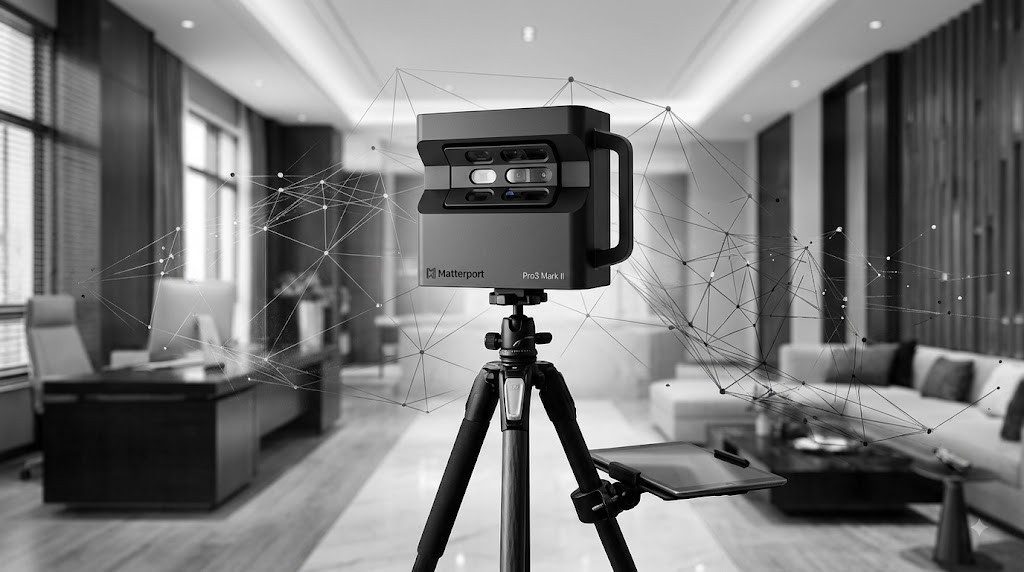
The current Pro3 remains the best reference point for understanding what Matterport could change. Its LiDAR system uses a 904nm wavelength. Matterport lists accuracy of approximately ±20mm at 10 meters and a depth rate of 100,000 points per second. The camera can capture up to 1.5 million points per scan.
Its imaging system produces 134.2MP panoramic output. The camera uses five exposures for each HDR frame and automatically balances white across the model. These features show that Matterport already takes both spatial accuracy and visual quality seriously.
The camera also supports GPS and uses a removable battery. Matterport rates it for more than 220 scans under its stated continuous scanning conditions.
These features create a strong foundation for a successor. Matterport does not need to reinvent the camera. It needs to refine it.
Could Matterport Make the Next Camera More Professional?
The answer could be yes. The current Pro3 already targets professional users, but the next model could focus even more heavily on high-volume capture.
Large construction companies may want faster workflows. Facility managers may want easier documentation. Architecture firms may want better measurement data. Real estate teams may want faster property capture.
A Matterport Pro3 Mark II could be designed around these needs.
That could mean better automation rather than simply better image quality. The camera might become easier to operate across large projects. It could also integrate more closely with professional software platforms.
Matterport’s existing ecosystem already supports professional plans and workflows. The Pro3 works with Professional, Business, and Enterprise plans. A future model would likely continue this ecosystem-first approach.
Could the Pro3 Mark II Become a Better All-Day Scanner?
Long scanning sessions expose the weaknesses of professional hardware. Battery life matters. Weight matters. Heat matters. Storage matters. Connectivity matters.
The existing Pro3 weighs 2.2kg and supports removable batteries. That makes continuous operation possible by swapping batteries rather than waiting for the camera to charge.
A future model could improve the same system. More efficient components could extend battery life. Faster charging could reduce downtime. Better thermal management could keep performance stable during long sessions.
The camera could also become easier to transport. A more compact case and lighter accessories could help professionals move between large spaces.
These improvements may not sound exciting in a rumor headline, but they can have a major effect on real-world productivity.
What Does This Mean for Matterport Users?
Existing Matterport users should not assume that a new camera is necessary. The Pro3 already provides a capable professional workflow. Its combination of LiDAR, panoramic imaging, cloud processing, and outdoor capture makes it suitable for a wide range of professional applications.
A future Matterport Pro3 Mark II would become attractive if it delivers a clear improvement in productivity. Users with large projects may benefit most from faster scanning and better battery life. Users focused on architectural documentation may care more about accuracy and point density.
Real estate users could prioritize image quality and speed. Construction teams could focus on LiDAR performance and exports.
That means the value of a future model will depend heavily on the user’s workflow.
There is no single feature that will make the camera perfect for everyone.
Alt Buzz Camera Coverage
For more camera rumors, technology news, comparisons, and future camera updates, visit Alt Buzz. Our camera coverage focuses on upcoming products and the features that could matter most to photographers, creators, and technology enthusiasts.
You can also follow the Alt Buzz YouTube channel for video coverage of camera rumors, new releases, comparisons, and photography technology. Use your existing Alt Buzz website and channel URLs here as internal links so the article strengthens your site’s internal SEO structure without sending readers to unrelated third-party websites.
The goal should always be to separate confirmed specifications from speculation. That is especially important with an unreleased camera. Rumors can change quickly, while official specifications come directly from the manufacturer.
Final Verdict: Is the Matterport Pro3 Mark II Worth Waiting For?
The Matterport Pro3 Mark II is an interesting camera to watch, but it is not an officially confirmed product at this point. Matterport continues to sell the Pro3, which already offers LiDAR, a custom 20MP sensor, 134.2MP panoramic output, outdoor scanning, GPS, removable batteries, and capture speeds below 20 seconds.
A successor would therefore need to deliver more than a small specification bump. Better LiDAR accuracy could make a real difference. Faster scanning could save professionals valuable time. Improved HDR and low-light performance could produce better digital twins. Longer battery life and stronger connectivity could make large projects easier.
The biggest opportunity may come from software. Matterport could combine smarter scanning assistance with better processing and AI-powered quality control. That approach could make the entire system more efficient without requiring dramatic changes to the hardware.
Price will also matter. The current Pro3 starts at $5,995, while professional bundles can reach much higher prices. A future model would need to justify its cost with meaningful improvements.
For now, there is no confirmed Matterport Pro3 Mark II release date, price, or specification list. Any exact figures circulating online should therefore be treated as rumors.
The current Pro3 remains the camera buyers can actually purchase today.
The Matterport Pro3 Mark II remains a product to watch.
If Matterport eventually announces it, the most important question will not be how many megapixels it has. The real question will be whether it can capture spaces faster, more accurately, and with less effort.
That is what could make the next Matterport camera truly interesting.
Matterport Pro3 Mark II Frequently Asked Questions
Is the Matterport Pro3 Mark II officially announced?
No. Matterport has not officially announced a Pro3 Mark II. Its current official professional model remains the Pro3.
What is the Matterport Pro3 Mark II release date?
There is no confirmed release date. Matterport has not published an official launch schedule for a Pro3 Mark II.
What could the Matterport Pro3 Mark II specifications include?
A future model could potentially feature improved LiDAR accuracy, faster scanning, better imaging, longer battery life, stronger connectivity, and improved processing. These are expectations, not confirmed specifications.
How much will the Matterport Pro3 Mark II cost?
The price is unknown because the camera has not been officially announced. The current Pro3 starts at $5,995 on Matterport’s official website.
Will the Matterport Pro3 Mark II use LiDAR?
LiDAR would be a logical feature for a Pro3 successor because it is central to the current Pro3 system. Matterport has not confirmed the specifications of a future Mark II.
How far can the current Matterport Pro3 scan?
Matterport lists a maximum range of up to 100 meters for supported E57 data. Its official store page notes that the normal range is 20 meters, with the extended 100-meter range available in E57 files.
How fast is the current Matterport Pro3?
Matterport lists a capture speed of less than 20 seconds per scan.
Is the current Matterport Pro3 good for outdoor scanning?
Yes. Matterport designed the Pro3 for indoor and outdoor reality capture. Its LiDAR system is designed to operate in conditions ranging from dim light to direct sunlight.
Should I wait for the Matterport Pro3 Mark II?
If you need a professional 3D camera now, there is little reason to wait for an unannounced product. The current Pro3 is available and already offers a mature professional workflow. If your project is not urgent, you can monitor official Matterport announcements before making a purchase decision.
What would make the Matterport Pro3 Mark II exciting?
Better LiDAR, faster capture, improved HDR, stronger low-light performance, longer battery life, better wireless connectivity, and smarter software would make a future Pro3 Mark II a significant upgrade. The most valuable improvement would be a combination of these features rather than one headline specification.