
Yashica FX-D 200: What Can We Expect?
The Yashica FX-D 200 is an interesting name in the growing retro digital camera market. It combines a classic film camera style with modern digital features. The camera has a built-in zoom lens, digital and film modes, manual controls, Wi-Fi, and 4K video. It also uses a physical film-style lever to create a more traditional shooting experience. A user manual available online lists the camera as the YASHICA FX-D 200 Digital Camera and provides a detailed specification and control guide.
There is an important detail to understand, though. Yashica’s current official FX-D series page lists the FX-D 100, FX-D 300, and FX-D S300 as its three FX-D models. The official page does not currently list an FX-D 200. That makes the FX-D 200 an unusual case. Available documentation describes the camera and its functions, but the current official Yashica lineup does not present it alongside the other FX-D models.
That distinction matters for anyone researching the Yashica FX-D 200. Some specifications can be found in the available manual, but buyers should check the exact seller and product version before making a purchase. The manual describes a 24MP CMOS camera with a 4.90mm to 49mm lens, 4K video, Wi-Fi, image stabilization, and several film simulations.
So, what exactly is the Yashica FX-D 200? What features does it offer? How does the film mode work? Could it be a good choice for creators who want a retro shooting experience? Here is everything worth knowing.
What Is the Yashica FX-D 200 and Who Is It For?
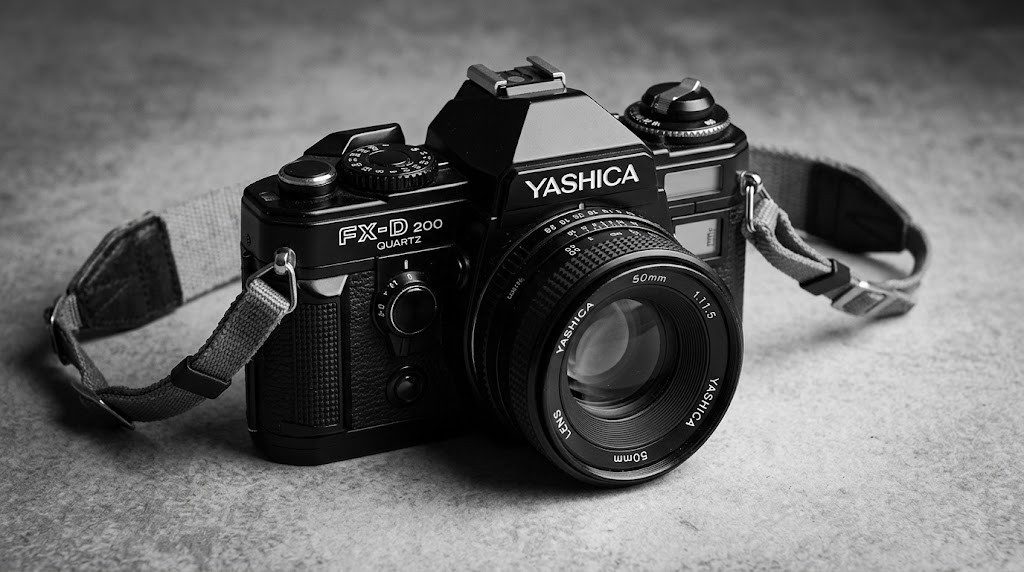
The Yashica FX-D 200 is designed around a simple idea. It tries to make digital photography feel more like shooting film. That approach is becoming popular again as photographers look for cameras that offer character and a slower shooting experience. Yashica itself describes the FX-D concept as “Film Experience in Digital” and says the series combines classic film-inspired controls with digital convenience.
The FX-D 200 takes that idea in a compact digital camera body. According to its manual, users can switch between digital and film modes. A dedicated filter system provides several digital looks, while the film mode includes YASHICA-branded simulations such as YASHICA 400, Ruby 60s, Sapphire 70s, Golden 80s, Mono 400, and B&W 400.
That makes the camera more interesting for casual photographers than for people searching for a professional interchangeable-lens system. It is built around convenience and creative shooting. The fixed lens removes the need to carry multiple lenses. The built-in filters add a visual style. Wi-Fi makes sharing easier. The film lever adds a physical interaction that most modern digital cameras do not provide.
Creators who enjoy retro cameras could find this combination appealing. Street photographers may also like the smaller, simpler approach. The camera could even work well for travel because it offers photography and video in one body.
What Can We Expect From the Yashica FX-D 200 Design?
The design is one of the biggest attractions of the Yashica FX-D 200. Rather than looking like a conventional modern compact camera, the FX-D concept takes inspiration from classic film cameras. The official Yashica FX-D series is inspired by the company’s FX-3, with retro controls and a manual-style film advance lever.
The FX-D 200 manual shows a body built around physical controls. There is a mode dial, focusing ring, filter knob, film mode lever, exposure and focus lock controls, and a zoom control. That gives the camera a much more hands-on feel than a basic point-and-shoot model.
The physical film lever is especially interesting. In film mode, the user needs to wind the lever after each photograph before taking another shot. This deliberately slows down the process. The idea is not to make digital photography faster. It is to make digital photography feel more deliberate.
That approach fits the current interest in digital cameras that imitate the experience of film. People can get the convenience of digital files without buying rolls of film or paying for development.
The design is therefore about more than appearance. The controls are part of the shooting experience.
What Are the Yashica FX-D 200 Camera Specifications?
The available manual provides a useful specification list for the Yashica FX-D 200. It identifies the camera as using a CMOS sensor and lists 24MP, 13MP, and 8MP photo resolution options. The camera has a fixed 4.90mm to 49mm lens with an aperture range of f/2.0 to f/3.1. The manual also lists a 2.8-inch 4:3 display.
The lens provides 10x optical zoom according to the documentation, along with 4x digital zoom. The listed shooting distance starts at 0.3 meters at the wide end and 1 meter at the telephoto end. That gives the camera flexibility for everyday photography, portraits, travel scenes, and more distant subjects.
Video is another major part of the specification. The camera supports 4K recording at 30fps. It also supports 2.7K at up to 60fps and 1080p recording at up to 120fps. Slow-motion options are available as well.
The camera also supports Micro SD or TF storage cards up to 256GB, according to the manual. It includes Wi-Fi, a built-in microphone, a built-in speaker, USB connectivity, and a hot shoe.
How Does the Yashica FX-D 200 Film Mode Work?
The film mode is probably the most distinctive feature of the Yashica FX-D 200. Instead of simply applying a filter after taking a picture, the camera creates a dedicated shooting experience around its film simulations.
The manual lists six film looks. They include YASHICA 400, YASHICA Ruby 60s, YASHICA Sapphire 70s, YASHICA Golden 80s, YASHICA Mono 400, and YASHICA B&W 400.
The filter knob lets users move between different looks. The camera also allows adjustments to several image parameters. These include grain, white balance, saturation, contrast, sharpness, and hue. Users can therefore customize the look rather than being limited to one fixed preset.
That makes the Yashica FX-D 200 more interesting than a simple novelty camera. A photographer can build a particular visual style and use it consistently.
The physical lever adds another layer. In film mode, the user must wind the lever after taking a photograph. This forces the photographer to pause before taking another frame. It is a small feature, but it changes how the camera feels in use.
Modern digital cameras encourage rapid shooting. The FX-D concept goes in the opposite direction.
Could the Yashica FX-D 200 Be Good for Street Photography?
Street photography could be one of the more interesting uses for the Yashica FX-D 200. The camera offers a fixed zoom lens, a compact body, and several creative modes. Those features can make it easier to carry around compared with a larger interchangeable-lens setup.
The zoom range also gives the photographer some flexibility. The manual lists a 4.90mm to 49mm focal length range and 10x optical zoom. That means users can frame wider scenes and move toward tighter compositions without changing lenses.
Film simulations could also work well for street images. A monochrome setting can create a classic documentary look. Warm simulations could suit evening scenes. More colorful settings could work for markets, signs, buildings, and urban details.
The biggest attraction may be the shooting experience. The film lever encourages photographers to think before every frame. That can be useful for street photography because it encourages observation rather than constant shooting.
However, photographers should not expect the autofocus and image quality of a modern professional mirrorless camera. The FX-D 200 is better understood as a creative compact camera with a retro identity.
What About Portrait Photography?
The Yashica FX-D 200 could also work for casual portraits. Its zoom lens provides flexibility, and the camera includes face tracking according to the available manual. The system also provides AF and AF+MF focusing modes.
The telephoto end of the lens could help create more flattering framing. Photographers can step back and use the longer focal range rather than placing the camera close to the subject.
The built-in film simulations could also give portraits a distinct appearance. A warm color profile may work well with skin tones in certain lighting conditions. Monochrome settings could create a more classic portrait style.
The camera also includes a beauty mode. That makes it clear that the FX-D 200 is aimed partly at casual creators and social photography rather than purely technical photography.
Good lighting will still matter. No filter can completely compensate for poor light. The camera will perform best when the photographer pays attention to exposure, background, and subject position.
How Good Is the Yashica FX-D 200 for Video?
Video is another strong part of the Yashica FX-D 200 specification. The camera can record 4K video at 30fps. It also offers 2.7K recording at 60fps and 30fps, along with Full HD recording at 120fps, 60fps, and 30fps.
That gives creators several options.
4K30 can work for standard content creation. The 2.7K60 mode can provide smoother motion. Full HD 120fps can be useful for slow-motion clips when the lighting is good.
The camera also includes image stabilization. The manual lists stabilization as an available option for both photography and video modes.
Audio is supported through a built-in microphone. More importantly for creators, the manual also lists an external microphone interface. That could make the camera more useful for basic vlogging and video production.
The hot shoe adds another potential advantage. External accessories can expand the setup.
Still, serious video creators should keep expectations realistic. The camera is designed around casual digital photography and retro shooting. It is not positioned as a professional cinema camera.
Could the Yashica FX-D 200 Be a Good Vlogging Camera?
Vlogging is another area where the camera could attract attention. The Yashica FX-D 200 has 4K recording, image stabilization, Wi-Fi, an external microphone interface, and a built-in display. Those features cover several basic requirements for casual creators.
Wi-Fi can make transferring files easier. The manual says the camera can connect to a phone through its YASHICA app. It uses a point-to-point wireless connection with a stated effective distance of around three meters.
The external microphone connection is particularly useful. Built-in microphones can struggle in windy environments or crowded locations. An external microphone can provide cleaner voice recording when the camera is used for talking-head content.
The camera’s retro design could also help it stand out on social media.
That does not mean it will replace a dedicated modern vlogging camera. Autofocus performance, stabilization quality, screen design, and low-light video all matter. The FX-D 200 should instead be viewed as a creative option for people who want personality as much as technical performance.
How Does the Zoom Range Affect the Yashica FX-D 200?
The zoom system is one of the more useful features in the Yashica FX-D 200. Its manual lists a 4.90mm to 49mm focal length range and 10x optical zoom. It also lists 4x digital zoom.
Optical zoom is the important part here. It allows the camera to change framing without relying entirely on digital cropping.
That makes the camera more versatile than a simple fixed-lens compact. A wide setting can help with travel scenes and group shots. A longer setting can help with portraits, details, and distant subjects.
The camera also includes a focusing ring with several fixed focal segments. The manual describes settings corresponding to A, 50mm, 85mm, 150mm, and 240mm.
This is an unusual approach.
It gives the user another way to think about framing. Instead of constantly zooming, photographers can choose a familiar focal-length setting.
That could be appealing to people who enjoy the discipline of traditional photography.
What Focusing Features Does the Yashica FX-D 200 Offer?
Autofocus is important for a compact digital camera. The Yashica FX-D 200 supports AF and AF+MF modes according to its manual. It also includes face tracking and an AF assist lamp.
The AF assist lamp is designed to help in darker environments. That can be useful for indoor photography when the available light is limited.
Manual focus is also available. This gives experienced users more control when autofocus is not selecting the subject they want.
The camera also provides exposure and focus lock controls. Users can lock the current focus and exposure before recomposing the image.
These controls make the FX-D 200 more flexible than a basic automatic point-and-shoot.
However, the real-world autofocus experience will depend on the lighting and subject. Buyers should not assume that the camera will match the autofocus performance of the latest Sony, Canon, Nikon, or Fujifilm mirrorless bodies.
What ISO Range Does the Yashica FX-D 200 Have?
The available manual lists ISO Auto and manual ISO settings from ISO 100 through ISO 3200.
That range is suitable for everyday photography. ISO 100 can work well in bright conditions. Higher settings can help when the light drops.
ISO 3200 can be useful indoors, at night, or during evening street photography. The actual image quality at high ISO will depend on the sensor and processing.
This is another reason not to judge the camera purely by its 24MP specification. Resolution is only one part of image quality.
Sensor size, lens quality, noise reduction, dynamic range, and processing all contribute to the final image.
The Yashica FX-D 200 is clearly designed around a fun digital photography experience rather than maximum technical performance.
Does the Yashica FX-D 200 Shoot RAW?
Yes, the available manual lists JPG and JPG+DNG as file format options.
That is a useful feature for photographers who want more control after shooting.
JPEG files are convenient. They are ready to share and require little editing. DNG files provide more flexibility for photographers who want to adjust exposure, white balance, color, and other settings during post-processing.
RAW support also makes the camera more interesting to enthusiasts. It means users do not have to rely entirely on the built-in film simulations.
A photographer could capture a DNG and create a personal look later.
That gives the camera two different approaches. Film simulations provide an immediate finished style. DNG files provide greater editing freedom.
What Video Features Does the Yashica FX-D 200 Offer?
The video specification is broader than many basic compact cameras. The Yashica FX-D 200 supports 4K30, 2.7K60, 2.7K30, 1080p120, 1080p60, 1080p30, and several 720p options.
The camera also provides slow-motion options. The manual lists 1080p 4X, 1080p 2X, 720p 4X, and 720p 2X slow-motion modes. Time-lapse options are available too.
That gives casual creators plenty to experiment with.
A travel creator could use 4K for standard footage. A social media creator could use slow motion for short clips. Time-lapse could work for sunsets, city traffic, clouds, or other moving scenes.
The camera also supports loop recording.
This makes the FX-D 200 a surprisingly flexible little video camera on paper.
Could the Yashica FX-D 200 Be Good for Travel?
Travel photography may be one of the best use cases for the Yashica FX-D 200. The built-in zoom means users do not need to carry several lenses. The camera also offers both still photography and video.
That matters when traveling light.
The retro design adds another advantage. A distinctive camera can make photography feel more enjoyable. Many people buy compact cameras because they want to take pictures more often, not because they need the highest possible resolution.
The film simulations could also help travelers create a consistent look. Instead of spending hours editing hundreds of vacation photographs, users can select a style before shooting.
Wi-Fi makes the workflow more convenient. Images can be transferred to a phone for sharing on social platforms.
The camera is therefore well suited to casual travel creators who value portability and style.
What Storage Does the Yashica FX-D 200 Use?
The Yashica FX-D 200 uses external Micro SD or TF storage according to the available documentation. The manual states that cards up to 256GB are supported and recommends U3-level cards for reliable operation.
Using a removable card is useful for travel.
A photographer can carry an extra card instead of depending entirely on internal storage.
However, card speed matters when recording higher-resolution video. A suitable U3 card is recommended by the manual.
Users should also format cards in the camera when necessary. The manual specifically recommends formatting a card in the camera if it has previously been used in another device.
That is a small detail, but it can prevent recording problems.
How Does Wi-Fi Work on the Yashica FX-D 200?
Wireless connectivity makes the Yashica FX-D 200 more convenient for modern creators. The camera can connect to the YASHICA app through Wi-Fi. The available manual says users can activate Wi-Fi in the system settings and connect to a network named in the FX-D 200 format.
The manual lists a default Wi-Fi password and says the point-to-point connection has an effective range of about three meters.
That means the feature is primarily intended for nearby phone connectivity.
It is not a replacement for a normal internet connection.
The main benefit is convenience. Users can connect the camera to a smartphone and work with the app without removing the memory card.
For social media creators, that can make the workflow much easier.
Could the Yashica FX-D 200 Become Popular With Gen Z?
There is a strong reason why cameras like the Yashica FX-D 200 are attracting attention. Younger photographers are showing renewed interest in compact cameras, film aesthetics, and physical controls.
The appeal is not necessarily technical.
Many users want something that feels different from a smartphone.
A smartphone can take excellent pictures, but the experience is highly automated. A retro digital camera introduces physical controls and a separate device dedicated to photography.
The FX-D 200 goes even further with its film lever and film simulations.
That creates an experience.
The photographer has to interact with the camera. The image can also have a distinctive look straight out of the camera.
This could make the FX-D 200 attractive for social media, travel, street photography, and casual lifestyle content.
How Does the Yashica FX-D 200 Fit Into the FX-D Family?
Yashica’s official FX-D page currently describes the FX-D series as a digital film simulation camera family inspired by the FX-3. The company currently lists three models: the FX-D 100, FX-D 300, and FX-D S300.
The FX-D 100 is listed with a 13MP sensor. The FX-D 300 and FX-D S300 use 50MP sensors, while the S300 adds an electronic viewfinder. Yashica also says the 300 and S300 support DNG.
That makes the Yashica FX-D 200 unusual because it appears in an available product manual but not in the current official lineup page.
For SEO readers and potential buyers, this is worth highlighting.
Do not assume that every FX-D 200 listing represents the same retail product or official current lineup. Check the seller, model name, warranty, packaging, and manufacturer information before buying.
The available documentation is useful, but the official Yashica lineup should remain the main reference for current products.
What Makes the Yashica FX-D 200 Different From a Normal Digital Camera?
The biggest difference is the philosophy.
Most modern digital cameras are designed to remove friction. They autofocus quickly. They shoot continuously. They use large screens. They automate exposure and processing.
The Yashica FX-D 200 takes a different approach.
Its film mode introduces a physical lever. Its filter knob makes creative looks part of the camera. Its retro controls encourage interaction. The goal is to make digital photography feel less disposable.
That could be exactly what some photographers want.
A person who wants the fastest autofocus and best image quality should probably look elsewhere.
Someone who wants to enjoy the process may find the FX-D 200 much more interesting.
The camera is therefore competing on experience as much as specifications.
Is the Yashica FX-D 200 a Professional Camera?
The answer depends on what “professional” means.
The Yashica FX-D 200 has several advanced features. It supports manual controls, DNG, 4K video, external microphones, Wi-Fi, optical zoom, and image stabilization.
However, it should not be confused with a professional interchangeable-lens camera.
The fixed lens limits flexibility. The available documentation does not position the camera as a direct competitor to high-end mirrorless systems.
Professional photographers often need reliable autofocus, strong dynamic range, interchangeable lenses, robust weather sealing, fast burst performance, and extensive accessory support.
The FX-D 200 focuses on a different audience.
It is better described as a creative compact digital camera with a retro shooting experience.
That is not a weakness.
It simply defines the product more accurately.
What Are the Biggest Strengths of the Yashica FX-D 200?
The Yashica FX-D 200 has several features that could make it appealing. Its retro design gives it personality. The built-in zoom provides flexibility without requiring additional lenses. The film simulations give users instant creative looks.
RAW support is another useful advantage. DNG files give photographers more editing flexibility. The 4K video mode makes the camera useful for content creation too.
Wi-Fi adds convenience.
An external microphone input adds value for video creators.
Manual focus and exposure controls provide more creative control than a basic point-and-shoot.
The physical film lever may be the biggest differentiator.
It changes how the camera feels.
What Could Be Better About the Yashica FX-D 200?
No camera is perfect.
The biggest question around the Yashica FX-D 200 is its position within the official Yashica lineup. The current official FX-D page does not list the 200 model. That means buyers should verify the exact product before purchasing.
The camera also uses a relatively small digital-camera-style body and fixed lens. Photographers expecting interchangeable-lens flexibility may quickly feel limited.
Image quality is another area where expectations should remain realistic. A 24MP specification does not automatically mean the camera will match a modern APS-C or full-frame camera.
The retro concept is the main attraction.
That means buyers should choose it for the experience as much as the specification sheet.
Is the Yashica FX-D 200 Worth Buying?
The answer depends on your priorities.
If you want a fun digital camera with retro controls, film simulations, optical zoom, 4K video, and smartphone connectivity, the Yashica FX-D 200 is certainly interesting.
The available manual provides a surprisingly broad feature set. It includes multiple shooting modes, DNG support, image stabilization, autofocus options, manual focus, custom modes, Wi-Fi, and several video formats.
However, buyers should verify availability and authenticity carefully.
Yashica’s current official FX-D page does not list the FX-D 200 among its three current FX-D models.
That makes it especially important to check the exact listing before spending money.
If you want a professional camera for commercial photography, there are stronger options.
If you want a camera that makes photography fun again, the FX-D concept is much more compelling.
What Could Make the Yashica FX-D 200 Interesting in 2026?
The renewed popularity of compact digital cameras gives products like the Yashica FX-D 200 an interesting opportunity. Smartphones continue to improve, but that has not removed the appeal of dedicated cameras.
People still want physical controls.
They still enjoy optical zoom.
They still like the look of film.
They also want instant sharing.
The FX-D 200 brings several of those ideas together.
Its film simulations provide the nostalgic look. The digital system provides convenience. Wi-Fi connects the camera to modern smartphones. The physical lever adds a sense of interaction.
That combination could appeal strongly to casual creators.
The camera does not need to beat a flagship mirrorless camera.
It only needs to provide an experience that a smartphone cannot.
Read More From Altbuzz
Want more camera rumor coverage like this? Head over to Altbuzz for the latest camera reviews, rumor roundups, and buying guides across every major brand.
Subscribe to Altbuzz YouTube Channel
Prefer video breakdowns of camera rumors and reviews? Subscribe to the Altbuzz YouTube Channel for hands-on camera coverage, rumor discussions, and gear comparisons every week.
Final Verdict: Should You Watch the Yashica FX-D 200?
The Yashica FX-D 200 is an interesting retro digital camera because it focuses on the experience of photography rather than chasing professional specifications. Its available documentation lists a 24MP CMOS sensor, a 4.90mm to 49mm lens, 10x optical zoom, 4K video, DNG support, Wi-Fi, image stabilization, and a wide range of creative controls.
The film mode is arguably its most interesting feature. Six film simulations give users different visual styles, while the physical film lever adds an analog-inspired step between photographs. The camera also offers manual focus, exposure controls, custom modes, external microphone support, and several video options.
There is one major caveat.
Yashica’s current official FX-D series page lists the FX-D 100, FX-D 300, and FX-D S300. It does not currently list the FX-D 200. Therefore, anyone interested in buying the Yashica FX-D 200 should verify the exact model and seller before making a purchase.
For photographers searching for maximum image quality, this is probably not the camera to buy.
For someone who wants a fun retro body, optical zoom, digital convenience, film-style colors, and a more engaging shooting process, it could be much more appealing.
The biggest strength of the Yashica FX-D 200 is not its 24MP number.
It is the experience.
Digital photography can sometimes feel too automatic. This camera tries to slow things down. It gives the photographer physical controls and creative choices. That makes it part of a growing trend toward cameras that bring personality back into digital photography.
The FX-D 200 may not be the camera for everyone.
But for the right photographer, that may be exactly the point.
Yashica FX-D 200 Frequently Asked Questions
What is the Yashica FX-D 200?
The Yashica FX-D 200 is described in an available digital camera manual as a compact CMOS camera with a 24MP photo mode, 10x optical zoom, film simulations, 4K video, Wi-Fi, and retro-style controls.
Does the Yashica FX-D 200 have a 24MP sensor?
The available manual lists 24MP as the camera’s highest photo resolution and identifies the sensor as CMOS. It also provides 13MP and 8MP photo options.
Does the Yashica FX-D 200 shoot 4K video?
Yes. The available documentation lists 4K video at 30fps. It also supports 2.7K and Full HD recording at several frame rates.
Does the Yashica FX-D 200 have optical zoom?
Yes. The available specifications list a 10x optical zoom with a 4.90mm to 49mm focal length range. A 4x digital zoom is also listed.
Does the Yashica FX-D 200 support RAW?
Yes. The manual lists JPG and JPG+DNG as available file formats.
Does the Yashica FX-D 200 have film simulations?
Yes. The manual lists six film modes: YASHICA 400, Ruby 60s, Sapphire 70s, Golden 80s, Mono 400, and B&W 400.
Does the Yashica FX-D 200 have Wi-Fi?
Yes. The manual describes Wi-Fi connectivity and connection to the YASHICA mobile app.
Is the Yashica FX-D 200 officially listed by Yashica?
The current official Yashica FX-D series page lists three models: FX-D 100, FX-D 300, and FX-D S300. The FX-D 200 is not currently listed on that page.
Who should buy the Yashica FX-D 200?
The camera is most interesting for casual photographers, street photographers, travelers, and creators who value retro design and film-style shooting. It is less suitable for photographers who need the advanced autofocus, interchangeable lenses, and professional image quality of a modern mirrorless system.
Is the Yashica FX-D 200 a film camera?
No. The Yashica FX-D 200 is a digital camera. Its film mode uses digital simulations to recreate film-inspired looks. The physical film advance lever is designed to imitate the experience of shooting a traditional film camera.