
Leica Cameras Ranked: We Used All 12 Models and Only One Earns #1
This Leica cameras ranked list opens with a surprise. One of these twelve cameras is the most technically advanced Leica ever made. Another comes closer to what a Leica should feel like than almost anything else the company builds. Neither one wins. I have used every camera in this ranking. I did not glance at them, and I did not handle them for five minutes at a counter. I used them. By the end, you will know why both lose. The most capable Leica and the most traditional Leica fall to a camera that simply gets used more.
Altbuzz builds every ranking from real time with the gear, not from a spreadsheet of specifications. Expect opinions, trade-offs, and a few arguments. Read the full countdown below. You can also jump straight to the quick table.
In This Guide
- How We Ranked These Leica Cameras
- Quick Summary Table
- #12 Leica D-Lux 8
- #11 Leica M11
- #10 Leica SL3
- #9 Leica M EV1
- #8 Leica Q3 Monochrom
- #7 Leica SL3-S
- #6 Leica M11-D
- #5 Leica M11 Monochrom
- #4 Leica Q3
- #3 Leica SL3-P
- #2 Leica M11-P
- #1 Leica Q3 43
- Buying Guide
- FAQs
How We Ranked These Leica Cameras
This ranking does not ask which Leica is the most capable. It also does not ask which Leica mattered most in history. It asks one question: which camera makes the strongest case for being a Leica today?
To answer it, I weighed five things:
- Current pricing: Does the camera justify its cost right now, not at launch?
- Shooting experience: Does it feel distinctive in the hand and at the eye?
- Lineup position: Does a sibling model now do the same job better?
- Completeness: How much must you buy or decide before the camera becomes useful?
- Real use: How often did I actually reach for it?
A lower spot does not always mean a weaker camera. It means the alternatives make a stronger case right now. That distinction runs through the whole list.
Leica Cameras Ranked: Quick Summary Table
| Rank | Camera | Best For |
|---|---|---|
| 12 | Leica D-Lux 8 | Pocketable travel and casual shooting |
| 11 | Leica M11 | Buyers who want 60MP and a rangefinder, ideally used |
| 10 | Leica SL3 | Landscape, architecture, and studio work |
| 9 | Leica M EV1 | Photographers who struggle with rangefinder focusing |
| 8 | Leica Q3 Monochrom | Dedicated 28mm black-and-white street shooters |
| 7 | Leica SL3-S | Hybrid shooters who need speed and video |
| 6 | Leica M11-D | Photographers who want to stop checking the screen |
| 5 | Leica M11 Monochrom | Black-and-white purists who want lens choice |
| 4 | Leica Q3 | Anyone who wants a complete Leica in one purchase |
| 3 | Leica SL3-P | Buyers who want maximum capability |
| 2 | Leica M11-P | Traditional rangefinder devotees |
| 1 | Leica Q3 43 | The strongest complete Leica package in 2026 |
Now, let’s start the climb.
#12: Leica D-Lux 8
What You Get
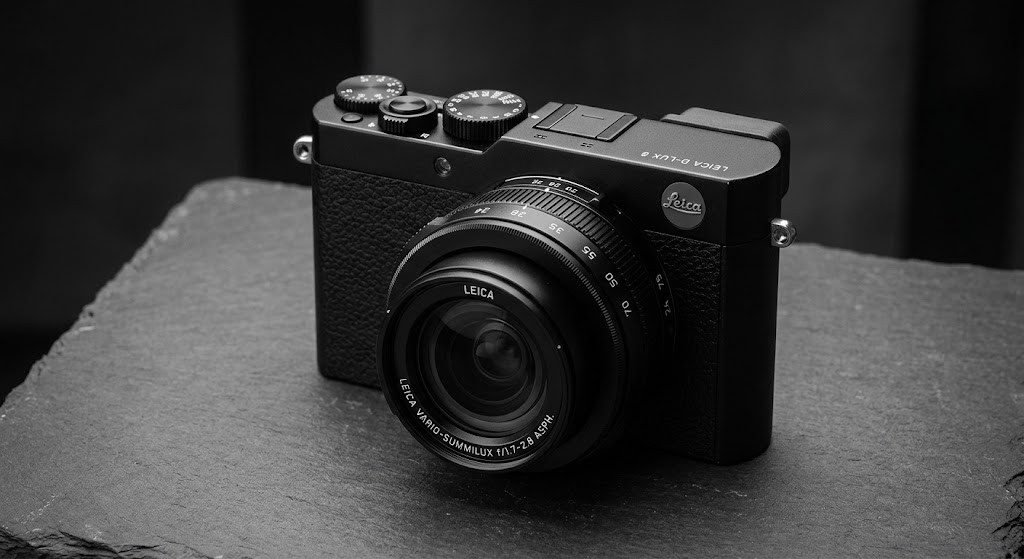
Last place does not mean bad here. The Leica D-Lux 8 is genuinely charming. It offers a fast 24-75mm equivalent zoom and a Four Thirds-type sensor. You also get real exposure dials, an electronic viewfinder, and RAW files. Leica folds all of that into a jacket-pocket body.
Why It Ranks #12
The sensor architecture underneath traces back further than Leica likes to advertise. The camera lists 21MP on paper, but it delivers around 17MP effective. At Leica pricing, that gap gets harder to explain every year. The D-Lux 8 does not land last because it fails. It lands last because every camera above it makes a more distinctive argument.
In Real-World Use
The D-Lux 8 works best as the camera you carry everywhere. It slips into a jacket pocket. You bring it on days when a bigger body would stay home. The fast zoom covers wide scenes, street moments, and casual portraits without a lens change. The exposure dials let you set exposure by feel, which separates it from most compact cameras. The electronic viewfinder helps in bright light. RAW files give you room to edit later. The fixed lens means fewer decisions. You shoot more. That simplicity is a quiet strength.
Who Should Skip It
Skip it if image quality per dollar drives your decision. The resolution gap and the Leica pricing make rivals look strong. Photographers who want a larger sensor or interchangeable lenses should look higher on this list.
Best For
Travelers and everyday shooters who want a charming, pocketable Leica without a big system commitment.
#11: Leica M11
What You Get
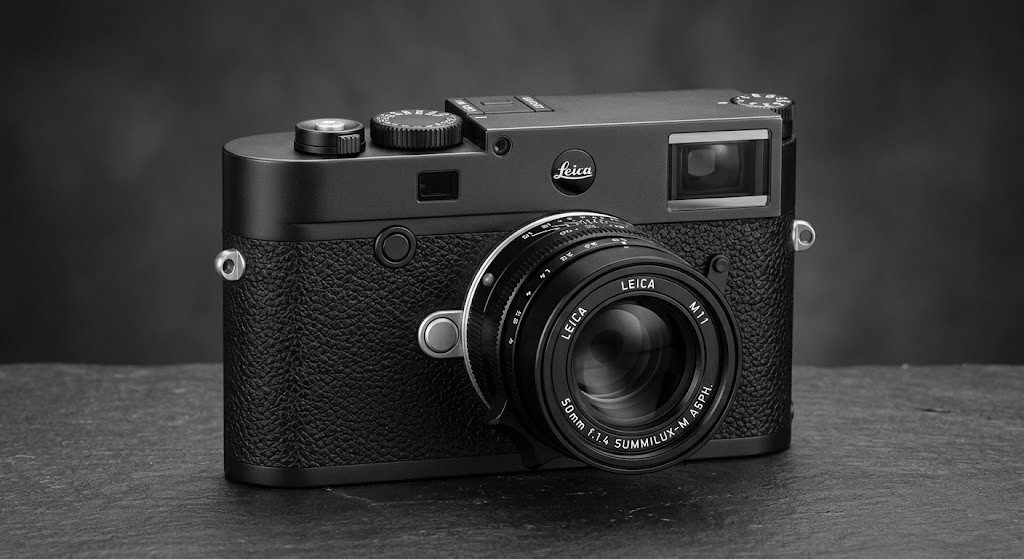
This is the camera that started the M11 story. On its own terms, it is still excellent. It offers 60MP, Triple Resolution recording, and the optical rangefinder. It also supports full M-mount compatibility, all in a remarkably compact body.
Why It Ranks #11
The problem is what Leica built around it since. The M11-P arrived. The M11-D, the M11 Monochrom, and the M EV1 followed. Each of those gives a buyer a sharper reason to choose it. At current pricing, the standard M11 starts to feel like the version you pick when you have not decided what you actually want.
Here is the twist. Used, I would rank it much higher. A discounted M11 still hands you the essential 60MP, optical-rangefinder experience. You skip the current P-series money. This ranking judges the strongest case today. It does not judge historical importance.
In Real-World Use
Shooting the M11 feels like shooting a classic M with modern insurance. The rangefinder pushes you to slow down and frame with care. Triple Resolution recording lets you choose the file size that fits the job. Shoot smaller files on casual days. Shoot full 60MP files when detail matters. Full M-mount compatibility means decades of lenses still work on the body. The compact size keeps it easy to carry all day. Those strengths never disappeared. They simply stopped being unique once the family grew.
Who Should Skip It
Skip a new M11 if you already know what you want. Maybe you want a screenless body, a quieter exterior, a monochrome sensor, or an electronic finder. Each of those exists elsewhere in the family, and each speaks more directly to its buyer.
Best For
Buyers who want the core M experience and shop on the used market.
#10: Leica SL3
What You Get
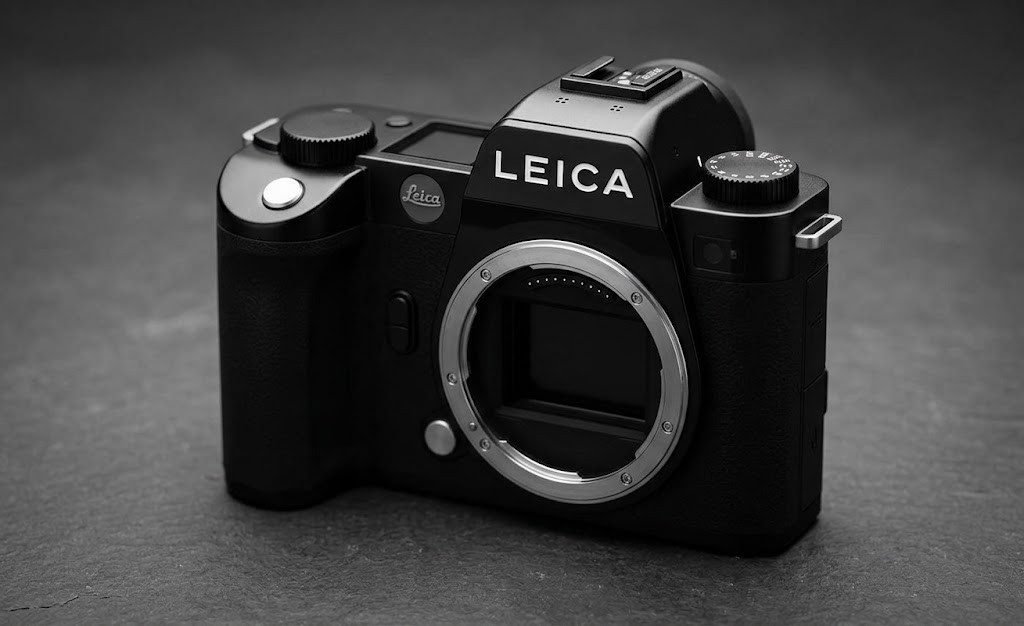
On paper, the Leica SL3 is still a serious professional tool. It packs 60MP, in-body stabilization, and hybrid autofocus. It records video up to 8K and carries IP54 weather sealing. For landscape, architecture, and studio work, it is still the SL I would reach for.
Why It Ranks #10
The trouble is that the SL3-P now exists. Leica’s own numbers make the split obvious. The P delivers 44MP at 40fps with tracking. The SL3-S delivers 24MP at 30fps. The standard SL3 delivers 60MP with a noticeably slower burst. That reshuffle turns the SL3 into the resolution specialist rather than the obvious default body.
The SL3 did not get worse. Its own siblings simply out-positioned it. This kind of distinction is exactly what we keep making in these rankings.
In Real-World Use
The SL3 rewards patient work. Landscape and architecture shooters benefit from the 60MP resolution. They can crop, print large, and keep fine detail. In-body stabilization helps with slower shutter speeds and handheld work. IP54 weather sealing adds confidence outdoors. Studio photographers enjoy the same resolution advantage inside a controlled workflow. Video up to 8K gives the body real hybrid ability.
The slower burst is the trade-off. You will feel it when subjects move quickly. That gap explains why the P and S models exist.
Who Should Skip It
Sports and wildlife shooters should look elsewhere. Burst speed matters more for them. The SL3-P or the SL3-S fits better.
Best For
Photographers who prioritize resolution over speed.
#9: Leica M EV1
What You Get
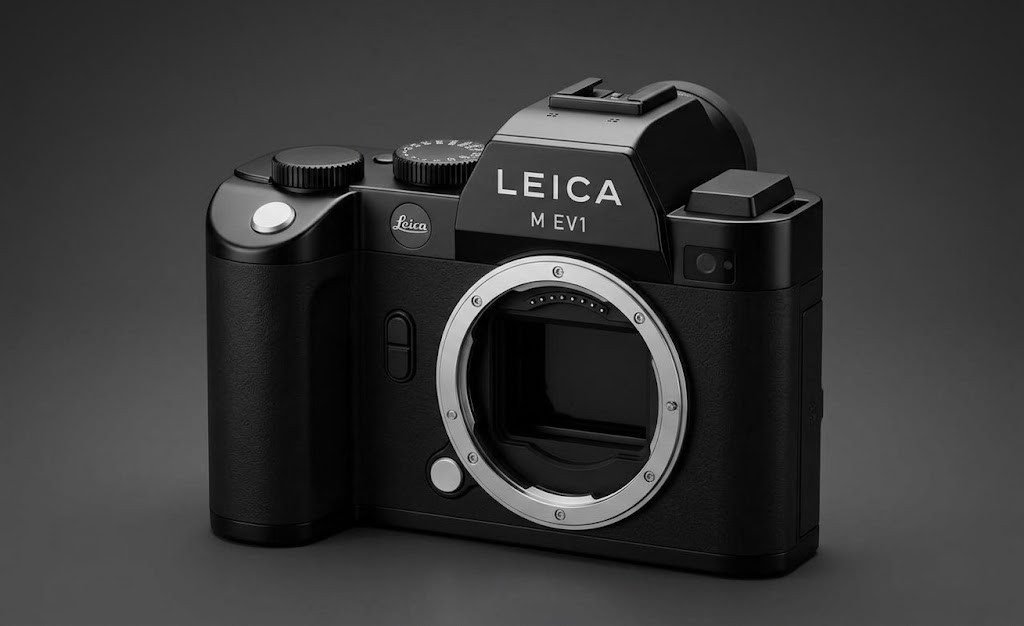
This section will start arguments. I am fine with that. The Leica M EV1 keeps the 60MP M11 sensor and full M-lens compatibility. Then it does something that still feels slightly heretical. It swaps the optical rangefinder for a 5.76M-dot electronic viewfinder. That finder adds focus peaking and magnification.
Why It Ranks #9
Honestly, it works. Fast M lenses, wide-angle glass, telephoto M lenses, close focusing, and shallow depth of field all become noticeably easier through an electronic finder. Compare that to a rangefinder patch. For photographers whose eyesight makes rangefinder focusing difficult, this may be the most usable M Leica ever built.
But here is the question I keep circling back to. If the optical rangefinder is a big part of why someone buys into the M system, does removing it improve the camera? Or does it build a different camera wearing an M badge? For me, the electronic finder made focusing faster. It also quietly removed what made the M feel like an M. Your eyes and priorities may land somewhere else. That is fair.
In Real-World Use
The electronic finder changes how you use fast M glass. Focus peaking marks the sharp area. Magnification lets you check critical focus before you press the shutter. With a wide-aperture lens, that confidence saves frames. Telephoto M lenses also become more practical, because small focus errors show up clearly in the finder. Close focusing gets easier too.
You can still use your full M lens collection. The camera simply asks you to accept a different viewing experience. Some photographers will welcome that change. Others will miss the rangefinder patch immediately.
Who Should Skip It
The optical rangefinder may be your reason for wanting an M. Then the M11-P or the standard M11 serves you better.
Best For
M-system fans who struggle with rangefinder focusing, and anyone who shoots fast glass wide open.
#8: Leica Q3 Monochrom
What You Get
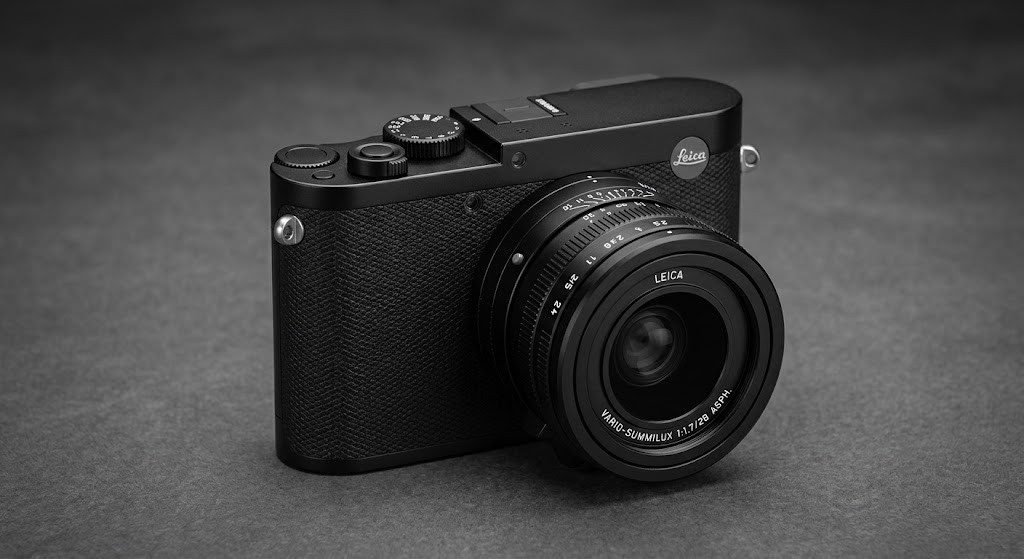
This is a genuinely brilliant camera whose biggest strength doubles as its biggest limitation. It pairs a dedicated 60MP monochrome sensor with a permanent 28mm F1.7 Summilux lens. It reaches sensitivity up to ISO 200,000 and records 8K monochrome video.
A dedicated monochrome sensor is not a black-and-white filter over a color file. No color array interpolates information that was never recorded. As a result, you get remarkable fine detail and rich tonal separation. You also get high-ISO performance that color sensors cannot match. Every photosite records luminance and nothing else.
Why It Ranks #8
The catch is permanence. You get 28mm, forever. You get black and white, forever. That is exactly why it sits here rather than higher. Do you already shoot black-and-white street work at 28mm? Move this camera several spots up your own list. I would not argue.
In Real-World Use
This camera trains your eye. You cannot switch to color. So you stop thinking about color. You start seeing light, shape, and contrast. The 28mm F1.7 lens suits street work, architecture, and environmental scenes. High ISO sensitivity lets you keep shooting when the light drops. The files carry rich tonal separation. Shadows and highlights keep their detail.
The fixed lens builds habits around one view. Many photographers find that focus helpful. Others find it limiting.
Who Should Skip It
Regular color shooters should look elsewhere. So should photographers who want more than one focal length or need color files for clients.
Best For
Committed black-and-white shooters who love the 28mm view.
#7: Leica SL3-S
What You Get
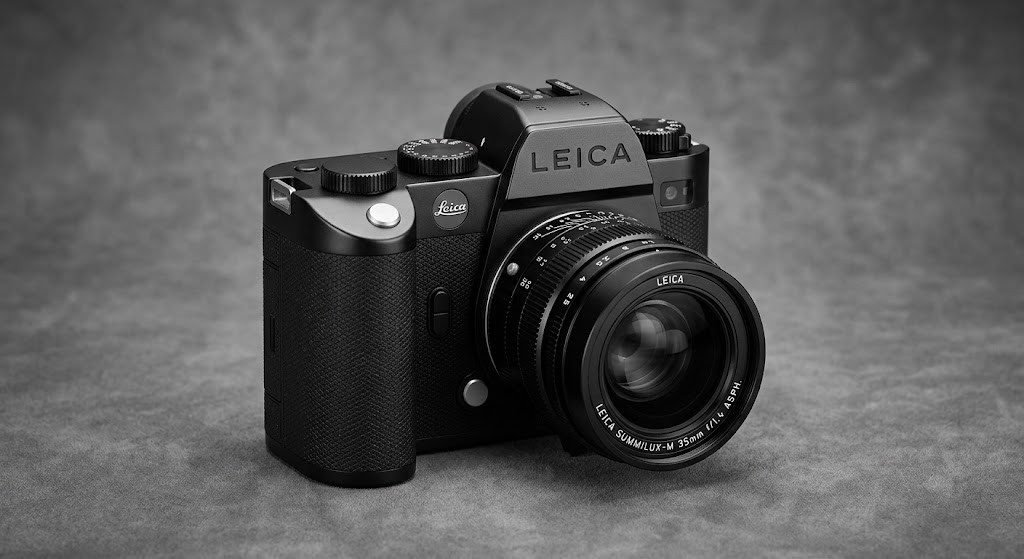
This is the SL body I would choose the moment video or speed matters more than raw resolution. It offers 24MP and up to 30fps with full tracking. It records 6K open-gate video, RAW video, and ProRes. All of that sits on the full L-mount ecosystem.
Why It Ranks #7
Notice what just happened. Fewer megapixels earned a higher rank. For a hybrid shooter, 24MP is plenty. Faster readout, faster bursts, real video tools, and a lighter file workflow matter more day to day than an unused extra 36MP. Lower resolution wins that argument outright. I am letting it win.
Also, L-mount does not lock you into Leica glass exclusively. Sigma and the wider L-mount ecosystem quietly change what building an SL system costs. If you want to read more about the system itself, visit the official Leica Camera website.
In Real-World Use
Speed defines this body. Up to 30fps with full tracking helps with sports, children, pets, and unpredictable street moments. Video shooters gain 6K open-gate recording, RAW video, and ProRes. These tools fit professional workflows. The 24MP files stay lighter. Cards fill slower. Editing moves faster. That workflow advantage adds up over a busy week.
L-mount flexibility also helps. You can mix Leica lenses with options from other L-mount makers, which keeps system costs under control.
Who Should Skip It
Large prints and heavy cropping call for more resolution. Landscape and architecture shooters should choose the SL3 or the SL3-P.
Best For
Hybrid photo and video shooters who value speed over resolution.
#6: Leica M11-D
What You Get
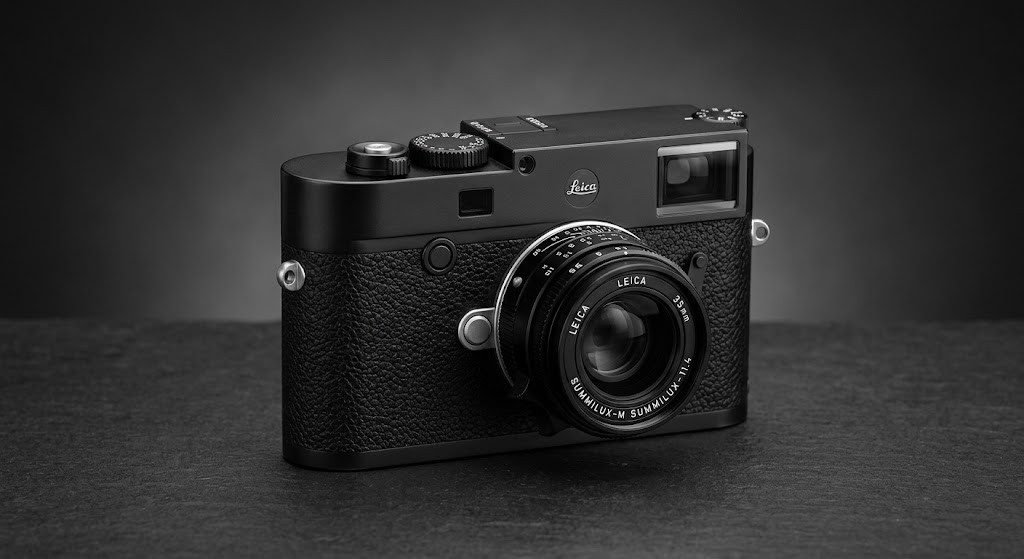
The Leica M11-D may be the most coherent idea in the whole lineup. Leica uses every bit of modern digital technology, then deliberately removes the habit of staring at a screen after every frame. You get the same 60MP sensor as the rest of the family and 256GB of storage. You also get the full rangefinder experience. The camera has no rear display.
Why It Ranks #6
That restriction changes behavior. That is the whole point. You cannot chimp every frame. Your attention goes back to the subject, the composition, and the timing. A screen quietly invites you to stop trusting yourself on all of those.
I will not romanticize it past what it is, though. It is still an extremely expensive digital camera. If you need instant focus confirmation or client review on the spot, the missing screen will feel like an inconvenience, not a liberation.
In Real-World Use
The habit shift comes quickly. You set your exposure, trust your judgment, and move on to the next frame. You review your images later on a computer. The 256GB of storage means you rarely think about capacity during a trip. The rangefinder keeps focus manual and deliberate. Together, those traits create a slower, calmer rhythm.
Travel, documentary work, and street photography suit that rhythm well. The camera protects your attention for the moment in front of you.
Who Should Skip It
Skip it if you work with clients who expect instant review. Beginners who want feedback after every shot should also look elsewhere.
Best For
Photographers who want a slower, more deliberate way of working.
#5: Leica M11 Monochrom
What You Get
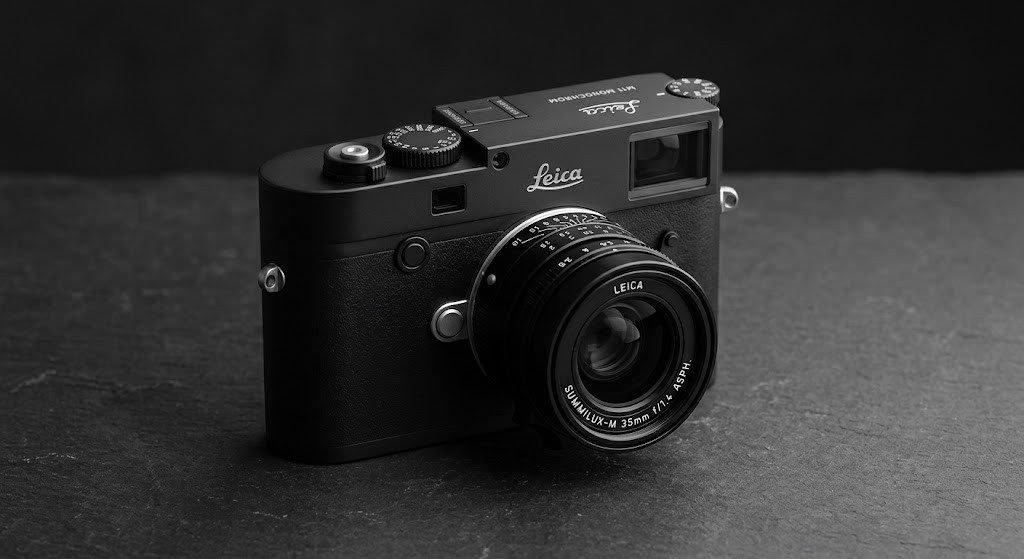
This camera suits someone who has already decided that color is not part of the equation. It uses a 60MP class dedicated monochrome sensor and the optical M rangefinder. It supports full interchangeable M-lens compatibility and reaches sensitivity up to ISO 200,000.
Why It Ranks #5
Why does it outrank the Q3 Monochrom? Lens choice, plainly. You can shoot wide, 35mm, 50mm, or portrait lengths. You can use vintage M glass, modern APO lenses, and fast Summilux and Noctilux options. The lens itself becomes part of how the monochrome image gets built.
It remains a manual focus camera. It stays permanently black and white. It is also extremely expensive before you buy a single lens. Someone who needs convincing that a monochrome-only M makes sense is probably not this camera’s buyer. That is not a criticism. It is simply accurate.
In Real-World Use
Lens choice defines this camera. A wide lens gives you sweeping scenes. A 50mm or portrait length gives you intimate frames. Vintage glass adds character to monochrome tones, while modern APO lenses add precision. Fast Summilux and Noctilux options give you shallow depth of field in low light. They pair naturally with the high ISO range. Manual focus keeps the whole process deliberate.
Costs add up quickly, because the lens is a separate purchase. Plan your budget around the body and at least one excellent lens.
Who Should Skip It
Color shooters and autofocus fans should look elsewhere. So should anyone who hesitates about permanent black and white.
Best For
Black-and-white purists who want the full M lens universe.
#4: Leica Q3
What You Get
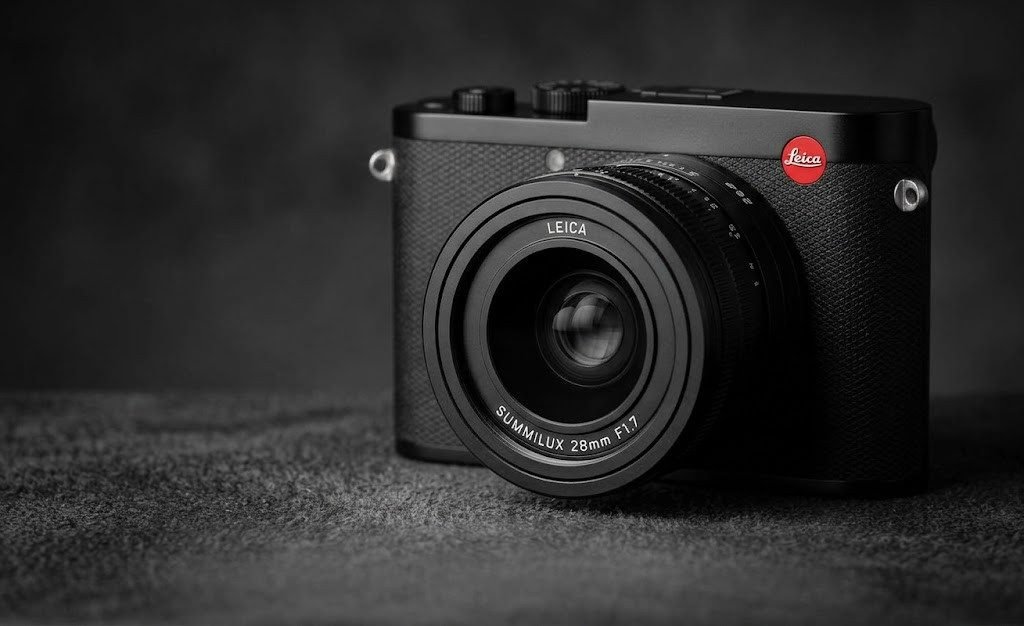
The Leica Q3 may be the easiest Leica to recommend to someone who wants the experience without assembling a system first. It offers 60MP and a 28mm F1.7 Summilux lens. It also adds stabilization, autofocus, and flexible digital cropping.
Why It Ranks #4
The appeal is completeness. Buy this one camera. You already own the lens, the autofocus, and a compact full-frame system. You face no lens roadmap and no second decision before the camera becomes useful. That is rarer in this lineup than it sounds.
Why does it not win outright? The answer is 28mm. The lens is superb, but focal length preference is everything on a fixed-lens camera. A photographer who naturally sees a little closer to normal will crop this file again and again. That habit leads directly toward #1.
In Real-World Use
You pick it up and shoot. Autofocus and stabilization make the camera forgiving. The 28mm view shows the environment around your subject. It suits travel, street work, architecture, and interiors. Digital cropping extends your reach when you need it. The built-in lens keeps the camera compact. You can carry it every day.
That ease explains why so many people recommend it first. It asks very little before it starts delivering.
Who Should Skip It
Skip it if you naturally prefer a normal view or tighter framing. In that case, the Q3 43 fits your eye better.
Best For
Photographers who love 28mm and want a complete camera.
#3: Leica SL3-P
What You Get
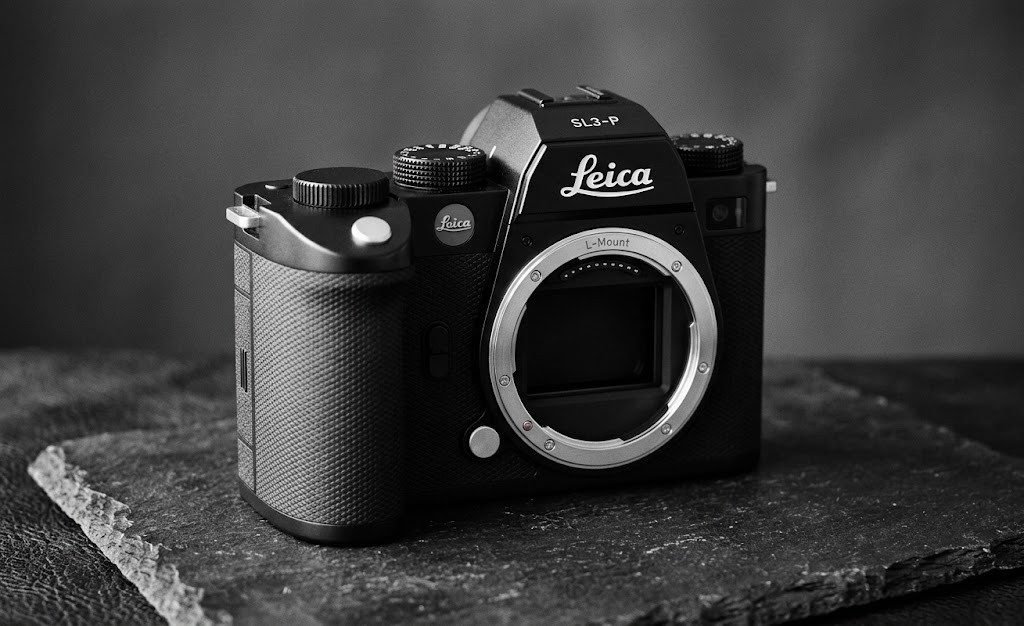
Leica launched the SL3-P on June 25, 2026. The company called it its most comprehensive full-frame camera yet. The numbers back that claim. The camera uses a new 44MP sensor and an 819-point autofocus system. It shoots up to 40fps with tracking and records 8.1K open-gate video. It also supports ProRes and includes built-in Content Credentials.
Why It Ranks #3
This is the Leica with the fewest technical excuses in the lineup. Action, portraits, landscapes, serious video, zooms, or primes: it holds up everywhere.
So why is it not #1? The more technically conventional a Leica becomes, the more directly it competes with Canon, Nikon, Sony, and Panasonic on their own terms. Once that comparison hits the table, Leica pricing gets a lot harder to justify. The SL3-P may genuinely be the most capable camera Leica has ever built. But this ranking never asked which Leica is the most capable. It asked which one makes the strongest case for being a Leica. Raw capability does not automatically win that.
In Real-World Use
Fast tracking at 44MP means each frame in a burst carries real detail. Action and portrait shooters benefit most. The 819-point autofocus system covers the frame. Filmmakers gain room to crop and reframe with 8.1K open-gate recording. ProRes supports professional workflows. Content Credentials help document where an image came from. That matters for journalists and working professionals.
L-mount compatibility also gives you wide lens choice. You can build a system around Leica glass or mix in other L-mount options.
Who Should Skip It
Price-sensitive buyers should look elsewhere. So should anyone who wants the traditional Leica ritual rather than a modern hybrid tool.
Best For
Professionals and hybrid shooters who want the most capable Leica available.
#2: Leica M11-P
What You Get
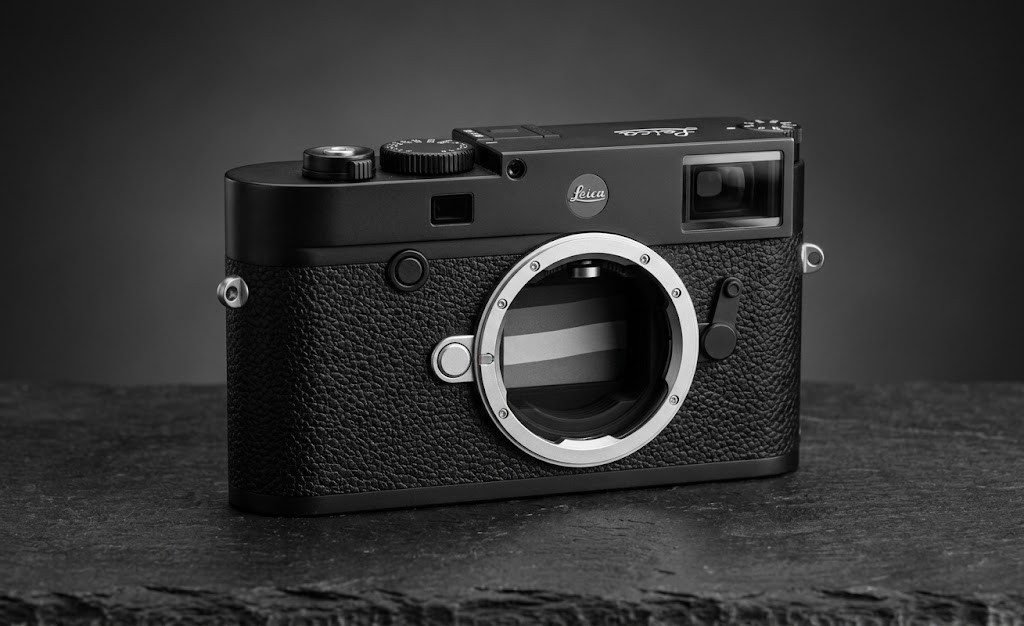
The Leica M11-P is the most complete expression of the traditional digital M that Leica currently sells. It uses a 60.3MP sensor and the optical rangefinder. It includes 256GB of memory, a sapphire-crystal display, and built-in Content Credentials. It also wears the quieter P-series exterior, so no front red dot advertises what you carry.
Why It Ranks #2
It earns this spot by making the fewest compromises within its own family. Unlike the M11-D, it keeps the screen. Unlike the Monochrom, it keeps color. Unlike the M EV1, it keeps the rangefinder. Nothing here is quietly missing.
The rangefinder experience is easy to describe and hard to explain. Manual focusing through an optical patch forces an attention that autofocus never asks for. It is slower on purpose. It still does not get old. High-end autofocus mirrorless cameras have not replicated that simplicity, no matter how good their sensors get.
And yet it does not win. It comes body only, and it focuses manually only. It is extremely expensive and depends on lenses you still have to buy. If the M11-P represents Leica this completely, what could possibly rank above it?
In Real-World Use
The P-series exterior draws less attention on the street, which suits quiet, observational work. The sapphire-crystal display resists scratches. The 256GB of memory gives you room for a long trip. Content Credentials help prove where your images originate. The rangefinder pushes you toward thoughtful framing.
Manual focus means fewer frames. Each one carries more intent. That slower pace is the heart of the M experience.
Who Should Skip It
Skip it if you shoot fast-moving subjects, rely on autofocus, or want a simple one-purchase setup. A lens purchase always follows the body.
Best For
Rangefinder devotees who want the definitive traditional M.
#1: Leica Q3 43
What You Get
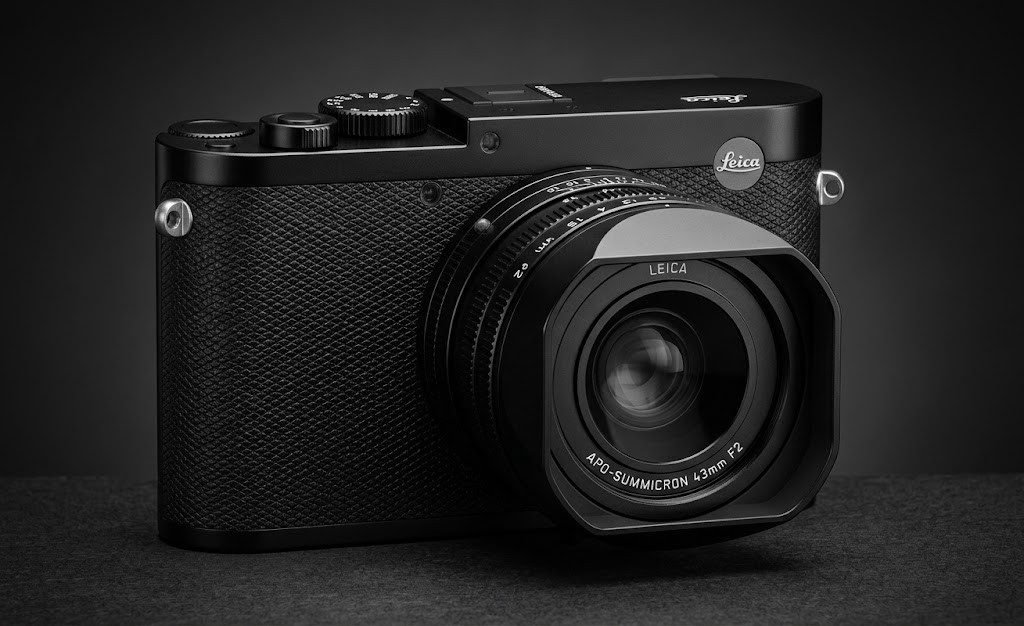
The Leica Q3 43 is the camera I would personally choose as the strongest complete package Leica sells in 2026. It offers 60MP and a permanently mounted APO-Summicron 43mm F2 lens. It adds autofocus and real macro capability. Its digital cropping reaches well past the native focal length.
Why the Q3 43 Wins Our Leica Cameras Ranked List
The 43mm focal length is not just a number sitting between 35 and 50. It changes what the camera does day to day: street work, environmental portraits, travel, and quiet documentary details. For many photographers, that is an easier single focal length to live with than 28mm. That is not universal. A committed 28mm shooter will likely still prefer the standard Q3. That is entirely fair.
Here is why it wins the whole ranking. It combines nearly everything people want from Leica. You get an exceptional lens, a high-resolution sensor, simple controls, and premium construction. You also get a distinctive shooting experience. Autofocus is there when you want it. Manual focus is there when you do not. All of that arrives in one camera. You never have to build a system around it.
Now compare it with the rest of the list:
- Versus the M11-P: No manual-focus-only requirement, and no separate lens purchase waiting on top.
- Versus the SL3-P: A simpler and, to me, more distinctly Leica object.
- Versus the standard Q3: 43mm is the more natural single-lens compromise for how I shoot.
- Versus the monochrome cameras: Color stays on the table.
- Versus the M11-D: The screen never goes away.
It does not win because it is Leica’s most capable camera. The SL3-P holds that title. I am not taking it away. It wins because it delivers the most complete version of what buying a Leica should feel like. You get it in one purchase, with nothing missing and nothing left to decide.
In Real-World Use
The 43mm view sits close to how many people naturally see. Street scenes feel intimate without feeling crowded. Environmental portraits show the subject and the surrounding context. Travel details, architectural fragments, and small objects all fit this focal length well. The macro capability lets you move in close on textures, food, and small items.
Autofocus keeps everyday shooting easy. Manual focus remains available for deliberate moments. The digital crop extends your reach when you need a tighter frame. Best of all, the single-camera setup removes decisions. You pick up the camera and go.
Who Should Skip the Q3 43
Wide-angle fans and interchangeable lens lovers should look elsewhere. Telephoto shooters should too.
Leica Q3 43 Pros and Cons
Pros
- Exceptional APO-Summicron 43mm F2 lens
- 60MP sensor with generous cropping room
- Autofocus and manual focus in one body
- Real macro capability
- No system to build and no second purchase required
Cons
- The lens is fixed, so you live with 43mm
- Committed 28mm shooters may still prefer the Q3
- Premium Leica pricing
Best For
Street, travel, environmental portrait, and documentary photographers who want one complete camera.
Which Leica Should You Buy? A Quick Buying Guide
Rankings help, but your own habits matter more. Use these shortcuts to narrow the field.
If You Want One Camera and No System
Choose the Q3 43 or the Q3. Both give you the lens, the sensor, and autofocus in one purchase. Pick the 43 if you like a natural view. Pick the Q3 if you love 28mm.
If You Love Rangefinders
Choose the M11-P for the most complete experience. Choose the M11-D if you want to stop checking the screen. Look at a used M11 if you want the essentials for less.
If You Shoot Hybrid Photo and Video
Choose the SL3-S for speed and lighter files. Want maximum capability, higher resolution, and 8.1K open-gate recording? Choose the SL3-P.
If You Shoot Black and White
Choose the Q3 Monochrom if you love 28mm. Choose the M11 Monochrom if you want the freedom of M lenses.
If You Want a Pocket Camera
Choose the D-Lux 8. It fits in a jacket pocket. It still gives you real controls and RAW files.
If You Care About Value
Look at a used M11. It keeps the 60MP sensor and the optical rangefinder without current P-series pricing.
Final Verdict on Our Leica Cameras Ranked List
The top three land on three different definitions of “best.”
- The SL3-P is the best Leica for raw capability. It has the fewest technical excuses and the broadest skill set.
- The M11-P is the best Leica for the traditional rangefinder experience. It keeps everything that makes an M feel like an M.
- The Q3 43 is the best Leica for the strongest complete package. It gives you the lens, the sensor, and the Leica feel in a single purchase.
Only one of those definitions earned my #1.
This Leica cameras ranked list comes from living with all 12 cameras, not from a chart of specifications. I expect plenty of you to disagree with parts of it. A 28mm shooter probably has the Q3 ahead of the 43. A rangefinder purist may have the M11-P at the top. A filmmaker might push the SL3-S or SL3-P far higher than I did. That is not a flaw. That is what makes Leica worth arguing about.
Leica Cameras Ranked: Frequently Asked Questions
What is the best Leica camera in 2026?
In our ranking, the Leica Q3 43 is the best Leica overall. It offers the strongest complete package, with a 60MP sensor, a built-in APO-Summicron 43mm F2 lens, and autofocus in one purchase.
What is the most capable Leica ever made?
The Leica SL3-P holds that title in our view. It uses a new 44MP sensor and an 819-point autofocus system. It shoots up to 40fps with tracking and records 8.1K open-gate video.
Which Leica is best for traditional rangefinder shooting?
The Leica M11-P is the best choice. It keeps the optical rangefinder, the screen, and color. It also adds the quieter P-series look.
Which Leica is best for video?
The Leica SL3-S and SL3-P stand out for video. The SL3-S records 6K open-gate video, RAW video, and ProRes. The SL3-P goes further with 8.1K open-gate recording.
Which Leica is best for black-and-white photography?
Both the Q3 Monochrom and the M11 Monochrom use dedicated monochrome sensors. The Q3 Monochrom suits 28mm shooters. The M11 Monochrom suits photographers who want full M-lens choice.
Is the Leica M11 still worth buying?
Yes, especially used. A discounted M11 still delivers the essential 60MP and optical-rangefinder experience without current P-series pricing.
Which Leica has the best autofocus?
The Leica SL3-P leads here. It uses an 819-point autofocus system and shoots up to 40fps with tracking.
Which Leica is best for travel?
The Q3 43 and the Q3 both work well. Each has a built-in lens and a compact body. The D-Lux 8 is the most pocketable option.
Which Leica has no rear screen?
The Leica M11-D has no rear display. It also includes 256GB of storage and the full rangefinder experience.
What is the difference between the M11-P and the M11-D?
The M11-P keeps the screen. It adds a sapphire-crystal display, built-in Content Credentials, and a quieter exterior. The M11-D removes the screen so you stay focused on the subject.
Why did the SL3-P not rank first?
It is the most capable Leica. This ranking asks a different question. Which camera makes the strongest case for being a Leica? The Q3 43 delivers the most complete Leica experience in one purchase.
Join the Discussion: Which Leica Tops Your List?
Which Leica actually tops your list? Did the technically best camera here deserve to lose? Tell us in the comments. Your pick might change the next ranking.
Read More from Altbuzz
- More camera rankings and hands-on comparisons
- Camera rumor coverage across Canon, Nikon, Sony, Fujifilm, and more
- Full camera reviews and buying guides
Explore all of it at altbuzzmedia.com.
Subscribe to Altbuzz YouTube Channel
Want more rankings built on real ownership instead of spec sheets? Subscribe to Altbuzz on YouTube at @AltBuzzMedia. A big thank you to the members who support the channel. Want to help fund more hands-on comparisons? Find the membership details on the channel and on altbuzzmedia.com.
Altbuzz | Camera reviews, rumors, and photography content Website: altbuzzmedia.com | YouTube: @AltBuzzMedia