
Fujifilm X Half Full Review: Specs, Performance and Verdict
The Fujifilm X Half is unlike any digital camera released before it. It uses a vertically oriented 18MP 1-inch sensor. It shoots in a 3:4 vertical format by default. It has no RAW output, no interchangeable lenses, and no tracking autofocus for moving subjects.
Fujifilm announced the X Half in May 2025. It began shipping in late June 2025 at $849. It comes in Black, Silver, and Charcoal Silver. Furthermore, Fujifilm designed it around the philosophy of the classic half-frame film camera brought into the modern digital era.
This review covers the Fujifilm X Half in complete and honest detail.
Release Date and Market Position
When Did It Launch?
Fujifilm announced the X Half at the end of May 2025. It began shipping to customers in late June and July 2025. Furthermore, it appeared at major international retailers at a roughly equivalent price to its $849 US MSRP.
Why Does It Cost $849?
The $849 price tag is the most debated aspect of the Fujifilm X Half. Many reviewers questioned how a JPEG-only fixed-lens compact with a 1-inch sensor could cost this much. However, Fujifilm officials indicated the intended price was closer to $650. Tariff uncertainty during 2025 pushed the US MSRP higher than originally planned.
Did the Price Drop Later?
Yes. Some sellers dropped the price to $649 during the 2025 holiday season. This lower price makes the X Half much easier to recommend. Furthermore, buyers who find the camera at this price point encounter a significantly stronger value proposition than the original $849 launch MSRP delivers.
Where Does It Sit in the Fujifilm Lineup?
The X Half is not a mini X100. It has more in common with an Instax hybrid camera than with an X-series mirrorless body. Fujifilm positions it as a companion camera rather than a primary photographic tool. Additionally, it pairs naturally with Instax Link printers for physical output from digital captures.
Who Is the Target Buyer?
The primary buyer is a film photography enthusiast who wants digital convenience. Additionally, content creators who primarily shoot vertical content for social platforms and lifestyle photographers who value Fujifilm’s color science above technical specifications both fit naturally. Younger photographers who experience photography through vertical social media also represent a major part of the expected audience.
Specifications Table
| Feature | Details |
|---|---|
| Sensor | 18MP 1-inch BSI CMOS (8.8 x 11.3mm), vertically oriented |
| Lens | FUJINON 10.8mm f/2.8 fixed |
| Equivalent Focal Length | 32mm full-frame |
| Crop Factor | 2.94x |
| Equivalent Aperture | f/8.2 full-frame equivalent |
| AF System | Phase Detection AF (human subject only) |
| AF Tracking | None for moving subjects |
| Output Format | JPEG only (no RAW) |
| Film Simulations | 13 built-in profiles |
| Creative Filters | 12 additional (grain, light leak, halation, double exposure) |
| Film Roll Mode | 36, 54, or 72-frame virtual rolls |
| Diptych Mode | Two-frame side-by-side composite |
| Video | 1080 x 1440 vertical video only |
| Rear Screen | Small vertical LCD (0.92M dots) |
| Secondary Screen | Thin vertical bar LCD for film simulation display |
| Viewfinder | Optical vertical viewfinder |
| Flash | LED flash with slide switch |
| Connectivity | USB-C only |
| Storage | Full-size SD card, UHS-I |
| Battery | NP-W126S, approximately 880 shots |
| Instax Compatibility | Direct wireless print to Instax Link printers |
| Weight | 240g with battery |
| Dimensions | 106 x 64 x 46mm |
| Colors | Black, Silver, Charcoal Silver |
| Price | $849 (frequently available at $649) |
Sensor and Image Quality
What Makes the Sensor Unique?
The Fujifilm X Half uses a standard 1-inch type sensor physically rotated 90 degrees inside the body. The same sensor size powers the Sony RX100 series and Canon G7X cameras. However, because it is oriented vertically, the camera captures a tall 3:4 image natively without any cropping or software rotation. This is genuinely the first mass-market digital camera to ship with a vertically oriented imaging sensor.
Why JPEG Only?
The Fujifilm X Half produces JPEG files exclusively. There is no RAW format option. This decision is fundamental to the camera’s identity and philosophy. Fujifilm designed it around a film camera mindset where the shooting experience produces a finished image directly. Furthermore, Fujifilm’s JPEG processing is genuinely among the best in the entire digital camera industry.
How Are the JPEG Files?
The JPEG output is very good by compact camera standards. Colors are accurate and pleasing. Detail rendering in daylight is sharp at the center. Furthermore, the film simulation profiles produce images that look distinctive and finished straight from the camera without requiring any editing or post-processing work.
What About Edge Sharpness?
The 10.8mm f/2.8 lens produces excellent center sharpness but softer results at the frame edges. This edge softness adds to the analog character of the images. Many buyers specifically prefer this look over the clinical edge-to-edge sharpness of modern smartphone computational photography results.
Does Color Moire Appear?
Some reviewers note occasional color moire in urban scenes containing repeating fine patterns like railings, roof tiles, and textured fabric at close range. This appears more frequently than on cameras with optical low-pass filters. However, this rarely affects the lifestyle and social photography scenarios that most X Half users pursue.
How Good Is Low-Light Quality?
The 1-inch sensor handles moderate low-light better than smaller compact sensors. Indoor shooting at moderate ISO settings produces acceptable results. However, high ISO performance is not a strength of this camera. Bright outdoor conditions represent the sweet spot for image quality consistently.
Film Simulation Quality
What Film Simulations Are Available?
The Fujifilm X Half delivers 13 film simulations. These include PROVIA Standard, Velvia Vivid, ASTIA Soft, Classic Chrome, REALA ACE, Classic Neg, Nostalgic Neg, ETERNA Cinema, ACROS black and white, and three ACROS color filter variants. Each simulation produces distinctly different color rendering, contrast characteristics, and tonal response.
Which Simulation Is Most Popular?
Classic Chrome is the most widely praised simulation among X Half users. It produces muted, slightly desaturated colors with a cool tone and lifted shadow detail. Furthermore, it captures the specific look of color slide film processed for negative output that defined photojournalism aesthetics in the 1980s and 1990s.
What Makes Fujifilm Simulations Special?
Fujifilm’s film simulations are widely regarded as the best implementation of this feature in any digital camera by a significant margin. The color rendering is not simply a filter applied globally. It responds differently to various color channels, light temperatures, and tonal regions just as actual film emulsions do. Moreover, this creates output that looks genuinely unique compared to any competitor’s color profiles.
Can You Change Simulations After Shooting?
No. The selected film simulation applies permanently at the moment of capture. JPEG-only output means there is no RAW file to reprocess with a different simulation later. Choosing the right simulation before shooting is therefore part of the creative decision process. Furthermore, this commitment mirrors the experience of choosing a specific film stock before loading a camera.
What Are the Creative Filters?
Beyond the 13 main film simulations, the X Half offers 12 additional creative filters. These include grain overlays, light leak effects, halation blurs, and double exposure combination modes. Additionally, the Instax frame mode applies an Instax Mini-style border to images destined for direct wireless printing.
Film Roll Mode
What Is Film Roll Mode?
Film Roll Mode is the Fujifilm X Half’s most distinctive and debated feature. The photographer chooses a film simulation and selects a virtual roll length of 36, 54, or 72 frames. Once activated, image playback disables completely until the entire roll is finished. Furthermore, the top lever advances the virtual frame after each shot, adding tactile engagement to every capture.
How Does Playback Lockout Work?
During an active Film Roll, pressing the playback button shows only the number of remaining frames on the roll. It does not reveal any images. The photographer must finish the entire roll before viewing any shots. This creates genuine anticipation and forces commitment to every frame without the safety net of immediate deletion.
What Happens When the Roll Finishes?
Completing a virtual film roll unlocks all images simultaneously. The photographer sees the full roll of committed frames for the first time at this moment. The surprise and variety of a complete roll of unreviewed shots creates a genuinely unique digital photography experience. Moreover, many photographers report discovering their best shots are frames they would have deleted after immediate review.
Why Does Roll Commitment Matter?
The inability to delete and reshoot mid-roll forces photographers to develop better observational habits. Every frame represents a genuine decision rather than a hedge against potential failure. Furthermore, many professional photography educators use this kind of restriction deliberately to help students build compositional confidence and instinctive timing.
What Is Diptych Mode?
The frame advance lever also enables diptych shooting in standard camera mode. After taking one shot, advancing the lever combines it with the next shot into a single side-by-side image file. Fujifilm saves both the individual images and the combined diptych version. Additionally, the Fujifilm X Half companion app on a smartphone allows post-capture diptych creation as well.
Autofocus Performance
How Does the AF System Work?
The Fujifilm X Half detects human subjects and focuses on faces and eyes using phase detection. The system achieves this accurately and reasonably quickly in good light. For the camera’s intended social, street, and lifestyle photography use cases, this level of capability handles most situations adequately.
What Can It Not Detect?
The autofocus cannot detect animals, vehicles, or non-human subjects of any kind. It cannot track any moving subject regardless of type. Additionally, the system struggles in backlit situations where the face is against a bright background. These limitations feel notably significant for a camera at this price point in 2025.
How Does It Perform in Low Light?
Autofocus reliability drops in low-light conditions as expected. The small optical viewfinder makes precise manual focus override difficult to judge in dim environments. Furthermore, the cramped touch interface on the small rear screen handles manual adjustments but becomes imprecise under real-world field shooting pressure.
What Is the Best AF Strategy?
For the best results, use the X Half in good daylight with human subjects positioned in the center of the frame. Avoid strongly backlit portrait situations. For street photography without human subjects, use the manual focus ring to preset a hyperfocal distance. Then shoot confidently at f/5.6 or f/8 for maximum depth of field across the scene.
Video Capabilities
What Video Can the X Half Record?
The Fujifilm X Half records 1080 x 1440 vertical video only. This is a low resolution by current camera standards. There is no horizontal video mode. Additionally, no image stabilization is present in the body. This makes handheld video noticeably shaky without external support.
Is the Video Quality Good?
Video quality is the weakest aspect of the Fujifilm X Half. The resolution is limited. Stabilization is absent. Reviewers consistently note that video feels like a genuine afterthought compared to the clearly prioritized still photography experience. Furthermore, the 3:4 vertical video format limits its usefulness compared to standard 9:16 vertical content.
Should Buyers Care About Video?
Most X Half buyers do not buy it for video. The camera exists as a still photography experience tool. Buyers who prioritize video capabilities should look at other cameras entirely. The X Half’s video output has no competitive advantage against any dedicated video-capable camera at any comparable price point.
Design and Handling
What Are the Physical Controls?
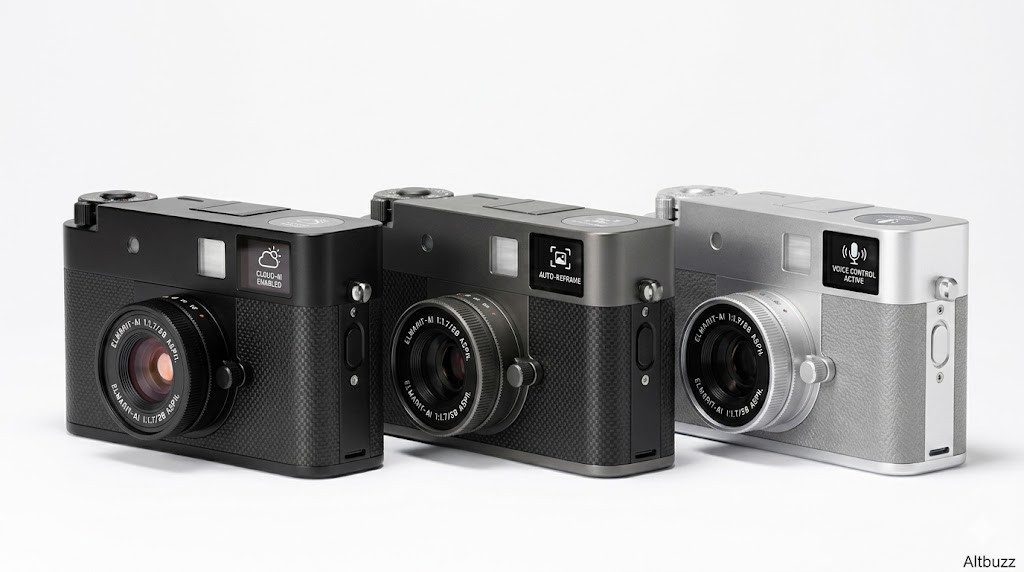
The Fujifilm X Half includes an aperture ring around the lens barrel. A manual focus ring sits behind it on the same barrel. An exposure compensation dial on top offers plus or minus three stops of adjustment. Additionally, the pseudo film advance lever on the top right provides tactile engagement and serves functional purposes in Film Roll Mode and diptych capture.
How Does the Dual Screen System Work?
The back of the Fujifilm X Half has two separate display elements. The main vertical LCD screen shows composition and playback. A thin secondary LCD bar to the left of the main screen shows the active film simulation name. This dual-display approach keeps film simulation identification visible at all times. Furthermore, it reinforces the camera’s analog framing in a clever and genuinely functional way.
How Does It Feel in the Hand?
The camera measures 106 by 64 by 46mm and weighs 240 grams with battery. It feels genuinely pocketable in most jacket pockets. The grip is not deeply contoured but the weight distribution and dimensions make one-handed shooting comfortable for extended periods. Furthermore, at 240 grams, it is light enough to carry on a wrist strap all day without fatigue.
What Is the Build Quality?
The body uses plastic construction with a decent quality level for its compact camera category. It does not match the premium metal construction of the X100VI or the G series cameras. Additionally, there is no weather sealing of any kind. The camera handles typical daily carry conditions but should stay protected from rain and wet environments.
How Does Instax Integration Work?
The Fujifilm X Half connects directly to Instax Link printers via Bluetooth. Photographers can print directly from the camera without requiring a phone or computer at any stage. This reinforces the physical photography philosophy at the heart of the product. Furthermore, it adds genuine practical value for photographers who enjoy tangible printed output from their casual shooting sessions.
What About the Optical Viewfinder?
The small optical viewfinder shows the vertical shooting frame. It gives basic composition guidance without requiring the shooter to use the rear screen. However, the viewfinder is small and its accuracy at the frame edges is limited. For casual street and social photography at typical distances, it guides composition adequately.
Battery and Connectivity
How Good Is Battery Life?
The NP-W126S battery delivers approximately 880 shots per charge when composing through the optical viewfinder. This is an excellent battery life rating for a compact camera. Real-world shooting at typical mixed screen and viewfinder usage produces somewhat lower counts but still more than most competing compact cameras at this price.
Is the NP-W126S Common?
Yes. The NP-W126S is compatible with many other Fujifilm cameras including the X-T series and X100 series bodies. This makes the battery easy to find as a replacement. Additionally, existing Fujifilm users who already own NP-W126S batteries can share them with the X Half without any extra investment.
What Does the USB-C Port Do?
The single USB-C port handles battery charging, data transfer, and audio monitoring output. There is no separate port for any other connection. The simple single-port design keeps the exterior clean and consistent with the product’s philosophy. Furthermore, USB-C charging enables power delivery from portable battery packs during extended shooting days away from wall power.
What Storage Does It Accept?
The Fujifilm X Half accepts full-size SD cards at UHS-I speed. This is a welcome choice over microSD cards, as full-size cards are easier to handle and identify in a bag or pocket. The camera accepts any standard UHS-I SD card from any major brand without compatibility issues.
Real-World Use Cases
Street Photography
The Fujifilm X Half is a natural street photography companion. The 32mm equivalent focal length is wide enough for environmental context but tight enough for subject-focused framing. Film Roll Mode adds a disciplined shooting rhythm that many street photographers value for building better compositional instincts. Furthermore, the compact body and silent shooting behavior make it unobtrusive in busy public spaces.
Social Media Content Creation
The vertical sensor is purpose-built for Instagram, TikTok, and Reels content. Native vertical photos upload without any cropping or rotation workflow. The 13 film simulations produce beautiful and distinctive looks without any editing at all. Additionally, the diptych feature creates unique paired frame compositions that perform particularly well in grid-based social media layouts.
Everyday Lifestyle Photography
As a daily carry camera, the Fujifilm X Half shines clearly. It encourages photography through simplicity rather than specification management. The lightweight body and pocket-friendly dimensions reduce friction between noticing a moment and capturing it. Furthermore, Fujifilm’s color science produces beautiful and emotionally resonant results without any post-processing expertise required.
Film Photography Enthusiasts Going Digital
For film photographers who love analog shooting but want digital convenience, the X Half provides a genuinely compelling bridge experience. Film Roll Mode recreates the psychological experience of film shooting with remarkable accuracy. Additionally, the film simulations mirror actual film stock character in ways that generic digital filters cannot authentically match.
Couples and Family Casual Photography
The simple operation and beautiful JPEG output make the X Half an excellent family camera for non-photographers. There are no confusing menus to navigate. Film simulations produce consistently flattering results. Furthermore, the compact size means it is always in a bag or pocket when spontaneous family moments arise.
Pros and Cons
Pros
The vertical 1-inch sensor is genuinely pioneering and makes the X Half ideal for social media-first photographers working in vertical formats. Fujifilm’s 13 film simulations produce best-in-class JPEG output that authentically matches the character of real film photography. Film Roll Mode delivers a genuinely unique and creatively valuable shooting experience unavailable on any other digital camera sold today. The NP-W126S battery provides exceptional 880-shot CIPA-rated life for a compact camera. Additionally, the 240-gram body is lightweight enough for all-day carry without any fatigue. Direct Instax printer integration adds physical photography capability in a single step. Furthermore, the aperture ring, exposure compensation dial, and frame advance lever create a genuinely tactile and engaging shooting experience.
Cons
The $849 price tag is difficult to justify against the JPEG-only output and limited autofocus system for many buyers at this budget tier. No RAW file support prevents professional color grading or advanced post-processing workflows. Autofocus cannot track moving subjects or detect non-human subjects reliably under any conditions. The main rear LCD screen is small at only 0.92 million dots and the cramped touch interface creates frustrating control moments during active shooting. Additionally, video quality is genuinely poor with no stabilization and limited resolution output. The plastic body has no weather sealing whatsoever. Furthermore, the equivalent aperture of f/8.2 full-frame creates very limited depth-of-field control compared to faster-aperture compacts at similar price points.
Final Verdict
The Fujifilm X Half rewards photographers who approach it completely on its own terms. It is not trying to be technically exceptional. It tries to recreate the joy, discipline, and aesthetic of film photography in a digital and pocket-friendly format.
For lifestyle photographers, film enthusiasts transitioning to digital, content creators living in vertical format, and anyone who values the experience of shooting over the analysis of results, the X Half is a deeply satisfying and genuinely unique camera. The $849 price requires accepting its specific limitations honestly. However, no other digital camera on the market offers this combination of film simulation quality, vertical sensor design, and analog shooting philosophy in a single body.
At $649 where it frequently appears, the recommendation becomes meaningfully stronger for the right type of buyer.
Read More from AltBuzz
Read more from Altbuzz for camera reviews, rumors, and detailed specs. AltBuzz delivers trusted and easy-to-understand photography content.
Subscribe AltBuzz YouTube Channel
Stay updated with camera reviews, rumors, and comparisons. AltBuzz shares regular camera content.