
Every few years, the photography world stops and waits. Right now, it is waiting for the Leica Q4.
The Q series has defined what a premium fixed-lens full-frame compact camera can be. The original Q arrived in 2015 and was a revelation. It placed a 24MP full-frame sensor behind a fixed 28mm Summilux f/1.7 lens in a body small enough to carry anywhere. Photographers who had never considered Leica before suddenly found themselves wanting one. The Q2 in 2019 raised the sensor to 47.3MP and added weather sealing. The Q3 in 2023 pushed to 60MP, added 8K video, and introduced a tilting touchscreen.
Now the Q4 rumor cycle has started. Based on Leica’s historical release cadence of roughly every three to four years, the math places the Q4 in the 2026 to 2027 window. Community discussions, industry analysts, and Leica-focused publications are building a picture of what the Q4 might offer.
Understanding the Q3: The Baseline the Q4 Must Exceed
Q3 Core Specifications
The Leica Q3, launched in June 2023, pairs a 60MP full-frame BSI CMOS sensor with Leica’s 28mm Summilux ASPH f/1.7 lens. The body is sealed to IP52 against dust and water splash. Video recording covers 8K at 24 and 30fps, 4K at up to 60fps, and 1080p at 120fps.
The EVF offers 5.76 million dots in a 0.5-inch OLED panel, making it one of the highest-resolution viewfinders on any compact camera. The Maestro IV processor handles image processing, noise reduction, and video encoding. The Q3 43 variant, launched September 2024, replaced the 28mm lens with a 43mm APO Summicron ASPH f/2, targeting photographers who prefer a more natural field of view.
Where the Q3 Falls Short
Autofocus reliability is the primary criticism. The Q3’s phase detection autofocus works well for static and moderately active subjects. However, it struggles with fast lateral movement, particularly during continuous tracking in dynamic situations.
The absence of in-body image stabilization is another community concern. The Q3 relies entirely on the optical stabilization of the lens. For handheld video and long-exposure stills in challenging conditions, the lack of sensor-shift IBIS limits the camera’s versatility compared to competitors that offer both optical and sensor stabilization.
At $5,995, the Q3 is expensive. The Q4 will be more expensive still, based on Leica’s consistent upward price trajectory.
Leica Q4 Release Timeline
The Three-Year Cycle
Leica’s Q series has followed a consistent release cycle. Q: June 2015. Q2: March 2019 (4 years). Q3: June 2023 (4 years). Based on this pattern, the Q4 falls in the 2026 to 2027 window.
The Leica Society International published a detailed analysis in April 2026, listing the Q4 among three cameras expected “by the end of this year or perhaps sometime in 2027.” The analysis notes the Q4 “could include a new, higher-res (70-100MP?) sensor and possibly 8K video capability.”
A DPReview forum thread from early 2026 offers a contrasting view: “I would be surprised if you see a Q4 before late 2028 at the earliest.” Another post from the Leica Forum argues that “the M12, SL4, and Q4 seem approximately two years down the road.”
The honest assessment is that the Q4 is not imminent. A 2027 announcement with 2028 shipping is perhaps the most probable scenario, though 2026 remains possible.
Why Leica Moves Slowly
Leica’s development process reflects the company’s manufacturing philosophy. Bodies are assembled by hand in Wetzlar, Germany. Sensor selections are made in partnership with suppliers and involve extended testing cycles. The company does not rush products to meet quarterly targets. This deliberate pace means that when the Q4 arrives, it will be a finished product rather than a platform for post-launch firmware development.
Rumored Sensor: 64MP to 100MP Full-Frame
The Resolution Speculation
The Q3’s 60MP sensor was ahead of its time at launch. By 2026, the competitive landscape has changed. Sony’s A7R VI is widely expected to carry a 67MP sensor. Canon and Nikon have both indicated upcoming high-resolution bodies in the 60-65MP range.
For the Q4 to feel like a meaningful upgrade over the Q3, the sensor needs to move beyond 60MP. Community and analyst speculation centers on 64MP to 100MP. The Leica Society International analysis specifically mentioned a “70-100MP” range.
Why 80MP Is the Most Plausible Target
An 80MP full-frame BSI sensor is technically achievable based on current semiconductor roadmaps. It would provide a 33% resolution increase over the Q3’s 60MP, enough to justify the sensor as new rather than merely refreshed.
AltBuzz Media’s Q4 analysis describes the expected jump more modestly: “around 64MP using a newer BSI chip.” At 64MP, the resolution increase over the Q3 is smaller, but the underlying architecture improvement of a newer BSI design delivers better dynamic range, lower read noise, and improved low-light performance.
Improved Low-Light Performance
Regardless of the specific megapixel figure, the Q4 sensor will use a more recent BSI architecture than the Q3. For a camera whose 28mm Summilux f/1.7 lens makes it a natural candidate for low-light photography, shadow detail and high-ISO performance improvements carry real practical weight. AltBuzz Media describes the expected improvement: “BSI sensors gather light more efficiently. That means cleaner shadows, better dynamic range, and sharper performance when the light gets low.”
IBIS: The Feature Leica Photographers Most Want
The Case for Adding Sensor Stabilization
The absence of IBIS in the Q series has been a consistent point of discussion. The Leica SL3, the company’s full-frame mirrorless with interchangeable lenses, includes IBIS. The technical foundation for sensor-shift stabilization exists within Leica’s product range. Community sentiment strongly supports adding it to the Q4.
The Counterargument
Adding IBIS requires more space inside the body and introduces mechanical complexity. There is also Leica’s philosophical position to consider. The Q line is designed as a precise, confident tool used decisively. However, virtually every competing full-frame camera now includes IBIS. Its absence in the Q4 would draw unfavorable comparisons that become harder to defend with each passing year.
Autofocus System: What the Q4 Needs to Fix
Current AF System Analysis
In practice, photographers describe the Q3’s autofocus system as capable but not exceptional. It acquires focus quickly in good light, handles face detection competently in moderate conditions, and struggles most during continuous tracking of subjects moving laterally at speed.
Q4 AF Expectations
The Q4 will use a newer Maestro processor, almost certainly a fifth generation. AltBuzz Media describes the expected improvement: “A more refined PDAF array is expected, with improved subject detection for people, animals, and even vehicles. Eye-tracking that actually holds through movement is widely anticipated.”
For photographers who use the Q4 primarily for deliberate portrait and travel work, this improvement will change how the camera feels in use. AF that confidently follows a person’s eye as they move through a scene allows photographers to concentrate on composition rather than managing focus behavior.
Video Capabilities: 8K and Beyond
The Q3 shoots 8K at 24 and 30fps, 4K at up to 60fps, and 1080p at 120fps. Based on the direction of the broader camera market, 8K 60fps becomes the expected baseline for flagship cameras by 2027. A Q4 launching at that time with only 8K 30fps would feel behind the market it positions itself against.
More practically, the Q4 might also add log profiles and a cine-focused color science option for users who incorporate the Q into hybrid creative workflows. The Q3 offered a Cinema mode but not the log-plus-LUT workflow that cameras like the Lumix L10 now deliver at $1,499.
Design: What Might Change
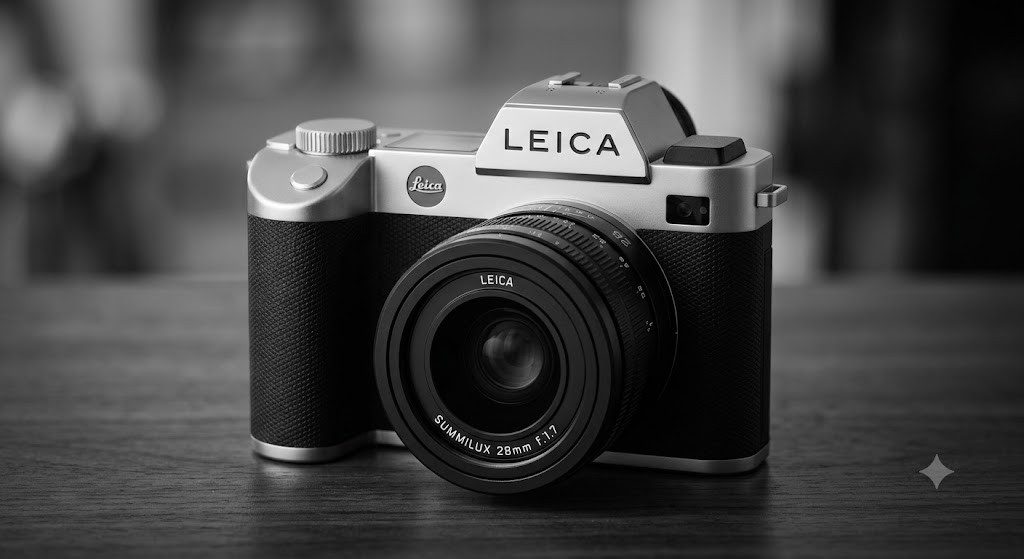
Q Series Design DNA
The Q line has maintained a consistent design language across three generations. The Q4 will almost certainly continue this language. Leica’s design changes between generations tend to be refinements rather than reinventions.
A fully articulating screen is the most frequently requested change. Travel and documentary photographers who shoot from ground level or over crowds find the tilting screen limiting. Full IP53 or IP54 weather sealing would also be a meaningful upgrade over the Q3’s IP52 rating for photographers who shoot in rain or dusty environments.
Lens: 28mm Optimized for Higher Resolution
The Q4 will almost certainly keep the 28mm focal length as the primary variant. However, whether the lens itself is updated for the Q4 depends on whether Leica engineers determine that a higher-resolution sensor reveals optical limitations in the existing design. An updated Summilux designed specifically for 80MP+ resolution might arrive alongside the Q4.
Price: The Q4 Will Not Be Cheap
The Q series has followed a consistent upward price trajectory. The Q launched at approximately $4,250. The Q2 arrived at $5,200. The Q3 launched at $5,995. Extrapolating this pattern and accounting for component cost increases and tariff impacts (Leica noted US price increases due to tariffs in May 2025), a Q4 price of $6,800 to $7,500 body-only is a reasonable projection.
The Leica Color Science Argument
Leica cameras use sensors supplied by Sony. The raw sensor data begins from the same approximate baseline as competing cameras. Where Leica differentiates is in three areas.
First, the Summilux lens delivers a specific rendering of light, particularly in the transition zones between sharp focus and bokeh, that reflects decades of optical engineering. Second, the Maestro processor’s color rendering pipeline uses Leica’s own tuning, particularly in skin tones and neutral colors. Third, the rendering of fine detail and micro-contrast in Leica glass has a specific quality that photographers train their eyes to recognize across prints and screens.
The AltBuzz Media Q4 analysis describes the expected improvement: “Leica’s color science, already praised for its natural and film-like rendering, is expected to become even more refined with the new processor. Think richer midtones. Think skin tones that look like skin rather than data.”
The Leica Q Ecosystem: Cases, Accessories, and Ownership
Leica produces a range of accessories designed specifically for the Q series: leather cases, lens hoods, half-cases, and filter adaptors. Third-party accessory makers like Gariz and Arte di Mano produce premium leather half-cases that become part of the Q camera aesthetic as much as the body itself.
Leica also operates boutique stores in major cities worldwide. Purchasing and servicing a Leica camera in these stores is a genuinely different experience from a mass-market electronics retailer. The stores staff knowledgeable photographers, host events, and provide direct connection to the Leica community.
Common Objections to the Leica Q4
“It’s Just a Fixed-Lens Camera at $7,000”
This has surface validity from a pure value-engineering standpoint. For $7,000, a photographer could buy a Sony A7C II, a Sony 28mm f/2, and an 85mm f/1.8 with money left over. However, this argument evaluates the Q4 by criteria its buyers do not prioritize. Q4 buyers are not optimizing for maximum versatility per dollar. They are choosing a specific optical perspective, a specific form factor, and a specific quality of manufacture.
“The Q3 Is Good Enough”
This is the most reasonable counterargument. The Q3 is a superb camera. Its 60MP sensor, Summilux f/1.7 lens, 8K video, and IP52 sealing deliver professional-grade results. The Q4’s improvements will be most relevant to photographers who push the Q3 to its limits and find specific limitations. If those limitations do not appear in your work, the Q3 remains an excellent choice.
“I Can Get a Sony with Better Specs for Less”
One specific point worth adding: the Summilux 28mm f/1.7 has no direct equivalent in the Sony FE mount or any other mirrorless system. A 28mm f/1.7 with the optical character of the Summilux does not exist as an interchangeable lens. The Q4 offers it in a compact body. That singularity has value that transcends spec comparison.
Should You Buy the Q3 Now or Wait?
The Q3 is an excellent camera that will remain excellent whether or not the Q4 arrives in 2027. If your photography requires the Q3’s capabilities now, buy it. A camera you shoot with is always more valuable than one you are waiting for.
If you are willing to wait until 2027 and the Q4’s improved autofocus, potentially higher resolution, and possible IBIS addition matter to your work, then waiting is a reasonable choice. The upgrade from Q3 to Q4 appears likely to be more substantial than the Q2-to-Q3 jump based on current rumor signals.
Final Outlook
The Leica Q4 will continue the Q series tradition of producing the finest fixed-lens compact camera available at the time of its release. Its most practically significant improvements will be in autofocus tracking reliability and potentially in IBIS and sensor resolution. It will cost more than the Q3. And it will be exactly the camera that its target audience has been waiting for.
It is not arriving immediately. But the Q series has earned its following through consistent excellence. When the Q4 does arrive, it will not need to rush.
Read More from Altbuzz
Stay current with our ongoing camera coverage at altbuzzmedia.com. This blog is the second in our three-camera 2026 series. The first covers the Panasonic Lumix L10 and the third examines the Hasselblad X3D 180C.
Subscribe to Altbuzz YouTube Channel
Stay ahead of every major camera announcement with in-depth video breakdowns on the Altbuzz YouTube channel @AltBuzzMedia. Upcoming coverage includes a full Q-series timeline analysis and a comparison of premium fixed-lens compacts across all price tiers.