
Lumix ZS99 Full Review: 30x Zoom Compact Camera Tested
The Panasonic Lumix ZS99 is the current travel zoom compact camera from Panasonic. It launched in early 2025 at $499. It carries a 20.3MP 1/2.3-inch sensor and a 30x optical Leica-branded zoom lens covering 24mm to 720mm in 35mm equivalent terms.
The Lumix ZS99 is a controversial product. It uses essentially the same sensor, lens, and design as the older ZS80. Additionally, it removes the electronic viewfinder that its predecessor included. Most reviewers describe it as a USB-C compliance update rather than a genuine new camera. This review examines who it actually serves and whether it is worth buying today.
Release Date and Market Position
When Did the Lumix ZS99 Launch?
Panasonic announced the Lumix ZS99 in late December 2024. It began shipping in early 2025. Furthermore, the same camera sells as the Lumix TZ99 in the United Kingdom and European markets without any specification differences.
Why Does It Exist?
Many reviewers note that the Lumix ZS99 exists primarily to comply with EU regulations requiring USB-C charging on all newly sold electronics. Beyond USB-C, the only meaningful new feature is extended video recording time. Furthermore, the sensor, lens, processor, and body design are unchanged from the ZS80 that launched in 2022.
What Is the Extended Video Recording Time?
The Lumix ZS99 extends video recording from 30 minutes to 90 minutes in 4K mode. Additionally, 1080p recording now runs up to 100 minutes in a single clip. These extended recording limits address practical needs for travel documentation and event coverage. However, they do not represent any image quality improvement over the predecessor.
How Much Does It Cost?
The Lumix ZS99 retails at $499 in the United States and approximately £469.99 in the United Kingdom. This pricing immediately raises value questions. A used Lumix ZS80 with identical image quality and the additional benefit of a built-in electronic viewfinder costs similarly in the used market. Furthermore, the Panasonic TZ200 with its larger 1-inch sensor offers meaningfully better image quality at a similar price point.
Who Is It For?
The Lumix ZS99 targets travel photographers who want extensive zoom range in a pocketable body without carrying a mirrorless system. Additionally, beginners and casual photographers who want simplicity with creative flexibility fit this camera naturally. Cruise passengers, wildlife park visitors, and family event photographers represent the core buyer profile Panasonic addresses.
Should Existing ZS80 Owners Upgrade?
Definitively, no. The image quality is identical to the ZS80. The body design is the same. The only practical gains are USB-C charging and extended video recording time. Furthermore, existing ZS80 users who need these features specifically can evaluate the upgrade. Everyone else should stay with their current body.
Specifications Table
| Feature | Details |
|---|---|
| Sensor | 20.3MP 1/2.3-inch BSI CMOS |
| Lens | 30x optical Leica DC zoom, 24-720mm f/3.3-6.4 |
| Lens Stabilization | 5-axis Optical IS |
| Autofocus | DFD contrast detection |
| ISO Range | 80 to 6400 |
| Video | 4K at 30fps, 1080p at 60fps |
| Max 4K Recording | 90 minutes |
| Max 1080p Recording | 100 minutes |
| Screen | 3-inch 1.84M-dot tiltable touchscreen |
| EVF | None (removed from this model) |
| RAW Support | Yes |
| Burst Speed | 10fps single AF |
| 4K Photo Mode | Yes, 8MP frame extracts |
| Connectivity | USB-C, Wi-Fi, Bluetooth |
| Storage | Single UHS-I SD slot |
| Battery | DMW-BLG10E, approximately 380 CIPA shots |
| Weight | 322g with battery and card |
| Dimensions | 112 x 67.8 x 43.1mm |
| Colors | Black, Silver, White |
| Price | $499 |
Sensor and Image Quality
What Does a 1/2.3-Inch Sensor Mean?
The Lumix ZS99 uses a 20.3MP 1/2.3-inch BSI CMOS sensor. This sensor is approximately the same physical size as the imaging chips inside modern flagship smartphones. The small sensor size is what enables the 30x optical zoom range in such a compact body design. However, it also fundamentally limits dynamic range, low-light performance, and depth-of-field character.
How Good Are Daylight Images?
In good daylight conditions, the Lumix ZS99 produces clean and pleasingly colored images consistently. Panasonic’s color science delivers vibrant and natural tones. Additionally, sharpness at medium focal lengths from 24mm to approximately 200mm equivalent is adequate for travel documentation and tourist photography needs.
What Happens at Long Zoom Distances?
The 30x optical zoom remains usable through most of its range. Sharpness at the 720mm extreme telephoto end shows some softening. Additionally, camera shake becomes a significant factor at maximum telephoto even with the 5-axis optical stabilization system active. Resting the camera against a stable surface improves results considerably at the longest focal lengths.
How Does It Perform in Low Light?
Low-light performance is the Lumix ZS99’s most significant real-world weakness. The small sensor produces noticeable noise at ISO 800. At ISO 1600, detail loss becomes significant. Furthermore, ISO 3200 and above requires heavy noise reduction before images are usable for any professional purpose. For indoor shooting without flash, the limitations become genuinely frustrating.
Does RAW Support Help?
Yes meaningfully. RAW file capture gives photographers more exposure recovery flexibility. Shadow detail recovered from underexposed RAW files looks noticeably cleaner than pushing JPEG brightness in editing software. Furthermore, RAW support helps extract maximum quality from the small sensor in challenging mixed-light travel situations where JPEG processing alone leaves too many compromises.
What Is 4K Photo Mode?
The 4K Photo Mode extracts 8MP still frames from 4K video sequences at 30 frames per second. This helps with unpredictable subjects like birds in flight, children playing, and fast-moving animals. Capturing a burst of frames at 30fps and selecting the sharpest moment significantly improves keeper rates. Furthermore, this mode partially compensates for the camera’s slower single-shot autofocus response compared to phase detection systems.
Zoom Performance
What Makes 30x Zoom Meaningful?
The 30x optical zoom range from 24mm to 720mm equivalent covers virtually every shooting scenario a travel photographer encounters. Wide architectural shots at 24mm, standard environmental portraits at 85mm, distant wildlife at 400mm, and very distant subject isolation at 720mm are all achievable from a single pocketable body. This versatility is genuinely exceptional for the price and form factor.
How Sharp Is the Lens at 720mm?
Sharpness at the extreme 720mm end is softer than at mid-range focal lengths. Some chromatic aberration appears at maximum telephoto on high-contrast edges. Additionally, stabilization effectiveness decreases at maximum zoom, requiring faster shutter speeds or physical stabilization support for sharp results. However, for web and social media delivery, the 720mm results are typically usable and impressive for the camera’s size.
What Is Zoom Frame Assist?
Zoom Frame Assist is a practical feature for telephoto shooting. It shows a wider context view in one corner of the screen while the main display shows the telephoto framing. This helps photographers track subjects that might move out of the narrow telephoto field of view before the zoom fully extends. Furthermore, it reduces the frustrating experience of losing a subject in the black void of a fully zoomed frame during active shooting.
Does Optical Stabilization Help at Long Focal Lengths?
The 5-axis Optical IS system provides meaningful stabilization benefit through most of the zoom range. At 200mm to 400mm equivalent, stabilization allows handheld shooting at reasonably natural shutter speeds. However, at 720mm equivalent, the stabilization system provides less effective compensation and images at slow shutter speeds still show motion blur. Faster shutter speeds above 1/1000 second are advisable at maximum zoom.
Autofocus Performance
What Is DFD Autofocus?
The Lumix ZS99 uses Panasonic’s DFD or Depth From Defocus contrast detection autofocus. This system is faster than standard contrast detection but still slower than phase detection systems found in mirrorless cameras. In practical terms, the autofocus is snappy and reliable for static and slow-moving subjects in good light conditions.
How Good Is Subject Tracking?
Subject tracking works adequately for casual photography situations. The Zoom Frame Assist feature assists tracking at long telephoto focal lengths by maintaining a wider view reference. However, the tracking system cannot maintain reliable lock on rapidly moving subjects at high telephoto focal lengths. This limits usefulness for serious bird-in-flight and fast wildlife photography.
How Does AF Perform in Low Light?
Autofocus reliability drops in lower light conditions as expected from a contrast detection system. Indoor shooting at moderate focal lengths functions adequately in reasonably lit rooms. However, telephoto shooting in poor light produces more focus hunting and missed acquisitions than phase detection alternatives at comparable prices. This is a notable limitation for event and indoor sports photography.
Can You Lock Exposure and Focus Separately?
Yes. The Lumix ZS99 allows separate AE lock and AF lock through the touch interface. Locking exposure on a specific part of the scene and then recomposing is a useful technique for challenging lighting situations. Furthermore, using touch AF to select off-center focus points is responsive and accurate on the tiltable touchscreen for stationary subject photography.
Video Capabilities
What Are the 4K Video Specifications?
The Lumix ZS99 records 4K video at 30fps with a maximum clip length of 90 minutes. This extended recording time is the most meaningful new feature compared to the ZS80. Furthermore, 4K footage captures detail that clearly surpasses 1080p recording when viewed on modern 4K displays.
Is There Stabilization During Video?
The 5-axis OIS provides stabilization during video recording. However, reviewers note that video stabilization performance is less consistent than in dedicated video cameras. Slow walking footage benefits from OIS. Running or fast-moving camera positions still produce shaky results. Additionally, heavy use of optical zoom during recording can introduce brief stabilization adjustment artifacts.
What Video Limitations Exist?
Several video limitations affect practical use. No microphone input exists for external audio recording. No headphone output allows audio monitoring during recording. No manual video exposure control provides sufficient creative control for professional applications. Furthermore, the touch controls for video mode are described by reviewers as temperamental and occasionally unresponsive during active recording.
When Does 1080p Video Work Better?
1080p video at 60fps performs more reliably than 4K in several practical situations. The stabilization system shows better performance at 1080p. Battery life extends further at 1080p. Additionally, the 100-minute maximum recording time in 1080p covers most practical travel and event documentation needs comfortably without any interruption.
Design and Handling
Is the Body Genuinely Pocketable?
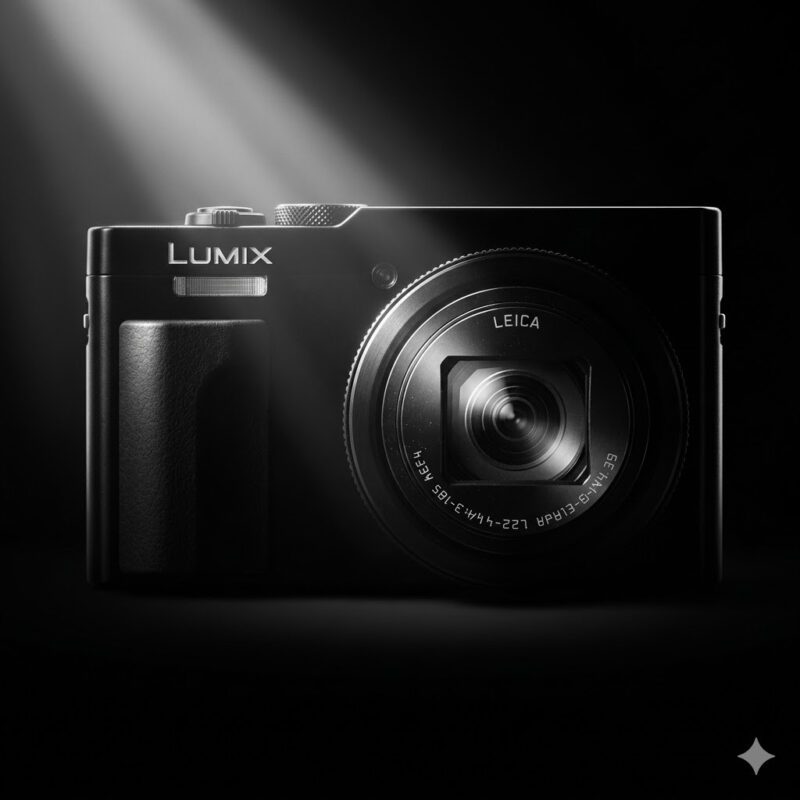
Yes. The Lumix ZS99 measures 112 by 67.8 by 43.1mm and weighs 322 grams with battery. It fits comfortably in a coat or large jacket pocket. The rubberized grip section on the front provides secure one-handed holding. Furthermore, the overall ergonomics feel refined and comfortable for a camera designed for casual travel use.
What Happened to the Electronic Viewfinder?
This is the most controversial design decision in the Lumix ZS99. The TZ95 predecessor included a small but genuinely useful electronic viewfinder. The ZS99 removed it entirely. Many reviewers describe this as a genuine downgrade rather than a neutral design change. For outdoor photographers who rely on an EVF for bright sunlight composition, this omission significantly reduces usability.
How Good Is the Tiltable Touchscreen?
The 3-inch 1.84M-dot tiltable touchscreen flips upward for overhead shooting and forward for selfie framing. Touch focus works reliably in stills mode. Additionally, three customizable function buttons provide quick access to frequently used settings. The controls are straightforward enough for beginners while offering sufficient depth for more experienced photographers.
What Are the Zoom Controls?
A rocker switch around the shutter button provides zoom control. The lens ring on the barrel can also be configured as a secondary zoom control. Both options function acceptably in use. However, the rocker switch zoom speed does not offer fine enough incremental adjustment for precise composition at extreme telephoto focal lengths.
How Is the Menu System?
Panasonic’s menu system on the ZS99 follows the standard Lumix layout. Long-term Lumix users will find it instantly familiar. Newer users may find some menu navigation less intuitive than competing brands. Furthermore, customizable function buttons help frequent users shortcut past the deepest menu layers during active shooting.
Battery and Connectivity
How Many Shots Per Charge?
The DMW-BLG10E battery delivers approximately 380 shots per CIPA standard rating. Real-world testing suggests approximately 430 usable shots under typical mixed shooting conditions. For a full day of tourist photography with moderate shooting intensity, one charge covers most needs. Carrying a spare battery is advisable for intensive full-day travel shooting.
Is USB-C Charging Useful?
Yes. USB-C charging is the primary and most practical upgrade in the Lumix ZS99 over its predecessor. The camera charges from any USB-C power source including standard travel adapters and portable battery packs. This convenience genuinely matters for travelers who want to minimize cable types in their kit. Furthermore, charging from a battery pack during travel gaps eliminates the need for dedicated charging time.
How Does Wireless Connectivity Work?
Built-in Wi-Fi and Bluetooth enable connection to the Lumix Sync smartphone app. This allows remote shooting control, image transfer to a smartphone, and social media sharing. The wireless system works reliably under typical conditions. Additionally, Bluetooth Low Energy maintains a persistent background pairing for quick reconnection without manual setup each time.
What Storage Does It Accept?
The Lumix ZS99 accepts a single full-size UHS-I SD card. UHS-II cards work but do not deliver faster write speeds than UHS-I in this camera. Any Class 10 or higher SD card from any reputable brand performs reliably. Furthermore, the single slot means backup recording is not available, which is appropriate for a travel compact at this price tier.
Real-World Use Cases
Travel and Holiday Photography
The Lumix ZS99 is purpose-built for travel. The 24 to 720mm zoom range covers every practical shooting scenario a tourist faces. Wide architectural shots, mid-range environmental portraits, and distant landmark details all work from a single camera body in a single jacket pocket. Furthermore, the compact body fits into bags without requiring a dedicated camera compartment.
Wildlife Observation
The 720mm equivalent reach makes the ZS99 genuinely useful for wildlife photography in accessible settings. Safari parks, bird watching sessions, and zoo visits all benefit from the long telephoto reach. Additionally, the Zoom Frame Assist tracking feature helps keep animals in the telephoto frame during movement.
Cruise and Vacation Photography
The Lumix ZS99 suits cruise travel particularly well. Space is at a premium on cruises and carrying multiple lenses is impractical. The single camera body with 30x zoom covers everything from shore excursion landscapes to distant ship details. Furthermore, the simple point-and-shoot operation works well for non-photographer travel companions.
Grandparents and Family Documentation
Older users who want a simple camera capable of capturing grandchildren, family gatherings, and travel experiences find the ZS99 approachable. Automatic mode handles exposure reliably in most situations. The touch screen makes basic operation intuitive. Additionally, the zoom range captures both group shots at short distances and individual portraits at longer distances equally well.
Pros and Cons
Pros
The 30x Leica-branded optical zoom lens covering 24mm to 720mm provides extraordinary reach that no smartphone can match optically. USB-C charging is a genuine and welcome convenience improvement for modern travelers. Extended video recording up to 90 minutes at 4K addresses a real practical limitation of the predecessor model. Additionally, RAW file support gives more image quality flexibility than JPEG-only compacts in this category. Panasonic’s color science produces vibrant and pleasant JPEG output consistently across diverse lighting conditions. The 4K Photo Mode provides a practical tool for capturing unpredictable subjects at 30 frames per second. Furthermore, the pocketable form factor and comfortable ergonomics make it a genuinely easy everyday carry travel companion.
Cons
The removal of the electronic viewfinder from the predecessor model is a meaningful downgrade that reduces outdoor shooting usability in bright sunlight conditions. The 1/2.3-inch sensor matches modern smartphone sensor sizes and produces noticeable noise at ISO 800 and significant quality loss above ISO 1600. No microphone input, no headphone output, and no manual video exposure control limit video usefulness for serious applications. Additionally, the camera is almost identical to the ZS80 it replaces, making it a poor investment for existing ZS80 owners. No stabilization improvement over the predecessor despite the new model designation. Furthermore, the $499 price is hard to justify against the value offered by the superior 1-inch sensor TZ200 at a similar price point in the used market.
Final Verdict
The Panasonic Lumix ZS99 is a reliable travel zoom compact with one genuinely exceptional capability: its 30x optical zoom range in a pocketable body. For first-time compact camera buyers who need maximum reach without carrying a mirrorless system, it delivers clearly on its core promise in good lighting conditions.
However, the removal of the EVF, the unchanged sensor and image quality from a 2022 predecessor, and the $499 launch price make it a frustrating recommendation for informed buyers. The Lumix ZS99 exists primarily because EU regulations required USB-C, not because Panasonic made meaningful imaging advances that justify a new camera purchase.
For first-time buyers who want maximum zoom reach in their pocket, it serves that specific need well. For anyone comparing it against a used TZ95, TZ200, or mirrorless alternatives with interchangeable lenses, the value case requires careful consideration before committing.
Read More from AltBuzz
Read more from Altbuzz for camera reviews, rumors, and detailed specs. AltBuzz delivers trusted and easy-to-understand photography content.
Subscribe AltBuzz YouTube Channel
Stay updated with camera reviews, rumors, and comparisons. AltBuzz shares regular camera content.