
Nikon Z50 II Full Review: Specs, Performance & Verdict
The Nikon Z50 II is proof that you do not always need a brand new sensor to make a genuinely better camera. Announced in November 2024, this APS-C mirrorless camera carries forward the same 20.9MP sensor as the original Z50, but pairs it with the EXPEED 7 processor from Nikon’s flagship full-frame lineup. The result is a camera that feels completely transformed.
For beginners, content creators, and enthusiasts who want a compact, capable system with serious performance behind it, the Nikon Z50 II delivers in ways the original never could. This review breaks down everything from image quality and autofocus to video, design, and real-world performance.
Release Date and Market Position
Nikon announced the Nikon Z50 II on November 6, 2024. Units began shipping on November 21, 2024. The camera is priced at $909.95 body-only, $1,049.95 with the 16-50mm f/3.5-5.6 VR kit lens, or $1,299.95 as a twin-lens kit with both the 16-50mm and 50-250mm lenses.
It replaces the original Z50 that launched back in 2019. While that camera was solid for its time, it became increasingly dated as rivals from Sony, Fujifilm, and Canon moved forward quickly. The Z50 II addresses five years of gaps in a single, focused update.
In the Nikon lineup, the Z50 II sits below the Z fc and above any entry-level offerings, targeting beginner to intermediate photographers who want something more capable than a smartphone but still manageable in size and cost.
Nikon Z50 II Specifications
| Feature | Details |
|---|---|
| Sensor | 20.9MP DX-Format BSI CMOS |
| Processor | EXPEED 7 |
| ISO Range | 100 – 51,200 (expandable to 204,800) |
| Autofocus | 209-point phase detection, AI subject detection |
| Burst Rate | 30fps (JPEG) / 11fps (RAW with AF/AE) |
| Pre-Capture | Yes (1 second pre-release buffer) |
| Video | 4K UHD up to 60fps, 1080p up to 120fps |
| Video Log | N-Log (10-bit, 4K 30fps) |
| Stabilization | No IBIS, electronic VR available |
| Viewfinder | 2.36M-dot OLED EVF |
| LCD Screen | 3.2-inch fully articulating touchscreen |
| Built-in Flash | Yes (pop-up) |
| Memory Card | Single UHS-II SD slot |
| Connectivity | Wi-Fi, Bluetooth, USB-C, Micro HDMI |
| Audio | 3.5mm mic input, 3.5mm headphone jack |
| Battery | EN-EL25a |
| Weight | Approximately 415g (with battery and card) |
| Lens Mount | Nikon Z-Mount (DX) |
| Weather Sealing | No |
| Special Features | Imaging Recipes, Picture Control button, REC lamp |
| Price | ~$909.95 (body only) |
Sensor and Image Quality
The Nikon Z50 II uses the same 20.9MP DX-format BSI CMOS sensor as the original Z50. On paper, that might seem disappointing. In practice, the combination of this sensor with the EXPEED 7 processor delivers meaningful improvements in image quality.
Colors are accurate and natural. Nikon’s JPEG processing has always been strong, and the Z50 II benefits from the same improvements that made cameras like the Z8 and Z9 so well regarded. The new Imaging Recipes feature allows users to download preset looks based on real film stocks or popular creator styles, applying them directly to JPEGs in-camera. For anyone who wants a polished look straight from the camera, this is a genuinely useful addition.
RAW files from the Z50 II respond very well to editing. Dynamic range at base ISO is solid for an APS-C sensor, with good shadow recovery and controlled highlight rolloff. High-ISO performance sees a clear benefit from the EXPEED 7 chip compared to the original Z50. Files at ISO 3200 and even ISO 6400 retain respectable detail, and the extended ISO ceiling reaches 204,800 for extreme low-light work.
The sensor produces 6240 x 4160 pixel images, which is adequate for large prints, significant cropping, and most online and commercial applications.
Autofocus Performance
This is where the Nikon Z50 II makes its biggest leap forward. The EXPEED 7 processor brings with it the same AI-driven subject detection algorithms found in Nikon’s professional bodies, including the Z8 and Z9.
The camera now tracks people, animals, birds, vehicles, airplanes, and trains with genuine reliability. 3D tracking has been significantly improved over the original Z50. In testing with challenging wildlife subjects, including partially obscured birds and animals in low contrast environments, the Z50 II has proven surprisingly capable.
Burst shooting hits 30fps in JPEG mode and 11fps with full RAW files and continuous AF/AE tracking. A pre-capture mode records up to one full second of images before the shutter button is fully pressed. For sports, wildlife, and fast-moving subjects, this is a valuable tool that was previously only available on much more expensive cameras.
One notable omission is the lack of an AF joystick. Repositioning the focus point requires using the touchscreen or the directional pad, which takes more time in fast-paced situations. For the target audience, this is a manageable limitation, but experienced shooters will feel its absence.
Video Capabilities
The Nikon Z50 II is a meaningful upgrade for video compared to its predecessor. It now shoots 4K UHD at up to 60fps and 1080p at up to 120fps for smooth slow-motion footage. Recording limits have also been extended to up to two hours in certain modes, addressing the 30-minute cap that frustrated creators with the original model.
N-Log is available in 10-bit 4K at 30fps, giving colorists proper dynamic range and grading headroom. A microphone input and dedicated headphone jack are both included, a first for this camera line and a significant upgrade for serious video creators.
Picture Controls can be applied directly to video, allowing users to bake a specific look into footage in-camera. Electronic Vibration Reduction helps smooth handheld footage without the need for IBIS.
External recording via micro HDMI supports higher-quality outputs for those connecting to a field recorder. The camera is also UAC and UAV compliant, making it a plug-and-play webcam option.
For a first-time video creator or a photographer exploring hybrid shooting, the Nikon Z50 II offers a very capable and approachable video experience. However, it falls short of the 10-bit 4:2:2 internal recording offered by competitors like the Sony ZV-E10 II in the same price category.
Design and Handling
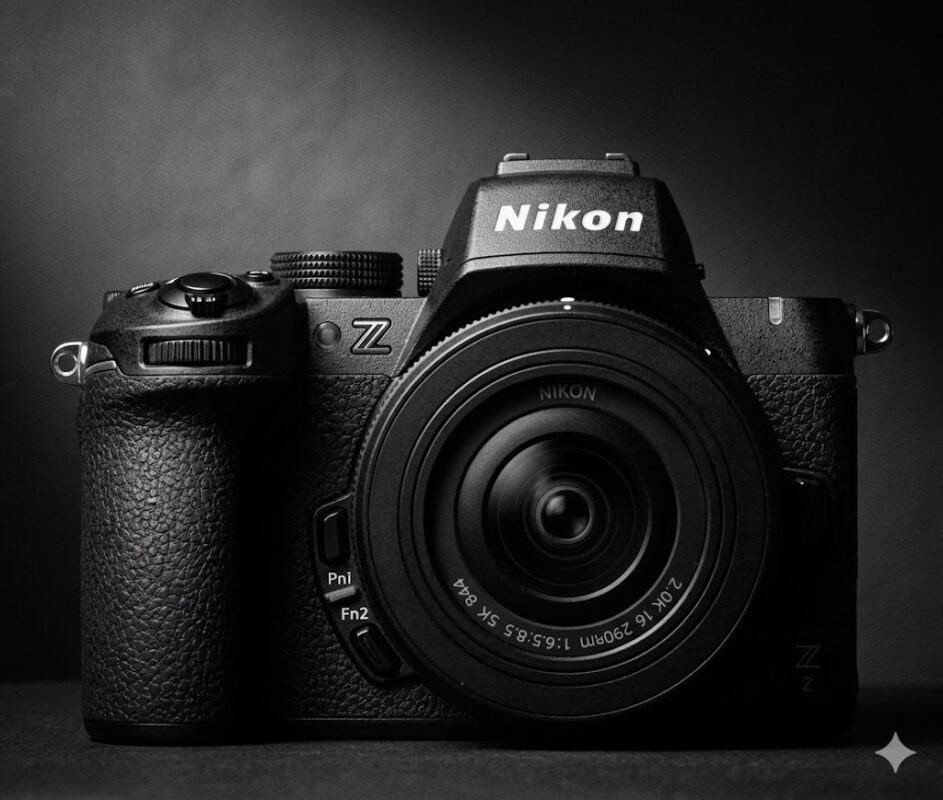
The Nikon Z50 II takes clear design inspiration from the full-frame Z6 III. The rounded, friendly shape of the original Z50 has been replaced by a sharper, more structured look. It feels more mature and more professional in hand.
The grip is notably larger than the original, which improves control when using heavier lenses. A REC lamp at the top of the camera lights up during video recording, a small but practical addition for self-filming. The fully articulating screen is a major upgrade over the original Z50’s tilt-only design. It supports selfie mode and full vlogging positions, and the touchscreen interface is fast and responsive.
The dedicated Picture Control button on the top plate is a new addition to the Z series, allowing one-touch color profile changes without diving into menus. It is a smart, beginner-friendly feature that reflects Nikon’s understanding of its target audience.
The pop-up flash remains, which is useful for casual indoor photography. Weather sealing is not included, so this camera is best suited for casual outdoor conditions rather than harsh environments.
Battery and Connectivity
The Nikon Z50 II uses the EN-EL25a battery, the same unit found in the original Z50 and the Z fc. Battery capacity is modest compared to larger batteries like Sony’s NP-FZ100. Nikon rates performance at around 280 shots per charge under CIPA testing, which is below average for the category. Real-world performance improves when using the EVF rather than live view, but this remains a weak point of the camera.
USB-C charging is supported, and the camera can be powered via USB while shooting. A single UHS-II SD card slot handles all storage. Connectivity includes Wi-Fi and Bluetooth for wireless image transfer to smart devices via Nikon’s SnapBridge app, which also supports remote control and automatic geotagging.
Micro HDMI output is available for external recording and monitor connections. Livestreaming is supported via the webcam compatibility.
Real-World Use Cases
Beginner Photography — The Z50 II is genuinely one of the friendliest cameras for new photographers. The Picture Control button, smart Auto mode, and Imaging Recipes all reduce the learning curve while still leaving room for skill growth.
Travel and Street — Compact dimensions, a light body, and the broad Z-mount lens selection make the Z50 II a strong travel camera. No weather sealing is a consideration for unpredictable conditions.
Wildlife and Sports — The AI subject detection system is genuinely impressive for this price tier. 30fps burst and pre-capture make it far more capable for action than the original Z50. Pairing it with the 50-250mm VR lens offers good reach for wildlife on a budget.
Content Creation and Vlogging — The articulating screen, N-Log, microphone and headphone jacks, and extended recording limits make this a capable content creation tool. It competes well against rivals though Sony’s ZV-E10 II edges ahead on pure video specs.
Studio Portraiture — The 20.9MP sensor produces clean, color-accurate files well-suited for portrait work. The AI face and eye tracking works well in controlled conditions.
Pros and Cons
Pros
- EXPEED 7 processor delivers flagship-level autofocus to APS-C
- 30fps JPEG burst with AF/AE tracking
- Pre-capture mode (1 second pre-release buffer)
- 4K UHD up to 60fps
- AI subject detection: people, animals, birds, vehicles, aircraft
- Fully articulating touchscreen
- N-Log and 10-bit video (4K 30fps)
- Microphone and headphone jack included
- Imaging Recipes for in-camera film-look presets
- Excellent Z-mount lens ecosystem and compatibility
Cons
- Same 20.9MP sensor as the 2019 original Z50
- No in-body image stabilization
- No AF joystick
- Battery life is below average for the class
- Single card slot
- No weather sealing
- Micro HDMI (not full-size) for external connections
- 10-bit internal video limited to 4K 30fps (not 60fps)
Final Verdict
The Nikon Z50 II is a genuinely impressive update considering the entry-level price. It takes the solid foundation of the original Z50 and adds exactly the features that users were asking for: better autofocus, more video capabilities, an articulating screen, and dedicated audio controls.
The unchanged sensor will disappoint those hoping for higher resolution. And the battery life remains one of the weaker points in the category. But for beginners, travel photographers, content creators, and anyone upgrading from a smartphone, the Z50 II delivers serious performance at a reasonable price.
Paired with the growing Nikon Z-mount lens lineup and the power of the EXPEED 7 processor, the Nikon Z50 II is one of the most capable beginner cameras available today. Buy it if you want flagship-level autofocus in a compact body, enjoy Nikon’s color rendering, and value ease of use alongside genuine performance headroom.
Read More from AltBuzz
Read more from Altbuzz for camera reviews, rumors, and detailed specs. AltBuzz delivers trusted and easy-to-understand photography content.
Subscribe AltBuzz YouTube Channel
Stay updated with camera reviews, rumors, and comparisons. Subscribe Altbuzz for regular camera content on the latest gear, hands-on tests, and buying guides.