
Blackmagic Pocket Cinema Camera 8K Gen 2 Rumors: Expected Specs, Features and Release
The Blackmagic Pocket Cinema Camera 8K Gen 2 has not been officially announced. Blackmagic Design has released no confirmation, no product page, and no official specification sheet. Nevertheless, professional cinema communities, colorists, indie filmmakers, and digital imaging technicians have been tracking a growing body of leaks and speculation that paints a detailed picture of what the next generation of Blackmagic’s flagship compact cinema camera may deliver.
The original Blackmagic Pocket Cinema Camera 8K and its subsequent Gen 1 variants established a remarkable standard for accessible cinema image quality. They brought full-frame 8K RAW recording, Blackmagic RAW format, and professional color science to filmmakers at price points that were genuinely unprecedented. Now the Blackmagic Pocket Cinema Camera 8K Gen 2 appears positioned to advance that foundation significantly across sensor performance, processing capability, autofocus intelligence, and professional workflow integration.
Every specification and feature discussed in this blog represents rumor, leak, or informed speculation. No detail here carries official Blackmagic Design confirmation.
Expected Release Date and Market Position
Blackmagic’s Product Development Cadence
Blackmagic Design operates on a less predictable release schedule than consumer camera manufacturers. Major product updates typically arrive at NAB Show in spring or IBC in September, the two flagship broadcast and cinema technology events. The original BMPCC 6K and 8K series launched at NAB 2019. Generation 2 updates followed at subsequent events.
Based on Blackmagic’s pattern of announcing major updates approximately two to three years after a significant generation launch, the Blackmagic Pocket Cinema Camera 8K Gen 2 could appear at NAB 2025 or NAB 2026. A subsequent retail release three to six months after announcement would align with Blackmagic’s historical shipping timelines.
Where the Blackmagic Pocket Cinema Camera 8K Gen 2 Sits Competitively
The Blackmagic Pocket Cinema Camera 8K Gen 2 targets the professional indie filmmaker, the serious documentary cinematographer, and the commercial video production professional who demands cinema-grade image quality without the budget for an ARRI or Sony Venice. It competes most directly with the Sony FX3 Mark II, the Canon EOS C70 Mark II, and the Nikon Z9 when used in cinema configurations.
However, Blackmagic’s competitive differentiation goes beyond specifications. The BMPCC ecosystem offers DaVinci Resolve integration, Blackmagic RAW format, and professional cinema color science at a price point that dramatically undercuts dedicated cinema cameras from Sony’s Cinema Line and Canon’s Cinema EOS range. The Gen 2 is expected to strengthen every one of those differentiators.
Expected Pricing
Based on the original BMPCC 8K’s pricing trajectory and Blackmagic’s established philosophy of democratizing professional cinema tools, the Blackmagic Pocket Cinema Camera 8K Gen 2 is expected to launch between 2,995 and 3,495 dollars. That pricing would maintain the remarkable value proposition that made the original model so commercially successful.
Blackmagic Pocket Cinema Camera 8K Gen 2 Rumored Specifications Table
| Feature | Rumored Details |
|---|---|
| Sensor Type | Full-frame or Super 35 BSI-CMOS with improved dual native ISO |
| Resolution | 8K full-frame or 8K Super 35 extraction |
| Processor | Next-generation Blackmagic processing engine |
| ISO Range | Dual Native ISO: 400 and 3200 (upgraded values speculated) |
| Autofocus System | Phase-detect with subject and face detection |
| Stabilization | In-body 5-axis IBIS (rumored as major new addition) |
| Video Recording | 8K RAW, 6K RAW, 4K ProRes up to 120fps |
| EVF | Optional EVF via top accessory mount |
| LCD Screen | 5-inch 2500 nit touchscreen (upgraded from 5-inch panel) |
| Burst Shooting | Not primary use case, continuous cinema recording standard |
| Battery | LP-E6NH or proprietary higher-capacity variant |
| Storage | CFexpress Type B primary, USB-C SSD recording |
| Connectivity | 12G-SDI, HDMI 2.1, USB-C 3.2, Wi-Fi, Bluetooth |
| Weight | Approximately 900 grams body only |
| Expected Price | 2995 to 3495 USD |
Rumored Sensor and Image Quality of the Blackmagic Pocket Cinema Camera 8K Gen 2
The Core Sensor Architecture Question
The sensor configuration of the Blackmagic Pocket Cinema Camera 8K Gen 2 is the most technically consequential element in the entire rumor discussion. The original BMPCC 8K used a Super 35 sensor with an 8K full-sensor mode and various windowed extraction modes at lower resolutions. This sensor delivered extraordinary detail and dynamic range for its price but had measurable limitations in shadow noise at higher ISO values.
The Gen 2 is widely rumored to introduce either a full-frame sensor with multiple extraction modes or a significantly improved Super 35 BSI sensor. Back-side illuminated technology would improve photon collection efficiency directly. More efficient photon collection at the photosite level translates into better signal-to-noise ratios across the entire ISO range. The result is cleaner shadow detail, smoother highlight rolloff, and a more refined overall image character.
Dual Native ISO Architecture Improvements
The original BMPCC 8K used dual native ISO at 400 and 3200. These two base sensitivity values corresponded to switchover points where the sensor read-out circuit changed amplification modes. At each base ISO, the sensor produced its cleanest output for that sensitivity range.
The Blackmagic Pocket Cinema Camera 8K Gen 2 is rumored to improve both of these values. Speculation suggests base ISO values of 800 and 6400, or alternatively 640 and 4000. Either improvement would meaningfully extend the camera’s practical operating range in challenging lighting. Base ISO 6400 would allow filmmakers to shoot in extremely dim available-light environments while maintaining the clean, low-noise image quality that defines cinema-grade capture.
Dynamic Range Expansion
Dynamic range from the Gen 2 is expected to exceed 14 stops under optimal conditions. The original BMPCC 8K measured approximately 13 stops of dynamic range in standard recording modes. Even a single additional stop of dynamic range dramatically expands the shadow and highlight information recoverable during color grading.
For cinema production, dynamic range determines how much visual information the camera captures in high-contrast scenes. A single additional stop means you can recover detail from areas that would have clipped or crushed to pure black in the original model. This matters most in outdoor scenes with bright sky and shaded subjects, interior scenes with windows, and any environment where practical lights create strong contrast.
Blackmagic RAW Evolution and Color Science
RAW format is expected to evolve alongside the Gen 2 sensor. It has consistently improved the BRAW format through firmware updates, adding new quality tiers and refining the compression algorithms. The Gen 2 hardware would enable new BRAW recording modes at higher data rates, preserving more sensor information in the recorded file.
Color science in the Blackmagic Pocket Cinema Camera 8K Gen 2 is expected to refine the Film color space that has defined Blackmagic’s visual aesthetic across the BMPCC lineup. Improved color matrix accuracy, better handling of difficult skin tones in tungsten and mixed lighting, and more refined color response in saturated environments are all anticipated improvements based on Blackmagic’s established development trajectory.
Rumored Autofocus System in the Blackmagic Pocket Cinema Camera 8K Gen 2
The Autofocus Weakness of Previous BMPCC Models
Autofocus has consistently been one of the most criticized aspects of the Blackmagic Pocket Cinema Camera series. Professional cinema cameras traditionally rely on manual focus with follow focus systems. However, the BMPCC series targets a broader audience that includes solo operators, documentary filmmakers, and run-and-gun content producers who need reliable AF without a dedicated focus puller.
The original BMPCC 8K’s autofocus performance was functional but not competitive with Sony’s Real-time Tracking or Canon’s Dual Pixel CMOS AF in terms of speed, accuracy, and subject intelligence. This limitation has been one of the most consistent feedback points from the BMPCC user community.
Phase-Detect AF With Subject Detection
The Blackmagic Pocket Cinema Camera 8K Gen 2 is widely rumored to introduce genuine phase-detect autofocus. This is a significant architectural change from the contrast-detect system in previous models. Phase-detect AF reads focus error directly from the sensor, enabling much faster and more decisive focus acquisition than contrast-detect systems that must search by hunting through the focus range.
Subject detection covering human faces and eyes is also expected. For documentary and interview work where a single operator needs to maintain sharp focus on a speaking subject while simultaneously monitoring framing and exposure, face-priority AF fundamentally changes the practical shooting experience.
Cinema-Appropriate Focus Behavior
Critically, the Blackmagic Pocket Cinema Camera 8K Gen 2’s AF implementation is expected to offer cinema-appropriate behavior controls. AF transition speed adjustment, focus smoothing parameters, and the ability to set the camera to use AF as an assistive reference rather than fully autonomous control are all speculated.
These controls matter enormously for narrative filmmakers. An AF system that snaps instantly to a new focus position looks wrong in cinematic context. A system that allows the filmmaker to dial in a smooth, deliberate transition speed that matches the scene’s pacing is genuinely useful. Blackmagic appears to understand this distinction based on how they have approached cinema tool design across their product history.
Expected Video Capabilities of the Blackmagic Pocket Cinema Camera 8K Gen 2
8K RAW Internal Recording
8K Blackmagic RAW internal recording is the core video specification of the Blackmagic Pocket Cinema Camera 8K Gen 2. The original BMPCC 8K established 8K BRAW as a practical and accessible format for indie filmmakers. The Gen 2 is expected to refine this capability with improved data rates, better compression quality at the same file sizes, and new quality tiers for different production contexts.
8K BRAW at higher quality settings produces files with extraordinary detail and color fidelity for feature film and high-end commercial production. At lower quality settings, it produces more manageable files suitable for faster-turnaround documentary and corporate production. The Gen 2’s improved processing engine is expected to handle these different quality tiers more efficiently than the original model.
4K ProRes at 120 Frames Per Second
Beyond RAW recording, 4K ProRes recording at up to 120 frames per second is widely rumored for the Blackmagic Pocket Cinema Camera 8K Gen 2. This would be a transformational addition for production workflows that require high-frame-rate slow motion at ProRes quality.
Currently, achieving 4K 120fps in ProRes requires cameras significantly more expensive than the BMPCC. Blackmagic delivering this capability at its rumored price point would make the Gen 2 an extraordinarily competitive option for commercial and narrative productions that need high-quality slow motion without renting a dedicated high-frame-rate cinema camera.
6K Windowed RAW Extraction Modes
Multiple 6K windowed RAW extraction modes are expected, giving cinematographers flexibility to choose between full sensor 8K capture for maximum resolution and 6K Super 35 extraction for a more traditional cinema aesthetic with different lens field of view characteristics.
These multiple extraction modes effectively give the Gen 2 versatility equivalent to multiple camera bodies for productions that need to match different lens and format conventions across scenes. A 6K Super 35 mode pairs appropriately with cinema S35 lenses. The full-frame 8K mode works with full-frame cinema glass. The same camera body serves both needs.
In-Body Image Stabilization
Perhaps the most significant new feature rumored for the Blackmagic Pocket Cinema Camera 8K Gen 2 is 5-axis in-body image stabilization. The original BMPCC series entirely lacked IBIS, requiring filmmakers to rely entirely on lens-based stabilization or external gimbals for smooth handheld footage.
Adding IBIS to the Gen 2 would dramatically expand its practical application in handheld documentary and run-and-gun scenarios. Stabilized 8K BRAW handheld footage from a camera at this price point would be genuinely unprecedented. The combination of IBIS with lens optical stabilization for certain compatible lenses would further improve stabilization effectiveness.
Log Profiles and Color Space Options
Blackmagic Film and Blackmagic Video color spaces are expected to continue and expand in the Gen 2. Additionally, industry-standard log profiles including a refined Blackmagic Log 3 or equivalent are speculated to offer better compatibility with ACES workflows and third-party color grading pipelines outside DaVinci Resolve.
For productions that use multiple camera systems from different manufacturers, better cross-camera color matching through standardized log formats is a practical workflow improvement that colorists and post-production supervisors appreciate significantly.
Design and Build Expectations for the Blackmagic Pocket Cinema Camera 8K Gen 2
The Familiar BMPCC Body Language Continues
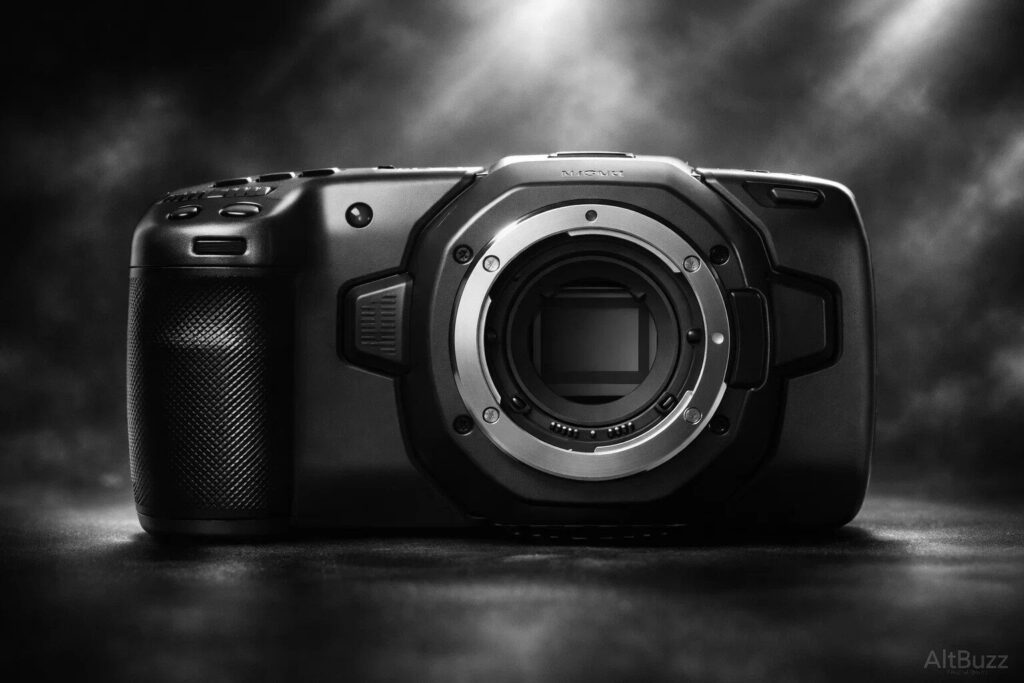
The Blackmagic Pocket Cinema Camera 8K Gen 2 is expected to maintain the boxy, purpose-built form factor that defines the BMPCC line. This design is not optimized for single-handed consumer shooting. It is built for rigged cinema production. A flat top surface for mounting accessories. Side ports for SDI and audio connections. A deep front grip for balanced handheld operation with longer cinema lenses.
Within this familiar architecture, build quality improvements are anticipated. Better weather sealing against dust and light moisture is expected, addressing one of the most common requests from working filmmakers who use BMPCC cameras in unpredictable location environments.
The 5-Inch Touchscreen Upgrade
The 5-inch touchscreen is expected to receive a significant brightness upgrade. The original BMPCC 8K’s screen struggled in outdoor direct sunlight conditions, making monitoring difficult on exterior locations. A rumored 2500 nit brightness rating would make the Gen 2 screen readable in virtually all outdoor conditions. Without even requiring an additional sunhood.
Touch response improvements and the addition of waveform and vectorscope overlays directly on the touchscreen are also anticipated. For solo operators who cannot always rely on an external monitor, these tools directly support accurate exposure.
Improved Ergonomics and Button Layout
Ergonomic refinements are expected based on accumulated user feedback from BMPCC 6K and 8K owners. Better button placement for one-handed operation during handheld shooting, improved recording button tactile feedback to reduce accidental stops and starts. Additionaly, more accessible direct access controls for ISO and white balance adjustments are all anticipated.
A more robust lens mount with improved tolerances is also speculated. Tighter lens mount tolerances reduce micro-play between camera body and lens, which can affect image sharpness in some shooting situations with longer lenses.
Professional I/O Panel
The Blackmagic Pocket Cinema Camera 8K Gen 2 is expected to include a comprehensive professional I/O panel befitting its cinema market positioning. Full-size 12G-SDI output for connection to professional monitors and recorders, HDMI 2.1 for 4K output to consumer monitoring solutions, USB-C 3.2 for external SSD recording and data transfer, and standard 3.5mm audio input alongside a dedicated XLR input via the included grip handle are all expected.
Battery and Connectivity Rumors for the Blackmagic Pocket Cinema Camera 8K Gen 2
Battery Architecture and Recording Time
The original BMPCC 8K used LP-E6 batteries, which provided approximately 45 minutes of recording time at demanding settings. This was one of the most consistently criticized practical limitations of the camera for professional use. The Blackmagic Pocket Cinema Camera 8K Gen 2 is expected to address this through either a higher-capacity proprietary battery or an LP-E6NH compatible system combined with improved power management.
Rumored recording time improvement targets approximately 70 to 80 minutes per charge at 6K BRAW settings. For production use, this still requires spare batteries for a full shooting day, but the improvement would reduce how frequently operators need to interrupt shooting for battery management.
USB-C SSD Recording
USB-C 3.2 external SSD recording is expected to remain a core workflow feature of the Blackmagic Pocket Cinema Camera 8K Gen 2. Recording directly to a fast external SSD bypasses the speed limitations of CFexpress media for extended takes and reduces media cost significantly compared to professional CFexpress Type B cards.
For productions that prioritize cost-effective media management alongside maximum quality recording, USB-C SSD recording is a practically important feature that Blackmagic pioneered in the BMPCC line and is expected to continue and improve in the Gen 2.
Wi-Fi and Remote Control Integration
Wi-Fi connectivity for remote camera control via Blackmagic Camera Control app is expected to improve in the Gen 2. Faster connection, more comprehensive remote control of camera settings, and better integration with DaVinci Resolve for direct metadata and color workflow management are all anticipated.
Bluetooth connectivity for lens communication with supported electronic lenses and for accessory integration is also expected. These connectivity improvements support the increasing trend toward wireless-assisted production workflows in documentary and solo cinematography contexts.
Potential Real-World Use Cases for the Blackmagic Pocket Cinema Camera 8K Gen 2
Independent Narrative Film Production
Independent narrative filmmakers represent the core audience for the Blackmagic Pocket Cinema Camera 8K Gen 2. The combination of 8K BRAW internal recording, improved dynamic range, refined color science, and DaVinci Resolve integration gives indie productions tools that were previously accessible only to much larger budgets.
A feature film shot on the Gen 2 with appropriate lenses, lighting, and color grading can achieve a visual quality that stands comparison with productions shot on cameras costing five to ten times as much. For filmmakers who prioritize putting their budget on screen rather than into camera equipment, this value proposition is genuinely transformational.
Documentary and Journalism
The improved autofocus system, potential IBIS addition, and better low-light performance make the Blackmagic Pocket Cinema Camera 8K Gen 2 a more practical tool for documentary and journalism cinematography than previous BMPCC models. Solo operators who previously found the camera’s AF limitations too constraining for documentary use would find the Gen 2’s subject detection AF far more usable in real-world run-and-gun situations.
The compact form factor also matters in documentary contexts where camera size affects how subjects interact with the production. A small camera is less intimidating than a large cinema rig, which sometimes produces more natural and authentic documentary performances from non-professional subjects.
Commercial and Corporate Video Production
Commercial video production companies producing brand content, corporate films, and advertising work benefit from the Gen 2’s combination of 4K ProRes 120fps, improved stabilization, and professional output quality. The camera’s DaVinci Resolve integration streamlines color grading workflows for productions that want consistent, branded visual aesthetics across multiple deliverables.
Possible Pros and Cons Based on Rumors
Expected Advantages of the Blackmagic Pocket Cinema Camera 8K Gen 2
- Improved BSI sensor expected for better low-light performance and dynamic range exceeding 14 stops
- Phase-detect AF with subject and face detection rumored to address the original model’s most criticized limitation
- 5-axis IBIS speculated as a major new addition enabling stabilized handheld cinema recording
- 4K ProRes at 120fps rumored for high-quality slow-motion production
- Improved dual native ISO values expected for extended practical operating range
- Refined Blackmagic RAW format expected with new quality tiers
- 2500 nit touchscreen brightness anticipated for reliable outdoor monitoring
- DaVinci Resolve integration expected to continue and deepen
- Competitive pricing expected to maintain remarkable value proposition
Possible Limitations of the Blackmagic Pocket Cinema Camera 8K Gen 2
- 8K BRAW files demand powerful editing computers and substantial storage infrastructure
- Battery life improvement expected but will still require spare batteries for full shooting days
- IBIS remains unconfirmed and its effectiveness at 8K with cinema lenses remains speculative
- No autofocus system at this price can fully replicate the performance of Sony Real-time Tracking or Canon DPAF
- Blackmagic’s historically variable shipping timelines mean announced products sometimes arrive months later than expected
- All specifications discussed here remain unconfirmed until Blackmagic Design makes an official announcement
Final Thoughts on the Blackmagic Pocket Cinema Camera 8K Gen 2
The Blackmagic Pocket Cinema Camera 8K Gen 2, as assembled from current leaks and technical speculation, represents exactly the kind of advancement the independent cinema community needs. The original BMPCC 8K democratized 8K cinema recording. The Gen 2 appears positioned to address every practical limitation that professionals identified in daily production use while pushing the image quality and feature set further than any competitor at its expected price point.
The autofocus improvement and potential IBIS addition would alone transform the Gen 2’s practicality for a wide range of production contexts. Combined with dynamic range expansion, improved dual native ISO values, and 4K 120fps ProRes recording, the overall package is remarkably compelling on paper.
The essential qualification remains critical. Nothing here is confirmed. Blackmagic Design has released no official information about the Gen 2. Every specification discussed here comes from leaks, industry analysis, and informed speculation. Wait for the official announcement and evaluate the confirmed specifications before committing to a purchase or production plan.
Read more from AltBuzz for camera rumors, leaked specs, and expert insights. AltBuzz delivers trusted and easy-to-understand photography content. Altbuzz
Stay updated with camera rumors and comparisons. AltBuzz shares latest camera content regularly. Subscribe Altbuzz