
Best Mirrorless Cameras 2026: We’d Only Pay Full Price for 3
Buying one of the best mirrorless cameras 2026 has to offer is easy. Buying the right one at the right price is much harder. Ten strong contenders currently fight for your money, and most buying guides simply rank them from best to worst and stop there. That approach misses the real question every shopper actually asks: which camera deserves your full budget right now, and which one deserves a wait for a sale?
At Alt Buzz, we tested and ranked the best mirrorless cameras 2026 has on the market and then pushed the analysis one step further. We asked which ones earn a full price purchase today. Out of all ten, only three made that cut, and they are not simply the top three cameras on this list. One winner shows up far earlier than most rankings would ever place it, so keep reading before you commit your budget to any camera on this list.
This guide breaks down all ten of the best mirrorless cameras 2026 offers, explains who each one actually suits, and flags the exact three models worth paying sticker price for right now. For more hands-on camera testing and gear breakdowns, subscribe to Alt Buzz on YouTube and visit altbuzzmedia.com for the full library of reviews.
Quick Answer: The Best Mirrorless Cameras 2026 Worth Full Price
Readers in a hurry deserve a straight answer before the full breakdown. Based on our analysis, these three cameras justify full retail price right now:
- Canon EOS R50 – the best full price entry-level pick for new mirrorless shooters
- Canon EOS R6 Mark III – the strongest full price mid-range hybrid camera
- Sony Alpha 7 V – the best overall mirrorless camera and top full price flagship-adjacent pick
Every other camera on this list earns a place in the ranking, but makes more financial sense as a sale purchase. The sections below explain exactly why, starting from number ten and working up to the best overall camera in the countdown.
Ranking the Best Mirrorless Cameras 2026: Full Breakdown
10. Canon EOS R50: The First Full Price Winner Nobody Expects
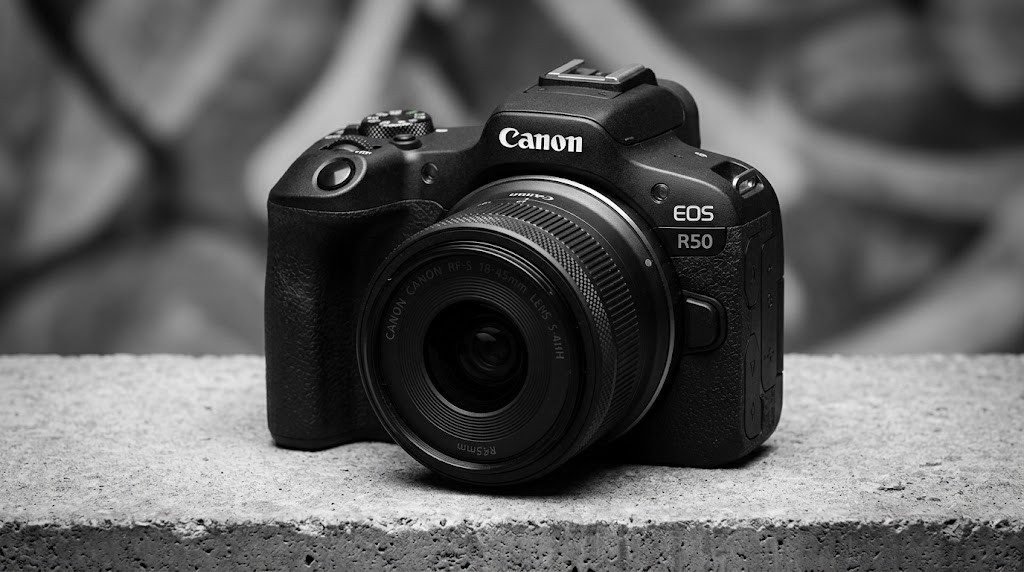
The countdown starts in an unusual place. Number ten is supposed to be the throwaway slot, the camera a list mentions out of obligation before moving on to better options. Instead, the Canon EOS R50 becomes full price winner number one, and that placement alone should tell you this ranking works differently than most.
Here is the case for it. Body only, this camera launches around $680, and that price buys a genuinely capable 24MP APS-C sensor. Canon’s Dual Pixel autofocus system handles the heavy lifting behind the scenes, and a real viewfinder backs up the rear screen instead of replacing it entirely. The 4K video output stays oversampled rather than cropped, so footage holds real detail instead of settling for good enough.
None of that reads as exciting on paper. However, it delivers exactly what a first serious camera should provide. Consider who actually buys this camera. Someone leaves their phone behind for the first time. Someone finally retires a decade-old DSLR that weighs twice as much and does half as much. A parent wants sharp photos of their kids without needing a technical degree to get them.
For that buyer, spending three or four times more on a camera higher up this list buys very little extra value they will actually use. The R50 skips in-body image stabilization, its controls stay smaller than higher-end bodies, and serious enthusiasts will eventually outgrow it. Still, that limitation misses the real test. The test asks whether the price matches the buyer, and for this camera, it does.
9. OM System OM-1 Mark II: Buy It on Sale, Not at Launch Price
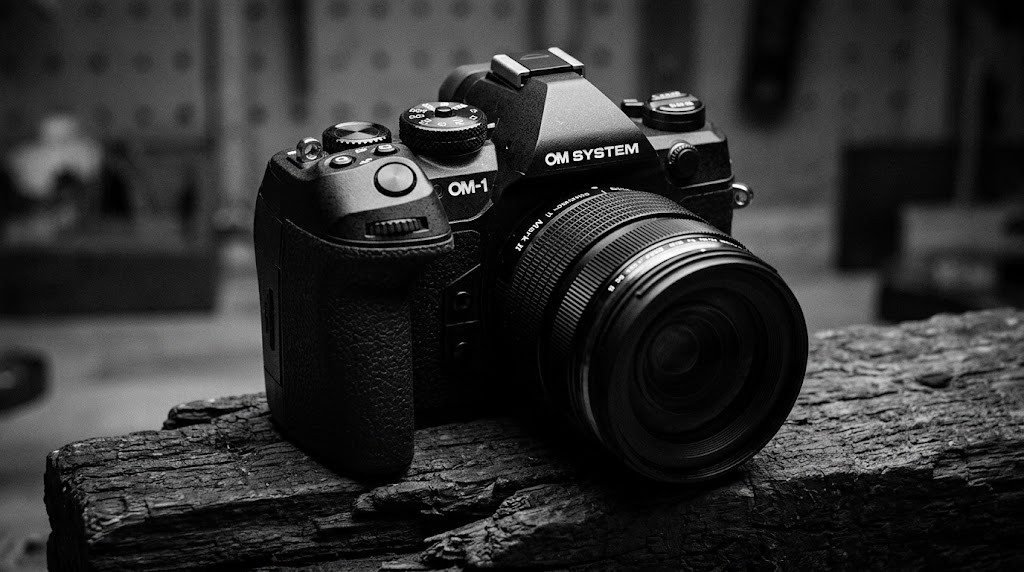
Number nine shifts the conversation from raw power toward something more practical: what you actually carry on a long shoot. Reducing the OM System OM-1 Mark II to its 20.4MP sensor misses the entire point of this camera.
What makes it remarkable is how every system works together. In-body stabilization rated past eight stops keeps handheld shots sharp, and a weather-sealed body shrugs off rain and dust without hesitation. The autofocus system recognizes birds and animals as reliably as it recognizes people, and burst shooting climbs into triple digits whenever a fast sequence demands it.
Pair that performance with the Micro Four Thirds lens lineup, where a long telephoto weighs a fraction of what a full-frame equivalent requires, and you get a kit a wildlife photographer can carry all day without shoulder pain setting in. That combination turns system size into a genuine performance advantage the moment you become the one carrying the gear.
Full-frame sensors still win in extreme low light and shallow depth of field, so photographers chasing that look should look elsewhere on this list. Meanwhile, at its regular price, buyers pay flagship money for a smaller sensor, which is exactly why this camera earns a buy-on-sale verdict rather than a full price recommendation. Catch it discounted, though, and it instantly becomes one of the smartest specialist purchases in this entire lineup.
8. Fujifilm X-T5: A Tactile Camera Worth Waiting to Discount
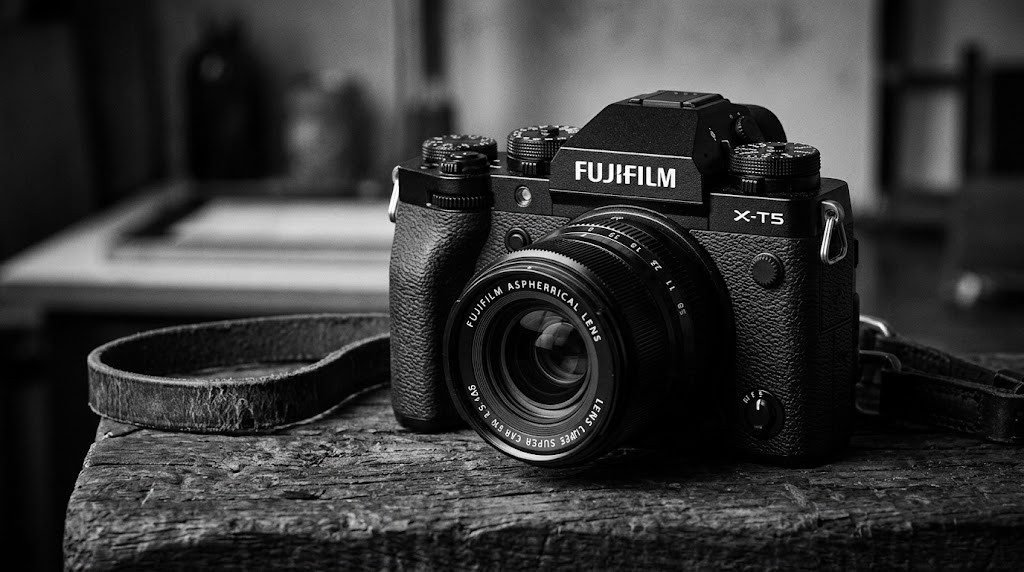
From portability as a performance feature, the countdown moves toward something almost old-fashioned: photography that feels tactile in your hands. The Fujifilm X-T5 exists for photographers who still want the process of taking a picture to feel like something, not just a screen tap.
This body centers on dials instead of menus. Aperture rings and dedicated shutter speed controls create a genuine sense that you operate a machine rather than an app. Underneath that tactile shell sits a 40MP APS-C sensor, still the highest resolution APS-C chip on the market. Paired with in-body stabilization and Fujifilm’s compact, beautifully built X-mount lenses, that resolution becomes genuinely usable in the field.
For travel photographers and street shooters, this exact combination of high resolution, small lenses, and real physical controls proves difficult to find anywhere else. Fujifilm’s color science also remains a major reason people choose this system over a spreadsheet full of competing specs.
However, the X-T5 has sat on shelves since late 2022, and its tracking autofocus, while good, was not built for demanding action the way newer bodies handle it. Rumors point to a successor arriving before too long, though nothing about that is confirmed, so treat it as a rumor rather than a reason to wait indefinitely. What that age does mean concretely is that paying full price today makes a harder case than catching this camera on sale, where its value proposition becomes excellent again.
7. Nikon Z5 II: Full Frame Without the Premium Tax
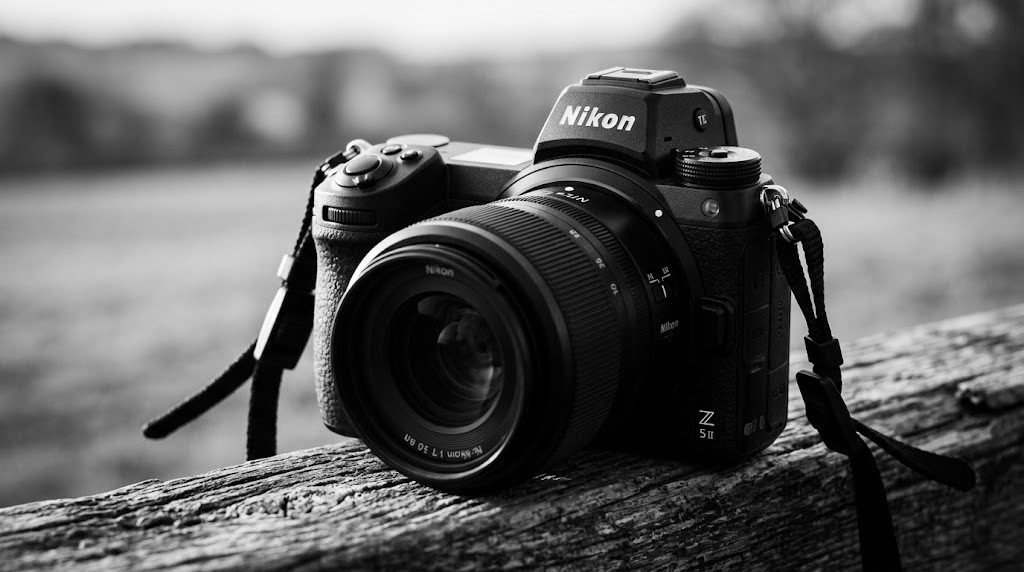
From premium APS-C photography, the conversation turns toward what happens when full frame stops functioning as a luxury tax. If you shoot on a DSLR and keep putting off the jump to mirrorless, the Nikon Z5 II exists to end that hesitation.
Full frame used to mean paying extra just for the sensor size alone. The Z5 II undercuts that assumption directly. It carries the same 24.5MP sensor found in Nikon’s pricier Zf, runs on the same EXPEED 7 processor that powers Nikon’s higher-end bodies, and adds subject-detection autofocus that recognizes people, animals, and vehicles without extra input from the shooter. Genuine weather-resistant construction and Nikon’s growing NIKKOR Z lens catalog round out a full-frame system that does not punish buyers for choosing the affordable entry point.
What it lacks is the sensor architecture found in Nikon’s speed-focused bodies further up this list, so this is not the camera for chasing fast sports or wildlife at their absolute limit. For portraits, travel, everyday full-frame work, and anyone upgrading from an aging DSLR, though, that limitation rarely matters. The real question this camera forces buyers to ask is whether they actually need to spend two or three times more just to get full frame. Often, they do not, so buying this one when it hits the right price closes the case on its own.
6. Panasonic Lumix S1 II: Best for Hybrid Video Creators
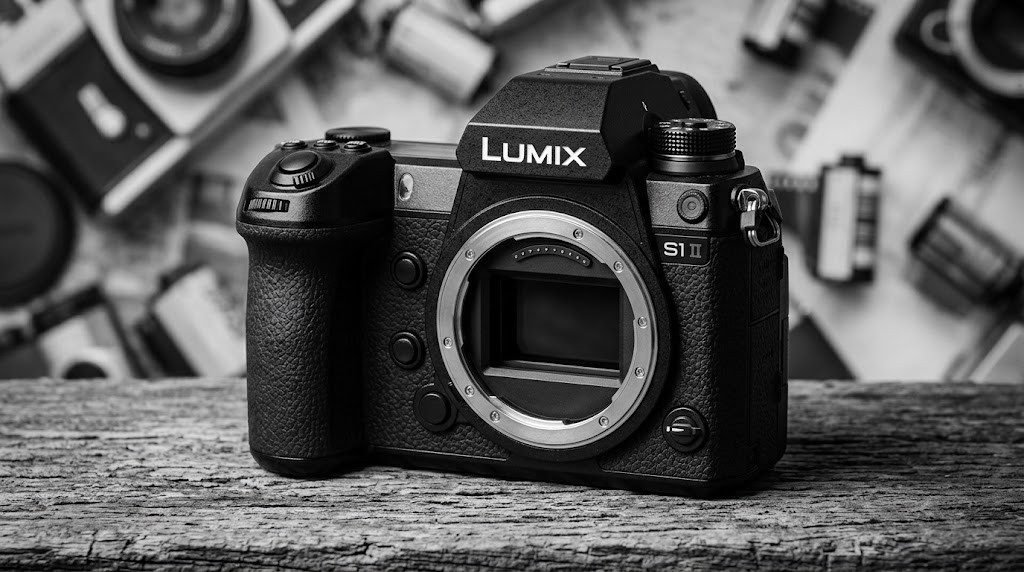
Full-frame photography naturally raises the next question: what happens when it turns toward video? The Panasonic Lumix S1 II keeps this list from becoming a three-way argument between Canon, Nikon, and Sony.
Panasonic built this camera for hybrid creators who genuinely push video tools to their limits, not creators who simply check a spec sheet box. Its 24MP sensor uses a partial stacked design, Panasonic’s first, which enables a faster autofocus system and read-out speeds earlier Lumix bodies could never match. Open-gate recording captures the entire sensor rather than a cropped slice, giving editors far more flexibility to reframe footage for square, vertical, or widescreen delivery from a single clip. High-frame-rate 4K modes let creators slow footage down dramatically without paying a quality penalty, and the stabilization performs well enough to make handheld footage look tripod mounted.
Stills-only photographers will not find much value here, and Canon, Nikon, or Sony bodies make easier recommendations for that use case. For creators who genuinely edit in open gate, shoot high frame rate slow motion regularly, and treat video as the primary job rather than an afterthought, though, this becomes one of the most complete tools currently available. It is also priced like it knows that, which is exactly why it lands as a buy-on-sale pick rather than a full price recommendation for most buyers.
5. Nikon Z8: Flagship Performance in a Smaller Body
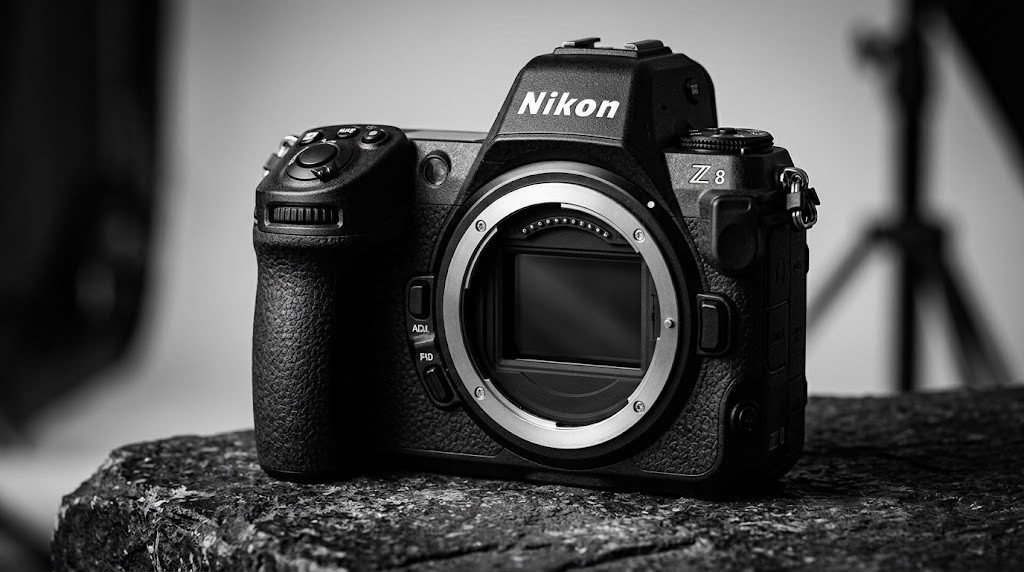
Flagship performance stops requiring flagship size at number five. Nikon built the Z8 around the same 45.5MP stacked sensor found in their top-tier Z9, then wrapped it in a body that is noticeably smaller and lighter.
That sensor reads out fast enough to shoot at up to 20 fps in RAW with essentially no rolling shutter distortion. Subject detection tracks people, animals, and vehicles with real consistency, and 8K video capability goes well beyond what most creators will ever need, which is exactly the point of a camera at this level. This body descends, in spirit, from the Nikon D850, a camera photographers still talk about years after its release, and the Z8 earns that lineage honestly. Wildlife photographers, wedding shooters, commercial teams, and hybrid creators all find a genuine home here.
Completeness, however, does not equal necessity. This camera remains large by mirrorless standards and priced for professional workloads, so photographers who do not need that ceiling of speed and resolution end up paying for performance they will rarely touch. Nikon has run promotions on this body before, and waiting for one of those windows makes far more financial sense than paying maximum price the moment the urge to buy hits.
4. Canon EOS R5 Mark II: Powerful, But Not for Everyone
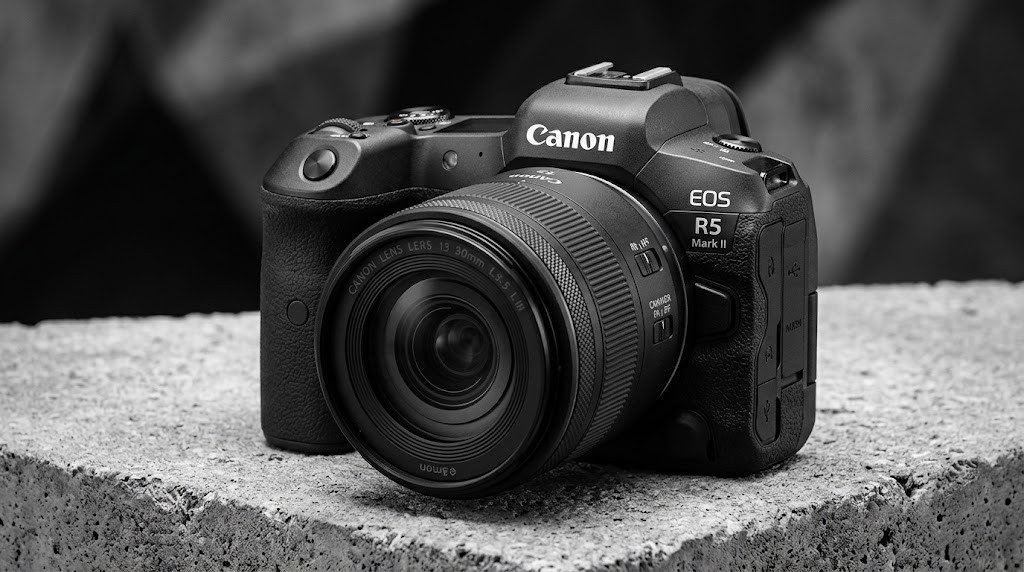
Nothing about this entry criticizes what the Canon EOS R5 Mark II can do. The argument centers entirely on who should actually pay full price for it.
This camera performs at an extraordinarily high level. A 45MP stacked sensor, burst shooting up to 30 fps electronically, autofocus that holds onto a subject through motion most cameras would lose, and video specifications built for commercial and hybrid production work all come standard here. Wedding photographers relying on it for reception lighting, wildlife shooters who need both resolution and speed in the same body, and commercial teams delivering high-resolution client work all get genuine value from this sensor and processor combination.
The real question is whether your photography benefits enough from that higher resolution and premium workflow to justify jumping over Canon’s own increasingly capable lower-tier bodies. For most serious enthusiasts, the honest answer lands on no. Canon’s lineup has gotten good enough that stepping up here needs justification through professional need, not simply a desire for the best number on a spec sheet. That is not a knock on the camera. It stands as a reminder that the best spec sheet and the smartest purchase are not always the same decision.
3. Canon EOS R6 Mark III: Full Price Winner Number Two
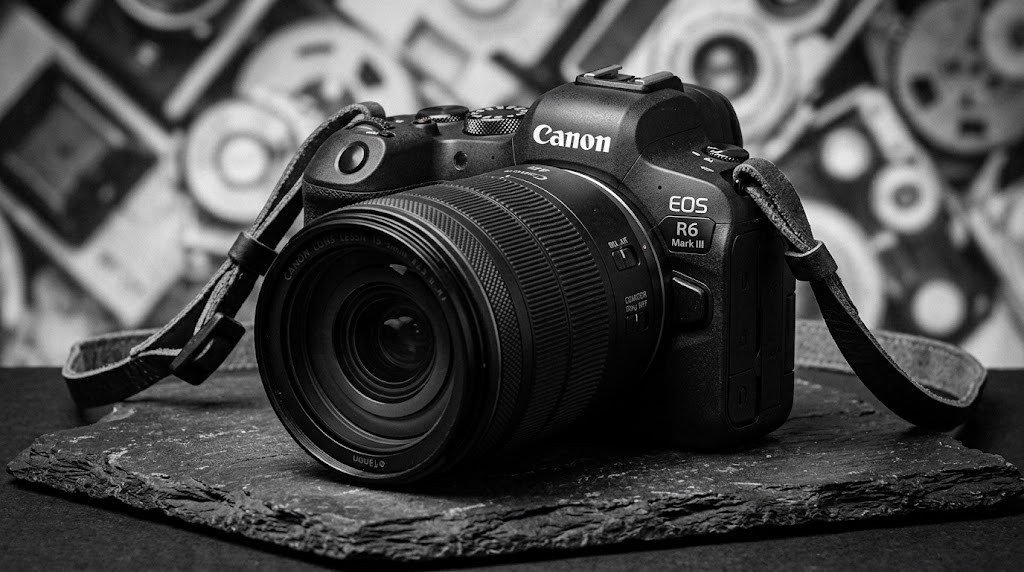
This entry matters more than almost any other section in the countdown, because it delivers full price winner number two. The Canon R6 line has historically stayed a modest, twenty-something megapixel proposition. Not anymore.
The Mark III jumps to a 32.5MP sensor while still hitting 40 fps electronic bursts. Pre-capture technology grabs images before the shutter finishes pressing, in-body stabilization rated past eight stops keeps handheld shots steady, and Canon’s first open-gate video recording arrives in this line for the first time. Resolution, speed, and hybrid video capability all arrive together in one body, at a price that barely moved from what the previous generation launched at three years earlier.
Point this camera at weddings, events, portraits, wildlife, travel, or hybrid content creation, and it covers every one of those jobs convincingly, without forcing buyers to pay for 45MP resolution most of these jobs never actually need. Photographers chasing extreme cropping, studio-grade detail, or commercial print output can still justify moving up from here. For the broad range of serious photographers this list targets, though, this camera lands as the Canon sweet spot. It costs real money, yes, but it costs appropriately for what buyers actually receive.
2. Sony Alpha 7R VI: Technically Brilliant, But Not the Final Winner
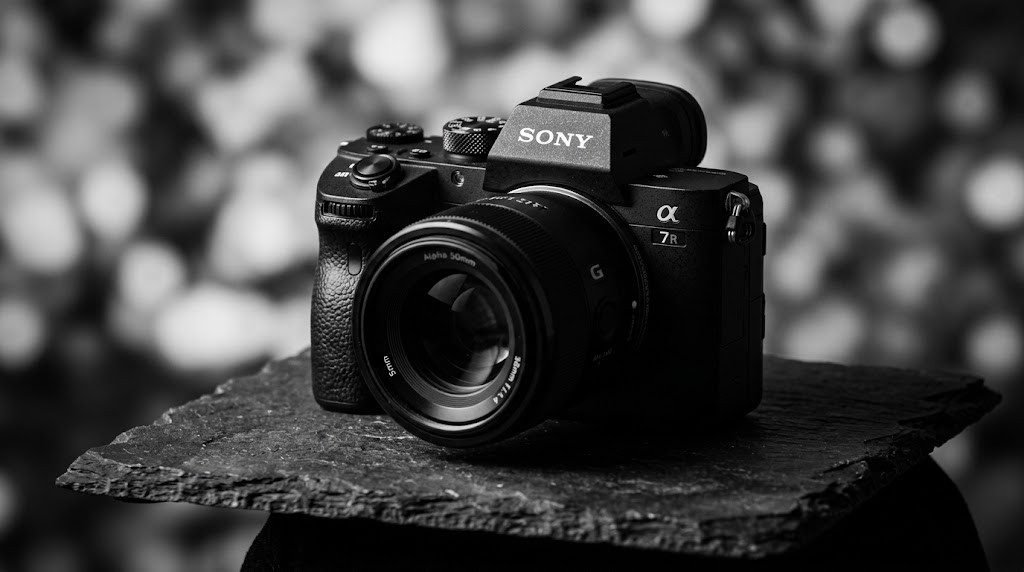
Two full price winners have appeared so far, and readers waiting for the third one to reveal itself might expect this entry to deliver it. It does not.
Let’s be clear about what this camera actually delivers: something extraordinary. A fully stacked sensor pushes past 66MP, 30 fps electronic burst shooting holds at that resolution, 8K video comes oversampled for genuine detail, and autofocus stays precise enough to matter at that pixel density. Landscape photographers who print large, fine art and studio work demanding maximum detail, and wildlife shooters who crop aggressively into distant subjects all find something here that nothing else on this list can touch.
That strength, however, becomes exactly the problem for most buyers. This is not a camera that overprices itself for the specialist who needs 66MP of resolving power. For that specialist, it arguably underprices itself given what it delivers. The issue surfaces when most serious, generalist photographers never come close to exploiting what this sensor can do, yet still pay flagship prices for headroom they will not use. Technologically, this might stand as the single most impressive camera in the entire countdown. That still does not make it the smartest purchase for most photographers reading this guide.
1. Sony Alpha 7 V: Best Overall Mirrorless Camera in 2026
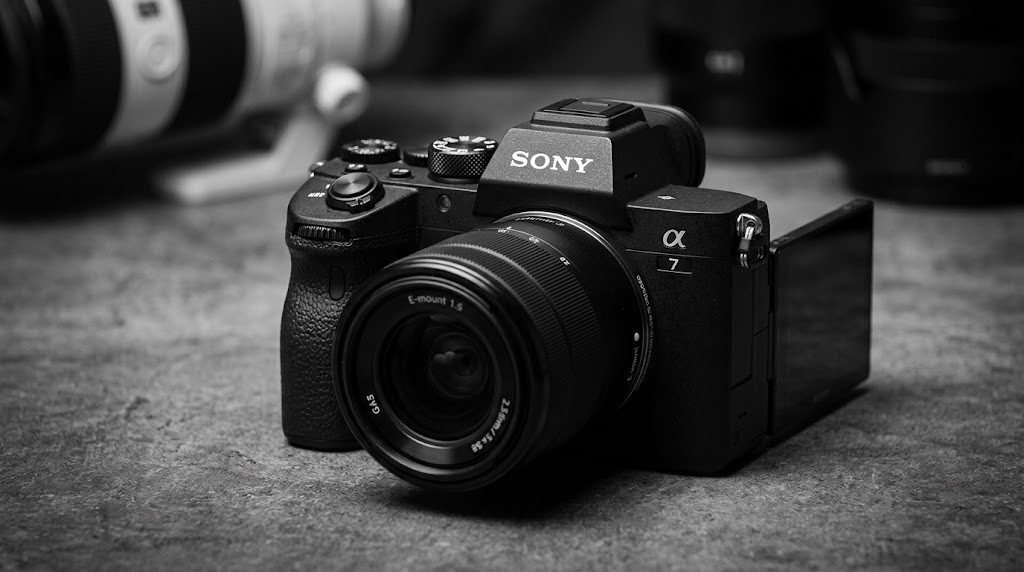
At number one sits the Sony Alpha 7 V, the best overall mirrorless camera in this ranking and full price winner number three.
This camera does not win by dominating a single spec sheet category. Instead, it wins by sitting closer than anything else here to the center of what capability and practicality actually look like together. A 33MP sensor balances resolution most photographers will genuinely use, without the file sizes or rig demands that come from chasing more. Blackout-free shooting at up to 30 fps means shooters never lose the subject mid-burst, and modern AI-driven autofocus tracks people, animals, and vehicles with a consistency that used to require a much more expensive body.
Strong in-body stabilization and serious hybrid video capability mean this camera never forces a choice between stills and motion. The E-mount lens ecosystem behind it also remains the deepest and most mature system in this entire countdown, covering everyone from portrait shooters to landscape photographers to working professionals.
That combination gives the Alpha 7 V the widest buyer profile of any camera in this ranking, which explains exactly why it belongs at number one and why its regular price stays the easiest of the ten to defend. It does not need to win every individual specification battle further up or down this list. Some competitors will out-resolve it, and others will out-speed it in narrow situations, and the regular Alpha 7 line has undeniably moved into premium territory. For the broadest range of serious photographers this countdown targets, though, this camera gets the balance between price and capability right.
Final Verdict: What the Best Mirrorless Cameras 2026 Taught Us
Ranking the best mirrorless cameras 2026 has to offer reveals a pattern worth remembering the next time you shop for a camera. The Canon EOS R50 proves that a lower-ranked, affordable body can still deserve its full asking price, as long as it matches the right buyer. The Canon EOS R6 Mark III proves that Canon’s real sweet spot is not necessarily their most expensive camera. The Sony Alpha 7 V wins this entire countdown not by beating every rival on paper, but by getting the balance right for more photographers than anything else here.
Meanwhile, the Nikon Z8, the OM System OM-1 Mark II, and the Panasonic Lumix S1 II remain excellent cameras that simply make smarter purchases at the right moment, ideally on sale. The Sony Alpha 7R VI proves that being the most technologically impressive camera in a lineup does not automatically make it the smartest thing to buy.
So do not just buy the camera sitting at the top of a list. Buy the one whose strengths you will actually use, at a price that makes sense for how you shoot.
Frequently Asked Questions About the Best Mirrorless Cameras 2026
Which mirrorless camera is worth buying at full price in 2026? Three cameras earn a full price recommendation in 2026: the Canon EOS R50 for new mirrorless shooters, the Canon EOS R6 Mark III for serious hybrid photographers, and the Sony Alpha 7 V as the best overall mirrorless camera in this ranking.
What is the best mirrorless camera overall in 2026? The Sony Alpha 7 V ranks as the best overall mirrorless camera in 2026 because it balances resolution, autofocus, video capability, and lens support better than any other camera in this lineup.
Which mirrorless cameras should buyers wait to purchase on sale? The OM System OM-1 Mark II, the Fujifilm X-T5, the Nikon Z5 II, the Panasonic Lumix S1 II, the Nikon Z8, the Canon EOS R5 Mark II, and the Sony Alpha 7R VI all deliver strong performance but make more financial sense as sale purchases rather than full price buys.
Is the Canon EOS R50 a good camera for beginners? Yes. The Canon EOS R50 suits beginners moving up from a smartphone or an older DSLR, thanks to its 24MP APS-C sensor, Dual Pixel autofocus, and oversampled 4K video, all at an entry-level price point.
Image alt text suggestions: “best mirrorless cameras 2026 lineup”, “Canon EOS R50 best mirrorless camera 2026”, “Sony Alpha 7 V best mirrorless camera 2026 overall pick.”
Want more breakdowns like this before you spend real money on gear? Subscribe to Alt Buzz on YouTube for full video reviews, and browse more buying guides at altbuzzmedia.com.