
Sony’s APS-C lineup has always been a puzzle. On one hand, the A6700 sits at the top of the E-mount crop sensor range as a genuinely excellent camera. On the other hand, Sony leaves a noticeable gap below it. The A6100 is now several years old. The ZV-E10 II targets content creators with a very specific design philosophy. Neither camera fully serves the entry-level enthusiast photographer who wants a traditional mirrorless body with a viewfinder, solid autofocus, and room to grow into the E-mount lens ecosystem.
The Sony A6200 is the rumored camera designed to fill exactly that gap. As of June 2026, the A6200 has been circulating through the rumor cycle for several months. The camera was originally expected to arrive in summer 2026 and is said to feature the same 26MP image sensor as the Sony A6700, which has also been used in the ZV-E10 II. It has appeared in certification databases. Digital Camera World lists it among confirmed upcoming Sony products. Sony Alpha Rumors tracks it as a high-confidence release within the current year. Fuji Rumors
This blog covers everything photographers need to know about the Sony A6200 in June 2026. We examine the rumored specifications, the sensor choice and what it means, where the A6200 fits in Sony’s lineup, who it is designed for, and the honest answer to the question every potential buyer is already asking: should you wait for it or buy the A6700 today?
Why the Sony A6200 Matters Right Now
The Gap Sony Needs to Fill
Sony’s current APS-C lineup in mid-2026 looks like this. The A6700 sits at approximately $1,299 new as the flagship APS-C body. The ZV-E10 II targets vloggers and content creators with a simplified, screen-forward design at approximately $500 to $600. Between these two cameras, there is almost nothing.
The A6100, Sony’s previous entry-level APS-C body, launched in 2019. In June 2026, it is approaching seven years old. Its autofocus system, while good for its era, predates the AI subject detection generation that the A6700 introduced and video specification records 4K with heavy cropping. Its IBIS is entirely absent. By any current standard, the A6100 is aging poorly against what Fujifilm, Canon, and Nikon now offer in their entry-level APS-C lineups.
The A6200 enters as a replacement for the A6100 that brings current-generation Sony technology to a more accessible price point. For photographers who cannot stretch to the A6700 or who simply do not need everything the A6700 offers, the A6200 represents the natural starting point for the Sony APS-C ecosystem in 2026.
The Sony APS-C Market Opportunity
Sony’s APS-C cameras have historically sold extremely well to first-time mirrorless buyers, travel photographers, and content creators who want a compact, versatile system without full-frame complexity. The E-mount lens ecosystem, particularly with affordable Sigma and Tamron third-party lenses, makes entry into the Sony system financially accessible.
An A6200 that delivers current-generation AI autofocus, improved video beyond the A6100, and a competitive price below the A6700 would compete directly with the Canon EOS R10, Fujifilm X-M5, and Nikon Z50 II. All of these cameras have been updated or refreshed recently. Sony needs the A6200 to maintain its share of the entry-level market rather than conceding that ground to competitors who have moved forward while the A6100 stood still.
Sony A6200 Confirmed Rumor Summary
Before diving into detailed analysis, here is every confirmed or highly credible detail about the Sony A6200 available as of June 2026.
| Specification | Sony A6200 (Rumored) |
|---|---|
| Sensor | 26MP APS-C BSI CMOS (same as A6700 and ZV-E10 II) |
| Processor | BIONZ XR (expected, based on shared sensor platform) |
| Autofocus | AI subject detection expected, scope unconfirmed |
| IBIS | Possible but unconfirmed |
| Video | 4K expected, frame rates unconfirmed |
| Viewfinder | EVF expected (differentiator from ZV-E10 II) |
| Rear screen | Tilting or articulating touchscreen expected |
| Launch price | Estimated $700 to $900 body only |
| Expected release | Summer to late 2026 |
| Certification status | Reported in regulatory databases |
These details come from Digital Camera World’s June 2026 camera rumors tracker, Sony Alpha Rumors’ ongoing A6200 coverage, and The New Camera’s APS-C analysis published in March 2026.
The 26MP Sensor: Shared Platform and What It Means
The Sensor Sony Chose for the A6200
The Sony A6200 is said to feature the same excellent 26MP image sensor as the Sony A6700. The same sensor has also been used in the Sony ZV-E10 II, which raises the question of whether Sony or consumers really need both the A6200 and A6700. Daily Camera News
This sensor choice is deliberate and strategic. Sony has used the 26MP APS-C BSI CMOS sensor across multiple product lines because it represents a mature, cost-effective solution that delivers proven performance. By building the A6200 on the same sensor, Sony amortizes the development and manufacturing cost of that sensor across three distinct camera bodies targeting three distinct audiences.
The A6700 uses this sensor in a flagship APS-C body with full subject detection, 4K 120fps, and partially stacked architecture for faster readout. The ZV-E10 II uses it in a simplified content creator body without a viewfinder. The A6200 uses it in an enthusiast entry-level body positioned between both.
What 26MP Delivers in Real Shooting Conditions
The 26MP APS-C BSI CMOS sensor is not the newest or highest-resolution APS-C sensor available. Fujifilm’s X-T5 and X-E5 both use 40MP sensors at similar prices. Canon’s APS-C cameras now use sensors in the 24 to 32MP range. Nikon’s Z50 II uses a 24.5MP sensor.
Despite not leading on raw resolution, the 26MP Sony sensor earns consistent praise in reviews of the A6700 and ZV-E10 II. Its color science delivers accurate, natural tones with excellent highlight rolloff, iIts dynamic range at base ISO competes strongly with comparably-priced cameras from other brands. Also, its high ISO noise performance produces clean results at ISO 1600 and usable files at ISO 3200 to ISO 6400.
In practical terms, 26MP provides more than enough resolution for every delivery format that an entry-level camera buyer will typically use. Web delivery, social media, standard print sizes up to approximately 20 x 16 inches, and moderate cropping all fall well within the 26MP sensor’s capability.
The Partially Stacked Question
The A6700 uses a partially stacked version of the 26MP APS-C sensor, with a DRAM buffer layer that enables faster readout. This faster readout is what allows the A6700 to offer 4K at 120fps and faster electronic shutter operation with reduced rolling shutter distortion.
Whether the A6200 receives the partially stacked variant or a standard BSI version of the same sensor is one of the most important unresolved questions in the rumor cycle. A standard BSI version costs less to manufacture, which helps Sony hit a more aggressive price point. However, it limits video frame rates and produces more rolling shutter in electronic shutter mode compared to the partially stacked A6700.
Most analysts expect the A6200 to use the standard BSI version of the sensor rather than the partially stacked variant. This would allow Sony to maintain meaningful differentiation between the $700 to $900 A6200 and the $1,299 A6700, while still delivering excellent image quality from the same underlying sensor design.
Expected Autofocus System
The AI Subject Detection Generation
Sony introduced AI-powered subject detection autofocus in 2023 with the A6700. This system moved beyond simple face detection to cover a wide range of subjects including humans, animals, birds, insects, vehicles, trains, and aircraft. The A6700’s subject detection, powered by BIONZ XR with a dedicated AI processor, represents a generational leap over the contrast-detection system that powered the A6100.
The A6200 is expected to carry a version of AI subject detection autofocus. The exact scope of subject categories it covers, and how closely it matches the A6700’s implementation, remains unconfirmed. However, delivering the A6200 to market in 2026 without at least human and animal subject detection would make it feel outdated before it even launches.
Phase Detection Coverage
The A6700 uses phase detection AF pixels covering approximately 759 points across the APS-C sensor area. The A6200 will likely carry a reduced but still substantial phase detection implementation. Entry-level Sony bodies have historically offered phase detection AF coverage in the 425-point range, which provides reliable fast acquisition across most of the frame without the full density of the flagship body.
For the photographers the A6200 targets, specifically first-time mirrorless buyers, travel photographers, and family shooters, the practical difference between 425-point and 759-point phase detection coverage is minimal. Both systems acquire focus quickly on subjects with clear contrast and track reliably through moderate movement.
Eye Detection in the A6200
Eye detection autofocus is the specific capability that transforms portrait and candid photography. When the camera detects and continuously tracks the nearest visible eye, photographers concentrate on composition rather than AF point placement. This feature, available in the A6700, is expected to appear in the A6200 as well.
Sony has been progressively democratizing eye detection across its lineup. The feature now appears in cameras well below the A6200’s expected price point. Including it in the A6200 is therefore a baseline expectation rather than an aspirational addition.
Video Specification Predictions
The A6100 Baseline and Where the A6200 Must Improve
The A6100 records 4K with a significant 1.5x crop on top of the APS-C sensor crop factor. This double-crop severely limits wide-angle video use. Furthermore, it records only in 8-bit color without any log profile. For a camera released in 2026, these specifications are simply not competitive.
The A6200 must at minimum deliver full-sensor 4K 30fps recording without additional crop, 4K 60fps for at least standard slow-motion capability, and 10-bit color recording with a log profile option. These specifications now represent the baseline that entry-level cameras from Fujifilm, Canon, and Nikon all meet or exceed. Sony cannot launch the A6200 below this threshold without inviting immediate criticism from the camera community.
4K 120fps: Likely Reserved for the A6700
The A6700’s 4K 120fps is one of its headline differentiators over every other entry-level APS-C camera. This specification depends on the partially stacked sensor architecture and the full processing pipeline of BIONZ XR at maximum throughput.
The A6200, on a standard BSI sensor variant and potentially a more power-efficient processor configuration, will almost certainly not offer 4K 120fps. This is the technically correct way for Sony to maintain meaningful differentiation between the two bodies. Buyers who specifically need 4K 120fps for slow-motion work should choose the A6700. Buyers who shoot primarily stills with occasional standard-frame-rate video will find the A6200’s video capability fully adequate.
S-Log and Creative Looks
Sony’s S-Log2 and S-Log3 gamma profiles for flat, wide-dynamic-range video recording are available in the A6700. Bringing at least S-Log2 to the A6200 would give entry-level buyers a color science foundation that works within Sony’s established log-plus-LUT post-production ecosystem.
Sony’s Creative Looks, introduced in the A6700 and refined across subsequent bodies, are also expected to appear in the A6200. These in-camera looks produce finished color grades without post-processing, similar in concept to Fujifilm’s film simulations but with Sony’s own visual character.
IBIS: The Question Sony Has Not Answered
Why IBIS Matters at the A6200 Price Point
The Sony A6100 had no image stabilization of any kind. Its successor, if the A6200 arrives without IBIS, would continue that limitation into a market where IBIS is increasingly expected even at entry-level pricing.
Canon’s EOS R10 at $799 does not include IBIS, which remains its most criticized omission. Fujifilm’s X-M5 at $799 does not include IBIS. Nikon’s Z50 II includes IBIS in its sensor-shift system. Within Sony’s own lineup, the A6700 includes IBIS at $1,299 but the ZV-E10 II does not include it at $500.
The A6200’s IBIS status depends heavily on Sony’s target price point. If the A6200 launches at $699, IBIS is unlikely given the cost it adds. If Sony targets $899 to $999, IBIS becomes feasible and would meaningfully differentiate the A6200 from both the cheaper ZV-E10 II and Canon’s similarly-priced R10.
The Competitive Pressure Argument
Nikon’s Z50 II includes IBIS and competes directly with the A6200’s expected positioning. If the A6200 arrives without IBIS while the Z50 II has it, Sony hands Nikon a direct advantage in side-by-side comparisons that every beginner buyer’s guide will highlight.
This competitive pressure may force Sony to include at least a basic IBIS implementation in the A6200 even at the cost of a slightly higher launch price. The alternative is accepting that the A6200 will consistently lose the IBIS comparison in every buying guide published after its release.
Body Design: What the A6200 Should Look Like
The Rangefinder Form Factor Continues
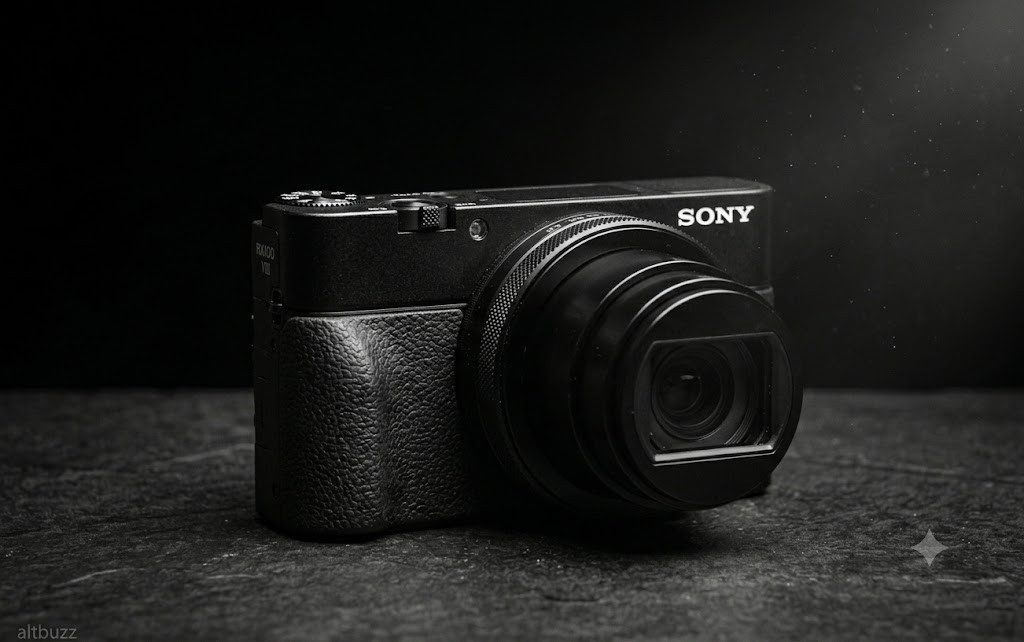
Sony’s APS-C mirrorless bodies have maintained a consistent design language since the A6000 in 2014. A rectangular body with a slight right-hand grip, a top-mounted mode dial, and an EVF centered above the lens mount. The A6200 will almost certainly continue this design language.
The EVF is the most important design differentiator between the A6200 and the ZV-E10 II. The ZV-E10 II has no viewfinder. The A6200 is expected to include one, which makes it a fundamentally different shooting experience for photographers who use eye-level framing as their primary composition method.
A 2.36 million dot OLED EVF, consistent with what Sony uses in the A6100 and several other entry-level bodies, is the expected specification. This resolution is adequate and appropriate for the price tier, even if it falls short of the A6700’s higher-resolution implementation.
Rear Screen Options
The A6100 uses a tilting touchscreen. The A6200 is expected to continue with a tilting design rather than the fully articulating screen found on the ZV-E10 II and A6700. A fully articulating screen adds cost and complexity, and Sony will likely reserve it for the A6700 to maintain its premium positioning.
For photographers who primarily shoot at eye level and occasionally use the screen for low-angle shots, a tilting screen is fully adequate. For vloggers and solo video creators who need to face the screen toward themselves while recording, the ZV-E10 II’s forward-facing screen design remains the better tool.
Weather Sealing Expectations
The A6100 has no weather sealing. The A6700 has basic weather sealing. Whether the A6200 receives any weather protection depends on Sony’s manufacturing cost targets at its expected price point.
Most analyst opinions suggest the A6200 will not be weather-sealed, consistent with the A6100 and with most entry-level APS-C cameras across all brands. Nikon’s Z50 II has no weather sealing. Canon’s R10 has no weather sealing. Weather sealing at the A6200’s price tier would make it exceptional rather than merely competitive.
Sony A6200 vs A6700: The Core Buying Decision
The fact that the A6200 shares the same sensor as the A6700 raises an important question about whether Sony or the consumer really needs both cameras, especially with the ZV camera as a third option. This is the right question to ask, and it deserves a direct answer. Fuji Rumors
Where the A6700 Wins Decisively
The A6700 offers 4K 120fps on a partially stacked sensor. The A6200 will not. The A6700 offers more comprehensive AI subject detection across more categories. The A6200 will likely offer a subset of these. The A6700 includes IBIS rated at 5 stops. The A6200 may or may not include IBIS, and if it does, the rating will likely be lower.
For photographers who shoot action, wildlife, or fast sports, the A6700 is the clear choice. Its faster sensor readout, deeper subject detection, and proven stabilization deliver capabilities the A6200 simply cannot match.
For video professionals who need 4K 120fps for slow-motion work, the A6700 is the only option between the two cameras.
Where the A6200 Is Genuinely Sufficient
For travel photography, portrait sessions, family documentation, street photography, and everyday personal use, the 26MP sensor’s image quality is identical between the A6200 and A6700. The same pixels produce the same images when the scene does not demand the A6700’s specific speed advantages.
For photographers who shoot primarily in standard lighting conditions where rolling shutter is not a concern, the standard BSI sensor in the A6200 produces files indistinguishable from the A6700.
For first-time mirrorless buyers who are still learning their way around manual exposure controls and lens selection, the $400 to $600 price difference between the A6200 and A6700 is better spent on lenses. A Sony A6200 body at $800 with a Sigma 30mm f/1.4 at $340 and a Tamron 17-70mm f/2.8 at $600 builds a far more versatile and capable system than an A6700 body alone at $1,299.
How the A6200 Competes Against APS-C Rivals
Against the Canon EOS R10
The Canon EOS R10 is the A6200’s most direct competitor at approximately $799 new. The R10 offers 24.2MP, Dual Pixel CMOS AF II with deep subject tracking, 15fps mechanical burst, and 4K 30fps without crop.
The A6200 will compete primarily on Sony’s subject detection breadth, the E-mount lens ecosystem’s third-party affordability, and whatever video advantages Sony builds into its specifications. If the A6200 includes 4K 60fps while the R10 still limits non-crop 4K to 30fps, that becomes an important differentiator for video-aware buyers.
Against the Fujifilm X-M5
The Fujifilm X-M5 at $799 targets content creators with a front-facing screen, 6.2K oversampled video, and film simulations. Also, it has no viewfinder. It has no weather sealing and appeals strongly to social media creators and vloggers.
The A6200 targets a different primary buyer: someone who wants a traditional camera experience with an EVF, standard body controls, and a stepping stone into the Sony E-mount ecosystem. These two cameras serve different buying motivations more than they compete directly.
Against the Nikon Z50 II
The Nikon Z50 II is the most technically competitive rival the A6200 faces. Nikon’s Z50 II includes IBIS, strong subject tracking, and a mature Z-mount ecosystem. Its sensor performs excellently. Its video covers 4K at competitive frame rates.
If the A6200 arrives without IBIS while the Z50 II has it, the Nikon wins the direct specification comparison for many buyers. Sony must compensate through autofocus depth, video quality, or price to overcome this disadvantage.
Sony E-Mount Ecosystem: The A6200’s Strongest Argument
Third-Party Lens Abundance
The Sony E-mount is the most mature APS-C lens ecosystem available. Sigma’s Art and Contemporary APS-C primes offer outstanding optical quality at reasonable prices. Tamron’s 17-70mm f/2.8, 11-20mm f/2.8, and 70-180mm f/2.8 cover the three most important zoom categories with excellent optical performance at prices far below Sony’s native G lenses.
A photographer who buys a Sony A6200 body immediately gains access to this entire ecosystem. No adapter is needed. Every E-mount lens works natively. The combination of an affordable A6200 body with Tamron and Sigma APS-C glass creates a system that competes optically with much more expensive camera and lens combinations.
Full-Frame Upgrade Path
The Sony E-mount covers both APS-C and full-frame cameras. An A6200 buyer who decides two or three years later to upgrade to an A7C II, A7 IV, or another full-frame Sony body can use their existing E-mount lenses on the new body immediately.
This upgrade path is the single most compelling long-term argument for choosing Sony at entry level. Fujifilm’s X-mount works only on APS-C bodies. Canon’s RF-S lenses work on APS-C bodies but do not cover the full-frame frame. Sony’s E-mount lenses work across the entire Alpha lineup from A6200 to A1 II.
Pricing Analysis: What the A6200 Should Cost
Target Price Positioning
Based on the A6100’s $750 launch price, the A6200’s expected position between the ZV-E10 II ($500) and A6700 ($1,299), and Sony’s current pricing strategy across its lineup, a launch price of $799 to $899 body only is the most widely cited community estimate.
At $799, the A6200 matches the Canon EOS R10 directly and undercuts the Fujifilm X-S20 by $500. This pricing makes the A6200 immediately compelling for first-time mirrorless buyers comparing entry-level options across brands.
At $899, the A6200 sits slightly above the R10 but must justify the premium through autofocus depth, video quality, or stabilization capability.
Sony will also likely offer a kit bundle pairing the A6200 with the 16-50mm f/3.5-5.6 power zoom kit lens, consistent with how previous A6000-series bodies have launched. Expect the kit price to fall approximately $100 to $150 above the body-only price.
Is the A6200 Worth Waiting For vs Buying the A6700 Today?
This is the question every potential buyer asks. The honest answer depends on budget.
Photographers with $1,200 to $1,300 available should buy the A6700 today. The A6700 is a proven, outstanding camera. It delivers everything the A6200 will offer and adds 4K 120fps, deeper subject detection, confirmed IBIS, and a partially stacked sensor for faster readout. Nothing about the A6200 makes the A6700 a less capable camera.
Photographers with $700 to $900 available should wait for the A6200 if the timeline is reasonably short. Based on summer 2026 expectations from multiple sources, the wait may be measured in weeks to months rather than years. Buying an A6100 now at its discounted price of approximately $500 to $600, using it while waiting for the A6200, and selling it when the A6200 arrives is another viable path.
Photographers who are comparing across brands rather than committed to Sony should evaluate all options available at launch, including the Canon R10, Nikon Z50 II, and Fujifilm X-M5, against the A6200’s final confirmed specifications.
Release Date: When Will the Sony A6200 Actually Arrive?
The Sony A6200 was originally expected to arrive in the summer of 2026. Digital Camera World’s June 2026 camera rumors tracker lists it as an active and credibly sourced upcoming release without a confirmed announcement date. Fuji RumorsFuji Rumors
Sony typically announces cameras two to four weeks before they go on sale. Based on the summer expectation and Sony’s historical announcement pattern, a July or August 2026 announcement date is the most logical projection. Pre-orders would open at announcement, with shipping following within two to four weeks.
Photokina and CP+ are not factors in this timeline, as both shows fall outside the summer window. However, Sony sometimes uses its own Alpha events for significant camera announcements, consistent with how the A7R VI launched at the Alpha In Residence event in May 2026.
Photographers who want to track the A6200 announcement in real time should follow Sony Alpha Rumors at sonyalpharumors.com and The New Camera at thenewcamera.com. Both sites have reliable track records on Sony APS-C announcements.
Final Thoughts: The Sony A6200 in June 2026
The Sony A6200 is not a revolutionary camera. It does not need to be. Its job is specific and important: deliver current-generation Sony autofocus, sensor quality, and video capability at a price that makes the E-mount ecosystem accessible to first-time mirrorless buyers in 2026.
Based on every available signal as of June 2026, the A6200 will accomplish that job competently. The 26MP sensor is proven and excellent. The expected AI autofocus will represent a generational improvement over the A6100 it replaces. The video specification, while not reaching the A6700’s 4K 120fps ceiling, will comfortably exceed what entry-level cameras offered three years ago.
The most important remaining questions center on IBIS inclusion, the exact video frame rate ceiling, and the final price. These details will determine whether the A6200 merely matches its competition or genuinely leads the entry-level APS-C market at launch.
For photographers watching the Sony APS-C lineup in June 2026, the A6200 is worth waiting for. It should arrive soon. And when it does, it will give first-time Sony buyers the best possible entry point into the world’s most versatile mirrorless lens ecosystem.
Read More from Altbuzz
For more Sony Alpha coverage from our June 2026 series, explore our guide to top 5 incoming Sony cameras of 2026 and 2027, our Sony A6700 full review and buying guide, and our Sony E-mount lens buying guide for APS-C photographers.
Stay updated on every Sony announcement and rumor as it breaks at altbuzzmedia.com. For dedicated Sony tracking, follow Sony Alpha Rumors at sonyalpharumors.com and Digital Camera World’s Sony page at digitalcameraworld.com.
Subscribe to Altbuzz YouTube Channel
Full coverage of the Sony A6200 announcement, hands-on preview, and comparison videos against the A6700 and Canon R10 are coming to the Altbuzz YouTube channel @AltBuzzMedia the moment the camera launches. Subscribe now and hit the notification bell so you never miss a Sony Alpha update.