
Sony’s APS-C lineup has needed a flagship for a long time. The A6700 launched in July 2023 and delivered genuine improvements over everything before it. However, the photography community always sensed that it was not the full story. Sony’s top APS-C engineers had more in reserve. They were building toward something bigger.
In March 2026, that something bigger finally started taking shape. Sony Alpha Rumors published the first credible technical specifications for a camera tentatively named the Sony A6900. What those specifications describe is not an incremental update. They describe a genuinely new class of APS-C camera, one that brings stacked sensor technology, flagship-grade burst performance, and professional-level IBIS to the crop-sensor format for the first time in Sony’s history.
The Sony A6900 is not yet announced. Sony has not confirmed its existence. Nevertheless, the rumor signals are stronger and more technically detailed than anything that circulated around the A6700 before its launch. Multiple independent sources, including Sony Alpha Rumors, The Phoblographer, Camera Times, Daily Camera News, and Camera Lookout, have all published overlapping accounts of the same core specifications as of June 2026.
This blog covers everything. We examine every rumored specification in depth, explain the technology behind each upgrade, compare the A6900 against the A6700 and key competitors, address the naming question, and give photographers a clear framework for deciding whether to wait or buy today.
The Naming Question: Why A6900 and Not A6800?
Sony’s Unconventional Numbering History
Before examining specifications, the naming situation deserves direct clarification. Sony skipped from the A6600 to the A6700, bypassing A6700 sequentially after the A6400 and A6500. This non-linear pattern confused many photographers at launch.
The A6900 is actually a tentative name. Although Sony seems to be moving chronologically after the A6600, it has decided to keep the name A6700 previously. Many people thought that Sony’s A6400 successor would be called the A6800, which is why they are now considering A6900 or even A7000 as the next naming step. Fuji Rumors
Consequently, the final retail name may differ from A6900. Some community sources suggest Sony could choose A7000 to signal a platform-level shift. Others argue that sticking with the A6-prefix maintains continuity for buyers who track the APS-C line by number. For this blog, we use A6900 as the universally accepted placeholder name used across all major rumor sources in 2026.
Sony A6900 Rumored Specifications: Full Summary
Based on Sony Alpha Rumors, Daily Camera News, Camera Times, and The Phoblographer reporting from March to April 2026, here is the most complete and credible spec picture available as of June 2026.
| Specification | Sony A6900 (Rumored) |
|---|---|
| Sensor | 33MP Chip-on-Wafer (CoW) stacked APS-C |
| Dynamic range | 15+ stops |
| Processor | BIONZ XR2 |
| Burst rate | 30fps electronic shutter, 15fps mechanical shutter |
| Maximum shutter speed | 1/16,000 second |
| IBIS | 5-axis, 8.5 stops |
| Autofocus | Next-gen AI subject detection, expanded categories |
| Video | Oversampled 4K, frame rates TBC |
| Body design | New-generation APS-C, thicker grip than A6700 |
| Custom buttons | Two additional: C1 and C3 |
| Mechanical shutter | Same silent compact drive as the Alpha 1 |
| Shutter modes | Electronic front-curtain and electronic shutter only |
| Weather sealing | Expected, details unconfirmed |
| Buffer capacity | Relatively limited at 30fps, per early reports |
| Expected price | $1,700 to $2,000 body only |
| Expected release | Late 2026 or early 2027 |
The 33MP Chip-on-Wafer Stacked Sensor: Sony’s Biggest APS-C Leap
What Chip-on-Wafer Stacking Means
The single most technically significant rumored specification is the sensor architecture. The A6900 reportedly uses a brand-new 33MP Chip-on-Wafer stacked sensor with up to 15+ stops of dynamic range, a faster readout, reduced rolling shutter, blackout-free shooting, and improved high-ISO performance compared to the A6700’s 26MP BSI sensor. Fuji Rumors
Chip-on-Wafer stacking represents the current cutting edge of image sensor manufacturing. Traditional stacked sensors bond two separate silicon wafers together after individual fabrication: one wafer carries the photodiode array, and a second wafer carries the processing and memory circuitry. CoW stacking goes further by bonding components at the wafer level before dicing into individual chips.
This manufacturing approach delivers several important benefits. First, the electrical connections between layers are shorter and denser. Shorter connections reduce signal latency between the photodiode layer and the processing layer. Second, the tighter integration enables higher pixel density without sacrificing the memory and logic area needed for fast readout. Third, CoW architecture allows faster data transfer from photodiodes to the DRAM buffer, which is precisely what enables 30fps burst shooting without rolling shutter distortion.
Why 33MP Is the Right Resolution for This Architecture
The 33MP sensor offers a meaningful bump from the 26MP sensor found in the A6700. However, there are concerns that 33MP may push photographers toward more expensive lenses to extract the full resolution potential. Fuji Rumors
This is a legitimate consideration. Higher-resolution APS-C sensors reveal lens limitations more clearly. Chromatic aberration, edge softness at wide apertures, and micro-contrast rendering all become more visible at 33MP than at 26MP. DPReview forum discussions about the A6900 specifically note that it would need APS-C lenses capable of resolving high detail, with weather sealing and fast AF motors. Users suggest that the 11mm f/1.8, 15mm f/1.4 G, 16-55mm f/2.8 G, and 70-350mm f/4.5-6.3 G are among the few Sony APS-C lenses likely to pair well with a higher-resolution sensor. Fuji Rumors
Fortunately, third-party manufacturers Sigma and Tamron both produce E-mount APS-C lenses with optical formulas designed for sensors above 26MP. The Sigma 30mm f/1.4 DC DN, Tamron 17-70mm f/2.8, and Sigma 16mm f/1.4 DC DN all resolve comfortably beyond 33MP at their optimal apertures. Photographers who already own these lenses will not need to replace their glass to take full advantage of the A6900’s resolution.
Dynamic Range: 15+ Stops from an APS-C Body
The A6900’s stacked sensor delivers 15+ stops of dynamic range. This figure matches what the Sony A7V delivers from its full-frame sensor and significantly exceeds the A6700’s measured dynamic range of approximately 14.0 to 14.3 stops at base ISO. Camera Lookout
For wildlife photographers who capture subjects against bright skies, landscape photographers shooting high-contrast golden hour scenes, and event photographers who work in mixed artificial and ambient lighting, 15+ stops of dynamic range translates directly into more detail recovered from shadows and better highlight control in challenging situations. Furthermore, this improvement derives from the CoW stacked architecture’s ability to read pixel data more efficiently, reducing read noise at the sensor level rather than compensating through aggressive in-camera processing.
BIONZ XR2: The Processor Driving the Next Generation
What Changes Between XR and XR2
The A6900 features the BIONZ XR2 processor, which supports 30fps electronic shutter continuous shooting and 15fps mechanical shutter continuous shooting. The BIONZ XR2 also powers the Sony A7V, which gives photographers a clear reference point for understanding what the processor delivers. Fuji Rumors
BIONZ XR2 introduces several architectural improvements over the original XR. Processing throughput increases substantially, enabling the A6900 to handle 33MP files at 30fps without the thermal throttling or buffer saturation that older processors would experience at equivalent data rates. Additionally, the neural network inference speed for AI subject detection increases, which directly improves tracking reliability during fast, unpredictable subject movement.
The XR2 also brings updated noise reduction algorithms. These algorithms apply more sophisticated analysis to distinguish between genuine image detail and noise artifacts at the pixel level, producing cleaner files at high ISO without the watercolor smearing effect that aggressive noise reduction sometimes introduces in competing cameras.
Pre-Capture and Computational Photography
Based on the BIONZ XR2’s capabilities as demonstrated in the A7V, the A6900 will likely support Sony’s pre-capture technology. Pre-capture buffers incoming frames before the shutter button is fully pressed. When the photographer completes the press, the camera saves frames that occurred up to one second before the physical action.
For wildlife and sports photographers, pre-capture fundamentally changes the shooting experience. Birds launching from branches, athletes at the peak of a jump, and animals beginning a run are all moments that happen faster than human reaction time. Pre-capture eliminates the reaction time penalty by capturing events retroactively from the buffer.
Burst Performance: 30fps That Redefines APS-C Speed
The Numbers in Context
The A6900 delivers 30fps electronic shutter continuous shooting and 15fps mechanical shutter continuous shooting. The new mechanical shutter uses the same silent, compact drive mechanism as the full-frame Alpha 1. Fuji Rumors
Thirty frames per second from an APS-C camera is extraordinary. For context, the A6700 delivers 11fps mechanical and 21fps electronic. The Sony A9 III, which uses a global shutter and sits at approximately $5,999, delivers 120fps as its headline. The A6900 at 30fps places itself between the A6700’s speed and the A9 series, at an APS-C price point that professional full-frame shooters spend on lenses alone.
At 30fps from a 33MP sensor, the camera generates approximately 1GB of data per second during maximum-speed electronic shutter burst shooting. This throughput requirement is precisely why the CoW stacked sensor architecture matters: conventional BSI sensors cannot read data fast enough to sustain 30fps at this resolution without introducing massive rolling shutter distortion.
The Buffer Limitation
The A6900 is limited by its relatively low buffer capacity for continuous shooting. This caveat deserves honest emphasis. A camera that shoots 30fps generates fifty frames in less than two seconds at full resolution. Without an enormous internal RAM buffer, the write pipeline to the memory card cannot keep pace, and the burst rate slows or stops. Fuji Rumors
The A6900’s reported buffer limitation means photographers who engage 30fps bursts will exhaust the buffer in a short sequence. This is less limiting than it initially sounds for experienced sports and wildlife photographers. In practice, these photographers do not hold the shutter for five-second bursts. They shoot in targeted two to three second sequences timed to specific action moments. A buffer that sustains two seconds at 30fps covers approximately sixty frames, which is more than adequate for most peak-action sequences.
Nevertheless, photographers who shoot extended sequences of continuous action, such as cycling races or long runway sequences in aviation photography, should note this limitation and plan shooting strategy accordingly.
1/16,000 Second Maximum Shutter Speed
The A6900 increases the maximum exposure speed to 1/16,000 second. This specification matters specifically for photographers who use fast prime lenses at wide apertures in bright light. A photographer shooting at f/1.4 under midday sun without a neutral density filter reaches the electronic shutter limit of most cameras at 1/8,000 second, producing overexposed images even at base ISO. Fuji Rumors
At 1/16,000 second, the A6900 doubles the available shutter speed ceiling. Photographers can comfortably shoot a 33mm f/1.4 lens wide open under bright sun without ND filtration. This is a genuinely practical benefit for portrait and street photographers who use fast glass in outdoor conditions.
In-Body Image Stabilization: 8.5 Stops Changes Everything
The Leap From A6700’s Stabilization
The Sony A6900 is rumored to include 5-axis IBIS rated at 8.5 stops. The A6700 offers approximately 5 to 5.5 stops of stabilization in its best-case implementation. Moving from 5.5 stops to 8.5 stops represents three full additional stops of stabilization, which is the equivalent of dividing the required shutter speed by eight. Camera Lookout
In practical terms, a photographer who could previously handhold the A6700 reliably at 1/30 second could potentially handhold the A6900 at 1/4 second with equivalent reliability. For low-light street photography, museum and gallery work, and indoor available-light documentary shooting, this is transformative.
Furthermore, 8.5 stops of IBIS combined with the A6900’s 30fps burst capability creates a scenario that no current APS-C camera can offer. Photographers shooting fast subjects in low light can use higher shutter speeds to freeze motion while the IBIS compensates for camera shake simultaneously, without choosing between motion freeze and stabilization.
Sync IS With Future APS-C Lenses
Sony’s Sync IS technology combines IBIS with optical stabilization in compatible lenses to deliver effective compensation beyond what either system achieves independently. The A6900’s 8.5-stop IBIS rating presumably represents standalone IBIS performance. With Sync IS active through a compatible APS-C lens such as the 70-350mm G OSS, effective stabilization could reach 9 to 10 stops, placing the A6900’s stabilization performance in territory previously occupied only by full-frame professional bodies.
Autofocus: Next-Generation AI That Learns From the A1 II
Building on the A6700’s Foundation
The A6700’s subject detection covers humans, animals, birds, insects, vehicles, trains, and aircraft. This breadth already exceeded every competing APS-C camera at launch in 2023. The A6900 builds on this foundation with the BIONZ XR2’s faster inference engine.
Across nearly all leaks, one consistent theme is advanced autofocus powered by AI. The A6900’s next-generation AI algorithms could make it one of the most intelligent APS-C cameras ever built. Faster inference translates into more reliable tracking during rapid subject direction changes, better performance when subjects partially leave and re-enter the frame, and improved low-light face detection when subjects move through mixed lighting conditions. Fuji Rumors
Specific AF Improvements Expected
Three specific autofocus improvements appear consistently across sources. First, improved tracking during 30fps burst sequences means the AF system updates subject position predictions fast enough to maintain focus lock at three times the frame rate of the A6700’s burst mode. Second, expanded recognition of wildlife and bird subjects at greater distances supports telephoto photography scenarios where the A6700 occasionally lost confidence. Third, video autofocus during 4K recording becomes smoother and more decisive through the XR2’s faster processing cycle.
Pre-AF and Subject Memory
The A7V introduced a subject memory feature that maintains tracking confidence on a recognized subject even when it temporarily disappears behind an obstacle. The A6900, sharing the BIONZ XR2 platform, will likely carry this feature forward. For bird photographers who shoot subjects moving through foliage, or sports photographers whose subjects pass briefly behind officials or other athletes, subject memory meaningfully improves continuous tracking reliability.
Video Capabilities: What the A6900 Could Deliver
The Oversampled 4K Promise
The A6900 is expected to deliver oversampled 4K video. This means the camera reads more than 4K worth of sensor data and downsamples to 4K output, producing cleaner, sharper footage than native 4K capture from a 33MP sensor would provide. From 33MP, the oversampling ratio to 4K is approximately 5.5x, which is extremely aggressive and would produce exceptionally detailed 4K output. Camera Lookout
The specific 4K frame rates remain unconfirmed at the time of writing. Based on the BIONZ XR2’s capabilities in the A7V, 4K at 60fps in 10-bit 4:2:2 is the minimum expectation. The community is widely hoping for 4K at 120fps, though this would require the CoW stacked sensor’s faster readout working at maximum capacity and may demand thermal management solutions that the compact APS-C body makes challenging.
S-Log3 and Creative Looks
S-Log3 with SGamut3.Cine provides the widest dynamic range capture option in Sony’s video pipeline, and the A6900 will almost certainly support it given the BIONZ XR2 platform. Additionally, Sony’s Creative Looks, Cineon gamma options, and potentially an updated S-Cinetone profile will give video creators multiple color science starting points without requiring a complex post-production LUT workflow.
Video Autofocus During Recording
Sony’s reputation for video autofocus is well-earned across its full-frame lineup. The FX3, A7 IV, and A7V all deliver reliable face and eye tracking during 4K recording that competing cinema cameras from Blackmagic, Fujifilm, and even Canon struggle to match consistently.
The A6900 brings this video AF quality to APS-C. Combined with the BIONZ XR2’s faster inference, the camera should deliver more decisive subject lock during continuous video recording than the A6700 currently provides, reducing the hunting and breathing that some users report during challenging video tracking scenarios.
Body Design: What Changes From the A6700
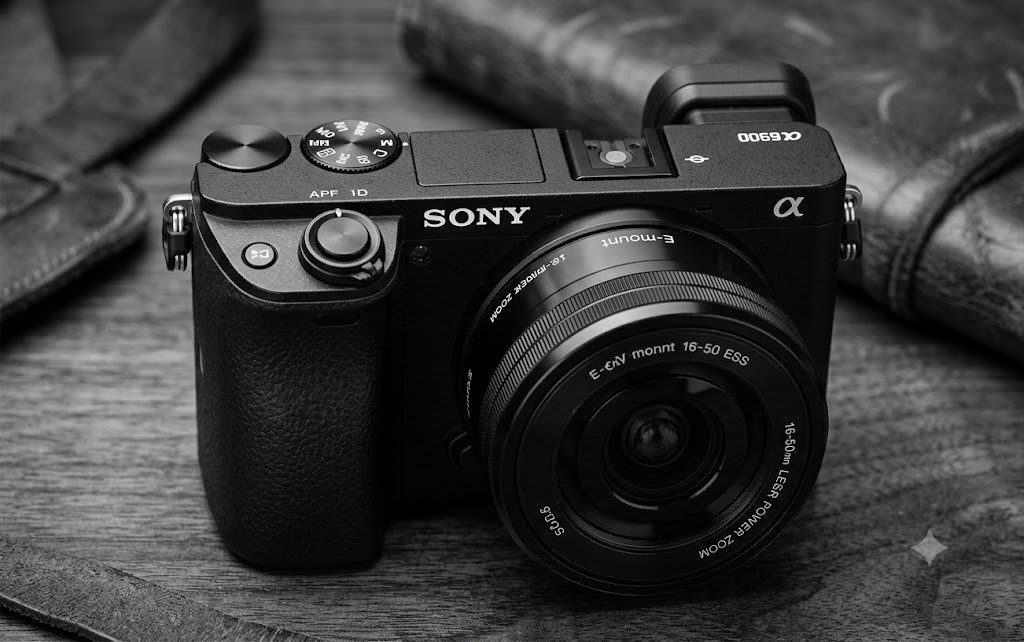
Thicker Grip and Better Ergonomics
The A6900 uses a new-generation standard APS-C design that is a bit thicker than the A6700 for a better grip. It adds two extra customizable buttons: C1 and C3. Fuji Rumors
The A6700’s grip depth is one of its most consistent criticisms in long-term user reviews. Photographers with larger hands find the shallow grip insufficient for comfortable extended shooting, particularly with heavier telephoto lenses. A thicker grip on the A6900 directly addresses this feedback.
Two additional custom buttons expand direct control access without menu navigation. The A6700’s custom button layout leaves some frequently needed functions buried in menus. C1 and C3 additions give photographers two more direct assignment slots, which is particularly valuable for sports and wildlife shooters who change AF area modes, drive modes, and tracking settings rapidly during shooting sessions.
Shutter Mechanism Borrowed From the Alpha 1
The new mechanical shutter uses the same silent, compact drive mechanism as the full-frame Alpha 1. However, the A6900 supports only electronic front-curtain shutter and electronic shutter modes, eliminating a fully mechanical rear-curtain option. Fuji Rumors
This design choice reflects the A6900’s prioritization of speed over mechanical shutter variety. Electronic front-curtain shutter (EFCS) eliminates the shutter shock from the front curtain while using a mechanical rear curtain for exposure end. Pure electronic shutter enables maximum speed and silence. Together, these two modes cover every practical shooting scenario for the A6900’s target audience without needing the maintenance-intensive fully mechanical shutter option.
Weather Sealing Expectations
Community expectations strongly favor weather sealing in the A6900, given its positioning above the A6700 in terms of price and capability. The A6700’s basic weather sealing was appreciated but limited in scope. An A6900 that targets professional-grade sports and wildlife photographers needs sealing appropriate to outdoor field use, meaning at minimum IP53 resistance against rain and dust ingress from any direction.
The A6900 vs A6700: Is It Worth Upgrading?
Who Benefits Most From the Upgrade
The sensor architecture change from BSI to CoW stacked is the clearest reason to upgrade. Rolling shutter reduction during electronic shutter shooting directly benefits sports and wildlife photographers who use silent shooting for sequences near skittish animals or during events where shutter noise is intrusive. The stacked design delivers this with 33MP, which surpasses the A6700’s 26MP.
The burst rate jump from 21fps to 30fps matters for photographers who shoot fast, unpredictable subjects. Peak moment probability at 30fps is approximately 43% higher than at 21fps during a one-second window. For bird photographers capturing takeoffs or wildlife photographers timing behavioral moments, those additional frames translate into better keepers from each shooting session.
The IBIS upgrade from 5.5 stops to 8.5 stops matters enormously for low-light photographers. This three-stop improvement effectively makes the A6900 suitable for handheld available-light shooting scenarios where the A6700 required a monopod or tripod.
Who Should Stay on the A6700
Photographers who shoot primarily in good to moderate light where IBIS beyond 5 stops makes little practical difference will not see daily shooting improvement significant enough to justify upgrading. Similarly, photographers who do not shoot burst sequences and work primarily with single-shot AF in deliberate, considered situations gain less from the burst rate improvement.
The A6700 was introduced in 2023 and over three years Sony needs to make major improvements for people to stick to the A6-series. The A6900 delivers those improvements. However, the A6700 remains an excellent camera today. Upgrading makes economic sense primarily when specific A6900 features directly address limitations that the A6700 shows in your actual shooting work. Fuji Rumors
Competitive Positioning: Where the A6900 Sits in June 2026
Against the Fujifilm X-H2S
The Fujifilm X-H2S is currently the most capable APS-C speed camera at approximately $2,499. It uses a 26.1MP partially stacked X-Trans V sensor and delivers 40fps burst with excellent subject tracking. At $1,700 to $2,000, the A6900 would challenge the X-H2S on burst performance while offering 33MP resolution versus the X-H2S’s 26MP.
The X-H2S’s advantages are its Fujifilm film simulations, the X-mount lens ecosystem’s prime lens depth, and its proven track record over two years of professional use. The A6900’s advantages would be sensor resolution, Sony’s subject detection breadth, E-mount ecosystem size, and the full-frame upgrade path that the Sony system uniquely provides.
Against the Canon EOS R7 Mark II
Canon’s rumored R7 Mark II targets a similar professional APS-C audience. Expected to arrive in late 2026 or early 2027, it will likely offer Dual Pixel CMOS AF II with updated AI, improved burst rates, and possibly a resolution bump above the original R7’s 32.5MP.
The A6900 and R7 Mark II will compete directly for the professional APS-C audience. Sony’s advantage lies in subject detection category breadth, which currently exceeds Canon’s coverage in animal and vehicle detection. Canon’s advantage lies in Dual Pixel CMOS AF’s proven reliability during video recording, which many filmmakers prefer over Sony’s phase detection video AF.
Against Sony’s Own Full-Frame Bodies
This is the most important competitive consideration that every A6900 buyer must confront. Some feel that 33MP may push photographers to buy expensive lenses, further increasing the system cost, and it may seem ideal to switch to full frame at that point. Fuji Rumors
At $1,700 to $2,000, the A6900 approaches the used price of a Sony A7 IV or a new Sony A7C II, both of which offer full-frame sensors with comparable or better image quality in most shooting scenarios. The A6900’s justification over these bodies centers on its specific APS-C advantages: the 1.5x crop factor provides an effective reach multiplier for telephoto work, the body is smaller and lighter, and the system cost for APS-C lenses remains lower than equivalent full-frame glass.
For wildlife and birding photographers who depend on maximum effective reach from their glass, the 1.5x APS-C crop multiplier is a genuine advantage. A 200-600mm Sony lens becomes a 300-900mm equivalent on the A6900, which no full-frame body at any price can replicate from the same physical lens.
The E-Mount Lens Ecosystem at 33MP
Native APS-C Options Requiring Evaluation
An A6900 would need new APS-C lenses that can resolve high detail and fully handle the specs with breathing compensation, weather sealing, and fast AF motors. The 11mm f/1.8, 15mm f/1.4 G, 16-55mm f/2.8 G, and 70-350mm f/4.5-6.3 G OSS are among the few Sony lenses that may pair well, basically 2019 and newer lenses. Fuji Rumors
This lens compatibility consideration is one of the most practically important pieces of guidance for A6900 planning. Older Sony APS-C lenses, designed before 24MP became standard, may not fully resolve the A6900’s 33MP sensor at all apertures. Photographers who own these older lenses should plan on testing each lens’s performance at the A6900’s resolution before committing to extensive use.
Third-Party Glass That Works Immediately
Fortunately, the third-party APS-C E-mount ecosystem includes several lenses specifically designed for high-resolution sensors. Sigma’s I-series APS-C primes, including the 16mm f/1.4, 30mm f/1.4, and 56mm f/1.4 DC DN models, all resolve comfortably beyond 33MP at their sharpest apertures. Tamron’s 17-70mm f/2.8 is another lens designed for the current APS-C resolution generation.
Additionally, Sony full-frame FE lenses work on the A6900 with a 1.5x effective focal length multiplier. G Master telephoto primes, particularly the FE 100-400mm GM and FE 200-600mm G, are optically capable of resolving well beyond 33MP from a cropped APS-C output area.
Pricing: Is the A6900 Worth $1,700 to $2,000?
The Price Justification
The Sony A6900 carries an expected price of $1,700 to $2,000 body only, with a projected late 2026 to 2027 release. At first glance, this price point appears aggressive for an APS-C camera. However, the specifications justify it when examined against what competing cameras at similar prices actually deliver. Camera Lookout
The A6700 launched at $1,299 in 2023. The A6900’s CoW stacked sensor, BIONZ XR2 processor, 30fps burst, and 8.5-stop IBIS represent a substantially larger manufacturing cost per unit than the A6700’s standard BSI design. A $400 to $700 price increase over three years, during which both component costs and feature levels increased significantly, is commercially logical.
Compared to the Fujifilm X-H2S at $2,499, the A6900 at $1,700 to $2,000 offers competitive APS-C flagship performance at a lower price point. Against the Sony A7C II at $2,199, the A6900 gives telephoto-heavy photographers the reach multiplier advantage at a comparable or lower price.
Should You Wait for the A6900 or Buy Now?
The Honest Answer in June 2026
Photographers who specifically need the A6900’s unique capabilities, meaning 30fps CoW stacked burst performance, 8.5-stop IBIS, or 33MP resolution for large print work, should wait. These specifications are genuinely unavailable in any current camera at the A6900’s expected price.
Photographers who need a capable Sony APS-C camera today and cannot wait six to twelve months should buy the A6700. The A6700 is an outstanding camera that will remain outstanding whether or not the A6900 launches this year. Its 26MP sensor, AI subject detection, and 4K 120fps capability serve the vast majority of professional APS-C shooting scenarios excellently.
One path that makes strong practical sense is purchasing a used A6700 at the $950 to $1,050 price it currently commands, shooting with it through late 2026 and into 2027, and selling it when the A6900 arrives. Used Sonys retain value well, and the financial gap between a used A6700 purchase and later A6900 purchase will be smaller than the gap between buying a new A6700 today and upgrading.
Final Thoughts: The Sony A6900 in June 2026
The Sony A6900 represents something the APS-C format has genuinely never seen from Sony before. A Chip-on-Wafer stacked sensor delivering 33MP at 30fps with 15+ stops of dynamic range. A BIONZ XR2 processor enabling next-generation AI subject detection. An 8.5-stop IBIS system that extends the camera’s usability into lighting conditions the A6700 approaches but cannot fully master.
Taken together, these specifications create a camera that does not merely replace the A6700. They create a camera that repositions Sony’s APS-C system as a serious professional platform rather than a compact enthusiast offering. Wildlife photographers, sports photographers, documentary creators, and serious hybrid shooters all gain something genuinely useful from every major A6900 upgrade.
The wait is real. The timeline of late 2026 to early 2027 means some photographers will face many more months before they can hold one. However, the camera being built is worth that patience. When the Sony A6900 arrives, it will be the finest APS-C camera Sony has ever produced and one of the most capable crop-sensor cameras the entire industry has offered.
Altbuzz Anticipation Rating: 9.4 / 10
Read More from Altbuzz
For more Sony Alpha coverage from our June 2026 series, explore our deep-dive on the Sony A6200 rumors, our top 5 incoming Sony cameras for 2026 and 2027, and our Sony A6700 full review. We also compare the A6900 against the Fujifilm X-H2S and the Canon EOS R7 Mark II rumors in our APS-C flagship buyer’s guide.
Stay updated on every Sony announcement and development at altbuzzmedia.com. For real-time A6900 tracking, follow Sony Alpha Rumors at sonyalpharumors.com and Daily Camera News at dailycameranews.com.
Subscribe to Altbuzz YouTube Channel
Full Sony A6900 spec analysis videos, comparisons with the A6700 and X-H2S, and announcement-day coverage are coming to the Altbuzz YouTube channel @AltBuzzMedia the moment Sony makes it official. Subscribe now to stay ahead of every Sony Alpha update throughout 2026.