
The Canon EOS RP arrived in February 2019 as the most affordable full-frame RF-mount mirrorless camera Canon had ever built. At $1,299, it democratized full-frame photography for a generation of photographers who previously could not justify the cost. For over six years, it served as the entry point to Canon’s RF ecosystem. Thousands of photographers built their full-frame systems starting from this compact, lightweight body.
In June 2026, that era is ending. The Canon EOS RP has been officially discontinued in parts of Asia. The camera that replaced it in Canon’s lineup, the EOS R8, launched in 2023 and continues selling well. However, the community is now looking further ahead. Canon Rumors has confirmed with near-100% confidence that the EOS R8 Mark II is coming in 2026. The only camera body that Canon Rumors has near 100% confidence is happening this year is the EOS R8 Mark II, and what separates this version from its predecessor is that the exterior styling is going retro. Digital Camera WorldSMotographers
This development opens a fascinating question. Is the retro-styled EOS R8 Mark II effectively the spiritual EOS RP II that photographers have been waiting for? Or does Canon plan a separate, more direct RP successor beneath the R8 line? This blog examines both possibilities in depth. We cover the RP’s legacy, the R8 Mark II’s confirmed and rumored details, what an EOS RP II would need to offer, and how photographers should position themselves in June 2026.
The Canon EOS RP Legacy: Why This Camera Mattered
Six Years of Full-Frame Accessibility
The EOS RP launched at a price that shocked the market. Full-frame mirrorless cameras at $1,299 body only simply did not exist before it. Sony’s entry-level full-frame option at the time was the A7 II at $1,698. Nikon’s Z6 started at $1,996. The RP arrived and immediately made Canon the most accessible full-frame mirrorless option in the market.
Its 26.2MP CMOS sensor delivered beautiful full-frame image quality. Its compact body, weighing just 485 grams with battery, made it the lightest full-frame mirrorless camera available for years after launch. Photographers who wanted to travel with a full-frame system without carrying the weight of an EOS R5 or R6 made the RP their primary travel body.
Furthermore, the Dual Pixel CMOS AF system offered reliable face and eye detection that genuinely worked in real shooting conditions. Portrait photographers, wedding assistants, and family photographers all found the RP’s autofocus dependable for their primary use cases.
Where the RP Showed Its Age
Despite its commercial success, the RP aged visibly over its six-year production life. Its 4K video required a heavy crop, making wide-angle video impractical. Its continuous burst rate at 5fps felt sluggish compared to APS-C cameras costing half as much. The absence of in-body image stabilization meant photographers relied entirely on the optical stabilization of compatible RF lenses, which not all affordable RF glass includes.
Canon Rumors notes that the RP currently occupies the entry-level full-frame space, and once the R8 Mark II hits the market, the R8 will probably occupy that spot. An R9 is not considered necessary in the next few years as a result. This confirms Canon’s approach: the RP’s market position passes upward through the lineup rather than receiving a direct numerical successor. LensClear
The EOS R8 Mark II: Canon’s Most Confirmed 2026 Camera
What Canon Rumors Has Confirmed
Canon Rumors states with near 100% confidence that the EOS R8 Mark II is happening in 2026. The defining change is that the exterior styling is going retro. Canon is taking the R8 Mark II into a more photocentric space in terms of features and aesthetics. SMotographers
This retro direction is significant for several reasons. Canon’s lineup in June 2026 is saturated with video-centric bodies. Canon has the V1, R50 V, R6 Mark III, R6 V, R5 Mark II, and C50 covering video and hybrid needs. In Canon Rumors’ view, there is no room for another video-centric camera in this lineup, and taking the R8 Mark II into a photocentric space with retro aesthetics seems like the right direction. SMotographers
The retro design language positions the R8 Mark II in a market segment that Canon has not occupied before: the premium compact full-frame camera with vintage aesthetic appeal. This segment currently belongs to the Leica Q3 at $5,995, the Panasonic Lumix S9, and the forthcoming Sigma BF. A Canon entry with Dual Pixel CMOS AF and RF-mount lens compatibility would be a powerful competitor in this space.
What Retro Means for the Body Design
The word “retro” in camera design currently refers to rangefinder-inspired bodies with top-plate exposure dials, leatherette textures, and rounded metal edges. Cameras like the Fujifilm X-E5, the Leica Q series, and the Sigma BF all draw from this design language.
For Canon, a retro R8 Mark II would represent a significant departure from the grip-heavy, DSLR-derived form factor that the current R8 uses. The current R8 body prioritizes hand comfort with a traditional SLR-style grip. A retro-styled successor would sacrifice some grip depth for a flatter, more classically photographic profile.
One Canon Rumors forum commenter captures the community response well: “I like my R8 a lot. I’m interested to see what improvements the R8 II brings. However, I have zero interest in a retro camera.” Another commenter takes the opposite view: “Make an R8 Mk II as a real successor of the R8, use the guts of it as the internals for a retro RE-1. And everybody could choose and everybody would be fine.” SMotographers
This community split reveals a genuine tension in the product decision. Canon must decide whether the retro design is an optional aesthetic variant or the defining identity of the entire R8 Mark II line. Based on how Fujifilm handles this situation, offering both retro X-E bodies alongside performance-focused X-T bodies, Canon may release a retro R8 Mark II alongside a more conventionally-styled option.
Rumored Specifications for the EOS RP Successor
Sensor: Moving Beyond the R8’s 24.2MP
The current EOS R8 uses a 24.2MP full-frame CMOS sensor shared with the R6 Mark II. Canon Rumors expects the R8 Mark II to use the same sensor as the EOS R6 Mark III and EOS C50, noting that the R6 Mark II and R8 shared a sensor and there is no need to add a fifth full-frame sensor to the lineup when four already exist. Digital Camera World
The EOS R6 Mark III’s sensor specification is itself a key point of interest. Based on Canon’s sensor development trajectory and the requirements of the C50 cinema camera, the R6 Mark III sensor likely represents a refinement of the existing 24.2MP design with improved dynamic range, better high-ISO noise performance, and potentially faster readout for reduced rolling shutter in video mode.
However, community expectations for a camera positioned as an RP successor push for higher resolution. Forum discussion suggests a resolution of approximately 34.6MP would be a meaningful marketing bump without requiring a new sensor class, noting that a stacked or partially stacked BSI new sensor at 34.6MP would be a huge deal for Canon’s marketing team. A resolution in this range would place the RP successor above the current R8 and R6 Mark II in terms of detail capture while staying below the R5 Mark II’s 45MP. SMotographers
IBIS: Finally Arriving in Canon’s Entry Full-Frame
The EOS RP has no IBIS. The EOS R8 has no IBIS. This omission has been the single most consistent criticism of Canon’s entry full-frame lineup across six years.
The R8 Mark II is widely expected to include IBIS, and this expectation comes with strong competitive justification. The Sony A7C II at $2,199 includes 7-stop IBIS. The Nikon Z5 II at $1,099 includes IBIS. The Panasonic Lumix S9 includes IBIS. Canon’s entry full-frame body arriving in 2026 without IBIS would immediately invite unfavorable comparisons in every buying guide published after launch.
Canon Rumors forum discussions specifically note that an R10 Mark II with IBIS “would basically be an R7 MkI” in terms of positioning, which suggests Canon is carefully managing IBIS inclusion across the lineup to avoid cannibalization. However, adding IBIS to the full-frame entry body is a different strategic decision than adding it to the APS-C lineup. SMotographers
A 5 to 6 stop IBIS rating would be competitive and appropriate for an entry full-frame body. This would match the Nikon Z5 II and undercut the A7C II’s 7-stop system, maintaining clear product differentiation within Canon’s own lineup where the R6 Mark II and R5 Mark II offer more powerful stabilization.
Dual Pixel CMOS AF II: The Expected Standard
Dual Pixel CMOS AF II is Canon’s current-generation phase detection autofocus system. It powers subject detection for humans, animals, vehicles, and various other categories across Canon’s current lineup from the EOS R10 to the EOS R1.
The RP successor will almost certainly use Dual Pixel CMOS AF II. This is not a question of whether the feature appears but rather of how deeply the subject detection categories are implemented at this price tier. The EOS R8 already includes basic Dual Pixel CMOS AF II with human and animal detection. The R8 Mark II will likely expand this to cover the broader subject categories including vehicles, birds in flight, and insects.
For photographers who buy the RP successor as a portrait, travel, and family camera, the expanded face and eye detection of Dual Pixel CMOS AF II fundamentally transforms the shooting experience compared to the original RP. Reliable eye-tracking through movement, quick face acquisition in challenging light, and consistent subject lock during candid shooting are all capabilities the R8 Mark II will deliver at the entry full-frame price point.
Video: Oversampled 4K Without the Heavy Crop
The EOS RP’s 4K video mode applied a 1.7x crop on top of the full-frame sensor’s APS-C crop factor during video recording. This double-crop severely restricted wide-angle video and made the 4K mode practically useless for many video applications.
The EOS R8 addressed this by offering full-sensor 4K without additional crop. The R8 Mark II must continue this improvement and add capabilities that make video genuinely competitive with the broader market in 2026.
Specifically, 4K at 60fps without significant crop is the minimum video expectation. The EOS R8 currently offers 4K 60fps with a slight 1.07x crop, which is acceptable. The R8 Mark II should eliminate this crop entirely for full-sensor 4K 60fps.
A rumored Canon R8V spec sheet from late 2025, which represents Canon’s thinking for this price tier, lists oversampled 4K 60p from 6K capture, 4K 120p with a 1.2x crop, C-Log 3, 10-bit 4:2:2, IBIS at 5 to 6 stops, Dual Pixel CMOS AF II, a 3-inch vari-angle LCD, single UHS-II slot, and USB-C 3.2, with a rumored price of approximately $1,799 body only or $1,999 in a kit. FUJI X WEEKLY
If the R8 Mark II incorporates even a subset of these video specifications, it becomes a compelling hybrid option for photographers who want full-frame quality in both stills and video from a compact, accessible body.
EVF and Screen Design
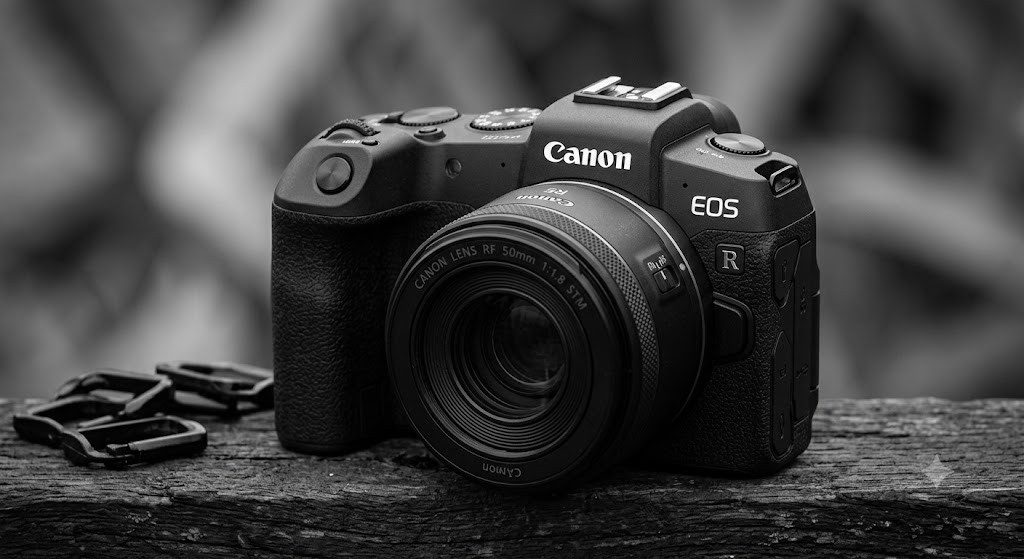
The EOS RP’s EVF offers 2.36 million dots at 0.59x magnification, which was adequate at launch in 2019 but feels modest against 2026 standards. The EOS R8 omitted the EVF entirely, a controversial decision that forced R8 shooters to use the rear screen for all framing.
The R8 Mark II’s design direction is uncertain on this point. A retro-styled body would logically include an EVF, as rangefinder-inspired cameras typically incorporate viewfinders as a defining characteristic. However, adding an EVF increases both manufacturing cost and body thickness.
Forum discussions about the R8 Mark II specifically address the EVF question, with one commenter noting: “a blackout-free better EVF than the current 2.36, a better monitor than the current 1.62 monitor” would be meaningful improvements. Another suggests a 3.69 million dot EVF would bring the body in line with current mid-range Canon bodies. SMotographers
For photographers who are considering the RP successor as a street or travel camera, the EVF question carries significant weight. A body without a viewfinder cannot serve as a primary camera for photographers who depend on eye-level framing in bright outdoor conditions. Canon’s retro design direction suggests an EVF is more likely than not in the R8 Mark II.
Canon’s Full-Frame Lineup Strategy in June 2026
Where the RP Successor Fits
Understanding where an EOS RP II or R8 Mark II sits requires mapping Canon’s current full-frame RF lineup.
The EOS R8 sits at approximately $1,299 as the current entry full-frame body. EOS R6 Mark III positions at approximately $2,499 as a mid-range hybrid. The EOS R5 Mark II at $4,299 serves the high-resolution professional audience. The EOS R1 at approximately $6,299 leads the professional flagship range.
An R8 Mark II at $1,499 to $1,799 would slot above the current R8 while remaining well below the R6 Mark III. This positioning serves the large audience of photographers who want more capability than the current R8 offers but cannot justify the R6 Mark III’s price.
Canon Rumors states directly: “I don’t get the feeling that we’re going to be seeing new full-frame cameras in 2026 beyond the R8. I suppose the EOS R8 would be the most likely to get a follow-up. It just makes sense to try and keep it as affordable as possible. It is a great camera body.” LensClear
This assessment confirms that the R8 Mark II is the primary full-frame Canon story for the remainder of 2026. The EOS RP’s discontinued status creates space for the R8 Mark II to absorb the RP’s audience while upgrading them to a more capable platform.
The R9 Question
Canon Rumors specifically addresses whether an R9 is needed beneath the R8: “I figure the R9 is reserved for an entry level full frame camera if Canon decides they need one more model beneath the R8. At the moment, the RP currently occupies that space and still seems to be selling well. Once the R8 II hits the market, the R8 will probably occupy this spot, so Canon may not release an R9 in the next few years.” LensClear
This analysis suggests a cascade effect. The R8 Mark II launches as the new entry full-frame. The existing R8 drops in price to occupy the former RP position. The RP retires from the lineup entirely. No R9 is needed because the R8 handles the entry-level full-frame role after its price adjustment.
For photographers currently considering the EOS RP, this timeline matters. Buying an RP in June 2026 means purchasing a discontinued camera that Canon has stopped producing in key markets. The EOS R8 at its current price is a significantly more future-proof entry-level full-frame choice.
Canon EOS RP vs R8 Mark II: The Upgrade Photographers Actually Care About
Sensor and Image Quality
The EOS RP uses a 26.2MP full-frame CMOS sensor. The R8 Mark II’s sensor, while unconfirmed, will almost certainly deliver more resolution, better dynamic range, and improved high-ISO performance based on the progress Canon has made across its sensor generations since 2019.
The practical image quality gap between 2019-era and 2026-era full-frame sensors is meaningful. Specifically, dynamic range improvement at base ISO translates into more shadow detail recovery during post-processing. An R8 Mark II with a 2024 or 2025 sensor generation will recover detail from underexposed shadows that the RP simply cannot retrieve.
For portrait and landscape photographers who frequently push exposure in post-production, this dynamic range improvement matters daily. It is not a marginal benefit. It is the difference between a recoverable shadow and a blown area of the image.
Autofocus: Generations Apart
The RP uses the original Dual Pixel CMOS AF system. It delivers competent face detection and acceptable tracking in moderate conditions. The R8 Mark II will use Dual Pixel CMOS AF II, which builds on years of additional AI training data and a faster processing pipeline.
The practical autofocus gap between the two systems is significant. Eye detection that works reliably in low light, subject tracking that maintains lock during fast lateral movement, and multi-subject scenes where the camera correctly identifies the intended subject are all situations where Dual Pixel CMOS AF II outperforms the original system.
Photographers who have found the RP’s autofocus frustrating during candid events, low-light portrait sessions, or fast-moving subject work will notice the R8 Mark II’s improvement immediately and profoundly.
Video: From Impractical Crop to Genuine Capability
The EOS RP’s 4K with 1.7x crop made it a poor video tool. Wide-angle lenses became effectively standard lenses during video recording. The R8 Mark II’s expected full-sensor 4K 60fps output transforms the video proposition entirely.
A photographer who purchased the RP for stills and avoided its video mode due to the crop penalty now has access to genuine full-frame video quality. Travel filmmakers, documentary shooters, and content creators who want full-frame shallow depth of field in their video footage gain a tool they never had in the RP.
IBIS: The Most Emotionally Significant Upgrade
The RP has no IBIS. Photographers who have owned it for years and relied on optical stabilization from their lenses know exactly which shots they missed because of camera shake in low light. They know which slow-shutter landscape images needed tripods that they did not carry. They know which evening street images came out soft.
Adding IBIS to the R8 Mark II changes the camera’s fundamental capability in low-light situations. Three additional stops of stabilization, moving from lens-only OIS to combined IBIS plus OIS, extends handheld shooting into lighting conditions where the RP required a tripod or extremely high ISO.
This is the upgrade that RP owners will feel most acutely and most immediately in real shooting conditions.
The Retro Design: Who It Appeals To and Who It Does Not
The Retro Camera Market in June 2026
The retro-styled camera segment has grown considerably since 2023. The Fujifilm X100VI demonstrated that a camera with deliberately old-fashioned aesthetics could generate extraordinary demand, selling out globally within days of launch. The Panasonic Lumix L10, launched in May 2026, drew on Leica’s brand heritage for its premium compact positioning. The Sigma BF’s minimalist panel design attracted cult following despite limited specifications.
Canon entering this space with the R8 Mark II’s retro styling represents a major brand’s acknowledgment that design language matters as much as specifications for a growing segment of camera buyers. A Canon body with vintage aesthetics, RF-mount flexibility, Dual Pixel CMOS AF II, and IBIS at approximately $1,499 to $1,799 would be a compelling offering that no current retro-styled camera can match on autofocus performance or lens ecosystem depth.
Photographers Who Will Love the Retro Direction
Street photographers who want a discreet, classically-styled full-frame body. Travel photographers who appreciate a camera that does not draw attention in public spaces. Photographers who are switching from Leica or Fujifilm and want Canon’s autofocus in a body that feels familiar in design language. Content creators who care about how their camera looks in behind-the-scenes photos and videos.
For all of these photographers, the R8 Mark II’s retro design is not a cosmetic feature. It is a core part of why they would choose it over a conventional-looking mirrorless body.
Photographers Who Will Resist the Retro Direction
Action and sports photographers who need a deep grip for secure holding during rapid camera movement. Wildlife photographers who mount heavy telephoto lenses that require substantial body grip for balance. Studio photographers who prefer a conventional control layout with dedicated dials for every exposure parameter.
Canon Rumors acknowledges this divide directly, with one forum commenter noting: “I like my R8 a lot. I have zero interest in a retro camera. The R8 definitely was an excellent entry into FF and likely targets a healthy segment of the market.” SMotographers
Canon’s strategic response to this tension may involve producing the retro R8 Mark II as one variant while keeping the current R8 in the lineup at a reduced price as the conventional-styled option. Both bodies could coexist, serving different aesthetic preferences with the same underlying imaging technology.
Pricing: What the EOS RP Successor Should Cost
The Price Ladder in June 2026
Entry full-frame camera pricing has shifted since the RP’s $1,299 launch in 2019. Inflation, supply chain costs, and feature additions have all pushed entry full-frame prices upward across all brands. The Sony A7C II sits at $2,199. The Nikon Z5 II at $1,099 remains the most affordable new full-frame option from a major brand. The current EOS R8 at approximately $1,099 to $1,299 competes directly with the Z5 II.
The R8 Mark II, adding IBIS, improved video specifications, and a retro design premium, will likely launch at $1,499 to $1,799. This price increase over the current R8 is justified by the feature additions but moves Canon’s entry full-frame above the $1,000 threshold that the RP and current R8 represent.
At $1,499, the R8 Mark II competes directly with the Fujifilm X-E5 at $1,699 and the Panasonic Lumix L10 at $1,499. At $1,799, it begins approaching the lower range of the Sony A7C II’s price territory. Canon will need to price carefully to maintain the value positioning that has historically made entry-level Canon full-frame bodies commercially successful.
Kit Pricing and Lens Pairing
Canon will almost certainly offer the R8 Mark II in a kit with an affordable RF lens. The RF 50mm f/1.8 STM at $199 would be an obvious choice for a retro-styled body that benefits from a small, lightweight prime. Alternatively, the RF 24-50mm f/4.5-6.3 IS STM kit zoom at $299 provides versatility at low cost and minimal weight addition.
A retro-styled Canon body paired with the RF 50mm f/1.8 would produce one of the most classically-proportioned camera configurations in Canon’s current lineup. This pairing would directly compete with the Leica Q3 43mm variant and the Fujifilm X-E5 with 35mm prime on design appeal, while significantly undercutting both on price.
Who Should Consider the EOS RP Successor?
Current EOS RP Owners
EOS RP owners who purchased their cameras between 2019 and 2022 are approaching the natural upgrade point in their camera lifecycle. The R8 Mark II offers every improvement the RP lacks: IBIS, improved autofocus, better dynamic range, proper 4K video, and a design refresh.
For RP owners who have not yet invested heavily in RF lenses, the upgrade cost is primarily the body price difference. For RP owners with an established RF lens collection, the transition is entirely seamless with no glass changes required.
First-Time Full-Frame Buyers in 2026
The EOS RP succeeded primarily by making full-frame accessible to first-time buyers. The R8 Mark II will serve this audience at a slightly higher price but with significantly better capabilities.
First-time full-frame buyers who choose the R8 Mark II in 2026 start with a camera that will not show its age for many years. Its IBIS, Dual Pixel CMOS AF II, and modern video specifications place it firmly in the current generation rather than the previous one. This longevity justifies the price premium over the current R8.
Fujifilm and Sony Users Considering Canon
Photographers currently shooting Fujifilm APS-C who want to move to full-frame have consistently cited Canon’s autofocus as a reason to consider switching. The R8 Mark II, in a retro design language familiar to X-series users and with Dual Pixel CMOS AF II’s reliability, could be a compelling entry point for this audience.
Sony APS-C users who want affordable full-frame and already own E-mount lenses face a higher switching cost because Canon uses the RF mount. However, the R8 Mark II’s full-frame image quality and Canon’s lens ecosystem could justify the transition for photographers who prioritize image quality and autofocus performance over existing lens compatibility.
Release Timeline: When Will the EOS RP Successor Arrive?
The Confirmed 2026 Window
Canon Rumors states near 100% confidence in the R8 Mark II arriving in 2026. Based on Canon’s typical announcement-to-shipping timeline of two to four weeks, a second-half 2026 announcement would put the camera on shelves before the year ends. SMotographers
Canon’s 2026 launch calendar has been dominated by video-centric releases: the PowerShot V1, EOS R50 V, EOS R6 Mark III, and EOS C50. A photocentric R8 Mark II announcement in late 2026 would provide a strong end-of-year narrative as Canon balances its video-heavy early-year releases with a stills-focused conclusion to the year.
Photokina does not factor into this timeline. Canon Expo and dedicated Canon Alpha launch events are the more likely announcement platforms, consistent with how Canon has handled recent significant body announcements.
What to Do Right Now in June 2026
Photographers currently using the EOS RP should continue using it while the R8 Mark II arrives. The RP is still capable. Nothing about the R8 Mark II’s rumored specifications makes the RP produce worse images than it did yesterday.
Photographers who are considering buying a Canon full-frame body right now should either purchase the current EOS R8 at its reduced price, knowing the R8 Mark II will eventually take its place, or wait for the R8 Mark II if the retro design and additional features matter to their work.
Photographers who are considering the original EOS RP as a new purchase should think carefully. The RP is discontinued in key markets. Buying a discontinued camera in June 2026 means limited long-term service support and no path to purchasing a new body if issues arise. The current EOS R8 is the safer choice today.
Canon EOS RP II vs the Competition: The Honest Assessment
Against the Sony A7C II
The Sony A7C II at $2,199 offers a 33MP full-frame sensor, 7-stop IBIS, Sony’s subject detection breadth, and the full E-mount lens ecosystem. It is a formidably capable camera at a price above where the R8 Mark II is expected to land.
The R8 Mark II at $1,499 to $1,799 would offer approximately the same subject detection capability through Dual Pixel CMOS AF II, similar IBIS performance, and Canon’s RF lens ecosystem at a lower price. The Sony wins on resolution and lens ecosystem size. Canon wins on price positioning and Dual Pixel CMOS AF’s video reliability.
Against the Nikon Z5 II
The Nikon Z5 II at $1,099 is currently the most affordable full-frame body from a major brand that includes IBIS. It offers 24.5MP, weather sealing, and reliable subject detection. Its video specifications are adequate without being exceptional.
The R8 Mark II at $1,499 would cost $400 more than the Z5 II. To justify that premium, Canon must offer meaningfully better video specifications, stronger autofocus reliability, or the retro design’s premium appeal. For photographers who value autofocus performance above all else, Dual Pixel CMOS AF II’s track record in video applications provides that justification.
Against the Panasonic Lumix S9
The Panasonic Lumix S9 at approximately $1,499 offers a full-frame sensor, IBIS, and creative LUT workflow tools in a compact, stylish body. It targets the creative lifestyle segment with its compact form factor and customizable color science tools.
The R8 Mark II competes directly in this space with the retro design direction. However, the critical advantage Canon holds over the Lumix S9 is autofocus. The S9’s phase detection system, while improved over earlier Lumix bodies, does not match Dual Pixel CMOS AF II’s reliability for subject tracking in dynamic situations. For photographers who shoot people rather than landscapes, this autofocus gap matters considerably.
Final Assessment: The Canon EOS RP Successor in June 2026
The Canon EOS RP II story in June 2026 is fundamentally the EOS R8 Mark II story. Canon has confirmed it is coming. The retro design direction is confirmed. The photocentric positioning is confirmed. The specific sensor, IBIS rating, and video specifications remain under rumor-level confidence rather than confirmed status.
What is clear is that Canon recognizes the gap left by the RP’s discontinuation. The R8 Mark II fills that gap with meaningfully better technology, a design direction that taps into the growing retro camera market, and a price positioning that keeps full-frame RF entry accessible to photographers who cannot justify the R6 Mark III or R5 Mark II.
For RP owners, the R8 Mark II represents everything that their camera should have included when it launched in 2019. IBIS, modern autofocus, proper 4K video, and improved dynamic range are not luxury additions in 2026. They are baseline expectations. The R8 Mark II meets those expectations at an entry full-frame price.
For new photographers considering their first full-frame Canon, the R8 Mark II arriving later in 2026 is worth the wait if the timeline is months rather than a year. A camera that starts with IBIS, Dual Pixel CMOS AF II, and proper video capability will serve your photography better for longer than any previous Canon entry full-frame body has managed.
Altbuzz Anticipation Rating: 8.6 / 10
Read More from Altbuzz
For more Canon and full-frame camera coverage from our June 2026 series, explore our analysis of top 5 incoming Sony cameras for 2026 and 2027, our Sony A6900 rumor deep-dive, and our best affordable cameras of 2026 guide which includes the current EOS R8 as a top recommendation.
Stay updated on every Canon announcement and rumor the moment they break at altbuzzmedia.com. For real-time Canon tracking, follow Canon Rumors at canonrumors.com and Digital Camera World’s Canon page at digitalcameraworld.com.
Subscribe to Altbuzz YouTube Channel
Full Canon EOS RP II and R8 Mark II announcement-day coverage, spec breakdowns, and comparison videos are coming to the Altbuzz YouTube channel @AltBuzzMedia the moment Canon makes it official. Subscribe now and never miss a Canon Alpha update through the rest of 2026.