
Top 5 Budget Cameras of 2026: The Complete Ranked Countdown
Shopping for budget cameras of 2026 does not have to feel confusing. Prices have crept up a little this year because of tariffs and supply costs, but the good news is simple. You can still buy a real mirrorless camera with a real sensor for less than the price of a flagship smartphone. These cameras beat your phone in low light, they give you actual depth of field, and they open the door to a whole system of lenses that grows with you.
We tested, researched, and compared the most talked about entry level cameras on the market right now. We looked at sensors, autofocus, video quality, handling, and price. Then we ranked them from number five up to our top pick for 2026. We are counting down, so the excitement builds as we go. Stick around for our number one pick. It might surprise you.
Every camera on this list comes from a brand you already trust. Canon, Sony, Nikon, and Fujifilm all make an appearance. Each one takes interchangeable lenses, each one shoots real 4K video, and each one costs less than $1,000 for the body. Let’s get into it.
How We Picked These Budget Cameras of 2026
Before we jump into the countdown, here is a quick look at how we chose this lineup. We focused on five things that matter most to real photographers and content creators.
- Sensor size and quality. Every camera here uses an APS-C sensor. That is far larger than any smartphone sensor, and it means better color, better low light performance, and natural background blur.
- Autofocus performance. A camera is only as good as its ability to lock onto a subject. We looked at autofocus point count, subject detection, and real world tracking reliability.
- Video specs. Almost everyone shoots video now. We checked resolution, frame rates, bit depth, and whether footage is cropped or uses the full sensor width.
- Handling and design. A camera you do not enjoy holding is a camera you leave at home. We considered screen type, viewfinder presence, and overall ergonomics.
- Price to value ratio. Budget does not mean cheap. It means smart spending. We ranked each camera on what you actually get for your money.
Now, let’s start the countdown at number five.
5. Fujifilm X-M5: The Color Science Champion
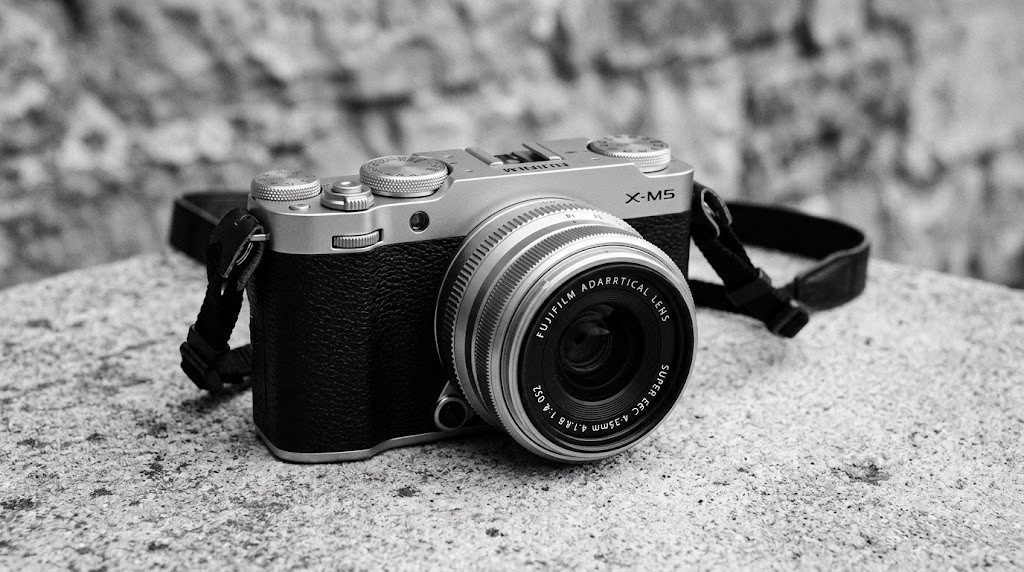
The Fujifilm X-M5 kicks off our countdown, and it earns its spot through sheer personality. Fujifilm built its reputation on color, and the X-M5 proves that reputation still holds even in an entry level body.
Sensor and Image Quality
The X-M5 uses a 26.1 megapixel X-Trans CMOS 4 sensor, the same sensor found in the beloved X100V and the mid-range X-S20. This is not a watered down chip. It delivers rich detail, excellent dynamic range, and Fujifilm’s signature color rendering straight out of the camera. The sensor pairs with the X-Processor 5, which handles image processing and autofocus duties.
Film Simulations and Design
Fujifilm gives the X-M5 a dedicated Film Simulation dial with 20 total looks, including fan favorites like Classic Chrome, Velvia, and the newer Reala Ace. Eight simulations sit directly on the dial for quick access, and you can program three more as custom presets. This feature alone makes photography fun again. You twist a dial, and your photos instantly take on a new mood, whether that is punchy Velvia color or moody Acros black and white.
The body is tiny. It weighs about 355 grams and measures under five inches wide, making it the smallest and lightest camera in Fujifilm’s current lineup. It skips the viewfinder and in body stabilization to keep costs and size down, but it keeps a proper mechanical shutter, a rarity at this price point.
Autofocus and Video
The X-Processor 5 brings Fujifilm’s newest AI driven subject detection to the X-M5. It recognizes people, animals, birds, cars, motorcycles, trains, and even insects and drones. Tracking stays confident in daylight and holds up reasonably well indoors too.
Video is where the X-M5 truly shines for its price. It records open gate 6.2K at 30fps in 10-bit color, plus 4K at up to 60fps for smooth slow motion footage. Full HD tops out at a blistering 240fps. Two Log profiles give you real flexibility in color grading, and a rotatable screen supports true vertical video recording without cropping your frame.
Price and Who Should Buy It
The X-M5 starts at $799 for the body and $899 with the XC 15-45mm kit lens. It targets vloggers and content creators who also care about still photography and want that classic Fujifilm color right out of the box. If you shoot mostly stills and want a viewfinder, look elsewhere on this list. If you want small size, huge video specs, and gorgeous color, the X-M5 delivers outstanding value.
Official page: Fujifilm X-M5 on Fujifilm-X.com
4. Nikon Z50 II: The DSLR Heir with Modern Muscle
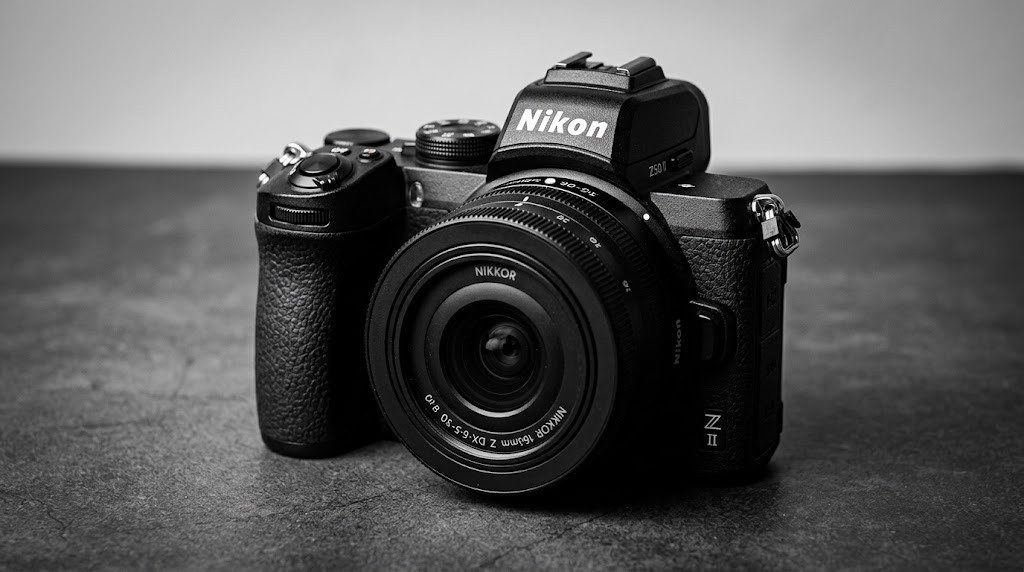
Moving up to number four, the Nikon Z50 II proves that Nikon has not forgotten its entry level shooters. This camera carries the spirit of the beloved Nikon D500 into a compact mirrorless body, and it does so with serious autofocus muscle.
Sensor and Processor
The Z50 II keeps the same 20.9 megapixel DX format sensor from the original Z50, but do not let that fool you into thinking nothing changed. Nikon dropped in the EXPEED 7 processor, the exact same chip found in the flagship Z8 and Z9 cameras. That processor transforms how the camera behaves, even with an unchanged sensor.
Autofocus That Punches Above Its Price
This is where the Z50 II separates itself from the pack. The EXPEED 7 processor enables 3D tracking and nine subject detection categories, covering people, dogs, cats, birds, and vehicles, plus dedicated bird and airplane modes for extra precision. Autofocus locks on quickly and holds steady even in trickier lighting. Reviewers consistently praise this system as one of the most dependable in its class, and it is easy to see why. You are getting flagship level focus logic in a body that costs a fraction of the price.
Burst Speed and Handling
The Z50 II shoots up to 30fps in JPEG mode using its electronic shutter, or 11fps with full raw files and continuous autofocus. A buffer that holds up to 200 frames means you can hold down the shutter and actually catch the moment, instead of watching the camera choke after five frames like older budget models. The body includes a bright electronic viewfinder, a fully articulating touchscreen, and a dedicated Picture Control button that lets you swap color profiles on the fly.
Video Capabilities
Video gets a real boost too. The Z50 II shoots 10-bit 4K at 60fps with N-Log support, though the 60fps mode does apply a crop on top of the standard DX crop, so keep that in mind if you shoot a lot of high frame rate footage. At 4K30, you get the full sensor width with no extra crop, and the results look clean and detailed.
Price and Who Should Buy It
Body only pricing sits around $907, with kit options running from about $1,047 to $1,297 depending on the lens bundle. The Z50 II suits photographers who want the fastest, smartest autofocus at this price tier, especially anyone who shoots pets, sports, or fast moving kids. If cutting edge tracking matters more to you than ultimate portability, this is your camera.
Official page: Nikon Z50 II on NikonUSA.com
3. Sony ZV-E10 II: The Vlogger’s Secret Weapon
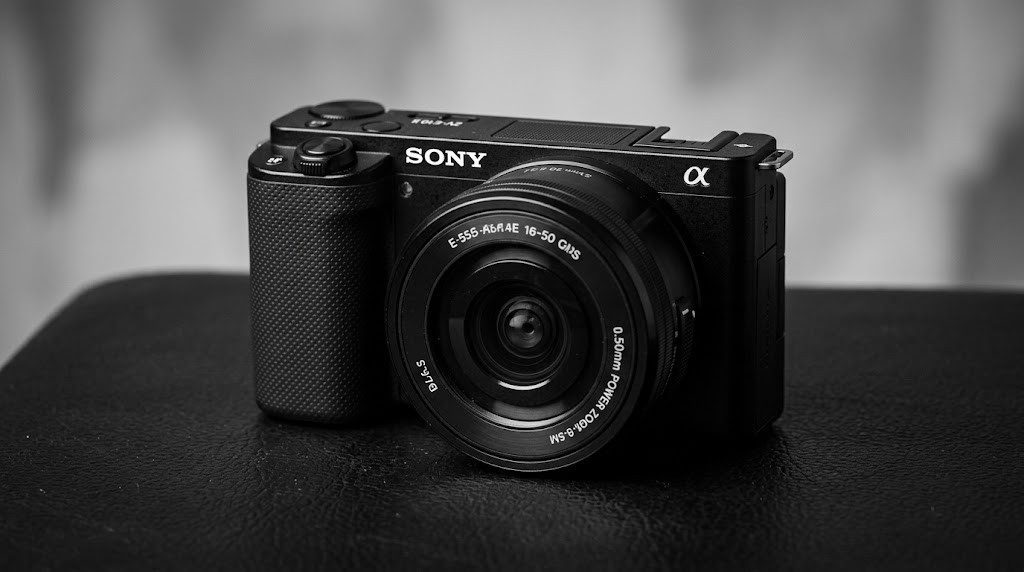
At number three, we reach a camera built almost entirely around one goal: making you look and sound great on video. The Sony ZV-E10 II takes everything creators loved about the original ZV-E10 and fixes nearly every complaint people had.
Sensor and Processor
Sony equips the ZV-E10 II with a 26 megapixel Exmor R BSI sensor and the BIONZ XR processor, the exact same combination found in the pricier a6700 and FX30. That is a genuinely big deal. You get flagship level image quality and processing speed in a camera that costs hundreds less than its siblings.
Autofocus Built for Creators
The ZV-E10 II inherits a 759-point phase detection autofocus system with real time Eye AF for humans, animals, and even birds. This is widely regarded as one of the best autofocus systems available anywhere near this price. Subject tracking stays locked on even when your subject turns away and comes back, or gets briefly blocked by something in the frame. For solo creators filming themselves, this reliability matters enormously. You do not have to think about focus. You just hit record and talk.
Video Specs That Outclass the Competition
Video is the whole point of this camera, and it delivers. You get 4K recording at up to 60fps with full pixel readout, oversampled from 5.6K for extra sharpness, in 10-bit 4:2:2 color. That is a professional level color depth rarely seen at this price. Full HD slow motion reaches 120fps. A Cinematic Vlog Setting automatically adjusts aspect ratio, frame rate, and autofocus transition speed to give your footage an instant filmic quality with a single tap.
Design Built for Solo Shooting
There is no viewfinder here, and Sony made that choice on purpose. Instead, you get a fully articulating 3-inch touchscreen that flips out and rotates for vertical video, complete with a built in tally light so you know exactly when you are recording. A three capsule directional microphone captures clean audio without an external mic, which is a lifesaver for creators filming on the move. The improved NP-FZ100 battery roughly doubles battery life compared to the original ZV-E10, letting you film for close to 200 minutes on a single charge.
Price and Who Should Buy It
The ZV-E10 II runs $999 body only or $1,099 with the compact 16-50mm power zoom kit lens. This camera targets YouTubers, TikTok creators, and anyone building a video first content business. Photographers who want a mechanical shutter or in body stabilization should look at the Nikon or Fujifilm options instead. But for video, almost nothing at this price competes.
Official page: Sony Interchangeable Lens Cameras on Sony.com
2. Canon EOS R50: The Best All Around Value
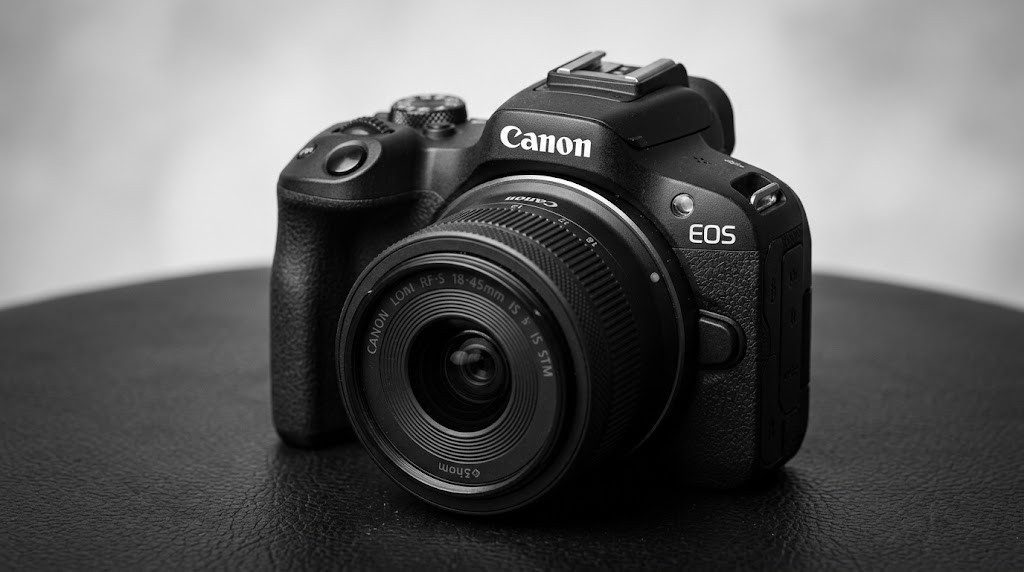
We are getting close now. At number two sits the Canon EOS R50, and this camera might be the single smartest purchase on this entire list. It takes nearly everything people love about Canon’s more expensive RF mount cameras and squeezes it into a body that costs under $700.
Sensor and Image Quality
The R50 uses a 24.2 megapixel APS-C CMOS sensor paired with Canon’s DIGIC X processor, the same processor family found in Canon’s professional bodies. Images come out clean, detailed, and full of natural color, with strong performance even as light starts to fade.
Autofocus That Feels Like Magic
Canon’s Dual Pixel CMOS AF II system is the real star here. It covers up to 651 automatically selected focus zones across 100 percent of the frame, and it uses deep learning technology to detect and track people, animals including dogs, cats, and birds, plus vehicles like cars and motorcycles. In practical use, this autofocus rarely misses. It tracks moving kids, running pets, and unpredictable subjects with confidence that used to only exist on cameras costing three or four times as much.
Speed and Handling
The R50 shoots up to 15fps using its electronic shutter, or 12fps with the electronic first curtain shutter, both with continuous autofocus tracking. That kind of speed lets you freeze fast action without missing the perfect frame. The body includes a fully articulating 3-inch touchscreen, a sharp 2.36 million dot electronic viewfinder with a 120fps refresh rate option, and genuinely comfortable ergonomics for a camera this small.
Video Performance
Video shooters get uncropped 4K at 30fps, oversampled from 6K resolution for extra detail and sharpness. Full HD slow motion reaches 120fps for smooth playback. Unlike the cheaper R100 below it, the R50 records without a crop, which means your wide angle lens actually stays wide when you switch to video.
Price and Who Should Buy It
Body only pricing sits at $679, with a kit lens bundle at $799. Reviewers across the board, including Engadget and DPReview, point to the R50 as the camera that makes the most sense for most first time buyers. You get flagship grade autofocus, real 4K without a punishing crop, and a screen you can flip to face yourself. This is the camera you will actually carry every single day, and that matters more than any spec sheet.
Official page: Canon EOS R50 on USA.Canon.com
1. Canon EOS R100: The Best Budget Camera of 2026
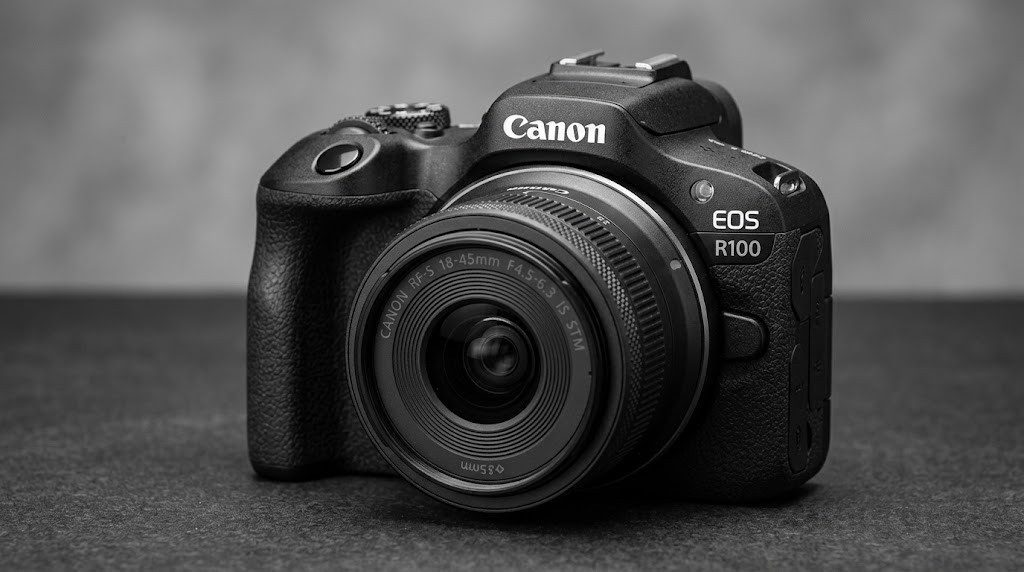
Here we are. The number one spot. The camera that started this entire conversation about what a truly budget friendly mirrorless camera should look like in 2026. The Canon EOS R100 is not the flashiest camera on this list. It does not have the fastest burst speed or the newest processor. What it has is something more valuable: it is the cheapest and lightest way into a real interchangeable lens system from a brand you already trust.
Why the R100 Takes the Top Spot
At $479 body only, the R100 is the smallest and lightest camera in Canon’s entire RF mount lineup. Weighing just 356 grams, it disappears into a small bag and never feels like a burden. This is a camera you actually bring with you, and a camera you use is infinitely more valuable than a camera that sits in a drawer because it feels like too much to carry.
Sensor and Image Quality
Despite its budget price, the R100 uses a genuinely capable 24.1 megapixel APS-C CMOS sensor paired with the DIGIC 8 processor. In our testing and across independent reviews, this sensor captures a surprising amount of detail and holds its own against competitors like the Sony a6100 and Nikon Z50. Colors look warm and natural, and images stay clean at moderate ISO settings.
Autofocus That Overdelivers
Do not let the slightly older DIGIC 8 processor fool you. The R100 still runs Canon’s Dual Pixel CMOS AF system, covering 143 autofocus zones across roughly 88 percent horizontal and 100 percent vertical of the frame. It includes Face and Eye Detection autofocus with reliable subject recognition. In hands on testing, the R100 locked onto moving subjects quickly and tracked a child running erratically with impressive consistency, keeping focus on the face and eyes through unpredictable movement. That is a genuinely strong result for a camera at this price.
Handling and Battery Life
The R100 uses a fixed, non-touch 3-inch LCD screen rather than the articulating touchscreen found on pricier siblings. That is the biggest compromise you make here, and it is worth knowing upfront. In exchange, you get excellent battery life and a body so light you forget it is even in your bag. The bright 2.36 million dot electronic viewfinder with 100 percent frame coverage makes composing in daylight easy, something phone cameras still cannot match.
Video Specs
Video capability includes 4K recording at 24fps, cropped from the center of the sensor, along with Full HD at up to 60fps and a fun 120fps slow motion mode in HD. The 4K crop means this is not the pick for serious videographers, but for casual clips, family memories, and everyday content, it gets the job done.
Price and Value
Here is the real magic of the R100. It starts at just $479 body only, $599 with the RF-S 18-45mm kit lens, or $829 with a telephoto zoom included. That is one of the lowest entry points into any modern mirrorless system from a major brand. Multiple major review outlets, including DPReview and Engadget, single out the R100 as the best true budget camera on the market precisely because of this combination of price, portability, and dependable autofocus.
If you are a beginner who wants to step up from a smartphone without spending a fortune, a parent who wants sharp photos of your kids without carrying a heavy camera, or a traveler who values packing light above all else, the Canon EOS R100 earns its place at the very top of our list for the budget cameras of 2026.
Official page: Canon EOS R100 on USA.Canon.com
Budget Cameras of 2026: Quick Comparison
| Rank | Camera | Sensor | Max Video | Starting Price |
|---|---|---|---|---|
| 5 | Fujifilm X-M5 | 26.1MP APS-C X-Trans 4 | 6.2K 30fps, 4K 60fps | $799 |
| 4 | Nikon Z50 II | 20.9MP APS-C DX | 4K 60fps (cropped) | $907 |
| 3 | Sony ZV-E10 II | 26MP APS-C Exmor R | 4K 60fps, 10-bit | $999 |
| 2 | Canon EOS R50 | 24.2MP APS-C | 4K 30fps, uncropped | $679 |
| 1 | Canon EOS R100 | 24.1MP APS-C | 4K 24fps (cropped) | $479 |
How to Choose the Right Camera for Your Needs
Every camera on this list earns its spot, but the right choice depends entirely on how you plan to shoot.
- Choose the Canon EOS R100 if budget and portability matter most and you mainly shoot photos.
- Choose the Canon EOS R50 if you want the best all around balance of autofocus, video, and handling without overspending.
- Choose the Sony ZV-E10 II if video and vlogging are your top priority and you film mostly by yourself.
- Choose the Nikon Z50 II if you photograph fast action like sports, pets, or kids and want the smartest autofocus available.
- Choose the Fujifilm X-M5 if color and creative style matter to you as much as specs, and you want the smallest possible body.
None of these cameras are bad choices. Every single one beats a smartphone in image quality, low light performance, and creative control. The real question is not which camera is best. It is which camera fits your life.
Final Thoughts on the Best Budget Cameras of 2026
Camera prices climbed a bit this year, but the value at the entry level has never been stronger. You can spend under $500 and walk away with a genuine mirrorless camera and interchangeable lens system, or you can spend closer to $1,000 and get autofocus and video specs that rival cameras twice the price from just a few years ago.
Our top pick, the Canon EOS R100, earns the number one spot because it nails the fundamentals. It is affordable, it is light, and its autofocus punches well above its price tag. But do not overlook the Canon EOS R50 sitting right behind it. For a small amount of extra money, you unlock a touchscreen, faster burst shooting, and uncropped 4K video, and many buyers will find that jump worth it.
Whatever you choose from this list, you are stepping up from your phone into a real photography and video system, and that is a decision you will not regret.
Read More from Altbuzz
Want more camera breakdowns, rumor coverage, and detailed reviews? Check out these related reads on Altbuzz:
- Sony ZV-E10 II Review: Specs, Video and Verdict
- Browse more camera news, reviews, and buying guides at AltbuzzMedia.com
Subscribe to the Altbuzz YouTube Channel
For hands on camera reviews, rumor roundups, and side by side comparisons, subscribe to the Altbuzz YouTube channel. New videos drop regularly, and you will never miss a budget camera breakdown again.