
Top 5 Newly Released Cameras of 2025 to 2026: Are They Worth It?
Camera technology moves fast. Brands are constantly releasing new models with upgraded sensors, smarter processors, and more advanced autofocus systems. Keeping up with the latest releases can feel overwhelming. With so many new announcements and launch events, it is hard to know which newly released cameras are genuine leaps forward and which ones are incremental updates dressed up in exciting marketing language.
This guide does the work for you. We reviewed the most significant new camera releases across 2025 and 2026 and ranked the five that genuinely matter. These are the cameras that bring real, measurable improvements over their predecessors and that are worth your money right now.
No hype. No filler. Just the cameras that have actually impressed us.
What Makes a Newly Released Camera Worth Buying?
Not every new camera deserves attention. Brands sometimes release updated models with marginal improvements and position them as major upgrades. We filtered out those cameras entirely.
A newly released camera earns a place on this list only if it delivers at least one of the following: a meaningfully improved sensor, a genuinely upgraded autofocus system, significantly enhanced video capabilities, a new level of value within its price category, or a technological innovation that changes what photographers can achieve.
Every camera on this list meets at least two of those criteria.
Quick Look: Top 5 Newly Released Cameras of 2025 to 2026
| Rank | Camera | Key Innovation | Launch Price |
|---|---|---|---|
| 1 | Canon EOS R5 Mark II | Hybrid flagship redefined | USD 4,300 |
| 2 | Nikon Z6 III | Partial stacked sensor at mid-range price | USD 1,999 |
| 3 | Sony A7 V | Best all-round Sony ever made | USD 3,299 |
| 4 | Fujifilm X-M5 | Ultracompact 6K creator camera | USD 799 |
| 5 | OM System OM-1 Mark II | Best weather sealed Micro Four Thirds | USD 2,199 |
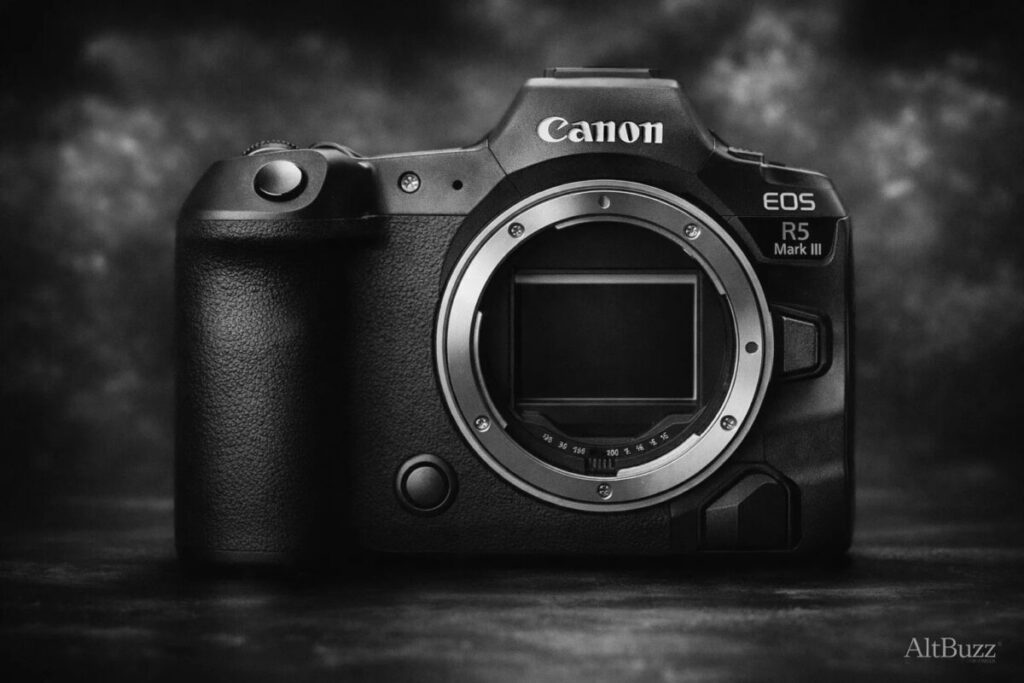
1. Canon EOS R5 Mark II: The Most Important New Camera Release
What Makes It Significant
The Canon EOS R5 Mark II is the most important camera Canon has released in years. It did not just improve on the original R5. It rebuilt it from the ground up in critical areas. Canon addressed the original R5’s biggest weaknesses directly and added new capabilities that put it ahead of every competitor at launch.
This is the kind of camera release that happens rarely. A flagship that actually lives up to the label.
What Is New Compared to the Original R5
The original R5 was held back by overheating during video recording. The R5 Mark II runs cool. The original had excellent autofocus that still occasionally struggled with fast, erratic subjects. The R5 Mark II’s AI Accelerator chip makes its autofocus arguably the most reliable in the industry. The original shot 12fps. The R5 Mark II shoots 30fps with lossless RAW. The original recorded 8K internally but with limitations. The R5 Mark II records 8K RAW up to 60fps with no practical limitations.
Every key specification improved. Not one regressed.
Specifications
| Feature | Canon EOS R5 Mark II |
|---|---|
| Sensor | 45MP Full-Frame BSI CMOS |
| ISO Range | 100 to 51200 |
| Autofocus | 1053-Point Phase-Detect with AI |
| Burst Rate | 30fps (Lossless RAW) |
| Video | 8K 60fps RAW, 4K 120fps |
| Stabilization | 8-Stop 5-Axis IBIS |
| Price | USD 4,300 |
Who It Is For
Wedding photographers, sports and action shooters, wildlife professionals, hybrid videographers, and portrait photographers who want the most capable single camera available.
Is It Worth Buying?
Without question. The Canon EOS R5 Mark II is not just the best new camera release of 2025. It is one of the best cameras Canon has ever made.
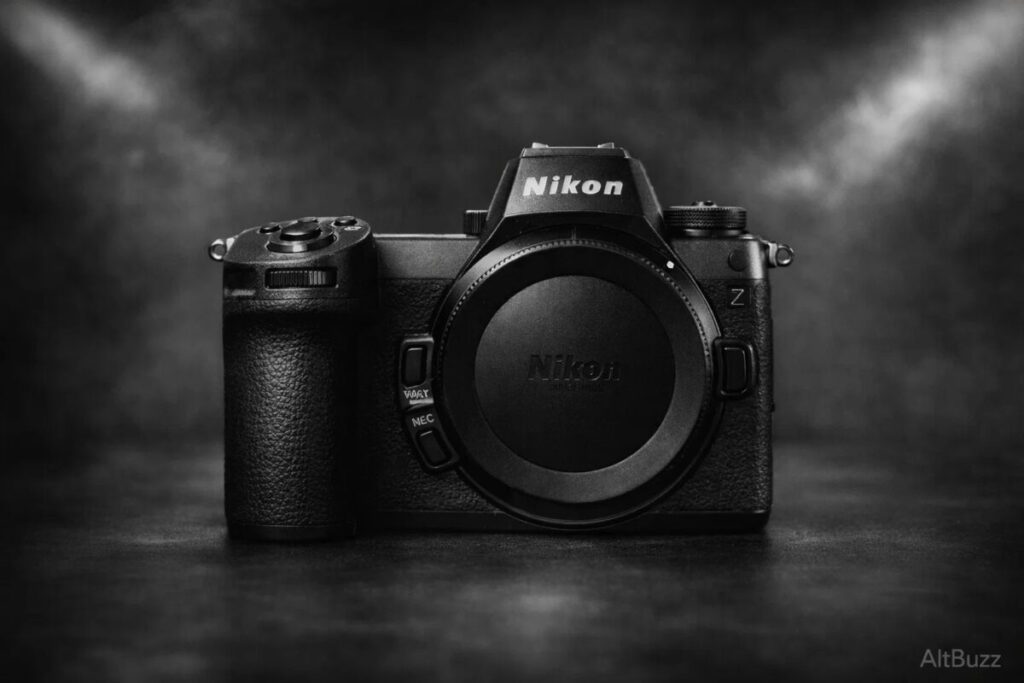
2. Nikon Z6 III: The Biggest Surprise in the Newly Released Camera Market
What Makes It Significant
The Nikon Z6 III caught the photography world off guard when Nikon announced a partial stacked sensor in a mid-range mirrorless camera body priced under USD 2,000. Before the Z6 III, stacked sensor technology was reserved for cameras costing twice as much or more.
The result of this engineering decision is a camera with speed and responsiveness that feels more like a flagship than a mid-range body. Photographers who could not justify the cost of a Nikon Z8 or Z9 suddenly had access to many of their key technical capabilities at an accessible price.
What Is New Compared to the Z6 II
The Z6 II used a conventional BSI CMOS sensor. It Z6 III uses a partial stacked sensor that dramatically improves readout speed, reduces rolling shutter, and enables much higher burst rates. And the Z6 III shoots 20fps in RAW. The Z6 II managed 14fps, Z6 III also adds 6K video recording capability that the Z6 II could not offer.
The autofocus system was also significantly upgraded with better subject recognition and faster tracking performance.
Specifications
| Feature | Nikon Z6 III |
|---|---|
| Sensor | 24.5MP Partial Stacked BSI CMOS |
| ISO Range | 100 to 64000 (ext. 50 to 204800) |
| Autofocus | 273-Point Phase-Detect with Subject Recognition |
| Burst Rate | 20fps RAW, 60fps JPEG |
| Video | 6K 60fps RAW, 4K 120fps |
| Stabilization | 8-Stop 5-Axis IBIS |
| Price | USD 1,999 |
Image Quality
The partial stacked sensor delivers excellent image quality. Dynamic range is strong across the ISO range. High ISO performance is very good, with clean images well into ISO 6400 and usable results beyond. For a 24.5-megapixel sensor, the output detail is impressive.
The 6K video capability is a standout feature. Few cameras at this price offer 6K recording, and the quality from the Z6 III is genuinely cinematic.
Who It Is For
Travel photographers, documentary shooters, videographers, enthusiast photographers upgrading from entry-level bodies, and professionals who need flagship-adjacent performance on a realistic budget.
Is It Worth Buying?
Absolutely. The Nikon Z6 III is one of the most significant value achievements in recent camera history. It offers technology that was previously unavailable at this price point.
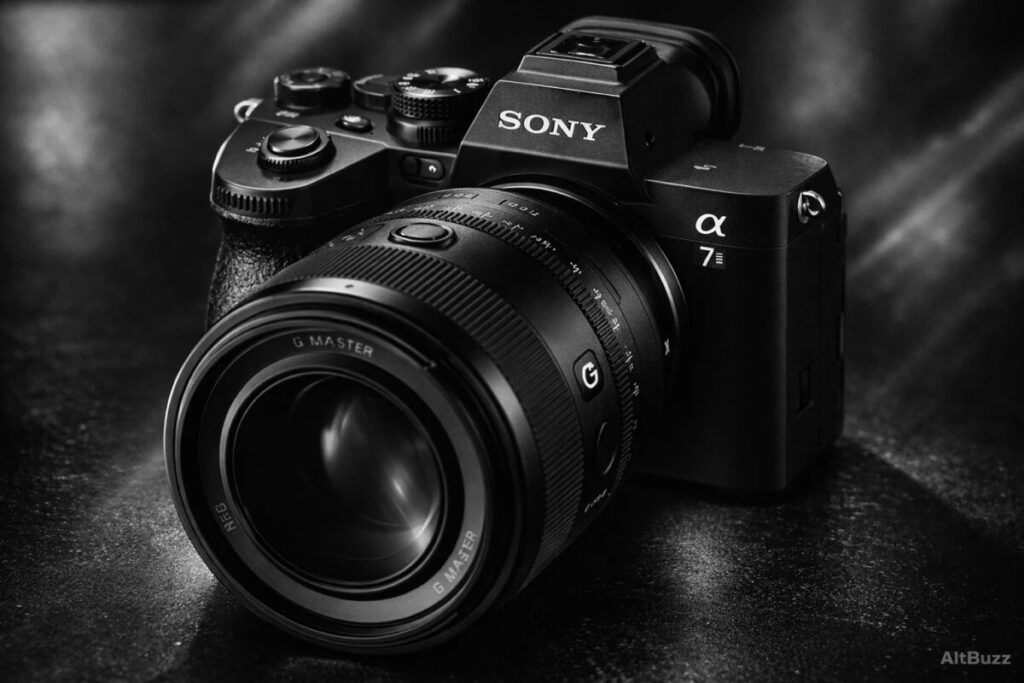
3. Sony A7 V: The New Standard for All-Round Full-Frame Photography
What Makes It Significant
Sony’s A7 series has always been the benchmark for all-round full-frame mirrorless performance. The Sony A7 V continues that tradition and improves on the highly respected A7 IV in every meaningful way. For photographers who want a single, capable, versatile full-frame camera that does everything well without extreme specialization, the A7 V is the definitive choice in 2026.
Sony refined rather than reinvented with the A7 V. The result is a camera that feels mature, confident, and complete.
What Is New Compared to the A7 IV
The A7 V features an upgraded sensor with improved dynamic range and better high ISO performance. The autofocus system received significant updates, bringing AI-based subject recognition that the A7 IV lacked. Video capabilities were expanded with higher bitrate recording options and improved overheating management. The menu system and user interface were further refined based on extensive user feedback.
Specifications
| Feature | Sony A7 V |
|---|---|
| Sensor | 33MP Full-Frame BSI CMOS |
| ISO Range | 100 to 51200 (ext. 50 to 204800) |
| Autofocus | Phase-Detect with AI Subject Recognition |
| Burst Rate | 10fps RAW |
| Video | 4K 60fps 10-Bit, 4K 120fps |
| Stabilization | 7-Stop 5-Axis IBIS |
| Price | USD 3,299 |
Image Quality
The A7 V sensor delivers a beautiful balance of resolution, dynamic range, and high ISO performance. At 33 megapixels, it captures more than enough detail for professional commercial, wedding, and event work. Dynamic range from the improved sensor is excellent. Shadow recovery in RAW files is notably better than the A7 IV.
Colors from the A7 V are accurate and flexible. S-Log3 video footage grades very well. The overall imaging quality positions the A7 V as one of the best all-round full-frame cameras available today.
Who It Is For
Portrait photographers, wedding professionals, travel photographers, documentary filmmakers, and any photographer who wants a single high-performance camera that covers a wide range of shooting scenarios without compromise.
Is It Worth Buying?
Yes. The Sony A7 V is the smartest all-round investment in the newly released camera market for 2025 to 2026.
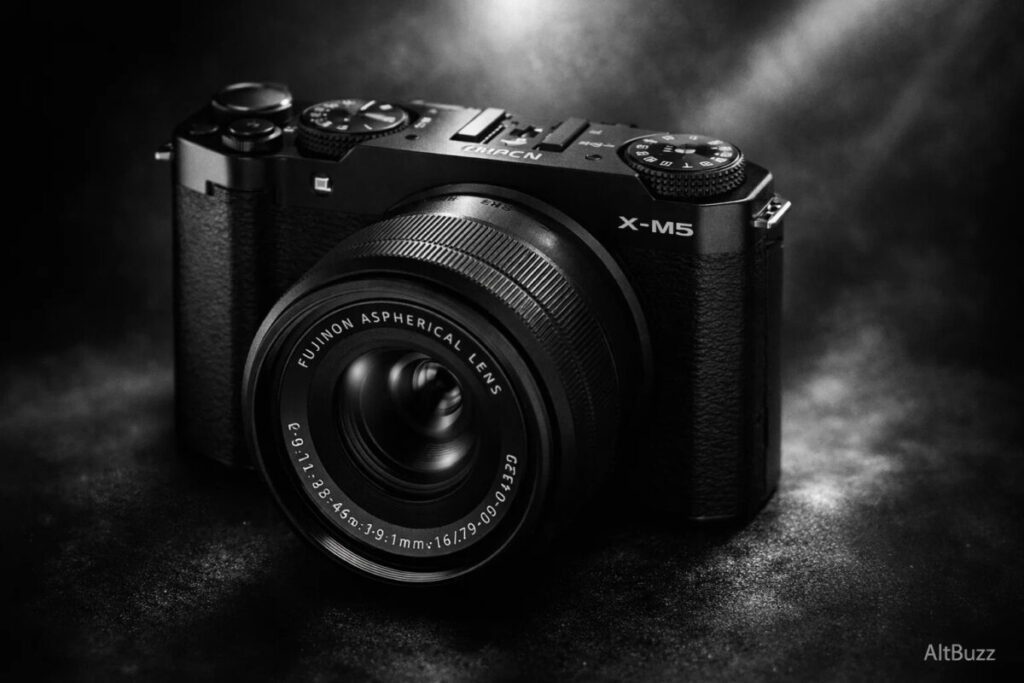
4. Fujifilm X-M5: The Smallest 6K Camera Ever Released
What Makes It Significant
The Fujifilm X-M5 is proof that impressive camera technology does not always require a large, heavy body. Fujifilm launched the X-M5 as an ultracompact APS-C camera aimed squarely at content creators, vloggers, and travel photographers who need serious image quality in the smallest possible package.
The headline specification is almost unbelievable for the size and price: 6K video recording in a body that fits in a jacket pocket and costs under USD 800.
What Is New
The X-M5 uses the same 26.1-megapixel X-Trans CMOS 4 sensor found in larger Fujifilm bodies. The real innovation is the video capability. Fujifilm enabled 6K recording at 30fps and 4K recording at up to 60fps, which is extraordinary for a camera at this price point. The fully articulating touchscreen, F-Log2 support, and subject detection autofocus make it a complete content creation tool.
Specifications
| Feature | Fujifilm X-M5 |
|---|---|
| Sensor | 26.1MP APS-C X-Trans CMOS 4 |
| ISO Range | 160 to 12800 (ext. 80 to 51200) |
| Autofocus | Contrast and Phase-Detect Hybrid |
| Burst Rate | 8fps |
| Video | 6K 30fps, 4K 60fps |
| Stabilization | None (Electronic only) |
| Price | USD 799 |
Image Quality
Fujifilm’s X-Trans sensor produces colors that have always impressed photographers and creators. The 26.1-megapixel output is sharp, detailed, and vibrant. Fujifilm’s Film Simulation modes, including Eterna Cinema and Provia, look especially striking when shooting video and are used by many creators without any additional color grading.
Still image quality is excellent for an APS-C camera at this price. The lack of optical stabilization is a meaningful limitation for handheld shooting, but many users pair the X-M5 with a lightweight gimbal to compensate.
Who It Is For
Content creators, vloggers, travel photographers, social media creators, beginner photographers who want serious quality at an accessible price, and anyone who needs compact size without compromising video capability.
Is It Worth Buying?
For content creators on a budget, the Fujifilm X-M5 is one of the best newly released camera purchases of 2025 to 2026. There is nothing else in its class that offers 6K video at this price and size.
5. OM System OM-1 Mark II: Best Newly Released Micro Four Thirds Camera
What Makes It Significant
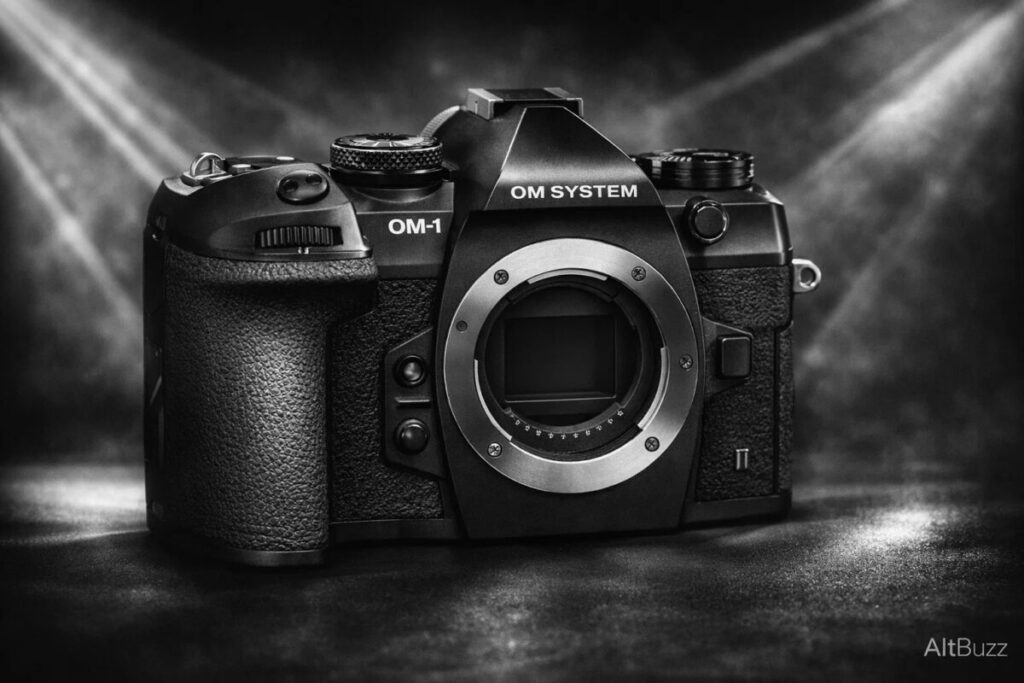
The OM System OM-1 Mark II is the best Micro Four Thirds camera ever made. It earns a place on this list because it pushes the limits of what the Micro Four Thirds format can achieve and delivers a feature set that exceeds many larger-sensor cameras in specific areas.
For outdoor photographers, wildlife shooters, and travel professionals who prioritize portability, weather sealing, and long telephoto reach, the OM-1 Mark II is a genuinely compelling choice in 2026.
What Is New Compared to the OM-1
The OM-1 Mark II improved the sensor readout speed for faster burst performance. Subject recognition was expanded to cover 10 subject categories including birds, trains, cars, and aircraft. The battery was upgraded for better endurance. AF sensitivity in low light was improved. Computational photography features including live ND, live composite, and star-track AF were enhanced.
Specifications
| Feature | OM System OM-1 Mark II |
|---|---|
| Sensor | 20.4MP Micro Four Thirds Stacked BSI CMOS |
| ISO Range | 200 to 102400 |
| Autofocus | Phase-Detect with AI Subject Recognition |
| Burst Rate | 120fps (electronic), 10fps (RAW) |
| Video | 4K 60fps, 4K 120fps |
| Stabilization | 8.5-Stop 5-Axis IBIS |
| Weather Sealing | IP53 (Dust and Splash Proof) |
| Price | USD 2,199 |
Image Quality
The Micro Four Thirds sensor has a smaller surface area than full-frame or APS-C sensors. This affects dynamic range and high ISO performance. The OM-1 Mark II handles this as well as any Micro Four Thirds camera has ever managed, but full-frame cameras at comparable prices will produce cleaner files in challenging light.
Where the OM-1 Mark II excels is in computational photography. The stacked sensor allows for 120fps burst shooting with full subject tracking. The combination of burst speed, reliable autofocus, and a 2x crop factor for effective telephoto reach makes it exceptional for bird and wildlife photography.
Who It Is For
Wildlife photographers who need long telephoto reach, bird photographers, outdoor adventure photographers, travel photographers who prioritize portability and weather sealing, and sports photographers who work within the Micro Four Thirds ecosystem.
Is It Worth Buying?
For its intended audience, the OM System OM-1 Mark II is the best Micro Four Thirds camera ever made. It is a specialized tool that delivers remarkable results in the right hands.
The Verdict: Which Newly Released Camera Should You Buy?
Here is the bottom line on each newly released camera from 2025 to 2026.
Pick the Canon EOS R5 Mark II for a powerhouse that handles every task without compromise.
If you crave high-end performance on a mid-range budget, the Nikon Z6 III is your best bet.
Choose the Sony A7 V to access the most polished and extensive full-frame lens ecosystem available today.
The Fujifilm X-M5 stands out as the ideal pick for creators who need portability and value above all else.
Go with the OM System OM-1 Mark II if your heart is set on birding and you need the most compact setup for long-reach shooting.
Every camera on this list represents a genuine leap forward in its category. Any of them will serve you well.
Read More from AltBuzz
Read more from Altbuzz for camera reviews, rumors, and detailed specs. AltBuzz delivers trusted and easy-to-understand photography content for photographers at every experience level.
Subscribe to the AltBuzz YouTube Channel
Get the latest hands-on camera reviews, comparisons, and field tests. AltBuzz covers every major new release as it happens. Subscribe Altbuzz and stay ahead of every new camera launch.