
Introduction: One Camera, One Lens, No Compromise
Most photographers carry a bag full of lenses. The Leica Q3 tells you to leave that bag at home.
That sounds bold. It also sounds limiting. So the question worth asking is simple: can a single fixed focal length truly satisfy a serious photographer day after day, shoot after shoot, city after city?
The Leica Q3 was introduced in May 2023 as the newest model in Leica’s Q series of premium compact cameras, following the Q2 and keeping the same fixed-lens philosophy that many photographers appreciate for its simplicity. But Leica did not just refresh the design. The engineers rebuilt several core systems from the ground up. gogemio
The Q3 moved to 60 megapixels, and over the Q2 it gained 8K video, a tilting screen, USB-C charging, a new 5.76M-dot OLED electronic viewfinder, and phase-detect autofocus as its most important upgrades. 5050 Travelog
That is a serious list. And for a camera priced at $5,995, it needs to be.
This review covers every layer of the Q3. Design, sensor, optics, autofocus, video, ergonomics, digital crop system, and real-world shooting behavior. By the end, you will know exactly what this camera does well, where it falls short, and whether it belongs in your hands.
Who Actually Buys the Leica Q3?
Before diving into technical specifics, it helps to understand the buyer.
The Q3 does not compete with the Sony A7R V on paper. It does not compete with the Fujifilm X100VI on price. It occupies a different space entirely, one built on craft, restraint, and a very specific shooting philosophy.
The camera is designed mainly for street, travel, and documentary photography, where portability and image quality matter equally. gogemio
The photographer who buys a Q3 typically values a quieter, more deliberate shooting experience. They appreciate the idea of working with constraints. A fixed lens forces you to move your feet, to choose your position carefully, and to commit to a focal length rather than zooming through the frame searching for a composition.
That mindset shapes everything about how the Q3 was designed. Understanding it makes the camera make more sense, even when certain spec-sheet numbers look modest compared to competitors at a lower price.
Body and Build: The Feel of Something Permanent
Materials and Construction
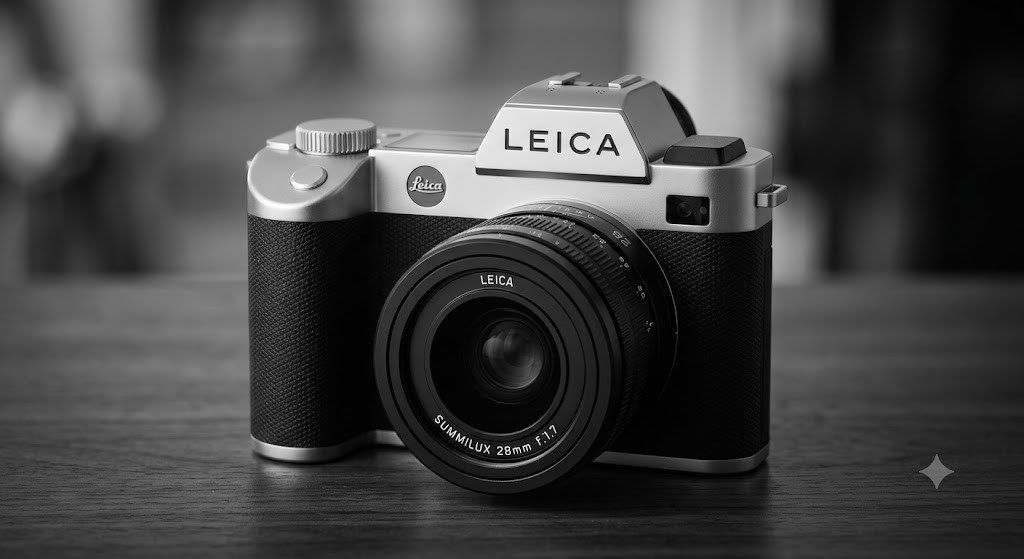
The Leica Q3 carries the classic Leica design language, with a clean, understated look that feels familiar to longtime users of the brand. It features a weather-sealed magnesium alloy body, which adds durability and helps the camera handle regular outdoor use. gogemio
The body measures 130 x 80 x 93mm and weighs 743g with battery. That weight sits right in the middle of the compact camera category. It feels substantial in hand without becoming heavy enough to cause fatigue during long days of shooting.
The body is styled to be reminiscent of Leica’s M-series rangefinders, including a stepped top-plate, shutter speed dial, and rounded ends. There is also a large corner-mounted electronic viewfinder. Amateur Photographer
Every surface of the Q3 communicates permanence. The top plate uses die-cast aluminum with a fine texture. The grip area has a subtle rubber coating that gives just enough friction without looking tactical. The controls click with a satisfying firmness that many modern cameras have abandoned in favor of soft, silent dials.
Weather Sealing
The camera has the same IP52 rating as the Q2, providing limited dust resistance and resistance to water spray less than 15 degrees from vertical. Digital Photography Review
IP52 is not IP67. You will not be shooting in a rainstorm or dunking this in a creek. However, it handles light drizzle, morning mist, and dusty streets without drama. One real-world user confirmed taking the camera through multiple rainy travel days without issue or fear.
The weather sealing also extends to the ports, which matters when you consider that the Q3 uses a micro-HDMI port and USB-C port cut directly into the body.
Control Layout
Leica keeps the control scheme extremely minimal by modern standards.
The top plate carries a shutter speed dial, an exposure compensation dial, and the shutter button. The front of the lens barrel holds separate aperture and focus rings. The rear has a thumb grip area, a joystick for autofocus point selection, a few function buttons, and the rear touchscreen.
Controls are minimalist and well-built, making the camera feel solid while still being simple to operate in daily shooting. gogemio
That minimalism is intentional. Leica believes that fewer decisions during shooting lead to better photographs. Many photographers who spend time with the Q3 agree. The absence of a mode dial, the lack of buried submenus, and the direct access to aperture and shutter speed all encourage a shooting rhythm that feels more intuitive.
The Sensor: 60MP BSI-CMOS and What It Actually Means
Sensor Architecture
The Leica Q3 houses a 60.0MP full-frame sensor measuring 36 x 24mm in BSI-CMOS design, paired with the Maestro IV processor. Camera Decision
BSI stands for Back-Side Illuminated. In a conventional front-illuminated sensor, the wiring and transistors sit in front of the photodiodes, which partially blocks incoming light. A BSI design flips that structure. The photodiodes face directly toward the lens, and the circuitry moves behind them.
The practical result of that architecture is meaningful. BSI sensors collect more light per pixel, which translates directly to better performance at higher ISO values. They also achieve faster readout speeds, which reduces rolling shutter in video and allows quicker burst capture.
The Q3 uses exactly the same 60 megapixel full-frame BSI-CMOS sensor that was initially developed for the flagship M11 rangefinder camera. This represents a 21% increase in resolution over the 47.3 megapixel sensor in the Q2. Photography Blog
That shared heritage matters. Leica did not develop a new sensor for the Q3. They transplanted the M11’s proven imaging core into a fundamentally different camera body, one with autofocus, a fixed lens, and a tilting screen. Photographers who already knew the M11’s image quality had a reliable preview of what the Q3 would deliver.
Maximum Resolution and File Size
Shooting at full resolution produces 9,520 x 6,336 pixel files. A standard compressed DNG raw file from the Q3 runs approximately 60-80MB. Uncompressed, expect files closer to 110MB each.
That file size carries real implications. Your memory cards fill up faster. Your computer needs more storage. Lightroom or Capture One takes longer to process and export. Post-production pipelines designed around 24MP cameras will feel the difference immediately.
However, that resolution also gives you enormous creative flexibility. You can crop aggressively in post and still retain publishable resolution. You can print at large format sizes without any interpolation. And you can recover fine detail in architectural and landscape shots that smaller sensors simply cannot match.
Dynamic Range
The Q3 delivers strong dynamic range performance, consistent with what the shared M11 sensor achieves in that body.
Highlight recovery is solid in raw files. However, the way Leica implements this sensor causes highlights to blow out much faster than on comparable cameras. This means you need to expose with more care than you would on a Sony A7R V using the same underlying sensor hardware. Shoot slightly to the left on the histogram in bright conditions, and recover exposure during editing rather than trying to rescue blown highlights. Fstoppers
This is not a unique Leica flaw. In-camera JPEG processing and metering choices affect how highlights behave at the capture stage. Shooting raw gives you access to the full dynamic range that the sensor is capable of producing.
The Leica Summilux 28mm f/1.7 ASPH: A Fixed Lens Worth Committing To
Optical Design
The Q3 ships with one lens and only one: the Leica Summilux 28mm f/1.7 ASPH. This is not a kit lens or a compromise. It is a purpose-built optical system designed to perform at maximum aperture on a 60MP sensor.
The lens comprises 11 elements in 9 groups, including 3 aspherical elements. The aperture ring is click-stopped at one-third stop intervals. ePHOTOzine
Aspherical lens elements correct for spherical aberration, the tendency of light entering near the edges of a lens to focus at a slightly different plane than light entering through the center. Three aspherical elements in one design is aggressive. It allows the f/1.7 maximum aperture to deliver sharp, contrasty results wide open rather than forcing you to stop down to f/2.8 before the image quality becomes acceptable.
Sharpness at Different Apertures
Wide open at f/1.7, the Summilux delivers impressive center sharpness for a lens with this maximum aperture. The very edges and corners show some softness at f/1.7, which is expected and normal for virtually every fast wide-angle lens ever made.
Stop down to f/2.8 and the entire frame becomes uniformly sharp. By f/4, the lens reaches peak performance from corner to corner. Diffraction starts to gently reduce absolute sharpness beyond f/11, though the Q3’s 60MP sensor means diffraction effects become visible sooner than they would on a lower resolution body.
The Summilux 28mm f/1.7 is known for its sharpness across the frame. It performs well in different lighting conditions and produces clear results even in lower light. The wide aperture also helps create smooth background blur, allowing the main subject to stand out while keeping the overall image clean and natural. gogemio
Bokeh Character
At f/1.7, a 28mm lens on full frame does not produce the compressed, heavily blurred background separation of a 50mm or 85mm portrait lens. That is physics, not a flaw. However, close focus distances change that equation dramatically.
When you fill the frame with a subject at close range, the background blurs noticeably. The circular bokeh shapes from the Summilux are smooth and pleasing. They do not show hard edges or onion ring artifacts. The transition from in-focus foreground to out-of-focus background is gradual and natural.
Optical Image Stabilization
The Leica Q3 has optical image stabilization built into the lens itself, which helps reduce blurry images from camera shake. B&H Photo Video
Leica does not publish exact stop values for the Q3’s OIS performance. In practical use, the stabilization allows clean handheld shots at shutter speeds of roughly 1/10s to 1/15s in good technique conditions. That is approximately 3-4 stops of compensation against the reciprocal rule baseline.
For street photographers shooting in low-light urban environments without flash, this stabilization system is genuinely useful. Paired with the f/1.7 maximum aperture and the strong high-ISO performance of the BSI sensor, the Q3 handles dim light without forcing uncomfortable compromises.
Manual Focus and Macro
The lens barrel carries a physical focus ring with excellent tactile feedback. The ring turns smoothly with enough resistance to prevent accidental movement.
The Q3’s lens includes a Manual Focus Mode. When you rotate the focus ring, the camera automatically magnifies the center of the frame to aid precise focus confirmation. This magnified view is clear and fast to disengage, making manual focus practical rather than frustrating. Camera Decision
The lens also focuses down to a true macro range. The minimum focus distance allows close-up work on small subjects at reasonably large magnifications, which expands the Q3’s usefulness well beyond its street photography primary role.
Autofocus System: Phase Detection Arrives in the Q Series
The Technology Behind the Upgrade
The Q2 relied entirely on contrast-detection autofocus. Contrast-detect AF works by analyzing contrast differences in the image data and hunting until maximum contrast is achieved at the focus plane. It works. But it is slower than phase detection, particularly in lower light.
The Q3 uses a hybrid autofocus system that combines phase-detection and contrast-detection autofocus to improve focusing speed and accuracy. This setup helps the camera achieve faster subject detection and more reliable results compared to the Q2. gogemio
Phase-detect pixels are embedded directly in the sensor surface. They detect the directional offset of light rays and calculate both the amount and direction of focus error in a single measurement. This allows the lens to drive directly to the correct focus position rather than hunting back and forth.
The combination of phase and contrast detection gives the Q3 the speed advantages of phase detection while using contrast detection to fine-tune final accuracy in critical situations.
Subject Detection
The camera offers Eye, Face, and Body detection modes, which help accelerate handheld portrait and candid shooting and improve keeper rates in real situations. LensesPro
Eye detection in particular represents a substantial improvement over the Q2. The system identifies faces, then narrows its focus to the nearest eye. For street portraits and environmental portraiture, this means you can compose freely and trust the camera to place focus precisely where it matters most.
Where Autofocus Performs Well
Single-shot autofocus for stationary and slow-moving subjects is fast and reliable. Lock-on speed in good light is quick enough that you rarely feel limited.
Autofocus for single-shot work is quick and reliable, letting photographers lock focus and capture decisive moments on the street or while traveling without fuss. LensesPro
The camera also responds well to touch-to-focus on the rear LCD. You tap a subject on the screen, the camera locks focus there, and you fire the shutter. This works cleanly and without noticeable lag.
Where Autofocus Falls Short
Continuous autofocus and subject tracking tell a different story.
The AF on the Leica Q3 falls well below expectations for a camera priced at over £5,000. Multiple tracking modes including eye, face, and body detection are present, but even when focus confirmation appeared, eyes were often not quite sharp when reviewing images in post-production. Many users ultimately resort to manually selecting AF spot focus points in AF-S mode because the tracking of moving subjects proves unreliable. Andydavison
This is an important limitation to understand before purchasing. The Q3 is not a sports camera or an action camera. It struggles when subjects move quickly and unpredictably. If your photography involves fast athletes, children running, or wildlife, the Q3 will frustrate you.
For the deliberate, considered photography that the Q3 is designed for, the autofocus system is genuinely capable. The mismatch between price and AF tracking performance is real, but it matters less when you understand the camera’s intended use case.
Firmware Improvements to AF
Leica has since released firmware updates that significantly improve the autofocus performance of the Q3 series, with AF Detection now enabled by default and faster camera start time after extended inactivity. PetaPixel
Keep the firmware current. Leica continues to push meaningful AF improvements through software updates rather than requiring hardware changes. The camera you buy today will perform better in six months than it did at launch.
The Electronic Viewfinder: 5.76 Million Dots at 120fps
The 5.76M-dot OLED EVF offers a high-resolution means for composing images and features a 120fps refresh rate for smoother motion rendering. The finder has a 0.79x magnification, an adjustable diopter, and an eye sensor for automatic switching between the EVF and LCD. B&H Photo Video
The jump from the Q2’s 3.68M-dot finder to the Q3’s 5.76M-dot panel is significant in practice. The image in the viewfinder looks sharper and more detailed. Fine textures become easier to evaluate. Manual focus confirmation in the magnified view is noticeably more reliable.
The 120fps refresh rate reduces the ghosting and judder that plagued earlier generations of electronic viewfinders. Panning shots and quickly moving subjects track more smoothly through the finder, making it easier to time captures precisely.
At 0.79x magnification, the Q3’s EVF sits among the larger viewfinders in the compact camera category. This matters during extended shooting sessions. A larger finder causes less eye fatigue and makes composition feel more natural.
The automatic eye sensor switches between the EVF and rear LCD seamlessly. Bring the camera to your eye, the finder activates. Lower it, and the LCD takes over. The switching speed is fast enough that it never interrupts your shooting flow.
Tilting Screen: A Small Change with Large Practical Value
The Q2 had a fixed rear LCD. The Q3 replaced it with a tilting design, and this single change expands the camera’s shooting versatility substantially.
The 3-inch touchscreen with 1,840,000 dots can tilt to face upward or downward to suit working from a variety of shooting positions. Amateur Photographer
Low-angle street photography becomes more practical when you tilt the screen upward. You hold the camera near ground level and compose while looking down at the screen rather than pressing your face to the pavement. Shooting over crowds becomes possible by tilting the screen downward from an elevated camera position.
The touchscreen functionality allows tap-to-focus, swipe-based image review, and direct menu navigation. The touch response is accurate and quick, with no noticeable lag between touch input and camera response.
When the camera points upward, it automatically detects the angle and produces geometrically corrected JPEG files without user input. This auto-perspective correction for architecture and interiors is a thoughtful addition that saves time in post-processing for photographers who shoot buildings frequently. Amateur Photographer
Digital Crop System: One Lens, Five Focal Lengths
How the Crop Mode Works
The Q3 solves the single-lens limitation through its digital crop system. Because the BSI-CMOS sensor resolves 60 megapixels, Leica can crop into the full-resolution image to simulate longer focal lengths while maintaining useful output resolution.
At the press of a small button on the rear of the camera, you switch to 35mm, 50mm, 75mm, and 90mm crop modes, with a rectangular overlay displayed in the viewfinder to help with composition. The 35mm equivalent crop provides 39 megapixels, the 50mm crop provides 19 megapixels, the 75mm crop provides 8 megapixels, and the 90mm crop provides 6 megapixels. Photography Blog
The frameline overlay works exactly like the projected framelines in Leica M rangefinders. You see the full 28mm field of view through the viewfinder, but a rectangle indicates what the crop mode will capture. This keeps your situational awareness intact while helping you compose for a specific focal length.
Raw File Behavior
Here is a critically important detail that separates the Q3’s crop system from a simple digital zoom.
The digital crops are only applied to the JPEG files. A full-size 60 megapixel DNG raw file is also recorded at the same time. Because the camera crops into the full-size image rather than interpolating up like most digital zooms, there is no degradation of image quality, just a reduction in megapixel count. Photography Blog
This means every shot you take in crop mode preserves the complete 60MP raw file. If you change your mind about composition during editing, you have the full frame available. The crop mode improves your in-camera shooting experience without permanently limiting your post-production options.
Practical Usefulness of Each Crop Mode
The 35mm crop at 39MP is the most useful. It produces files that still rival most full-frame cameras in raw resolution. Street and travel photographers who prefer 35mm over 28mm will find this genuinely practical.
The 50mm crop at 19MP remains highly usable for most printing and display purposes. Environmental portraits and architectural details work well at this setting.
The 75mm crop at 8MP becomes marginal for large-format printing but works well for web and social media content. It also works well when the raw file is available for quality work.
The 90mm crop at 6MP is honestly limited. It is technically available, but 6 megapixels constrains your output options significantly.
ISO Performance and Low-Light Capability
ISO Range and Technical Limits
The Q3 offers a native ISO range of 50 to 100,000. Camera Decision
ISO 50 is an extended low setting that reduces the sensor’s effective sensitivity below its native base. This proves useful in bright sunlight when you want to shoot at f/1.7 and maintain control over shutter speed without exceeding safe mechanical shutter limits.
Noise Behavior Across the Range
The ISO performance of the Q3 is impressive. Up to ISO 400, images are virtually noise-free. The first mild signs of noise appear at ISO 800 and 1600, but these settings remain fully usable. ISO 3200 shows increased noise alongside some softening. This progressively worsens through ISO 12500 and 25000, where darker areas begin to blend together. ISO 50000 and 100000 show significant noise with real loss of fine detail. ePHOTOzine
For practical shooting purposes, ISO 3200 is the comfortable ceiling for critical work. ISO 6400 remains usable when subject matter allows some noise texture. Beyond ISO 6400, noise reduction software like Lightroom’s AI Denoise or DxO DeepPRIME XD2 can recover surprisingly clean results from raw files.
The f/1.7 maximum aperture of the Summilux lens changes the low-light equation meaningfully. At any given light level, an f/1.7 aperture admits 2.4x more light than f/2.8. In practical terms, you can shoot at ISO 800 in conditions where a slower-aperture camera would need ISO 2000. That keeps your noise levels lower and your files cleaner before post-processing enters the picture.
White Balance Performance
Auto White Balance works extremely well across a wide variety of lighting conditions and is particularly useful in mixed lighting. The Shade preset proves especially helpful in shadowy woodland environments, avoiding excessive purple casts in the images. ePHOTOzine
Leica’s color science produces results with a specific character. JPEG files tend toward natural, slightly cooler renditions rather than the saturated, punchy look that some manufacturers prefer. This suits documentary and street photography aesthetics well. Photographers who prefer warmer, more vivid JPEG output may want to adjust the in-camera color profile or rely on raw processing for final color decisions.
Video Capabilities: Serious Specs, Some Compromises
Video Resolution and Frame Rates
The Q3 supports 8K recording at 30fps, 4K at 60fps, and Full HD at 120fps. Amateur Photographer
8K video from a compact fixed-lens camera is genuinely impressive. The 8K output allows extreme post-production cropping and reframing, essentially turning the Q3’s fixed 28mm into a flexible framing tool for video work.
4K at 60fps enables smooth slow-motion playback at standard 24fps or 30fps delivery speeds. Full HD at 120fps doubles that slow-motion potential for more dramatic effect shots.
ProRes and Log Recording
Advanced video features include ProRes recording, Leica’s L-log profile, and LUT compatibility. Amateur Photographer
ProRes 422 HQ recording can be done internally with Full HD resolution at frame rates up to 60fps. B&H Photo Video
L-log is Leica’s flat picture profile that preserves maximum dynamic range in the video file for color grading in post-production. Combined with LUT support, the Q3 produces log footage that works within professional video color workflows.
External Connectivity
Leica added a micro-HDMI port for video output, plus a USB-C port for connectivity, power delivery, and audio input in future firmware. Amateur Photographer
The micro-HDMI port allows connection to external monitors and field recorders, expanding the Q3’s video capabilities for professional production use. The USB-C port handles charging, data transfer, and tethered shooting.
The Audio Limitation
There is no dedicated microphone socket for higher quality sound, which is a surprising omission given the video specifications. Leica committed to a firmware update that would allow audio input via the USB-C port and suggested using an external recorder in the meantime. Amateur Photographer
This is a genuine shortcoming for video producers. A camera with 8K capability and ProRes recording that cannot accept a simple 3.5mm microphone plug forces awkward workflow workarounds. The USB-C audio solution, once available through firmware, requires a specific adapter and adds complexity to an otherwise elegant system.
Connectivity: USB-C, Wi-Fi, Bluetooth, and the Leica FOTOS App
Leica packaged a Lightning-to-USB-C cable with the Q3. Using this cable, the camera can connect to an iPhone as one more means of connection to the Leica FOTOS app. Android users can use Bluetooth and Wi-Fi connections. The direct wired connection results in faster and more dependable transfer, with up to 10x faster speeds than the wireless alternative. Digital Photography Review
The Leica FOTOS app handles remote control, image transfer, GPS tagging, and firmware updates. The interface is clean and well-designed, reflecting the same aesthetic restraint as the camera itself.
Bluetooth provides always-on connectivity for continuous GPS logging when paired with a smartphone. This attaches accurate location metadata to every image, which proves useful for travel photographers who need to remember where specific shots were taken.
Ergonomics and Daily Handling: What Extended Use Feels Like
In-Hand Experience
The Q3 balances well in one hand. The grip is not deep or aggressively sculpted, but the rubber coating and body weight combine to create a stable hold without strain. Photographers with larger hands sometimes use an optional thumb grip accessory, which attaches to the hot shoe and provides additional rear support.
The full-metal body has a satisfying, solid weight and a smooth finish that makes the camera feel like a proper tool in your hands. That premium feel inspires you to shoot more. LensesPro
The physical aperture ring and shutter speed dial create a tactile shooting experience that purely electronic cameras cannot replicate. Setting exposure involves touching, turning, and feeling the camera respond. This physical connection between photographer and camera is something many experienced shooters deeply value.
Burst Shooting
The Q3 allows up to 15 frames per second in burst mode. The Drive Mode menu now provides more precise definitions of the different speed options available. The Leica X2
15fps is a competitive burst rate. Combined with the 60MP sensor, however, buffer management becomes important during sustained shooting. Writing large raw files quickly fills the buffer. SDXC UHS-II cards reduce this constraint significantly compared to slower UHS-I media.
Startup and Response Time
Overall operation feels responsive and refined most of the time, though occasional slow startup behavior has been noted. LensesPro
Firmware updates have since addressed this, with the camera now starting up significantly faster after extended inactivity. PetaPixel
This is worth reemphasizing: keep the firmware current. Leica actively improves the camera’s software performance, and several annoying early behaviors have been resolved through updates.
Image Quality: What the Final Files Look Like
JPEG Rendering
Leica’s JPEG processing produces files with a specific look. Colors appear natural and slightly restrained rather than punchy. Skin tones reproduce with accuracy that requires minimal correction. Fine detail in textures renders with the crispness you expect from a 60MP sensor and a high-quality prime lens combination.
The in-camera JPEG sharpening defaults to a moderate setting that avoids the oversharpened halo artifacts common in heavily processed files from other manufacturers. If you prefer a softer or more aggressive look, the camera allows adjustment of sharpness, contrast, and saturation through its Picture Profile settings.
Raw File Quality
Raw files from the Q3 open with excellent detail, strong color accuracy, and the full dynamic range of the BSI-CMOS sensor. Adobe Camera Raw and Lightroom handle DNG files natively with good profile support.
The Q3 features the same sensor as the Sony A7CR and Sony A7R V, which are among the best sensors on the market. As expected, the image quality is excellent. Fstoppers
At low ISO values, raw files support aggressive shadow recovery without introducing unwanted noise in the recovered areas. This makes the Q3 particularly well-suited to high-contrast scenes like backlit subjects against bright skies, where exposing for the highlights and recovering shadow detail in post produces clean, balanced final images.
Leica Color Science
The Q3 produces images with a specific Leica color character. This is partly the result of the lens, partly the sensor’s response characteristics, and partly the JPEG processing decisions baked into the Maestro IV processor.
Leica color tends toward accurate, slightly neutral rendering with excellent tonal gradation in midtones. Shadows retain detail and color accuracy rather than blocking up to pure black. Highlights roll off gradually rather than clipping abruptly.
This color character is one of the reasons Leica photographers develop such strong loyalty to the brand. Once you calibrate your eye to Leica color, images from other systems can look either over-processed or flat by comparison.
Digital Crop Mode vs. Carrying Multiple Lenses
Let us address this question directly, because it matters to purchase decisions.
The digital crop system is genuinely useful for the 35mm and 50mm equivalent focal lengths. At 39MP and 19MP respectively, these crops produce files that satisfy most real-world output requirements from web to large-format printing.
However, the crop mode is not a replacement for a telephoto lens if your work genuinely demands reach. A 75mm crop at 8MP and a 90mm crop at 6MP serve situational needs rather than sustained telephoto photography. If you regularly shoot at 85mm, 100mm, or beyond, the Q3 will require you to compromise or change your approach.
The honest answer is that the crop system extends the Q3’s versatility without fundamentally changing its identity as a wide-angle camera. You still think in wide-angle terms. You still position yourself close to subjects. The crop modes give you compositional options and post-production flexibility, not a zoom lens experience.
Leica Q3 vs. the Competition
Leica Q3 vs. Sony RX1R II
The Sony RX1R II is older but shares the fixed full-frame concept. Sony’s 42.4MP sensor and 35mm f/2 Zeiss lens compete directly with the Q3’s positioning.
The Q3 wins on resolution (60MP vs 42.4MP), video capability, modern autofocus, and viewfinder quality. The RX1R II wins on price and compactness. If you specifically prefer 35mm over 28mm, the Sony’s focal length also suits a different shooting instinct.
Leica Q3 vs. Fujifilm GFX100S
The Fujifilm GFX100S offers 102MP on a medium-format sensor at a similar price. It accepts interchangeable lenses. On pure resolution and sensor size, the GFX100S technically surpasses the Q3.
However, the GFX100S is significantly larger, heavier, and slower. It is not a carry-everywhere camera. The Q3’s strength is its combination of 60MP output in a body you actually bring everywhere. A 102MP camera that stays home on most days produces fewer good images than a 60MP camera that goes everywhere.
Leica Q3 vs. Ricoh GR IIIx HDF
The Ricoh GR IIIx is tiny, affordable, and excellent for pure street photography. It uses an APS-C sensor at 26.1MP with a fixed 40mm equivalent lens. At roughly $1,000, it costs about one-sixth the price of the Q3.
The Q3 wins on sensor size, resolution, low-light performance, autofocus sophistication, video capability, and build quality. The GR IIIx wins on portability and value. These cameras serve different tiers of the same market, and comparing them on specs alone misses the point of both.
The Price Question: Is $5,995 Justifiable?
This is the conversation every Q3 review eventually has.
The recommended retail price of the Leica Q3 is £5,300 / $5,995. It is designed and manufactured in Germany. Photography Blog
At $5,995, the Q3 is not competing on value. It is competing on experience, image quality, craftsmanship, and longevity.
Leica cameras hold their value exceptionally well in the used market. A well-maintained Q3 will sell for a meaningful percentage of its original price years after purchase, which changes the true cost of ownership calculation compared to cameras that depreciate more aggressively.
The camera is also built to last. The magnesium alloy body, precision manufacturing standards, and regular firmware support suggest a product designed for a decade of use rather than an annual replacement cycle.
The key to understanding Leica is understanding emotions. Many people buy on emotions and rationalize intellectually. Leica offers a unique user experience. The build quality is exceptional, the design and menus are minimalist and easy to use, and the romanticism of the brand adds to the overall appeal. Digital Photography Review
That perspective might sound dismissive. But it is also accurate. The Q3 is a camera people love using, not just owning. That emotional dimension of the shooting experience has real value for photographers who spend significant time with their cameras.
Real-World Shooting Scenarios
Street Photography
This is where the Q3 feels most at home. The compact body does not attract attention. The quiet mechanical shutter, the wide 28mm lens, and the fast f/1.7 aperture combine perfectly for candid urban shooting.
The phase-detect autofocus locks quickly on stationary subjects. The physical aperture ring allows you to set a hyperfocal distance and shoot zone focus without ever pressing the shutter halfway, exactly as classic street photographers have worked for decades.
The weather sealing removes hesitation in challenging outdoor conditions. You can shoot through light rain, in coastal humidity, and on dusty streets without reaching for a dry bag.
Travel Photography
The Q3 stands out for travel photography by offering a compact design paired with full-frame performance. gogemio
A single camera body with no extra lenses to carry, no lens changes to manage, and no lens-specific filter adapters to pack represents a genuinely liberating travel experience. The USB-C charging means one cable handles both the camera and your other devices.
The crop modes add versatility at different moments during travel. Wide shots of architecture at 28mm, environmental portraits at 35mm, detail shots at 50mm, all from the same body without touching a bag.
Documentary Photography
Documentary work benefits from cameras that disappear. The Q3’s understated design, its quiet shutter, and its relatively small size all reduce the camera’s presence in sensitive or intimate situations.
The 28mm focal length suits documentary work naturally. Wide enough to place subjects in context, not so wide as to distort faces at close range.
Portrait Photography
This is genuinely challenging territory for the Q3. Portraits typically demand longer focal lengths, tighter subject separation, and more compression. The 28mm lens at even f/1.7 cannot produce the compressed, isolating background blur of an 85mm f/1.4.
You can produce beautiful environmental portraits at 28mm. Close-approach portraits with context in the background work well. But photographers who primarily shoot tight headshots and three-quarter portraits with shallow depth of field will find the Q3 a frustrating tool for that specific work.
Known Limitations: What to Consider Before Buying
Highlight Rolloff Behavior
The way Leica implements the sensor causes highlights to blow out much faster than on comparable cameras. Combined with the shutter speed limitation, this makes it difficult to shoot wide open in bright conditions without compromising images or needing to resort to higher apertures or ND filters. Fstoppers
Invest in a quality neutral density filter for outdoor wide-aperture work in daylight. A 3-stop ND filter allows f/1.7 shooting in bright sunlight at reasonable shutter speeds.
No Microphone Input
The absence of a 3.5mm mic jack remains a real limitation for video production. The USB-C audio firmware solution works but adds complexity. Serious video shooters may find this a dealbreaker.
Continuous AF Tracking
As discussed earlier, fast-moving subject tracking falls below what the price suggests. This limitation has been partially addressed through firmware improvements but remains a genuine constraint for action and sports work.
Single Memory Card Slot
The Q3 uses a single SD card slot with UHS-II support. No card redundancy exists for critical professional assignments. Photographers who require dual-card backup for commercial work will notice this absence.
File Size and Storage Demands
60MP raw files demand attention to storage planning. Memory cards fill quickly. Backup storage requirements grow rapidly during extended trips. This is not a flaw, but it is a practical consideration that affects workflow cost.
Firmware and Software Support
Leica has demonstrated genuine commitment to improving the Q3 through software updates since launch.
Firmware updates have significantly improved autofocus performance across the Q3 series, with AF Detection now enabled by default, faster startup after inactivity, and improved warning messages for battery condition. PetaPixel
This ongoing support matters. Camera manufacturers who actively improve their products through firmware updates extend the value of your investment and demonstrate long-term commitment to their user base.
Always check the current firmware version before important shoots. The improvements Leica has delivered since the Q3’s May 2023 release have meaningfully changed the ownership experience.
Quick-Reference Specifications
Here is a condensed specifications overview for reference:
Sensor: 60MP Full-Frame BSI-CMOS, 36 x 24mm Processor: Maestro IV Lens: Summilux 28mm f/1.7 ASPH, 11 elements in 9 groups OIS: In-lens optical image stabilization Autofocus: Hybrid phase and contrast detection, Eye/Face/Body tracking ISO Range: 50 to 100,000 Shutter: Mechanical up to 1/2,000s, Electronic up to 1/16,000s Burst Rate: Up to 15fps EVF: 5.76M-dot OLED, 0.79x magnification, 120fps LCD: 3-inch 1.84M-dot tilting touchscreen Video: 8K/30fps, 4K/60fps, 1080p/120fps, ProRes 422 HQ, L-log Crop Modes: 35mm (39MP), 50mm (19MP), 75mm (8MP), 90mm (6MP) Weather Sealing: IP52 Connectivity: USB-C, Micro-HDMI, Wi-Fi, Bluetooth Body: Magnesium alloy, made in Germany Dimensions: 130 x 80 x 93mm Weight: 743g with battery Price: $5,995 / £5,300
Final Verdict: Who Should Buy the Leica Q3?
The Leica Q3 succeeds on the terms it sets for itself. It is not the fastest autofocus camera. It is not the most versatile camera. It is not the best value camera. However, it is one of the most complete fixed-lens cameras ever made for photographers who align with its philosophy.
Buy the Q3 if you shoot street, travel, or documentary work. Buy it if you value build quality, image quality, and a deliberate shooting experience over specification breadth. Buy it if you shoot primarily stills and use video as a secondary capability. Buy it if $5,995 represents a serious but manageable investment in a camera you will carry for a decade.
Do not buy the Q3 if you regularly shoot fast action. Do not buy it if you need tight telephoto focal lengths as a primary working tool. Do not buy it if a microphone input is essential to your video workflow. Do not buy it if you need dual card slots for professional redundancy.
The Q3 asks you to commit to a focal length and a way of seeing. In return, it delivers 60MP full-frame image quality, exceptional optics, and a shooting experience that genuinely connects you to your photography rather than separating you from it behind layers of menus and automated decisions.
That exchange is worth understanding clearly. For the right photographer, it is worth every dollar.
Frequently Asked Questions
Does the Leica Q3 shoot raw video? The Q3 does not shoot raw video internally. It records compressed video including H.264, H.265, and ProRes 422 HQ. Log output via L-log is available for color grading flexibility.
Can you change the lens on the Leica Q3? No. The Summilux 28mm f/1.7 ASPH is permanently fixed to the body. Digital crop modes simulate 35mm, 50mm, 75mm, and 90mm focal lengths using the high-resolution sensor.
Does the Leica Q3 have in-body image stabilization? No. Stabilization is handled by the optical image stabilization system inside the lens itself.
How does the Q3 compare to the Q3 43? The Leica Q3 43 was released in September 2024 as a companion model, featuring a 43mm APO Summicron ASPH f/2 lens instead of the 28mm Summilux. It uses the same 60MP sensor and Maestro IV processor. The Q3 is the wider choice for street and documentary work. The Q3 43 suits portrait, architecture, and environmental photography with a more natural perspective compression. Wikipedia
Is the Leica Q3 worth the price in 2026? For photographers whose work aligns with its strengths, yes. The image quality, build quality, lens performance, and Leica shooting experience justify the investment when they match your needs. For photographers who need features the Q3 does not offer, better value alternatives exist.
Read More from AltBuzz
Read more from Altbuzz for camera reviews, rumors, and detailed specs. AltBuzz delivers trusted and easy-to-understand photography content.
Subscribe AltBuzz YouTube Channel
Stay updated with camera reviews, rumors, and comparisons. AltBuzz shares regular camera content. Subscribe Altbuzz to stay ahead of every major camera announcement.