
Leica Upcoming Cameras 2026-2027: Don’t Buy Yet
Leica rarely rushes a release, and that’s exactly why the next two years matter so much. Several Leica upcoming cameras are already making headlines, and each one touches a different part of the brand. A Q3 43 Monochrom looks close to real. The M11-R might quietly test Leica’s next sensor generation. And the M12 could reshape parts of the M experience that Leica has protected for over seventy years.
So if you’re about to spend thousands on a Leica body, the timing question is fair. Should you buy now, or wait for one of the biggest transitions in Leica’s recent history? This roadmap breaks it down camera by camera, in the order it actually matters.
The Leica Camera Closest to Launch
Start with the release that feels most real. Reports point to a Q3 43 Monochrom arriving this fall, and Leica-focused outlets now treat it as close to confirmed. Only the exact date remains unknown.
The reasoning behind it makes sense. The original Q3 43 already gave photographers a more natural 43mm view instead of Leica’s usual 28mm. A monochrome version would bring that same perspective into Leica’s black-and-white lineup, the one that built a loyal following through the Q Monochrom series.
Here’s why this launch carries weight. Leica’s marketing team has said the Q line now outsells the M rangefinder family by more than two to one. That’s not a side project. It’s Leica’s strongest modern format, and a monochrome 43mm version doubles down on what already works. It also tells a bigger story about where Leica’s money and attention currently sit. Fixed-lens cameras have become the entry point for a huge portion of new Leica buyers, and Leica clearly knows that its future growth depends on keeping that momentum going.
There’s also a practical angle worth mentioning. A 43mm monochrome sensor changes how a photographer approaches street and documentary work. It sits closer to how the human eye naturally frames a scene, which makes it easier to shoot instinctively instead of composing through a 28mm wide view. For black-and-white shooters who’ve wanted that exact combination, this isn’t a small update. It’s the camera they’ve been asking for.
If you shoot mostly color, this update won’t change your decision. But if black-and-white is your main focus, waiting a few months makes sense. The earlier Q2 Monochrom built real demand, and many of those owners have wanted this exact combination for a while.
Next, let’s move from Leica’s most commercial camera to something built for a completely different buyer.
The Collector’s Pick: M12
Rumors suggest an M11-P Hammertone edition later this year. It would use Leica’s textured grey Hammertone finish, a nod to some of the rarest cameras and lenses in Leica’s history. Vintage Leica gear with that same finish has sold for enormous premiums at auction, which explains why any modern revival gets attention right away.
Keep your expectations narrow here. The shooting experience won’t change at all. The sensor, the rangefinder mechanism, and the core performance stay identical to the standard M11-P. What changes is what the camera represents, and how it’s likely to hold value over time.
This is where Leica behaves differently from Sony or Nikon. A special finish from most brands barely gets noticed outside a small group of enthusiasts. From Leica, a historic finish becomes a real story, because part of Leica’s audience buys for rarity and provenance, not just image quality. Limited editions like this tend to sell out fast, and they often become the cameras people trade years later for well above the original price.
If you want the best M11 for daily photography, skip this one. The standard M11-P already delivers everything you need for real shooting, and you won’t gain a single practical advantage from the special finish. But if collectability plays into why you buy Leica in the first place, this release is worth watching closely.
That covers Leica looking backward. Now let’s look at a camera that might be pointing forward.
The M11-R: A Possible Preview of the M12
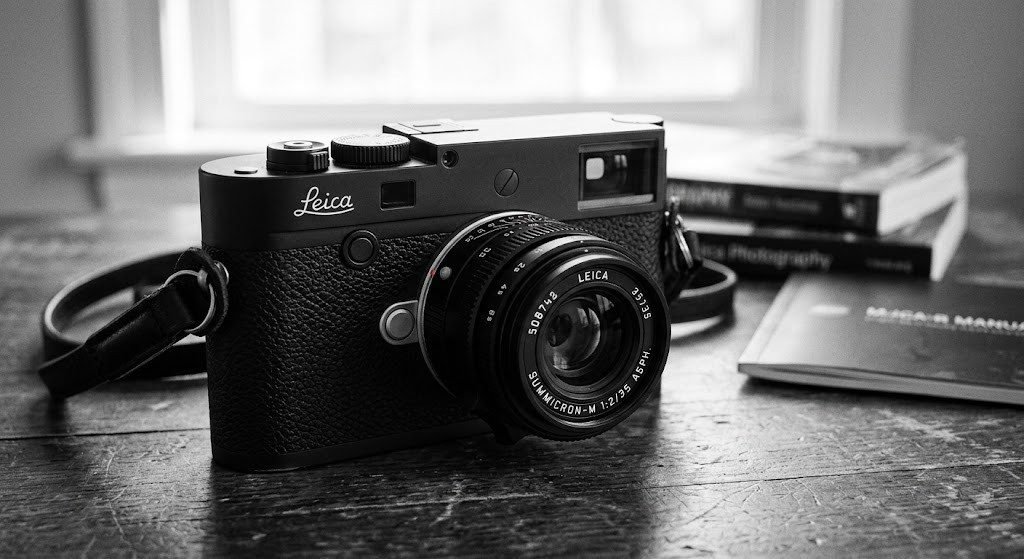
This is where the roadmap gets interesting. Reports place the M11-R sometime later this year or early next, and it may hold at roughly 60MP while switching to an entirely new sensor generation.
That detail stands out because “R” has always meant more resolution in Leica’s lineup. This time, the upgrade may focus less on pixel count and more on how those pixels actually work. That’s a meaningful shift in philosophy. Instead of chasing bigger numbers on a spec sheet, Leica may be prioritizing dynamic range, color depth, and low-light behavior, the qualities photographers actually notice in real images.
Some reports also mention a larger rear display and a possible shift in the control layout. Treat this carefully, since nothing confirms Leica is removing physical buttons. Still, the idea raises a real question for Leica owners. A more touchscreen-driven interface might feel like progress to one shooter and feel like the wrong direction to another, especially someone who chose the M system because it skips digital menus entirely.
Here’s the part that matters for your budget. Current reporting suggests the M11-R could serve as a technical bridge, letting Leica test features before the M12 arrives. If that’s accurate, buying into the M11 family now means buying in just before a bigger shift, not after one. That’s worth sitting with, because it changes how you should think about resale value and long-term support for the current generation.
That doesn’t mean you should hold off completely. No price, date, or spec sheet exists yet. But this rumor deserves attention if you’re close to buying, especially if you tend to keep a camera body for many years before upgrading again.
Now let’s talk about the camera this entire roadmap seems to be building toward.
The M12: The Camera That Could Redefine the M System
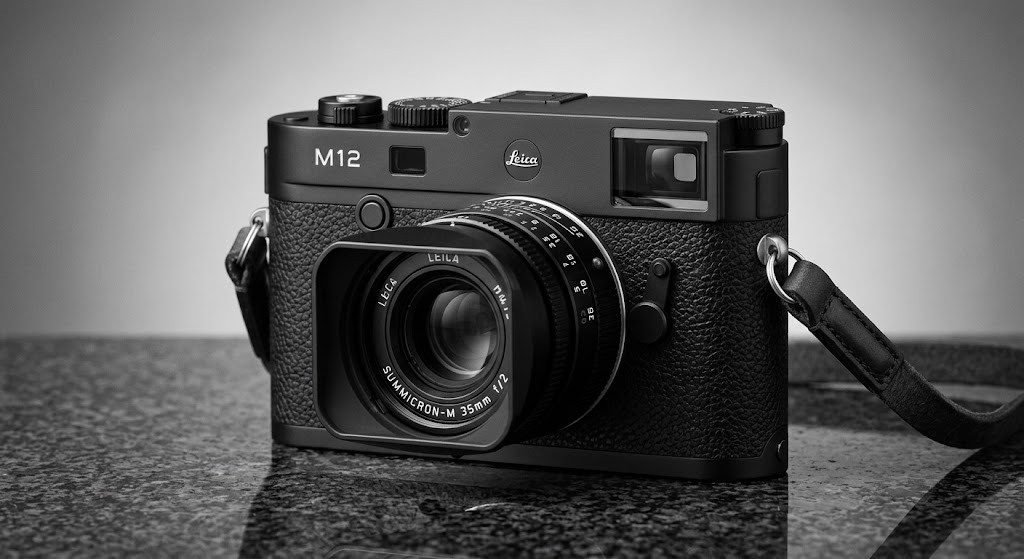
Everything so far leads here. Reports place the M12 sometime in 2027, and unlike the earlier sections, this one includes a piece of confirmed news underneath the speculation.
In April this year, Leica officially announced a partnership with sensor maker Gpixel to co-develop a high-performance sensor for its next generation of cameras. Leica says the project targets image quality, dynamic range, color accuracy, and noise performance. Leica’s chairman even called the goal a true Leica sensor.
That part is confirmed. What isn’t confirmed is which camera gets the sensor first. Rumors connect it to the M12, but Leica hasn’t said so directly. That distinction matters, since it separates fact from guesswork, and it’s the line this entire article tries to respect.
From there, the rumors stack up quickly, and each one touches something Leica has historically avoided changing.
Reports suggest Leica has tested in-body image stabilization for the M12, something the M system has never had in its seventy-year history. For a high-resolution, manual-focus rangefinder, stabilization could genuinely help with slower shutter speeds, low light, and older M-mount lenses that many owners have collected over decades. But the real question isn’t whether IBIS works. It’s whether Leica can add it without changing the body’s size, battery life, or mechanical feel that longtime M shooters expect.
Then comes the rumor that matters most. Some reports suggest Leica may explore a hybrid rangefinder, one that keeps the optical viewing experience but adds electronic viewfinder functionality, similar to what Fujifilm has done with its X100 series. Nothing here is confirmed. But consider what it would mean if true. The optical rangefinder isn’t just a feature of the M system. It practically defines the M system. So the real debate isn’t whether an electronic overlay would help. It’s how much of the traditional viewing experience should survive the change, and whether longtime M owners would even want it to.
On top of that, rumors point to a possible redesign of the physical controls. The classic ISO dial might disappear, the rear screen could grow larger, buttons may shrink in number, and the body could end up a few millimeters shorter. There’s even talk of Leica surveying users about whether the M12 should keep its removable baseplate or move to something more modern. That alone shows Leica knows it’s walking a line between innovation and identity, and it suggests the company is treating this decision with unusual care.
None of this is official yet. All of it matters if you’re about to spend Leica money today. And it’s worth repeating clearly: the sensor partnership is the one confirmed fact in this entire story. Everything else, from IBIS to the viewfinder debate to the missing buttons, remains a rumor and should be treated that way until Leica says otherwise.
Should You Buy Now or Wait?
Here’s a simple breakdown, camera by camera.
- Want a Q3 43 for color work? Buy now. Nothing here should stop you.
- Want black-and-white in that 43mm view? Wait for the Monochrom. It’s close.
- Want an M11-P purely to shoot with? Skip the Hammertone rumor. It mainly matters to collectors.
- Considering an M11 family upgrade but in no rush? Give the M11-R time to surface first.
- Already own a solid M10 or M11 that isn’t holding you back? The M12 is the one real reason to wait, since it could reshape the parts of the M experience Leica almost never touches.
If you need a Leica for real work right now, don’t put your photography on hold for a camera that’s still a year out and still unconfirmed. Rumors move slowly in the Leica world, and specs tend to shift more than once before a launch actually happens.
Where This Leaves Us
The M12 probably won’t be as revolutionary as rumor sites love to suggest. There isn’t enough confirmed information to say that for certain, and it wouldn’t be fair to pretend otherwise. But here’s what does hold up: every reported change points to the same core areas, including sensor architecture, the rangefinder itself, the physical controls, and the body Leica has protected for seventy years. That’s not a typical upgrade pattern. That looks like a company deciding what an M camera should be for the next decade.
So here’s the real question worth asking. If Leica does build a hybrid rangefinder into the M12, does it still feel like an M camera? Or does the appeal fade the moment the optical viewfinder stops being purely optical?
Leica upcoming cameras like the Q3 43 Monochrom, M11-R, and M12 all point toward a bigger transition than usual. Whether that transition strengthens the M legacy or changes it completely is still up for debate, and it’s a debate worth having before you decide what to buy next.
More Camera Coverage From AltBuzz
This kind of deep dive into upcoming gear is exactly what AltBuzz Media covers on a regular basis. If you want more breakdowns like this one before new cameras even hit the market, the site tracks rumors, sensor news, and buying advice across multiple brands, not just Leica. It’s a useful bookmark for anyone who wants to make a smart purchase instead of an impulsive one.